Early this morning, I had a chance to Zoom in and present a workshop for Saint Michael’s College in Vermont. This was probably a good thing, because they had more than their share of snow to deal with. I got to be in Vermont virtually from beautiful Missoula Montana, where we’ve had spring most of winter. I wish we could borrow a few feet of that Vermont snow to get us up to something close to normal.
But my point is to share my ppts from this morning, and not talk about the weather. I had a great two hours with the Saint Michael’s professionals . . . as they posed excellent and nuanced questions and made insightful comments. Here’s a link to the ppts:
Yesterday I had a chance to do a 3-hour online workshop with a very cool group of about 22 smart, skilled, and dedicated professionals. They engaged with the content and consequently, we had some great discussions. One of the discussions has kept percolating for me today. The topic: How do we handle situations where clients are clearly suicidal, but are reluctant or unwilling to develop and agree to a collaborative safety plan.
We talked about how, often, the knee-jerk impulse is to pursue hospitalization. While that’s a viable and reasonable option, the problem is that hospitalization and discharge is a notable risk factor for death by suicide. The other problem is that it’s pretty much impossible for us to know if the client’s resistance to a safety plan indicates increased risk, or just resistance to what s/he/they view as a coercive mandate.
There’s no perfect clinician response to this dilemma. Hospitalization helps some clients, and causes demoralization and regression in others. Not hospitalizing can feel too risky for practitioners.
We talked about a few guidelines in dealing with this conundrum. They include: (a) consulting with colleagues, (b) reflecting on the client’s engagement in other aspects of treatment (increased engagement in treatment is a protective factor), (c) evaluating client intent and client impulsivity, and (d) documenting your decision-making process (including citations indicating that psychiatric hospitalization may not be the best alternative). But again, there’s no perfect guideline.
When discussing Kate’s situation and other scenarios that involve outpatient work with highly suicidal clients, the following question usually comes up, “What if your judgment is wrong and she either makes a suicide attempt, or she kills herself before your next session?” This is a great question and gets to the core of practitioner anxiety.
The answer is that, yes, she could kill herself, and if she does, I’ll feel terrible about my clinical judgment. Also, I might get sued. And, if I’m inclined toward suicidal thoughts myself, Kate killing herself might precipitate a suicidal crisis in me. Sometimes suicide tragedies happen, and sometimes we will feel like the tragedy was our fault and that we should have or could have prevented it. That said, most suicides are more or less unpredictable. Even if you think you’re correct in categorizing someone as high or low risk, chances are you’ll be wrong; many high-risk clients don’t die by suicide and some low-risk clients do (see Sommers-Flanagan, 2021, for a personal essay on coping with the death of a client to suicide; https://www.psychotherapynetworker.org/magazine/article/2565/the-myth-of-infallibility).
More depressing is the reality that hospitalization – the main therapeutic option we turn to when clients are highly suicidal – isn’t very effective at treating suicidality and preventing suicide (Large & Kapur, 2018). Hospitalization sometimes causes clients to regress and destabilize, and suicide risk is often higher after hospitalization (Kessler et al., 2020). Because hospitalization isn’t a good fit for many clients who are suicidal and because we can’t predict suicide very well anyway, some cutting edge suicide researchers recommend intensive safety planning as a viable (and often preferred) alternative to hospitalization. In the case of Kate, as long as she’s willing to collaborate, and I’m able to contact her husband, and we can construct a plan that provides safety, then I’m on solid professional ground (or at least as solid as professional ground gets when working with highly suicidal clients).
Kessler, R. C., Bossarte, R. M., Luedtke, A., Zaslavsky, A. M., & Zubizarreta, J. R. (2020). Suicide prediction models: A critical review of recent research with recommendations for the way forward. Molecular Psychiatry, 25(1), 168-179. doi:http://dx.doi.org/10.1038/s41380-019-0531-0
Large, M. M., & Kapur, N. (2018). Psychiatric hospitalisation and the risk of suicide. The British Journal of Psychiatry, 212(5), 269-273.
The idea that healthcare professionals must take an authoritarian role when evaluating and treating suicidal clients has proven problematic (Konrad & Jobes, 2011). Authoritarian clinicians can activate oppositional or resistant behaviors (Miller & Rollnick, 2013). If you try arguing clients out of suicidal thoughts and impulses, they may shut down and become less open.
For decades, no-suicide contracts were a standard practice for suicide prevention and intervention (Drye et al., 1973). These contracts consisted of signed statements such as: “I promise not to commit suicide between my medical appointments.” In a fascinating turn of events, during the 1990s, no-suicide contracts came under fire as (a) coercive and (b) as focusing more on practitioner liability than client well-being (Edwards & Sachmann, 2010; Rudd et al., 2006). Suicide experts no longer advocate using no-suicide contracts.
Instead, collaborative approaches to working with suicidal clients are strongly recommended. One such approach is the collaborative assessment and management of suicide (CAMS; Jobes, 2016). CAMS emphasizes suicide assessment and intervention as a humane encounter honoring clients as experts regarding their suicidal thoughts, feelings, and situation. Jobes and colleagues (2007) wrote:
CAMS emphasizes an intentional move away from the directive “counselor as expert” approach that can lead to adversarial power struggles about hospitalization and the routine and unfortunate use of coercive “safety contracts.” (p. 285)
Tomorrow I’ll be presenting all day on Strengths-Based Suicide Assessment and Treatment at Water’s Edge Counseling Services in Rogers, Arkansas. Water’s Edge Counseling Services employs dozens of therapists at four locations. They continue to grow to meet the mental health needs of Arkansas residents. You can find information about their services here: https://www.watersedgecounselingnwa.com/
In anticipation of tomorrow, I looked up some stats on suicide in Arkansas and the U.S.
In the U.S. – the average rate of death by suicide (from 2022) is 14.5 per 100,000
New Jersey had the lowest 2022 rates at 7.6.
Wyoming had the highest at 31.8.
Arkansas was at 19.5.
Montana was at 27.5.
Today has been a hard day in Montana, as I’ve heard about two deaths by suicide by individuals in the social world of friends and family. Suicides are tragic and difficult to understand. When suicide happens, it’s important to remember many things, but a couple key points come to mind today.
It’s estimated that each suicide affects about 150 people. If you’re feeling guilty and like you should have or perhaps could have done something to save a life, you’re likely not alone.
Although you’ll often see messages in suicide prevention presentations or on the internet that suicide is 100% preventable, that’s not really true. In fact, we do more prevention now than ever before in the history of time and the U.S. rates have steadily risen over the past 25 years, in the face of all our prevention efforts.
My big points are that suicide is very difficult to predict and prevent and yet it’s very easy and common for people to feel guilty when someone they know dies of suicide . . . even though the people left behind are not at fault.
However your day has gone today, I wish you as much peace and comfort as possible. If you’re feeling suicidal or especially guilty, please reach out to someone who loves you. They will be happy to talk. Or, if you feel the need, you can call the national suicide crisis hotline: 988. Or, if you’re a texter, there’s a text hotline. Just text HOME to 741741 to connect with a volunteer Crisis Counselor.
All my best to you . . . and here are the ppts for tomorrow’s presentation:
In the piece I review some information and make one point that I’d like to share more broadly. Below are several opening paragraphs from the Op-Ed piece.
*Beginning of Excerpt*
Beyond Suicide Prevention: The Montana Happiness Challenge
John Sommers-Flanagan, Ph.D.
All September, organizations and individuals celebrated suicide prevention month, sharing information about suicide and promoting strategies for preventing suicide deaths. Although the information was life-affirming, underneath the messaging lies an unpleasant truth: Broadly speaking, suicide prevention has been failing for over two decades.
In August, the Centers for Disease Control (CDC) released provisional United States suicide data for 2022. The news was bad. An estimated 49,449 Americans died by suicide in 2022—the highest number ever recorded in U.S. history.
The bad news goes far beyond last year. Suicide rates have risen every year for over 20 years, with only two puzzling exceptions. In 2020 and 2021—during the onset of COVID-19, lockdowns, and other national stressors—suicide rates declined; they declined despite the fact that by every other measure Americans were suffering from unprecedented stress, depression, anxiety, and suicidal thinking. Suicide researchers have long noted this odd pattern: higher stress, depression, anxiety, and suicidal thinking do not inevitably translate to more suicides.
If all this seems confusing—20 years of vigorous suicide prevention, and suicide rates steadily rise, while during 2 years of intensive COVID-related individual and public distress, suicide rates go down—it’s only because it is.
In his book, Rethinking suicide, Craig Bryan, a renowned suicide researcher, called suicide “a wicked problem,” noting, “Wicked problems cannot be definitively solved or completely eliminated . . .” In fact, as Bryan and others have described, efforts to eliminate wicked problems sometimes make them worse. The preceding facts don’t indicate suicide prevention doesn’t work . . . and they don’t mean COVID pandemics solve the suicide problem. What they do mean—at minimum—is that suicide prevention doesn’t work for everyone, and we need to collectively think differently about this wicked problem.
Suicide prevention ideology over-focuses on eliminating “bad” or negative thinking and behavior. This conceptualization is contrary to science and common sense. The science says that telling people to stop engaging in unhealthy behaviors usually doesn’t work. When people are judged and told they should change, they often become defensive and more resistant to change. This is human nature.
All this brings me to share one strategy for moving beyond traditional suicide prevention. We should put more energy into growing and nurturing positive and meaningful thoughts and behaviors. People are more likely to change if they’re accepted for who they are, and then invited to try something interesting.
*End of Excerpt*
If you read the preceding and have a reaction, I’d love to hear your thoughts on how, with increasing suicide prevention focus, the suicide deaths keep increasing, and why, during the two worst years of COVID, suicide deaths decreased. Feel free to post on this blog or pop me an email.
This week, for the Montana Happiness Challenge, we’re focusing on adopting a mindset where we look for joy or for what inspires us. Last week I did a day-long training on Suicide Assessment and Treatment with professionals in Canada. At the end of the day, I was inspired that they took a full-day to learn about something so hard and challenging. Similarly, if you got through this whole blog because of your interest in making the world a better place, you inspire me.
If you want to keep up with the Montana Happiness Challenge, here are some clickable options:
Last week I did a little cliff-jumping into the Stillwater River with my twin 13-year-old grandchildren. It was only about 20 feet, but high enough to feel the terror and exhilaration of a brief free-fall.
This week I’m having a different kind of buzz. Dr. Margaret Rutherford reached out to me with a link to her TEDx Boca Raton talk. Previously I was a guest on her video podcast show (here’s the link to her podcast page: https://drmargaretrutherford.com/podcast-2-2/, and a link to her website and book, “Perfectly Hidden Depression” https://drmargaretrutherford.com/perfectlyhiddendepressionbook/). We’ve stayed in touch via email. Along with her link, she apologetically noted that she “barely” got a plug in for my work on strengths-based suicide assessment. I thought it was incredibly nice for her to give a nod, even a brief one, to my work. But then I watched and discovered that she had only mentioned three professionals: Edwin Shneidman (the “Father of Suicidology), Sidney Blatt (a renowned suicide and depression researcher from Yale), and some obscure guy from the University of Montana (that would be me).
Aside from feeling honored, humbled, and flattered to even get a mention, Dr. Margaret’s talk is fantastic. She makes the point–with a couple of articulate cases–for moving away from a strictly medical model perspective and toward working with people who may be suicidal through a lens of no judgment and acceptance. Here’s the link to her talk, which is well-worth a watch: https://www.youtube.com/watch?v=lXZ5Bo5lafA
There are other signs that how professionals (and hopefully the public) view suicidal ideation and behavior may be shifting toward greater acceptance. I’ll go into these other signs in a future post, but right now I want to emphasize that the point is not to replace the medical model, but to move the needle toward less pathologizing and more acceptance of the fact that having suicidal thoughts is often a normal part of life. To the extent that we can approach people who are thinking about suicide with, as Dr. Margaret said, “non-judgment and acceptance,” the more likely they are to be open with us about their pain. . . and . . . when people are open about their pain and suffering, then we have a chance to listen with empathy and a greater opportunity to be of help. . . which, I think, is the main point.
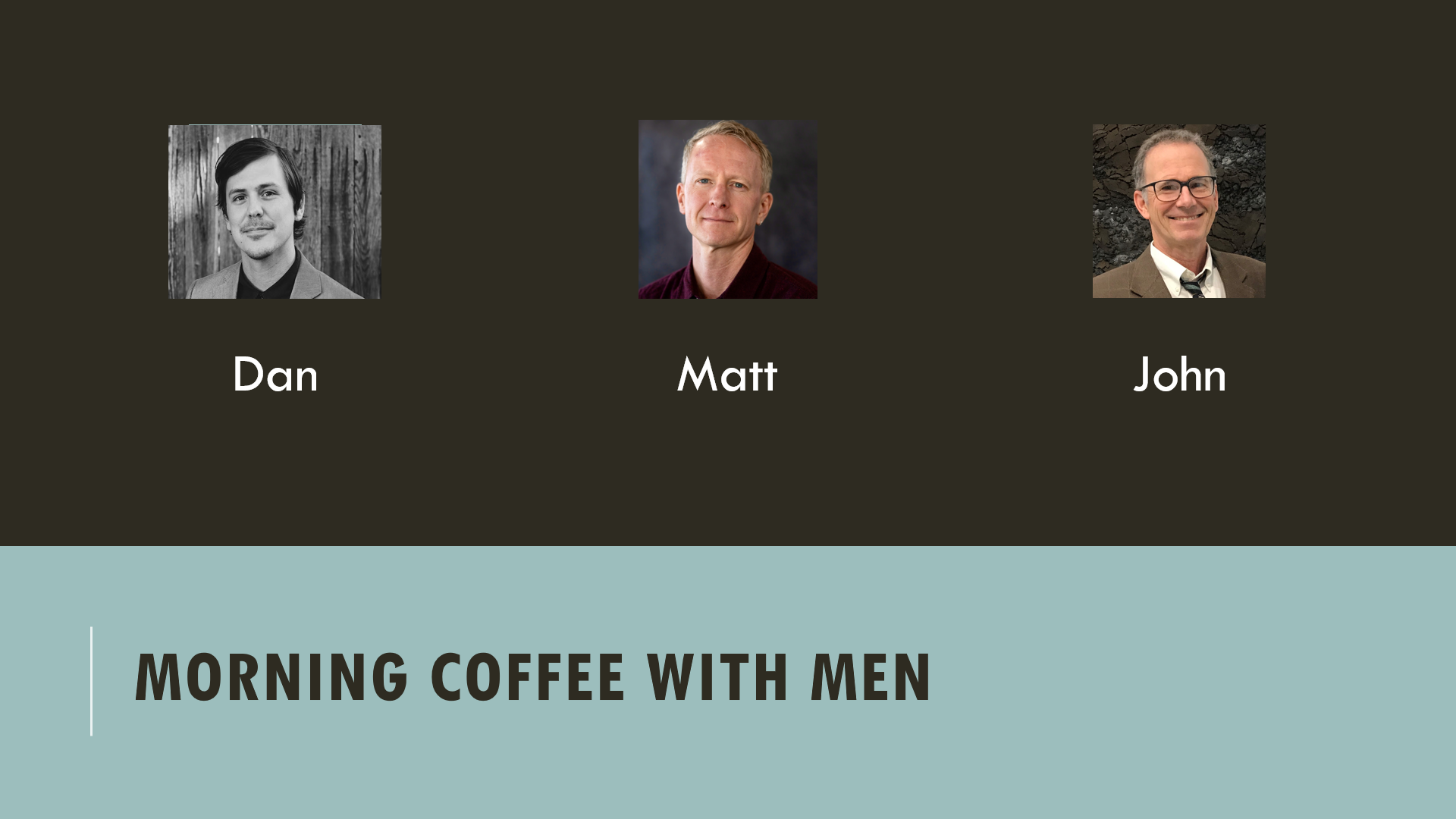
Tomorrow morning, March 31, 2023, at 8am, I’m co-presenting with Matt Englar-Carlson and Dan Salois on suicide and happiness with men at the American Counseling Association World Conference in Toronto.
Here’s the session blurb:
Men and boys account for nearly 80% of all suicide deaths in the U.S. Factors contributing to high suicide rates include: constricted emotional expression, reluctance to seek help, firearms, alcohol abuse, and narrowly defined masculinity. In this educational session, we will use a case demonstration to illustrate suicide assessment counseling methods to help boys and men liberate themselves from narrow masculine values, while embracing alternative and meaningful paths to happiness.
If you’re in Toronto, I hope to see you there. . . and for anyone interested, here’s the Powerpoint presentation:
Engaging clients in a collaborative safety planning process is an evidence-based suicide intervention. The typical gold standard for safety planning is the Safety Planning Intervention (SPI) by Stanley and Brown (2012). You can access free material on the SPI and learn how to obtain professional training for using SPIs at this link: https://suicidesafetyplan.com/
As a part of the 7.5-hour Assessment and Intervention with Suicidal Clients video published by psychotherapy.net, I did a short (about 7 minute) demonstration of safety planning with a 15-year-old cisgender female client. The demo comes at the end of the session and naturally, I already know lots of information that can be integrated into the safety plan. Nevertheless, introducing and completing the safety plan is an excellent organizing experience.
In part, safety planning emerged as an alternative to what were called “No-suicide contracts.” No suicide contracts fell out of favor in the mid-to-late 1990s, because many clients/patients viewed them as coercive and liability-dodging behaviors by clinicians, and because they focused on what NOT TO DO, instead of what clients/patients should do, when feeling suicidal. Safety planning involves proactive planning for what clients can do to effectively cope during a suicidal crisis.
Victor Yalom of psychotherapy.net has given me permission to offer this video clip to everyone as a free resource to guide and inspire you as you work to develop your skills for collaborative safety planning. You can find a glittering array of videos, including the previously mentioned, three-part 7.5 hour classic at: https://www.psychotherapy.net/ and https://www.psychotherapy.net/video/suicidal-clients-series
I’m in Helena today, learning and presenting at the Montana CBT Conference. This is a very cool event, organized by Kyrie Russ, M.A., LCPC, and including about 35 fantastic Montana professionals interested in deepening their knowledge of CBT principles and practice.
I’m presenting twice; below I’ve included links to my two sets of ppts (which may be redundant/overlapping with ppts I’ve posted here before).
Exploring the Potential of Evidence-Based Happiness
I’m in Enterprise, Oregon today and tomorrow morning. I got here Sunday evening after a winding ride through forests and mountains. Yes, I’m in Eastern Oregon. Even I, having attended Mount Hood Community College and Oregon State University, had no idea there were forests and mountains in Enterprise.
The scenes are seriously amazing, but the people at the Wallowa Valley Center for Wellness-where I’m doing a series of presentations on suicide assessment and prevention-are no less amazing. I’ve been VERY pleasantly surprised at the quality, competence, and kindness of the staff and community.
Just in case you’re interested, below I’m posting ppts for my three different presentations. They overlap, but are somewhat distinct.
Earlier this year I was asked by a school district to create and record a one-hour training on strengths-based suicide assessment. I made the recording, shipped it off, got paid, and mostly forgot about it. However, because I have the recording and sometimes I think it’s good to give things away, I’m sharing the link here: https://youtu.be/kLlkh8nJ2pI
The video is about 62 minutes, recorded on Zoom, and slightly oriented toward school counselors and school psychologists. I’m sharing this video just in case it might be useful to you in your teaching or for your clinical group or personal knowledge, etc. Feel free to share the link.
If you feel you benefit from this video, I hope you’ll consider the “pay it forward” concept. No need to pay me . . . just notice opportunities where you can share your gifts and talents and resources with others and pay it forward.
The place to click if you want to learn about psychotherapy, counseling, or whatever John SF is thinking about.







 John Sommers-Flanagan