It can be good to have an IOU. I knew I owed my former student and current colleague, Maegan Rides At The Door, a chance to publish something together. We had started working on a project several years ago, but I got busy and dropped the ball. For years, that has nagged away at me. And so, when I read an article in the American Psychologist about suicide assessment with youth of color, I remembered my IOU, and reached out to Maegan.
The article, written by a very large team of fancy researchers and academics, was really quite good. But, IMHO, they neglected to humanize the assessment process. As a consequence, Maegan and I prepared a commentary on their article that would emphasize the relational pieces of the assessment process that the authors had missed. Much to our good fortune, after one revision, the manuscript was accepted.
I saw Maegan yesterday as she was getting the President Royce Engstrom Endowed Prize in University Citizenship award (yes, she’s just getting awards all the time). She said, with her usual infectious smile, “You know, I re-read our article this morning and it’s really good!”
I am incredibly happy that Maegan felt good about our published article. I also re-read the article, and felt similar waves of good feelings—good feelings about the fact that we were able to push forward an important message about working with youth of color. Because I know I now have your curiosity at a feverish pitch, here’s our closing paragraph:
In conclusion, to improve suicide assessment protocols for youth of color, providers should embrace anti-racist practices, behave with cultural humility, value transparency, and integrate relational skills into the assessment process. This includes awareness, knowledge, and skills related to cultural attitudes consistent with local, communal, tribal, and familial values. Molock and colleagues (2023) addressed most of these issues very well. Our main point is that when psychologists conduct suicide assessments, relational factors and empathic attunement should be central. Overreliance on standardized assessments—even instruments that have been culturally adapted—will not suffice.
And here’s the Abstract:
Molock and colleagues (2023) offered an excellent scholarly review and critique of suicide assessment tools with youth of color. Although providing useful information, their article neglected essential relational components of suicide assessment, implied that contemporary suicide assessment practices are effective with White youth, and did not acknowledge the racist origins of acculturation. To improve suicide assessment process, psychologists and other mental health providers should emphasize respect and empathy, show cultural humility, and seek to establish trust before expecting openness and honesty from youth of color. Additionally, the fact that suicide assessment with youth who identify as White is also generally unhelpful, makes emphasizing relationship and development of a working alliance with all youth even more important. Finally, acculturation has racist origins and is a one-directional concept based on prevailing cultural standards; relying on acculturation during assessments with youth of color should be avoided.
And finally, if you’re feeling inspired for even more, here’s the whole Damn commentary:
Tomorrow morning, three counseling interns and I will hit the road for Ronan, where we’ll spend the day with the staff of CSKT Tribal Health. We are honored and humbled to engage in a conversation about how to make the usual medical model approach to suicide be more culturally sensitive and explicitly collaborative.
Tomorrow morning (Wednesday, October 2) I have the honor and privilege of being the keynote speaker for Maryland’s 36th Annual Suicide Prevention Conference. So far, everyone I’ve met associated with this conference is amazing. I suspect tomorrow will be filled with excellent presentations and fabulous people who are in the business of mental health and saving lives.
I hope I can do justice to my role in this very cool conference.
Why Do We Need a Strengths-Based Approach to Suicide Assessment and Treatment?
Imagine this: You’re living in a world that seems like it would just as soon forget you exist. Maybe your skin color is different than the dominant people who hold power. Maybe you have a disability. Whatever the case, the message you hear from the culture is that you’re not important and not worthy. You feel oppressed, marginalized, unsupported, and as if much of society would just as soon have you become invisible or go away.
In response, you intermittently feel depressed and suicidal. Then, when you enter the office of a health or mental health professional, the professional asks you about depression and suicide. Even if the professional is well-intended, judgment leaks through. If you admit to feeling depressed and having suicidal thoughts, you’ll get a diagnosis that implies you’re to blame for having depressing and suicidal thoughts.
The medical model overfocuses on trying to determine: “Are you suicidal?” The medical model is also based on the assumption that the presence of suicidality indicates there’s something seriously wrong with you. But if we’re working with someone who has been or is currently being marginalized, a rational response from the patient might be:
“As it turns out, I’ve internalized systemic and intergenerational racism, sexism, ableism, and other dehumanizing messages from society. I’ve been devalued for so long and so often that now, I’ve internalized societal messages: I devalue myself and wonder if life is worth living. And now, you’re blaming me with a label that implies I’m the problem!”
No wonder most people who are feeling suicidal don’t bother telling their health professionals.
When I think of this preceding scenario, I want to add profanity into my response, so I can adequately convey that it’s completely unjust to BLAME patients for absorbing repeated negative messages about people who look like or sound like or act like them. WTH else do you think should happen?
This is why we need to integrate strengths-based principles into traditional suicide assessment and prevention models. Of course, we shouldn’t use strengths-based ideas in ways that are toxically positive. We ALWAYS need to start by coming alongside and feeling with our patients and clients. As it turns out, if we do a good job of coming alongside patients/clients who are in emotional pain, natural opportunities for focus on strengths and resources, including cultural, racial, sexual, and other identities that give the person meaning.
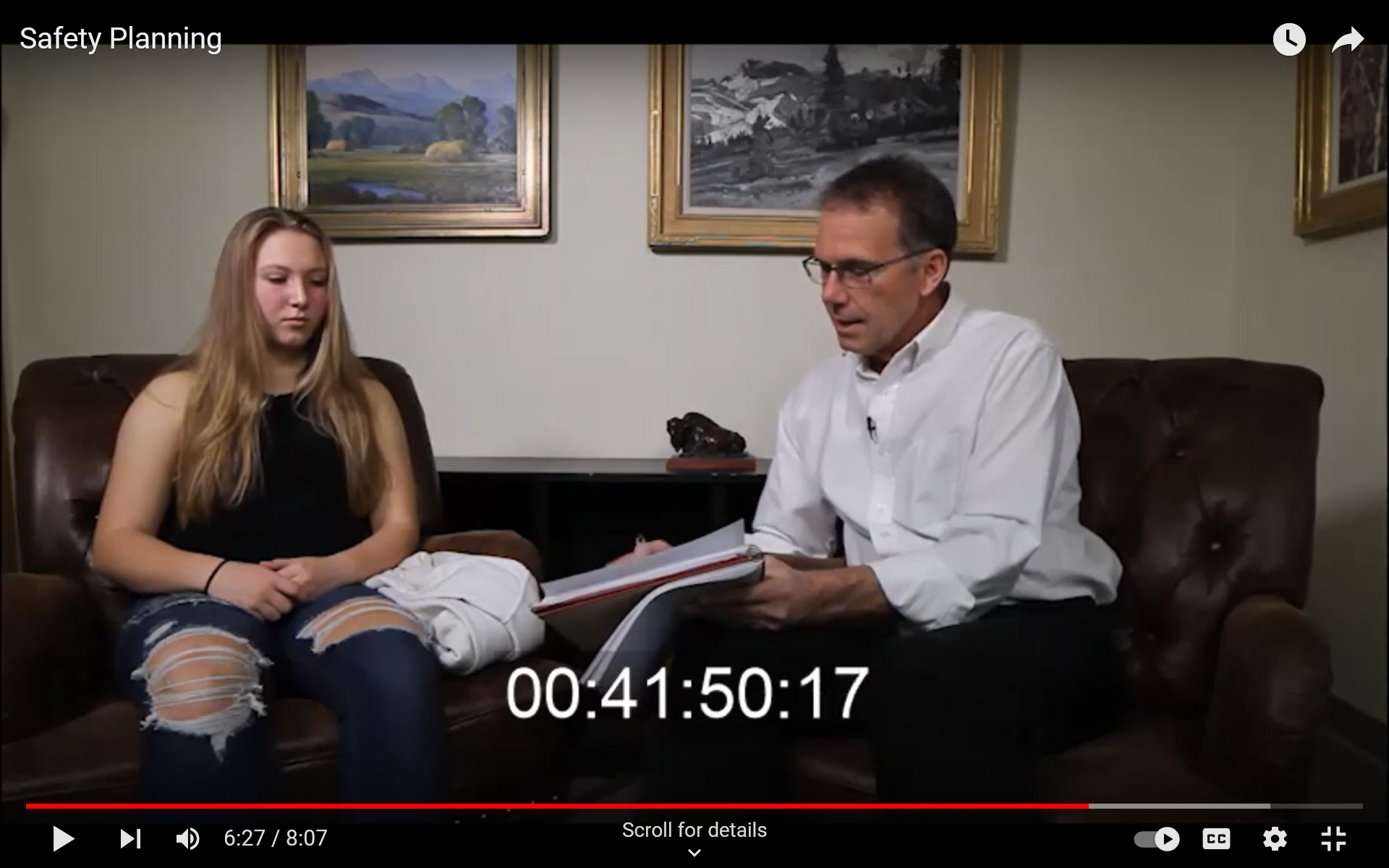
I’m reminded of an interview I did with an Alaskan Native person from the Yupik tribe. She talked at length about her depression, about feeling like a zombie, and past and current suicidal thoughts. Eventually, I inquired: “What’s happening when you’re not having thoughts about suicide?” She seemed surprised. Then she said, “I’d be singing or writing poetry.” I instantly had a sense that expressing herself held meaning for her. In particular, her singing Native songs and contemporary pop songs became important in our collaborative efforts to build her a safety plan.
This coming Wednesday morning I have the honor of presenting as the keynote speaker for the Maryland Department of Health 36th Annual Suicide Prevention Conference. During this keynote, I’ll share more ideas about why a strengths-based model is a good fit when working with diverse clients who are experiencing suicidal thoughts and impulses.
With all that said, here’s the title and abstract of my upcoming presentation.
Strengths-Based Assessment, Treatment, and Prevention with Diverse Populations
Traditional suicide assessment tends to be a top-down information-gathering process wherein healthcare or prevention professionals use questionnaires and clinical interviews to determine patient or client suicide risk. This approach may not be the best fit for people from populations with historical trauma, or for people who continue to experience oppression or marginalization. In this presentation, John Sommers-Flanagan will review principles of a strengths-based approach to suicide prevention, assessment, and treatment. He will also discuss how to be more sensitive, empowering, collaborative, and how to leverage cultural strengths when working with people who are potentially suicidal. You will learn at least three practical strengths-based strategies for initiating conversations about suicide, conducting culturally-sensitive assessments, and implementing suicide interventions—that you can immediately use in your prevention work.
In the lasting glow of Saturday’s Mental Health Academy’s annual Suicide Prevention Summit, I discovered 33 new blog followers. We had right around 3,000 for the session, and the chat-based posts were overwhelmingly positive and affirming. One person wrote, “You can use these comments to think about 1,000 good things from today.” The comments were THAT GOOD. I am deeply grateful for the positive feedback and amazing support of my work. Thank-you!
This year I’m embarking, along with Dylan Wright of Families First (thanks Dylan!), on something new, and possibly ill-advised. We’re hosting three Montana Happiness Project interns! My thinking was that because I’m growing long of tooth (haha), I need to begin formally passing on my knowledge and skills to the next generation. Of course, as most of you know, I’ve been passing on information and doing supervision for decades, but in this case, the process is somewhat outside of the University of Montana, and will involve a bit more mentoring. You’ll be hearing about this new wave of Montana Happiness stuff off and on in the coming months.
Here’s the first volley.
To get our interns ready, Dylan and I are creating content. I guess that makes us content creators. Cool. One of our first creations is a Step-by-Step Suicide Assessment Guide. I like to give stuff away, and so I’ve included a pdf of the guide here.
This guide is designed to be used flexibly. Mostly, it’s a knowledge-base (complete with some interesting links) that you can use to frame how you do suicide assessment and safety planning. I hope it’s useful to you in your work.
Good Morning or Good Afternoon (wherever you may be),
In 28 minutes I’ll be online presenting for the Mental Health Academy Suicide Prevention Summit. A big thanks to Pedro and Greg for their organizing and broadcasting of this worldwide event. I’m honored to be a part of it.
It’s still not too late to register. The link is here: https://www.mentalhealthacademy.net/suicideprevention. It’s all free . . . or you can pay a whopping $10 and have access to all the recordings. TBH, I’m not sure if I’d pay $10 to hear me (jokes), but tomorrow morning features Craig Bryan, and I’ll be an early-riser to catch him live (and free). There are also some other FABULOUS presenters.
Today, I’m online doing the final webinar in a three-part series for PacificSource. The PacificSource organizers and participants have been fabulous. Everything has worked smoothly and the participants have engaged with many excellent thoughts and questions. We’ve got 503 registered for today.
Here’s the title and description of today’s webinar.
Strengths-Based Approaches to Management of Patient Suicidality
John Sommers-Flanagan, Ph.D.
Healthcare providers need to do more than conduct suicide assessments; they also need to flow from assessment into providing interventions to help patients move out of crisis and toward greater emotional regulation, hope, and health. In this webinar, using video clips and vignettes, you will learn at least five specific assessment and management interventions designed to help facilitate patient transitions from crisis to constructive problem-solving. These interventions are based on robust suicide theory, clinical wisdom, and empirical evidence on strategies for working effectively with patients who are suicidal.
For anyone interested, here are the ppts for today:
Tomorrow, I’ll be online again with PacificSource, doing Part 2 of a three-part webinar series titled, “Caring for People Who are Suicidal.” Last week we focused on how to talk with people in general about this challenging topic. This week, the focus is on: “Blending Traditional and Strengths-Based Approaches to Suicide Assessment“
I’ll be talking for about an hour, which means we’ll really only quickly graze the topic. Below, for webinar viewers and other interested readers, I’ve posted the ppts, and excerpted the section in our Clinical Interviewing text that focuses on assessing suicide plans, patient impulsivity, suicidal intent, and a bit of information on talking with patients about previous attempts.
Once rapport is established and the client has talked about suicidal ideation, it’s appropriate to explore suicide plans. You can begin with a paraphrase and a question:
You said sometimes you think it would be better for everyone if you were dead. Some people who have similar thoughts also have a suicide plan. Do you have a plan for how you would kill yourself if you decided to follow through on your thoughts?”
Many clients respond to questions about suicide plans with reassurance that they’re not really thinking about acting on their suicidal thoughts; they may cite religion, fear, children, or other reasons for staying alive. Typically, clients say something like “Oh, yeah, I think about suicide sometimes, but I’d never do it. I don’t have a plan.” Of course, sometimes clients will deny having a plan even when they do. However, if clients admit to a plan, further exploration is crucial.
When exploring and evaluating a client’s suicide plan, assess four areas (M. Miller, 1985): (a) specificity of the plan; (b) lethality of the method; (c) availability of the proposed method; and (d) proximity of social or helping resources. These four areas of inquiry are easily recalled with the acronym SLAP.
Specificity
Specificity refers to the details. Has the person thought through details necessary to die by suicide? Some clients describe a clear suicide method, others avoid the question, and still others say something like “Oh, I think it would be easier if I were dead, but I don’t have a plan.”
If your client denies a suicide plan, you have two choices. First, if you believe your client is being honest, you can drop the topic. Alternatively, if you suspect your client has a plan but is reluctant to speak about it, you can use the normalizing frame discussed previously.
You know, most people who have thought about suicide have at least had passing thoughts about how they might do it. What kinds of thoughts have you had about how you would [die by suicide] if you decided to do so? (Wollersheim, 1974, p. 223)
Lethality
Lethality refers to how quickly a suicide plan could result in death. Greater lethality confers greater risk. If you believe your client is a very high suicide risk, you might inquire not simply about your client’s general method (e.g., firearms, toxic overdose, or razor blade), but also about the way the method will be employed. Does your client plan to use aspirin or cyanide? Is the plan to slash their wrists or throat with a razor blade? In both of these examples, the latter alternative is more lethal.
Availability
Availability refers to availability of the means. If clients plan to overdose with a particular medication, check on whether that medication is available. (Keep in mind this sobering thought: Most people keep enough substances in their home medicine cabinets to die by suicide.) To overstate the obvious, if the client is considering suicide by driving a car off a cliff and has neither car nor cliff available, the immediate risk is lower than if the person plans to use a firearm and keeps a loaded gun in an unlocked location.
Proximity
Proximity refers to proximity of social support. How nearby are helping resources? Are other individuals available to intervene and provide rescue if an attempt is made? Does the client live with family or roommates? Is the client’s day spent alone or around people? The further a client is from helping resources, the greater the suicide risk.
If you have an ongoing therapy relationship with clients, you should check in periodically regarding plans. One recommendation is for collaborative reassessment at every session until suicide thoughts, plans, and behaviors are absent in three consecutive sessions (Jobes, 2016).
Assessing Client Self-Control
Asking directly about self-control and observing for agitation, arousal, and impulsivity are the main methods for evaluating client self-control.
Asking Directly
If you want to focus on the positive while asking directly about self-control, you can ask something like this:
What helps you stay in control? Or, What stops you from killing yourself?
If you want to explore the less positive side, you could ask:
Do you ever feel worried that you might lose control and make a suicide attempt?
Exploring both sides of self-control (what helps maintaining self-control and what triggers a loss of self-control) can be therapeutic. This is done together with clients to understand their perception of self-control. Rudd (2014) recommended having clients rate their subjective sense of self control using a 1-10 scale (although we prefer 0-10). When clients are feeling or acting “out of control” hospitalization should be considered. Hospitalization can provide external controls and safety until clients feel more internal control.
Here’s an example of a discussion that shows (a) an interviewer focusing on the client’s fear of losing control and (b) an indirect question leading the client to talk about suicide prevention.
Client: I’m afraid of losing control late at night.
Therapist: Sounds like night is the roughest time.
Client: I hate when I’m awake and alone into the night.
Therapist: So, late at night, you’re sometimes afraid you’ll lose control and kill yourself. What has helped keep you from doing it.
Client: I think of how my kids would feel when they couldn’t get me to wake up. I can’t even think of that.
A brief verbal exchange, such as this, isn’t a final determination of safety or risk. However, this client’s children are a mitigating factor that may help with self-control.
Observing for Arousal/Agitation
Arousal and agitation are contemporary terms used to describe what Shneidman originally referred to as perturbation. Perturbation is the inner push that drives individuals toward suicidal acts. Arousal and agitation are underlying components of several other risk factors, such as akathisia associated with SSRI medications, psychomotor agitation in bipolar disorder, and command hallucinations in schizophrenia.
Arousal or agitation adversely affect self-control. Unfortunately, systematic methods for evaluating arousal are lacking. This leaves clinicians to rely on five approaches to assessing arousal, agitation, and impulsivity:
Subjective observation of client increased psychomotor activity (as in an MSE)
Client self-disclosure of feeling unsettled, unusually overactive, or impulse ridden (often accompanied by statements like, “I need to do something”)
Questionnaire responses or scale scores indicating agitation
A history of agitation-related suicide gestures or attempts
Clients report impulsivity around aggression and/or substance use
Assessing Suicide Intent
Suicide intent is defined as how much an individual wants to die by suicide. Suicide intent can be evaluated via clinical interview (Lindh et al., 2020), standardized questionnaire (e.g., the Beck Suicide Intent Scale, Beck et al., 1974), or after completed suicides. When evaluated after suicide deaths, higher suicide intent is linked to lethality of means, more extensive planning, and a negative reaction to surviving the act.
Assessing suicide intent prior to potential attempts is challenging. In an interview, the question can be placed on a scale and asked directly:
On a scale from 0 to 10, with 0 being you’re absolutely certain you want to die and 10 that you’re absolutely certain you want to live, how would you rate yourself right now?
Suicide intent is also related to suicide planning; that means when you’re evaluating suicide plans, you’re also evaluating suicide intent. More specificity and lethality in planning is linked to intent. Overall, standardized questionnaires and clinical interviews are equivalent in their predictive accuracy (Lindh et al., 2020).
Obtaining detailed information about previous attempts is important from a medical-diagnostic-predictive perspective, but less important from a constructive perspective, where the focus is on the present and future. Whether to explore past attempts or to stay focused on the positive is a dialectical problem in suicide assessment protocols. On the one hand, suicide scheduling, rehearsal, experimental action, and preoccupation indicate greater risk and, therefore, are valuable information (Rudd, 2014). On the other hand, to some extent, detailed questioning about intent, plans, and past attempts reinforces client preoccupation with suicide and suicide planning.
Balance and collaboration are recommended. As you inquire about intent, continue to integrate positively oriented questions into your protocol:
How do you distract yourself from your thoughts about suicide?
As you think about suicide, what other thoughts spontaneously come into your mind that make you want to live?
Now that we’ve talked about your plan for suicide, can we talk about a plan for life?
What strengths or inner resources do you tap into to fight back those suicidal thoughts?
Eventually you may reach the point where directly asking about and exploring previous attempts is needed.
Exploring Previous Attempts
Previous attempts are considered the strongest of all suicide predictors (Franklin et al., , 2017). Information about previous attempts is usually obtained through the client’s medical-psychological records or an intake form, or while discussing depressive symptoms during a clinical interview (see Case Example 10.2). It’s also possible that you won’t have information about previous attempts, but you decide to ask directly:
Have there been any times when you were so down and hopeless that you tried to kill yourself?
Once you have or obtain information about a previous attempt or attempts, you have a responsibility to acknowledge and explore it, even if only via a solution-focused question.
You’ve tried suicide before, but you’re here with me now . . . What has helped?
If you’re working with a client who’s severely depressed, it’s not unusual for your solution-focused question to elicit a response like this:
Nothing helped. Nothing ever helps.
One error clinicians often make at this point is to venture into a yes-no questioning process about what might help or what might have helped in the past. If you’re working with someone who is extremely depressed and experiencing the problem-solving deficit of mental constriction, your client will respond in the negative and insist that nothing ever has helped and that nothing ever will help. Encountering a negative response set requires a different assessment approach. Even severely depressed clients can, if given the opportunity, acknowledge that every attempt to address depression and suicidality isn’t equally bad. Using a continuum where severely depressed and mentally constricted clients can rank intervention strategies (instead of a series of yes-no questions) is a better approach:
Therapist: It sounds like you’ve tried many different things to help you through your depressed feelings and suicidal thoughts. Of all the things you’ve tried and all the ideas that professionals like me have recommended, which one has been the worst?
Client: The meds were the worst. They made me feel like I was already dead inside.
Therapist: Okay. Let’s put meds down as the worst option you’ve experienced so far. So, which one was a little less bad than the meds?
Instead of asking the client “What worked best?” and getting a bleak depressive response, the therapist asked which therapeutic recommendation had been “the worst?” Focusing on what’s worst resonates with the negative emotional state of depressed clients. Identifying the most worthless of all therapeutic strategies is more likely to produce a response and you can build from there to strategies that are “a little less bad.” Later in the interview process, you can add new ideas that you suggest or that the client suggests and put them in their appropriate place on the continuum. When this strategy works, it produces a list of ideas (some new and some old) for potential homework and experimentation (see also Sommers-Flanagan & Sommers-Flanagan, 2021).
***************************************
As I read through the preceding excerpt, I realize there’s so much more that could be covered. For more info, we also have our strengths-based suicide assessment book, which you can find online through different booksellers. Just search for our name and strengths-based suicide assessment to find a plethora of resources, many of which are free.
When I wrote this, I was listening to Dr. Jennifer Crumlish, a consultant for the CAMS-Care program. Dr. Crumlish provided a fantastic overview of the challenges associated with suicide prevention and interventions, along with introductory information pertaining to implementing the CAMS model. For more on CAMS-Care, see this link: https://cams-care.com/
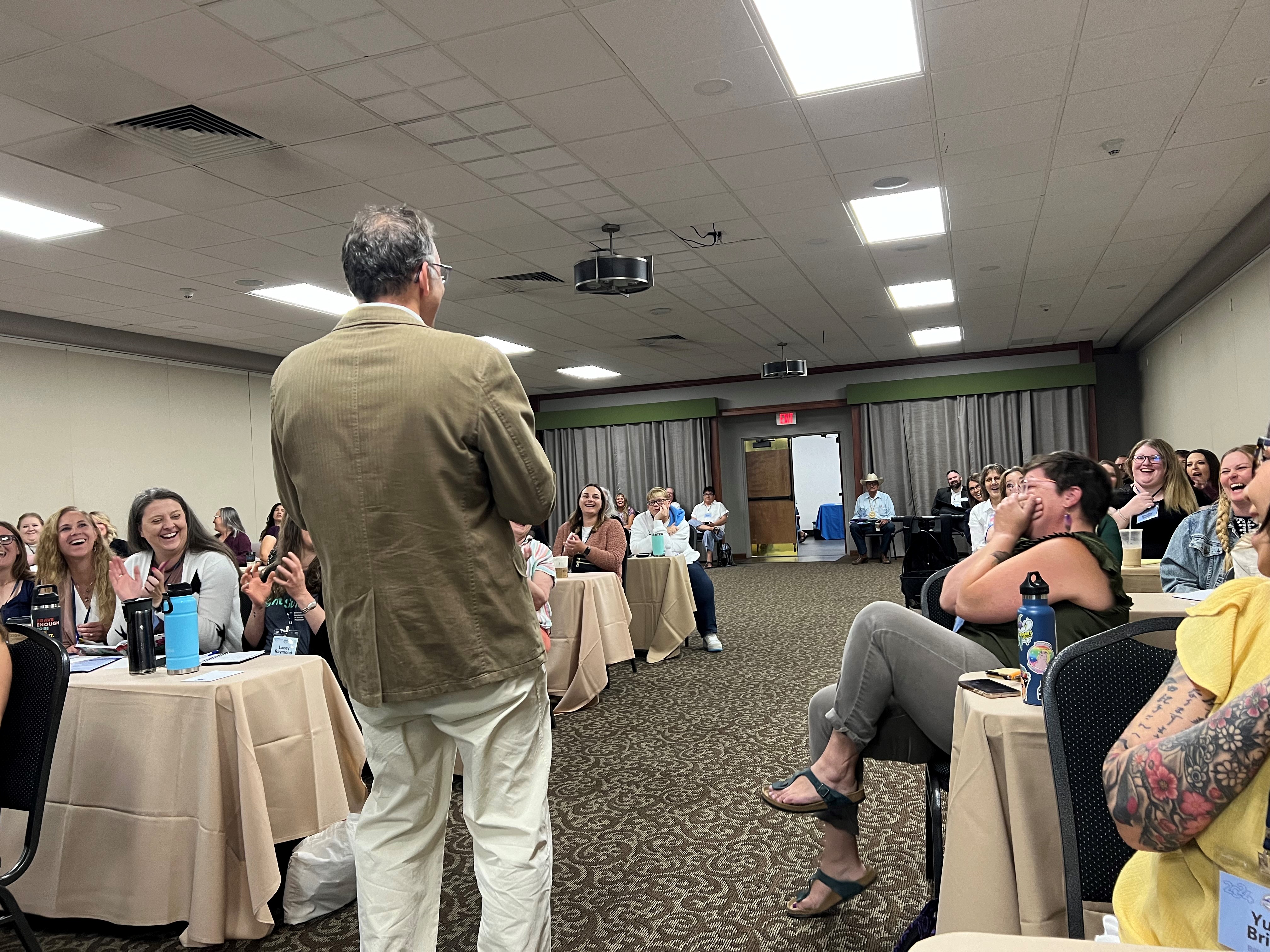
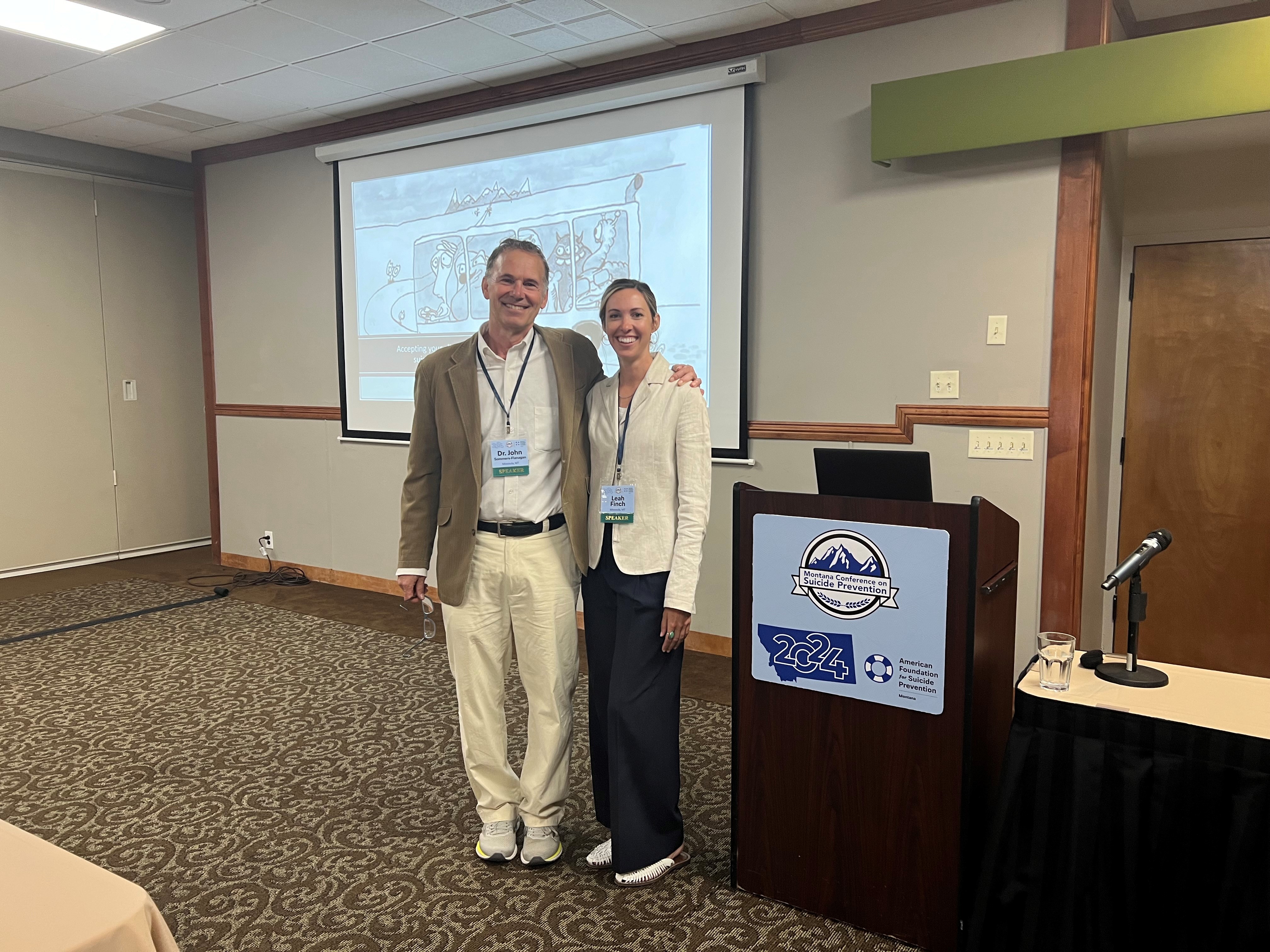
Earlier in the day, Leah Finch—one of our excellent doc students in counseling—and I, did our presentation. Our participants were awesome. A bit later, I got to be on an “expert panel” along with several very cool people, facilitated by Dr. Jen Preble. We fielded an array of interesting questions from the audience. Very fun.
For those of you interested, here are the ppts Leah and I developed, here they are:
Yesterday I was at Camp Mak-A-Dream talking with young people about happiness. Today, I’ll be online with 400+ professionals doing a presentation titled: Strategies for Listening and Responding to People Who are Suicidal. Today’s presentation is offered through PacificSource, a health insurance provider in the NW United States.






 John Sommers-Flanagan