The Three-Step Emotional Change Trick, Revisited (Again) . . . with a side note on plagiarism

I’ve said it before and I’ll say it again: I have a friend who repeatedly espouses the glories of redundancy. Maybe that’s why some politicians stay on-message, regardless of the veracity of their statements. Of course, George Orwell and Hannah Arendt also commented on redundancy as persuasion, and not in a good way. I should emphasize that my goal for using redundancy and writing about the three-step emotional technique again has nothing to do with shaping your reality through political messaging.

When I presented on positive psychology to a bunch of UM STEM graduate students back in August, 2022, I made it very clear that I was not advocating toxic positivity. Nevertheless, in one of the student evaluations, someone complained that all I was doing was telling graduate students to “Cheer up.” Oh my. Sometimes people just hear what they want to hear. That’s a problem with over-valuing “lived experience.” When we over-value lived experience, then everything is viewed through our own, usually narrow and biased, personal lenses. Adler called this private logic. Too much private logic is too much private logic. Although we should strive to value, learn from, and share lived experiences, we should also have a shared value of this thing called . . . wait for it . . . science!

The next time I presented to the UM STEM grad students (in January, 2023), I made an explicit point of emphasizing my “non-toxic positivity street cred” by beginning the lecture with a short lesson on the three-step emotional change trick (which, BTW, with inspiration from Alfred Adler and Harold Mosak, we created as a youth psychotherapy technique in the mid-1990s). You can even find our (with Rita) original three-step article here: https://www.tandfonline.com/doi/abs/10.1300/J019v17n04_02 and a later book chapter here: https://psycnet.apa.org/record/2002-01308-098 and, of course, I’ve written about it on this blog, and have a youtube video demonstration: https://www.youtube.com/watch?v=ITWhMYANC5c, yada, yada, yada.

While presenting the 3SECT (which is what cool people call it) to the STEM students, there was a woman sitting toward the back. She had stationed her 8-year-old son still farther back, where he was sitting, head down, playing on her phone. I did the 3SECT thing, including the famous “And so I put my cat on my head” scene, emphasizing throughout, that the WHOLE reason for the 3SECT existing was because we should NEVER SAY CHEER UP to anyone, anytime!

The next day, I received the following email from the anonymous woman in the back (who generously gave me permission to share it here):

Hi John,

I was at your happiness seminar yesterday and was very disappointed I had to leave early. You may have noticed my son (who is 8) was sitting in the back playing a game on my phone during the seminar. I was delighted to find out this morning, while my 6-year-old daughter was having a meltdown trying to do her hair for school, that my son had been listening and absorbed your 3-step emotional change trick. He remembered the whole thing, and he asked his sister this morning if she wanted to learn it, but only if she wanted to change her own mood. He was clear that it wasn’t because he was trying to tell her to cheer up. He heard it all yesterday! Thought you might enjoy that little anecdote.

A few days later, she wrote:

We have gotten a lot of mileage out of your emotional change trick in the last few days.

I have to admit, I absolutely love it when people listen and get the message, but I truly and deeply love it EVEN MORE when 8-year-olds absorb messages while allegedly playing on a cell phone. I believe this may just be the scientific evidence (or is it my lived experience) I needed to validate that I am not and never have been a proponent of toxic positivity.

One other notable note. When searching (via Google) for my very own 3SECT video, I found that a counselor in Tennessee has copied one of my three-step blog posts and posted it as his own blog post. I was gobsmacked—with annoyance and flattery in equal proportions. If you want to read the blog post worthy of plagiarism (not the plagiarist’s version, which is the same, but my version that was so darn tempting that it literally caused plagiarism, here you go: https://johnsommersflanagan.com/2020/04/15/the-three-step-emotional-change-technique/

I’m ending now with a few core messages:

  • Don’t say “cheer up” to anyone.
  • Don’t get too over-focused on your own lived experiences, because, after all, everyone has their own lived experiences, and we should complement them all with scientific knowledge.
  • Don’t plagiarize.
  • If the person you plagiarized emails you, asking you to stop plagiarizing or provide a citation, don’t ignore that person.
  • And, whenever appropriate, follow in the anonymous 8-year-old’s footsteps and spread the good mood – without saying cheer-up!
Tough Kids, Cool Counseling Visits Eastern Michigan

In 1990, when I moved back to Missoula, Montana to join Philip and Marcy Bornstein in their private practice, my goal was to establish a practice focusing on health psychology. I believed deeply in the body-mind connection and wanted to work with clients/patients with hypertension, asthma, and other health-related conditions with significant behavioral and psychosocial components.

Turns out, maybe because I was the youngest psychologist in town, all I got were referrals from Youth Probation Services, Child Protective Services, local schools, and parents who asked if I could “fix” their children’s challenging behaviors.

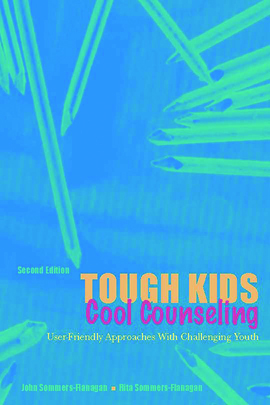
I’d say that I made lemonade from lemons, but it turns out I LOVED working with the so-called “challenging youth.” There were no lemons! The work led to our Tough Kids, Cool Counseling book (1997 and 2007), along with many articles, book chapters, and demonstration counseling videos. Over the years I’ve had the honor of working extensively with parents, families, youth, and young adults.

In about 10 days, I’ll be in Ypsilanti, Michigan doing a full-day professional workshop on “Tough Kids, Cool Counseling.” If you’re concerned about the title, don’t worry, so am I. In the first few minutes of the day, I’ll explain why using the terminology “Tough Kids” is a bad idea for counselors, psychotherapists, and other humans.

Just in case you’re in the Eastern Michigan area, the details and links for the conference are below. I hope to see you there . . . and hope if you make the trip, you’ll be sure to say hello to me at a break or after the workshop.

What: Tough Kids, Cool Counseling: Cognitive, Emotional, & Constructive Change Strategies

When: Friday, March 10, 2023, 8:30 AM – 5:00 PM EST

Where: Eastern Michigan University Student Center, Second Floor – Ballroom B Ypsilanti, MI 48197

Counseling so-called “tough kids” can be immensely frustrating or splendidly gratifying. The truth of this statement is so obvious that the supportive reference, at least according to many teenagers is, “Duh!” In this workshop, participants will sharpen their counseling skills by viewing and discussing video clips from actual counseling sessions, discussing key issues, and participating in live demonstrations. Attending this workshop will add tools to your counseling youth tool-box, and deepen your understanding of specific interventions. Over 20 cognitive, emotional, and constructive counseling techniques will be illustrated and demonstrated. Examples include acknowledging reality, informal assessment, the affect bridge, the three-step emotional change trick, asset flooding, empowered storytelling, and more. Four essential counseling principles, counselor counter-transference, and multicultural issues will be highlighted.

The link: https://www.eventbrite.com/e/tough-kids-cool-counseling-cognitive-emotional-constructive-change-tickets-470275485637

The Acts of Kindness Challenge

On TikTok, people often post challenges. A couple years ago, one of my former students reached out to me for a consultation because he was getting an unusual number of young clients reporting psychotic symptoms. Turns out there was a TikTok challenge to see if kids could trick their counselor or psychotherapist into thinking they were psychotic. This sort of “challenge” just turns me speechless.

But, no worries. I’m never speechless for long.

Today I’m issuing my own non-TikTok challenge. Along with wishing you all Happy Random Acts of Kindness Day, I’m challenging you to adopt an attitude of kindness.

Random Acts of Kindness Day has been celebrated since 1995. Although I love randomness and kindness, as some of you already know, I believe our efforts toward kindness should be more than just random. We should put value into being a kind person, have a kindness intention, and then be waiting and watching for kindness opportunities around every corner.

Just in case you want a copy of my “Intentional Acts of Kindness Homework Assignment,” here it is:

Good luck with the Intentional Acts of Kindness challenge. If you do something kind and feel an impulse to share it, please share it as a comment on this blog, or through your preferred social media platform.

And now, I present you with a kindness opportunity.

Hana Meshesha, one of our University of Montana doctoral students in counseling, is conducting a qualitative research study. I’m posting her call for participants below. If you or someone you know meets the criteria to participate in her study, please contact Hana. Her contact information is also below.

Hello! 

My name is Hana Meshesha and I am a doctoral candidate in the Counselor Education and Supervision program at the University of Montana. I am conducting a qualitative research study on the experience and process of surviving from sexual trauma for individuals identifying as part of a minority/underrepresented group. My goal is to develop a framework to better support survivors of sexual trauma. This research is approved by the University of Montana Institutional Review Board #213-22.  

If you experienced sexual trauma and identify as a part of a minority/underrepresented group based on your sexual orientation, gender, race, and/or ability status, I would appreciate your participation in this study. You are eligible for this study if you meet all of the following criteria:  

  • Identify as a survivor of adulthood sexual violence and the sexual trauma is no longer intruding on your daily functioning
  • Have disclosed your experience to another person prior to participating in this study 
  • Are 20 years of age or older 
  • Identify as part of a minority/underrepresented group based on your gender, sexual orientation, disability status and/or race 
  • Have not experienced childhood sexual abuse/trauma.

Participating in this study involves two 60-minute interviews focused on your process of surviving and healing from the experience of sexual trauma. If you are interested and willing, you will also be asked to share a poem, picture, song, or any artwork that represents your journey of surviving from sexual trauma. To participate or ask any questions related to this study, please contact me at hana.meshesha@umconnect.umt.edu or 406-303-1794. 

Thank you for your time and consideration.  

Hana Meshesha 

Working Effectively with Parents: Powerpoints from the 1st Annual Missoula Education Summit

I had an awesome day yesterday with many amazing Missoula educators. I always respect and admire educators for their willingness to enter classrooms with large groups of young people. I have many reasons upon which I base the belief–that educators deserve respect and admiration–not the least of which is my lived experience of having occasionally stepped into a classroom with young people. One of my memories is of hearing panic in my own voice, while asking the regular classroom teacher, “You’re not leaving me alone in here, are you?”

Sadly, now is a time in American society when teachers seem not to receive the respect and admiration I think they deserve. For multiple reasons (many of which strike me as misleading and political), it seems like there has been distrust sown between teachers and parents. Yesterday, I spent the day with over 400 teachers, counselors, psychologists, administrators, custodians, and other school personnel who attended sessions I offered. I was honored to be there. Being with them not only strengthened my trust in them, but also renewed my hope in the world.

Here are the powerpoints for my workshop on “Working Effectively with Parents”:

And here’s a one-page handout on de-escalation strategies:

FYI: My biggest takeaway from the Summit was that teachers and other school personnel who dedicate themselves to educating our future generations are simply amazing.

Pass it on.

My Political Platform . . . and Tomorrow’s 1st Annual Education Summit in Missoula

I have a political platform. I’m not running for public office, but I still share my platform when it seems appropriate and the time is right.

Tomorrow will be an appropriate and right time for me to share my platform.

The nice thing about having your own personal political platform is that it never involves committee meetings. I don’t have to vote or risk rejection of my excellent ideas. I am solely responsible for my personal political platform.

A while back, I got into trouble for expressing my political views in a newspaper Op-Ed piece. The Office of the Commissioner of Higher Education contacted the University of Montana Legal Counsel asking her to issue me a stern warning. Apparently, I was supposed to have a line along with my Op-Ed byline saying something like, “The views expressed herein are solely the views of John Sommers-Flanagan, and not representative of the University of Montana.”

Clearly, I was in the wrong and admitted so. Not having the UM disclaimer statement was an oversight for which I was, as usual, solely responsible.

But I was still annoyed, and so I wrote the UM Legal Counsel and asked her if I should include similar comments the next week when keynoting the Montana statewide “Prevent Child Abuse” conference. I explained that I was going to “come out” against child abuse. Would OCHE be okay with that? I was also going to recommend one (among many) evidence-based solution for child abuse that involves increased government provision of financial and material support to low income families. I went on to note that I’m pro-mental health and against violence. Should I disclaim the University of Montana in all my books, articles, speeches, and conversations? I told her she could share my questions with OCHE. Fortunately, her judgment is better than mine and she just emailed me back with a calming, soothing, and understanding tone.

All this is a lead-up to tomorrow.

Tomorrow is the First Annual Missoula Summit on Education. Luckily, Dr. Erica Zins, the 2017 Montana School Counselor of the Year and current MCPS Student Services Coordinator, asked if I would be willing to provide a presentation for the Summit. I eagerly said yes, yes, yes, choose me! Now I have the good fortune of getting to do three separate talks tomorrow.

My talks are titled, “Weaving Evidence-Based Happiness into the Lives of Students and Educators” at 9am and repeated at 12:15pm and then “Engaging and Working Effectively with Parents” at 2:15pm. They’re all in the Sentinel H.S. auditorium. I’ve got about 210, 175, and 100 MCPS staff signed up for my talks. . . which is humbling because many MCPS staff have already heard most of my stories and jokes.

I never told Erica that my true motive for being so eager to talk at the Summit was related to my personal political platform. Tomorrow, I will have three chances to begin workshops with my short stump speech. I’m stoked about this. Just in case you’ll be missing tomorrow’s event, here’s a written version of the highly anticipated stump speech.

Nothing is more important for American prosperity and success than teachers and other public-school employees. Everything runs through education. Think about it. Economic vitality? We need people with knowledge, skills, and business acumen. Healthcare? Who wants uneducated healthcare personnel? As far as I’m concerned, the smarter and more well-educated my doctor is, the better. How about the environment? Only through education can we learn to be great stewards of the earth. And relationships? We need awareness, knowledge, and skills to create better marriages and families, be better parents, and have healthier, empathic, and equitable relationships with all people—including the full range of diverse backgrounds, ethnicities, and identities.

To summarize, my platform is EDUCATION. EDUCATION in general, and PUBLIC EDUCATION in particular . . . along with all the school personnel that make education happen. They need and deserve support, appreciation, and pay raises.

And . . . to make the OCHE people happy, I will also be emphasizing: Although I am a proud University of Montana faculty member and huge supporter of, and believer in, the University of Montana, I am solely responsible for the views on education expressed in this blog, as well as the views I will express tomorrow at the Summit.  

For anyone interested, here’s a draft version of the Weaving Happiness . . . ppts:

Love One Another

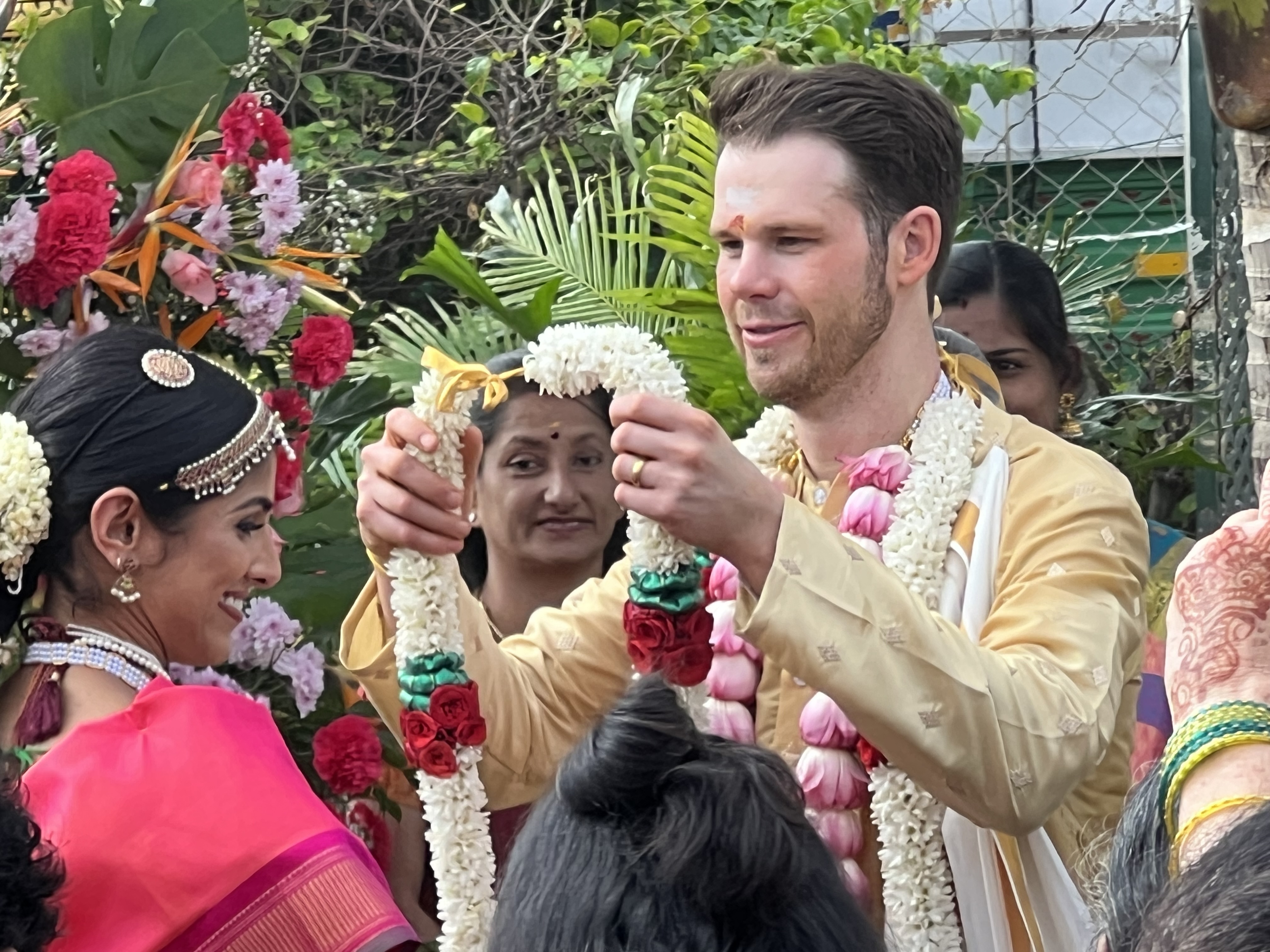
Last week I was dancing and singing in India at my nephew’s wedding. This week I’m jet-lagged in Missoula. But the afterglow continues.

Being at a wedding, it was hard not to think of my mother. She loved weddings and always wished for everyone to find love.

My sisters had similar thoughts. We reminisced and projected my mother into the scene of my nephew marrying an Asian Indian woman in a Hindu ceremony. We wished she could pop back into the world and join in.

Mostly, my mother was shy and insecure. She didn’t learn to drive until age 34. I often wished she had more confidence.

But there was one place where my mom found her voice, early and often. For mysterious and obvious reasons, she became anti-racist in the 1950s, before anti-racism was a thing. She delighted in visits from my father’s Japanese friend, Carl Tanaka. When a Black family moved onto our all-White dead-end suburban street, she was the first to greet them with welcome gifts. She then sat my sisters and I down, and told us with piercing clarity that we would ALWAYS treat every member of that family with nothing but respect and kindness. They quickly became our friends. I have great memories of hanging out with my friend Darrell, who was the closest to me in age and in school.

What I didn’t understand about my mom’s anti-racism—until last week—was that she also had a solution. My sisters told me that my mother’s favorite solution to all that ails the world was inter-racial, inter-cultural, and inter-religion marriage. Of course, I’m not naïve enough to think that any single strategy could solve racism, but last week, during a three-day Hindu marriage ceremony, I returned home transformed and preoccupied with the idea that we can and should love one another.

The internet tells me that love one another has Christian Biblical origins . . . and more. Here’s an excerpt from a site that discusses “love of neighbor” in Hinduism.

Love of the neighbor or the “other soul” is a fundamental requirement for a functioning Hindu who aspires for final liberation from this world. Any injury or insult inflicted upon the other soul is ultimately injury inflicted on oneself—or worse still, the higher being. Neighborly love is integral for one’s social existence in this world. The Anusana Parva (113:8) in Mahabharata encapsulates this wisdom and dictates that one should be unselfish and not behave toward others in a way that is disagreeable to oneself. [From: http://what-when-how.com/love-in-world-religions/love-of-neighbor-in-hinduism/]

The facts were that Stephen Klein married Sahana Kumar last week, in a beautiful coastal setting just south of Chennai, India.

In a marvelous stroke of luck, I happen to be Gayle Klein’s brother and Stephen’s Uncle John. Along with the dancing singing (which I may have overdone), I was completely taken by the intercultural love and acceptance. The Kumar family welcomed Stephen and all of us to be with them not only in the celebration, but in relationship. At the Sangeet, we were invited to dance a Bollywood and a Hollywood dance. We were terrible AND we were completely accepted. To be immersed in another culture, to learn about Hinduism, to experience glimpses of the Southern Indian cultural ways of being . . . was AMAZING.

In love and in relationship, we often fall short. It’s hard to love our politically different family members. It’s hard to love when we feel annoyed. Sometimes, as I heard the famous Julie and John Gottman say, it’s even hard to find the time and timing to love our romantic partners. But love is big and, thanks to my sisters and Stephen, Sahana, and the Kumars, I understand love a little better this week. The intent to love people who are different than us; the invitation to be in relationship across cultures and generations; the desire to be as loving as we can be . . . those are the ways of being my mom might be shouting from the heavens.   

Istanbul Tomorrow

In 90-minutes, Rylee and I fly out of Seattle to Istanbul. Upon our arrival, the amazing Dr. Umit Arslan will pick us up from the airport, and then we’ll have three days of Umit, Turkish coffee, Turkish breakfasts, and tours of Istanbul with him (thank you, Umit!). As part of the trip, I’ll be offering a talk (translated live and in-person by Umit) at Yildiz Technical University (motto: “The ever-shining star”) in Istanbul. For those of you interested in such things, here are the ppts for the presentation, titled, Skills and Strategies for Conducting Excellent Clinical Interviews:

Peace, love, and virtual hugs,

John S-F

Neurogenesis and Ideas for Training Your Brain to Listen with Empathy

To start, I should say that I generally dislike pop-psych articles and promotional efforts that include cute sayings like, you can “Train (or re-wire) your Brain.” Most of you know this about me, partly because I like to make pithy comments about how, in fact, our brains actually don’t have any wires.

Despite overuse of the “wiring” analogy, I’m all-in on the principle that our behavior influences our brain structure, function, including a vast array of neurochemicals, hormones, and yada, yada, yada. In the following excerpt from our forthcoming Clinical Interviewing text, we provide a brief scientific commentary and recommendations for what we might oversimplify as “empathy training.”

*****

Neurogenesis refers to the birth of neurons and is one of the biggest revelations in brain research. Although neurogenesis primarily occurs during prenatal brain development, humans and other mammals generate new neurons (brain cells) throughout the life span (Jenkins et al., 1990). When adult neurogenesis occurs, new neurons are integrated into existing neurocircuitry.

Over 30 years ago, researchers demonstrated that repeated tactile experiences produced functional reorganization in the primary somatosensory cortex of adult owl monkeys (Jenkins et al., 1990). This finding and subsequent research supporting neurogenesis underscore a commonsense principle: Whatever behavior you practice or repeat is likely to stimulate neural growth and strengthen skills in that area. This is our explanation and prescription for how you can become more like Carl Rogers.

Multiple brain regions are activated during an empathic experience. Kim and colleagues (2020) summarized the complexity of what’s happening in the brain during empathic or compassionate responding, “Our analysis of sixteen fMRI studies revealed activation across seven broad regions, with the largest peaks localized to the Periaqueductal Grey, Anterior Insula, Anterior Cingulate, and Inferior Frontal Gyrus” (p. 112). In a similar review, Sezer and colleagues (2022) wrote:

Mindfulness-mediated functional connectivity changes include (1) increased connectivity between posterior cingulate cortex (DMN) and dorsolateral prefrontal cortex (FPN), which may relate to attention control; (2) decreased connectivity between cuneus and SN, which may relate to self-awareness; (3) increased connectivity between rostral anterior cingulate cortex region and dorsomedial prefrontal cortex (DMN) and decreased connectivity between rostral anterior cingulate cortex region and amygdala region, both of which may relate to emotion regulation; and lastly, (4) increased connectivity between dorsal anterior cingulate cortex (SN) and anterior insula (SN) which may relate to pain relief. (https://doi.org/10.1016/j.neubiorev.2022.104583)

If we focus in (somewhat inappropriately) on a particular brain structure, the anterior insula or insular cortex, a small structure residing deep within the fissure that separates the temporal lobe from the frontal and parietal lobes, seems particularly linked to empathy experiences, self-regulation, and other compassionate counseling-type responses (Chen et al., 2022).

Compassion meditation (aka lovingkindness meditation) is also associated with neural activity and structural development (or thickening) of the insula. Individuals who engage in regular compassion meditation have thicker insula, and when they view or hear someone in distress, they show more insula-related neural activity than individuals without compassion meditation experience (Hölzel et al., 2011). Other researchers have conducted meta-analyses and written reviews indicating that several brain structures are activated during cognitive-emotional perception, regulation, and response, and the relationships among them are highly complex (Kim et al., 2020; Pernet et al., 2021).

To oversimplify a complex neurological process, it appears generally safe to conclude that compassion meditation and other human activities related to empathy may contribute in some way to the thickening of the insula and development of other brain processes that enhance empathic responsiveness.

Although our knowledge about what’s actually happening in the brain is limited, these findings imply that you should engage in rigorous training to strengthen and grow your insula—as well as some of its empathic and self-regulating buddies like the posterior cingulate cortex, dorsolateral prefrontal cortex, rostral anterior cingulate cortex region, and dorsomedial prefrontal cortex (Sezer et al., 2022). This “training regimen” might contribute to you becoming more empathic and therefore, more therapeutic. In addition to practicing mindfulness or lovingkindness meditation, such a regimen could include:

  1. Committing to the intention of becoming a person who listens to others in ways that are accepting, empathic, and respectful.
  2. Developing an empathic listening practice. This would involve regular interpersonal experiences where you devote time to using active listening skills described in this chapter. As you practice, it’s important to have listening with compassion as your primary goal.
  3. Engaging in the active listening, multicultural, and empathy development activities sprinkled throughout this text, offered in your classes, and obtained from additional outside readings.
  4. When watching videos/television/movies, reading literature, and obtaining information via technology, lingering on and experiencing emotions that these normal daily activities trigger.
  5. Reflecting on these experiences and then… repeating… repeating… and repeating them over time and across situations

Rogers wrote in personal ways about his core conditions for counseling and psychotherapy. Contemplating his perspective is part of our prescription for developing an empathic orientation toward the variety of individuals with whom you will work.

“I come now to a central learning which has had a great deal of significance for me. I can state this learning as follows: I have found it of enormous value when I can permit myself to understand another person. The way in which I have worded this statement may seem strange to you. Is it necessary to permit oneself to understand another? I think that it is. Our first reaction to most of the statements which we hear from other people is an immediate evaluation or judgment, rather than an understanding of it. When someone expresses some feeling or attitude or belief, our tendency is, almost immediately, to feel “That’s right”; or “That’s stupid”; “That’s abnormal”; “That’s unreasonable”; “That’s incorrect”; “That’s not nice.” Very rarely do we permit ourselves to understand precisely what the meaning of [the] statement is to him [or her or them]. I believe this is because understanding is risky. If I let myself really understand another person, I might be changed by that understanding.” (Rogers, 1961, p. 18; italics in original)

As always, send me your thoughts on this content, as well as any ideas for improvement. Thanks and happy Friday!

The Delight of Scientific Discovery

Art historians point to images like John Henry Fuseli’s 1754 painting “The Nightmare” as early depictions of sleep paralysis.

Consensus among my family and friends is that I’m weird. I’m good with that. Being weird may explain why, on the Saturday morning of Thanksgiving weekend, I was delighted to be searching PsycINFO for citations to fit into the revised Mental Status Examination chapter of our Clinical Interviewing textbook.

One thing: I found a fantastic article on Foreign Accent Syndrome (FAS). If you’ve never heard of FAS, you’re certainly not alone. Here’s the excerpt from our chapter:   

Many other distinctive deviations from normal speech are possible, including a rare condition referred to as “foreign accent syndrome.” Individuals with this syndrome speak with a nonnative accent. Both neurological and psychogenic factors have been implicated in the development of foreign accent syndrome (Romö et al., 2021).

Romö’s article, cited above, described research indicating that some forms of FAS have clear neurological or brain-based etiologies, while others appear psychological in origin. Turns out they may be able to discriminate between the two based on “Schwa insertion and /r/ production.” How cool is that? To answer my own question: Very cool!.

Not to be outdone, a research team from Oxford (Isham et al., 2021) reported on qualitative interviews with 15 patients who had grandiose delusions. They wrote: “All patients described the grandiose belief as highly meaningful: it provided a sense of purpose, belonging, or self-identity, or it made sense of unusual or difficult events.” Ever since I worked about 1.5 years in a psychiatric hospital back in 1980-81, I’ve had affection for people with psychotic disorders, and felt their grandiose delusions held meaning. Wow.  

One last delight, and then I’ll get back to my obsessive PsycINFO search-aholism.

Having experienced sleep paralysis when I was a frosh/soph attending Mount Hood Community College in 1975-1976, I’ve always been super-delighted to discover old and new information about multi-sensory (and bizarre) experiences linked to sleep paralysis episodes. Today I found two articles stunningly relevant to my 1970s SP experiences. One looked at over 300 people and their sleep paralysis/out-of-body experiences. They found that having out-of-body experiences during sleep paralysis reduced the usual distress linked to sleep paralysis. The other study surveyed 185 people with sleep paralysis and found that most of them, as I did in the 1970s, experienced hallucinations of people in the room and many believed the “others” in the room to be supernatural. I find these results oddly confirming of my long-passed sleep insomnia experiences.

All this delight at scientific discovery leads me to conclude that (a) knowledge exists, (b) we should seek out that knowledge, and (c) gaining knowledge can help us better understand our own experiences, as well as the experiences of others.

And another conclusion: We should all offer a BIG THANKS to all the scientists out there grinding out research and contributing to society . . . one study at a time.

For more: Here’ a link to a cool NPR story on sleep paralysis: https://www.npr.org/2019/11/21/781724874/seeing-monsters-it-could-be-the-nightmare-of-sleep-paralysis

References

Isham, L., Griffith, L., Boylan, A., Hicks, A., Wilson, N., Byrne, R., . . . Freeman, D. (2021). Understanding, treating, and renaming grandiose delusions: A qualitative study. Psychology and Psychotherapy: Theory, Research and Practice, 94(1), 119-140. doi:https://doi.org/10.1111/papt.12260

Herrero, N. L., Gallo, F. T., Gasca‐Rolín, M., Gleiser, P. M., & Forcato, C. (2022). Spontaneous and induced out‐of‐body experiences during sleep paralysis: Emotions, “aura” recognition, and clinical implications. Journal of Sleep Research, 9. doi:https://doi.org/10.1111/jsr.13703

Romö, N., Miller, N., & Cardoso, A. (2021). Segmental diagnostics of neurogenic and functional foreign accent syndrome. Journal of Neurolinguistics, 58, 15. doi:https://doi.org/10.1016/j.jneuroling.2020.100983

Sharpless, B. A., & Kliková, M. (2019). Clinical features of isolated sleep paralysis. Sleep Medicine, 58, 102-106. doi:https://doi.org/10.1016/j.sleep.2019.03.007

Checklists from the Forthcoming 7th Edition of Clinical Interviewing

Textbook writing is a particular kind of writing that requires a variety of ways to present relatively boring material to students and aspiring professionals. Although we pride ourselves on writing the most entertaining textbooks in the business, our efforts to entertain are all part of a reader-friendly delivery system.

Another (less humorous) reader-friendly delivery strategy is the checklist. We intermittently use checklists to summarize essential information in our Clinical Interviewing text. Below, I’m including links to three checklists. Please note, these checklists are in process, and so if you see any typos or missing information or have some excellent feedback to share with me . . . post your feedback here on this blog or email me: john.sf@mso.umt.edu. I will greatly appreciate your feedback!

From Chapter 10: A Checklist on Suicide Assessment Documentation:

From Chapter 12: A Checklist on Strategies and Techniques for Working with Client Ambivalence or Natural Client Resistance.

From Chapter 13: A Checklist on Getting Prepped for Your First Session with a Child or Adolescent Client

For those of you who are still reading (and I hope that’s everyone), I’m still looking for someone who can write me a short (400 word) case or two on working with LGBTQ+ youth. A transgender case would be especially nice. If you’re interested, send me an email: john.sf@mso.umt.edu

The place to click if you want to learn about psychotherapy, counseling, or whatever John SF is thinking about.