I’ve got two events coming up, one sooner and one later.
This Friday, I’m doing the closing talk for Tamarack’s Grief Institute (which is on Thursday and Friday in Missoula, and available online too!).
This is late notice, as the end of day tomorrow (March 3) is the registration deadline. The whole Institute is worth attending. The fantastic Dr. Joyce Mphande-Finn kicks things off on Thursday morning. Then, the amazing Dr. Micki Burns takes over . . . and I’ll be bringing it home Friday afternoon. Check it out. Here’s a registration link:
This June, I have the incredible fortune of joining Dr. Jeff Linkenbach and the renowned Montana Summer Institute in Big Sky, Montana (and Livestream) from June 17-20. Here’s a description of what’s happening!
Reimagining Community Health:
Uncovering Positive Norms and & Activating Hidden
Protective Factors
In Big Sky, Montana and via Livestream: June 17-20, 2025
Join us at the 2025 Montana Summer Institute for three and a half transformative days dedicated to advancing community well-being. Through thought-provoking keynotes, interactive workshops, and engaging discussions, you’ll explore innovative strategies that leverage positive norms and amplify protective factors.
Learn to uncover hidden community strengths, identify untapped opportunities, and craft impactful communications that drive meaningful change. With insights from leading experts and experienced practitioners, you’ll gain practical tools to reimagine your approach to data, messaging, and the people you serve—all through a positive, effective frame.
Don’t miss this opportunity to expand your expertise, deepen your impact, and shape healthier, more resilient communities. For more information, visit www.montanainstitute.com
Is there any chance you will join us in June? It would be wonderful to have you there! Here is the Montana Discount Code to give $100 off the price: MSIMONT which would give $100 off registration
***********************
And here’s a fancy flyer for the Montana Summer Institute:
Author Note: As simple and naïve as this may sound, my new subversive social message and political metric is kindness. The social message is intentional kindness. Kindness everywhere; kindness as often as we can muster. The political metric is, “Who is acting with kindness?” Let kindness be our judge.
Occasionally in my life, I’ve seen the future. This moderately delusional belief is related to my love of prediction. Right now, I see tomorrow’s opportunities unfolding. I’m sharing my vision here as a strategy for nudging these opportunities forward. The future I’m seeing is all about, “A Declaration of Independence.”
You might view this post as political. I’m sure it is. That said, my intent is humanitarian. I want people to be treated with respect and compassion. Again, think of kindness.
Donald Trump has begun his presidency at a manic pace. This is a planned mania. He needs mania now, because his days are numbered; his days are numbered due to his age and the forthcoming midterm elections—when he could and should lose substantial power. He and his team can feel the clock ticking.
His mania is a confession of vulnerability. Approximately half the republican party lie in wait for their moment of emancipation . . . the moment to make their declaration of independence from Donald Trump.
************************************
Dear Moderate Republicans,
This is your moment.
Now is the time to seize the day.
You have an unprecedented opportunity for heroism.
I know you can feel and sense this opportunity. You’re too smart and savvy to be ignorant of political opportunity. You must know that now is the time for you to stand up and do what’s right and good for the country and for the world.
Heroism requires self-sacrifice; it involves risk. You cannot achieve hero status without engaging in risky, humanitarian, and possibly sacrificial acts.
But you have a rare heroic opportunity to benefit OTHERS while simultaneously benefiting YOURSELF. Yes, there is still risk.
The risk involves standing up to Donald Trump. And, while that is a risk, most of the country and most of the world are waiting and hoping for someone to emerge who represents wise leadership. You know it’s not Elon Musk or J.D. Vance. It could be you.
Risk is frightening. Risk is also invigorating. Incredibly invigorating.
But why take a risk when you can—in poker terminology—stand pat, take no risk, and continue to experience a modest gain from remaining a status quo supporter of Donald Trump.
Here’s why.
You know in your heart how good it will feel to honor what you know to be true. To live your life with a clear conscience; to look yourself in the mirror and say, “I did something amazing.”
If following your heart and conscience needs a nudge, here are a few actions you’ve been asked to lie about—to yourself and to the American people:
Allowing a vaccine-denier to serve as Secretary of Health and Human Services, a Fox News analyst as Secretary of Defense, a potential Russian asset as Secretary of Intelligence, and a professional wrestling executive for Secretary of Education. You know America deserves better.
Replacing traditional federal oversight mechanisms (like Inspectors General) with Musk and his DOGE crew to cruelly eliminate what they judge to be waste in the federal system. You know the depth and breadth of Musk’s conflicts of interest. You know that giving him more power will not satiate his voracious hunger for even more power.
Ignoring the dangers of reaching out to Putin and turning our backs on Ukraine.
Pretending that creating a Gazan coastal resort to further the Trump/Musk empire is a just and viable road to peace in the Middle East.
Giving the go-ahead to illegal and unregulated mass deportations and the repopulating of an unaccountable Guantanamo Bay.
Acting as if the U.S. can unilaterally annex Canada, grab Greenland, and steal the Panama Canal.
Trusting that global tariff wars will improve relationships with our allies or reduce the cost of eggs.
And finally, you cannot give up your critically important constitutional responsibilities to rein in a power-hungry executive branch. The founding fathers created a system with separation of powers for times like these. Don’t let them down.
Now is the time to pick one or more of the preceding issues and stand firm in the face of the Donald Trump-Musk bloviating firestorm. You risk threats, name-calling, and manipulation; but, the majority of Americans (and global citizens) are waiting, hoping, and longing for YOU to step up and stand strong.
People will shower you with praise, affection, and much more power and attention than you’ll ever get by playing it safe as a quiet member of the Trumpian order.
By standing up for truth, you will be revered.
Honor your conscience. Be honest with yourself. Make Americans proud.
Tomorrow morning, from 7:30am-8:30am (Mountain time), I’ll be presenting for the online Friday Medical Conference at St. Patrick Hospital. It’s free. All you need to do is click on the link below a couple minutes before the start time and join in.
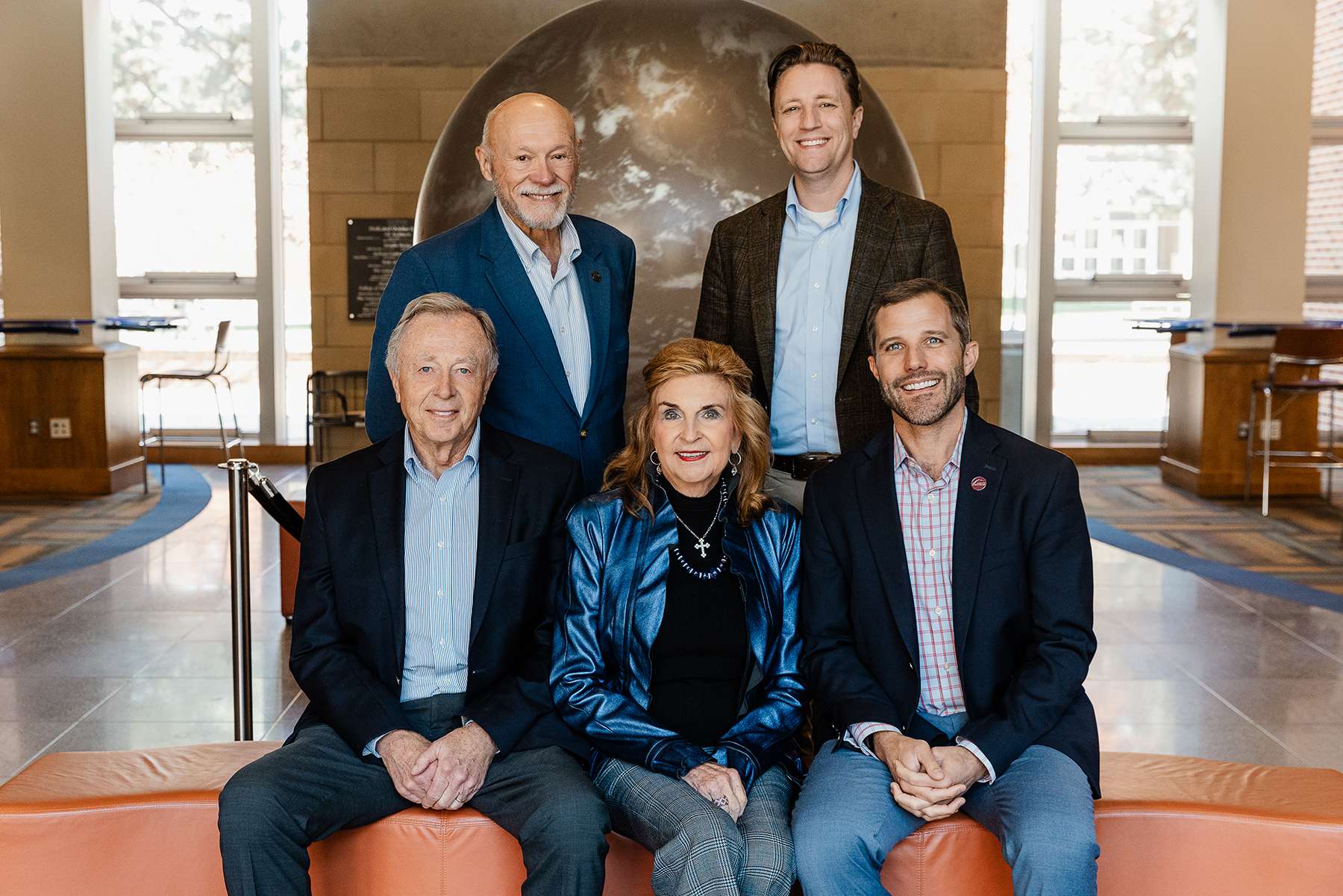
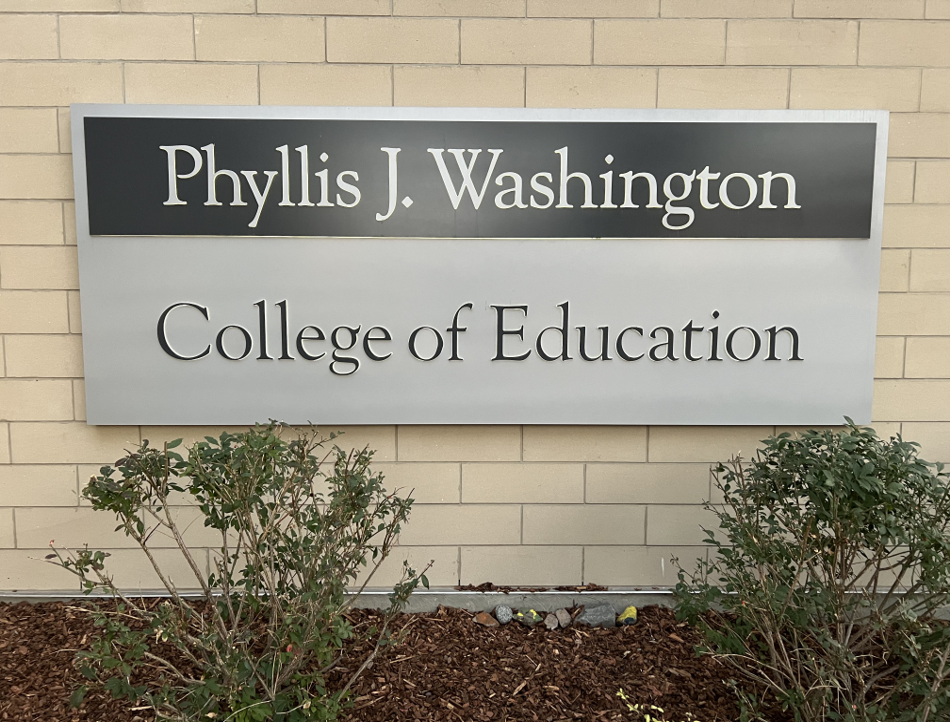
The University of Montana Foundation and the Phyllis J. Washington College of Education have just issued a press release announcing a $9.4M grant from the Dennis and Phyllis Washington Foundation to support positive education at the University of Montana and throughout the state. I am humbled to hear of this amazing support and immensely grateful to Phyllis Washington and the Washington Foundation for their vision and generosity.
Specifically, these funds will support the educational journey of prospective Montana teachers and school counselors and will grow our efforts to address the emotional and behavioral health of Montana educators and students through positive education. As you may know, thanks to a previous grant from the Arthur M. Blank Family Foundation, I’ve been very involved in promoting the principles of positive psychology and education throughout Montana. I look forward to continuing my work with Montana teachers and administrators. This incredibly generous grant will deepen our support for current and future Montana educators, including professional school counselors. Together, we will work to improve the emotional and behavioral health of young people in Montana and beyond.
If you have questions, please reach out to the names and numbers listed in the official press release.
P.S.: Along with my thanks to the Washington Foundation, in keeping with the principles of positive psychology, I want to emphasize my gratitude to Dr. Dan Lee, Dean of the Phyllis J. Washington College of Education, and the extremely competent and capable team of Erin Keenan, Erin White, and Jason Newcomer from the University of Montana Foundation. Of course, many of you who receive this message are also on my gratitude list. I hope you can feel good feelings deep inside yourselves about your own contributions to creating a better future for Montana youth, educators, and schools. I look forward to working collaboratively with all of you in the future.
If you’re an educator, you can sign up for the “Spring” version (starting in January) of our Happiness for Teachers course. This course has been very popular among teachers who have taken it. Here’s what one Montana educator emailed me first thing on January 1:
John, your course is fantastic! It absolutely exceeded my high expectations, and I find myself reflecting on and applying things I’ve learned all the time. There’s likely some recency bias, but I’m trying to think of another college course I have taken that is as meaningful and applicable for me. It has helped my overall happiness and well-being both personally and professionally, and it has given me the ideas and language to share with and support others (wife, children, students, coworkers, etc.). Thank you!
If you’re an educator or you want to share this information with an educator, read on for the details.
To Register
This semester, we have a reduced price for Rural Montana Educators: $95. We also have our usual extremely reduced price for Montana Educators for the Big Seven School Districts: $195. Either way, thanks to a grant from the Arthur M. Blank Family Foundation, the price is a bargain for 3 Grad Credits from the University of Montana.
Because we want to support teachers, our approach to grading is flexible. Teachers can select from one of three grading options.
Teachers can receive 3 graduate credits from the University of Montana – graded using a Credit/No Credit system. That means you need to complete enough course assignments to obtain 70% (you can do more). Then you will pass the course and receive the credits. Even if you get an NCR in the course, you can qualify for a pro-rated number of OPI credits based on your percentage completion.
Teachers can receive 3 graduate credits from the University of Montana – graded using a traditional “letter” grading system. Some school districts require a letter grade to count the course toward your payscale.
You can receive up to 48 OPI credits. This option is especially useful if you find you’re unable to complete at least 70% of the assignments. You can receive a pro-rated total of OPI hours . . . depending on how many hours of the course you complete.
How Much Work will the Course Be?
This is a graduate-level course, and so there’s a significant workload. If you can take the course for credit/no credit (see above), then you only need to obtain 70%, which makes the workload lighter.
At the ½ point in the course, we will ask all participants to inform us how they want to take the course (for credit/no credit; for a letter grade; for OPI hours). If you get ½ way through the course and you think you’re not going to pass (or get the grade you want), then you can take it for OPI hours. In the end, even if you get an NCR in the course, you can still qualify for a prorated number of OPI hours.
To complete the whole course, teachers need to complete the following assignments:
Initial and Final Happiness Assessments (20 points each; 40 points total): During the first and final days of class you’ll be given a link to a happiness assessment packet via Qualtrics. We’re collecting this data to support the grant we have that enabled us to offer you this course at a steep discount.
Active Learning Assignments (complete 10 of the 14 options available; 10 points each; 100 total points): These are short assignments designed to get you in the habit of incorporating happiness-related activities into your life. These assignments are graded pass (10 points) or not pass (0 points). To get your 10 points you need to complete the bare minimum of a thoughtful response.
Weekly Discussion Board Postings and Comments (30 posts; total 60 points): We want you to engage with each other on how you might apply what you’re learning in this course. To encourage this, you’re assigned to make two posts each week (30 total posts). We’d like you to make one post about the weekly course content (lectures and other assigned content) and one post commenting on the post of someone else.
Development of One Educational Lesson Plan (3-5 pages; 40 points): Pick a topic from class (e.g., savoring, gratitude, acts of kindness, etc.) and then write a lesson plan that you could potentially use in your educational setting. You DO NOT need to implement these lesson plans; the assignment is only to create them.
Live online or recorded final pub quiz (30 points, plus prizes): During the last Unit of class John Sommers-Flanagan will hold a live and synchronous open pub-style happiness trivia quiz. If you participate live you can win prizes. Whether you participate live or watch the recording, you can earn 30 points by turning in the answers to the 30 happiness trivia questions.
Substitute (or Extra) Credit (40 points): You can engage in 5 or more sessions of individual counseling with a Master’s student at the University of Montana. You can use these points to substitute for another assignment, or as extra credit.
How Much Time will This Course Take?
The video-recorded lecture component of the course takes about 45 hours to view.
If you complete the whole course, assignments outside of class will take approximately an additional 100 hours.
For the Fall, 2024 version of the course, there will be 15 weeks—although you’ll be working at your own pace. Assuming you worked at an even pace over the 15 weeks, anticipating about 10 hours a week for the course is a reasonable estimate.
Our Goals
We want to support teachers because we view them as unappreciated, underpaid, and highly stressed by the demands of their jobs. We have three objectives:
Offer a high quality and low-cost course to Montana teachers and other school personnel. The fee is $195 for 3-credits.
Focus the course content on emotional wellness—teachers can apply this content to themselves, and possibly also apply it in their classrooms.
By offering a 3-credit graduate course through the University of Montana, teachers may qualify for a salary bump.
Here are a couple of un-flashy memos describing the courses, just in case you want to download and share them. First, the Rural Educator section:
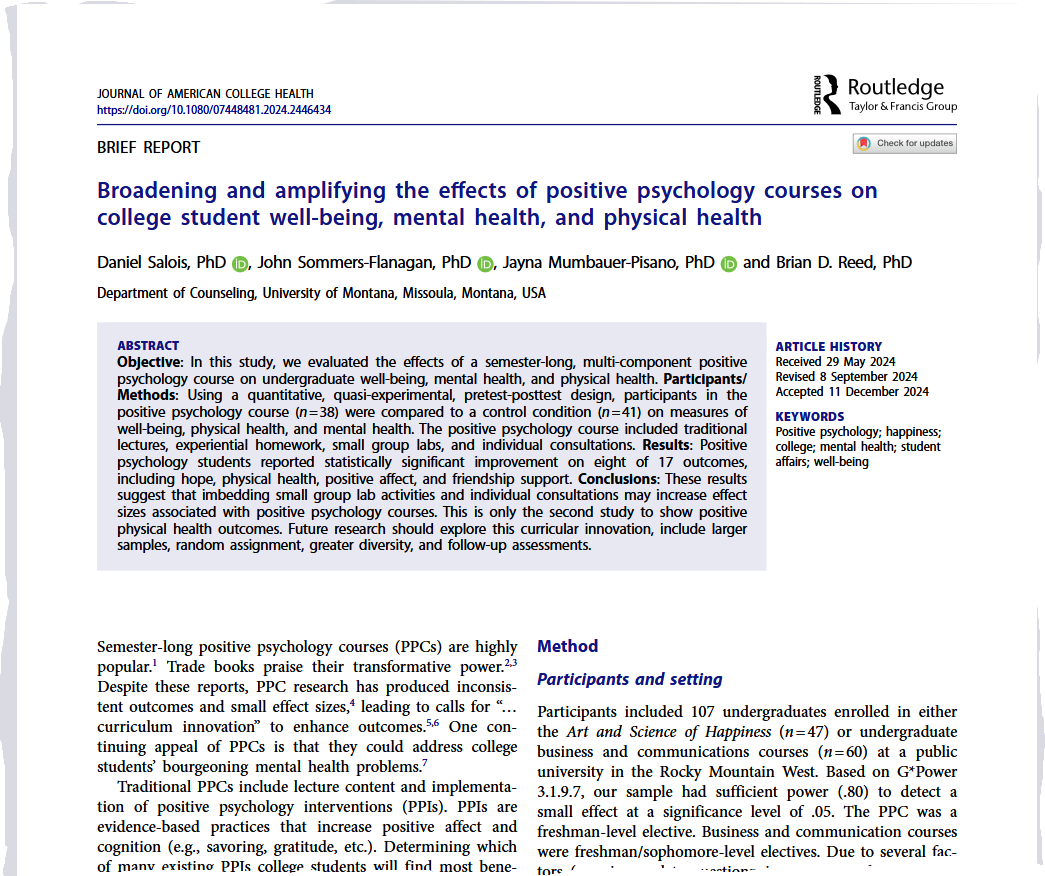
We have more good news for 2025. At long last, we’ve published a research article based on Dr. Dan Salois’s doctoral dissertation. Congratulations Dan!
This article is part of growing empirical support for our particular approaches to teaching positive psychology, happiness, and how people can live their best lives. As always, I want to emphasize that our approach is NOT about toxic positivity, as we encourage people to deal with the deep conflicts, trauma, and societal issues that cause distress — while also teaching strategies for generating positive affect, joyspotting, and other practices derived from positive psychology.
One of the big takeaways from Dr. Dan’s dissertation is that our happiness class format may produce physical health benefits. Also, it’s important to note that this publication is from early on in our research, and that our later research (currently unpublished) continues to show physical health benefits. Exciting stuff!
Whatever the influences, while in grad school, I got slightly obsessed with predicting human behavior. My four roommates were an inspiration. They were wonderful, and, they provided entertaining signs of four different DSM personality disorders. Although not officially “diagnosable,” they each had distinctive “features” of compulsive, histrionic, narcissistic, and dependent personality disorders.
I was convinced I could predict the behavior of my roommates based on their personalities. As one example, during a group therapy session involving nickname-sharing, my so-called “narcissistic” friend shared that his nickname was “Lord.” As another, my “dependent” friend took to following me around and calling me his “hero.” I could go on, but this blogpost is about the future and not the past.
But first, four more historical reflections: (1) I developed my own totally bizarre personality test (the Sommers-Circles), (2) I did my thesis and dissertation on personality and prediction, (3) I discovered, as it turns out, personality is a rather poor predictor of human behavior, and (4) I also discovered that nothing is a very good behavioral predictor, and humans are more unpredictable than not.
Now, with my thesis 40 years behind me, and despite scientific evidence against anything being predictable, I still believe—as the famous/infamous social psychologist Daryl Bem wrote in 1974 (paraphrasing here), “That my predictions are right and the research is wrong.”
In honor of my lifelong prediction obsession, here are my Predictions for 2025.
On January 8, I, along with the Montana Happiness Project, will announce big, luscious, and wonderful news.
In early 2025, we will rediscover once again that, in fact, the body does NOT keep the score, but that the brain and body keep the score together, just as nature and nurture work together, despite annoying efforts by the misinformed to keep them apart.
To rebalance our collective worldwide preoccupation during the first half of the 2020s with TRAUMA as being at the root of everything and everything being TRAUMA, the second half of the 2020s will be about growth and resilience in the face of stress and oppression.
After January 20, Trump will continue to be Trump. What will that mean, specifically? First, he won’t suddenly become “presidential” (although the media will continue to expect him to). Second, he will lie about nearly everything, nearly all the time. Third, he will take credit for positive local and world events, and avoid or deflect responsibility for anything negative. Fourth, he will be cruel toward anyone he views as (a) beneath him or (b) unloyal. The corollary to this is that he will not be cruel toward Elon Musk or Vladimir Putin, but people like Laura Loomer will be left out to dry like laundry in the wind. Fifth, cracks will form within his circle of influence, which liberals will gleefully interpret as signs of his imminent fall, but he will carry on halfheartedly with his public agendas, and full-heartedly with his private agenda of making as much money as possible, while stomping on the poor, needy, and vulnerable.
Other than a few rogue reporters here and there, the press will continue to snuggle up to Trump in ways that make many of us feel sad about journalism.
Similar to #3, other than a few rogue republicans, when it comes to Trump, the GOP will continue to be unable to find their voices, souls, and morals. . . in ways that make many of us discouraged about the future of the country. This charade of cooperation with emperor trump will begin deteriorating in the run-up to the midterm elections, unless the so-called emperor coalesces power in ways that allow him to destroy the constitution and democracy.
The Buffalo Bills will defeat the Detroit Lions 36-30 in Super Bowl LIX.
Around the time of the Super Bowl, Trump will fire someone from his cabinet. Although Ramaswamy would be likely, his position will only ever be pretend, and so his squeaky voice will only fade into the background.
Auburn will defeat Duke, 80 to 76, for the NCAA basketball championship.
The price of groceries will NOT come down. If anyone in the media has the courage to mention high grocery prices, Trump will blame it on Biden, Harris, Obama, “Crooked” Hillary, fake news, or whomever is most convenient.
Global and local temperatures will continue to rise. Politicians and businesses with corporate interests in fossil fuels will continue to question climate science . . . just as they have since the 1950s, when Edward Teller and others began warning the world about carbon.
The New York Mets will defeat the Los Angeles Dodgers in the World Series, in six games, partly due to Dodger’s manager Dave Roberts continued affinity with his “gut” over analytics.
Suicide rates in the U.S. will remain stable, at or near modern highs.
Taylor Swift will marry her boyfriend.
The rate of worldwide species extinction will continue at unprecedented rates, matched only by the collective denial of politicians and corporations (which, as it turns out, are not people).
Jennifer Lopez will marry Michael B. Jordan, resulting in J-Lo-Jo.
At some point, someone will make the obvious point that even though the media loves rich people, most (not all) rich people have gotten rich through selfishness and greed, and consequently, putting rich people in charge of the country will not work out well for anyone other than the rich people.
Like other predictions by famous pundits, no one will remember this blog, and consequently, I’ll be free to boldly, irresponsibly, and confidently make predictions for 2026, despite having no successful track record or credibility for making predictions.
But one thing is certain: January 8th will be big news day here. . . on this blog, and elsewhere. . . so stay tuned.
Happy New Year,
John
P.S.: Here’s a copy of the 1974 (Bem and Allen) article that inspired me to pursue the science of prediction.
Tomorrow is a celebrated holiday involving gratitude. Given the American history of mistreatment, oppression, and abuse of indigenous peoples, I have trouble saying the holiday name. You may think I’m being over-sensitive or politically correct, or you may find yourself seeking some other label to describe me. No worries, I’m here to help. My current labels (which switch with considerable frequency) are grumpy and discouraged.
I know better than to dwell too long on my grumpy and discouraged thoughts, feelings, and somatic complaints. Those of you who know me well know that it makes me grumpy to even use the word somatic, and so the discouragement is deep. While I’m drilling down into my negativity, I’ll add that it also makes me grumpy to hear the words “fight-or-flight” and “brain shut-down” and “amygdala hijack” and “PHQ-9 or GAD-7” and “mental illness” and the mispronunciation of “Likert” and everything else our culture is using to push us into negative mental and emotional states—and keep us there.
I also know that some of the preceding linguistic pet peeves may seem cryptic. That’s okay. I like being mysterious. I’ll just say that I would prefer “amygdala hijinks” over “hijack,” and leave the mystery unsolved.
Not surprisingly, the bigger laments are what give the smaller laments most of their negative power. My bigger laments are probably obvious, but here are a few: How did we develop into a culture where the voices and opinions of people like Andrew Tate and Joe Rogan shape the psychology, emotions, and behavior of so many young men? How did we become a nation that could elect a convicted felon, rapist, racist, sexist, reality television star as the next president? When did Christianity take a turn and become a narcissistic, nationalist, anti-immigrant movement? How did our mainstream media become an entity that gives voice to social media posts from the president elect? And, because the president elect is a well-known serial and pathological liar, how did the media decide they should center their reporting around his likely dissembling bloviations as potentially truthful statements?
I do have to admit that it makes me a little bit happy to use the word bloviations. That was fun.
Now that I have you (my six faithful readers) grumpy and discouraged along with me, maybe I should pause to take stock of the many things and people toward whom I feel gratitude. If, by chance, you’ve also been feeling your share of doom and gloom, I hope you’ll consider joining me in a gratitude activity.
First in line is Rita. Only minutes ago, while planning a few Turkey Day dishes, I offered up one simple suggestion that may have required only one or two brain cells and could easily have been brought forth during a so-called fight-or-flight brain shut-down. Her response of, “That’s a REALLY good idea!” made me laugh out loud (even amidst my gloomy mood). This small interaction reminded me of the many ways that I am lucky to be supported and inspired by Rita every day.
Our children (and son-in-law) are basically overachieving geniuses who work every day to make the world a better place. I won’t go into details here, but this is more good fortune on a rather magnificent scale.
This past weekend I hung out with my sisters, attending a Bat Mitzvah with my Jewish cousins who welcomed us into their celebration with open arms and hearts. We mercilessly teased each other, laughed together, played games, and did what family does. My sisters and I often marvel at our mutual family experiences . . . as given to us by our amazing parents. More big gratitude.
First thing this morning, I got to lightly supervise a few interns who are facilitating a group for dads, prepping to present to classrooms of 8th graders, and being coached by Dylan Wright, who just might be the most dynamic presentation coach of all time. These young people are smart, capable, and committed to being therapeutic forces in the world. . . and I get to work with them.
Tomorrow Rita and I will have dinner with a long-time friend who, having already made substantial contributions to the mental health of a multitude of Montanans, invited us over to help her eat up a frozen turkey that she surprisingly found in her freezer. We have gratitude to her for the past, present, and future.
Just in case you’re wondering, the empirical research on gratitude is pretty fantastic. Focused and intentional gratitude will not immediately transform your life, but in general, gratitude practice is linked to improved mood, increased positive communications with others, hope, and improvements in physical exercise. That last one is as cryptic as my linguistic pet peeves. How could gratitude make you exercise more? Nobody knows. All I can say is this: How about you practice gratitude tonight, tomorrow, and into the future and then see if it helps you exercise more? As B.F. Skinner might say, we should all experiment with our experiences.
Given all the world-wide and local reasons to be grumpy and discouraged, my plan is to counter those feelings by spending more time being grateful. I know it won’t fix the world . . . but I know it will create nicer feelings . . . and that, I suppose, is plenty good for now.
Earlier this week I was asked to write a very brief stump speech for positive education. I’ve never written a stump speech. . . and mostly feel good about that. For this stump speech, I decided to stick with very basic facts or tendencies associated with positive psychology and positive education.
Here’s a hastily written first draft. Feel free to comment and make recommendations as you like.
*********
Positive education, as we define it at the University of Montana, is based on three essential psychological truths (or tendencies).
Most people are naturally compelled to focus on the negative, as captured by the question: “What’s wrong with you?”
The things and experiences that we pay attention to, will grow.
We are better at growing strengths than we are at getting rid of problems or symptoms.
These truths explain why current approaches to education unintentionally grow negative emotions and symptoms like anxiety, depression, and trauma. These truths also explain why we need to train all educators, counselors, and students to overcome their tendency to over-focus on the negative, and instead systematically focus on growing student, teacher, and administrator strengths, skills, resources, and virtues.
Positive education is the best path forward for education in Montana and beyond.
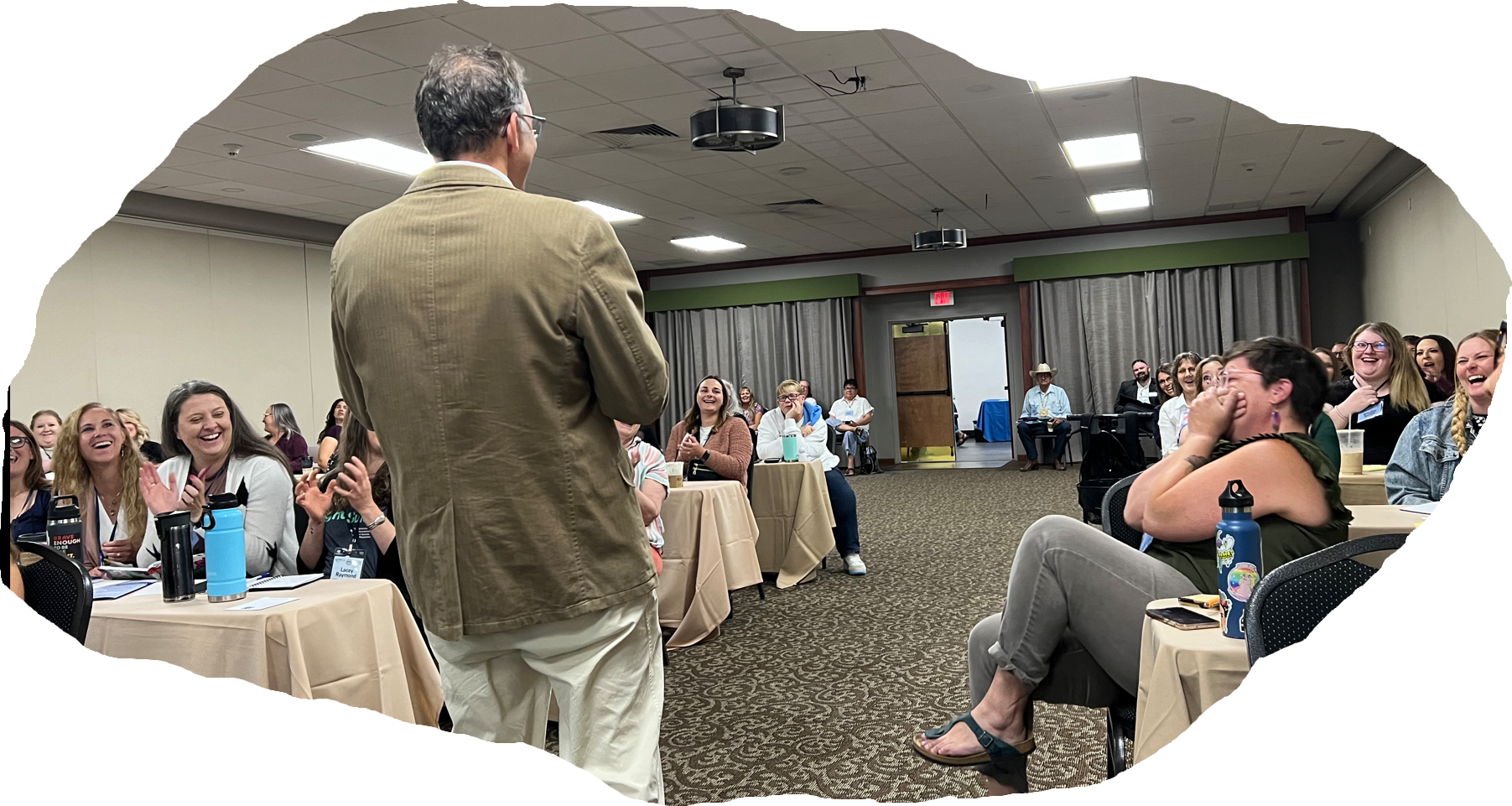
[I love the preceding photo because I’m doing a workshop on suicide in Billings, Montana, and despite the content, the participants are clearly having a good time]
Sometimes people ask me if I have presentations coming up. Other times they ask me about recent presentations. For reasons related to my own inability to be more organized and behave responsibly, I haven’t been very good at inserting “upcoming events” into my schedule, or at sharing links with readers about recent content that’s available online. Today’s post is my effort to address my irresponsibility.
September 11, 2024 – JSF presented a day-long ONLINE workshop, Conducting Parenting Consultations on behalf of Families First. Missoula, MT. Here are the ppts for the Parenting Consultation workshop:
September 26, 2024 – JSF presented a day-long IN-PERSON workshop, Tough Kids, Cool Counseling on behalf of Families First. Missoula, MT.
October 10, 2024 – JSF presented a day-long IN-PERSON workshop, Strengths-Based Suicide Assessment and Treatment on behalf of Tribal Health, Ronan, MT.
October 24, 2024 – JSF did an on-air guest interview on Evidence-Based Happiness for Teachers on a South Korean radio station. https://youtu.be/xYdJOInpAkE
November 6, 2024 – JSF presented on Let’s Pursue Happiness . . . Together (with our children) to the Washington Middle School Parent Teacher Association (PTA)
November 7, 2024 – JSF presented IN-PERSON on Why We Should Be in Pursuit of Eudaimonia (Not “Happiness”) for the University of Montana Alumni Association. Missoula, MT.
UPCOMING ACTIVITIES AND EVENTS
November 13 – JSF is presenting Let’s Pursue Happiness Together [In our schools . . . with our teachers . . . and for our children]ONLINE to the Montana Office of Public Instruction Montana Student Wellness Advisory Committee.
November 14 – JSF is presenting Happiness and You: Methods for Managing Your MoodsIN PERSON at the annual statewide Future Farmers of America (FFA) conference at MSU in Bozeman, MT.
December 4 – JSF is presenting a one-hour workshop on Strengths-Based Integrating Strengths-Based and Traditional (Medical Model) Approaches to Suicide AssessmentONLINE to the Professional Counseling Association of Montana. Link unavailable for now.
December 6 John Sommers-Flanagan is presenting an all-day ONLINE workshop for mental health professionals titled, Tough Kids, Cool Counseling, on behalf of the Vermont Psychological Association. Info is here: https://twinstates.ce21.com/speaker/john-sommersflanagan-2295709
January 10 – JSF is doing a 2-hour ONLINE workshop titled, Strategies for Integrating Traditional and Strengths-Based Approaches to Suicide, through the Cognitive Behavior Institute. You can register here for $25.00: https://www.pathlms.com/cbi/courses/77936#
The place to click if you want to learn about psychotherapy, counseling, or whatever John SF is thinking about.