
Category Archives: Happiness

The Three-Step Emotional Change Trick, Revisited (Again) . . . with a side note on plagiarism

I’ve said it before and I’ll say it again: I have a friend who repeatedly espouses the glories of redundancy. Maybe that’s why some politicians stay on-message, regardless of the veracity of their statements. Of course, George Orwell and Hannah Arendt also commented on redundancy as persuasion, and not in a good way. I should emphasize that my goal for using redundancy and writing about the three-step emotional technique again has nothing to do with shaping your reality through political messaging.

When I presented on positive psychology to a bunch of UM STEM graduate students back in August, 2022, I made it very clear that I was not advocating toxic positivity. Nevertheless, in one of the student evaluations, someone complained that all I was doing was telling graduate students to “Cheer up.” Oh my. Sometimes people just hear what they want to hear. That’s a problem with over-valuing “lived experience.” When we over-value lived experience, then everything is viewed through our own, usually narrow and biased, personal lenses. Adler called this private logic. Too much private logic is too much private logic. Although we should strive to value, learn from, and share lived experiences, we should also have a shared value of this thing called . . . wait for it . . . science!

The next time I presented to the UM STEM grad students (in January, 2023), I made an explicit point of emphasizing my “non-toxic positivity street cred” by beginning the lecture with a short lesson on the three-step emotional change trick (which, BTW, with inspiration from Alfred Adler and Harold Mosak, we created as a youth psychotherapy technique in the mid-1990s). You can even find our (with Rita) original three-step article here: https://www.tandfonline.com/doi/abs/10.1300/J019v17n04_02 and a later book chapter here: https://psycnet.apa.org/record/2002-01308-098 and, of course, I’ve written about it on this blog, and have a youtube video demonstration: https://www.youtube.com/watch?v=ITWhMYANC5c, yada, yada, yada.

While presenting the 3SECT (which is what cool people call it) to the STEM students, there was a woman sitting toward the back. She had stationed her 8-year-old son still farther back, where he was sitting, head down, playing on her phone. I did the 3SECT thing, including the famous “And so I put my cat on my head” scene, emphasizing throughout, that the WHOLE reason for the 3SECT existing was because we should NEVER SAY CHEER UP to anyone, anytime!

The next day, I received the following email from the anonymous woman in the back (who generously gave me permission to share it here):

Hi John,

I was at your happiness seminar yesterday and was very disappointed I had to leave early. You may have noticed my son (who is 8) was sitting in the back playing a game on my phone during the seminar. I was delighted to find out this morning, while my 6-year-old daughter was having a meltdown trying to do her hair for school, that my son had been listening and absorbed your 3-step emotional change trick. He remembered the whole thing, and he asked his sister this morning if she wanted to learn it, but only if she wanted to change her own mood. He was clear that it wasn’t because he was trying to tell her to cheer up. He heard it all yesterday! Thought you might enjoy that little anecdote.

A few days later, she wrote:

We have gotten a lot of mileage out of your emotional change trick in the last few days.

I have to admit, I absolutely love it when people listen and get the message, but I truly and deeply love it EVEN MORE when 8-year-olds absorb messages while allegedly playing on a cell phone. I believe this may just be the scientific evidence (or is it my lived experience) I needed to validate that I am not and never have been a proponent of toxic positivity.

One other notable note. When searching (via Google) for my very own 3SECT video, I found that a counselor in Tennessee has copied one of my three-step blog posts and posted it as his own blog post. I was gobsmacked—with annoyance and flattery in equal proportions. If you want to read the blog post worthy of plagiarism (not the plagiarist’s version, which is the same, but my version that was so darn tempting that it literally caused plagiarism, here you go: https://johnsommersflanagan.com/2020/04/15/the-three-step-emotional-change-technique/

I’m ending now with a few core messages:

  • Don’t say “cheer up” to anyone.
  • Don’t get too over-focused on your own lived experiences, because, after all, everyone has their own lived experiences, and we should complement them all with scientific knowledge.
  • Don’t plagiarize.
  • If the person you plagiarized emails you, asking you to stop plagiarizing or provide a citation, don’t ignore that person.
  • And, whenever appropriate, follow in the anonymous 8-year-old’s footsteps and spread the good mood – without saying cheer-up!

The Acts of Kindness Challenge

On TikTok, people often post challenges. A couple years ago, one of my former students reached out to me for a consultation because he was getting an unusual number of young clients reporting psychotic symptoms. Turns out there was a TikTok challenge to see if kids could trick their counselor or psychotherapist into thinking they were psychotic. This sort of “challenge” just turns me speechless.

But, no worries. I’m never speechless for long.

Today I’m issuing my own non-TikTok challenge. Along with wishing you all Happy Random Acts of Kindness Day, I’m challenging you to adopt an attitude of kindness.

Random Acts of Kindness Day has been celebrated since 1995. Although I love randomness and kindness, as some of you already know, I believe our efforts toward kindness should be more than just random. We should put value into being a kind person, have a kindness intention, and then be waiting and watching for kindness opportunities around every corner.

Just in case you want a copy of my “Intentional Acts of Kindness Homework Assignment,” here it is:

Good luck with the Intentional Acts of Kindness challenge. If you do something kind and feel an impulse to share it, please share it as a comment on this blog, or through your preferred social media platform.

And now, I present you with a kindness opportunity.

Hana Meshesha, one of our University of Montana doctoral students in counseling, is conducting a qualitative research study. I’m posting her call for participants below. If you or someone you know meets the criteria to participate in her study, please contact Hana. Her contact information is also below.

Hello! 

My name is Hana Meshesha and I am a doctoral candidate in the Counselor Education and Supervision program at the University of Montana. I am conducting a qualitative research study on the experience and process of surviving from sexual trauma for individuals identifying as part of a minority/underrepresented group. My goal is to develop a framework to better support survivors of sexual trauma. This research is approved by the University of Montana Institutional Review Board #213-22.  

If you experienced sexual trauma and identify as a part of a minority/underrepresented group based on your sexual orientation, gender, race, and/or ability status, I would appreciate your participation in this study. You are eligible for this study if you meet all of the following criteria:  

  • Identify as a survivor of adulthood sexual violence and the sexual trauma is no longer intruding on your daily functioning
  • Have disclosed your experience to another person prior to participating in this study 
  • Are 20 years of age or older 
  • Identify as part of a minority/underrepresented group based on your gender, sexual orientation, disability status and/or race 
  • Have not experienced childhood sexual abuse/trauma.

Participating in this study involves two 60-minute interviews focused on your process of surviving and healing from the experience of sexual trauma. If you are interested and willing, you will also be asked to share a poem, picture, song, or any artwork that represents your journey of surviving from sexual trauma. To participate or ask any questions related to this study, please contact me at hana.meshesha@umconnect.umt.edu or 406-303-1794. 

Thank you for your time and consideration.  

Hana Meshesha 

My Political Platform . . . and Tomorrow’s 1st Annual Education Summit in Missoula

I have a political platform. I’m not running for public office, but I still share my platform when it seems appropriate and the time is right.

Tomorrow will be an appropriate and right time for me to share my platform.

The nice thing about having your own personal political platform is that it never involves committee meetings. I don’t have to vote or risk rejection of my excellent ideas. I am solely responsible for my personal political platform.

A while back, I got into trouble for expressing my political views in a newspaper Op-Ed piece. The Office of the Commissioner of Higher Education contacted the University of Montana Legal Counsel asking her to issue me a stern warning. Apparently, I was supposed to have a line along with my Op-Ed byline saying something like, “The views expressed herein are solely the views of John Sommers-Flanagan, and not representative of the University of Montana.”

Clearly, I was in the wrong and admitted so. Not having the UM disclaimer statement was an oversight for which I was, as usual, solely responsible.

But I was still annoyed, and so I wrote the UM Legal Counsel and asked her if I should include similar comments the next week when keynoting the Montana statewide “Prevent Child Abuse” conference. I explained that I was going to “come out” against child abuse. Would OCHE be okay with that? I was also going to recommend one (among many) evidence-based solution for child abuse that involves increased government provision of financial and material support to low income families. I went on to note that I’m pro-mental health and against violence. Should I disclaim the University of Montana in all my books, articles, speeches, and conversations? I told her she could share my questions with OCHE. Fortunately, her judgment is better than mine and she just emailed me back with a calming, soothing, and understanding tone.

All this is a lead-up to tomorrow.

Tomorrow is the First Annual Missoula Summit on Education. Luckily, Dr. Erica Zins, the 2017 Montana School Counselor of the Year and current MCPS Student Services Coordinator, asked if I would be willing to provide a presentation for the Summit. I eagerly said yes, yes, yes, choose me! Now I have the good fortune of getting to do three separate talks tomorrow.

My talks are titled, “Weaving Evidence-Based Happiness into the Lives of Students and Educators” at 9am and repeated at 12:15pm and then “Engaging and Working Effectively with Parents” at 2:15pm. They’re all in the Sentinel H.S. auditorium. I’ve got about 210, 175, and 100 MCPS staff signed up for my talks. . . which is humbling because many MCPS staff have already heard most of my stories and jokes.

I never told Erica that my true motive for being so eager to talk at the Summit was related to my personal political platform. Tomorrow, I will have three chances to begin workshops with my short stump speech. I’m stoked about this. Just in case you’ll be missing tomorrow’s event, here’s a written version of the highly anticipated stump speech.

Nothing is more important for American prosperity and success than teachers and other public-school employees. Everything runs through education. Think about it. Economic vitality? We need people with knowledge, skills, and business acumen. Healthcare? Who wants uneducated healthcare personnel? As far as I’m concerned, the smarter and more well-educated my doctor is, the better. How about the environment? Only through education can we learn to be great stewards of the earth. And relationships? We need awareness, knowledge, and skills to create better marriages and families, be better parents, and have healthier, empathic, and equitable relationships with all people—including the full range of diverse backgrounds, ethnicities, and identities.

To summarize, my platform is EDUCATION. EDUCATION in general, and PUBLIC EDUCATION in particular . . . along with all the school personnel that make education happen. They need and deserve support, appreciation, and pay raises.

And . . . to make the OCHE people happy, I will also be emphasizing: Although I am a proud University of Montana faculty member and huge supporter of, and believer in, the University of Montana, I am solely responsible for the views on education expressed in this blog, as well as the views I will express tomorrow at the Summit.  

For anyone interested, here’s a draft version of the Weaving Happiness . . . ppts:

Love One Another

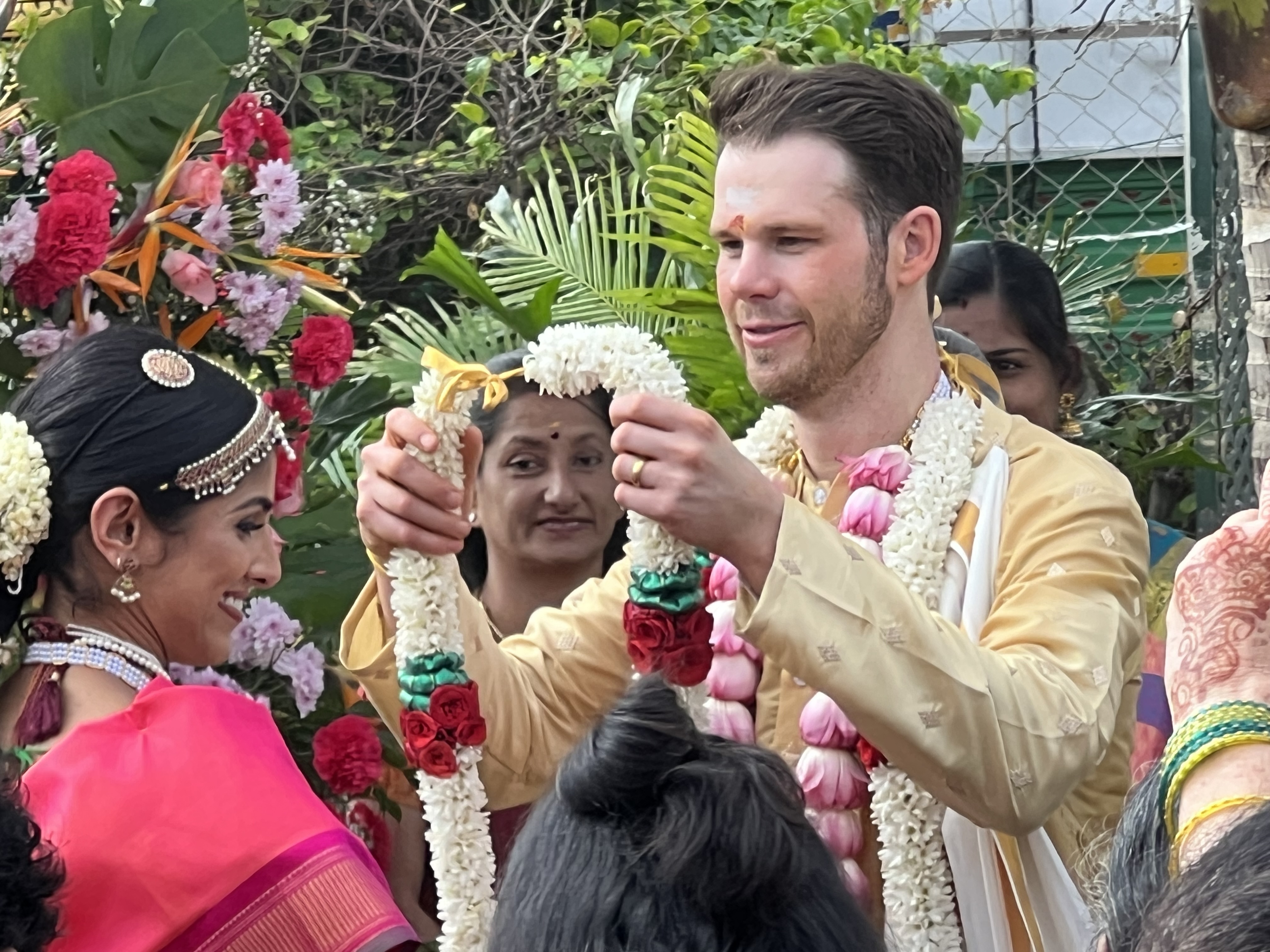
Last week I was dancing and singing in India at my nephew’s wedding. This week I’m jet-lagged in Missoula. But the afterglow continues.

Being at a wedding, it was hard not to think of my mother. She loved weddings and always wished for everyone to find love.

My sisters had similar thoughts. We reminisced and projected my mother into the scene of my nephew marrying an Asian Indian woman in a Hindu ceremony. We wished she could pop back into the world and join in.

Mostly, my mother was shy and insecure. She didn’t learn to drive until age 34. I often wished she had more confidence.

But there was one place where my mom found her voice, early and often. For mysterious and obvious reasons, she became anti-racist in the 1950s, before anti-racism was a thing. She delighted in visits from my father’s Japanese friend, Carl Tanaka. When a Black family moved onto our all-White dead-end suburban street, she was the first to greet them with welcome gifts. She then sat my sisters and I down, and told us with piercing clarity that we would ALWAYS treat every member of that family with nothing but respect and kindness. They quickly became our friends. I have great memories of hanging out with my friend Darrell, who was the closest to me in age and in school.

What I didn’t understand about my mom’s anti-racism—until last week—was that she also had a solution. My sisters told me that my mother’s favorite solution to all that ails the world was inter-racial, inter-cultural, and inter-religion marriage. Of course, I’m not naïve enough to think that any single strategy could solve racism, but last week, during a three-day Hindu marriage ceremony, I returned home transformed and preoccupied with the idea that we can and should love one another.

The internet tells me that love one another has Christian Biblical origins . . . and more. Here’s an excerpt from a site that discusses “love of neighbor” in Hinduism.

Love of the neighbor or the “other soul” is a fundamental requirement for a functioning Hindu who aspires for final liberation from this world. Any injury or insult inflicted upon the other soul is ultimately injury inflicted on oneself—or worse still, the higher being. Neighborly love is integral for one’s social existence in this world. The Anusana Parva (113:8) in Mahabharata encapsulates this wisdom and dictates that one should be unselfish and not behave toward others in a way that is disagreeable to oneself. [From: http://what-when-how.com/love-in-world-religions/love-of-neighbor-in-hinduism/]

The facts were that Stephen Klein married Sahana Kumar last week, in a beautiful coastal setting just south of Chennai, India.

In a marvelous stroke of luck, I happen to be Gayle Klein’s brother and Stephen’s Uncle John. Along with the dancing singing (which I may have overdone), I was completely taken by the intercultural love and acceptance. The Kumar family welcomed Stephen and all of us to be with them not only in the celebration, but in relationship. At the Sangeet, we were invited to dance a Bollywood and a Hollywood dance. We were terrible AND we were completely accepted. To be immersed in another culture, to learn about Hinduism, to experience glimpses of the Southern Indian cultural ways of being . . . was AMAZING.

In love and in relationship, we often fall short. It’s hard to love our politically different family members. It’s hard to love when we feel annoyed. Sometimes, as I heard the famous Julie and John Gottman say, it’s even hard to find the time and timing to love our romantic partners. But love is big and, thanks to my sisters and Stephen, Sahana, and the Kumars, I understand love a little better this week. The intent to love people who are different than us; the invitation to be in relationship across cultures and generations; the desire to be as loving as we can be . . . those are the ways of being my mom might be shouting from the heavens.   

Update on the Wright Stuff on Happiness

Several weeks ago, Dylan Wright (of Families First Learning Lab in Missoula) and I had a successful, albeit (speaking for myself) embarrassing fundraiser for his show, The Wright Stuff on Happiness, at the Missoula Public Library. At that time, we didn’t have the schedule for the show’s debut and season. Now we do . . . and so I’m happily sharing it here with you, so you can tune in and then share it with the world (or vice versa). 

The release of The Wright Stuff on Happiness has been scheduled to air, beginning December 12, on MCAT’s TV, channel 189 (Spectrum Cable) or https://mcat.org/watch/  on Mondays at 4:00 PM and Wednesdays at 6:00 PM! The schedule is below. You will also be able to watch the show anytime after it airs by going to The Montana Happiness Project YouTube Channel. We will post each episode as they air. To re-watch or share the teaser that we showed at the release party, please use the following link – https://youtu.be/t3YfBmjzqUo

Feel free to reach out if you have any questions, and here’s THE SHOW SCHEDULE! 

Dec 12th (4:00 PM) & Dec 14th (6:00 PM) – Dr. Dan Salois

Dec 19th (4:00 PM) & Dec 21st (6:00 PM) – Dr. Emily Sallee

Dec 26th (4:00 PM) & Dec 28th (6:00 PM) – Dr. Jayna Mumbauer

Jan 2nd (4:00 PM) & Jan 4th (6:00 PM) – Lillian Martz

Jan 9th (4:00 PM) & 11th (6:00 PM) – Dr. Nancy Seldin 

Jan 16th (4:00 PM) & Jan 18th (6:00 PM) – Dr. Sidney Shaw

Jan 23rd (4:00 PM) & Jan 25th (6:00 PM) – Hana Meshesha

Advanced Mental Health for the Jackson Construction Group

Three years ago (2019) I had the honor and privilege to be the first outside person to speak at a Jackson Construction retreat. The topic was suicide prevention. During our time at the Jackson retreat at Big Sky, Rita and I were touched by the kindness, authenticity, and engagement of the Jackson community.

On this rather frigid Montana day, I’m back with 130 Jackson employees at Fairmont Hot Springs. Once again, I’m honored and humbled to have the chance to speak. Knowing how hard it is to gain and maintain positive mental health, I deeply appreciate the chance to speak, and I hope the words and experiences I share are of use to the Jackson community.

Here is a one-page summary handout:

Here are the ppts:

Talking to MOLLI About Eudaimonic Happiness

Last night I had the honor of helping facilitate the World Premiere of “The Wright Stuff on Happiness” along with Dylan Wright and Hannah Zuraff and the Families First Learning Lab staff. Hannah posted a short video clip of the event on LinkedIn: https://www.linkedin.com/feed/update/urn:li:activity:6995246199964413952/?commentUrn=urn%3Ali%3Acomment%3A(ugcPost%3A6995246199159095297%2C6995248345623527425)&dashCommentUrn=urn%3Ali%3Afsd_comment%3A(6995248345623527425%2Curn%3Ali%3AugcPost%3A6995246199159095297)

After watching the video last night, I experienced an unplanned two-hour bout of insomnia wherein I replayed all the ways in which my behavior at the event (singing as a part of a group name that tune trivia contest) was embarrassing and regrettable. The good news is that I’ve studied insomnia and negative cognitions in the night enough to know that the middle of the night is a particularly easy time to exaggerate and negatively evaluate oneself. I (mostly) pushed out the cognitions with some mindfulness meditation, three good things, and music from David Bowie’s “Changes” (which had randomly or unconsciously gotten stuck in my brain).

This morning I’m presenting on the Art and Science of Happiness with the University of Montana’s Osher Center for Lifelong Learning. One core message from last night woven into today is that that we’re not striving toward unreflective toxic positivity, but instead, we’re working toward an awakened eudaimonic happiness, in the Aristitotean sense of living a balanced and meaningful life.

Here are the ppts for today’s talk:

I’m looking forward to spending time with the good folks and folx of MOLLI

Happy Monday!

Today: CBT Conference in Helena — Powerpoints

Happy Friday!

I’m in Helena today, learning and presenting at the Montana CBT Conference. This is a very cool event, organized by Kyrie Russ, M.A., LCPC, and including about 35 fantastic Montana professionals interested in deepening their knowledge of CBT principles and practice.

I’m presenting twice; below I’ve included links to my two sets of ppts (which may be redundant/overlapping with ppts I’ve posted here before).

Exploring the Potential of Evidence-Based Happiness

Using a Strengths-Based Approach to Suicide Assessment and Treatment in Your Counseling Practice

To Tweet or Not to Tweet: The Question of Quitting Twitter

Photo, courtesy of @rksf2/twitter

Last week, I tweeted that I was quitting Twitter, “For obvious reasons.” In response, several of my Twitter friends (you know who you are AND I appreciate YOU) noted that staying on Twitter and having a positive voice might be a better option than retreating to a location under Zuckerman’s umbrella. Hmm. Point taken. And so instead of completely quitting Twitter, this past week I put myself in Twitter time-out.

Over the past couple years, I’ve come to mostly like Twitter. There’s lots of aversive stuff, but following selected news outlets, researchers, a few Twitter-friends, and various renowned individuals helps with cutting edge news and perspective; it also contributes to me feeling “in the loop.”

Problems with Twitter, however, are legion. There’s an odd plethora of so-called mindfulness practitioners engaging in self-promotion. That’s ironic, but my understanding (and experience) is that Twitter is very much about self-promotion. That’s probably why the former guy (TFG) used it so prolifically. But only so many voices can fit into a Twitter feed, which leads to INTERMITTENT YELLING IN HOPE THAT SOMEONE WILL HEAR YOUR TWITTER-VOICE. Even TFG did lots of ALL CAPS. There may be no better means for getting your perspective “out there.” Whether the perspective is worthy of public viewing, that’s harder to discern.

Part of my current conundrum stems from the fact that I have a small sense of a small “Twitter community.” I enjoy liking and being liked by them. I can find cutting edge suicide-related research straight from several academics. But, along with the benefits, two days prior to the Musk takeover, my Twitter feed became suspiciously littered with so-called republican politicians. I saw despicable Unamerican, divisive posts from Marsha Blackburn, Marco Rubio, Kevin McCarthy, Lauren Boebert, Jim Jordan, and others whose names I’m conveniently suppressing. It was a line-up of political partisan trash the likes of which couldn’t have been better designed to push my buttons.

Of course, as someone close to me accurately observed (I’m paraphrasing now), perhaps rather than living in my own partisan echo-chamber, I should be more open to hearing messages from the “other side.” Not surprisingly, my buttons were pushed, yet again.

Maybe it’s already obvious to everyone else, but MY biggest problem with Twitter (and mainstream media and other social media and political debates and any opinion other than my own) is more about me than anything else. My inability to self-regulate and manage my own emotional buttons make the best case for exiting Twitter. If I can’t read antivaxxer Twitter posts without feeling the need to slap them upside the head with a rolled-up copy of the latest edition of the New England Journal of Medicine or bash them in the face with David Quammen’s “Breathless,” then maybe it’s time to stop tweeting. On the other hand, if I can recognize that all Twitter disagreements end the same way—with elevated animosity and mutual disgust—and instead, focus on being the most positive voice I can be, then maybe Musk won’t dysregulate me into quitting something I enjoy.

This past week without Twitter has been fine. I found plenty of alternative ways to agitate myself (haha). But I didn’t feel any Tweet-generated-angst. I also was out of the news loop. My wife had to tell me Lula won the Brazilian election. Woot-woot! If I’d been Twittering, I’d have known right away. I also missed following my daughter’s non-profit, social justice Upper Seven Law firm. Her tweets are awesome and she—along with other people in the habit of consciousness-raising and justice give me hope.

Here’s my new plan. I’m returning to Twitter this week, with adjusted expectations, and will closely monitor myself. Can I be a positive voice? Can I accept the reality that some people (and Bots and Trolls) are purposely spreading misinformation (without feeling agitated and unhappy)? Can I accept that I’m mostly powerlessness and irrelevant in the fight against racist, sexist, ableist, and classist forces seeking to inhibit growth in the lower and middle class, while sowing fear and hate? Can I add my voice (and Tweets) to the social media soup and stay mostly positive, while managing my expectations and NOT FEELING THE URGE TO YELL?

We shall see.  

The World Premier of “The Wright Stuff on Happiness”

On Sunday, November 6 from 6pm to 7:30pm on the 4th floor of the Missoula Public Library (the recent winner of the International Library of the Year award) Dylan Wright and I will co-host the brief and fantastic world premier of “The Wright Stuff on Happiness.”

You may be wondering, “What is The Wright Stuff on Happiness?”

The Wright Stuff on Happiness is a new Missoula Community Access Television show featuring Dylan Wright discussing, interviewing, and pontificating on individual, family, and community happiness. The Wright Stuff on Happiness is a program of Families First Learning Lab and is one of the initiatives of the Montana Happiness Project, L.L.C. (specifically, the Happy Media initiative).

At the World Premier, Dylan and I will introduce the show and Dylan will present a short series of video clips of never-before viewed footage. And then, we will engage the group with a never-before hybrid version of “Name That Tune” and Pub Trivia wherein Dylan and I sing songs and participants work in teams to win prizes by identifying the song title and artist.

Although the World Premier is a fundraiser for Families First Learning Lab and the Happy Media Initiative, you can also attend to learn and participate in the highly acclaimed and world renowned Name That Tune trivia competition.

Here’s the fancy flyer. I hope to see you there!