One of my 2026 goals is to post more often on my blog because my blog gets sad when I ignore it. So far, I’m not exactly knocking this 2026 goal out of the park. . .but the time is coming.
Today, I have several exciting things to share.
I’m heading to Grand Forks, North Dakota on Sunday, to present to a group of about 850 educators there. Here’s the link to that ppt presentation:
Then, I take a (hopefully) quick flight to Boston, where I’ll present (along with the wonderful Tammy Tolleson Knee) to about 500 educators in the Easton School District. Here’s a link to the Easton presentation on Tuesday:
Yesterday a Missoula school counselor emailed me and said she (along with a classroom that included one of my granddaughters) were watching a video of me teaching the three-step emotional change trick to some finger puppets. I had totally forgotten about that slightly bizarre 4-minute home-made video. Here’s a link for those of you interested in the bizarre, or who need a 4-minute emotional education video for a classroom of 6th graders. https://www.youtube.com/watch?v=NexXUNy_BaM
As a part of a presentation in Hawai’i that I didn’t attend (what’s wrong with me, I’m going to ND in January, but not HI??), I created a 9-minute video on the outcomes we’ve got for the first 451 educators who have completed our Happiness for Educators course. Dylan fixed up the video, so it’s a little cooler than it would have been. Here’s a link to that one: https://www.youtube.com/watch?v=S3cWziR5MDM
I know there are tons of terrible things happening on the planet and in the U.S. Wherever you are and whatever you’re doing, I hope your mid-January is going as well as the forces in the world will allow, and I hope for all things to get better soon. My wife and I have recently been reading about how experiencing positive emotions and joy—in the face of oppression—can be an act of protest and defiance. Of course, we should keep doing social justice along with our defiant joy, but intermittent joy is important too.
I’m done with New Year’s resolutions. This year, I’m changing from New Year’s resolutions to New Year’s intentions.
My first New Year’s intention is to be on time, which is why I’m writing this blog about nine days into 2026.
New Year’s resolutions, intentions, and goal-setting are distinctions with very little difference. You know what they say, “A rose by any other name still smells the same.” But, several years ago, New Year’s intentions became chic. That means if your goal—like mine—for 2026 is to become more chic, you should set intentions, because goals stink.
Whether we call them resolutions, intentions, or goals, ambition for self-improvement is based on one central idea in mental and behavioral health: We all want to be better, to do better, and to become better versions of ourselves.
But self-improvement has never been and never will be easy. What gets in the way? Almost anything. We get distracted. We lose motivation. We get in our own way. We get annoyed and enraged at a world over which we have no control and then give up on the things we do have control over. If you’ve become frustrated at improving yourself (or our American democracy), join the club.
Before I offer a list of tips for bending resolutions, intentions, or goals to your will—so you can remake yourself, here’s a big caveat: Nothing always works. Just because I list it below, it doesn’t mean it will work for you. Life is an experiment. To effectively change your behavior is a long and winding experimental path. Your first resolution, intention, or goal should be to learn as much as you can as you experiment (and intermittently fail) at your efforts for self-improvement. Now, here’s the list of ideas you can try to make yourself a better YOU in 2026.
Linger, reflect, and contemplate on what you want to change about yourself and your life. Impulsive goals last until you get to your next impulse. You may want to consult with someone about what you want to change and why. When building intentions, clarity helps. Finding your why helps too.
Don’t set DUMB goals. I could have suggested that you set SMART goals, but that’s boring and passé and I’m chic. DUMB goals are goals that involve factors outside your control. If your goal is to experience even more frustration then you’re already experiencing, then be sure to make your goal all about somebody else, like, for example, getting your romantic partner, your parent, or your child to communicate better or be on time or stop criticizing you. If you want a snowball’s chance of success, put the resolution, intention, or goal within your circle of control.
Make yourself a bad-ass plan. You shouldn’t rely on your mythical willpower or your vision board or somebody else’s plan. You know yourself. Make a plan that incorporates knowledge from your previous successes. Use your knowledge of your skills for avoidance and your tendency toward distraction to build yourself a unique plan for change.
Set yourself up for easy actions. Let’s say you want to run a marathon or lose 20 pounds or bench press 220 lbs. Would you expect success tomorrow? Of course not. If you’re chic like me, set short-term and long-term intentions.
Go public. If you tell a few people about your goals, you’re more likely to stick with them. Why? It’s not rocket science. Who wants to humiliate themselves via public failure? Also, it doesn’t hurt to check your realism with your friends and family. If your family tells you you’re foolish, use that info in one of two ways: (a) re-evaluate and re-set your goal or (b) use your family’s lack of faith in you as motivation to prove them wrong.
Physically, mentally, and emotionally celebrate short-term success. One of the best tricks for habit change is to celebrate the small steps you make toward success. If you want to engage in social justice activities, give yourself a high-five or a fist pump or a verbal yessssss when you take a tiny step toward meeting with a like-minded civic group. Your brain will feel the love and help you continue toward your goal.
Manage your self-talk (or not). Inevitably, your brain will try to sabotage you. You’ll hear an inner voice of doubt. Words like “You can’t do it” will rise up to smite you and your efforts. Don’t bother wondering where they came from. Either just notice them, say hello, and then let them float away or push back on them with evidence and effort.
This is a short list of a few ideas. There’s much more out there in the world, should you be interested. One warning: If you’re reading or watching something that promises magically easy self-improvement “hacks,” just get out your clicker and change the channel, because, if you’re chic like me, then you know self-improvement requires a savvy plan and sustained effort.
On this weekend, when there is so much wrong in the world, it may be more important than ever for us to gather in small groups, pause, focus on what’s right and good, and express gratitude.
How’s that going? Are you feeling the gratitude?
Often, focusing on what’s right, on good things, and on strengths and solutions, takes effort. It’s not easy to orient our brains to what’s right, even in the best of times.
As negativity rains down on and around us through news and social media, it’s easy to get judgy. And when I say “judgy” I don’t mean judgy in a nice, positive, “I love your shoes” or “You have such creative views on immigrants” sort of way. Shifting our brains from their natural focus on angst and anger to gratitude feels difficult and sometimes impossible.
First Toast: Let’s hear it for the forces outside and inside ourselves that make it REALLY DIFFICULT to FEEL gratitude, hope, and positivity.
[Editor’s note: When I’m suggesting we push ourselves to experience gratitude and focus on strengths, I’m not endorsing toxic positivity. Sometimes we all need to rant, rave, complain, and roll around in the shit. If that’s what you need, you should find the time, place, and space to do just that. What I’m suggesting here is that opening yourself up to experiencing gratitude and focusing on strengths and solutions is like a muscle. If we intentionally give it a workout, it can get stronger. But, if you’re not ready for or interested in a positivity workout, don’t do it!]
Second Toast: How about some cheer for the EFFORT it takes to push ourselves to focus on gratitude, hope, strengths, and solutions—because that’s how we grow them. Woohoo!
Earlier this year, I attended a medical conference where the presenter did an exquisite job describing the “problem-solving model.” Having taught about problem-solving for three decades, my mind wandered, until the presenter—who was excellent by the way—passionately stated, “Before moving forward, before doing anything, we need to define the problem!”
Maybe it was just me being oppositional, but my wandering mind suddenly became woke and whispered something sweet in my inner ear, like, “This might be bullshit.”
I found myself face-to-face with the BIG problem with problem-solving.
You may be wondering, “What is the BIG problem with problem-solving?” Thanks for wondering. The problem includes:
As my colleague Tammy says, maybe we don’t need to gather round and worship the problem.
When we drill deeper and more meticulously into what’s wrong, we can grow the problem.
As social constructivist theorists would say, “When we center the problem in our collective psyches,” we give it mass, and make it more difficult to change.
What if, instead of relentlessly focusing on the problem, we decided to only discuss what’s going well and possible solutions? What if we decided to grow and celebrate good things?
Adopting a mental set to persistently focus on strengths and solutions is not a new idea. Back in the 1980s, Insoo Kim Berg and Stephen de Shazer pushed as, “Solution-focused brief therapy” (SFBT).
At the time, I found their ideas interesting, but not captivating. One of my friends and a champion for all things strengths-focused (you know who you are Jana), knew the famous Insoo Kim Berg. Once, as Jana and I brainstormed, the possibility of consulting with Insoo came up. Jana said something like, “I could reach out to her, but if we frame this as a problem, Insoo might not even understand what we’re talking about. Insoo only speaks the language of solutions.”
Third Toast: Let’s toast Jana and Insoo Kim Berg for inspiring me to suddenly remember a conversation from 25 years ago.
The language of problems has deep roots in our psyche. Of course it does. Evolutionary psychology people would say we had to notice and orient toward problems to survive, and so we passed problem-focused genes onto offspring. As our brains evolved, they became excellent at identifying problems, because if we didn’t quickly identify problems, threats, or danger, we would be dead.
[Editor’s note: In contrast to biological evolution theory, evolutionary psychology is incredibly fun, but not very scientific. I know I’m supposed to be orienting myself to the positive right now, but evolutionary psychology mostly involves creating contemporary explanations for observed patterns from the past. As you can imagine, it’s quite entertaining and easy to make up fascinating explanations for human behavior, especially if you don’t need to reconcile your creative ideas with anything resembling fossilized evidence.]
Fourth Toast: Hat’s off and glasses up to evolutionary psychology for aptly demonstrating the power of social constructionism. Boom!
Most of us are naturally well-versed in the language of problems. We see them. We expect them. Even when no problems are present, we worry they’re coming. And they are. Problems and catastrophes are always on their way.
But most of us are not especially well-versed in Insoo Kim Berg’s language of strengths and solutions. Becoming linguistically fluent in strengths and solutions requires effort, discipline, and practice. How could it be any other way? If we WANT to speak the language of the positive, we need to learn and practice it; immersion experiences can be especially helpful.
As our collective gratitude weekend ends, we might benefit from committing ourselves to practicing the language of the positive. We could strive to become so linguistically positive that, at night, we begin dreaming in solution-focused, strengths-based language.
Fifth Toast: Let’s raise our glasses to dreaming in bright, colorful strengths.
We shouldn’t forget our old, natural, first language of problems. Problem-focused language is essential to survival and progress. We just need to stretch ourselves and become bilingual. Imagine the benefits for individuals, families, communities, and nations when we become intentionally bilingual, moving beyond the problem saturated language of our times, and into a solution-saturated future.
Last Toast: Three cheers to you, for making it to the end of this blog. May you have a glorious gratitude-filled holiday weekend.
We had a blast on Saturday afternoon in Absarokee doing a 3-hour workshop on “Tools for Living your Best Life: A Happiness Primer.
Why was it a blast? Let me count the ways.
Rita opened the event with a sweet version of the song, “Happiness Runs. . .”
Turnout was awesome with 33 participants packed into the old Cobblestone Schoolhouse.
Rita and the Cobblestone Board orchestrated a “Best Savoring Treat” contest, brought in a judge, and we all applied our savoring skills before, during, and after our designated snack time. There were many deserving entries. I felt for the judge, who had to sample all 14 food options!
The group was a combination of educators and people off the street. I think the person who won the longest travel to attend drove from Jordan, but we also had a teacher from Townsend, and a handful who drove down the hill from Red Lodge.
Questions, comments, and participation was amazing. I was very impressed with the level of engagement.
At the end, I had the honor and opportunity to act as the auctioneer to raise funds for the Cobblestone Building (which needs gutters installed). As an untrained auctioneer who uses his little league “a-batta” skills combined with a complete breakdown of inhibition, it was great fun.
The event was supported by the Cobblestone Board and the Phyllis J. Washington Center for the Advancement of Positive Education (CAPE) at the University of Montana. If your organization would like to host a community event, contact Torey Wetsch at CAPE for information: torey.wetsch@mso.umt.edu.
Tomorrow’s talk is titled, Ten Things Everyone Should Know About Children’s Mental Health and Happiness. Because this talk is about what everyone should know, I suspect everyone will be there. So, I’ll see you soon.
Given the possibility that everyone won’t be there, I’m sharing the list of the 10 things, along with some spiffy commentary.
First, I’ll give a strength warning. If you don’t know what that means, you’re not alone, because I made it up. It might be the coolest idea ever, so watch for more details about it in future blogs.
Then, I’ll say something profound like, “The problems with mental health and happiness are big, and they seem to just be getting bigger.” At which point, I’ll launch into the ten things.
Mental health and happiness are wicked problems. This refers to the fact that mental health and happiness are not easy to predict, control, or influence. They’re what sociologists call “wicked problems,” meaning they’re multidimensional, non-linear, elicit emotional responses, and often when we try to address them, our well-intended efforts backfire.
Three ways your brain works. [This one thing has three parts. Woohoo.]
We naturally look for what’s wrong with us. Children and teens are especially vulnerable to this. In our contemporary world they’re getting bombarded with social media messages about diagnostic criteria for mental disorders so much that they’re overidentifying with mental disorder labels.
We find what we’re looking for. This is called confirmation bias, which I’ve blogged about before.
What we pay attention to grows. This might be one of the biggest principles in all of psychology. IMHO, we’re all too busy growing mental disorders and disturbing symptoms (who doesn’t have anxiety?).
We’re NOT GOOD at shrinking NEGATIVE behaviors. This is so obvious that my therapist friends usually say, “Duh” when I mention it.
We’re better at growing POSITIVE behaviors. Really, therapy is about helping people develop skills and strengths for dealing with their symptoms. More skills, strengths, and resources result in fewer disturbing symptoms.
Should we focus on happiness? The answer to this is NO! Too much preoccupation with our own happiness generally backfires.
What is happiness? If you’ve been following this blog, you should know the answer to this question. Just in case you’re blanking, here’s a pretty good definition: From Aristotle and others – “That place where the flowering of your greatest (and unique) virtues, gifts, skills, and talents intersect (over time) with the needs of the world [aka your family/community].”
You can flip the happiness. This thing flows from a live activity. To get it well, you’ll need to be there!
Just say “No” to toxic positivity. To describe how this works and why we say no to toxic positivity, I’ll take everyone through the three-step emotional change trick.
Automatic thoughts usually aren’t all that positive. How does this work for you? When something happens to you in your life and your brain starts commenting on it, does your brain usually give you automatic compliments and emotional support? I thought not.
How anxiety works. At this point I’ll be fully revved up and possibly out of time, so I’ll give my own anxiety-activated rant about the pathologizing, simplistic, and inaccurate qualities of that silly “fight or flight” concept.
Depending on timing, I may add a #11 (Real Mental Health!) and close with my usual song.
If you’re now experiencing intense FOMO, I don’t blame you. FOMO happens. You’ll just need to lean into it and make a plan to attend one of my future talks on what everyone should know.
Thanks for reading and have a fabulous evening. I’ll be rolling out of Absarokee on my way to Butte at about 5:30am!
A friend and colleague in the Counseling Department at the University of Montana forwarded me an article by Lucy Foulkes of Oxford University titled, “Mental-health lessons in schools sound like a great idea. The trouble is, they don’t work.”
That is troubling. My friend knows I’ve been thinking about these things for years . . . and I feel troubled about it too.
Children’s behavioral or mental or emotional health has been in decline for decades. COVID made things worse. Even at the University, our collective impression is that current students—most of whom are simply fantastic—are more emotionally fragile than we’ve ever seen before.
As Craig Bryan says in his remarkable book, “Rethinking Suicide,” big societal problems like suicide, homelessness, addiction, and mental health are “wicked problems” that often respond to well-intended efforts by not responding, or by getting worse.
Such is the case that Lisa Foulkes is describing in her article.
I’ve had a front row seat to mental health problems getting worse for about 42 years now. Oh my. That’s saying something. Mostly it’s saying something about my age. But other than my frightening age, my point is that in my 42+ years as a mental health professional, virtually everything in the mental health domain has gotten worse. And when I say virtually, I mean literally.
Anxiety is worse. Depression is worse. ADHD is worse, not to mention bipolar, autism spectrum disorder, suicide, and spectacular rises in trauma. I often wonder, given that we have more evidence-based treatments than ever before in the history of time . . . and we have more evidence-based mental health prevention programming than ever before in the history of time . . . how could everything mental health just keep on going backward? The math doesn’t work.
In her article, Lisa Foulkes points out that mental health prevention in schools doesn’t work. To me, this comes as no big surprise. About 10 years ago, mental health literacy in schools became a big deal. I remember feeling weird about mental health literacy, partly because across my four decades as an educator, I discovered early on that if I presented the diagnostic criteria for ADHD to a class of graduate students, about 80% of them would walk away thinking they had ADHD. That’s just the way mental health literacy works. It’s like medical student’s disease; the more you learn about what might be wrong with you the more aware and focused you become on what’s wrong with you. We’ve known this since at least the 1800s.
But okay, let’s teach kids about mental health disorders anyway. Actually, we’re sort of trapped into doing this, because if we don’t, everything they learn will be from TikTok. . . which will likely generate even worse outcomes.
I’m also nervous about mindful body scans (which Foulkes mentions), because they nearly always backfire as well. As people scan their bodies what do they notice? One thing they don’t notice is all the stuff that’s working perfectly. Instead, their brains immediately begin scrutinizing what might be wrong, lingering on a little gallop in their heart rhythm or a little shortness of breath or a little something that itches.
Not only does mental health education/prevention not work in schools, neither does depression screenings or suicide screenings. Anyone who tells you that any of these programs produces large and positive effects is either selling you something, lying, or poorly informed. Even when or if mental health interventions work, they work in small and modest ways. Sadly, we all go to bed at night and wake up in the morning with the same brain. How could we expect large, dramatic, and transformative positive outcomes?
At this point you—along with my wife and my team at the Center for the Advancement of Positive Education—may be thinking I’ve become a negative-Norman curmudgeon who scrutinizes and complains about everything. Could be. But on my good days, I think of myself as a relatively objective scientist who’s unwilling to believe in any “secret” or public approaches that produce remarkably positive results. This is disappointing for a guy who once hoped to develop psychic powers and skills for miraculously curing everyone from whatever ailed them. My old college roommate fed my “healer” delusions when, after being diagnosed with MS, “I think you’ll find the cure.”
The painful reality was and is that I found nothing helpful about MS, and although I truly believe I’ve helped many individuals with their mental health problems, I’ve discovered nothing that could or would change the negative trajectory of physical or mental health problems in America. These days, I cringe when anyone calls themselves a healer. [Okay. That’s likely TMI.]
All this may sound ironic coming from a clinical psychologist and counselor educator who consistently promotes strategies for happiness and well-being. After what I’ve written above, who am I to recommend anything? I ask that question with full awareness of what comes next in this blog. Who am I to offer guidance and educational opportunities? You decide. Here we go!
*********************************************
The Center for the Advancement of Positive Education (CAPE) and the Montana Happiness Project (that means me and my team) are delighted to be a part of the upcoming Jeremy Bullock Safe Schools Conference in Billings, MT. The main conference will be Aug 5-6. You can register for the conference here: https://jeremybullocksafeschools.com/register. The flyer with a QR code is here:
In the same location, beginning on the afternoon of Aug 6 and continuing for most of Aug 7, CAPE is offering a “Montana Happiness” infused 7-hour bonus training. Using our combined creative skills, we’ve decided to call our workshop: “Happiness for Educators.” Here’s the link to sign up for either a one-credit UM grad course (extra work is required) or 7 OPI units: https://www.campusce.net/umextended/course/course.aspx?C=763&pc=13&mc=&sc=
The flyer for our workshop, with our UM grad course or OPI QR code is at the top of this blog post.
In the final chapter of Rethinking Suicide, Craig Bryan, having reviewed and lamented our collective inability to prevent suicide, turns toward what he views as our most hopeful option: Helping people create lives worth living. Like me, Dr. Bryan has shifted from a traditional suicide prevention perspective to strategies for helping people live lives that are just a little more happy, meaningful, and that include healthy supportive relationships. IMHO, this positive direction provides hope.
In our Billings workshop, we’ll share, discuss, and experience evidence-based happiness strategies. We’ll do this together. We’ll do it together because, in the words of the late Christopher Peterson, “Other people matter. And we are all other people to everyone else.”
Come and join us in Billings . . . for the whole conference . . . or for our workshop . . . or for both.
To prevent confusion and conflation, I should note that the title of this blog post represents two separate events:
In 1958, Peggy bit me.
Then, in 2025, she wrote a children’s book.
Just so you know, the 2025 children’s book is NOT about that time she bit me. I’m hoping that will be her second book because I’d really love to get to the bottom of what the heck 3-year-old Peggy was thinking right before she tried to bite off my big toe. My guess it was something like, “I’ll show that chubby, whiny infant baby John a thing or two; he’s not bumping me off my youngest child throne. And if he does, he’ll be limping all the way, because he’ll be missing a toe.”
But I digress. This post is about my wonderful sister’s wonderful new children’s book. I don’t want to make a big deal about my toe injury. The “toe incident,” which people are now calling it, although still emotionally painful for me, is ancient history. Although initially a wild-rabid-feral child, my sister Peggy has grown into a gentle, kind, creative, smart, compassionate, and amazing woman. She would never bite my toe again. Right Peggy?
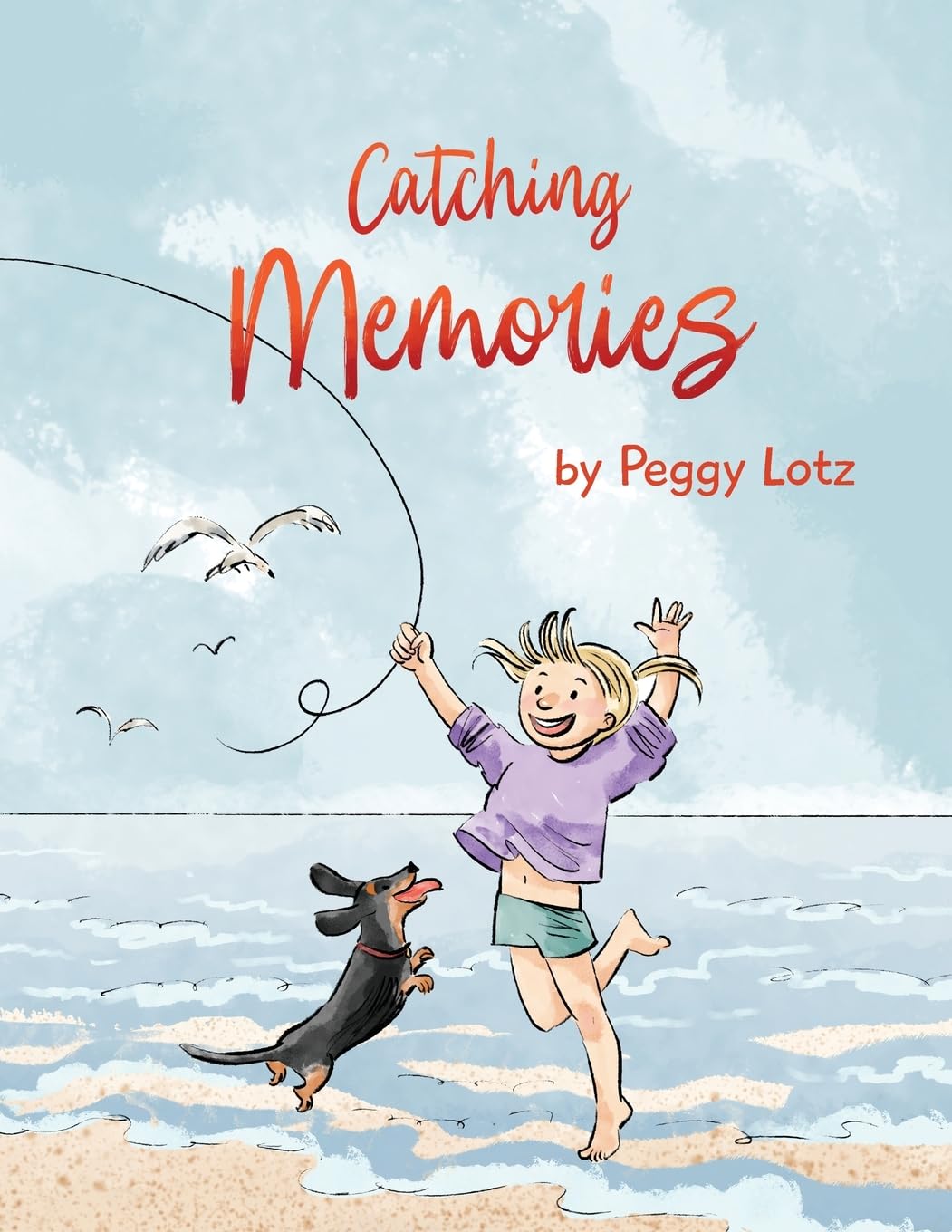
Peggy’s book is titled, “Catching Memories.” It’s about a unique childhood experience she had with our family (with Gayle and Peggy’s favorite brother, John, as key sibling figures), at Arch Cape, a beautiful beach on the Northern Oregon Coast. We spent many weekends at Arch Cape, as it was our maternal grandparents home.
The specific memory Peggy writes about was SO GOOD. I’m not sharing details. You’ll have to pay the big bucks, $14.99 on Amazon, to read the story. Here’s a link. Buy Catching Memories
Peggy just sent me a copy of an INCREDIBLY POSITIVE Falcon Review of her book. The review is great, because the book is great. I’m guessing Peggy did not bite the toe of the reviewer. I say this because right now I’m typing a great review and hoping Peggy will take notice:
“Catching Memories is a fabulous children’s book about a unique family experience, memories, and kindness. Peggy Lotz’s debut children’s book is written with so much love, affection, and grace that you would never suspect she tried to maim her younger brother. The book is so awesome that you’ll want a copy for your children or for yourself or both. Buy it now”
In case Peggy is reading this, I’m trying to make it clear that even though that Falcon Review guy wrote you a great review, I’ve just written and posted a rather fantastic review . . . AND you (Peggy) bit me. This fantastic review should make it clear that I’m better than that Falcon Press guy could ever hope to be . . . because the fact that I’m writing it for someone who bit me speaks to the sort of selfless and forgiving person I am. In summary: My sister bites my toe and I put aside the pain and write her a stellar review. If I haven’t made it obvious yet, I’m campaigning for the position of being Peggy’s favorite brother. Given that I’m her only brother, I have the inside track, but you can’t mess around with favorite brother stuff because one day, just when you think you’re on top of the world, the next minute your big sister might try to gnaw off your big toe with her big teeth.
All I’m saying here (Peggy), is that I’m your favorite brother. Forget about that Falcon Review guy. He’s not your brother. . . let alone your favorite!
In closing, if any of you care about me, please show it by buying a copy of my sister’s book.
P.S. Here’s the best thing. Peggy says there’s a chance that the marketing plan might involve creating “Gayle, Peggy, and John” dolls. . . which is simply the coolest idea ever.
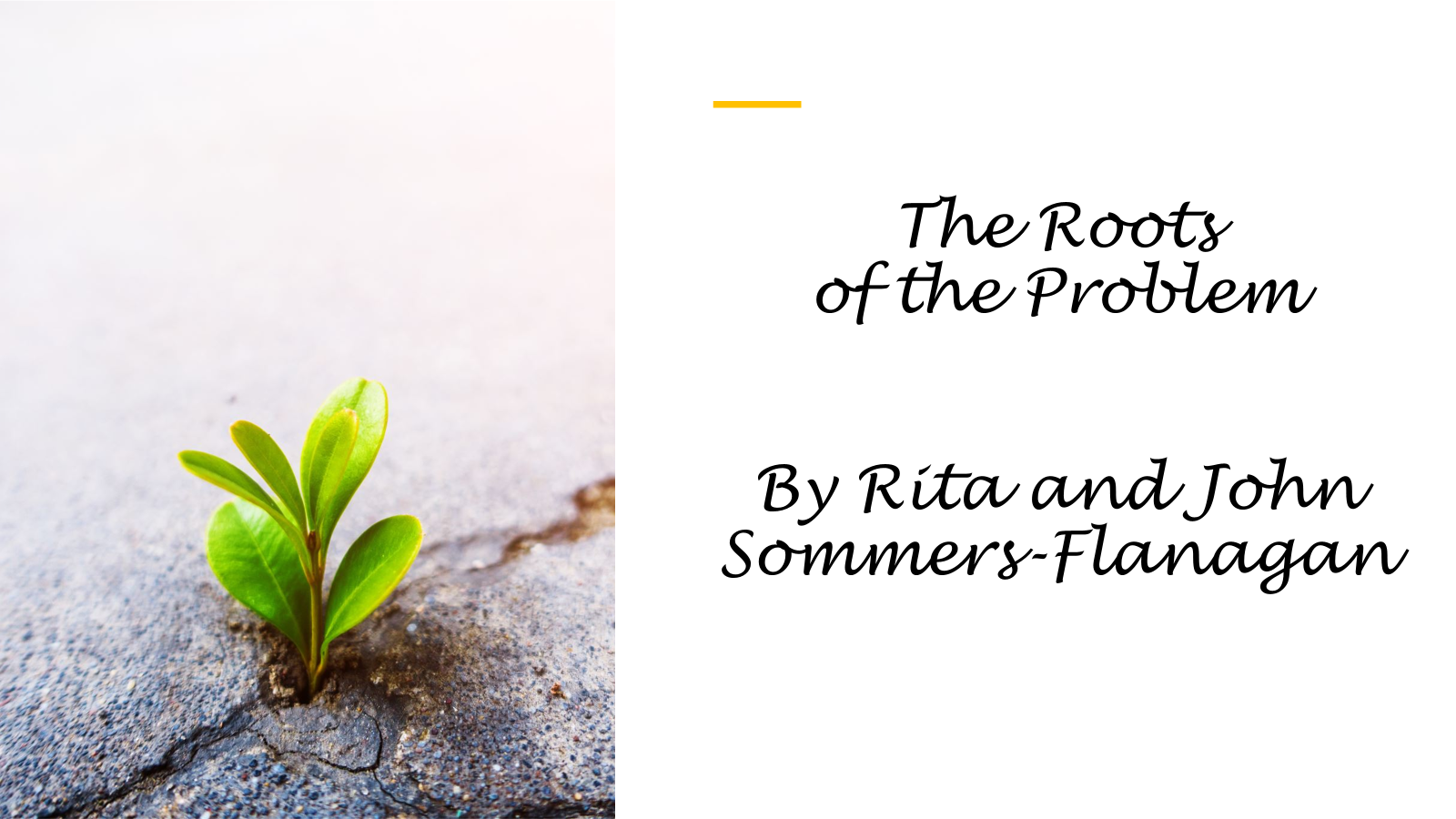
Today, Dr. Bossypants (aka Rita) offered me a coauthor opportunity. Thanks Dr. BP!
Problems, like trees, have roots. As Alfred Adler (and many others) would have said, problems are multi-determined, meaning: There’s always more than one root. Most of us agree that the United States has big problems. But what are the roots of our troubles?
One side insists that the roots of our troubles include unworthy and illegal immigrants, burdening the rich with taxes, satanic trans folk, welfare fakers, and bleeding hearts. The media picks up this messaging, repeating these highly questionable theories until they sink into our psyches as if they were true.
But we are being played.
As they said back in the Watergate era, follow the money.
The rare transgender athlete is not to blame for your low wages or the price of food and shelter. Tending to the disabled and disadvantaged is not breaking the bank. Social Security makes us a strong, compassionate society—providing for all of us as we age. Social Security isn’t going broke. It’s being dismantled and privatized so the wealthy benefit.
We’re chopping off our noses to spite our faces. USAID greatly contributed to the health of the poor, the planet, and developing societies trying to recover, survive, and grow. NPR and PBS cost about $1.50 per person per year. Although their coverage has been leaning right, they work toward being objective, balanced, and accurate. A free press is at the heart of democracy.
Hiding the contributions of people of color from American history involves rewriting reality. What might be the purpose of excluding honorable actions and voices of diverse individuals and groups from our history? There’s an African proverb: “Until lions have their historians, tales of the hunt shall always glorify the hunter.” Preserving real history doesn’t make us less safe. Massive salaries, bonuses, and advantages given to those mismanaging and/or dismantling our social and financial safety nets is a real danger.
Billionaires have lied so well for so long that many Americans blame poor people and the middle class for government waste and fraud. As everyone admits, government waste and fraud exist, and there are effective strategies for minimizing waste and fraud. One billionaire strategy is this: Get the American people to blame each other for their financial woes. Then, through their tax loopholes, billionaires walk right into the henhouse and steal the country’s eggs.
Most billionaires don’t become billionaires because of their compassion and generosity. They’re billionaires because of miners, farmers, mill workers, steelmakers, refinery workers, teachers, servers, nurses, doctors, social workers, inventors, and small businesspeople: THESE are the people who make becoming a billionaire possible.
Balanced budgets are possible. Giving billionaires MORE money will not balance the budget. Taxing them more will. A graduated income tax is not the same thing as socialism. Anyone who tells you that taxing the rich and providing a social safety net is socialism or communism either (a) wants YOUR money, (b) is lying, or (c) is ignorant.
Socialism is a political and economic theory advocating that the means of production, distribution of goods, and trade/exchange be owned by the collective. Taxing the wealthy in a proportionate manner is not the same as having the collective or the government take over ownership of their businesses. In a capitalist system, taxes and government regulation function to reduce power imbalance, abuse of the poor by the wealthy, and the development of social safety nets and public health systems that benefit the whole.
The ugly fights we’re in now were started purposefully and fueled by lies, phony moral outrage, purchased bots and paid “news” outlets. We’ve been duped into “culture wars.” As if a gay marriage is why you aren’t paid fairly. As if God needs guns to defend holiness. As if basic health care for everyone will cost more than our broken system. As if we cannot share bathrooms. We share bathrooms all the time in our homes, while camping, at outdoor sporting events (think porta potties). Our economic and social problems are NOT ABOUT BATHROOMS.
We would say “wake up,” but the billionaires have cleverly stolen that concept. They want us asleep. They want us less educated, less compassionate, and more frightened.
Those in power twist science, scripture, economics, virtue, common sense, and the idea of community. But they can’t take your soul; they can’t eliminate your deep awareness of right and wrong. Only you can do that.
Ask yourselves:
If climate change caused by humans is wrong, why not clean things up anyway? Powerful people can say “drill baby drill” and it sounds aggressively American, but really, who’s pro-pollution? Denying climate change will cost us our planet.
All religions, including Christianity, advocate for taking care of the poor. Yes, it costs a few shekels. But do we want the alternative? Shall we harden our hearts and let others suffer and die?
If you believe YOU should have control over your own body and your own sexual decisions, maybe YOU can let others own their bodies and make their own choices as well?
Science is not a simplistic fact-finding mission. Science is a disciplined process of inquiry. Scientific knowledge has saved millions of lives. Funding science is about progress and having a higher quality of living. Superstition, politicizing, and irrational attacks on science is regressive, ignorant, and dangerous.
Do you think the Creator expects YOU to force your version of morality onto others? Should you enforce thou shalt not kill with weapons? Aren’t you busy enough just finding the time and resources to love your neighbor? Care for the poor? Offer your coat to anyone who needs it? It takes a lifetime to remove the log in your eye, so you can see well enough to help someone with a splinter? Isn’t God, by definition, omnipotent? We should all stop confusing our will, our interests, and our greed, with God’s will.
We need the rule of law. When people in power disregard and disparage the courts, they’re not acting for the common good. If we lose the rule of law, we’ll be ruled by outlaws.
Over our long history, humans have been conned, cheated, manipulated, and enslaved many times by the rich, powerful, and depraved. Trusting billionaires and others who are energized by the pursuit of power, greed, and revenge does not end well.
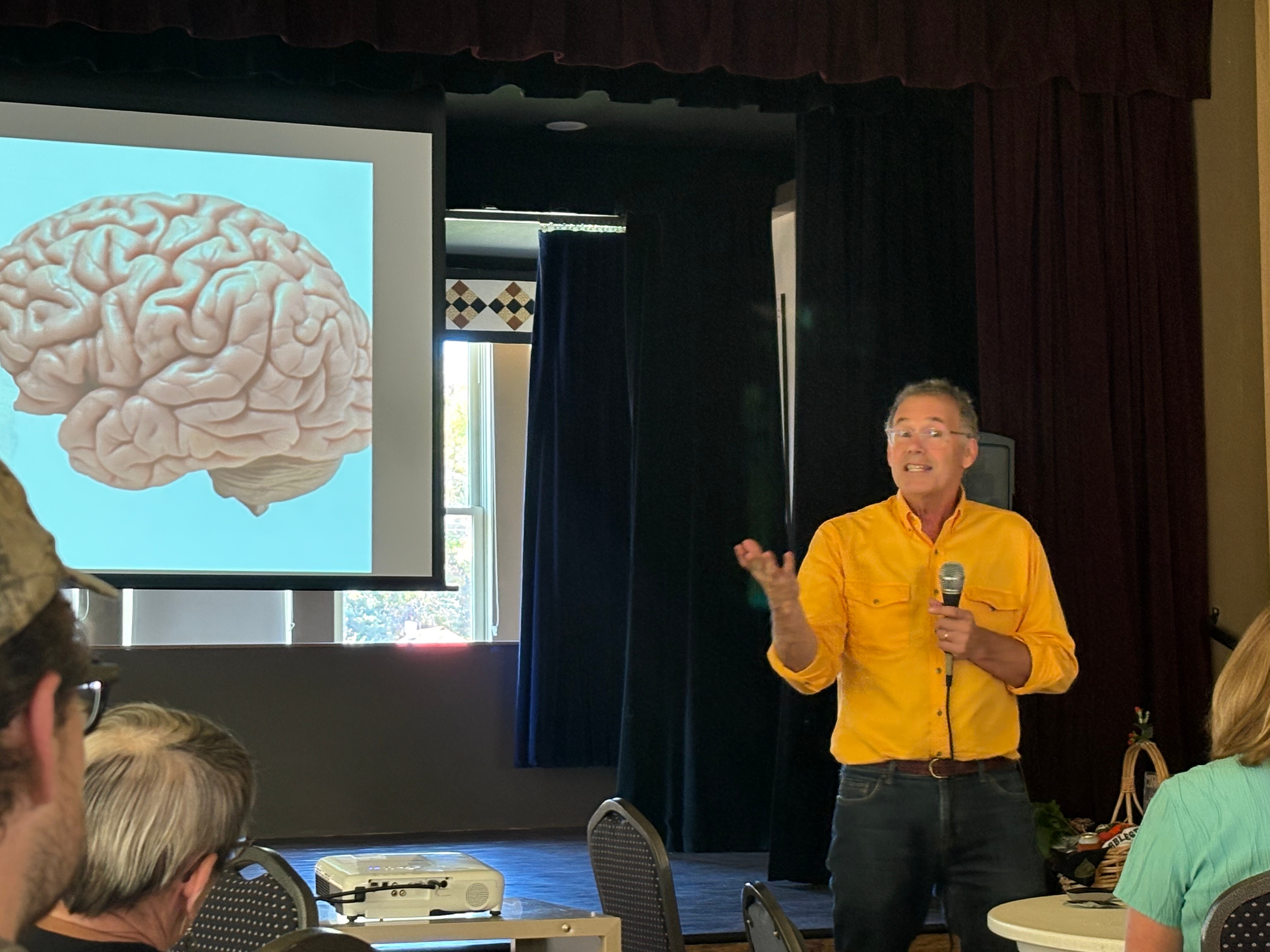
This past week I had the honor and privilege of offering four presentations, one each on Monday, Tuesday, Wednesday, and Thursday.
Monday was a Zoom date with a counseling class at West Virginia University.
Tuesday was an exciting in-person presentation for the University of Montana MOLLI program, kicking off our small group experiential Evidence-Based Happiness course for older adults. It was phenomenal. The older adults always bring it. One–among many–highlights was an 88 -year-old guy who, in the midst of the Three-Step Emotional Change Trick, shared about how he “Honored” his emotions by joining a grief group after his wife died (3 years ago). His sharing was beautiful and perfect.
Wednesday was my annual visit to Dr. Timothy Nichols’s Honors College course on LOVE. Dr. Nichols happens to be the Dean of the Honors College and one of the coolest and kindest and most enthused people on the planet. Mostly I go every year just to hear him introduce me. In truth, I also go because the topic and the students are INCREDIBLE. I think it may have been the best LOVE lecture EVER. I’d post the ppts here, but my computer crashed yesterday, and the U of M IT people (who are always very nice) are now attempting “data recovery.” Argh!
Thursday I got to hang out for two hours with the Graduate Students of the University of Montana Psychology Club. This was yet another fun experience with a group of students who are all simply brilliant. To top it off, a couple of my favorite people (and Psych faculty), Bryan Cochran and Greg Machek also attended. . . providing the precise level of sarcasm and humor that made the experience practically perfect. Here are the Psych Club’s ppts, which I happened to have on a flash drive:





 John Sommers-Flanagan