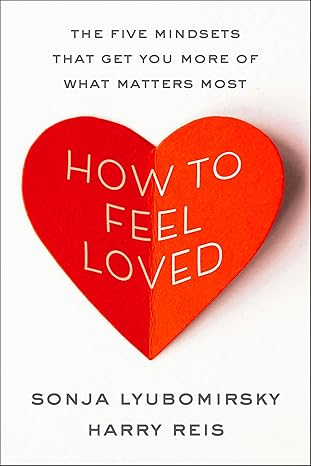
From Wikipedia: Sonja Lyubomirsky is a Russian-born American professor in the Department of Psychology at the University of California, Riverside and author of The How of Happiness: A Scientific Approach to Getting the Life You Want.
And there’s so much more.
Not long ago, Tammy Tolleson Knee, the new Director of the Phyllis J. Washington Center for the Advancement of Positive Education, asked me if I thought she should attend the Western Positive Psychology Conference at Claremont Graduate University. I saw that Sonja Lyubomirsky was the featured keynote speaker and immediately said “Hell, Yes!” [I didn’t really swear at the time, but it sounded cooler for this blog post].
I also looked at my calendar and was bummed that I couldn’t attend. But then I said to Tammy that we should reach out to Dr. Sonja for a possible short meet-up at the conference.
So I did.
She responded within hours.
At the conference, Tammy got to meet her and talk–despite the fact that Dr. Sonja also was busily signing her new book for the masses. How cool!
And then, Tammy shared the following email with our whole CAPE staff upon her return.
Happy Friday, ,
In honor of my Sonja Lyubomirsky buzz, I thought I’d share some fun tidbits and resources from the WPPA conference!
Her last name is pronounced Lou – Boe – Mere – Ski
Here is a recent chapter she co-authored in the Handbook of Social Psychology(6th ed.) titled “Well-being” (though she prefers the term “happiness”). It’s long but comprehensive.
Here is a 5-minute Ted Talk teaser on her new book.
Fun fact: She has been cited in academic publications more than 90,000 times.
She said the Big 3 PPIs are Gratitude, Kindness, and Social Interventions (or Acting Extraverted).
Among the many fascinating findings she shared was a study fromBrain, Behavior, and Immunity suggesting that intentionally engaging in more extroverted behavior can improve patterns of gene expression.
She joked that part of her wishes they had never introduced the happiness pie. More on that later.
Her final advice: Share deeply, listen and be curious.
My overall takeaway: There is no end to what we can learn in positive psychology, and CAPE is very much on the right track.
In conclusion: Who is Dr. Sonja Lyubomirsky? She’s a bad-ass academic researcher who’s also incredibly personable and who, in her spare time, writes books designed to help people live better lives. You can learn more about her here: https://sonjalyubomirsky.com/
Think about it. Can you name a single mental disorder that, in your lifetime, has decreased in significance?
Depression? Anxiety? ADHD? Bipolar? As a mental health professional for the past 45 years, I’ve watched mental disorders in America stubbornly increase, despite more national, state, and local mental health awareness and prevention programs than ever before.
Mental health awareness and prevention are failing for multiple reasons, none of which are the fault of all the compassionate, hard-working, and well-intended people involved with mental health prevention. More likely, our collective failure begins with confusion over how to define mental health. Most Americans use “mental health” to describe mental health problems, mental disorders, or mental illness. Mental health is supposed to be positive and include joy, happiness, meaning, and mutually supportive relationships.
Instead, even the term “mental health prevention” is awkwardly phrased. Wait. Does mental health prevention mean we’re preventing mental health? Ironically, that might be exactly what we’re doing.
Pretend for a moment that you’re a young person. You have two options. You can enroll in a program designed to reduce your anxiety and depression. Or you can enroll in a program designed to help you strive toward happiness, meaning, and realizing your abilities. Of course, this is a false dichotomy, but which direction do you find more hopeful and inspiring?
We also need to stop using unidimensional slogans to bludgeon community mental health from bad to better. Mental health awareness is a great example. Too much awareness of negative symptoms is not a good thing. More on this soon.
Contemporary prevention programs also ignore several basic psychological principles.
When young people begin learning about mental disorders, a natural and powerful process begins. First, they learn about psychiatric symptoms. Then, they’re told these symptoms represent mental illnesses. Inevitably, they see these symptoms in themselves (or their friends) and begin self-diagnosing. Sometimes, the labels help explain their experiences and youth experience temporary relief. Who’s not reassured to learn that social anxiety is a thing? But, when the label gets too closely linked to identity, diagnosis becomes self-limiting. Students think: “I can’t pay attention because I have ADHD” or “My anxiety stops me from having fun and being around people.” And, because labels are sticky, it becomes difficult for young people (and adults) to shake the label and pursue their potential.
As you read these words, thousands of American youth are learning about their so-called mental disorders in at least two ways: on social media (via Tik-Tok, in particular) and through school-based mental health literacy/awareness workshops. More awareness and more information can make mental health worse—especially if the information is inaccurate or not applied with sensitivity and nuance.
Another psychological principle operates to sustain and deepen negative labeling. Like everyone, young people are inclined toward “confirmation bias.” They easily find evidence for their pre-existing beliefs while discarding evidence inconsistent with their pre-existing beliefs. If I believe I have anxiety and my anxiety limits my ability to participate in social activities, I will become skilled at noticing when my anxiety is adversely affecting me, while dismissing evidence that I’m strong and resilient enough to socialize with my peers.
What we pay attention to grows. Although my teenage clients would respond to this statement with “duh,” prevention programs ignore this concept by paying far too much attention to what’s wrong. We will not shrink problems by paying more attention to them. This is fundamental brain science. The more we focus on and talk about our problems, the better we become at focusing on and talking about our problems. The famous neuroscientist Donald Hebb put it this way: “Neurons that fire together, wire together.” The more we think about our problems, the more we’re teaching our brain to think about our problems. Soon, it becomes automatic, and you’ll be thinking about your problems all day long.
For 2027, let’s reboot mental health. Let’s redefine mental health as a positive emotional, psychological, and relational state. Then, let’s help young (and older) people develop strengths, skills, empathic relationships, positive experiences, and resources to successfully pursue positive mental health.
Together, we can turn Mental Health Awareness Month into a collective experience of joy and wellbeing for everyone.
********************************************
John Sommers-Flanagan, Ph.D. is a clinical psychologist and founding director of the Phyllis J. Washington Center for the Advancement of Positive Education at the University of Montana. He is coauthor of 10 books and many professional articles. The opinion expressed here is solely that of John Sommers-Flanagan and does not represent his current or former employers. You can email your thoughts to: john.sf@mso.umt.edu. For more information, go to https://johnsommersflanagan.com/ or https://www.umt.edu/education/cape
One of my 2026 goals is to post more often on my blog because my blog gets sad when I ignore it. So far, I’m not exactly knocking this 2026 goal out of the park. . .but the time is coming.
Today, I have several exciting things to share.
I’m heading to Grand Forks, North Dakota on Sunday, to present to a group of about 850 educators there. Here’s the link to that ppt presentation:
Then, I take a (hopefully) quick flight to Boston, where I’ll present (along with the wonderful Tammy Tolleson Knee) to about 500 educators in the Easton School District. Here’s a link to the Easton presentation on Tuesday:
Yesterday a Missoula school counselor emailed me and said she (along with a classroom that included one of my granddaughters) were watching a video of me teaching the three-step emotional change trick to some finger puppets. I had totally forgotten about that slightly bizarre 4-minute home-made video. Here’s a link for those of you interested in the bizarre, or who need a 4-minute emotional education video for a classroom of 6th graders. https://www.youtube.com/watch?v=NexXUNy_BaM
As a part of a presentation in Hawai’i that I didn’t attend (what’s wrong with me, I’m going to ND in January, but not HI??), I created a 9-minute video on the outcomes we’ve got for the first 451 educators who have completed our Happiness for Educators course. Dylan fixed up the video, so it’s a little cooler than it would have been. Here’s a link to that one: https://www.youtube.com/watch?v=S3cWziR5MDM
I know there are tons of terrible things happening on the planet and in the U.S. Wherever you are and whatever you’re doing, I hope your mid-January is going as well as the forces in the world will allow, and I hope for all things to get better soon. My wife and I have recently been reading about how experiencing positive emotions and joy—in the face of oppression—can be an act of protest and defiance. Of course, we should keep doing social justice along with our defiant joy, but intermittent joy is important too.
Now that I’m immersed in positivity every day as the Director of the Center for the Advancement of Positive Education, I think I’ve become weirder.
Some of you, including my sisters and brothers-in-law may be wondering, “Wait. How could John become any MORE weird than he already is?”
You know what they say: “All things are possible!” [Actually, I don’t know why I just wrote all things are possible, because, even in my most positive mental states, I don’t believe that BS. All things are not possible. I could make a list of impossible things, but I’ve already digressed.]
Here’s what I mean by me becoming even weirder.
I find myself more easily hearing and seeing the pervasive negative narratives emerging around us. I could make another long list of all the bad ideas (negative narratives) I’m noticing (think: “fight or flight”), but I’ll limit myself to one example: The “Trigger warning.”
Trigger warnings are statements that alert listeners or viewers (or people attending my suicide assessment workshops) to upcoming intense and potentially emotionally activating content. Over the past 10ish years, we’ve all started giving and receiving trigger warnings from time to time, now and then. A specific example, “The next segment of this broadcast includes gunfire” or “In my lecture I will be talking about mental health and suicide.”
As a college professor in a mental health-related discipline, I became well-versed in providing trigger warnings. . . and have offered them freely. Because some people have strong and negative emotional reactions to specific content, providing trigger warnings has always made good sense. The point is to alert people to intense content so they can take better care of themselves or opt out (stop listening/viewing). Trigger warnings are important and, no doubt, useful for helping some people prepare for emotionally activating content.
As a college professor, I’m also obligated to keep up with the latest research. Unfortunately, the research on trigger warnings isn’t very supportive of trigger warnings. Argh! In general, it appears that trigger warnings sensitize people and might make some people more likely to have a negative emotional response. You can read a 2024 meta-analysis on trigger warning research here: https://journals.sagepub.com/doi/10.1177/21677026231186625
In response to the potential adverse effects of trigger warnings, I came up with a clever idea: I started giving trigger warnings for my trigger warnings. These were something like, “Because research suggests that trigger warnings can make you more reactive to negative content, I want to give you a trigger warning for my trigger warning and encourage you to not let my warning make you more sensitive than you already would be.”
Then, about a year ago, I had an epiphany. [I feel compelled to warn you that my epiphany might just be common sense, but it felt epiphany-like to me]
I realized—perhaps aided by my experiences training to do hypnosis—that trigger warnings might be functioning as negative suggestions, implying that people might not be able to handle the content and priming them to notice and focus on their negative reactions.
Given my epiphany, I was energized—as the solution-focused people like to say—to do something different. The different thing I settled on was to invent “The Strength Warning.”
[Here’s where I digress again to pitch a podcast. Paula Fontenelle, an all-around wonderful, kind, and competent professional, has a new podcast called, Relating to AI. And, lucky me, I got to be one of her very first guests. And, lucky Paula (joking now), she got to have me start her podcast interview by explaining and demonstrating the strength warning. Consequently, if you’re interested in AI and/or in hearing me demonstrate the strength warning, the link to Paula’s podcast is here: https://www.youtube.com/watch?v=MHDIYrXw_2Y]
Although watching/listening to me give the strength warning with Paula is way more fun, I will also describe it below.
For strengths warnings, I say things like this.
In addition to warning you about sensitive content coming up, I also want to give you a Strength Warning. A strength warning is mostly the opposite of a trigger warning. I want you to watch out for the possibility that being here together in this lecture and with your colleagues might just make you notice yourself feeling stronger, feeling better, feeling more prepared, feeling more knowledgeable, and maybe even feeling smarter. So . . . watch for that, because I think you might even be stronger than you think you are.
Please, let me know what you think about my invention of the strength warning. I encourage you to try it out when you’re teaching or presenting.
I also encourage you to try out Paula’s new podcast. If you do, you might feel smarter, stronger, and more prepared to face the complicated issue of having AI intrude on our lives.
[Photo by Jean Bjerke, from a post in the Henrys Fork Wildlife Alliance – Wildlife Weekly Archives – July 15, 2021
Rita and I are working on a short “Happiness Handbook.” It’s a secret. Don’t tell ANYONE!
Below is a short and modified excerpt of something I’d written a while back on happiness being “hard to catch.” I’m looking for a place to put it in our secret handbook . . . so, for now, I’m putting it here. There’s one line in this little story that I love so much that I wish I could turn it into a quotable quote for everyone to use on the internet (haha). See if you can find it!
******************************************
Several days prior to driving across the state to a party she was planning with her family, a friend met up with us and we talked about happiness. She said she liked the word contentment better than happiness, along with the image of hanging out in a recliner after a day of meaningful work.
After her family party, she wrote me an email, sharing, rather cryptically, that her party planning turned out just okay, because,
“Sigh. Some days, happiness runs so fast!”
I loved her image of chasing happiness even more than the image of her reclining in contentment–although savoring contentment after a meaningful day is unequivocally awesome.
As it turns out, being naturally fleet, happiness prefers not being caught. Because happiness is in amazing shape, if you chase it, it will outrun you. Happiness never gets tired, but usually, before too long, it gets tired of you.
In the U.S., we’ve got an unhealthy preoccupation with happiness, as if it were an end-state we can eventually catch and convince to live with us. But happiness doesn’t believe in marriage—or even in shacking up. Happiness has commitment issues. Just as soon as you start thinking happiness might be here to stay, she/he/they disappears into the night.
But don’t let our pessimism get you down. Even though we’re not all that keen on pursuing happiness, we believe (a) once we’ve defined happiness appropriately, and (b) once we realize that instead of happiness, we should be pursuing meaningfulness.
Then, ironically or paradoxically or dialectically, after we stop chasing it, happiness will sneak back into our lives, sometimes landing on our shoulder like a delicate butterfly, and other times trumpeting like a magnificent elephant.
The place to click if you want to learn about psychotherapy, counseling, or whatever John SF is thinking about.