Category Archives: Happiness

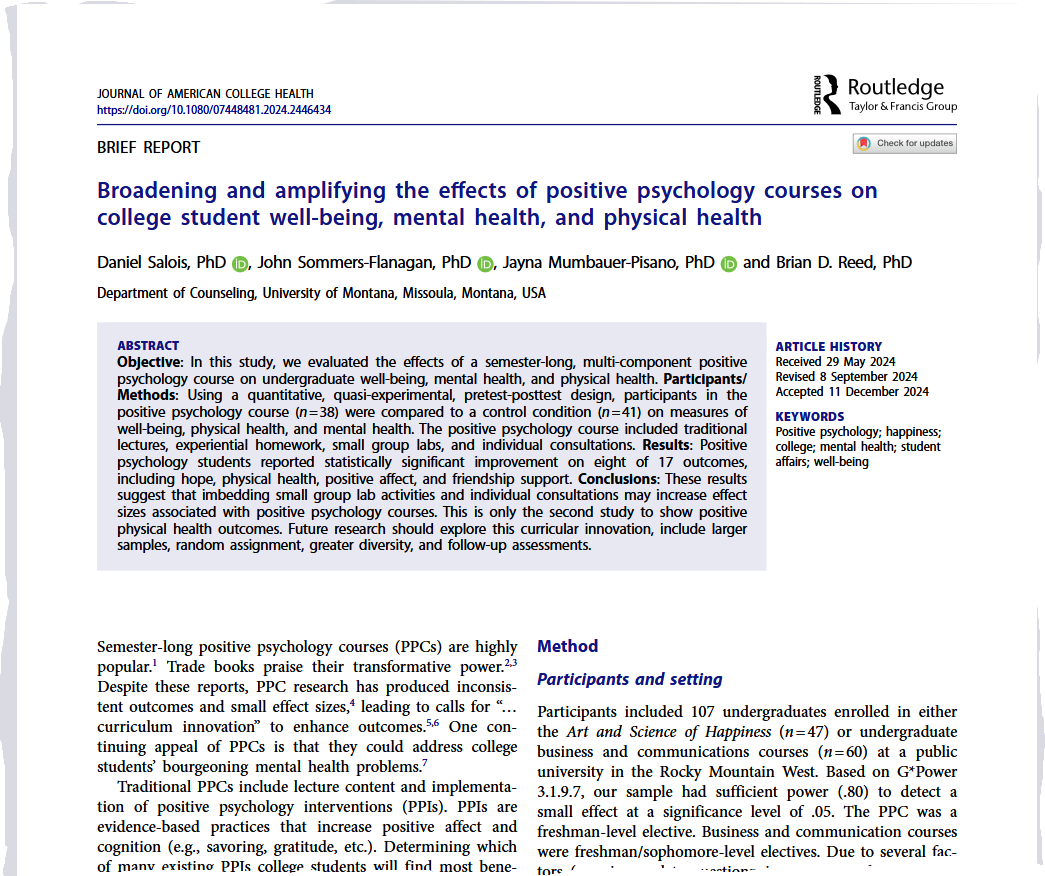
Publication Alert — Broadening and Amplifying the Effects of Positive Psychology Courses on College Student Well-Being, Mental Health, and Physical Health

We have more good news for 2025. At long last, we’ve published a research article based on Dr. Dan Salois’s doctoral dissertation. Congratulations Dan!

This article is part of growing empirical support for our particular approaches to teaching positive psychology, happiness, and how people can live their best lives. As always, I want to emphasize that our approach is NOT about toxic positivity, as we encourage people to deal with the deep conflicts, trauma, and societal issues that cause distress — while also teaching strategies for generating positive affect, joyspotting, and other practices derived from positive psychology.

One of the big takeaways from Dr. Dan’s dissertation is that our happiness class format may produce physical health benefits. Also, it’s important to note that this publication is from early on in our research, and that our later research (currently unpublished) continues to show physical health benefits. Exciting stuff!

Here’s a link to the article. My understanding from the publisher is that only the first 50 clicks on this link can read/view the whole article.
https://www.tandfonline.com/eprint/VXXD3ISCT7EUJ8WAM7UY/full?target=10.1080/07448481.2024.2446434

My 2025 Predictions

I’ve always been fascinated with prediction.

Maybe it was my mother’s interest in all things psychic? Maybe it was my father’s interest in gambling and the weather?

[For new predictions on what’s next in the socio-political scene, go here: https://johnsommersflanagan.com/2025/02/14/a-declaration-of-independence/]. For a new opinion piece on “How Evil Works” go here: https://johnsommersflanagan.com/2025/03/12/how-evil-works/

Whatever the influences, while in grad school, I got slightly obsessed with predicting human behavior. My four roommates were an inspiration. They were wonderful, and, they provided entertaining signs of four different DSM personality disorders. Although not officially “diagnosable,” they each had distinctive “features” of compulsive, histrionic, narcissistic, and dependent personality disorders.

[To learn more about how Donald J. Trump’s personality predicts his behaviors, check out this extended version of an article I wrote for Slate Magazine in 2018]: https://johnsommersflanagan.com/2018/09/03/the-long-version-of-the-trump-personality-slate-magazine-article/

*****

I was convinced I could predict the behavior of my roommates based on their personalities. As one example, during a group therapy session involving nickname-sharing, my so-called “narcissistic” friend shared that his nickname was “Lord.” As another, my “dependent” friend took to following me around and calling me his “hero.” I could go on, but this blogpost is about the future and not the past.

But first, four more historical reflections: (1) I developed my own totally bizarre personality test (the Sommers-Circles), (2) I did my thesis and dissertation on personality and prediction, (3) I discovered, as it turns out, personality is a rather poor predictor of human behavior, and (4) I also discovered that nothing is a very good behavioral predictor, and humans are more unpredictable than not.

Now, with my thesis 40 years behind me, and despite scientific evidence against anything being predictable, I still believe—as the famous/infamous social psychologist Daryl Bem wrote in 1974 (paraphrasing here), “That my predictions are right and the research is wrong.”

In honor of my lifelong prediction obsession, here are my Predictions for 2025.

  1. On January 8, I, along with the Montana Happiness Project, will announce big, luscious, and wonderful news.
  2. In early 2025, we will rediscover once again that, in fact, the body does NOT keep the score, but that the brain and body keep the score together, just as nature and nurture work together, despite annoying efforts by the misinformed to keep them apart.
  3. To rebalance our collective worldwide preoccupation during the first half of the 2020s with TRAUMA as being at the root of everything and everything being TRAUMA, the second half of the 2020s will be about growth and resilience in the face of stress and oppression.
  4. After January 20, Trump will continue to be Trump. What will that mean, specifically? First, he won’t suddenly become “presidential” (although the media will continue to expect him to). Second, he will lie about nearly everything, nearly all the time. Third, he will take credit for positive local and world events, and avoid or deflect responsibility for anything negative. Fourth, he will be cruel toward anyone he views as (a) beneath him or (b) unloyal. The corollary to this is that he will not be cruel toward Elon Musk or Vladimir Putin, but people like Laura Loomer will be left out to dry like laundry in the wind. Fifth, cracks will form within his circle of influence, which liberals will gleefully interpret as signs of his imminent fall, but he will carry on halfheartedly with his public agendas, and full-heartedly with his private agenda of making as much money as possible, while stomping on the poor, needy, and vulnerable.  
  5. Other than a few rogue reporters here and there, the press will continue to snuggle up to Trump in ways that make many of us feel sad about journalism.
  6. Similar to #3, other than a few rogue republicans, when it comes to Trump, the GOP will continue to be unable to find their voices, souls, and morals. . . in ways that make many of us discouraged about the future of the country. This charade of cooperation with emperor trump will begin deteriorating in the run-up to the midterm elections, unless the so-called emperor coalesces power in ways that allow him to destroy the constitution and democracy.
  7. The Buffalo Bills will defeat the Detroit Lions 36-30 in Super Bowl LIX.
  8. Around the time of the Super Bowl, Trump will fire someone from his cabinet. Although Ramaswamy would be likely, his position will only ever be pretend, and so his squeaky voice will only fade into the background.
  9. Auburn will defeat Duke, 80 to 76, for the NCAA basketball championship.
  10. The price of groceries will NOT come down. If anyone in the media has the courage to mention high grocery prices, Trump will blame it on Biden, Harris, Obama, “Crooked” Hillary, fake news, or whomever is most convenient.
  11. Global and local temperatures will continue to rise. Politicians and businesses with corporate interests in fossil fuels will continue to question climate science . . . just as they have since the 1950s, when Edward Teller and others began warning the world about carbon.
  12. The New York Mets will defeat the Los Angeles Dodgers in the World Series, in six games, partly due to Dodger’s manager Dave Roberts continued affinity with his “gut” over analytics.
  13. Suicide rates in the U.S. will remain stable, at or near modern highs.
  14. Taylor Swift will marry her boyfriend.
  15. The rate of worldwide species extinction will continue at unprecedented rates, matched only by the collective denial of politicians and corporations (which, as it turns out, are not people).
  16. Jennifer Lopez will marry Michael B. Jordan, resulting in J-Lo-Jo.
  17. At some point, someone will make the obvious point that even though the media loves rich people, most (not all) rich people have gotten rich through selfishness and greed, and consequently, putting rich people in charge of the country will not work out well for anyone other than the rich people.
  18. Like other predictions by famous pundits, no one will remember this blog, and consequently, I’ll be free to boldly, irresponsibly, and confidently make predictions for 2026, despite having no successful track record or credibility for making predictions.

But one thing is certain: January 8th will be big news day here. . . on this blog, and elsewhere. . . so stay tuned.

Happy New Year,

John

P.S.: Here’s a copy of the 1974 (Bem and Allen) article that inspired me to pursue the science of prediction.

On This Gratitude Eve

Tomorrow is a celebrated holiday involving gratitude. Given the American history of mistreatment, oppression, and abuse of indigenous peoples, I have trouble saying the holiday name. You may think I’m being over-sensitive or politically correct, or you may find yourself seeking some other label to describe me. No worries, I’m here to help. My current labels (which switch with considerable frequency) are grumpy and discouraged.

I know better than to dwell too long on my grumpy and discouraged thoughts, feelings, and somatic complaints. Those of you who know me well know that it makes me grumpy to even use the word somatic, and so the discouragement is deep. While I’m drilling down into my negativity, I’ll add that it also makes me grumpy to hear the words “fight-or-flight” and “brain shut-down” and “amygdala hijack” and “PHQ-9 or GAD-7” and “mental illness” and the mispronunciation of “Likert” and everything else our culture is using to push us into negative mental and emotional states—and keep us there.

I also know that some of the preceding linguistic pet peeves may seem cryptic. That’s okay. I like being mysterious. I’ll just say that I would prefer “amygdala hijinks” over “hijack,” and leave the mystery unsolved.

Not surprisingly, the bigger laments are what give the smaller laments most of their negative power. My bigger laments are probably obvious, but here are a few: How did we develop into a culture where the voices and opinions of people like Andrew Tate and Joe Rogan shape the psychology, emotions, and behavior of so many young men? How did we become a nation that could elect a convicted felon, rapist, racist, sexist, reality television star as the next president? When did Christianity take a turn and become a narcissistic, nationalist, anti-immigrant movement? How did our mainstream media become an entity that gives voice to social media posts from the president elect? And, because the president elect is a well-known serial and pathological liar, how did the media decide they should center their reporting around his likely dissembling bloviations as potentially truthful statements?

I do have to admit that it makes me a little bit happy to use the word bloviations. That was fun.

Now that I have you (my six faithful readers) grumpy and discouraged along with me, maybe I should pause to take stock of the many things and people toward whom I feel gratitude. If, by chance, you’ve also been feeling your share of doom and gloom, I hope you’ll consider joining me in a gratitude activity.

First in line is Rita. Only minutes ago, while planning a few Turkey Day dishes, I offered up one simple suggestion that may have required only one or two brain cells and could easily have been brought forth during a so-called fight-or-flight brain shut-down. Her response of, “That’s a REALLY good idea!” made me laugh out loud (even amidst my gloomy mood). This small interaction reminded me of the many ways that I am lucky to be supported and inspired by Rita every day.

Our children (and son-in-law) are basically overachieving geniuses who work every day to make the world a better place. I won’t go into details here, but this is more good fortune on a rather magnificent scale.

This past weekend I hung out with my sisters, attending a Bat Mitzvah with my Jewish cousins who welcomed us into their celebration with open arms and hearts. We mercilessly teased each other, laughed together, played games, and did what family does. My sisters and I often marvel at our mutual family experiences . . . as given to us by our amazing parents. More big gratitude.

First thing this morning, I got to lightly supervise a few interns who are facilitating a group for dads, prepping to present to classrooms of 8th graders, and being coached by Dylan Wright, who just might be the most dynamic presentation coach of all time. These young people are smart, capable, and committed to being therapeutic forces in the world. . . and I get to work with them.

Tomorrow Rita and I will have dinner with a long-time friend who, having already made substantial contributions to the mental health of a multitude of Montanans, invited us over to help her eat up a frozen turkey that she surprisingly found in her freezer. We have gratitude to her for the past, present, and future.

Just in case you’re wondering, the empirical research on gratitude is pretty fantastic. Focused and intentional gratitude will not immediately transform your life, but in general, gratitude practice is linked to improved mood, increased positive communications with others, hope, and improvements in physical exercise. That last one is as cryptic as my linguistic pet peeves. How could gratitude make you exercise more? Nobody knows. All I can say is this: How about you practice gratitude tonight, tomorrow, and into the future and then see if it helps you exercise more? As B.F. Skinner might say, we should all experiment with our experiences.

Given all the world-wide and local reasons to be grumpy and discouraged, my plan is to counter those feelings by spending more time being grateful. I know it won’t fix the world . . . but I know it will create nicer feelings . . . and that, I suppose, is plenty good for now.

My Positive Education Stump Speech

Earlier this week I was asked to write a very brief stump speech for positive education. I’ve never written a stump speech. . . and mostly feel good about that. For this stump speech, I decided to stick with very basic facts or tendencies associated with positive psychology and positive education.

Here’s a hastily written first draft. Feel free to comment and make recommendations as you like.

*********

Positive education, as we define it at the University of Montana, is based on three essential psychological truths (or tendencies).

  1. Most people are naturally compelled to focus on the negative, as captured by the question: “What’s wrong with you?”
  2. The things and experiences that we pay attention to, will grow.
  3. We are better at growing strengths than we are at getting rid of problems or symptoms.

These truths explain why current approaches to education unintentionally grow negative emotions and symptoms like anxiety, depression, and trauma. These truths also explain why we need to train all educators, counselors, and students to overcome their tendency to over-focus on the negative, and instead systematically focus on growing student, teacher, and administrator strengths, skills, resources, and virtues. 

Positive education is the best path forward for education in Montana and beyond.

Recent and Upcoming Activities and Events – Nov 2024

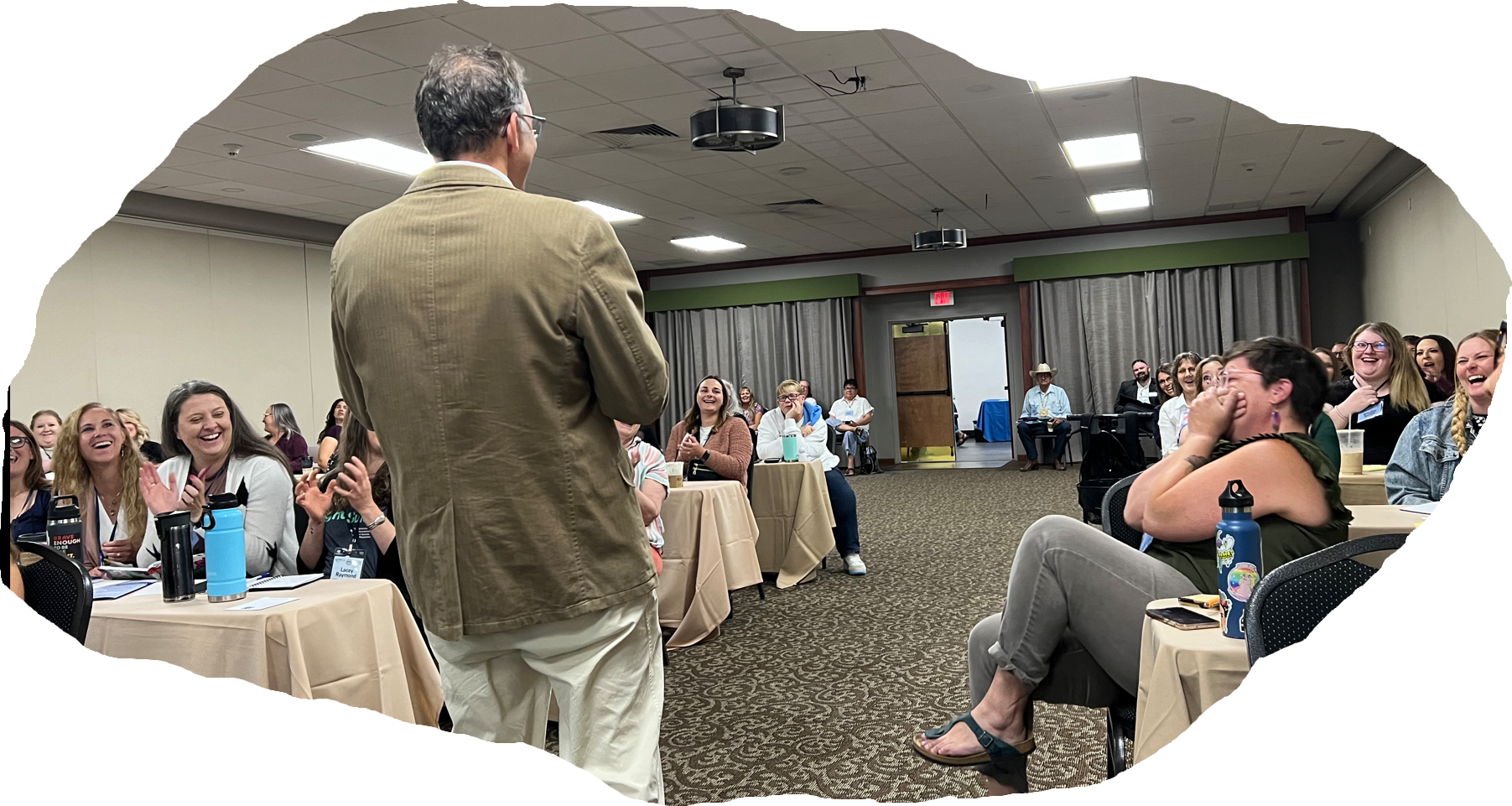
[I love the preceding photo because I’m doing a workshop on suicide in Billings, Montana, and despite the content, the participants are clearly having a good time]

Sometimes people ask me if I have presentations coming up. Other times they ask me about recent presentations. For reasons related to my own inability to be more organized and behave responsibly, I haven’t been very good at inserting “upcoming events” into my schedule, or at sharing links with readers about recent content that’s available online. Today’s post is my effort to address my irresponsibility.

RECENT EVENTS

August 20, 2024 – JSF presented, Self-Care for Educators, as an invited guest on the Last Best Learning Podcast – Ep. 1: https://www.youtube.com/watch?v=Kr8he3nyVGk&list=PLhMIpFmxQv0cRQB1jzK1ifchR0Hk8bBtg&index=3  

September 11, 2024 – JSF presented a day-long ONLINE workshop, Conducting Parenting Consultations on behalf of Families First. Missoula, MT. Here are the ppts for the Parenting Consultation workshop:

September 26, 2024 – JSF presented a day-long IN-PERSON workshop, Tough Kids, Cool Counseling on behalf of Families First. Missoula, MT.

October 10, 2024 – JSF presented a day-long IN-PERSON workshop, Strengths-Based Suicide Assessment and Treatment on behalf of Tribal Health, Ronan, MT.

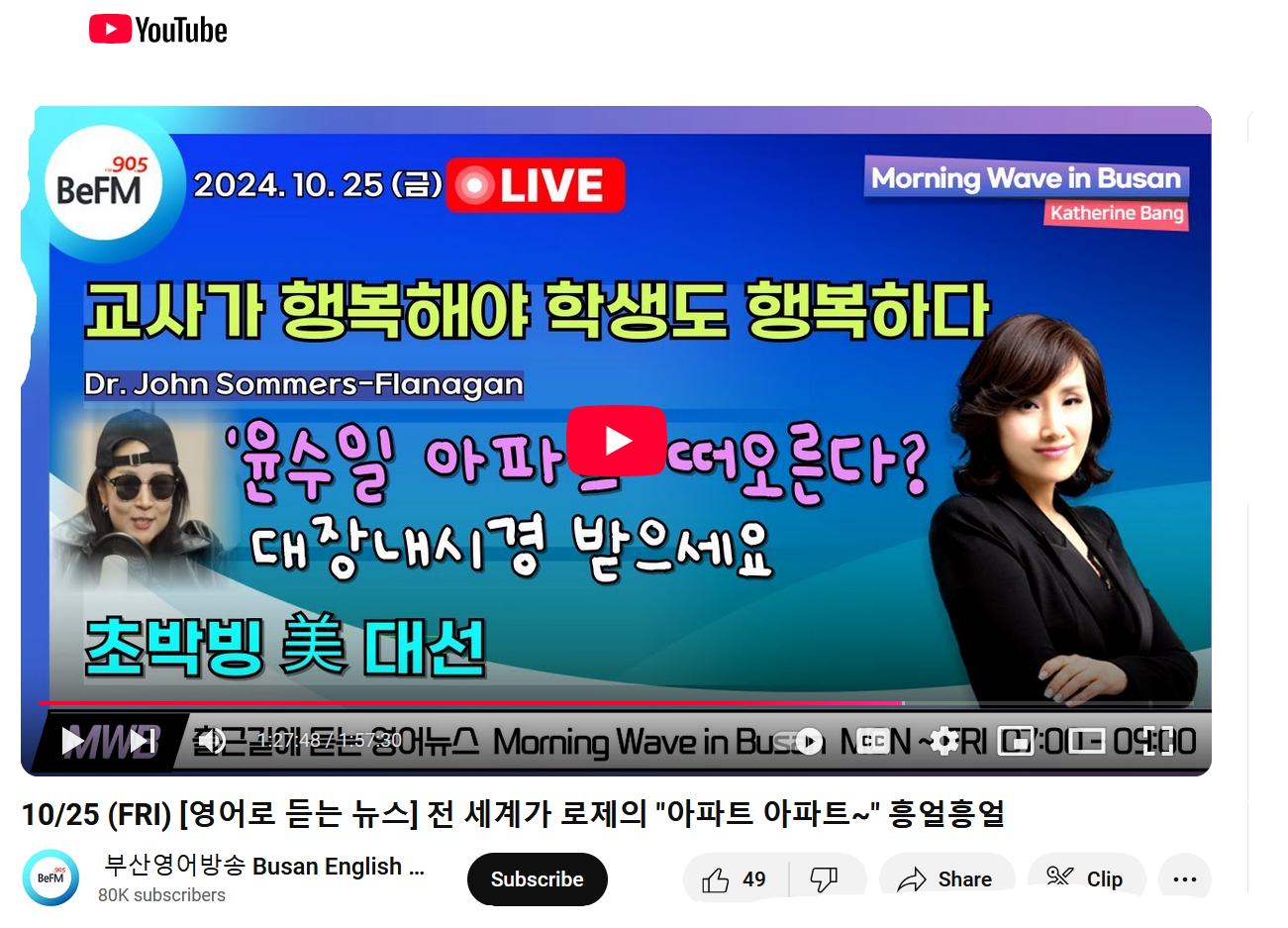
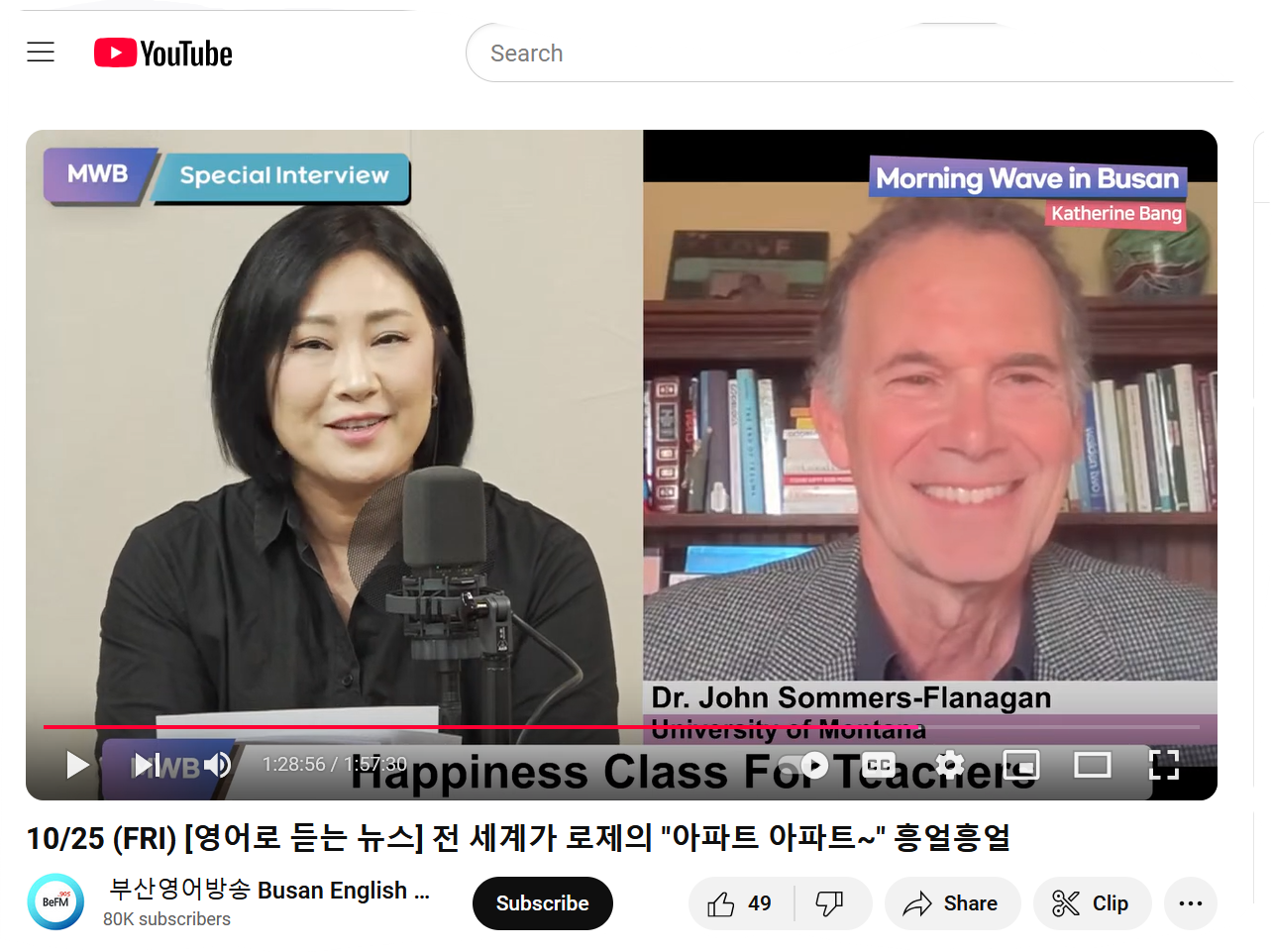
October 24, 2024 – JSF did an on-air guest interview on Evidence-Based Happiness for Teachers on a South Korean radio station. https://youtu.be/xYdJOInpAkE

November 6, 2024 – JSF presented on Let’s Pursue Happiness . . . Together (with our children)
to the Washington Middle School Parent Teacher Association (PTA)

November 7, 2024 – JSF presented IN-PERSON on Why We Should Be in Pursuit of Eudaimonia (Not “Happiness”) for the University of Montana Alumni Association. Missoula, MT.

UPCOMING ACTIVITIES AND EVENTS

November 13 – JSF is presenting Let’s Pursue Happiness Together [In our schools . . . with our teachers . . . and for our children] ONLINE to the Montana Office of Public Instruction Montana Student Wellness Advisory Committee.

November 14 – JSF is presenting Happiness and You: Methods for Managing Your Moods IN PERSON at the annual statewide Future Farmers of America (FFA) conference at MSU in Bozeman, MT.

December 4 – JSF is presenting a one-hour workshop on Strengths-Based Integrating Strengths-Based and Traditional (Medical Model) Approaches to Suicide Assessment ONLINE to the Professional Counseling Association of Montana. Link unavailable for now.

December 6 John Sommers-Flanagan is presenting an all-day ONLINE workshop for mental health professionals titled, Tough Kids, Cool Counseling, on behalf of the Vermont Psychological Association. Info is here: https://twinstates.ce21.com/speaker/john-sommersflanagan-2295709

January 10 – JSF is doing a 2-hour ONLINE workshop titled, Strategies for Integrating Traditional and Strengths-Based Approaches to Suicide, through the Cognitive Behavior Institute. You can register here for $25.00: https://www.pathlms.com/cbi/courses/77936#

My 12 Minutes of Fame in South Korea

Last week I had my Andy Warholian 15 minutes of fame in South Korea. Actually, it was only 12 minutes and 27 seconds, and as some historians note, Andy Warhol may have never actually said the 15 min of fame thing. But, pushing the silly details aside, the truth is: I got over 12 minutes of fame on a South Korean radio station! “How cool is that?”

My answer is, “Very cool,” partly because I was on a very cool English-speaking South Korean radio station and radio show: The Morning Wave in Busan (BeFM 90.5). Before I went “live” on the air, I listened to Kathryn Bang, the radio host, interviewing someone about college students selling their ADHD meds and voyeurism and some singing/dancing and a Bruno Mars song that’s popular in South Korea. Wow. That was an amazing line-up.

If you’re interested, The Morning Wave has a recorded video of my appearance. The focus of the interview was our “Happiness for Educators” course. I got the gig because the radio station tracks The Conversation, where I had a publication pop back on October 11.   

Here’s the link to the YouTube video.

Just in case the link doesn’t load to the right moment in the show, the interview with me starts at 1:27:50 and ends at 1:40:17 . . . although the whole show is worth a listen/viewing!

Exploring Your Eudaimonic Belongingness Sweet-Spot at West Creek Ranch

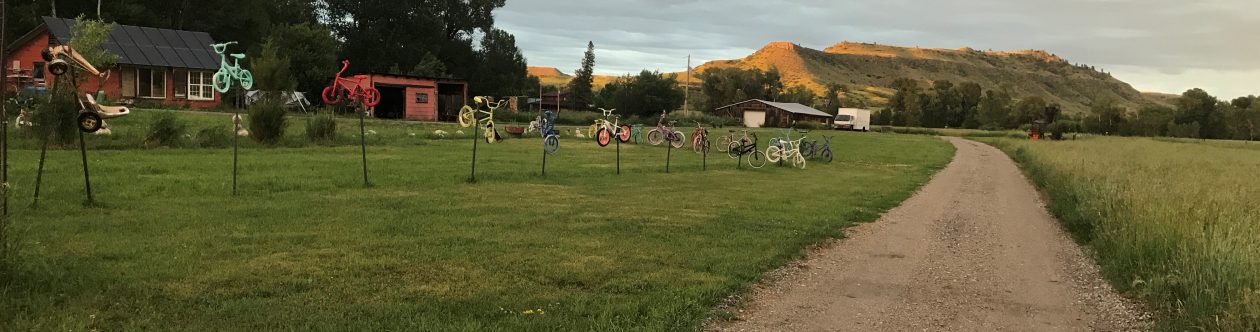
[Moon Rise at West Creek Ranch]

This past week I spent four days at West Creek Ranch, where I was forced to eat gourmet food, do sunrise yoga, experience a ropes course (briefly becoming a “flying squirrel”), watch a reflective horse session, dance away one night, hike in the beautiful Paradise Valley, and hang out, converse, and learn from about 25 very smart/cool/fancy people. Yes, it was a painful and grueling experience—which I did not deserve—but of which I happily partook.

On the first morning, I provided a brief presentation to the group on the concept of belonging, from the perspective of the Montana Happiness Project. Despite having shamefully forgotten to take off my socks during the sunrise morning yoga session, and having anxiety about whether or not I belonged with this incredible group of people, they let me belong. They also laughed at all the right moments during my initial mini-comedy routine, and then engaged completely in a serious reflective activity involving them sharing their eudaimonic belongingness sweet-spots with each other.

If you don’t know what YOUR eudaimonic belongingness sweet-spot is, you’re not alone (because hardly anyone knows what I mean by that particular jumble of words). That’s because, as a university professor, I took the liberty of making that phrase up, while at the same time, noting that it’s derived from some old Aristotelean writings. Yes, that’s what university professors do. Here’s the definition that I half stole and half made up.

That place where the flowering of your greatest (and unique) virtues, gifts, skills, talents, and resources intersect (over time) with the needs of the world [or your community or family].

I hope you take a moment to reflect on that definition and how it is manifest in who you are, and how you are in your relationships with others. If you’re reading this blog post, I suspect that you’re a conscious and sentient entity who makes a positive difference in the lives of others in ways that are uniquely you. Because we can’t and don’t always see ourselves as others see us, in our University of Montana Happiness course, we have an assignment called the Natural Talent Interview designed to help you gain perspective on your own distinct and distinctive positive qualities. You can find info on the Natural Talent Interview here: https://johnsommersflanagan.com/2023/12/26/what-do-you-think-of-me/

And my West Creek presentation powerpoint slides (all nine of them) are here:  

You may have missed the main point of this blog post—which would be easy because I’m writing like a semi-sarcastic and erudite runaway loose association train that’s so busy whistling that it can’t make a point. My main point is GRATITUDE. Big, vast, and immense gratitude. Gratitude for the Arthur M. Blank Family Foundation (AMBFF) and our massively helpful program officers. Gratitude for our retreat facilitators. Gratitude for the staff at West Creek Ranch. Gratitude for the presence of everyone at the gathering. And gratitude for the therapeutic feelings of belonging I had the luxury of ruminating on all week. My experience was so good that I’m still savoring it like whatever you think might be worth savoring and then end up savoring even more than you expected.

Thank you AMBFF and Arthur Blank for your unrelenting generosity and laser-focus on how we can come together as community and make the world a better place.

************

*Note: At the Montana Happiness Project, we do not support toxic positivity. What I mean by that is: (a) no one should ever tell anyone else to cheer up (that’s just offensive and emotionally dismissive), and (b) although we reap benefits from shifting our thinking and emotions in positive directions, we also reap similar benefits from writing and talking about trauma, life challenges, and social injustice. As humans, we are walking dialectics, meaning we grow from exploring the negative as well as the positive in life. We are multitudes, simultaneously learning and growing in many directions.

Here’s a new article published in The Conversation

Happiness class is helping clinically depressed school teachers become emotionally healthy − with a cheery assist from Aristotle

This course is more than just suggesting that you ‘cheer up’ and ‘look on the bright side.’ akinbostanci/E+ via Getty Images

John Sommers-Flanagan, University of Montana

Text saying: Uncommon Courses, from The Conversation

Uncommon Courses is an occasional series from The Conversation U.S. highlighting unconventional approaches to teaching.

Title of Course

Evidence-Based Happiness for Teachers

What prompted the idea for the course?

I was discouraged. For nearly three decades, as a clinical psychologist, I trained mental health professionals on suicide assessment. The work was good but difficult.

All the while, I watched in dismay as U.S. suicide rates relentlessly increased for 20 consecutive years, from 1999 to 2018, followed by a slight dip during the COVID-19 pandemic, and then a rise in 2021 and 2022 – this despite more local, state and national suicide prevention programming than ever.

I consulted my wife, Rita, who also happens to be my favorite clinical psychologist. We decided to explore the science of happiness. Together, we established the Montana Happiness Project and began offering evidence-based happiness workshops to complement our suicide prevention work.

In 2021, the Arthur M. Blank Family Foundation, through the University of Montana, awarded us a US$150,000 grant to support the state’s K-12 public school teachers, counselors and staff. We’re using the funds to offer these educators low-cost, online graduate courses on happiness. In spring 2023, the foundation awarded us another $150,000 so we could extend the program through December 2025.

What does the course explore?

Using the word “happiness” can be off-putting. Sometimes, people associate happiness with recommendations to just smile, cheer up and suppress negative emotions – which can lead to toxic positivity.

As mental health professionals, my wife and I reject that definition. Instead, we embrace Aristotle’s concept of “eudaimonic happiness”: the daily pursuit of meaning, mutually supportive relationships and becoming the best possible version of yourself.

The heart of the course is an academic, personal and experiential exploration of evidence-based positive psychology interventions. These are intentional practices that can improve mood, optimism, relationships and physical wellness and offer a sense of purpose. Examples include gratitude, acts of kindness, savoring, mindfulness, mood music, practicing forgiveness and journaling about your best possible future self.

Students are required to implement at least 10 of 14 positive psychology interventions, and then to talk and write about their experiences on implementing them.

Why is this course relevant now?

Teachers are more distressed than ever before. They’re anxious, depressed and discouraged in ways that adversely affect their ability to teach effectively, which is one reason why so many of them leave the profession after a short period of time. It’s not just the low pay – educators need support, appreciation and coping tools; they also need to know they’re not alone. https://www.youtube.com/embed/ZOGAp9dw8Ac?wmode=transparent&start=0 This exercise helps you focus on what goes right, rather than the things that go wrong.

What’s a critical lesson from the course?

The lesson on sleep is especially powerful for educators. A review of 33 studies from 15 countries reported that 36% to 61% of K-12 teachers suffered from insomnia. Although the rates varied across studies, sleep problems were generally worse when teachers were exposed to classroom violence, had low job satisfaction and were experiencing depressive symptoms.

The sleep lesson includes, along with sleep hygiene strategies, a happiness practice and insomnia intervention called Three Good Things, developed by the renowned positive psychologist Martin Seligman.

I describe the technique, in Seligman’s words: “Write down, for one week, before you go to sleep, three things that went well for you during the day, and then reflect on why they went well.”

Next, I make light of the concept: “I’ve always thought Three Good Things was hokey, simplistic and silly.” I show a video of Seligman saying, “I don’t need to recommend beyond a week, typically … because when you do this, you find you like it so much, most people just keep doing it.” At that point, I roll my eyes and say, “Maybe.”

Then I share that I often awakened for years at 4 a.m. with terribly dark thoughts. Then – funny thing – I tried using Three Good Things in the middle of the night. It wasn’t a perfect solution, but it was a vast improvement over lying helplessly in bed while negative thoughts pummeled me.

The Three Good Things lesson is emblematic of how we encourage teachers in our course – using science, playful cynicism and an open and experimental mindset to apply the evidence-based happiness practices in ways that work for them.

I also encourage students to understand that the strategies I offer are not universally effective. What works for others may not work for them, which is why they should experiment with many different approaches.

What will the course prepare students to do?

The educators leave the course with a written lesson plan they can implement at their school, if they wish. As they deepen their happiness practice, they can also share it with other teachers, their students and their families.

Over the past 16 months, we’ve taught this course to 156 K-12 educators and other school personnel. In a not-yet-published survey that we carried out, more than 30% of the participants scored as clinically depressed prior to starting the class, compared with just under 13% immediately after the class.

This improvement is similar to the results obtained by antidepressant medications and psychotherapy.

The educators also reported overall better health after taking the class. Along with improved sleep, they took fewer sick days, experienced fewer headaches and reported reductions in cold, flu and stomach symptoms.

As resources allow, we plan to tailor these courses to other people with high-stress jobs. Already, we are receiving requests from police officers, health care providers, veterinarians and construction workers.

John Sommers-Flanagan, Clinical Psychologist and Professor of Counseling, University of Montana

This article is republished from The Conversation under a Creative Commons license. Read the original article.

Tomorrow Morning in Ronan, MT: A Presentation and Conversation about Strengths-Based Suicide Assessment and Treatment

Tomorrow morning, three counseling interns and I will hit the road for Ronan, where we’ll spend the day with the staff of CSKT Tribal Health. We are honored and humbled to engage in a conversation about how to make the usual medical model approach to suicide be more culturally sensitive and explicitly collaborative.

Here are the ppts for the day:

Strengths-Based Suicide Assessment with Diverse Populations — The PPTs

Tomorrow morning (Wednesday, October 2) I have the honor and privilege of being the keynote speaker for Maryland’s 36th Annual Suicide Prevention Conference. So far, everyone I’ve met associated with this conference is amazing. I suspect tomorrow will be filled with excellent presentations and fabulous people who are in the business of mental health and saving lives.

I hope I can do justice to my role in this very cool conference.

Here’s a link to tomorrow’s ppts: