Last week was a blur. On Wednesday, I did a break-out session for the Montana Prevent Child Abuse and Neglect conference in Helena. I’ve been to this conference multiple times and always deeply appreciate the amazing people in Montana and beyond who are dedicated to the mission of preventing child abuse and neglect. For the break-out, I presented on “Ten Things Everyone Should Know About Mental Health, Suicide, and Happiness.” This is one of my favorite newish topics and I felt very engaged with the 120+ participants. A big thanks to them.
Before the session, I felt a bit physically “off.” Overnight, the “off” symptoms developed into a sore throat and cough. This would NOT have been a problem, except I was scheduled for the hour-long closing conference keynote on Thursday. The good news is that I had zero fever and it was NOT Covid. The bad news was my voice was NOT good. I did the talk “In Pursuit of Eudaimonia” with 340ish attendees and got through it, but only with the assistance of a hot mic.
I had to cancel my Friday in Missoula and ended up in Urgent Care, with a diagnosis of bronchitis or possibly pneumonia, which was rather unpleasant over the weekend.
Having recovered (mostly), by yesterday, I recorded a podcast (Justin Angle’s “A New Angle” on Montana Public Radio) at the University of Montana College of Business. Thanks to a helpful pharmaceutical consult with a helpful woman at Albertsons, I had just the right amount of expectorant, later combined with a strong cough suppressant, to make it through 90 minutes of fun conversation with Justin without coughing into the podcast microphone. We talked about “Good Faith” in politics, society, and relationships. The episode will air in early June.
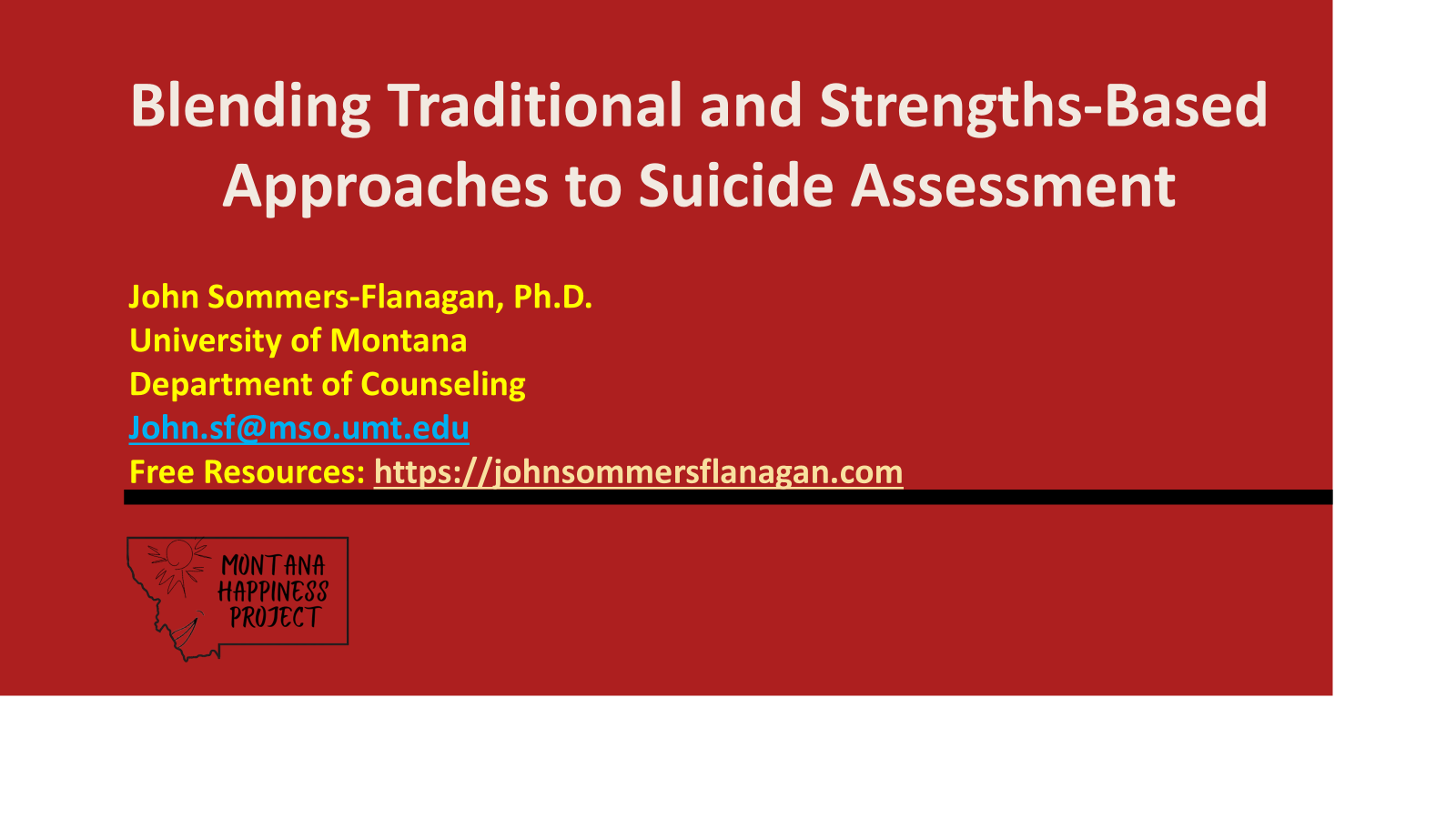
And now . . . I’m in beautiful Butte, Montana, where I’m doing an all-day (Thursday) workshop for the Montana Sex Offender Treatment Association. . . on Strengths-Based Suicide Assessment and Treatment . . . at the Copper King Hotel and Convention Center. Not surprisingly, having slept a bit extra the past five days, I’m up and wide awake at 4:30am, with not much to do other than post a pdf of my ppts for the day. Here they are:
Thanks for reading and thanks for being the sort of people who are, no doubt, doing what you can to make Montana and the world a little kinder and more compassionate place to exist.
I’ve spent the better part of the past two weeks doing presentations in various locations and venues. I did five presentations in Nebraska, and found myself surprisingly fond of Lincoln and Kearney Nebraska. On Thursday I was at a Wellness “Reason to Live” conference with CSKT Tribal Services at Kwataqnuk in Polson. Just now I finished an online talk with the Tex-Chip program. One common topic among these talks was the title of this blog post. I have found myself interestingly passionate about the content of this particular. . . so much so that I actually feel energized–rather than depleted–after talking for two hours.
Not surprisingly, I’ve had amazingly positive experiences throughout these talks. All the participants have been engaged, interesting, and working hard to be the best people they can be. Beginning with the Mourning Hope’s annual breakfast fundraiser, extending into my time with Union Bank employees, and then being with the wonderful indigenous people in Polson, and finally the past two hours Zooming with counseling students in Texas . . . I have felt hope and inspiration for the good things people are doing despite the challenges they face in the current socio-political environment.
If you were at one of these talks (or are reading this post), thanks for being you, and thanks for contributing your unique gifts to the world.
For your viewing pleasure, the ppts for this talk are linked here.
For fans of Strengths-Based suicide workshops, this Friday I’m doing a three hour online workshop for the Western Oregon Mental Health Assocation.
The workshop is happening this Friday from 9-noon (PDT). It’s a pretty reasonable deal: $60 for licensed WOMHA members, $75 for licensed non-members, $35 for pre-licensed people, and $5 for students.
Sorry for the late notice, but here’s the link to register:
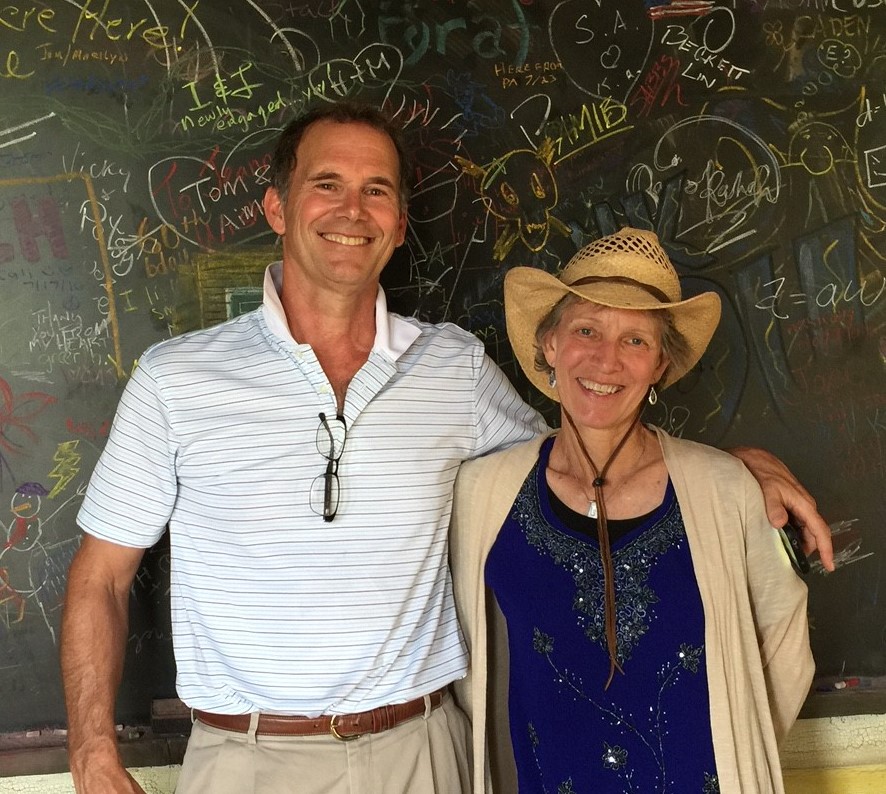
Today, Dr. Bossypants (aka Rita) offered me a coauthor opportunity. Thanks Dr. BP!
Problems, like trees, have roots. As Alfred Adler (and many others) would have said, problems are multi-determined, meaning: There’s always more than one root. Most of us agree that the United States has big problems. But what are the roots of our troubles?
One side insists that the roots of our troubles include unworthy and illegal immigrants, burdening the rich with taxes, satanic trans folk, welfare fakers, and bleeding hearts. The media picks up this messaging, repeating these highly questionable theories until they sink into our psyches as if they were true.
But we are being played.
As they said back in the Watergate era, follow the money.
The rare transgender athlete is not to blame for your low wages or the price of food and shelter. Tending to the disabled and disadvantaged is not breaking the bank. Social Security makes us a strong, compassionate society—providing for all of us as we age. Social Security isn’t going broke. It’s being dismantled and privatized so the wealthy benefit.
We’re chopping off our noses to spite our faces. USAID greatly contributed to the health of the poor, the planet, and developing societies trying to recover, survive, and grow. NPR and PBS cost about $1.50 per person per year. Although their coverage has been leaning right, they work toward being objective, balanced, and accurate. A free press is at the heart of democracy.
Hiding the contributions of people of color from American history involves rewriting reality. What might be the purpose of excluding honorable actions and voices of diverse individuals and groups from our history? There’s an African proverb: “Until lions have their historians, tales of the hunt shall always glorify the hunter.” Preserving real history doesn’t make us less safe. Massive salaries, bonuses, and advantages given to those mismanaging and/or dismantling our social and financial safety nets is a real danger.
Billionaires have lied so well for so long that many Americans blame poor people and the middle class for government waste and fraud. As everyone admits, government waste and fraud exist, and there are effective strategies for minimizing waste and fraud. One billionaire strategy is this: Get the American people to blame each other for their financial woes. Then, through their tax loopholes, billionaires walk right into the henhouse and steal the country’s eggs.
Most billionaires don’t become billionaires because of their compassion and generosity. They’re billionaires because of miners, farmers, mill workers, steelmakers, refinery workers, teachers, servers, nurses, doctors, social workers, inventors, and small businesspeople: THESE are the people who make becoming a billionaire possible.
Balanced budgets are possible. Giving billionaires MORE money will not balance the budget. Taxing them more will. A graduated income tax is not the same thing as socialism. Anyone who tells you that taxing the rich and providing a social safety net is socialism or communism either (a) wants YOUR money, (b) is lying, or (c) is ignorant.
Socialism is a political and economic theory advocating that the means of production, distribution of goods, and trade/exchange be owned by the collective. Taxing the wealthy in a proportionate manner is not the same as having the collective or the government take over ownership of their businesses. In a capitalist system, taxes and government regulation function to reduce power imbalance, abuse of the poor by the wealthy, and the development of social safety nets and public health systems that benefit the whole.
The ugly fights we’re in now were started purposefully and fueled by lies, phony moral outrage, purchased bots and paid “news” outlets. We’ve been duped into “culture wars.” As if a gay marriage is why you aren’t paid fairly. As if God needs guns to defend holiness. As if basic health care for everyone will cost more than our broken system. As if we cannot share bathrooms. We share bathrooms all the time in our homes, while camping, at outdoor sporting events (think porta potties). Our economic and social problems are NOT ABOUT BATHROOMS.
We would say “wake up,” but the billionaires have cleverly stolen that concept. They want us asleep. They want us less educated, less compassionate, and more frightened.
Those in power twist science, scripture, economics, virtue, common sense, and the idea of community. But they can’t take your soul; they can’t eliminate your deep awareness of right and wrong. Only you can do that.
Ask yourselves:
If climate change caused by humans is wrong, why not clean things up anyway? Powerful people can say “drill baby drill” and it sounds aggressively American, but really, who’s pro-pollution? Denying climate change will cost us our planet.
All religions, including Christianity, advocate for taking care of the poor. Yes, it costs a few shekels. But do we want the alternative? Shall we harden our hearts and let others suffer and die?
If you believe YOU should have control over your own body and your own sexual decisions, maybe YOU can let others own their bodies and make their own choices as well?
Science is not a simplistic fact-finding mission. Science is a disciplined process of inquiry. Scientific knowledge has saved millions of lives. Funding science is about progress and having a higher quality of living. Superstition, politicizing, and irrational attacks on science is regressive, ignorant, and dangerous.
Do you think the Creator expects YOU to force your version of morality onto others? Should you enforce thou shalt not kill with weapons? Aren’t you busy enough just finding the time and resources to love your neighbor? Care for the poor? Offer your coat to anyone who needs it? It takes a lifetime to remove the log in your eye, so you can see well enough to help someone with a splinter? Isn’t God, by definition, omnipotent? We should all stop confusing our will, our interests, and our greed, with God’s will.
We need the rule of law. When people in power disregard and disparage the courts, they’re not acting for the common good. If we lose the rule of law, we’ll be ruled by outlaws.
Over our long history, humans have been conned, cheated, manipulated, and enslaved many times by the rich, powerful, and depraved. Trusting billionaires and others who are energized by the pursuit of power, greed, and revenge does not end well.
This past week I had the honor and privilege of offering four presentations, one each on Monday, Tuesday, Wednesday, and Thursday.
Monday was a Zoom date with a counseling class at West Virginia University.
Tuesday was an exciting in-person presentation for the University of Montana MOLLI program, kicking off our small group experiential Evidence-Based Happiness course for older adults. It was phenomenal. The older adults always bring it. One–among many–highlights was an 88 -year-old guy who, in the midst of the Three-Step Emotional Change Trick, shared about how he “Honored” his emotions by joining a grief group after his wife died (3 years ago). His sharing was beautiful and perfect.
Wednesday was my annual visit to Dr. Timothy Nichols’s Honors College course on LOVE. Dr. Nichols happens to be the Dean of the Honors College and one of the coolest and kindest and most enthused people on the planet. Mostly I go every year just to hear him introduce me. In truth, I also go because the topic and the students are INCREDIBLE. I think it may have been the best LOVE lecture EVER. I’d post the ppts here, but my computer crashed yesterday, and the U of M IT people (who are always very nice) are now attempting “data recovery.” Argh!
Thursday I got to hang out for two hours with the Graduate Students of the University of Montana Psychology Club. This was yet another fun experience with a group of students who are all simply brilliant. To top it off, a couple of my favorite people (and Psych faculty), Bryan Cochran and Greg Machek also attended. . . providing the precise level of sarcasm and humor that made the experience practically perfect. Here are the Psych Club’s ppts, which I happened to have on a flash drive:
[Photo by Jean Bjerke, from a post in the Henrys Fork Wildlife Alliance – Wildlife Weekly Archives – July 15, 2021
Rita and I are working on a short “Happiness Handbook.” It’s a secret. Don’t tell ANYONE!
Below is a short and modified excerpt of something I’d written a while back on happiness being “hard to catch.” I’m looking for a place to put it in our secret handbook . . . so, for now, I’m putting it here. There’s one line in this little story that I love so much that I wish I could turn it into a quotable quote for everyone to use on the internet (haha). See if you can find it!
******************************************
Several days prior to driving across the state to a party she was planning with her family, a friend met up with us and we talked about happiness. She said she liked the word contentment better than happiness, along with the image of hanging out in a recliner after a day of meaningful work.
After her family party, she wrote me an email, sharing, rather cryptically, that her party planning turned out just okay, because,
“Sigh. Some days, happiness runs so fast!”
I loved her image of chasing happiness even more than the image of her reclining in contentment–although savoring contentment after a meaningful day is unequivocally awesome.
As it turns out, being naturally fleet, happiness prefers not being caught. Because happiness is in amazing shape, if you chase it, it will outrun you. Happiness never gets tired, but usually, before too long, it gets tired of you.
In the U.S., we’ve got an unhealthy preoccupation with happiness, as if it were an end-state we can eventually catch and convince to live with us. But happiness doesn’t believe in marriage—or even in shacking up. Happiness has commitment issues. Just as soon as you start thinking happiness might be here to stay, she/he/they disappears into the night.
But don’t let our pessimism get you down. Even though we’re not all that keen on pursuing happiness, we believe (a) once we’ve defined happiness appropriately, and (b) once we realize that instead of happiness, we should be pursuing meaningfulness.
Then, ironically or paradoxically or dialectically, after we stop chasing it, happiness will sneak back into our lives, sometimes landing on our shoulder like a delicate butterfly, and other times trumpeting like a magnificent elephant.
I’ve been in repeated conversations with numerous concerned people about the risks and benefits of suicide screenings for youth in schools. Several years ago, I was in a one-on-one coffee shop discussion of suicide prevention with a local suicide prevention coordinator. She said, more as a statement than a question, “Who could be against school-based depression and suicide screenings?”
I slowly raised my hand, forced a smile, and confessed my position.
The question of how and why I’m not in favor of school-based mental health and suicide screenings is a complex one. On occasion, screenings will work, students at high-risk will be identified, and tragedy is averted. That’s obviously a great outcome. But I believe the mental health casualties from broad, school-based screenings tend to outweigh the benefits. Here’s why.
Early identification of depression and suicide in youth will result in early labeling in school systems; even worse, young people will begin labeling themselves as being “ill” or “defective.” Those labels are sticky and won’t support positive outcomes.
Most youth who experience depressive symptoms and suicide ideation are NOT likely to die by suicide. Odds are that students who don’t report suicidal ideation are just as likely to die by suicide. As the scientists put it, suicidal ideation is not a good predictor of suicide. Also, depression symptoms generally come and go among teenagers. Most teens will recover from depressive symptoms without intensive interventions.
After a year or two of school-based screenings, the students will know the drill. They will realize that if they endorse depression symptoms and suicidal items that they’ll have to experience a pretty horrible assessment and referral process. When I talk to school personnel, they tell me that, (a) they already know the students who are struggling, and (b) in year 2 of screenings, the rates of depression and suicidality plummet—because students are smart and they want to avoid the consequences of being open about their emotional state.
About 10-15% of people who complete suicide screenings feel worse afterward. We don’t really want that outcome.
There’s no evidence that school-based screenings are linked to reductions in suicide rates.
For more info on this, you can check out a brief commentary I published in the American Psychologist with my University of Montana colleague, Maegan Rides At The Door. The commentary focuses on suicide assessment with youth of color, but our points work for all youth. And, citations supporting our perspective are included.
Here are a few excerpts from the commentary:
Standardized questionnaires, although well-intended and sometimes helpful, can be emotionally activating and their use is not without risk (Bryan, 2022; de Beurs et al., 2016).
In their most recent recommendations, the United States Preventive Services Task Force (2022) concluded that the evidence supporting screening for suicide risk among children and adolescents was “insufficient” (p. 1534). Even screening proponents acknowledge, “There is currently little to no data to show that screening decreases suicide attempt or death rates” (Cwik et al., 2020, p. 255). . . . Across settings, little to no empirical evidence indicates that screening assessments provide accurate, predictive, or useful information for categorizing risk (Bryan, 2022).
This post is a continuation of my focus on kindness, positive psychology, and becoming the best possible versions of ourselves. Lyrics from Katharine Lee Bates’s America the Beautiful are part of my underlying inspiration. Buried in the 3rd verse, she wrote, “Till all success be nobleness.” We all should be seeking to be our best and noblest selves, but there are forces in the world pulling in less noble directions. Be forewarned that this post can be interpreted politically or through an historic religious lens. That’s not my intent. The point is simply that we should resist darker impulses and join together to elevate virtuous well-being for as many of us as we can muster. (Here’s Keb Mo singing my favorite version of “America the Beautiful” https://www.youtube.com/watch?v=zcUx3I0k_Fw):
***********************************
In 2015, at a family dinner, I told my sister that if then-candidate Donald Trump were caught in a strong headwind, his hair would fly up, revealing the number 666 (the mark of the Beast) on his forehead. My sister said, “John, you’re being overly dramatic.” She was right.
And so was I.
So many scenes and statements over the past month have been nauseating and shameful. When Trump, along with his #1 sycophant, JD Vance, berated Ukrainian President Volodymyr Zelenskyy (the only courageous person in the room), it was like a bad episode of an already failing reality television show. Trump likes to use the word disgrace to describe his adversaries. Trump was, is, and always will be a disgrace. As with most of his insults, “disgrace” is a projection that he pulls out of his own psyche and pastes onto others.
Musk and Trump are firing civil servants and dismantling government services. They have no concern for the lives of people they are destroying. One of their first targets was USAID. Why? Because USAID does kind, generous, and nice things for people across the globe who are in need and suffering. USAID does not promote crypto or cater to the well-heeled. For Musk and Trump, the suffering of others is sometimes collateral damage; other times being cruel is their point.
My new measure for politicians and other humans is kindness. USAID was doing more kind, generous, and compassionate things in one day, than Musk and Trump have done in their combined lifetimes. Marco Rubio recently announced that over 80% of USAID programming is cut. This is not a noble path.
If you don’t believe me, that’s fine. Do the research. Check it out. But don’t believe them. Mega-wealthy people who tell you they’re looking out for your best interests are nearly always lying. Trump and Musk didn’t get rich off their compassion; they got rich using, abusing, and scamming others.
My list of republican sycophants is long and boring. I’m thinking of Lindsey Graham and Rubio, but there are so many others. Most republicans don’t have Zelenskyy’s courage, so they insult him, or imply that he didn’t read the room. Seriously? He read the room with precision. His first option was to get screwed by Trump and Vance while acting like their lap dog. His second option was to stand strong in the face of their theatrical insults to fight for his country and his people. He chose the latter. There never was an option that was in Ukraine’s best interests. The situation was a set up; Zelenskyy took the only respectable option.
Many republicans recognize our democracy is at stake, but they cave to Trumpian bullying anyway. Spineless, led by their fear, they capitulate, even when they know that unpredictable tariffs are reaping chaos on the economy. They capitulate even when they know that pardoning January 6 rioters who attacked the police is wrong. They remain quiet and demur while a legal protester and recent graduate from Columbia University is arrested.
I’m in a fevered state. I may regret putting my thoughts into words, but what I’m saying is coming directly from the burning in my heart for noble causes. I love America. I love the goals and hard work of organizations like USAID. I love civil servants. I stand with them, with Zelenskyy, with peaceful protesters, with the Department of Education, to push back against the big gangsters in their big, imaginary thrones.
If Evil had a plan, it might be this: Make the tired, hungry, and poor the enemy. Sow fear and distrust; grow it into jealousy and hate. Once the hate sprouts, attack the poor and disenfranchised. Cut federal education because of its great value to the poor and uselessness to the rich. Eliminate environmental protections for marginalized communities; let them breathe monoxide and drink brown water because their voices are easy to ignore or dismiss. Destroy USAID, because what wealthy person ever benefited from aid to the hungry or medicines for the sick? Convince the gullible to distrust medicine and question life-saving vaccines; only the affluent deserve to live long and healthy lives.
If Evil had a plan, it might be happening—even as you read these words. And the plan is profoundly Un-American.
But Evil is not a thing or a person. Evil, and all things we call Evil, are conceptual. The great Evil makes us all fall from grace. Evil plays the news cycle, promotes hate, stokes division, and makes us all less good, less happy, angrier, and less compassionate. I was wrong in 2015. If you look closely at Donald Trump’s forehead, you won’t see the numbers 666. He’s no concrete embodiment of Evil. Instead, if you look and listen closely, you’ll see and hear a large vacuous ego that seeks to fill itself with power, and by inspiring everyone to hate more and be less humane, because, quite frankly, that’s how “Evil” works.
Now is the time to put Evil in the rear-view mirror. We will need all our combined strength to make this happen. We need to reach out in kindness and compassion. We need to push back against messages of hate and division and policies that further decimate the poor and disenfranchised. We need to listen to the small, still voice in the night, the voice that knows our name, the voice beckoning us to embrace our better selves and noble natures.
This week I had a chance to do a couple presentations for a couple awesome groups.
On Monday, along with Victor Yapuncich, I presented a talk at Fairmont titled “Why We Should Be in Pursuit of Eudaimonia (Not just “Happiness”)” to the Rural Medical Training Collaborative of the Family Medicine Residency of Western Montana. The group was amazing, and we even got Evelyn and Shilo to sing with us at the end. Here are the ppts for the Fairmont talk:
Today, I had the honor to deliver the closing talk for Tamarack Grief Resource Center’s annual Grief Institute. Thanks Tina . . . for the amazing opportunity. It was fabulous to be with such an incredibly dedicated and compassionate group of professionals who are using their gifts to help people through the journey of grief. Here are the ppts for the Grief Institute:
I’ve got two events coming up, one sooner and one later.
This Friday, I’m doing the closing talk for Tamarack’s Grief Institute (which is on Thursday and Friday in Missoula, and available online too!).
This is late notice, as the end of day tomorrow (March 3) is the registration deadline. The whole Institute is worth attending. The fantastic Dr. Joyce Mphande-Finn kicks things off on Thursday morning. Then, the amazing Dr. Micki Burns takes over . . . and I’ll be bringing it home Friday afternoon. Check it out. Here’s a registration link:
This June, I have the incredible fortune of joining Dr. Jeff Linkenbach and the renowned Montana Summer Institute in Big Sky, Montana (and Livestream) from June 17-20. Here’s a description of what’s happening!
Reimagining Community Health:
Uncovering Positive Norms and & Activating Hidden
Protective Factors
In Big Sky, Montana and via Livestream: June 17-20, 2025
Join us at the 2025 Montana Summer Institute for three and a half transformative days dedicated to advancing community well-being. Through thought-provoking keynotes, interactive workshops, and engaging discussions, you’ll explore innovative strategies that leverage positive norms and amplify protective factors.
Learn to uncover hidden community strengths, identify untapped opportunities, and craft impactful communications that drive meaningful change. With insights from leading experts and experienced practitioners, you’ll gain practical tools to reimagine your approach to data, messaging, and the people you serve—all through a positive, effective frame.
Don’t miss this opportunity to expand your expertise, deepen your impact, and shape healthier, more resilient communities. For more information, visit www.montanainstitute.com
Is there any chance you will join us in June? It would be wonderful to have you there! Here is the Montana Discount Code to give $100 off the price: MSIMONT which would give $100 off registration
***********************
And here’s a fancy flyer for the Montana Summer Institute:




 John Sommers-Flanagan