Hello from Montana where we continue to offer and collect data on our evidence-based “Happiness for Educators” course.
Although we’re in the process of updating the following abstract (see below) with fancier stats, for now, it’s a solid summary of our outcomes to date. You’ll notice our depression outcomes (g = 0.59) are not far from worldwide estimates of counseling and psychotherapy outcomes for depression (see Harrer et al., 2025; estimated effect size for depression treatment is g = 0.73)
I’m writing today with expansion and collaboration on my mind.
If any of you academics, educators, or practitioners out there are interested in offering the Happiness for Educators course in your state, or if you happen to be interested in research collaboration, please email me: john.sf@mso.umt.edu. We’ve got a good thing going (who’s against having happier and healthier educators?) and would love to begin scaling up (within our capacity).
Abstract
Purpose: Using an approach grounded in happiness research, this study contributes to the literature on strategies for supporting educator well-being. Educators deserve good health; when educators have better health, students benefit. We developed and evaluated the effectiveness of a three-credit, graduate-level, online and asynchronous evidence-based “Happiness for Educators” course on educator well-being, mental health, and physical health.
Research Methods/Approach: Using a pre-experimental design with five repeated cohorts, we evaluated pre-post course changes on six different well-being, mental health, and physical health questionnaires with 17 end-point outcomes. Across five cohorts, 266 of 293 (90.8%) educators completed the course. We evaluated outcomes using paired t-tests.
Findings: After using a Bonferroni adjustment for multiple comparisons, educators completing the course reported statistically significant improvements (p < .002) on all 17 outcomes. These outcomes included measures of positive and negative affect, hope, depression, mindfulness, and physical health. Large to medium effect sizes (using Hedge’s g) were obtained on the following outcomes:
Positive affect, (g = .802)
Total health, (g = .719)
Negative affect, (g = .705)
Depression (g = 590)
Total hope (g = .568)
Sleep (g = .556)
Mindfulness, (g = .542).
Overall, course participation was linked to a 60.8% reduction in depression rates.
Implications: Implications that can be drawn from a pre-experimental exploratory study are limited. However, these outcomes suggest that an asynchronous, online graduate-level course on positive psychology (aka happiness) has potential for improving educators’ well-being, mental health, and physical health. Future research on this approach is recommended.
One of my 2026 goals is to post more often on my blog because my blog gets sad when I ignore it. So far, I’m not exactly knocking this 2026 goal out of the park. . .but the time is coming.
Today, I have several exciting things to share.
I’m heading to Grand Forks, North Dakota on Sunday, to present to a group of about 850 educators there. Here’s the link to that ppt presentation:
Then, I take a (hopefully) quick flight to Boston, where I’ll present (along with the wonderful Tammy Tolleson Knee) to about 500 educators in the Easton School District. Here’s a link to the Easton presentation on Tuesday:
Yesterday a Missoula school counselor emailed me and said she (along with a classroom that included one of my granddaughters) were watching a video of me teaching the three-step emotional change trick to some finger puppets. I had totally forgotten about that slightly bizarre 4-minute home-made video. Here’s a link for those of you interested in the bizarre, or who need a 4-minute emotional education video for a classroom of 6th graders. https://www.youtube.com/watch?v=NexXUNy_BaM
As a part of a presentation in Hawai’i that I didn’t attend (what’s wrong with me, I’m going to ND in January, but not HI??), I created a 9-minute video on the outcomes we’ve got for the first 451 educators who have completed our Happiness for Educators course. Dylan fixed up the video, so it’s a little cooler than it would have been. Here’s a link to that one: https://www.youtube.com/watch?v=S3cWziR5MDM
I know there are tons of terrible things happening on the planet and in the U.S. Wherever you are and whatever you’re doing, I hope your mid-January is going as well as the forces in the world will allow, and I hope for all things to get better soon. My wife and I have recently been reading about how experiencing positive emotions and joy—in the face of oppression—can be an act of protest and defiance. Of course, we should keep doing social justice along with our defiant joy, but intermittent joy is important too.
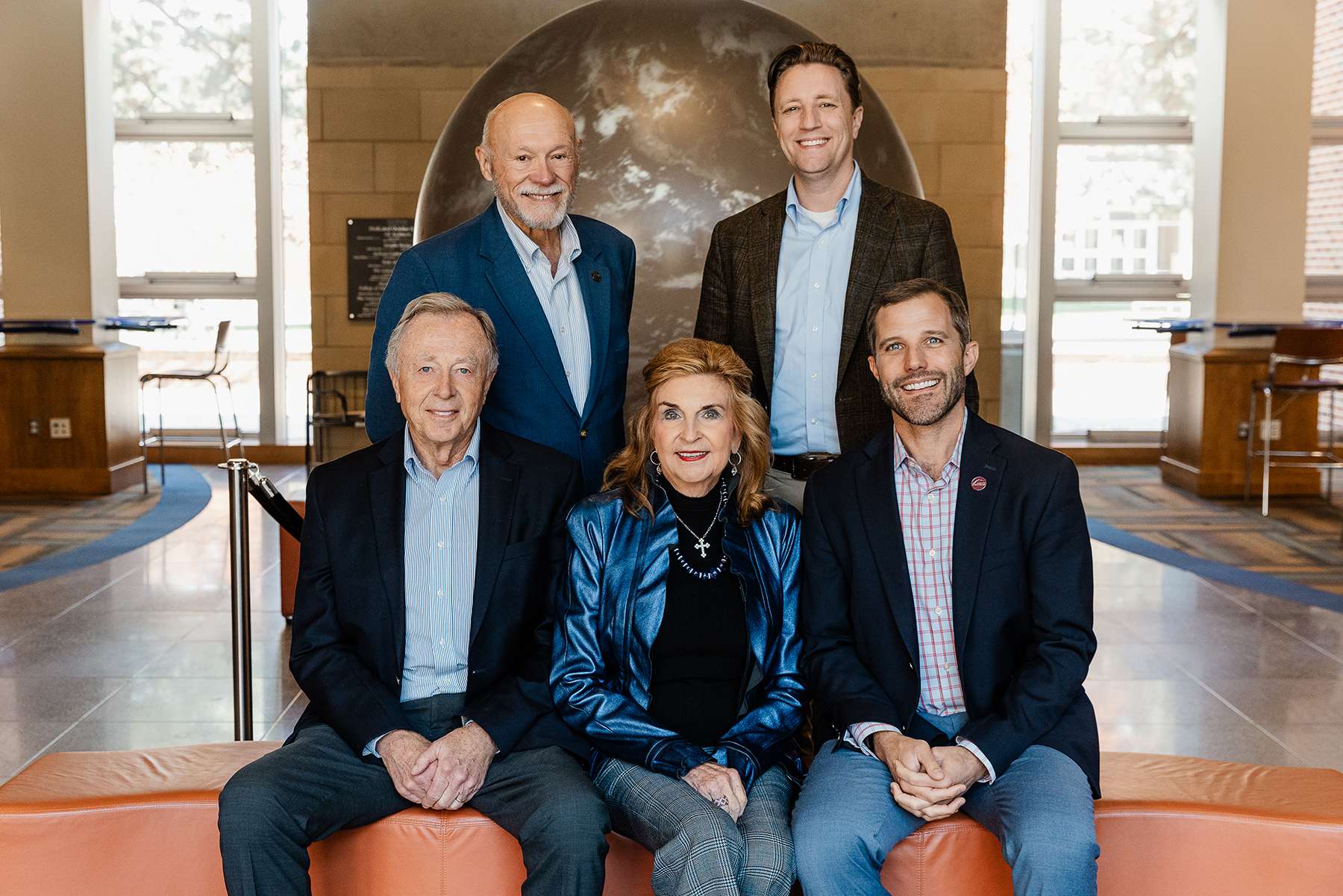
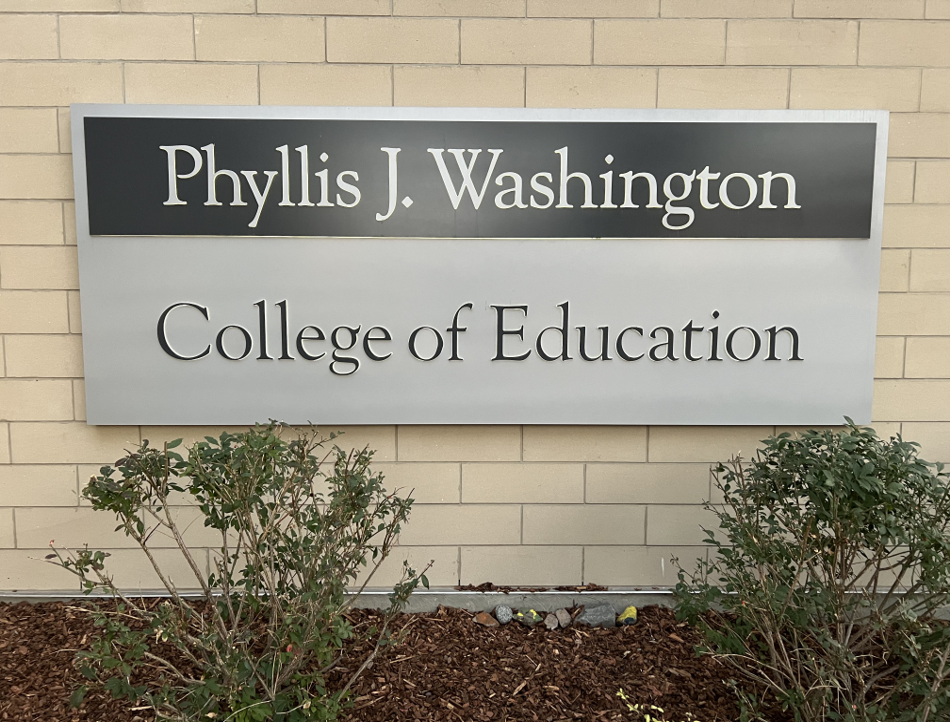
The University of Montana Foundation and the Phyllis J. Washington College of Education have just issued a press release announcing a $9.4M grant from the Dennis and Phyllis Washington Foundation to support positive education at the University of Montana and throughout the state. I am humbled to hear of this amazing support and immensely grateful to Phyllis Washington and the Washington Foundation for their vision and generosity.
Specifically, these funds will support the educational journey of prospective Montana teachers and school counselors and will grow our efforts to address the emotional and behavioral health of Montana educators and students through positive education. As you may know, thanks to a previous grant from the Arthur M. Blank Family Foundation, I’ve been very involved in promoting the principles of positive psychology and education throughout Montana. I look forward to continuing my work with Montana teachers and administrators. This incredibly generous grant will deepen our support for current and future Montana educators, including professional school counselors. Together, we will work to improve the emotional and behavioral health of young people in Montana and beyond.
If you have questions, please reach out to the names and numbers listed in the official press release.
P.S.: Along with my thanks to the Washington Foundation, in keeping with the principles of positive psychology, I want to emphasize my gratitude to Dr. Dan Lee, Dean of the Phyllis J. Washington College of Education, and the extremely competent and capable team of Erin Keenan, Erin White, and Jason Newcomer from the University of Montana Foundation. Of course, many of you who receive this message are also on my gratitude list. I hope you can feel good feelings deep inside yourselves about your own contributions to creating a better future for Montana youth, educators, and schools. I look forward to working collaboratively with all of you in the future.
If you’re an educator, you can sign up for the “Spring” version (starting in January) of our Happiness for Teachers course. This course has been very popular among teachers who have taken it. Here’s what one Montana educator emailed me first thing on January 1:
John, your course is fantastic! It absolutely exceeded my high expectations, and I find myself reflecting on and applying things I’ve learned all the time. There’s likely some recency bias, but I’m trying to think of another college course I have taken that is as meaningful and applicable for me. It has helped my overall happiness and well-being both personally and professionally, and it has given me the ideas and language to share with and support others (wife, children, students, coworkers, etc.). Thank you!
If you’re an educator or you want to share this information with an educator, read on for the details.
To Register
This semester, we have a reduced price for Rural Montana Educators: $95. We also have our usual extremely reduced price for Montana Educators for the Big Seven School Districts: $195. Either way, thanks to a grant from the Arthur M. Blank Family Foundation, the price is a bargain for 3 Grad Credits from the University of Montana.
Because we want to support teachers, our approach to grading is flexible. Teachers can select from one of three grading options.
Teachers can receive 3 graduate credits from the University of Montana – graded using a Credit/No Credit system. That means you need to complete enough course assignments to obtain 70% (you can do more). Then you will pass the course and receive the credits. Even if you get an NCR in the course, you can qualify for a pro-rated number of OPI credits based on your percentage completion.
Teachers can receive 3 graduate credits from the University of Montana – graded using a traditional “letter” grading system. Some school districts require a letter grade to count the course toward your payscale.
You can receive up to 48 OPI credits. This option is especially useful if you find you’re unable to complete at least 70% of the assignments. You can receive a pro-rated total of OPI hours . . . depending on how many hours of the course you complete.
How Much Work will the Course Be?
This is a graduate-level course, and so there’s a significant workload. If you can take the course for credit/no credit (see above), then you only need to obtain 70%, which makes the workload lighter.
At the ½ point in the course, we will ask all participants to inform us how they want to take the course (for credit/no credit; for a letter grade; for OPI hours). If you get ½ way through the course and you think you’re not going to pass (or get the grade you want), then you can take it for OPI hours. In the end, even if you get an NCR in the course, you can still qualify for a prorated number of OPI hours.
To complete the whole course, teachers need to complete the following assignments:
Initial and Final Happiness Assessments (20 points each; 40 points total): During the first and final days of class you’ll be given a link to a happiness assessment packet via Qualtrics. We’re collecting this data to support the grant we have that enabled us to offer you this course at a steep discount.
Active Learning Assignments (complete 10 of the 14 options available; 10 points each; 100 total points): These are short assignments designed to get you in the habit of incorporating happiness-related activities into your life. These assignments are graded pass (10 points) or not pass (0 points). To get your 10 points you need to complete the bare minimum of a thoughtful response.
Weekly Discussion Board Postings and Comments (30 posts; total 60 points): We want you to engage with each other on how you might apply what you’re learning in this course. To encourage this, you’re assigned to make two posts each week (30 total posts). We’d like you to make one post about the weekly course content (lectures and other assigned content) and one post commenting on the post of someone else.
Development of One Educational Lesson Plan (3-5 pages; 40 points): Pick a topic from class (e.g., savoring, gratitude, acts of kindness, etc.) and then write a lesson plan that you could potentially use in your educational setting. You DO NOT need to implement these lesson plans; the assignment is only to create them.
Live online or recorded final pub quiz (30 points, plus prizes): During the last Unit of class John Sommers-Flanagan will hold a live and synchronous open pub-style happiness trivia quiz. If you participate live you can win prizes. Whether you participate live or watch the recording, you can earn 30 points by turning in the answers to the 30 happiness trivia questions.
Substitute (or Extra) Credit (40 points): You can engage in 5 or more sessions of individual counseling with a Master’s student at the University of Montana. You can use these points to substitute for another assignment, or as extra credit.
How Much Time will This Course Take?
The video-recorded lecture component of the course takes about 45 hours to view.
If you complete the whole course, assignments outside of class will take approximately an additional 100 hours.
For the Fall, 2024 version of the course, there will be 15 weeks—although you’ll be working at your own pace. Assuming you worked at an even pace over the 15 weeks, anticipating about 10 hours a week for the course is a reasonable estimate.
Our Goals
We want to support teachers because we view them as unappreciated, underpaid, and highly stressed by the demands of their jobs. We have three objectives:
Offer a high quality and low-cost course to Montana teachers and other school personnel. The fee is $195 for 3-credits.
Focus the course content on emotional wellness—teachers can apply this content to themselves, and possibly also apply it in their classrooms.
By offering a 3-credit graduate course through the University of Montana, teachers may qualify for a salary bump.
Here are a couple of un-flashy memos describing the courses, just in case you want to download and share them. First, the Rural Educator section:
Earlier this week, I had an amazing Montana educator tell me, among other things, about how the election results ignited fears for the future of public education. In response, I wrote the following piece. I know it’s a little intellectual, but that’s what you get from a college professor. I’m sharing this with you mostly because I think you’re all amazing Montana educators and want to support you in whatever way I can.
********************
In this moment, I’m aware that while some are celebrating this morning’s election outcome, others are experiencing despair, sadness, anger, betrayal, and fear. After an election like this one, it’s easy to have our thoughts and emotions race toward various crisis scenarios. If that’s what’s happening to you, no doubt, you are not alone.
We all have unique responses to emotional distress. If you feel threatened by the election outcome, you may have impulses toward action that come with your emotions. In stress situations, we often hear about the fight or flight (or freeze) response, but because we’re all complex human beings, fight or flight or freeze is an oversimplification. Although feeling like running, hiding, freezing, or feeling surges of anger are natural and normal, most of the fight or flight research was conducted on rats—male rats in particular. For better and worse, our emotional and behavioral responses to the election outcomes are so much more complex than fight or flight.
As humans we respond to threat in more sophisticated ways. One pattern (derived from studies with female rats) is called tend and befriend. Although these are also simplistic rhyming words, I translate them to mean that if you’re feeling stressed, threatened and fearful, it’s generally good to reach out to others for support and commiseration, to support others, and to gather with safe people in pairs or families or groups.
If you work in a school, I encourage you to be there for each other, regardless of your political views. For now, it will probably feel best to stay close to those with whom you have common beliefs. Eventually, I hope that even those of you with different beliefs can recognize and respect the humanity within each other. The most destructive responses to stress and threat are usually characterized by hate and division. The more we can connect with others who feel safe, the better we can deal with our own rising feelings—feelings that may be destructive or hateful.
Another complex thing about humans is that we can have a therapeutic response to focusing on our pain, grief, anger, and other disturbing emotions. There’s clear evidence that letting ourselves feel those feelings, and talking and writing about them, is important and therapeutic. But, in an odd juxtaposition, it’s also therapeutic to intentionally focus on the positive, to imagine and write about the best possible outcomes in whatever situations we face, and in looking—every day—for that which is inspiring (rather than over-focusing on that which is depressing or annoying). To the extent that you’re feeling distressed, I encourage you, when you can, to take time going down both those roads. That means taking time to experience your difficult and painful feelings, as well as taking time to focus on what you’re doing that’s meaningful in the moment, and whatever positive parts of life you can weave into your life today, tomorrow, and in the future.
My main point is that you are not alone. Many people, right alongside you, are in deep emotional pain over the outcome of the election. As you go through these bumpy times, times that include fears for the future of children, families, education, and communities I hope we can do this together. Because in these moments of despair and pain, we are better together.
Or, as Christopher Peterson said, “Other people matter. And, we are all other people to everyone else.”
You matter and your reactions to this immense life event matters. Please take good care of yourself and your colleagues, friends, and family.
It can be good to have an IOU. I knew I owed my former student and current colleague, Maegan Rides At The Door, a chance to publish something together. We had started working on a project several years ago, but I got busy and dropped the ball. For years, that has nagged away at me. And so, when I read an article in the American Psychologist about suicide assessment with youth of color, I remembered my IOU, and reached out to Maegan.
The article, written by a very large team of fancy researchers and academics, was really quite good. But, IMHO, they neglected to humanize the assessment process. As a consequence, Maegan and I prepared a commentary on their article that would emphasize the relational pieces of the assessment process that the authors had missed. Much to our good fortune, after one revision, the manuscript was accepted.
I saw Maegan yesterday as she was getting the President Royce Engstrom Endowed Prize in University Citizenship award (yes, she’s just getting awards all the time). She said, with her usual infectious smile, “You know, I re-read our article this morning and it’s really good!”
I am incredibly happy that Maegan felt good about our published article. I also re-read the article, and felt similar waves of good feelings—good feelings about the fact that we were able to push forward an important message about working with youth of color. Because I know I now have your curiosity at a feverish pitch, here’s our closing paragraph:
In conclusion, to improve suicide assessment protocols for youth of color, providers should embrace anti-racist practices, behave with cultural humility, value transparency, and integrate relational skills into the assessment process. This includes awareness, knowledge, and skills related to cultural attitudes consistent with local, communal, tribal, and familial values. Molock and colleagues (2023) addressed most of these issues very well. Our main point is that when psychologists conduct suicide assessments, relational factors and empathic attunement should be central. Overreliance on standardized assessments—even instruments that have been culturally adapted—will not suffice.
And here’s the Abstract:
Molock and colleagues (2023) offered an excellent scholarly review and critique of suicide assessment tools with youth of color. Although providing useful information, their article neglected essential relational components of suicide assessment, implied that contemporary suicide assessment practices are effective with White youth, and did not acknowledge the racist origins of acculturation. To improve suicide assessment process, psychologists and other mental health providers should emphasize respect and empathy, show cultural humility, and seek to establish trust before expecting openness and honesty from youth of color. Additionally, the fact that suicide assessment with youth who identify as White is also generally unhelpful, makes emphasizing relationship and development of a working alliance with all youth even more important. Finally, acculturation has racist origins and is a one-directional concept based on prevailing cultural standards; relying on acculturation during assessments with youth of color should be avoided.
And finally, if you’re feeling inspired for even more, here’s the whole Damn commentary:
Uncommon Courses is an occasional series from The Conversation U.S. highlighting unconventional approaches to teaching.
Title of Course
Evidence-Based Happiness for Teachers
What prompted the idea for the course?
I was discouraged. For nearly three decades, as a clinical psychologist, I trained mental health professionals on suicide assessment. The work was good but difficult.
I consulted my wife, Rita, who also happens to be my favorite clinical psychologist. We decided to explore the science of happiness. Together, we established the Montana Happiness Project and began offering evidence-based happiness workshops to complement our suicide prevention work.
In 2021, the Arthur M. Blank Family Foundation, through the University of Montana, awarded us a US$150,000 grant to support the state’s K-12 public school teachers, counselors and staff. We’re using the funds to offer these educators low-cost, online graduate courses on happiness. In spring 2023, the foundation awarded us another $150,000 so we could extend the program through December 2025.
What does the course explore?
Using the word “happiness” can be off-putting. Sometimes, people associate happiness with recommendations to just smile, cheer up and suppress negative emotions – which can lead to toxic positivity.
As mental health professionals, my wife and I reject that definition. Instead, we embrace Aristotle’s concept of “eudaimonic happiness”: the daily pursuit of meaning, mutually supportive relationships and becoming the best possible version of yourself.
The heart of the course is an academic, personal and experiential exploration of evidence-based positive psychology interventions. These are intentional practices that can improve mood, optimism, relationships and physical wellness and offer a sense of purpose. Examples include gratitude, acts of kindness, savoring, mindfulness, mood music, practicing forgiveness and journaling about your best possible future self.
Students are required to implement at least 10 of 14 positive psychology interventions, and then to talk and write about their experiences on implementing them.
The lesson on sleep is especially powerful for educators. A review of 33 studies from 15 countries reported that 36% to 61% of K-12 teachers suffered from insomnia. Although the rates varied across studies, sleep problems were generally worse when teachers were exposed to classroom violence, had low job satisfaction and were experiencing depressive symptoms.
The sleep lesson includes, along with sleep hygiene strategies, a happiness practice and insomnia intervention called Three Good Things, developed by the renowned positive psychologist Martin Seligman.
I describe the technique, in Seligman’s words: “Write down, for one week, before you go to sleep, three things that went well for you during the day, and then reflect on why they went well.”
Next, I make light of the concept: “I’ve always thought Three Good Things was hokey, simplistic and silly.” I show a video of Seligman saying, “I don’t need to recommend beyond a week, typically … because when you do this, you find you like it so much, most people just keep doing it.” At that point, I roll my eyes and say, “Maybe.”
Then I share that I often awakened for years at 4 a.m. with terribly dark thoughts. Then – funny thing – I tried using Three Good Things in the middle of the night. It wasn’t a perfect solution, but it was a vast improvement over lying helplessly in bed while negative thoughts pummeled me.
The Three Good Things lesson is emblematic of how we encourage teachers in our course – using science, playful cynicism and an open and experimental mindset to apply the evidence-based happiness practices in ways that work for them.
I also encourage students to understand that the strategies I offer are not universally effective. What works for others may not work for them, which is why they should experiment with many different approaches.
What will the course prepare students to do?
The educators leave the course with a written lesson plan they can implement at their school, if they wish. As they deepen their happiness practice, they can also share it with other teachers, their students and their families.
Over the past 16 months, we’ve taught this course to 156 K-12 educators and other school personnel. In a not-yet-published survey that we carried out, more than 30% of the participants scored as clinically depressed prior to starting the class, compared with just under 13% immediately after the class.
The educators also reported overall better health after taking the class. Along with improved sleep, they took fewer sick days, experienced fewer headaches and reported reductions in cold, flu and stomach symptoms.
As resources allow, we plan to tailor these courses to other people with high-stress jobs. Already, we are receiving requests from police officers, health care providers, veterinarians and construction workers.
Thanks to the support of the Arthur M. Blank Foundation, we (the Montana Safe Schools Center and the Montana Happiness Project) have funding to support a very low cost 3-credit online graduate course titled, “Evidence-Based Happiness for Educators.”
This course is available very soon – the first class “meeting” is on July 5, from 9:30am-11:30am. I have “meeting” in quotes here because the course can be taken asynchronously, although we recommend synchronous “live” attendance on specific dates. The details follow:
When: The course begins on Wednesday, July 5, 2023. The course consists of 20, 2-hour sessions. The final meeting is on Tuesday, August 1. Live (synchronous) class meetings will be held from 9:30am to 11:30am on the following dates:
Wednesday, July 5
Monday, July 10
Monday, July 17
Monday, July 24
Monday, July 31
Where: Online. After you register, as soon as we have the final course details taken care of, you’ll receive a Zoom link for attending sessions, and accessing course videos and materials.
What: The course, COUN 595 (Evidence-Based Happiness for Educators) is an academic review and experiential practice of evidence-based happiness strategies. Participants will have daily reading/podcast/video assignments, along with experiential practice assignments. The primary purpose of the course is for teachers to learn to apply evidence-based happiness strategies (e.g., gratitude, savoring, etc.) to themselves. The secondary purpose of the course is for teachers to make plans for how they can integrate evidence-based happiness principles and activities into their classrooms. You will not be required to implement these ideas in your classrooms, but we will encourage you to experiment with the ideas on yourself and, to the extent that you desire, to share them with students.
Who can enroll: All Montana teachers are eligible to enroll. There is a class cap at 40.
Who will teach the course: Lillian Martz, M.A., a doctoral student in the Department of Counseling at the University of Montana will be the lead instructor. John Sommers-Flanagan, a professor in the Department of Counseling will be the secondary instructor.
The cost: Due to a generous grant from the Arthur M. Blank Foundation, we can offer this course at approximately 20% of a usual University of Montana summer course. Instead of over $1,000, the course is $175.00 for 3 graduate credits. You can also take the noncredit version of the course (and qualify for 40 OPI hours), for $75.00.
What else: Because this course is underwritten by the Arthur M. Blank Foundation, we will ask participants to complete questionnaires before and after the course. You will not be required to complete the questionnaires, but if you do, that will help us to better understand the usefulness of this course content for Montana educators . . . and we would greatly appreciate your participation.
In 2017, I collaborated with Dr. Charles Palmer and Daniel Salois (now Dr. Daniel Salois) on a creative, one-of-a-kind research study evaluating and comparing the effectiveness of an educational intervention vs. a hypnotic induction transporting people to the future in for improving the accuracy of March Madness NCAA Basketball Tournament bracket picks. The results were stunning (but I can’t share them right now because I want to recruit anyone and everyone in the Missoula area to participate in our planned replication of this amazing study). The study has been approved by the University of Montana IRB.To participate, follow these instructions:1.Email Marchmadnessresearch2023@gmail.com and say “Yes, I’m in!”2.We will email you back a confirmation.3.Upon arrival at the study location, you will be randomly assigned to one of two “March Madness Bracket Training” groups:a.Hypnosis to enhance your natural intuitive powersb.Educational information from a UM professor4.All participants will meet in room 123 of the Phyllis J. Washington College of Education building at 7pm on Tuesday, 3/14/23. Enter on the East end of the building. From there, we’ll send you to a room for either the education or hypnosis intervention.5.When you arrive in your room, you will fill out an informed consent form, a March Madness bracket, and complete a short questionnaire. 6.Then you will participate in either they educational or hypnosis training.7.After the training, you will complete another bracket and short questionnaire8.You will leave your completed packet and your brackets with the researchers; they will be uploaded into the ESPN Tournament Challenge website using the “Team Name” you provide. If you bring a device, we will provide a password so you can upload your own selections into the ESPN system.9.You will receive information at the “Training” on how to login and track your bracket. On or around April 15, we will post a summary of the research results at: https://johnsommersflanagan.com/Once again, to sign up for this research project, email: Marchmadnessresearch2023@gmail.com I’m posting this because we’re trying to recruit as many participants as possible. If you live near Missoula, please consider participating. If you know someone who might be interested, please share this with them. Thanks for reading and have a fabulous day.John S-F
I have a political platform. I’m not running for public office, but I still share my platform when it seems appropriate and the time is right.
Tomorrow will be an appropriate and right time for me to share my platform.
The nice thing about having your own personal political platform is that it never involves committee meetings. I don’t have to vote or risk rejection of my excellent ideas. I am solely responsible for my personal political platform.
A while back, I got into trouble for expressing my political views in a newspaper Op-Ed piece. The Office of the Commissioner of Higher Education contacted the University of Montana Legal Counsel asking her to issue me a stern warning. Apparently, I was supposed to have a line along with my Op-Ed byline saying something like, “The views expressed herein are solely the views of John Sommers-Flanagan, and not representative of the University of Montana.”
Clearly, I was in the wrong and admitted so. Not having the UM disclaimer statement was an oversight for which I was, as usual, solely responsible.
But I was still annoyed, and so I wrote the UM Legal Counsel and asked her if I should include similar comments the next week when keynoting the Montana statewide “Prevent Child Abuse” conference. I explained that I was going to “come out” against child abuse. Would OCHE be okay with that? I was also going to recommend one (among many) evidence-based solution for child abuse that involves increased government provision of financial and material support to low income families. I went on to note that I’m pro-mental health and against violence. Should I disclaim the University of Montana in all my books, articles, speeches, and conversations? I told her she could share my questions with OCHE. Fortunately, her judgment is better than mine and she just emailed me back with a calming, soothing, and understanding tone.
All this is a lead-up to tomorrow.
Tomorrow is the First Annual Missoula Summit on Education. Luckily, Dr. Erica Zins, the 2017 Montana School Counselor of the Year and current MCPS Student Services Coordinator, asked if I would be willing to provide a presentation for the Summit. I eagerly said yes, yes, yes, choose me! Now I have the good fortune of getting to do three separate talks tomorrow.
My talks are titled, “Weaving Evidence-Based Happiness into the Lives of Students and Educators” at 9am and repeated at 12:15pm and then “Engaging and Working Effectively with Parents” at 2:15pm. They’re all in the Sentinel H.S. auditorium. I’ve got about 210, 175, and 100 MCPS staff signed up for my talks. . . which is humbling because many MCPS staff have already heard most of my stories and jokes.
I never told Erica that my true motive for being so eager to talk at the Summit was related to my personal political platform. Tomorrow, I will have three chances to begin workshops with my short stump speech. I’m stoked about this. Just in case you’ll be missing tomorrow’s event, here’s a written version of the highly anticipated stump speech.
Nothing is more important for American prosperity and success than teachers and other public-school employees. Everything runs through education. Think about it. Economic vitality? We need people with knowledge, skills, and business acumen. Healthcare? Who wants uneducated healthcare personnel? As far as I’m concerned, the smarter and more well-educated my doctor is, the better. How about the environment? Only through education can we learn to be great stewards of the earth. And relationships? We need awareness, knowledge, and skills to create better marriages and families, be better parents, and have healthier, empathic, and equitable relationships with all people—including the full range of diverse backgrounds, ethnicities, and identities.
To summarize, my platform is EDUCATION. EDUCATION in general, and PUBLIC EDUCATION in particular . . . along with all the school personnel that make education happen. They need and deserve support, appreciation, and pay raises.
And . . . to make the OCHE people happy, I will also be emphasizing: Although I am a proud University of Montana faculty member and huge supporter of, and believer in, the University of Montana, I am solely responsible for the views on education expressed in this blog, as well as the views I will express tomorrow at the Summit.
For anyone interested, here’s a draft version of the Weaving Happiness . . . ppts:







 John Sommers-Flanagan