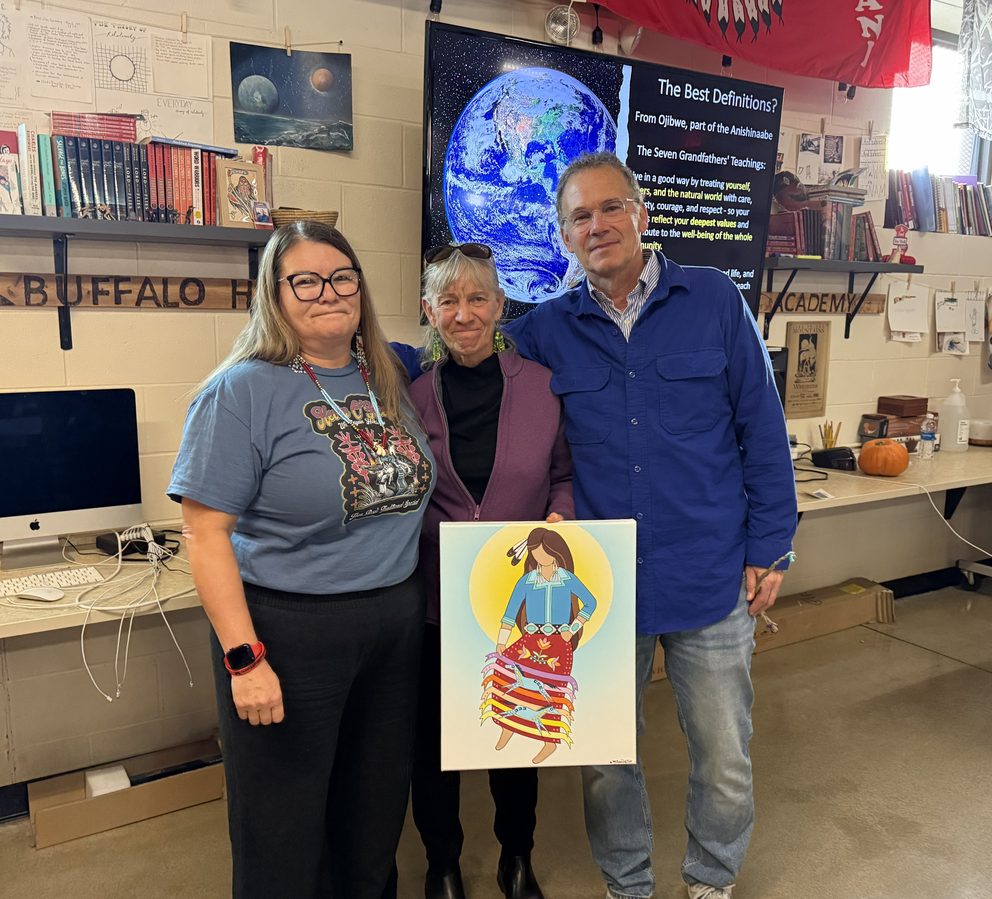
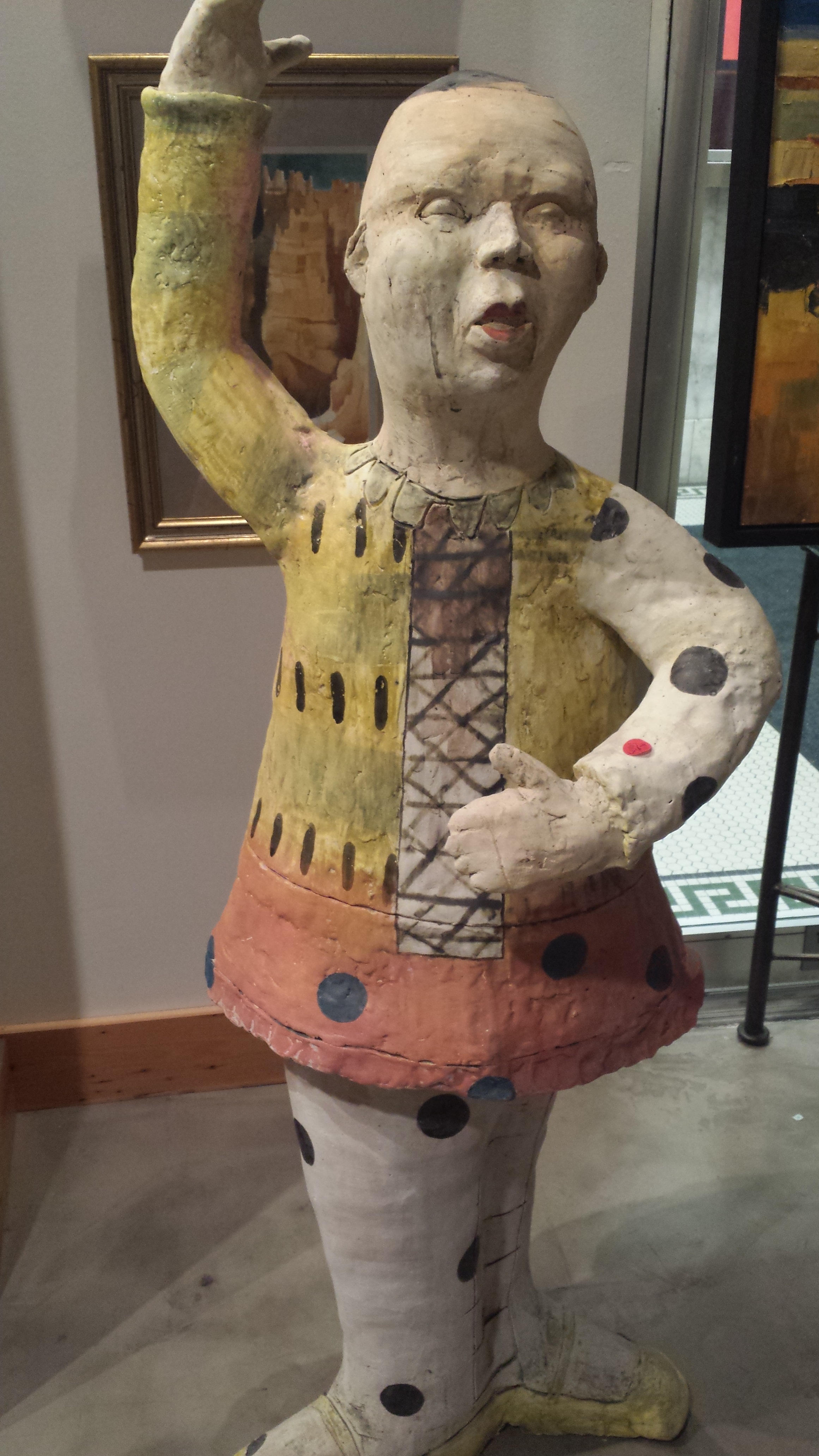
This photo is of Lynnel Bullshoe gifting Rita beautiful Indigenous art at a two-day workshop in Browning on the Blackfeet Reservation.
With all the politicizing and media activity around DEI, I think it’s easy to get confused and polarized on DEI issues. Last October, when talking with a friend at a conference in Philly, my friend told a story that I found wonderfully clarifying about DEI. In my previous Theories Preface post, I didn’t include her anecdote–which is one of my favorites–because I didn’t have permission then. But I have permission now, so here’s the missing anecdote:
Recently, a friend of ours told us a story about being asked to deliver a keynote speech for a state school counselor association event. A board member recommended that she “go light on DEI.” Perhaps our friend interpreted that as “You’ve got the green light on DEI,” as the beginning of her speech went something like this:
I was asked to go light on DEI, so I’d like to start by saying, I recently heard someone say that the opposite of diversity is uniformity. The opposite of equity is inequity. The opposite of inclusion is exclusion. And the opposite of anti-racism is racism. I sincerely hope it’s safe to say that as school counselors, none of us want uniformity, inequities, or exclusionary and racist practices.
She went on to remind the audience that we cannot take DEI out of our work, that it is our professional and ethical duty to continuously examine our biases, assumptions, and beliefs, and engage in the ongoing work of self-reflection, learning, and unlearning (J. V. Taylor, personal communication, October 11, 2025).
I love this clear, concise, and beautiful analysis of what is NOT DEI.
Today, Tammy Tolleson Knee and completed day 1 of a 2-day course on Strengths-Based Suicide Assessment and Interventions in Schools at the Buffalo Hide Academy of Browning Public Schools on the Blackfeet Reservation. We are beyond happy for this opportunity. It’s the first time for Tammy and I to present together (for two days!). As frosting on the presentation cake, Rita is here with us, watching, listening, heckling, and guiding.
In case you haven’t heard, Browning Public Schools and their staff have already started integrating strengths-based suicide prevention work into their programming. Two of our former University of Montana school counseling graduates, Sienna and Charlie Speicher are at the center of this work. Sienna and Charlie have already taught strengths-based courses through Blackfeet Community College, and they founded the Firekeeper Alliance. Here’s the Firekeeper Alliance Mission Statement:
Our mission is to cultivate resources, attention, and awareness to ultimately transform perspectives regarding suicidal distress in Indian Country and to help reduce suicide rates in our communities. We believe that mainstream and current approaches of suicide assessment and intervention struggle to meet the unique needs of Tribal populations. The Firekeeper Alliance promotes a different set of strengths-based, decolonized ideals around suicidal behavior. We believe that systemic and cultural shifts in the clinical community are necessary to truly make a positive change.
The Firekeeper Alliance also focuses on several areas, including offering strengths-based approaches to counseling, as in the following:
Offer individual and group counseling sessions utilizing evidence-based therapies which are effective in addressing suicidality.
Promote assessment techniques and interventions that elicit protective factors and a resilient spirit.
Administer assessment instruments that screen for strengths, character assets, and benevolent experience to depathologize suicidal distress.
Advocate for strengths based assessment and intervention approaches to be used in conjunction with cultural healing mechanisms.
Back to our training. . .here are the ppts that Tammy and I developed. There are SO MANY, but then again, we’re covering two whole days!
In closing, I want to give a big shout-out to Browning Public Schools (BPS) for collaborating with us (the Center for the Advancement of Positive Education; aka CAPE) to bring this training to Browning. Not only do we have a dozen or so school counselors in the room, we’ve also got a dozen or so administrative staff, including principals and the BPS superintendent. We had a blast today and are looking forward to more meaningful fun tomorrow!
We’re in the throes of editing our Theories text, meaning I’m so deep into existential, feminist, and third wave counseling and psychotherapy theories that I may have lost myself. If any of you find me somewhere on the street babbling about Judith Jordan and Frantz Fanon and Bryan Cochran, please guide me home.
This brings me to a big ask.
As part of 4th wave feminism, we’re more deeply integrating intersectionality into the practice of feminist therapy. Among other things, intersectionality is about identity. I’m interested in using a variation of Irvin Yalom’s “Who are you?” group technique to explore identity in anyone willing to respond to this post.
To participate, follow these instructions.
Clear a space for thinking, writing, and exploring your identity.
Ask yourself the question: “Who am I?” and write down the response as it flows into your brain/psyche.
Repeat this process nine more times, for a total of 10 responses, numbering each response. One rule about this: You can’t use the same response twice.
After you finish your list of 10, write a paragraph or two about how you were affected by this activity.
If you’re comfortable sharing, send me your list of 10 identities along with your reflections (email: john.sf@mso.umt.edu). If you prefer the more public route, you can post your responses here on my blog. Either way, because I’m in 24/7 theories mode, you may not hear back from me until middle November!
There’s a chance I might want to quote one or more of you in the theories text, instructor’s manual, student guide, or in this blog. If that’s the case, I will email you and request permission.
Thanks for considering this activity and request. Identity and identity development are fascinating. Whether we’re talking about multiple identities (intersectionality), emotions and behaviors (Blake), or the “microbes within us” (Yong), we all contain multitudes.
I’ve spent the better part of the past two weeks doing presentations in various locations and venues. I did five presentations in Nebraska, and found myself surprisingly fond of Lincoln and Kearney Nebraska. On Thursday I was at a Wellness “Reason to Live” conference with CSKT Tribal Services at Kwataqnuk in Polson. Just now I finished an online talk with the Tex-Chip program. One common topic among these talks was the title of this blog post. I have found myself interestingly passionate about the content of this particular. . . so much so that I actually feel energized–rather than depleted–after talking for two hours.
Not surprisingly, I’ve had amazingly positive experiences throughout these talks. All the participants have been engaged, interesting, and working hard to be the best people they can be. Beginning with the Mourning Hope’s annual breakfast fundraiser, extending into my time with Union Bank employees, and then being with the wonderful indigenous people in Polson, and finally the past two hours Zooming with counseling students in Texas . . . I have felt hope and inspiration for the good things people are doing despite the challenges they face in the current socio-political environment.
If you were at one of these talks (or are reading this post), thanks for being you, and thanks for contributing your unique gifts to the world.
For your viewing pleasure, the ppts for this talk are linked here.
Today, Dr. Bossypants (aka Rita) offered me a coauthor opportunity. Thanks Dr. BP!
Problems, like trees, have roots. As Alfred Adler (and many others) would have said, problems are multi-determined, meaning: There’s always more than one root. Most of us agree that the United States has big problems. But what are the roots of our troubles?
One side insists that the roots of our troubles include unworthy and illegal immigrants, burdening the rich with taxes, satanic trans folk, welfare fakers, and bleeding hearts. The media picks up this messaging, repeating these highly questionable theories until they sink into our psyches as if they were true.
But we are being played.
As they said back in the Watergate era, follow the money.
The rare transgender athlete is not to blame for your low wages or the price of food and shelter. Tending to the disabled and disadvantaged is not breaking the bank. Social Security makes us a strong, compassionate society—providing for all of us as we age. Social Security isn’t going broke. It’s being dismantled and privatized so the wealthy benefit.
We’re chopping off our noses to spite our faces. USAID greatly contributed to the health of the poor, the planet, and developing societies trying to recover, survive, and grow. NPR and PBS cost about $1.50 per person per year. Although their coverage has been leaning right, they work toward being objective, balanced, and accurate. A free press is at the heart of democracy.
Hiding the contributions of people of color from American history involves rewriting reality. What might be the purpose of excluding honorable actions and voices of diverse individuals and groups from our history? There’s an African proverb: “Until lions have their historians, tales of the hunt shall always glorify the hunter.” Preserving real history doesn’t make us less safe. Massive salaries, bonuses, and advantages given to those mismanaging and/or dismantling our social and financial safety nets is a real danger.
Billionaires have lied so well for so long that many Americans blame poor people and the middle class for government waste and fraud. As everyone admits, government waste and fraud exist, and there are effective strategies for minimizing waste and fraud. One billionaire strategy is this: Get the American people to blame each other for their financial woes. Then, through their tax loopholes, billionaires walk right into the henhouse and steal the country’s eggs.
Most billionaires don’t become billionaires because of their compassion and generosity. They’re billionaires because of miners, farmers, mill workers, steelmakers, refinery workers, teachers, servers, nurses, doctors, social workers, inventors, and small businesspeople: THESE are the people who make becoming a billionaire possible.
Balanced budgets are possible. Giving billionaires MORE money will not balance the budget. Taxing them more will. A graduated income tax is not the same thing as socialism. Anyone who tells you that taxing the rich and providing a social safety net is socialism or communism either (a) wants YOUR money, (b) is lying, or (c) is ignorant.
Socialism is a political and economic theory advocating that the means of production, distribution of goods, and trade/exchange be owned by the collective. Taxing the wealthy in a proportionate manner is not the same as having the collective or the government take over ownership of their businesses. In a capitalist system, taxes and government regulation function to reduce power imbalance, abuse of the poor by the wealthy, and the development of social safety nets and public health systems that benefit the whole.
The ugly fights we’re in now were started purposefully and fueled by lies, phony moral outrage, purchased bots and paid “news” outlets. We’ve been duped into “culture wars.” As if a gay marriage is why you aren’t paid fairly. As if God needs guns to defend holiness. As if basic health care for everyone will cost more than our broken system. As if we cannot share bathrooms. We share bathrooms all the time in our homes, while camping, at outdoor sporting events (think porta potties). Our economic and social problems are NOT ABOUT BATHROOMS.
We would say “wake up,” but the billionaires have cleverly stolen that concept. They want us asleep. They want us less educated, less compassionate, and more frightened.
Those in power twist science, scripture, economics, virtue, common sense, and the idea of community. But they can’t take your soul; they can’t eliminate your deep awareness of right and wrong. Only you can do that.
Ask yourselves:
If climate change caused by humans is wrong, why not clean things up anyway? Powerful people can say “drill baby drill” and it sounds aggressively American, but really, who’s pro-pollution? Denying climate change will cost us our planet.
All religions, including Christianity, advocate for taking care of the poor. Yes, it costs a few shekels. But do we want the alternative? Shall we harden our hearts and let others suffer and die?
If you believe YOU should have control over your own body and your own sexual decisions, maybe YOU can let others own their bodies and make their own choices as well?
Science is not a simplistic fact-finding mission. Science is a disciplined process of inquiry. Scientific knowledge has saved millions of lives. Funding science is about progress and having a higher quality of living. Superstition, politicizing, and irrational attacks on science is regressive, ignorant, and dangerous.
Do you think the Creator expects YOU to force your version of morality onto others? Should you enforce thou shalt not kill with weapons? Aren’t you busy enough just finding the time and resources to love your neighbor? Care for the poor? Offer your coat to anyone who needs it? It takes a lifetime to remove the log in your eye, so you can see well enough to help someone with a splinter? Isn’t God, by definition, omnipotent? We should all stop confusing our will, our interests, and our greed, with God’s will.
We need the rule of law. When people in power disregard and disparage the courts, they’re not acting for the common good. If we lose the rule of law, we’ll be ruled by outlaws.
Over our long history, humans have been conned, cheated, manipulated, and enslaved many times by the rich, powerful, and depraved. Trusting billionaires and others who are energized by the pursuit of power, greed, and revenge does not end well.
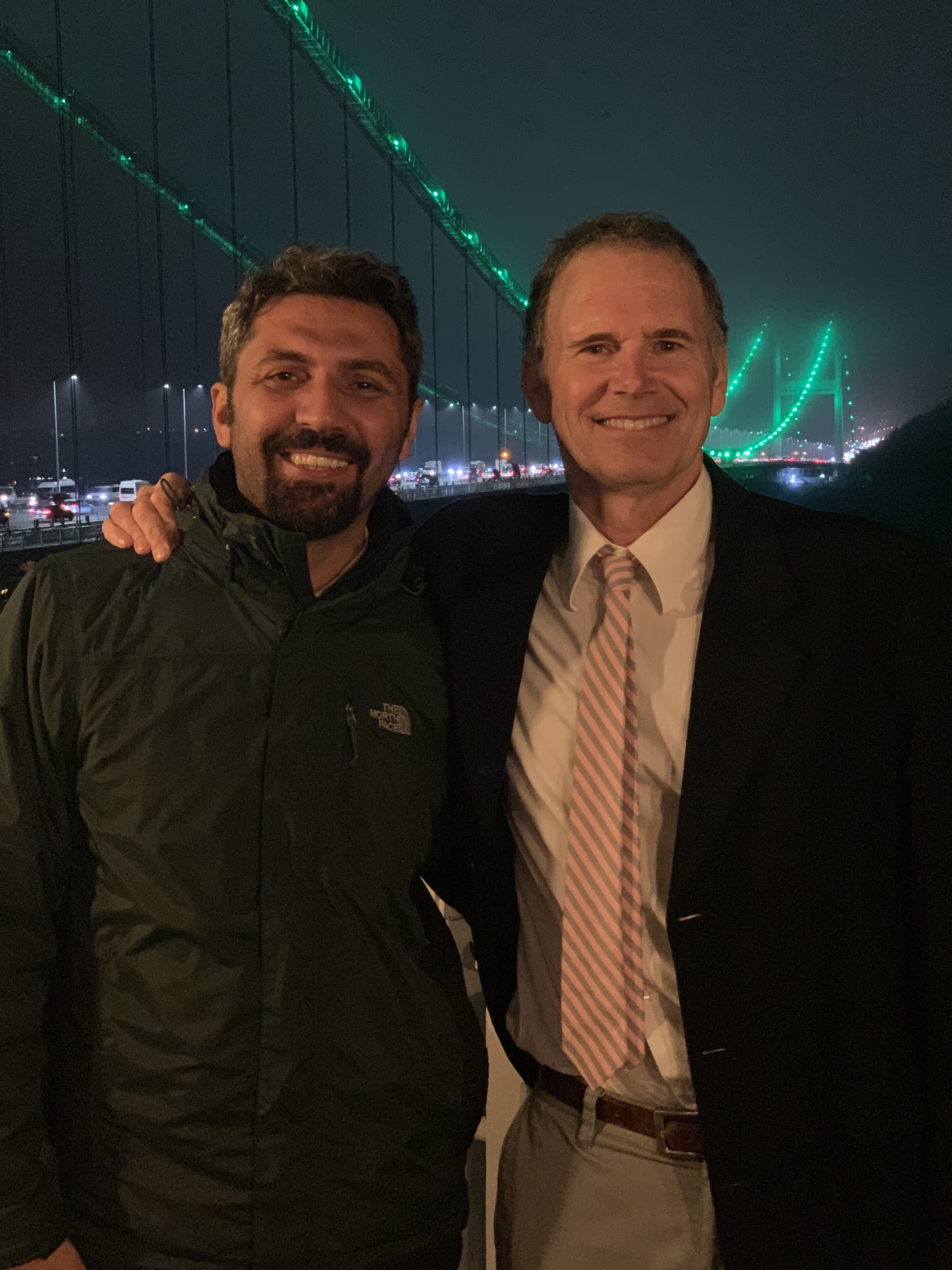
I’m continuing with the theme of featuring diverse identities from the Clinical Interviewing (7th edition) textbook with a case example written by Dr. Umit Arslan. Dr. Arslan is writing about his experience as an international graduate student in counseling, when he was at the University of Montana. Currently, he’s a faculty member at the University of Nebraska-Kearney.
The photo is from when I visited him in Istanbul in January, 2023.
Enjoy!
As you’ll see below, Umit’s experience was unique. Given his Turkish heritage and cultural background, he needed to reflect and engage in a self-awareness process to experiment with finding a better way to introduce himself to clients. What I love most about this essay is Umit’s authentic description of his own experience. His answer to a better way to introduce himself won’t be the right answer for everyone. But his process is open and admirable.
CASE EXAMPLE 2.2: BEING A COUNSELOR FIRST . . . AND TURKISH SECOND, WORKED BETTER THAN BEING TURKISH FIRST . . . AND A COUNSELOR SECOND
Finding the right words and ways to introduce yourself is important. In this essay, Ümüt Arslan, Ph.D., an associate professor of counseling at İzmir Democracy University (Turkey), writes about challenges he faced as an international doctoral student in counseling at the University of Montana. Put yourself in Dr. Arslan’s shoes as he discovers (for him) a better way of introducing himself.
While pursuing my doctoral degree in the U.S., my supervisor and I discussed how to share my cultural identity and accent to clients. When I shared, my clients were not only interested in my appearance and accent, but also about my diet, coffee preferences, job, and of course, about my native country, Turkey. But they were reluctant to talk about themselves.
Clients assumed I was Muslim and against alcohol. Their assumptions were especially challenging because they were inaccurate. I was not religious, and like many Americans, I enjoyed having a beer after work. I wanted to challenge clients’ assumptions about my identity, but worried about countertransference and focusing too much on myself.
One cisgender female client came for an intake interview. She saw me, grabbed her bag (almost the size of a camping tent), and put it on her knees. I couldn’t see her face. I told her she could put the bag down if she wanted to. She declined.
When I re-watched this and other sessions, the striking thing was that my clients (mostly White) appeared stressed at the sight of me, a bearded Turkish man with dark skin. They didn’t even talk about the problems they had written on their intake form. My identity as a Turkish man overshadowed everything else. I needed a path forward.
In class, my supervisor discussed alternative ways to open sessions. I tried asking clients: “If you were the counselor today, what question would you ask yourself?” Clients suddenly engaged with me, giving deep and enthusiastic answers to their own questions. I stopped opening sessions by emphasizing cultural differences. Instead, I focused on my counselor identity, saying: “I completed my master’s degree and am currently a doctoral student. What do you think is the best question for me to ask you for us to have a good start here today?”The message, “I am here with my counselor identity” instead of “I’m a Turkish man in the U.S., and desperate to explain my culture to you,” had an amazing effect. Using a less cultural opening was more culturally sensitive. Clients could naturally introduce their own cultural identities, with fewer assumptions about me. Although I could still talk about culture, emphasizing my counselor identity enabled me to focus on counseling goals, the therapeutic relationship, and evidence-based counseling interventions.
I’m really not sure what’s happening with WordPress, but because of tech and formatting issues, this is my third effort to post this blog. Now, I’m trying an approach that requires me to separately copy and paste each paragraph into this post. I used to be able to paste the whole document and it worked just fine. Now, if I do that, it makes all 10 paragraphs into one long paragraph and I look technologically even dumber than I am. Next month, WordPress will likely make me copy and paste the blog word by word.
You may be wondering, “How are you doing John?”
I think I’ll pass on answering that for now because WordPress is now graying out each sentence I type as soon as I press “enter.” And it’s repeating some short paragraphs and even though I delete them and they appear to be gone, when I try to publish this, the deleted paragraphs re-appear. I don’t know what any of this means other than WordPress must be angry with me because I asked them for help.
What I’ve been wanting to post is that I’m honored to be speaking several times at the American Counseling Association World Conference in Toronto next week. Here’s what’s happening. . .
Bright and early Friday morning, March 31 from 8am to 9:30am, I’ll be joined by Matt Englar-Carlson of Cal State Fullerton and Dan Salois of the University of Montana, for an educational session titled, “Men, Suicide, and Happiness: Helping Men Live Meaningful Lives.” We’ll be starting our talk by wondering why there isn’t more focus on the fact that men die by suicide at 3+ the rates of women and by wondering who gets to define what constitutes intimacy and intimate conversations among men. If you come to our talk and are not fully satisfied, you just might win an evening out getting a beer with us as we lament the unpopularity of masculine psychology. Or you might not. Life is like that.
At 1pm to 1:30pm on Friday I have the great fortune of joining Amanda Evans and Kenson Hiatt of James Madison University for a poster session titled, “Wellness and Social Justice: A Positive, Liberation-Oriented Approach.” Among the many things that are cool about this presentation is the fact that Dr. Evans has creatively combined social justice, positive psychology, and liberation psychology in ways that—as far as I know—have never been done before. Given the usual awkward nature of poster sessions, I hope you’ll drop by for some conversations about how we can integrate these important perspectives and facilitate social justice. But if you’re the type who prefers walking and studiously avoiding eye-contact with poster presenters, that works too.
From 3:30pm to 5pm on Friday, I have the privilege of offering an “Author Session” titled, “Top Tips for Weaving a Strengths-Based Approach to Suicide into Your Practice.” This session—based on our ACA book by nearly the same name, I will offer strengths-based tips about viewing suicidality as an unparalleled counseling opportunity, making your assessments therapeutic, building hope from the bottom-up, and much more. Right afterward, there will be a book-signing session . . . and I hope you’ll come to that, if only to talk to me and save me from the embarrassing situation of sitting alone next to a pile of books.
On Saturday, April 1 (and this is no joke), I’ll be presenting an education session on “Counseling for Happiness: Facilitating Client and Student Wellness.” Here’s the blurb:
Most people who seek counseling not only want to deal with their problems and distress, they also want to live happier and more meaningful lives. In this education session, the presenter will describe and demonstrate six evidence-based happiness strategies that professional counselors can use with clients and with themselves. The discussion will also address how specific happiness interventions may be more or less culturally appropriate. Using an open and collaborative experimental mindset is encouraged.
In addition to these formal appearances, I will also be hanging out at the John Wiley and Sons booth in the exhibition hall (especially on Thursday, March 30, from 2-5pm for the Expo Grand Opening). If you happen to be in Toronto for the ACA Conference, I hope to see you there.
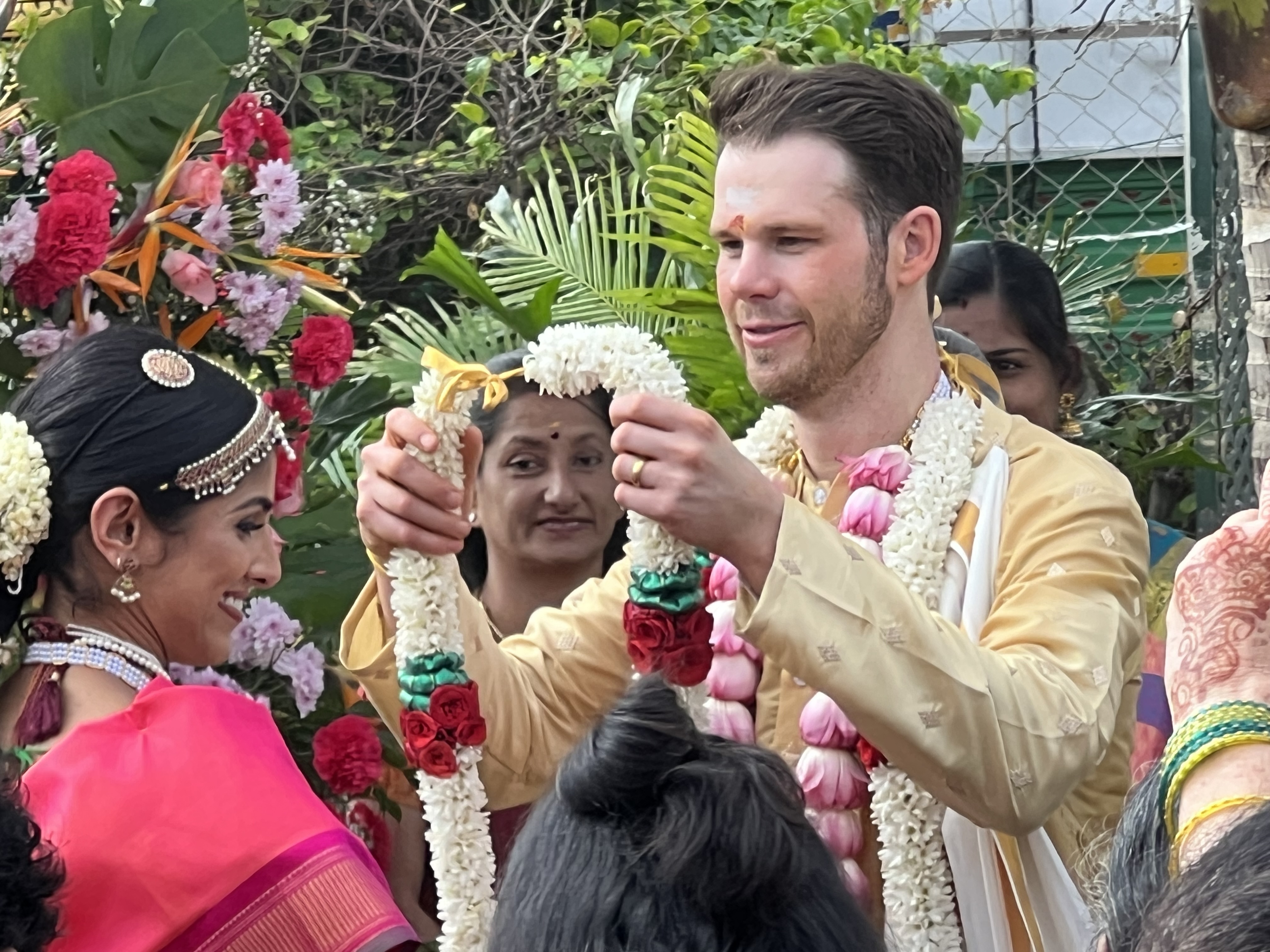
Last week I was dancing and singing in India at my nephew’s wedding. This week I’m jet-lagged in Missoula. But the afterglow continues.
Being at a wedding, it was hard not to think of my mother. She loved weddings and always wished for everyone to find love.
My sisters had similar thoughts. We reminisced and projected my mother into the scene of my nephew marrying an Asian Indian woman in a Hindu ceremony. We wished she could pop back into the world and join in.
Mostly, my mother was shy and insecure. She didn’t learn to drive until age 34. I often wished she had more confidence.
But there was one place where my mom found her voice, early and often. For mysterious and obvious reasons, she became anti-racist in the 1950s, before anti-racism was a thing. She delighted in visits from my father’s Japanese friend, Carl Tanaka. When a Black family moved onto our all-White dead-end suburban street, she was the first to greet them with welcome gifts. She then sat my sisters and I down, and told us with piercing clarity that we would ALWAYS treat every member of that family with nothing but respect and kindness. They quickly became our friends. I have great memories of hanging out with my friend Darrell, who was the closest to me in age and in school.
What I didn’t understand about my mom’s anti-racism—until last week—was that she also had a solution. My sisters told me that my mother’s favorite solution to all that ails the world was inter-racial, inter-cultural, and inter-religion marriage. Of course, I’m not naïve enough to think that any single strategy could solve racism, but last week, during a three-day Hindu marriage ceremony, I returned home transformed and preoccupied with the idea that we can and should love one another.
The internet tells me that love one another has Christian Biblical origins . . . and more. Here’s an excerpt from a site that discusses “love of neighbor” in Hinduism.
Love of the neighbor or the “other soul” is a fundamental requirement for a functioning Hindu who aspires for final liberation from this world. Any injury or insult inflicted upon the other soul is ultimately injury inflicted on oneself—or worse still, the higher being. Neighborly love is integral for one’s social existence in this world. The Anusana Parva (113:8) in Mahabharata encapsulates this wisdom and dictates that one should be unselfish and not behave toward others in a way that is disagreeable to oneself. [From: http://what-when-how.com/love-in-world-religions/love-of-neighbor-in-hinduism/]
The facts were that Stephen Klein married Sahana Kumar last week, in a beautiful coastal setting just south of Chennai, India.
In a marvelous stroke of luck, I happen to be Gayle Klein’s brother and Stephen’s Uncle John. Along with the dancing singing (which I may have overdone), I was completely taken by the intercultural love and acceptance. The Kumar family welcomed Stephen and all of us to be with them not only in the celebration, but in relationship. At the Sangeet, we were invited to dance a Bollywood and a Hollywood dance. We were terrible AND we were completely accepted. To be immersed in another culture, to learn about Hinduism, to experience glimpses of the Southern Indian cultural ways of being . . . was AMAZING.
In love and in relationship, we often fall short. It’s hard to love our politically different family members. It’s hard to love when we feel annoyed. Sometimes, as I heard the famous Julie and John Gottman say, it’s even hard to find the time and timing to love our romantic partners. But love is big and, thanks to my sisters and Stephen, Sahana, and the Kumars, I understand love a little better this week. The intent to love people who are different than us; the invitation to be in relationship across cultures and generations; the desire to be as loving as we can be . . . those are the ways of being my mom might be shouting from the heavens.
Critical Race Theory (CRT) has been in the news lately, especially in Montana. As it turns out, several Montana public officials (you know who you are) appear frightened by CRT. Their response to the idea (not the reality) of CRT being taught anywhere or anytime is to try to ban it, as in make it illegal. It’s like a modern Montana-style prohibition (“Don’t you go out and get caught with a bottle of CRT or we’ll be taking you on down to see the sheriff!”).
All jokes aside (well, not all), I have a couple brief comments and a question.
I’m struck that, in the 21st century, anyone is using the old tried and failed strategies of banning ideas and burning books. Alcohol prohibition seemed rather unsuccessful. . . and we don’t need to know what happened with Romeo and Juliet to understand that, that which is forbidden, takes on a certain sex appeal.
My other main thought is that, just in case anyone was sleeping through science class, Critical Race Theory is a . . . (wait for it) . . . a theory! As with all theories, it’s not a perfect explanation of anything. It’s a working model, a set of ideas, with maybe a few scientific hypotheses. The right response to CRT isn’t to outlaw it—because if CRT is outlawed, then only outlaws will understand CRT. Instead, CRT is great food for thought, discussion, and public and private discourse. Rather than make it illegal, we should be discussing, evaluating, and critiquing its usefulness and validity, rather than acting like studying the presence of systemic racism in American history is blasphemy. If you contemplate the issue, the answer is “Yes, of course” there has been, from the beginning, systemic racism in the U.S. (think Columbus, slavery, Indian Boarding Schools, etc.). However, the fact that systemic racism is an historic and contemporary reality doesn’t make every jot and tittle of CRT true; but certainly it suggests we take it seriously. If not, we risk tempting our children with forbidden fruit or teaching them to be afraid of new ways of thinking. Either way, banning or illegalizing or running like scared rabbits away from CRT does a disservice to our state, our country, and our children.
My question is whether I should write an Op-Ed piece on this topic. If you think so, let me know. If you think not, tell me I should let it go.
A question and brief discussion on Twitter about integrating multicultural competence into CBT inspired me to look back and see what the heck we wrote for that section in our theories text. In the Twitter discussion, we agreed that Pam Hays’s work on CBT and multicultural content is good.
Here’s what I found in our theories text. Obviously it’s a short section and limited, but there are a few interesting points and a citation or two.
Cultural and Diversity Considerations in CBT
CBT focuses on symptoms as manifest within individuals. This position can be (and is) sometimes viewed as disregarding important culture, gender, and sexual diversity issues. For most cognitive-behavioral therapists, culture, gender, and sexuality aren’t primary factors that drive successful outcomes.
This position is a two-edged sword. In the featured case (in Chapter 8), Richard is a white male living a life squarely in the middle of the dominant culture. The therapist was committed to Richard’s well-being. If the client had been an Asian Indian or a bisexual or a woman experiencing domestic abuse the cognitive-behavioral therapist would have been equally committed to the client’s well-being. This is the positive side of CBT being less diversity-oriented.
The negative side is that CBT can be viewed and experienced as blaming clients for their symptoms, when the symptoms may be a function of diversity bias. D. Dobson and K. S. Dobson (2009) articulated the potential for clients to experience blame,
By virtue of looking for distorted thoughts, cognitive-behavioral therapists are more likely than other therapists to find them. Furthermore, some clients do react to the terms distorted, irrational, or dysfunctional thinking. We have heard clients say something to the effect—” Not only do I feel bad, but now I’ve learned that my thoughts are all wrong.” (p. 252)
Awareness of the possibility of client blaming is crucial. For example, what if Richard were a Black American male? And what if his therapist noticed that Richard’s thought record included numerous personalization examples? If so, instead of concluding that Richard is displaying oversensitivity and paranoid cognitions, his therapist should explore the possibility of microaggressions in Richard’s daily life.
The term microaggression was coined by Chester Pierce (1978). Microaggressions were originally defined as “the everyday subtle and often automatic ‘put-downs’ and insults directed toward Black Americans” but now this is expanded so they “can be expressed toward any marginalized group in our society” (Sue, 2010, p. 5).
Microaggressions are typically unconscious. For example, we had a female client come to us in great distress because her vocational instructor had told her “You’re pretty strong for a girl.” Although the vocational instructor defended his “compliment,” the young woman clearly didn’t experience the statement as a compliment. In this circumstance if a therapist is insensitive to culture and gender issues, the young woman might feel blamed for having irrational thoughts and overreactive behaviors. Sue (2010) recommends that mental health professionals exercise vigilance to address microaggression issues inside and outside of counseling. One way in which cognitive behavioral practitioners have addressed the potential for committing microaggressions against sexually diverse clients is by using LGBTQ affirmative CBT (Pachankis, Hatzenbuehler, Rendina, Safren, & Parsons, 2015).
Returning to racial/cultural microaggressions, let’s briefly pretend that Richard is a 6′7′′ Black American male. In his thought record he notes:
Situation: Walking into the local grocery store. Young female makes eye contact with me and then quickly turns around and goes back and locks her car.
Thoughts: She thinks I’m going to steal her car.
Emotions: Anger.
Behavior: I act rude toward her and toward other white people I see in the store.
If the Black American version of Richard has a therapist who looks at this thought record and then talks with Richard about the distorted thinking style of mind-reading (“Richard, you didn’t really know what she was thinking, did you?”) this therapist is showing cultural insensitivity and will likely be fired by Richard. This is an example of one of the many growing edges CBT should address with respect to women and minority clients.
************
As always, your reactions to this content are welcome.
The place to click if you want to learn about psychotherapy, counseling, or whatever John SF is thinking about.




 John Sommers-Flanagan