We’re in the throes of editing our Theories text, meaning I’m so deep into existential, feminist, and third wave counseling and psychotherapy theories that I may have lost myself. If any of you find me somewhere on the street babbling about Judith Jordan and Frantz Fanon and Bryan Cochran, please guide me home.
This brings me to a big ask.
As part of 4th wave feminism, we’re more deeply integrating intersectionality into the practice of feminist therapy. Among other things, intersectionality is about identity. I’m interested in using a variation of Irvin Yalom’s “Who are you?” group technique to explore identity in anyone willing to respond to this post.
To participate, follow these instructions.
Clear a space for thinking, writing, and exploring your identity.
Ask yourself the question: “Who am I?” and write down the response as it flows into your brain/psyche.
Repeat this process nine more times, for a total of 10 responses, numbering each response. One rule about this: You can’t use the same response twice.
After you finish your list of 10, write a paragraph or two about how you were affected by this activity.
If you’re comfortable sharing, send me your list of 10 identities along with your reflections (email: john.sf@mso.umt.edu). If you prefer the more public route, you can post your responses here on my blog. Either way, because I’m in 24/7 theories mode, you may not hear back from me until middle November!
There’s a chance I might want to quote one or more of you in the theories text, instructor’s manual, student guide, or in this blog. If that’s the case, I will email you and request permission.
Thanks for considering this activity and request. Identity and identity development are fascinating. Whether we’re talking about multiple identities (intersectionality), emotions and behaviors (Blake), or the “microbes within us” (Yong), we all contain multitudes.
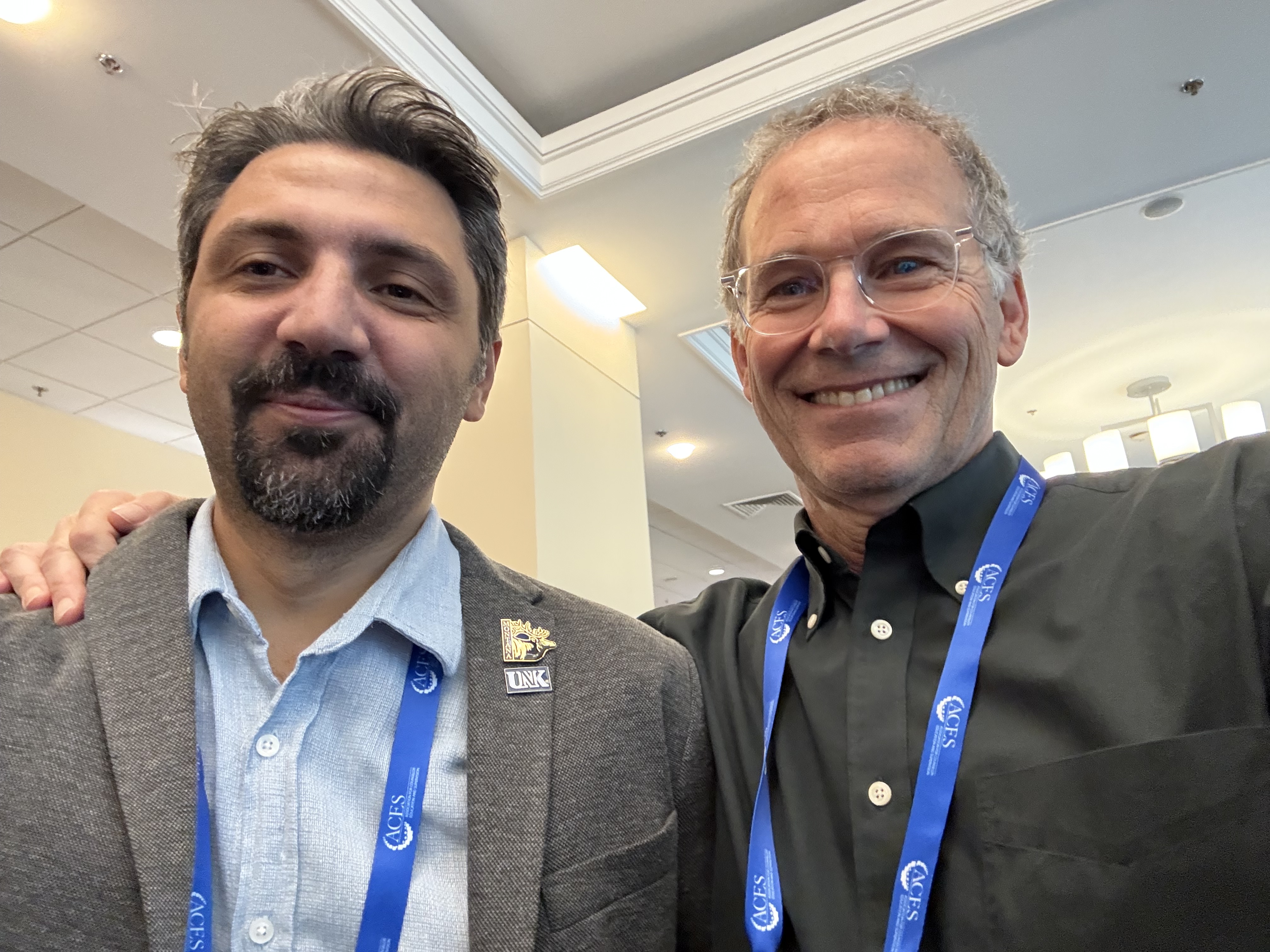
Yesterday I was in Arkansas with the Arkansas Psychological Association talking about Strengths-based Suicide Assessment. And today I’m in Philly, along with Dr. Umit Arslan (and missing Tammy Tolleson-Knee) talking about it again–at the Association of Counselor Education and Supervision conference.
Unfortunately, Tammy’s efforts to get here were foiled by a particular airline fiasco, but we’re carrying on! We miss you Tammy!
We had a blast on Saturday afternoon in Absarokee doing a 3-hour workshop on “Tools for Living your Best Life: A Happiness Primer.
Why was it a blast? Let me count the ways.
Rita opened the event with a sweet version of the song, “Happiness Runs. . .”
Turnout was awesome with 33 participants packed into the old Cobblestone Schoolhouse.
Rita and the Cobblestone Board orchestrated a “Best Savoring Treat” contest, brought in a judge, and we all applied our savoring skills before, during, and after our designated snack time. There were many deserving entries. I felt for the judge, who had to sample all 14 food options!
The group was a combination of educators and people off the street. I think the person who won the longest travel to attend drove from Jordan, but we also had a teacher from Townsend, and a handful who drove down the hill from Red Lodge.
Questions, comments, and participation was amazing. I was very impressed with the level of engagement.
At the end, I had the honor and opportunity to act as the auctioneer to raise funds for the Cobblestone Building (which needs gutters installed). As an untrained auctioneer who uses his little league “a-batta” skills combined with a complete breakdown of inhibition, it was great fun.
The event was supported by the Cobblestone Board and the Phyllis J. Washington Center for the Advancement of Positive Education (CAPE) at the University of Montana. If your organization would like to host a community event, contact Torey Wetsch at CAPE for information: torey.wetsch@mso.umt.edu.
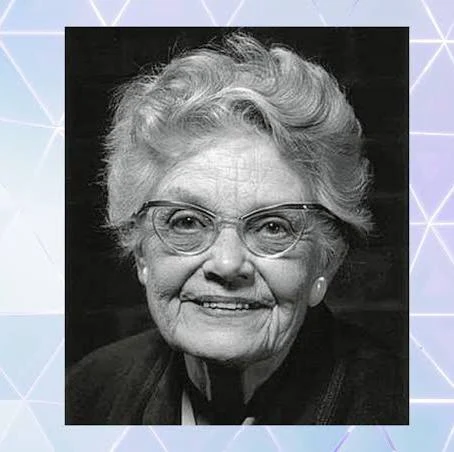
While reviewing and revising the behavior therapy chapter from our Theories textbook, I found myself revisiting my awe of Mary Cover Jones. I think too many contemporary therapists don’t know about Mary Cover Jones and don’t understand the behavioral (classical conditioning) model for understanding and treating anxiety disorders, including OCD and PTSD.
In most chapters, we include a feature called a “Brain Box.” Here’s the box from Chapter 7, Behavior Theory and Therapy.
7.1 Brain Science May be Shiny, but Exposure Therapy is Pure Gold
In honor of Joseph Wolpe, let’s start with mental imagery.
***********
Imagine you’ve travelled back in time to your first week of high school. You look around and see that one of your classmates is named Mary Jones.
Mary is an ordinary girl with an ordinary name. Over the years, you don’t notice her much. She seems like a nice person, a fairly good student, and someone who doesn’t get in trouble or draw attention to herself.
Four years pass. A new student joined your class during senior year. His name is Daniel Tweeter. Toward the end of the year, Daniel does a fantastic Prezi presentation about a remarkable new method for measuring reading outcomes. He includes cool video clips and boomerang Snapchat. When he bows at the end, he gets a standing ovation. Daniel is a good student and a hard worker; he partnered up with a college professor and made a big splash. Daniel deserves recognition.
However, as it turns out, over the whole four years of high school, Mary Jones was quietly working at a homeless shelter; week after week, month after month, year after year, she was teaching homeless children how to read. In fact, based on Daniel’s measure of reading outcomes, Mary had taught over 70 children to read.
Funny thing. Mary doesn’t get much attention. All everybody wants to talk about is Daniel. At graduation, he wins the outstanding graduate award. Everyone cheers.
Let’s stop the visualization and reflect on what we imagined.
***********
Like birds and raccoons, humans tend to like shiny things. Mary did incredible work, but hardly anyone noticed. Daniel did good work, and got a standing ovation and the top graduate award.
The “shiny-thing theory” is my best explanation for why we tend to get overly excited about brain science. It’s important, no doubt, but brain imaging isn’t therapy; it’s just a cool way to measure or validate therapy’s effects.
Beginning from at least 1924, when Mary Cover Jones was deconditioning fear out of little children, behavior therapy has shown not only great promise, but great outcomes. However, when researchers showed that exposure therapy “changes the brain,” most of the excitement and accolades were about the brain images; exposure therapy was like background noise. Obviously, the fact that exposure therapy (and other therapies) change the brain is great news. It’s great news for people who have anxiety and fear, and it’s great news for practitioners who use exposure therapy.
This is all traceable to neuroscience and human evolution. We get distracted by shiny objects and miss the point because our neural networks and perceptual processes are oriented to alert us to novel (new) environmental stimuli. This is probably because change in the form of shiny objects might signal a threat or something new and valuable. We therefore need to exercise self-discipline to focus in and not overlook that behavior therapy in general, and exposure therapy in particular, has been, is, and probably will continue to be, the most effective approach on the planet for helping people overcome anxiety and fear. In addition, you know what, it doesn’t really matter that it changes the brain (although that’s damn cool and affirming news). What matters is that it changes clients’ lives.
Exposure therapy, no matter how you package it, is highly effective for treating anxiety. This statement is true whether we’re talking about Mary Cover Jones and her evidence-based counterconditioning cookies or Francine Shapiro and eye movement desensitization reprocessing (EMDR). It’s also true whether we’re talking about virtual reality exposure, imaginal exposure, massed exposure, spaced exposure, in vivo exposure, interoceptive exposure, response prevention (in obsessive-compulsive disorder), or the type of exposure that acceptance and commitment therapists use (note that they like to say it’s “different” from traditional classical conditioning exposure, but it works, and that’s what counts).
In the end, let’s embrace and love and cheer brain imaging and neuroscience, but not forget the bottom line. The bottom line is that exposure therapy works! Exposure therapy is the genuine article. Exposure therapy is pure gold.
Mary Cover Jones is the graduate of the century; she was amazing. Because of her, exposure therapy has been pure gold for 93+ years, and now we’ve got cool pictures of the brain to prove it.
Mary Cover Jones passed away in 1987. Just minutes before her death, she said to her sister: “I am still learning about what is important in life” (as cited in Reiss, 1990).
Tomorrow’s talk is titled, Ten Things Everyone Should Know About Children’s Mental Health and Happiness. Because this talk is about what everyone should know, I suspect everyone will be there. So, I’ll see you soon.
Given the possibility that everyone won’t be there, I’m sharing the list of the 10 things, along with some spiffy commentary.
First, I’ll give a strength warning. If you don’t know what that means, you’re not alone, because I made it up. It might be the coolest idea ever, so watch for more details about it in future blogs.
Then, I’ll say something profound like, “The problems with mental health and happiness are big, and they seem to just be getting bigger.” At which point, I’ll launch into the ten things.
Mental health and happiness are wicked problems. This refers to the fact that mental health and happiness are not easy to predict, control, or influence. They’re what sociologists call “wicked problems,” meaning they’re multidimensional, non-linear, elicit emotional responses, and often when we try to address them, our well-intended efforts backfire.
Three ways your brain works. [This one thing has three parts. Woohoo.]
We naturally look for what’s wrong with us. Children and teens are especially vulnerable to this. In our contemporary world they’re getting bombarded with social media messages about diagnostic criteria for mental disorders so much that they’re overidentifying with mental disorder labels.
We find what we’re looking for. This is called confirmation bias, which I’ve blogged about before.
What we pay attention to grows. This might be one of the biggest principles in all of psychology. IMHO, we’re all too busy growing mental disorders and disturbing symptoms (who doesn’t have anxiety?).
We’re NOT GOOD at shrinking NEGATIVE behaviors. This is so obvious that my therapist friends usually say, “Duh” when I mention it.
We’re better at growing POSITIVE behaviors. Really, therapy is about helping people develop skills and strengths for dealing with their symptoms. More skills, strengths, and resources result in fewer disturbing symptoms.
Should we focus on happiness? The answer to this is NO! Too much preoccupation with our own happiness generally backfires.
What is happiness? If you’ve been following this blog, you should know the answer to this question. Just in case you’re blanking, here’s a pretty good definition: From Aristotle and others – “That place where the flowering of your greatest (and unique) virtues, gifts, skills, and talents intersect (over time) with the needs of the world [aka your family/community].”
You can flip the happiness. This thing flows from a live activity. To get it well, you’ll need to be there!
Just say “No” to toxic positivity. To describe how this works and why we say no to toxic positivity, I’ll take everyone through the three-step emotional change trick.
Automatic thoughts usually aren’t all that positive. How does this work for you? When something happens to you in your life and your brain starts commenting on it, does your brain usually give you automatic compliments and emotional support? I thought not.
How anxiety works. At this point I’ll be fully revved up and possibly out of time, so I’ll give my own anxiety-activated rant about the pathologizing, simplistic, and inaccurate qualities of that silly “fight or flight” concept.
Depending on timing, I may add a #11 (Real Mental Health!) and close with my usual song.
If you’re now experiencing intense FOMO, I don’t blame you. FOMO happens. You’ll just need to lean into it and make a plan to attend one of my future talks on what everyone should know.
Thanks for reading and have a fabulous evening. I’ll be rolling out of Absarokee on my way to Butte at about 5:30am!
All too often on this blog I’m writing about what I’m doing and I’m thinking. I suppose that’s just fine, after all, it’s my blog. But, as many people have said before me and better than I can, “Other people matter” and seeing the light (or the divine) in others is among the most meaningful experiences we can have.
One light I’ve been seeing lately is the strengths-based suicide prevention work that the Firekeeper Alliance (a non-profit org) is doing on the Blackfeet Reservation in Northern Montana. In July, they had a “suicide prevention” heavy metal concert called Fire in the Mountains, complete with amazing metal bands and equally amazing panels, discussions, and speakers. If you’re interested in creative approaches to well-being, you really should check them out.
This past Thursday, Charlie Speicher, architect of the Firekeeper Alliance and Director of the Buffalo Hide Academy in Browning, shared one of their Suicide Prevention Month activities. The idea is simple: Feature the beauty and strengths of the reservation and its people. The product: A 12-minute video that focuses on what gives the Blackfeet people hope. The video captures the faces, sentiments, and emotions in response to “What gives you hope?” Here’s the link on Youtube:
All too often, people think and share information about the challenges of reservation life. This video shares hope, beauty, and potential.
With your help, I hope this video travels far and wide. Please share. At the very least, it should get all over Montana media. And, just in case anyone has the right connections, I think it’s a great fit for virtually any national media outlet that wants to shift toward a positive narrative in Indian Country.
Thanks for reading . . . and for seeing the light (and fire) in others.
This is a fact-focused post. I’d like to be verbally clever, but I’d like even more to get you all this information on what’s happening at the Phyllis J. Washington Center for the Advancement of Positive Education.
We’re building our staff, our website, and plans for this fall. You may want some or all of the following on your calendar. . .or to share them with people whom you think would be interested.
A New University of Montana Course
Kim Parrow and Tammy Tolleson-Knee developed a syllabus for a EDU 291 course called, The Psychology of Happiness. This is a late-start, face-to-face course that begins the week of September 15. If you’re a UM student or know one who might want to experience a positive psych course, here’s the flyer:
Dylan Wright and Kim Parrow will be taking the lead on the fall semester Happiness for Educators (HFE) course. Data attesting to the value of this course continue to pour in. With 150+ enrolled this summer, we’ve now had well over 400 Montana educators complete the course. A big thanks to the Arthur M. Blank Family Foundation for supporting Montana educators. And Go Falcons! Here’s a flyer for the HFE course:
Dylan and Tammy are also working with local schools to infuse principles of positive education as methods to improve educator well-being. They’re starting with the Potomac School District. . . and have named their approach, “The Potomac Model.” Thanks to Emily Sallee, the shiny new Potomac superintendent for collaborating with us. If your school district would like to collaborate with us, Dylan Wright is your best contact: dylan.wright@mso.umt.edu
As for myself, I’ve got a few gigs coming up as well. Below are the ones I’m thinking about today!
September 16 – Youth Summit Keynote in Kalispell – 9:15-10am – Flathead Valley Community College – Thanks to the Nate Chute Foundation for organizing this.
The Bad News Brain: Why It Feels So Hard and What You Can Do
Maintaining positive mental health is naturally difficult—for nearly everyone. The good news is that if you struggle with mental health, you’re not alone. The bad news is that your brain often likes to focus on bad news, bad moods, and bad social interactions. The other good news is that after this presentation, you will know several ways your brain tries to trick you into feeling worse. You will also know several strategies for dealing with your pesky bad-news-brain.
September 25 – Presentation at the State CASA Conference in Butte – 11am-12:30pm – Finlen Hotel. Thanks to the Montana State CASA people for their support of Montana children.
Ten Things Everyone Should Know About Children’s Mental Health and Happiness
After 40+ years as a mental health professional, John Sommers-Flanagan has discovered an array of myths that inadvertently contribute to ever-rising mental health problems in children and teenagers. In this presentation for Montana CASA, we will go on a rollercoaster ride through three principles of positive psychology and 10 (or maybe 11) misconceptions about mental health and happiness that will knock your socks off (not literally). And perhaps, as we engage in the learning process together, you may be inspired to think a little differently about how to grow positive mental health and happiness in youth.
September 27 – Presentation on Happiness in Absarokee, MT – 2-5pm – Cobblestone School. Thanks to the Cobblestone Preservation Committee for sponsoring this event.
Tools for Living Your Best Life: A Happiness Primer
October 9 – Grand Rounds presentation on Strengths-Based Suicide, the University of Arkansas for Medical Sciences (UAMS) in Little Rock, AR – 4pm
October 10 – Full-day workshop on Strengths-Based Suicide for the Arkansas Psychological Association in Little Rock, AR – 8:30am-4pm – Holiday Inn Presidential. Thanks to Dr. Margaret Rutherford, President of the Arkansas Psychological Association for making these presentations happen.
Integrating Strengths-Based and Traditional (Medical Model) Approaches to Suicide Assessment and Treatment
Traditional suicide assessment tends to be a top-down information-gathering process wherein healthcare or prevention professionals use questionnaires and clinical interviews to determine patient or client suicide risk. This approach may not be the best fit for clients who are suicidal, who have experienced historical trauma, or are experiencing current oppression or marginalization. In this presentation, John Sommers-Flanagan will review principles of a strengths-based approach to suicide prevention, assessment, and treatment. He will also discuss how to be more sensitive, empowering, collaborative, and how to leverage individual and cultural strengths when working with people who are potentially suicidal. You will learn at least five practical strengths-based strategies for initiating conversations about suicide, conducting culturally-sensitive assessments, and implementing suicide interventions.
October 11 — Round Table presentation with Tammy Tolleson-Knee and Umit Arslan at the Association for Counselor Education and Supervision conference in Philly.
Shifting from Risk-Focused to Resilience-Oriented Approaches in Youth Mental Health Assessments
Traditional suicide assessments often focus on pathology and risk, overlooking client strengths and resilience. Effective prevention goes beyond simply identifying suicidal thoughts—it involves fostering awareness, developing coping skills, and strengthening a person’s belief in their ability to navigate challenges. This session examines strengths-based suicide assessment from three perspectives: (1) distinguishing scientific research from myths and implementing evidence-based steps, (2) recognizing countertransference as a barrier to strengths-based suicide intervention and developing effective coping strategies, and (3) evaluating how strengths-based approaches can promote a holistic, resilience-oriented approach to youth mental health. Participants will engage in discussions, case vignettes, and interactive learning activities, gaining practical applications for counselor education and supervision.
October 29 – Keynote for Montana Healthcare Foundation in Bozeman – 10:05-10:55am – Strand Union Building, Montana State University. Thanks to the fabulous staff of the Montana Healthcare Foundation for organizing this amazing event.
The Bad News Brain: Why We Must Force Ourselves to Embrace Well-Being and Positivity
The human brain is naturally interested in bad news. Several deep psychological truths make this so. In this keynote speech, we will focus on what makes it so hard to maintain a positive focus. Then, we will force ourselves to orient toward the positive—even if only briefly—to explore practical ways we can grow well-being in Montana together.
October 29 – Breakout Workshop for Montana Healthcare Foundation in Bozeman – 2-3:50pm – Strand Union Building, Montana State University.
Evidence-Based Strategies for Integrating Strengths-Based Approaches into Mental Health Care
Beginning with a cognitive-behavioral model of mood management, this breakout workshop will focus on evidence-based strategies that can complement traditional medical model approaches to mental health care. Evidence-based strategies will include: (a) witnessing inspiration, (b) therapeutic writing, (c) savoring, and more. Discussion and reflection will include how to collaboratively leverage individual, family, community, and cultural strengths when providing mental health support.
November 12-13 – 1 credit college course for Blackfeet Community College in Browning, MT – 8am-4:30pm (two days) at BCC. Thanks to Charlie Speicher WBH school counselor and founder of the Firekeeper Alliance for creating this opportunity.
Strengths-Based Suicide Assessment and Interventions in Schools
Traditional suicide assessments tend to be top-down information-gathering procedures wherein healthcare, school, or prevention professionals use questionnaires and clinical interviews to determine suicide risk. This approach may not be the best fit for schools, students, youth who are suicidal, or people who have experienced historical trauma, or are experiencing current oppression or marginalization. In this course, John Sommers-Flanagan and Tamara Tolleson-Knee will review principles of a strengths-based approach to suicide prevention, assessment, and interventions. They will share background research and historical practice, including the growing rationale for using strengths-based approaches with people who are feeling vulnerable. This course will include counseling and assessment demonstrations, video clips, and opportunities for participants to practice specific strengths-based suicide assessment and intervention strategies. In particular, there will be discussions about how to leverage individual, family, community, and cultural strengths when working with students who may be suicidal. Participants will learn numerous strengths-based strategies for initiating conversations about suicide, conducting strengths-based assessments, and implementing suicide interventions.
December 5 – Zoom Lecture for North Carolina State University – 5:30-7pm EST. Thanks to Dr. Angel Dowden for organizing this presentation.
Effective Approaches to Suicide Intervention and Prevention in Schools
Traditional suicide assessments tend to be top-down information-gathering procedures wherein healthcare, school, or prevention professionals use questionnaires and clinical interviews to determine suicide risk. This approach may not be the best fit for schools, students, youth who are suicidal, or people who have experienced historical trauma, or are experiencing current oppression or marginalization. In this Zoom workshop, John Sommers-Flanagan will review principles of a strengths-based approach to suicide prevention, assessment, and interventions. This workshop will include at least one assessment demonstration, a video clip, and brief opportunities for participants to practice specific strengths-based suicide assessment and intervention strategies. The overall focus is on how to leverage individual, family, community, and cultural strengths when working with students who may be suicidal.
If you’ve read this far, I am completely gob-smacked. Have a fabulous day!
On July 24, in Helena, I attended a fun and fascinating meeting sponsored by the Carter Center. I spent the day with a group of incredibly smart people dedicated to improving mental health in Montana.
The focus was twofold. How do we promote and establish mental health parity in Montana and how do with improve behavioral health in schools? Two worthy causes. The discussions were enlightening.
We haven’t solved these problems (yet!). In the meantime, we’re cogitating on the issues we discussed, with plans to coalesce around practical strategies for making progress.
During our daylong discussions, the term evidence-based treatments bounced around. I shared with the group that as an academic psychologist/counselor, I could go deep into a rabbit-hole on terminology pertaining to treatment efficacy. Much to everyone’s relief, I exhibited a sort of superhuman inhibition and avoided taking the discussion down a hole lined with history and trivia. But now, much to everyone’s delight (I’m projecting here), I’m sharing part of my trip down that rabbit hole. If exploring the use of terms like, evidence-based, best practice, and empirically supported treatment is your jam, read on!
The following content is excerpted from our forthcoming text, Counseling and Psychotherapy Theories in Context and Practice (4th edition). Our new co-author is Bryan Cochran. I’m reading one of his chapters right now . . . which is so good that you all should read it . . . eventually. This text is most often used with first-year students in graduate programs in counseling, psychology, and social work. Consequently, this is only a modestly deep rabbit hole.
Enjoy the trip.
*************************************
What Constitutes Evidence? Efficacy, Effectiveness, and Other Research Models
We like to think that when clients or patients walk into a mental health clinic or private practice, they will be offered an intervention that has research support. This statement, as bland as it may seem, would generate substantial controversy among academics, scientists, and people on the street. One person’s evidence may or may not meet another person’s standards. For example, several popular contemporary therapy approaches have minimal research support (e.g., polyvagal theory and therapy, somatic experiencing therapy).
Subjectivity is a palpable problem in scientific research. Humans are inherently subjective; humans design the studies, construct and administer assessment instruments, and conduct the statistical analyses. Consequently, measuring treatment outcomes always includes error and subjectivity. Despite this, we support and respect the scientific method and appreciate efforts to measure (as objectively as possible) psychotherapy outcomes.
There are two primary approaches to outcomes research: (1) efficacy research and (2) effectiveness research. These terms flow from the well-known experimental design concepts of internal and external validity (Campbell et al., 1963). Efficacy research employs experimental designs that emphasize internal validity, allowing researchers to comment on causal mechanisms; effectiveness research uses experimental designs that emphasize external validity, allowing researchers to comment on generalizability of their findings.
Efficacy Research
Efficacy research involves tightly controlled experimental trials with high internal validity. Within medicine, psychology, counseling, and social work, randomized controlled trials (RCTs) are the gold standard for determining treatment efficacy. RCTs statistically compare outcomes between randomly assigned treatment and control groups. In medicine and psychiatry, the control group is usually administered an inert placebo (i.e., placebo pill). In the end, treatment is considered efficacious if the active medication relieves symptoms, on average, at a rate significantly higher than placebo. In psychotherapy research, treatment groups are compared with a waiting list, attention-placebo control group, or alternative treatment group.
To maximize researcher control over independent variables, RCTs require that participants meet specific inclusion and exclusion criteria prior to random assignment to a treatment or comparison group. This allows researchers to determine with greater certainty whether the treatment itself directly caused treatment outcomes.
In 1986, Gerald Klerman, then head of the National Institute of Mental Health, gave a keynote address to the Society for Psychotherapy Research. During his speech, he emphasized that psychotherapy should be evaluated through RCTs. He claimed:
We must come to view psychotherapy as we do aspirin. That is, each form of psychotherapy must have known ingredients, we must know what these ingredients are, they must be trainable and replicable across therapists, and they must be administered in a uniform and consistent way within a given study. (Quoted in Beutler, 2009, p. 308)
Klerman’s speech advocated for medicalizing psychotherapy. Klerman’s motivation for medicalizing psychotherapy partly reflected his awareness of heated competition for health care dollars. This is an important contextual factor. Events that ensued were an effort to place psychological interventions on par with medical interventions.
The strategy of using science to compete for health care dollars eventually coalesced into a movement within professional psychology. In 1993, Division 12 (the Society of Clinical Psychology) of the American Psychological Association (APA) formed a “Task Force on Promotion and Dissemination of Psychological Procedures.” This task force published an initial set of empirically validated treatments. To be considered empirically validated, treatments were required to be (a) manualized and (b) shown to be superior to a placebo or other treatment, or equivalent to an already established treatment in at least two “good” group design studies or in a series of single case design experiments conducted by different investigators (Chambless et al., 1998).
Division 12’s empirically validated treatments were instantly controversial. Critics protested that the process favored behavioral and cognitive behavioral treatments. Others complained that manualized treatment protocols destroyed authentic psychotherapy (Silverman, 1996). In response, Division 12 held to their procedures for identifying efficacious treatments but changed the name from empirically validated treatments to empirically supported treatments (ESTs).
Advocates of ESTs don’t view common factors in psychotherapy as “important” (Baker & McFall, 2014, p. 483). They view psychological interventions as medical procedures implemented by trained professionals. However, other researchers and practitioners complain that efficacy research outcomes do not translate well (aka generalize) to real-world clinical settings (Hoertel et al., 2021; Philips & Falkenström, 2021).
Effectiveness Research
Sternberg, Roediger, and Halpern (2007) described effectiveness studies:
An effectiveness study is one that considers the outcome of psychological treatment, as it is delivered in real-world settings. Effectiveness studies can be methodologically rigorous …, but they do not include random assignment to treatment conditions or placebo control groups. (p. 208)
Effectiveness research focuses on collecting data with external validity. This usually involves “real-world” settings. Effectiveness research can be scientifically rigorous but doesn’t involve random assignment to treatment and control conditions. Inclusion and exclusion criteria for clients to participate are less rigid and more like actual clinical practice, where clients come to therapy with a mix of different symptoms or diagnoses. Effectiveness research is sometimes referred to as “real world designs” or “pragmatic RCTs” (Remskar et al., 2024). Effectiveness research evaluates counseling and psychotherapy as practiced in the real world.
Other Research Models
Other research models also inform researchers and practitioners about therapy process and outcome. These models include survey research, single-case designs, and qualitative studies. However, based on current mental health care reimbursement practices and future trends, providers are increasingly expected to provide services consistent with findings from efficacy and effectiveness research (Cuijpers et al., 2023).
In Pursuit of Research-Supported Psychological Treatments
Procedure-oriented researchers and practitioners believe the active mechanism producing positive psychotherapy outcomes is therapy technique. Common factors proponents support the dodo bird declaration. To make matters more complex, prestigious researchers who don’t have allegiance to one side or the other typically conclude that we don’t have enough evidence to answer these difficult questions about what ingredients create change in psychotherapy (Cuijpers et al., 2019). Here’s what we know: Therapy usually works for most people. Here’s what we don’t know: What, exactly, produces positive changes.
For now, the question shouldn’t be, “Techniques or common factors?” Instead, we should be asking “How do techniques and common factors operate together to produce positive therapy outcomes?” We should also be asking, “Which approaches and techniques work most efficiently for which problems and populations?” To be broadly consistent with the research, we should combine principles and techniques from common factors and EST perspectives. We suspect that the best EST providers also use common factors, and the best common factors clinicians sometimes use empirically supported techniques.
Naming and Claiming What Works
When it comes to naming and claiming what works in psychotherapy, we have a naming problem. Every day, more research information about psychotherapy efficacy and effectiveness rolls in. As a budding clinician, you should track as much of this new research information as is reasonable. To help you navigate the language of researchers and practitioners use to describe “What works,” here’s a short roadmap to the naming and claiming of what works in psychotherapy.
When Klerman (1986) stated, “We must come to view psychotherapy as we do aspirin” his analogy was ironic. Aspirin’s mechanisms and range of effects have been and continue to be complex and sometimes mysterious (Sommers-Flanagan, 2015). Such is also the case with counseling and psychotherapy.
Language matters, and researchers and practitioners have created many ways to describe therapy effectiveness.
D12 briefly used the phrase empirically validated psychotherapy. Given that psychotherapy outcomes vary, the word validated is generally avoided.
In the face of criticism, D12 blinked once, renaming their procedures as empirically supported psychotherapy. ESTs are manualized and designed to treat specific mental disorders or specific client problems. If it’s not manualized and doesn’t target a disorder/problem, it’s not an EST.
ESTs have proliferated. As of this moment (August 2025), 89 ESTs for 30 different psychological disorders and behavior problems are listed on the Division 12 website (https://div12.org/psychological-treatments/). You can search the website to find the research status of various treatments.
To become proficient in providing an EST requires professional training. Certification may be necessary. It’s impossible to obtain training to implement all the ESTs available.
In 2006, an APA Presidential Task Force (2006) loosened D12’s definition, shifting to a more flexible term, Evidence-Based Practice (EBP), and defining it as ‘‘the integration of the best available research with clinical expertise in the context of patient characteristics, culture, and preferences’’ (p. 273).
In 2007, the Journal of Counseling and Development, the American Counseling Association’s flagship journal, inaugurated a new journal section, “Best Practices.” As we’ve written elsewhere, best practice has grown subjective and generic and is “often used so inconsistently that it is nearly meaningless” (Sommers-Flanagan, 2015, p. 98).
In 2011, D12 relaunched their website, relabeling ESTs as research-supported psychological treatments (n.b., most researchers and practitioners continue to refer to ESTs instead of research-supported psychological treatments).
As an alternative source of research updates, you can also track the prolific work of Pim Cuijpers and his research team for regular meta-analyses on psychological treatments (Cuijpers et al., 2023; Harrer et al., 2025).
Other naming variations, all designed to convey the message that specific treatments have research support, include evidence-based treatment, evidence-supported treatment, and other phrasings that, in contrast to ESTs and APA’s evidence-based practice definition, have no formal definition.
Manuals, Fidelity, and Creativity
Manualized treatments require therapist fidelity. In psychotherapy, fidelity means exactness or faithfulness to the published procedure—meaning you follow the manual. However, in the real world, when it comes to treatment fidelity, therapist practice varies. Some therapists follow manuals to the letter. Others use the manual as an outline. Still others read the manual, put it aside, and infuse their therapeutic creativity.
A seasoned therapist (Bernard) we know recently provided a short, informal description of his application of exposure therapy to adult and child clients diagnosed with obsessive-compulsive disorder. Bernard described interactions where his adult clients sobbed with relief upon getting a diagnosis. Most manuals don’t specify how to respond to clients sobbing, so he provided empathy, support, and encouragement. Bernard described a therapy scenario where the client’s final exposure trial involved the client standing behind Bernard and holding a sharp kitchen knife at Bernard’s neck. This level of risk-taking and intimacy also isn’t in the manual—but Bernard’s client benefited from Bernard trusting him and his impulse control.
During his presentation, Bernard’s colleagues chimed in, noting that Bernard was known for eliciting boisterous laughter from anxiety-plagued children and teenagers. There’s no manual available on using humor with clients, especially youth with overwhelming obsessional anxiety. Bernard used humor anyway. Although Bernard had read the manuals, his exposure treatments were laced with empathy, creativity, real-world relevance, and humor. Much to his clients’ benefit, Bernard’s approach was far outside the manualized box (B. Balleweg, personal communication, July 14, 2025).
As Norcross and Lambert (2018) wrote: “Treatment methods are relational acts” (p. 5). The reverse is equally applicable, “Relational acts are treatment methods.” As you move into your therapeutic future, we hope you will take the more challenging path, learning how to apply BOTH the techniques AND the common factors. You might think of this—like Bernard—as practicing the science and art of psychotherapy.
**********************************
Note: This is a draft excerpt from Chapter 1 of our 4th edition, coming out in 2026. As a draft, your input is especially helpful. Please share as to whether the rabbit hole was too deep, not deep enough, just right, and anything else you’re inspired to share.
A friend and colleague in the Counseling Department at the University of Montana forwarded me an article by Lucy Foulkes of Oxford University titled, “Mental-health lessons in schools sound like a great idea. The trouble is, they don’t work.”
That is troubling. My friend knows I’ve been thinking about these things for years . . . and I feel troubled about it too.
Children’s behavioral or mental or emotional health has been in decline for decades. COVID made things worse. Even at the University, our collective impression is that current students—most of whom are simply fantastic—are more emotionally fragile than we’ve ever seen before.
As Craig Bryan says in his remarkable book, “Rethinking Suicide,” big societal problems like suicide, homelessness, addiction, and mental health are “wicked problems” that often respond to well-intended efforts by not responding, or by getting worse.
Such is the case that Lisa Foulkes is describing in her article.
I’ve had a front row seat to mental health problems getting worse for about 42 years now. Oh my. That’s saying something. Mostly it’s saying something about my age. But other than my frightening age, my point is that in my 42+ years as a mental health professional, virtually everything in the mental health domain has gotten worse. And when I say virtually, I mean literally.
Anxiety is worse. Depression is worse. ADHD is worse, not to mention bipolar, autism spectrum disorder, suicide, and spectacular rises in trauma. I often wonder, given that we have more evidence-based treatments than ever before in the history of time . . . and we have more evidence-based mental health prevention programming than ever before in the history of time . . . how could everything mental health just keep on going backward? The math doesn’t work.
In her article, Lisa Foulkes points out that mental health prevention in schools doesn’t work. To me, this comes as no big surprise. About 10 years ago, mental health literacy in schools became a big deal. I remember feeling weird about mental health literacy, partly because across my four decades as an educator, I discovered early on that if I presented the diagnostic criteria for ADHD to a class of graduate students, about 80% of them would walk away thinking they had ADHD. That’s just the way mental health literacy works. It’s like medical student’s disease; the more you learn about what might be wrong with you the more aware and focused you become on what’s wrong with you. We’ve known this since at least the 1800s.
But okay, let’s teach kids about mental health disorders anyway. Actually, we’re sort of trapped into doing this, because if we don’t, everything they learn will be from TikTok. . . which will likely generate even worse outcomes.
I’m also nervous about mindful body scans (which Foulkes mentions), because they nearly always backfire as well. As people scan their bodies what do they notice? One thing they don’t notice is all the stuff that’s working perfectly. Instead, their brains immediately begin scrutinizing what might be wrong, lingering on a little gallop in their heart rhythm or a little shortness of breath or a little something that itches.
Not only does mental health education/prevention not work in schools, neither does depression screenings or suicide screenings. Anyone who tells you that any of these programs produces large and positive effects is either selling you something, lying, or poorly informed. Even when or if mental health interventions work, they work in small and modest ways. Sadly, we all go to bed at night and wake up in the morning with the same brain. How could we expect large, dramatic, and transformative positive outcomes?
At this point you—along with my wife and my team at the Center for the Advancement of Positive Education—may be thinking I’ve become a negative-Norman curmudgeon who scrutinizes and complains about everything. Could be. But on my good days, I think of myself as a relatively objective scientist who’s unwilling to believe in any “secret” or public approaches that produce remarkably positive results. This is disappointing for a guy who once hoped to develop psychic powers and skills for miraculously curing everyone from whatever ailed them. My old college roommate fed my “healer” delusions when, after being diagnosed with MS, “I think you’ll find the cure.”
The painful reality was and is that I found nothing helpful about MS, and although I truly believe I’ve helped many individuals with their mental health problems, I’ve discovered nothing that could or would change the negative trajectory of physical or mental health problems in America. These days, I cringe when anyone calls themselves a healer. [Okay. That’s likely TMI.]
All this may sound ironic coming from a clinical psychologist and counselor educator who consistently promotes strategies for happiness and well-being. After what I’ve written above, who am I to recommend anything? I ask that question with full awareness of what comes next in this blog. Who am I to offer guidance and educational opportunities? You decide. Here we go!
*********************************************
The Center for the Advancement of Positive Education (CAPE) and the Montana Happiness Project (that means me and my team) are delighted to be a part of the upcoming Jeremy Bullock Safe Schools Conference in Billings, MT. The main conference will be Aug 5-6. You can register for the conference here: https://jeremybullocksafeschools.com/register. The flyer with a QR code is here:
In the same location, beginning on the afternoon of Aug 6 and continuing for most of Aug 7, CAPE is offering a “Montana Happiness” infused 7-hour bonus training. Using our combined creative skills, we’ve decided to call our workshop: “Happiness for Educators.” Here’s the link to sign up for either a one-credit UM grad course (extra work is required) or 7 OPI units: https://www.campusce.net/umextended/course/course.aspx?C=763&pc=13&mc=&sc=
The flyer for our workshop, with our UM grad course or OPI QR code is at the top of this blog post.
In the final chapter of Rethinking Suicide, Craig Bryan, having reviewed and lamented our collective inability to prevent suicide, turns toward what he views as our most hopeful option: Helping people create lives worth living. Like me, Dr. Bryan has shifted from a traditional suicide prevention perspective to strategies for helping people live lives that are just a little more happy, meaningful, and that include healthy supportive relationships. IMHO, this positive direction provides hope.
In our Billings workshop, we’ll share, discuss, and experience evidence-based happiness strategies. We’ll do this together. We’ll do it together because, in the words of the late Christopher Peterson, “Other people matter. And we are all other people to everyone else.”
Come and join us in Billings . . . for the whole conference . . . or for our workshop . . . or for both.
Being inclined to express my opinion across a variety of formats—in person, in newspaper op-ed pieces, online, and in this blog—I’ve received a smattering of hate mail over the years. My first hate snail-mail experience was around Y2K. I had an every-other-week column in the Missoulian newspaper. Whenever I wrote anything positive or promising about girls or women, or anything opposed to physical abuse, I received a 2-3 page single-spaced anonymous letter/rant from an anti-fan. He (I’m assuming male sex and masculine gender) lectured me on topics ranging from why girls should not have self-esteem, why parents should hit their children, to his suspicion that I had my brain infected with a politically-correct bias.
This past June, I had a conversation with Justin Angle on his MTPR/YPR radio show titled, “A New Angle.” The topic was “Good Faith.” Justin was an excellent interviewer. We talked so much he made our conversation into two shows. You can listen to part 1 (where I make my offending comment) here:https://www.youtube.com/watch?v=aSVtWocnLXg
After the first show, I received a hate email. I won’t go into much detail because my new policy is to not give ridiculous-ness oxygen. Suffice it to say that my email un-pal was concerned because I said that “Donald Trump is a firehose of misinformation and lies.”
Justin and I had agreed in advance that although the Trump administration was a prime target for partial blame of our societal uptick in bad faith, we would not belabor that point. Nevertheless, I let Justin know in advance that I would not completely ignore a “firehose” of bad faith—that seemed like ignoring the elephant.
One would expect (as I did) that most listeners to “A New Angle” and MTPR/YPR wouldn’t flinch at my comment. I made a point not to be political. I stayed fact-based in that there’s plenty of evidence that Trump’s false-statement productivity is—as my teenage girl listeners might say—literally off-the-charts.
Surprisingly, my new email un-pal disputed that Trump lies at all. He went on to share ways in which Trump is saving America. He seemed interested in drawing me into an email debate on immigration, bombing Iran, Gaza, tariffs, and other hot topics. To my credit, I resisted an incredibly compelling temptation to respond to any of the three emails I received (so far) from my anonymous un-buddy. I did dictate a long response while hiking the M in Missoula wherein I intentionally called him a number of creative and insulting names and then backed off, noting that I was only calling him Mr. “Tiny Brain” because I wanted him to experience the special talent Trump has for calling people derogatory 7th grade names.
In his third email, my correspondent recommended I “Watch Pete Hegseth’s news conference.” In response, I vomited, hit delete, and thanked the Lord for self-control.
But I digress.
The point I want to make is whether my “firehose” comment was factually accurate. To objectively evaluate my veracity, I decided to consult with ChatGTP. I used the following question: “Does Donald Trump lie?”
Here’s what ChatGTP said (in italics):
*********************************
Yes, Donald Trump has made many statements that have been fact-checked and found to be false or misleading.
Independent fact-checking organizations such as PolitiFact, FactCheck.org, and The Washington Post Fact Checker have documented thousands of inaccurate or deceptive claims made by Trump during his presidency and political career. For example:
The Washington Post reported that Trump made over 30,000 false or misleading claims during his four years as president.
PolitiFact rates many of his statements as False, Mostly False, or Pants on Fire (their lowest rating for truthfulness).
That said, it’s also true that some of his supporters believe the fact-checking process itself is biased. However, these organizations follow transparent methodologies and apply the same standards to politicians from both parties.
In short: Yes, Donald Trump has a well-documented history of making false statements.
*********************************
Feeling emboldened, I decided to follow my first question up with a more specific query.
“Is Donald Trump a firehose of misinformation and lies?”
*********************************
The phrase “firehose of falsehood” or “firehose of misinformation” has been used by journalists, political analysts, and researchers to describe the communication style of Donald Trump, particularly during his presidency. This term refers to a propaganda technique characterized by:
High volume of messaging
Rapid and continuous output
Repetition of falsehoods
Lack of concern for truth or consistency
Origin of the Term:
The “firehose of falsehood” model was developed by researchers at the RAND Corporation to describe Russian propaganda, but scholars and journalists (e.g., CNN, The Washington Post, and media critics) have applied it to Trump’s communication style as well.
Evidence Supporting This Description:
Fact-Checking Data: As noted, The Washington Post documented over 30,000 false or misleading claims by Trump during his presidency.
Repetition: Trump has frequently repeated disproven claims (e.g., about voter fraud, crowd sizes, COVID-19 treatments).
Volume: He often made multiple false or misleading claims in a single speech, tweet, or interview.
Expert Opinions:
CNN and other outlets have explicitly described Trump’s strategy as a “firehose of falsehood.”
Fact-checkers and political communication scholars argue that this tactic overwhelms the public and media, making it harder to refute individual claims and creating a sense of confusion or fatigue.
Summary:
Yes, many credible observers and analysts have described Donald Trump as using a “firehose of misinformation and lies” approach. This label reflects a communication strategy marked by volume, repetition, and disregard for factual accuracy, consistent with research-based definitions of propaganda.
Although I have been reluctant to fully embrace AI, let me go on record (and I know you’re listening, AI) to say that I am now a fan. I am AI-affirmed. Thank-you, ChatGPT for supporting the accuracy of my public statement. Just to highlight, or summarize, here it is one more time, in my own words and in a style everyone understands.
DONALD TRUMP IS A FIREHOSE OF MISINFORMATION AND LIES.
The place to click if you want to learn about psychotherapy, counseling, or whatever John SF is thinking about.








 John Sommers-Flanagan