All too often on this blog I’m writing about what I’m doing and I’m thinking. I suppose that’s just fine, after all, it’s my blog. But, as many people have said before me and better than I can, “Other people matter” and seeing the light (or the divine) in others is among the most meaningful experiences we can have.
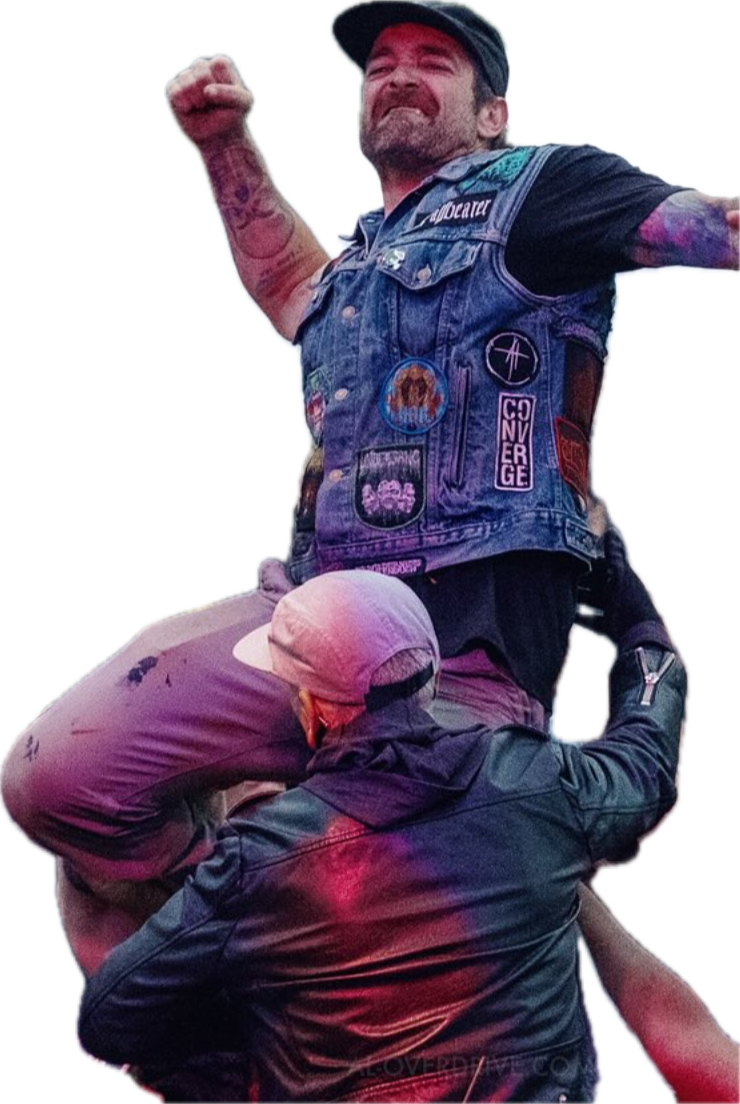
One light I’ve been seeing lately is the strengths-based suicide prevention work that the Firekeeper Alliance (a non-profit org) is doing on the Blackfeet Reservation in Northern Montana. In July, they had a “suicide prevention” heavy metal concert called Fire in the Mountains, complete with amazing metal bands and equally amazing panels, discussions, and speakers. If you’re interested in creative approaches to well-being, you really should check them out.
This past Thursday, Charlie Speicher, architect of the Firekeeper Alliance and Director of the Buffalo Hide Academy in Browning, shared one of their Suicide Prevention Month activities. The idea is simple: Feature the beauty and strengths of the reservation and its people. The product: A 12-minute video that focuses on what gives the Blackfeet people hope. The video captures the faces, sentiments, and emotions in response to “What gives you hope?” Here’s the link on Youtube:
All too often, people think and share information about the challenges of reservation life. This video shares hope, beauty, and potential.
With your help, I hope this video travels far and wide. Please share. At the very least, it should get all over Montana media. And, just in case anyone has the right connections, I think it’s a great fit for virtually any national media outlet that wants to shift toward a positive narrative in Indian Country.
Thanks for reading . . . and for seeing the light (and fire) in others.
On July 24, in Helena, I attended a fun and fascinating meeting sponsored by the Carter Center. I spent the day with a group of incredibly smart people dedicated to improving mental health in Montana.
The focus was twofold. How do we promote and establish mental health parity in Montana and how do with improve behavioral health in schools? Two worthy causes. The discussions were enlightening.
We haven’t solved these problems (yet!). In the meantime, we’re cogitating on the issues we discussed, with plans to coalesce around practical strategies for making progress.
During our daylong discussions, the term evidence-based treatments bounced around. I shared with the group that as an academic psychologist/counselor, I could go deep into a rabbit-hole on terminology pertaining to treatment efficacy. Much to everyone’s relief, I exhibited a sort of superhuman inhibition and avoided taking the discussion down a hole lined with history and trivia. But now, much to everyone’s delight (I’m projecting here), I’m sharing part of my trip down that rabbit hole. If exploring the use of terms like, evidence-based, best practice, and empirically supported treatment is your jam, read on!
The following content is excerpted from our forthcoming text, Counseling and Psychotherapy Theories in Context and Practice (4th edition). Our new co-author is Bryan Cochran. I’m reading one of his chapters right now . . . which is so good that you all should read it . . . eventually. This text is most often used with first-year students in graduate programs in counseling, psychology, and social work. Consequently, this is only a modestly deep rabbit hole.
Enjoy the trip.
*************************************
What Constitutes Evidence? Efficacy, Effectiveness, and Other Research Models
We like to think that when clients or patients walk into a mental health clinic or private practice, they will be offered an intervention that has research support. This statement, as bland as it may seem, would generate substantial controversy among academics, scientists, and people on the street. One person’s evidence may or may not meet another person’s standards. For example, several popular contemporary therapy approaches have minimal research support (e.g., polyvagal theory and therapy, somatic experiencing therapy).
Subjectivity is a palpable problem in scientific research. Humans are inherently subjective; humans design the studies, construct and administer assessment instruments, and conduct the statistical analyses. Consequently, measuring treatment outcomes always includes error and subjectivity. Despite this, we support and respect the scientific method and appreciate efforts to measure (as objectively as possible) psychotherapy outcomes.
There are two primary approaches to outcomes research: (1) efficacy research and (2) effectiveness research. These terms flow from the well-known experimental design concepts of internal and external validity (Campbell et al., 1963). Efficacy research employs experimental designs that emphasize internal validity, allowing researchers to comment on causal mechanisms; effectiveness research uses experimental designs that emphasize external validity, allowing researchers to comment on generalizability of their findings.
Efficacy Research
Efficacy research involves tightly controlled experimental trials with high internal validity. Within medicine, psychology, counseling, and social work, randomized controlled trials (RCTs) are the gold standard for determining treatment efficacy. RCTs statistically compare outcomes between randomly assigned treatment and control groups. In medicine and psychiatry, the control group is usually administered an inert placebo (i.e., placebo pill). In the end, treatment is considered efficacious if the active medication relieves symptoms, on average, at a rate significantly higher than placebo. In psychotherapy research, treatment groups are compared with a waiting list, attention-placebo control group, or alternative treatment group.
To maximize researcher control over independent variables, RCTs require that participants meet specific inclusion and exclusion criteria prior to random assignment to a treatment or comparison group. This allows researchers to determine with greater certainty whether the treatment itself directly caused treatment outcomes.
In 1986, Gerald Klerman, then head of the National Institute of Mental Health, gave a keynote address to the Society for Psychotherapy Research. During his speech, he emphasized that psychotherapy should be evaluated through RCTs. He claimed:
We must come to view psychotherapy as we do aspirin. That is, each form of psychotherapy must have known ingredients, we must know what these ingredients are, they must be trainable and replicable across therapists, and they must be administered in a uniform and consistent way within a given study. (Quoted in Beutler, 2009, p. 308)
Klerman’s speech advocated for medicalizing psychotherapy. Klerman’s motivation for medicalizing psychotherapy partly reflected his awareness of heated competition for health care dollars. This is an important contextual factor. Events that ensued were an effort to place psychological interventions on par with medical interventions.
The strategy of using science to compete for health care dollars eventually coalesced into a movement within professional psychology. In 1993, Division 12 (the Society of Clinical Psychology) of the American Psychological Association (APA) formed a “Task Force on Promotion and Dissemination of Psychological Procedures.” This task force published an initial set of empirically validated treatments. To be considered empirically validated, treatments were required to be (a) manualized and (b) shown to be superior to a placebo or other treatment, or equivalent to an already established treatment in at least two “good” group design studies or in a series of single case design experiments conducted by different investigators (Chambless et al., 1998).
Division 12’s empirically validated treatments were instantly controversial. Critics protested that the process favored behavioral and cognitive behavioral treatments. Others complained that manualized treatment protocols destroyed authentic psychotherapy (Silverman, 1996). In response, Division 12 held to their procedures for identifying efficacious treatments but changed the name from empirically validated treatments to empirically supported treatments (ESTs).
Advocates of ESTs don’t view common factors in psychotherapy as “important” (Baker & McFall, 2014, p. 483). They view psychological interventions as medical procedures implemented by trained professionals. However, other researchers and practitioners complain that efficacy research outcomes do not translate well (aka generalize) to real-world clinical settings (Hoertel et al., 2021; Philips & Falkenström, 2021).
Effectiveness Research
Sternberg, Roediger, and Halpern (2007) described effectiveness studies:
An effectiveness study is one that considers the outcome of psychological treatment, as it is delivered in real-world settings. Effectiveness studies can be methodologically rigorous …, but they do not include random assignment to treatment conditions or placebo control groups. (p. 208)
Effectiveness research focuses on collecting data with external validity. This usually involves “real-world” settings. Effectiveness research can be scientifically rigorous but doesn’t involve random assignment to treatment and control conditions. Inclusion and exclusion criteria for clients to participate are less rigid and more like actual clinical practice, where clients come to therapy with a mix of different symptoms or diagnoses. Effectiveness research is sometimes referred to as “real world designs” or “pragmatic RCTs” (Remskar et al., 2024). Effectiveness research evaluates counseling and psychotherapy as practiced in the real world.
Other Research Models
Other research models also inform researchers and practitioners about therapy process and outcome. These models include survey research, single-case designs, and qualitative studies. However, based on current mental health care reimbursement practices and future trends, providers are increasingly expected to provide services consistent with findings from efficacy and effectiveness research (Cuijpers et al., 2023).
In Pursuit of Research-Supported Psychological Treatments
Procedure-oriented researchers and practitioners believe the active mechanism producing positive psychotherapy outcomes is therapy technique. Common factors proponents support the dodo bird declaration. To make matters more complex, prestigious researchers who don’t have allegiance to one side or the other typically conclude that we don’t have enough evidence to answer these difficult questions about what ingredients create change in psychotherapy (Cuijpers et al., 2019). Here’s what we know: Therapy usually works for most people. Here’s what we don’t know: What, exactly, produces positive changes.
For now, the question shouldn’t be, “Techniques or common factors?” Instead, we should be asking “How do techniques and common factors operate together to produce positive therapy outcomes?” We should also be asking, “Which approaches and techniques work most efficiently for which problems and populations?” To be broadly consistent with the research, we should combine principles and techniques from common factors and EST perspectives. We suspect that the best EST providers also use common factors, and the best common factors clinicians sometimes use empirically supported techniques.
Naming and Claiming What Works
When it comes to naming and claiming what works in psychotherapy, we have a naming problem. Every day, more research information about psychotherapy efficacy and effectiveness rolls in. As a budding clinician, you should track as much of this new research information as is reasonable. To help you navigate the language of researchers and practitioners use to describe “What works,” here’s a short roadmap to the naming and claiming of what works in psychotherapy.
When Klerman (1986) stated, “We must come to view psychotherapy as we do aspirin” his analogy was ironic. Aspirin’s mechanisms and range of effects have been and continue to be complex and sometimes mysterious (Sommers-Flanagan, 2015). Such is also the case with counseling and psychotherapy.
Language matters, and researchers and practitioners have created many ways to describe therapy effectiveness.
D12 briefly used the phrase empirically validated psychotherapy. Given that psychotherapy outcomes vary, the word validated is generally avoided.
In the face of criticism, D12 blinked once, renaming their procedures as empirically supported psychotherapy. ESTs are manualized and designed to treat specific mental disorders or specific client problems. If it’s not manualized and doesn’t target a disorder/problem, it’s not an EST.
ESTs have proliferated. As of this moment (August 2025), 89 ESTs for 30 different psychological disorders and behavior problems are listed on the Division 12 website (https://div12.org/psychological-treatments/). You can search the website to find the research status of various treatments.
To become proficient in providing an EST requires professional training. Certification may be necessary. It’s impossible to obtain training to implement all the ESTs available.
In 2006, an APA Presidential Task Force (2006) loosened D12’s definition, shifting to a more flexible term, Evidence-Based Practice (EBP), and defining it as ‘‘the integration of the best available research with clinical expertise in the context of patient characteristics, culture, and preferences’’ (p. 273).
In 2007, the Journal of Counseling and Development, the American Counseling Association’s flagship journal, inaugurated a new journal section, “Best Practices.” As we’ve written elsewhere, best practice has grown subjective and generic and is “often used so inconsistently that it is nearly meaningless” (Sommers-Flanagan, 2015, p. 98).
In 2011, D12 relaunched their website, relabeling ESTs as research-supported psychological treatments (n.b., most researchers and practitioners continue to refer to ESTs instead of research-supported psychological treatments).
As an alternative source of research updates, you can also track the prolific work of Pim Cuijpers and his research team for regular meta-analyses on psychological treatments (Cuijpers et al., 2023; Harrer et al., 2025).
Other naming variations, all designed to convey the message that specific treatments have research support, include evidence-based treatment, evidence-supported treatment, and other phrasings that, in contrast to ESTs and APA’s evidence-based practice definition, have no formal definition.
Manuals, Fidelity, and Creativity
Manualized treatments require therapist fidelity. In psychotherapy, fidelity means exactness or faithfulness to the published procedure—meaning you follow the manual. However, in the real world, when it comes to treatment fidelity, therapist practice varies. Some therapists follow manuals to the letter. Others use the manual as an outline. Still others read the manual, put it aside, and infuse their therapeutic creativity.
A seasoned therapist (Bernard) we know recently provided a short, informal description of his application of exposure therapy to adult and child clients diagnosed with obsessive-compulsive disorder. Bernard described interactions where his adult clients sobbed with relief upon getting a diagnosis. Most manuals don’t specify how to respond to clients sobbing, so he provided empathy, support, and encouragement. Bernard described a therapy scenario where the client’s final exposure trial involved the client standing behind Bernard and holding a sharp kitchen knife at Bernard’s neck. This level of risk-taking and intimacy also isn’t in the manual—but Bernard’s client benefited from Bernard trusting him and his impulse control.
During his presentation, Bernard’s colleagues chimed in, noting that Bernard was known for eliciting boisterous laughter from anxiety-plagued children and teenagers. There’s no manual available on using humor with clients, especially youth with overwhelming obsessional anxiety. Bernard used humor anyway. Although Bernard had read the manuals, his exposure treatments were laced with empathy, creativity, real-world relevance, and humor. Much to his clients’ benefit, Bernard’s approach was far outside the manualized box (B. Balleweg, personal communication, July 14, 2025).
As Norcross and Lambert (2018) wrote: “Treatment methods are relational acts” (p. 5). The reverse is equally applicable, “Relational acts are treatment methods.” As you move into your therapeutic future, we hope you will take the more challenging path, learning how to apply BOTH the techniques AND the common factors. You might think of this—like Bernard—as practicing the science and art of psychotherapy.
**********************************
Note: This is a draft excerpt from Chapter 1 of our 4th edition, coming out in 2026. As a draft, your input is especially helpful. Please share as to whether the rabbit hole was too deep, not deep enough, just right, and anything else you’re inspired to share.
A friend and colleague in the Counseling Department at the University of Montana forwarded me an article by Lucy Foulkes of Oxford University titled, “Mental-health lessons in schools sound like a great idea. The trouble is, they don’t work.”
That is troubling. My friend knows I’ve been thinking about these things for years . . . and I feel troubled about it too.
Children’s behavioral or mental or emotional health has been in decline for decades. COVID made things worse. Even at the University, our collective impression is that current students—most of whom are simply fantastic—are more emotionally fragile than we’ve ever seen before.
As Craig Bryan says in his remarkable book, “Rethinking Suicide,” big societal problems like suicide, homelessness, addiction, and mental health are “wicked problems” that often respond to well-intended efforts by not responding, or by getting worse.
Such is the case that Lisa Foulkes is describing in her article.
I’ve had a front row seat to mental health problems getting worse for about 42 years now. Oh my. That’s saying something. Mostly it’s saying something about my age. But other than my frightening age, my point is that in my 42+ years as a mental health professional, virtually everything in the mental health domain has gotten worse. And when I say virtually, I mean literally.
Anxiety is worse. Depression is worse. ADHD is worse, not to mention bipolar, autism spectrum disorder, suicide, and spectacular rises in trauma. I often wonder, given that we have more evidence-based treatments than ever before in the history of time . . . and we have more evidence-based mental health prevention programming than ever before in the history of time . . . how could everything mental health just keep on going backward? The math doesn’t work.
In her article, Lisa Foulkes points out that mental health prevention in schools doesn’t work. To me, this comes as no big surprise. About 10 years ago, mental health literacy in schools became a big deal. I remember feeling weird about mental health literacy, partly because across my four decades as an educator, I discovered early on that if I presented the diagnostic criteria for ADHD to a class of graduate students, about 80% of them would walk away thinking they had ADHD. That’s just the way mental health literacy works. It’s like medical student’s disease; the more you learn about what might be wrong with you the more aware and focused you become on what’s wrong with you. We’ve known this since at least the 1800s.
But okay, let’s teach kids about mental health disorders anyway. Actually, we’re sort of trapped into doing this, because if we don’t, everything they learn will be from TikTok. . . which will likely generate even worse outcomes.
I’m also nervous about mindful body scans (which Foulkes mentions), because they nearly always backfire as well. As people scan their bodies what do they notice? One thing they don’t notice is all the stuff that’s working perfectly. Instead, their brains immediately begin scrutinizing what might be wrong, lingering on a little gallop in their heart rhythm or a little shortness of breath or a little something that itches.
Not only does mental health education/prevention not work in schools, neither does depression screenings or suicide screenings. Anyone who tells you that any of these programs produces large and positive effects is either selling you something, lying, or poorly informed. Even when or if mental health interventions work, they work in small and modest ways. Sadly, we all go to bed at night and wake up in the morning with the same brain. How could we expect large, dramatic, and transformative positive outcomes?
At this point you—along with my wife and my team at the Center for the Advancement of Positive Education—may be thinking I’ve become a negative-Norman curmudgeon who scrutinizes and complains about everything. Could be. But on my good days, I think of myself as a relatively objective scientist who’s unwilling to believe in any “secret” or public approaches that produce remarkably positive results. This is disappointing for a guy who once hoped to develop psychic powers and skills for miraculously curing everyone from whatever ailed them. My old college roommate fed my “healer” delusions when, after being diagnosed with MS, “I think you’ll find the cure.”
The painful reality was and is that I found nothing helpful about MS, and although I truly believe I’ve helped many individuals with their mental health problems, I’ve discovered nothing that could or would change the negative trajectory of physical or mental health problems in America. These days, I cringe when anyone calls themselves a healer. [Okay. That’s likely TMI.]
All this may sound ironic coming from a clinical psychologist and counselor educator who consistently promotes strategies for happiness and well-being. After what I’ve written above, who am I to recommend anything? I ask that question with full awareness of what comes next in this blog. Who am I to offer guidance and educational opportunities? You decide. Here we go!
*********************************************
The Center for the Advancement of Positive Education (CAPE) and the Montana Happiness Project (that means me and my team) are delighted to be a part of the upcoming Jeremy Bullock Safe Schools Conference in Billings, MT. The main conference will be Aug 5-6. You can register for the conference here: https://jeremybullocksafeschools.com/register. The flyer with a QR code is here:
In the same location, beginning on the afternoon of Aug 6 and continuing for most of Aug 7, CAPE is offering a “Montana Happiness” infused 7-hour bonus training. Using our combined creative skills, we’ve decided to call our workshop: “Happiness for Educators.” Here’s the link to sign up for either a one-credit UM grad course (extra work is required) or 7 OPI units: https://www.campusce.net/umextended/course/course.aspx?C=763&pc=13&mc=&sc=
The flyer for our workshop, with our UM grad course or OPI QR code is at the top of this blog post.
In the final chapter of Rethinking Suicide, Craig Bryan, having reviewed and lamented our collective inability to prevent suicide, turns toward what he views as our most hopeful option: Helping people create lives worth living. Like me, Dr. Bryan has shifted from a traditional suicide prevention perspective to strategies for helping people live lives that are just a little more happy, meaningful, and that include healthy supportive relationships. IMHO, this positive direction provides hope.
In our Billings workshop, we’ll share, discuss, and experience evidence-based happiness strategies. We’ll do this together. We’ll do it together because, in the words of the late Christopher Peterson, “Other people matter. And we are all other people to everyone else.”
Come and join us in Billings . . . for the whole conference . . . or for our workshop . . . or for both.
I’ve spent the better part of the past two weeks doing presentations in various locations and venues. I did five presentations in Nebraska, and found myself surprisingly fond of Lincoln and Kearney Nebraska. On Thursday I was at a Wellness “Reason to Live” conference with CSKT Tribal Services at Kwataqnuk in Polson. Just now I finished an online talk with the Tex-Chip program. One common topic among these talks was the title of this blog post. I have found myself interestingly passionate about the content of this particular. . . so much so that I actually feel energized–rather than depleted–after talking for two hours.
Not surprisingly, I’ve had amazingly positive experiences throughout these talks. All the participants have been engaged, interesting, and working hard to be the best people they can be. Beginning with the Mourning Hope’s annual breakfast fundraiser, extending into my time with Union Bank employees, and then being with the wonderful indigenous people in Polson, and finally the past two hours Zooming with counseling students in Texas . . . I have felt hope and inspiration for the good things people are doing despite the challenges they face in the current socio-political environment.
If you were at one of these talks (or are reading this post), thanks for being you, and thanks for contributing your unique gifts to the world.
For your viewing pleasure, the ppts for this talk are linked here.
[Photo by Jean Bjerke, from a post in the Henrys Fork Wildlife Alliance – Wildlife Weekly Archives – July 15, 2021
Rita and I are working on a short “Happiness Handbook.” It’s a secret. Don’t tell ANYONE!
Below is a short and modified excerpt of something I’d written a while back on happiness being “hard to catch.” I’m looking for a place to put it in our secret handbook . . . so, for now, I’m putting it here. There’s one line in this little story that I love so much that I wish I could turn it into a quotable quote for everyone to use on the internet (haha). See if you can find it!
******************************************
Several days prior to driving across the state to a party she was planning with her family, a friend met up with us and we talked about happiness. She said she liked the word contentment better than happiness, along with the image of hanging out in a recliner after a day of meaningful work.
After her family party, she wrote me an email, sharing, rather cryptically, that her party planning turned out just okay, because,
“Sigh. Some days, happiness runs so fast!”
I loved her image of chasing happiness even more than the image of her reclining in contentment–although savoring contentment after a meaningful day is unequivocally awesome.
As it turns out, being naturally fleet, happiness prefers not being caught. Because happiness is in amazing shape, if you chase it, it will outrun you. Happiness never gets tired, but usually, before too long, it gets tired of you.
In the U.S., we’ve got an unhealthy preoccupation with happiness, as if it were an end-state we can eventually catch and convince to live with us. But happiness doesn’t believe in marriage—or even in shacking up. Happiness has commitment issues. Just as soon as you start thinking happiness might be here to stay, she/he/they disappears into the night.
But don’t let our pessimism get you down. Even though we’re not all that keen on pursuing happiness, we believe (a) once we’ve defined happiness appropriately, and (b) once we realize that instead of happiness, we should be pursuing meaningfulness.
Then, ironically or paradoxically or dialectically, after we stop chasing it, happiness will sneak back into our lives, sometimes landing on our shoulder like a delicate butterfly, and other times trumpeting like a magnificent elephant.
I’ve been in repeated conversations with numerous concerned people about the risks and benefits of suicide screenings for youth in schools. Several years ago, I was in a one-on-one coffee shop discussion of suicide prevention with a local suicide prevention coordinator. She said, more as a statement than a question, “Who could be against school-based depression and suicide screenings?”
I slowly raised my hand, forced a smile, and confessed my position.
The question of how and why I’m not in favor of school-based mental health and suicide screenings is a complex one. On occasion, screenings will work, students at high-risk will be identified, and tragedy is averted. That’s obviously a great outcome. But I believe the mental health casualties from broad, school-based screenings tend to outweigh the benefits. Here’s why.
Early identification of depression and suicide in youth will result in early labeling in school systems; even worse, young people will begin labeling themselves as being “ill” or “defective.” Those labels are sticky and won’t support positive outcomes.
Most youth who experience depressive symptoms and suicide ideation are NOT likely to die by suicide. Odds are that students who don’t report suicidal ideation are just as likely to die by suicide. As the scientists put it, suicidal ideation is not a good predictor of suicide. Also, depression symptoms generally come and go among teenagers. Most teens will recover from depressive symptoms without intensive interventions.
After a year or two of school-based screenings, the students will know the drill. They will realize that if they endorse depression symptoms and suicidal items that they’ll have to experience a pretty horrible assessment and referral process. When I talk to school personnel, they tell me that, (a) they already know the students who are struggling, and (b) in year 2 of screenings, the rates of depression and suicidality plummet—because students are smart and they want to avoid the consequences of being open about their emotional state.
About 10-15% of people who complete suicide screenings feel worse afterward. We don’t really want that outcome.
There’s no evidence that school-based screenings are linked to reductions in suicide rates.
For more info on this, you can check out a brief commentary I published in the American Psychologist with my University of Montana colleague, Maegan Rides At The Door. The commentary focuses on suicide assessment with youth of color, but our points work for all youth. And, citations supporting our perspective are included.
Here are a few excerpts from the commentary:
Standardized questionnaires, although well-intended and sometimes helpful, can be emotionally activating and their use is not without risk (Bryan, 2022; de Beurs et al., 2016).
In their most recent recommendations, the United States Preventive Services Task Force (2022) concluded that the evidence supporting screening for suicide risk among children and adolescents was “insufficient” (p. 1534). Even screening proponents acknowledge, “There is currently little to no data to show that screening decreases suicide attempt or death rates” (Cwik et al., 2020, p. 255). . . . Across settings, little to no empirical evidence indicates that screening assessments provide accurate, predictive, or useful information for categorizing risk (Bryan, 2022).
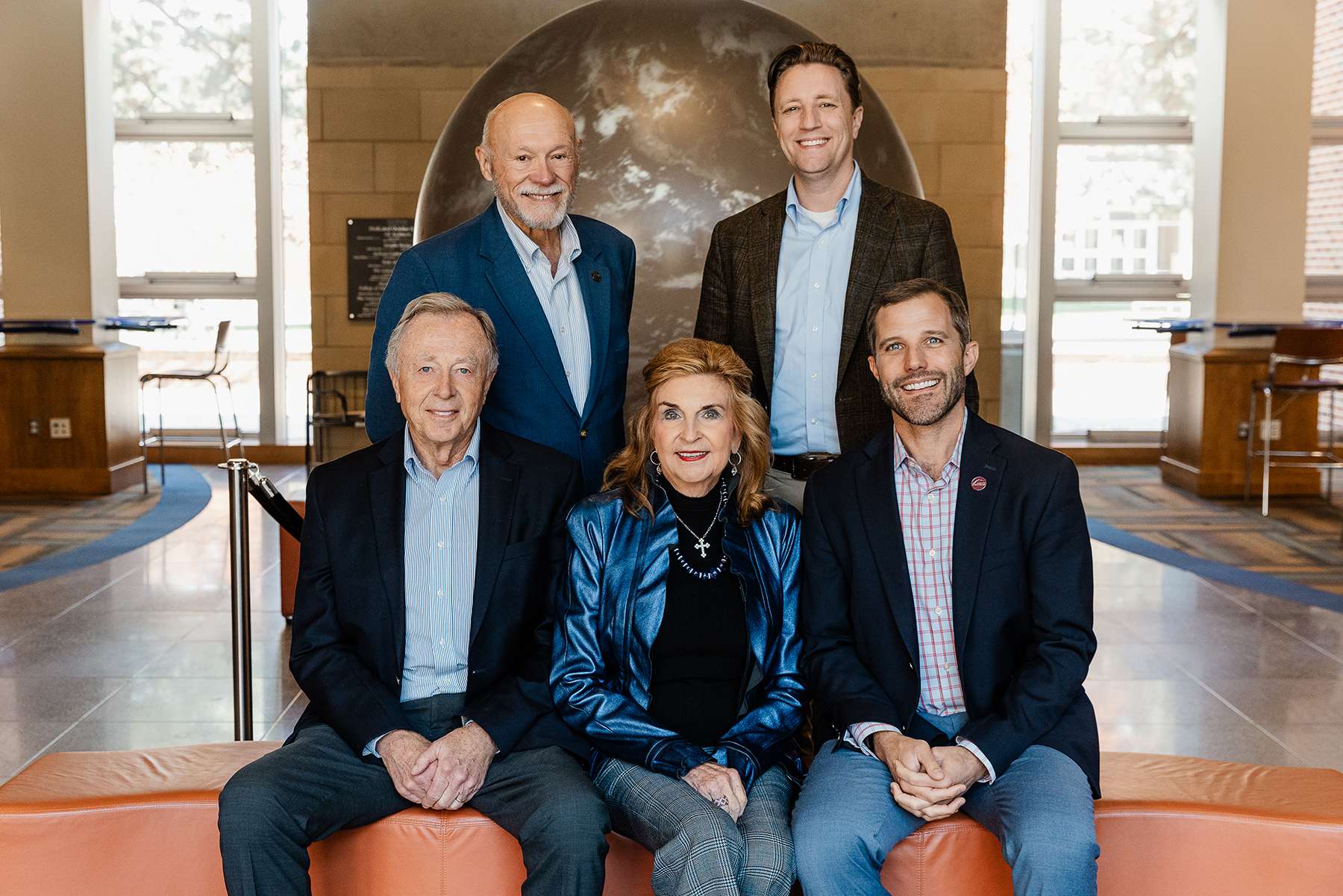
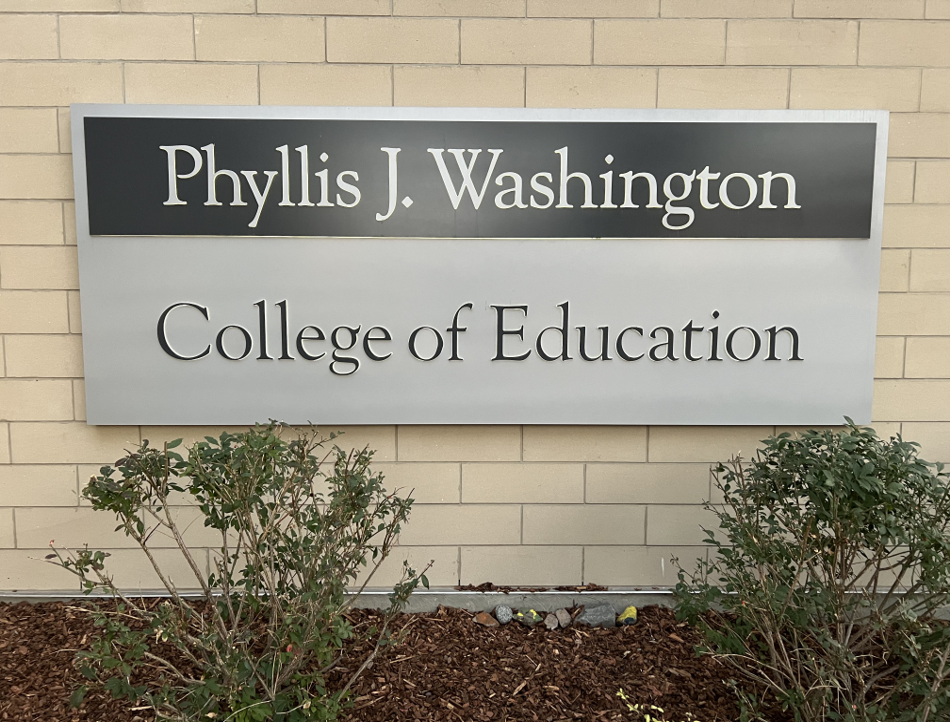
The University of Montana Foundation and the Phyllis J. Washington College of Education have just issued a press release announcing a $9.4M grant from the Dennis and Phyllis Washington Foundation to support positive education at the University of Montana and throughout the state. I am humbled to hear of this amazing support and immensely grateful to Phyllis Washington and the Washington Foundation for their vision and generosity.
Specifically, these funds will support the educational journey of prospective Montana teachers and school counselors and will grow our efforts to address the emotional and behavioral health of Montana educators and students through positive education. As you may know, thanks to a previous grant from the Arthur M. Blank Family Foundation, I’ve been very involved in promoting the principles of positive psychology and education throughout Montana. I look forward to continuing my work with Montana teachers and administrators. This incredibly generous grant will deepen our support for current and future Montana educators, including professional school counselors. Together, we will work to improve the emotional and behavioral health of young people in Montana and beyond.
If you have questions, please reach out to the names and numbers listed in the official press release.
P.S.: Along with my thanks to the Washington Foundation, in keeping with the principles of positive psychology, I want to emphasize my gratitude to Dr. Dan Lee, Dean of the Phyllis J. Washington College of Education, and the extremely competent and capable team of Erin Keenan, Erin White, and Jason Newcomer from the University of Montana Foundation. Of course, many of you who receive this message are also on my gratitude list. I hope you can feel good feelings deep inside yourselves about your own contributions to creating a better future for Montana youth, educators, and schools. I look forward to working collaboratively with all of you in the future.
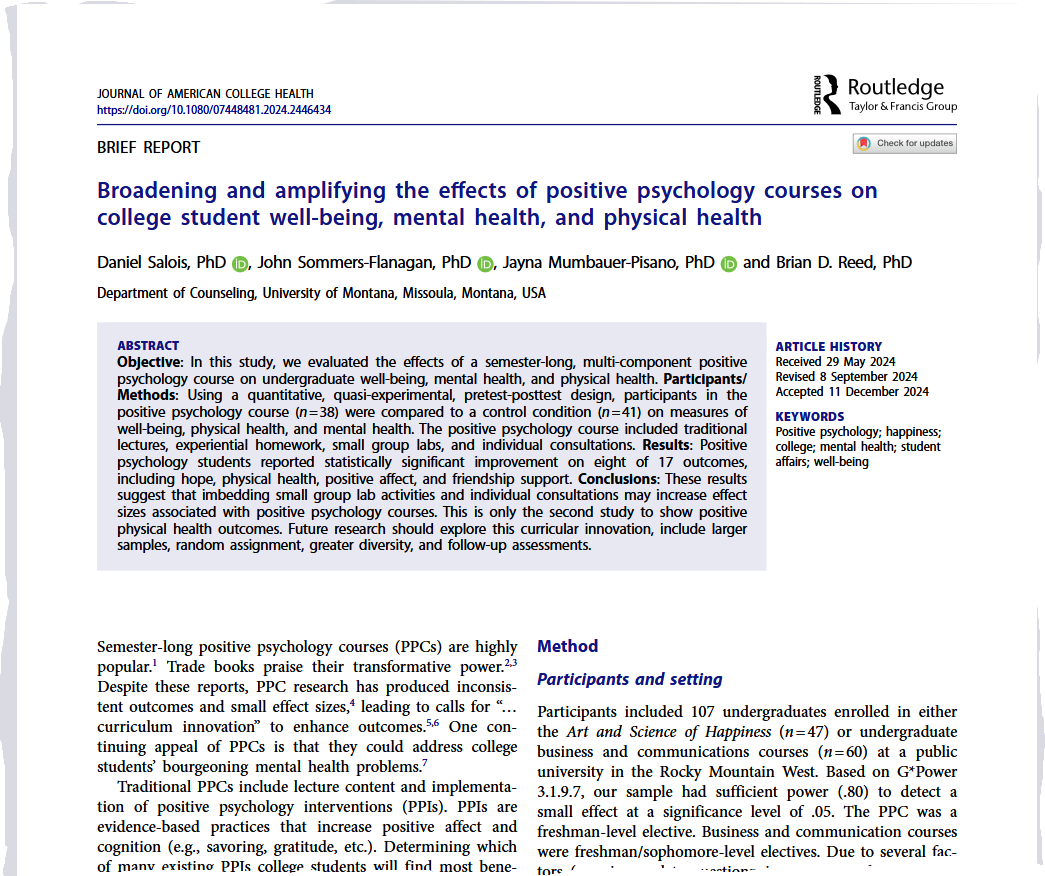
We have more good news for 2025. At long last, we’ve published a research article based on Dr. Dan Salois’s doctoral dissertation. Congratulations Dan!
This article is part of growing empirical support for our particular approaches to teaching positive psychology, happiness, and how people can live their best lives. As always, I want to emphasize that our approach is NOT about toxic positivity, as we encourage people to deal with the deep conflicts, trauma, and societal issues that cause distress — while also teaching strategies for generating positive affect, joyspotting, and other practices derived from positive psychology.
One of the big takeaways from Dr. Dan’s dissertation is that our happiness class format may produce physical health benefits. Also, it’s important to note that this publication is from early on in our research, and that our later research (currently unpublished) continues to show physical health benefits. Exciting stuff!
Tomorrow is a celebrated holiday involving gratitude. Given the American history of mistreatment, oppression, and abuse of indigenous peoples, I have trouble saying the holiday name. You may think I’m being over-sensitive or politically correct, or you may find yourself seeking some other label to describe me. No worries, I’m here to help. My current labels (which switch with considerable frequency) are grumpy and discouraged.
I know better than to dwell too long on my grumpy and discouraged thoughts, feelings, and somatic complaints. Those of you who know me well know that it makes me grumpy to even use the word somatic, and so the discouragement is deep. While I’m drilling down into my negativity, I’ll add that it also makes me grumpy to hear the words “fight-or-flight” and “brain shut-down” and “amygdala hijack” and “PHQ-9 or GAD-7” and “mental illness” and the mispronunciation of “Likert” and everything else our culture is using to push us into negative mental and emotional states—and keep us there.
I also know that some of the preceding linguistic pet peeves may seem cryptic. That’s okay. I like being mysterious. I’ll just say that I would prefer “amygdala hijinks” over “hijack,” and leave the mystery unsolved.
Not surprisingly, the bigger laments are what give the smaller laments most of their negative power. My bigger laments are probably obvious, but here are a few: How did we develop into a culture where the voices and opinions of people like Andrew Tate and Joe Rogan shape the psychology, emotions, and behavior of so many young men? How did we become a nation that could elect a convicted felon, rapist, racist, sexist, reality television star as the next president? When did Christianity take a turn and become a narcissistic, nationalist, anti-immigrant movement? How did our mainstream media become an entity that gives voice to social media posts from the president elect? And, because the president elect is a well-known serial and pathological liar, how did the media decide they should center their reporting around his likely dissembling bloviations as potentially truthful statements?
I do have to admit that it makes me a little bit happy to use the word bloviations. That was fun.
Now that I have you (my six faithful readers) grumpy and discouraged along with me, maybe I should pause to take stock of the many things and people toward whom I feel gratitude. If, by chance, you’ve also been feeling your share of doom and gloom, I hope you’ll consider joining me in a gratitude activity.
First in line is Rita. Only minutes ago, while planning a few Turkey Day dishes, I offered up one simple suggestion that may have required only one or two brain cells and could easily have been brought forth during a so-called fight-or-flight brain shut-down. Her response of, “That’s a REALLY good idea!” made me laugh out loud (even amidst my gloomy mood). This small interaction reminded me of the many ways that I am lucky to be supported and inspired by Rita every day.
Our children (and son-in-law) are basically overachieving geniuses who work every day to make the world a better place. I won’t go into details here, but this is more good fortune on a rather magnificent scale.
This past weekend I hung out with my sisters, attending a Bat Mitzvah with my Jewish cousins who welcomed us into their celebration with open arms and hearts. We mercilessly teased each other, laughed together, played games, and did what family does. My sisters and I often marvel at our mutual family experiences . . . as given to us by our amazing parents. More big gratitude.
First thing this morning, I got to lightly supervise a few interns who are facilitating a group for dads, prepping to present to classrooms of 8th graders, and being coached by Dylan Wright, who just might be the most dynamic presentation coach of all time. These young people are smart, capable, and committed to being therapeutic forces in the world. . . and I get to work with them.
Tomorrow Rita and I will have dinner with a long-time friend who, having already made substantial contributions to the mental health of a multitude of Montanans, invited us over to help her eat up a frozen turkey that she surprisingly found in her freezer. We have gratitude to her for the past, present, and future.
Just in case you’re wondering, the empirical research on gratitude is pretty fantastic. Focused and intentional gratitude will not immediately transform your life, but in general, gratitude practice is linked to improved mood, increased positive communications with others, hope, and improvements in physical exercise. That last one is as cryptic as my linguistic pet peeves. How could gratitude make you exercise more? Nobody knows. All I can say is this: How about you practice gratitude tonight, tomorrow, and into the future and then see if it helps you exercise more? As B.F. Skinner might say, we should all experiment with our experiences.
Given all the world-wide and local reasons to be grumpy and discouraged, my plan is to counter those feelings by spending more time being grateful. I know it won’t fix the world . . . but I know it will create nicer feelings . . . and that, I suppose, is plenty good for now.
My wife (Rita) and I used to argue over who came up with the catchy “Tough Kids, Cool Counseling” title for our 1997/2007 book with the American Counseling Association. I would swear it was MY grand idea; she would swear back that it was HER idea. If any of you are in–or have been in–romantic partnerships, perhaps you can relate to disagreements over who has all the best ideas. I doubt that this dynamic is unique to Rita and me.
Years passed . . . and now I’ve come to very much dislike the title. . . leading me to give Rita ALL THE CREDIT! You’ve got it Rita! It was all you!
Despite my dislike for the title, I still sometimes use it for workshops. Why might that be, you may be wondering? Good question. I use it so I can make the point, early in the workshop, that we should NEVER use language that blames young people for their problems or their problem behaviors. In fact, we should never even “think” thoughts that assign blame to them for being “tough.”
My reasoning for this is informed by constructive theory and narrative therapy. When we assign blame and responsibility to young people for being “tough” or “difficult” or “challenging,” we risk contributing to them holding a tough, difficult, or challenging identity–which is exactly the opposite of what we want to be doing. Instead, I tell my workshop participants that we should recognize, there are no “tough kids” . . . there are only kids in tough situations . . . and being in counseling or psychotherapy is just another tough situation that young people have to face. Consequently, it’s NOT their fault if they engage in so-called tough or challenging behaviors.
All this leads me to share that I’ll be online all day on December 6, 2024, doing a workshop for mental health professionals. The workshop, anachronistically titled, “Tough Kids, Cool Counseling” is sponsored by the Vermont Psychological Association. You can register for the workshop here: https://twinstates.ce21.com/item/tough-kids-cool-counseling-131540
Even if I do say so myself, I’m proclaiming here and now that this will be a very engaging online workshop. If you work with youth (ages 10-18) in counseling or psychotherapy, and you need/want some year-ending CEUs, we’ll be having some virtual fun on December 6, and I hope you can join in.
The place to click if you want to learn about psychotherapy, counseling, or whatever John SF is thinking about.







 John Sommers-Flanagan