
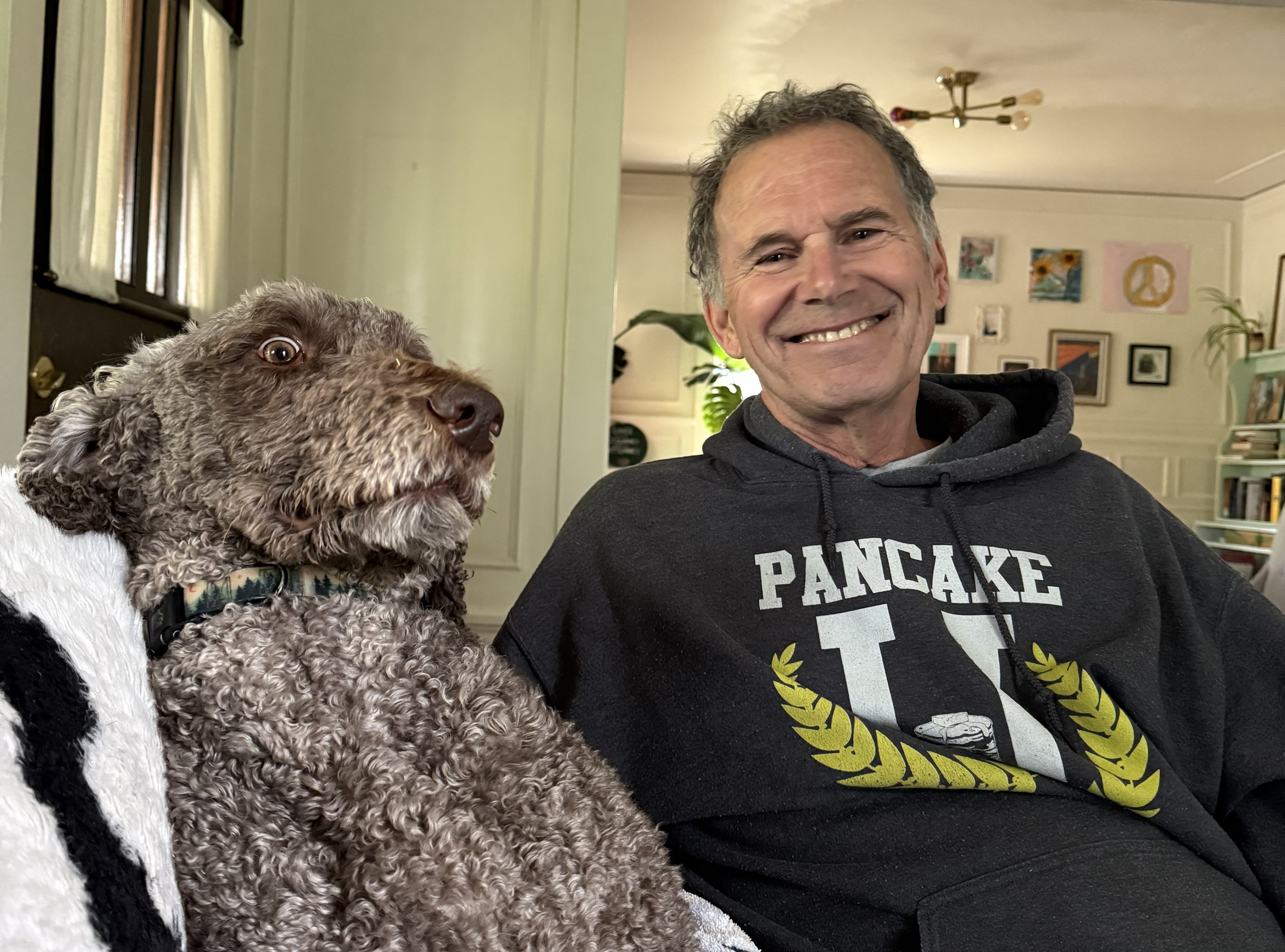
I wrote my reflections on mental health awareness and prevention as an Op-Ed piece and pasted it below.
The Future of Mental Health Awareness
As we exit Mental Health Awareness Month version 2026, I’m already anticipating May 2027. It’s time to rethink, rebrand, and reboot mental health awareness and prevention.
Think about it. Can you name a single mental disorder that, in your lifetime, has decreased in significance?
Depression? Anxiety? ADHD? Bipolar? As a mental health professional for the past 45 years, I’ve watched mental disorders in America stubbornly increase, despite more national, state, and local mental health awareness and prevention programs than ever before.
Mental health awareness and prevention are failing for multiple reasons, none of which are the fault of all the compassionate, hard-working, and well-intended people involved with mental health prevention. More likely, our collective failure begins with confusion over how to define mental health. Most Americans use “mental health” to describe mental health problems, mental disorders, or mental illness. Mental health is supposed to be positive and include joy, happiness, meaning, and mutually supportive relationships.
Instead, even the term “mental health prevention” is awkwardly phrased. Wait. Does mental health prevention mean we’re preventing mental health? Ironically, that might be exactly what we’re doing.
Without a positive vision of mental health, we’re left trying to manage, eliminate, or run from negative symptoms. Mental health should be something positive to strive toward. How about we start with the World Health Organization’s (WHO) definition of mental health? “A state of mental well-being that enables people to cope with the stresses of life, realize their abilities, learn and work well, and contribute to their community.”
Pretend for a moment that you’re a young person. You have two options. You can enroll in a program designed to reduce your anxiety and depression. Or you can enroll in a program designed to help you strive toward happiness, meaning, and realizing your abilities. Of course, this is a false dichotomy, but which direction do you find more hopeful and inspiring?
We also need to stop using unidimensional slogans to bludgeon community mental health from bad to better. Mental health awareness is a great example. Too much awareness of negative symptoms is not a good thing. More on this soon.
Research indicates that school-based mental health programs can adversely affect students. Providing prevention programming that simultaneously helps all students is a worthy, but unrealistic goal. Because preference is a powerful determinant of effective therapy, students might be better served by choosing from a menu of indirect mental health education activities.
Contemporary prevention programs also ignore several basic psychological principles.
When young people begin learning about mental disorders, a natural and powerful process begins. First, they learn about psychiatric symptoms. Then, they’re told these symptoms represent mental illnesses. Inevitably, they see these symptoms in themselves (or their friends) and begin self-diagnosing. Sometimes, the labels help explain their experiences and youth experience temporary relief. Who’s not reassured to learn that social anxiety is a thing? But, when the label gets too closely linked to identity, diagnosis becomes self-limiting. Students think: “I can’t pay attention because I have ADHD” or “My anxiety stops me from having fun and being around people.” And, because labels are sticky, it becomes difficult for young people (and adults) to shake the label and pursue their potential.
As you read these words, thousands of American youth are learning about their so-called mental disorders in at least two ways: on social media (via Tik-Tok, in particular) and through school-based mental health literacy/awareness workshops. More awareness and more information can make mental health worse—especially if the information is inaccurate or not applied with sensitivity and nuance.
Another psychological principle operates to sustain and deepen negative labeling. Like everyone, young people are inclined toward “confirmation bias.” They easily find evidence for their pre-existing beliefs while discarding evidence inconsistent with their pre-existing beliefs. If I believe I have anxiety and my anxiety limits my ability to participate in social activities, I will become skilled at noticing when my anxiety is adversely affecting me, while dismissing evidence that I’m strong and resilient enough to socialize with my peers.
What we pay attention to grows. Although my teenage clients would respond to this statement with “duh,” prevention programs ignore this concept by paying far too much attention to what’s wrong. We will not shrink problems by paying more attention to them. This is fundamental brain science. The more we focus on and talk about our problems, the better we become at focusing on and talking about our problems. The famous neuroscientist Donald Hebb put it this way: “Neurons that fire together, wire together.” The more we think about our problems, the more we’re teaching our brain to think about our problems. Soon, it becomes automatic, and you’ll be thinking about your problems all day long.
For 2027, let’s reboot mental health. Let’s redefine mental health as a positive emotional, psychological, and relational state. Then, let’s help young (and older) people develop strengths, skills, empathic relationships, positive experiences, and resources to successfully pursue positive mental health.
Together, we can turn Mental Health Awareness Month into a collective experience of joy and wellbeing for everyone.
********************************************
John Sommers-Flanagan, Ph.D. is a clinical psychologist and founding director of the Phyllis J. Washington Center for the Advancement of Positive Education at the University of Montana. He is coauthor of 10 books and many professional articles. The opinion expressed here is solely that of John Sommers-Flanagan and does not represent his current or former employers. You can email your thoughts to: john.sf@mso.umt.edu. For more information, go to https://johnsommersflanagan.com/ or https://www.umt.edu/education/cape
 John Sommers-Flanagan