Category Archives: Uncategorized

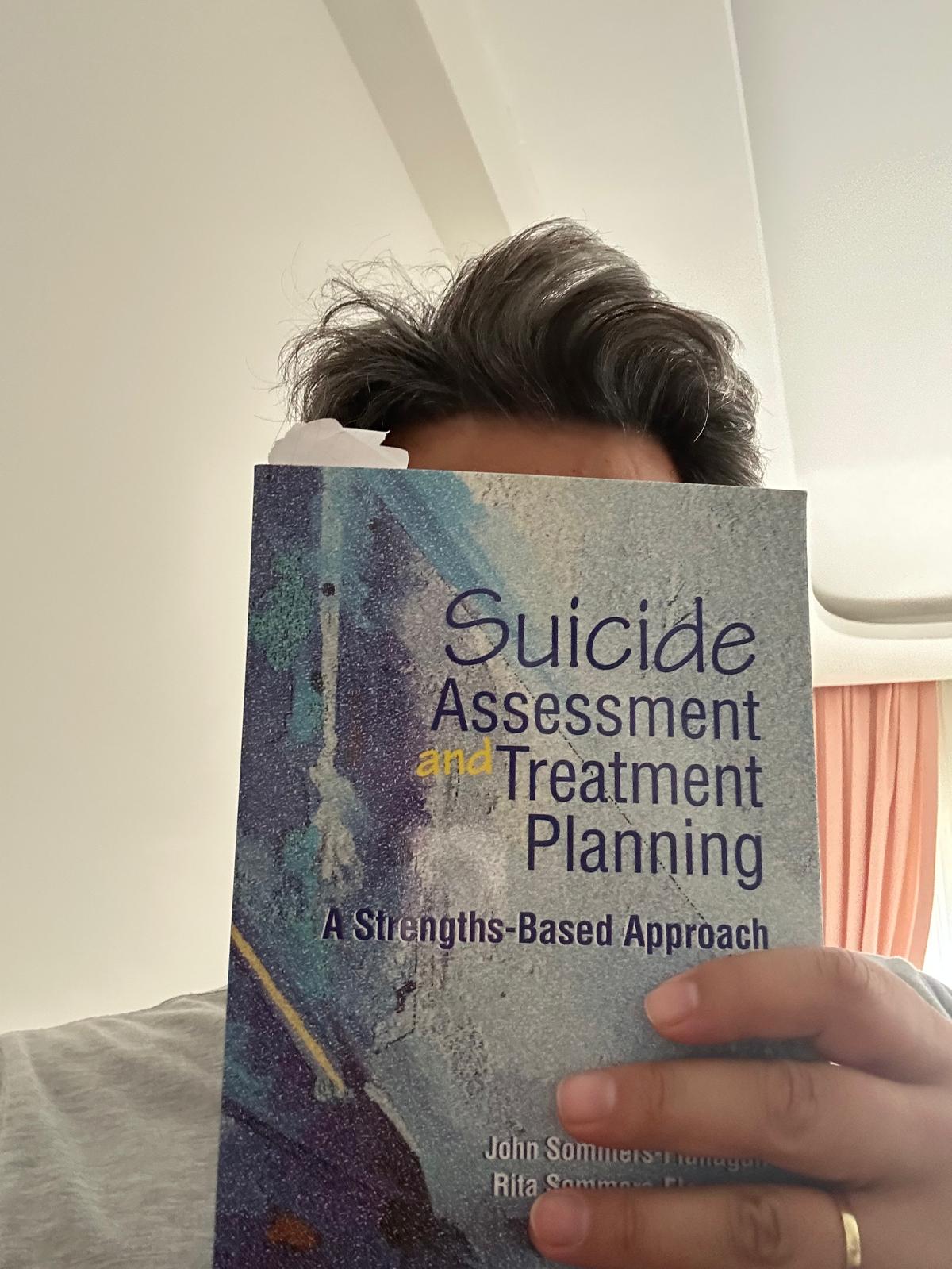
A Glimpse and Quote from Laura Perls (co-developer of Gestalt Therapy) . . . and the Suicide Prevention Slides for North Carolina State University

You may be wondering (I know I am), what does a glimpse and quote from the illustrious Laura Perls have to do with suicide prevention slides for North Carolina State University?

If you have thoughts on the connection, please share. I see a connection, but maybe it’s just because I wanted to post both these things. First, here’s a bit of content from Laura Perls from our Counseling and Psychotherapy Theories text.

***************************************

Although the contributions of Laura Posner Perls to Gestalt therapy practice were immense, she never receives much credit, partly due to the flamboyant extraversion of Fritz and partly because her name, somewhat mysteriously (at least to us), is not on many publications. She does, however, comment freely on Fritz’s productivity at the twenty-fifth anniversary of the New York Institute for Gestalt Therapy (an organization that she co-founded with Fritz).

Without the constant support from his friends, and from me, without the constant encouragement and collaboration, Fritz would never have written a line, nor founded anything. (L. Perls, 1990, p. 18)

REFLECTIONS

We hear resentment in the preceding quotation from Laura Perls. We feel it too, because we’d like to know more about Laura and for her to have gotten the credit she deserved. If you want more Laura, here’s a nice tribute webpage: https://gestalt.org/laura.htm?ya_src=serp300. And here’s a quotation from her (obtained from the webpage and compiled by Anne Leibig): “Real creativeness, in my experience, is inextricably linked with the awareness of mortality. The sharper this awareness, the greater the urge to bring forth something new, to participate in the infinitely continuing creativeness in nature. This is what makes out of sex, love; out of the herd, society; out of wheat and fruit, bread and wine; and out of sound, music. This is what makes life livable and incidentally makes therapy possible.”

Now, don’t you want to hear more from Laura?

*******************************************

And here’s the North Carolina State University link:

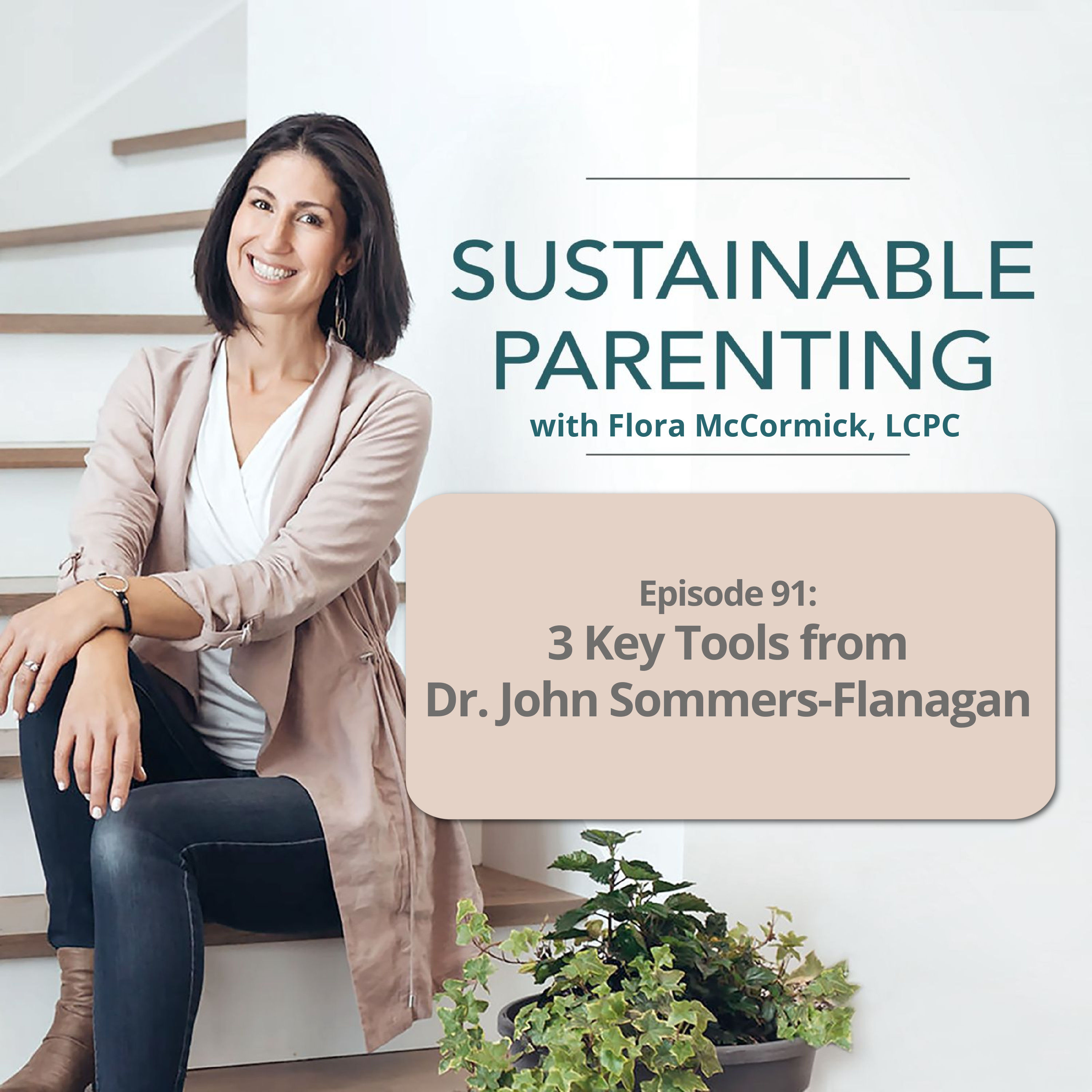
Check Out This Podcast: Sustainable Parenting with Flora McCormick, LCPC

Just before the big news about our $9.4M gift from the Dennis and Phyllis J. Washington Foundation, I had a chance to sit with Flora McCormick as a guest on her very cool podcast, “Sustainable Parenting.” I’ve known Flora for at least 15 years, and she is a focused, dedicated, knowledgeable, kind, and EXCELLENT parenting educator. Talking with her was, as usual, fun and insightful.

In this podcast, we cover three big ideas about parenting. You’ll notice, as in the attached video clips below, Flora is very good at getting me to talk. . . and at zeroing in on what’s the most important information for parents.

Here are some links to the podcast:

I hope you enjoy the pod.

Tomorrow Morning in Ronan, MT: A Presentation and Conversation about Strengths-Based Suicide Assessment and Treatment

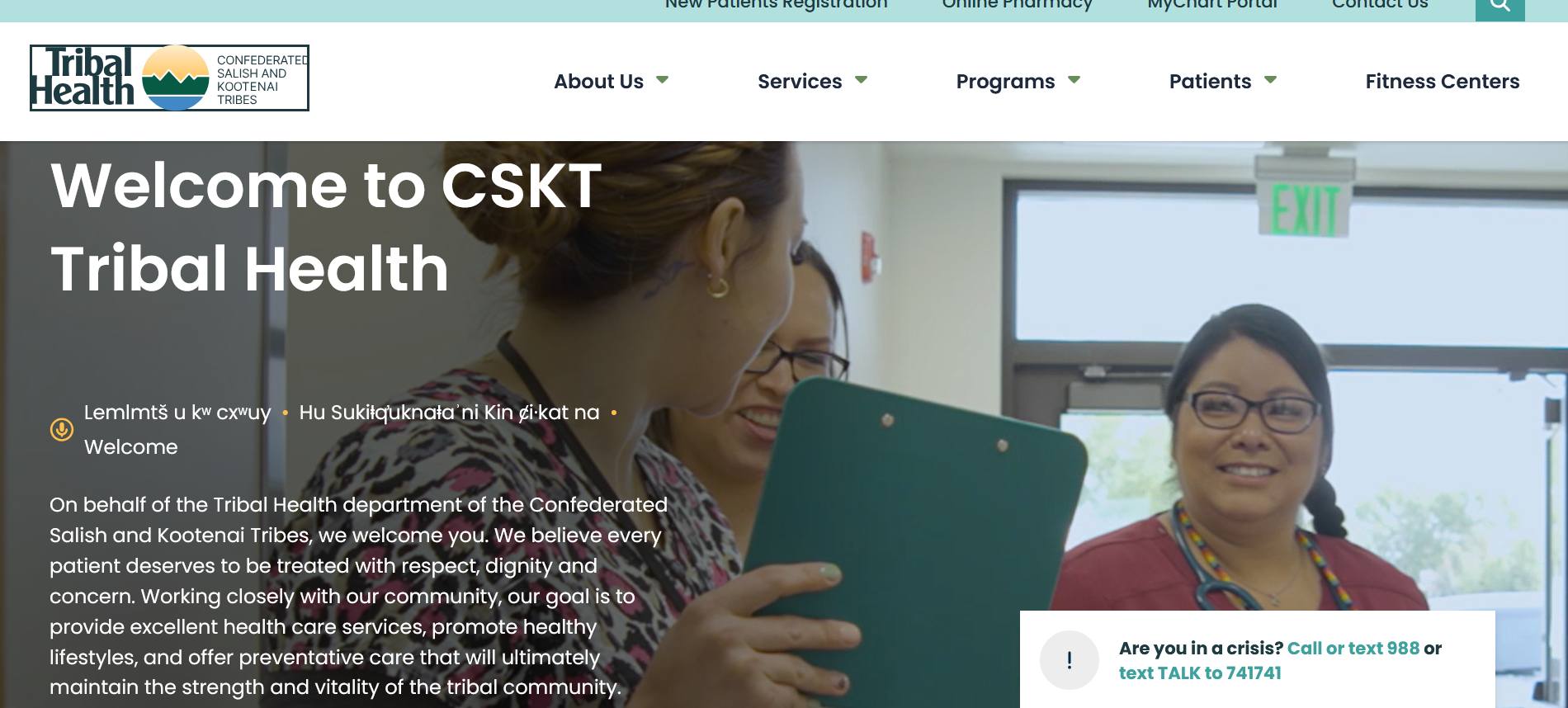
Tomorrow morning, three counseling interns and I will hit the road for Ronan, where we’ll spend the day with the staff of CSKT Tribal Health. We are honored and humbled to engage in a conversation about how to make the usual medical model approach to suicide be more culturally sensitive and explicitly collaborative.

Here are the ppts for the day:

A Strengths-Based Approach to Suicide Assessment & Treatment with a Particular Focus on Marginalized Client Populations

Early this morning, I had a chance to Zoom in and present a workshop for Saint Michael’s College in Vermont. This was probably a good thing, because they had more than their share of snow to deal with. I got to be in Vermont virtually from beautiful Missoula Montana, where we’ve had spring most of winter. I wish we could borrow a few feet of that Vermont snow to get us up to something close to normal.

But my point is to share my ppts from this morning, and not talk about the weather. I had a great two hours with the Saint Michael’s professionals . . . as they posed excellent and nuanced questions and made insightful comments. Here’s a link to the ppts:

Thoughts on Ethnic Matching From Clinical Interviewing (7th edition)

Every chapter in Clinical Interviewing has several pop-out boxes titled, “Practice and Reflection.” In this–the latest–edition, we added many that include the practice and perspective of diverse counselors and psychotherapists. Here’s an example from Chapter One.

PRACTICE AND REFLECTION 1.3: AM I A GOOD FIT? NAVIGATING ETHNIC MATCHING IN PRIVATE PRACTICE

The effects of ethnic matching on counseling outcomes is mixed. In some cases and settings, and with some individuals, ethnic matching improves treatment frequency, duration, and outcomes; in other cases and settings, ethnic matching appears to have no effects in either direction (Olaniyan et al., 2022; Stice et al., 2021). Overall, counseling with someone who is an ethnic/cultural match is meaningful for some clients, while other clients obtain equal meaning and positive outcomes working with culturally different therapists.

For clients who want to work with therapists who have similar backgrounds and experiences, the availability of ethnically-diverse therapists is required. In the essay below, Galana Chookolingo, Ph.D., HSP-P, a licensed psychologist, writes of personal and professional experiences as a South Asian person in independent practice.

On a personal note, being from a South Asian background in private practice has placed me in a position to connect with other Asians/South Asians in need of culturally-competent counseling. In my two years in solo private practice, I have had many individuals reach out to me specifically because of my ethnicity and/or the fact that I am also an immigrant to the U.S. (which I openly share on my website). These individuals hold an assumption that I would be able to relate to a more collectivistic worldview. Because I offer free consultations prior to meeting with clients for an intake, I have had several clients ask directly about my ability to understand certain family dynamics inherent to Asian cultures. I have responded openly to these questions, sharing the similarities and differences I am aware of, as well as my limitations, since I moved to the U.S. before age 10. For the most part, I have been able to connect with many clients of Asian backgrounds; this tends to be the majority of my caseload at any given time.

As you enter into the multicultural domain of counseling and psychotherapy, reflect on your ethnic, cultural, gender, sexual, religious, and ability identities. As a client, would you prefer working with someone with a background or identity similar to yours? What might be the benefits? Alternatively, as a client, might there be situations when you would prefer working with someone who has a background/identity different than yours? If so, why and why not?

Reflecting on Dr. Chookolingo’s success in attracting and working with other Asian/South Asian people . . . what specific actions did she take to build her caseload? How did she achieve her success?

[End of Practice and Reflection 1.3]

For more info on ethnic matching, see these articles:

Olaniyan, F., & Hayes, G. (2022). Just ethnic matching? Racial and ethnic minority students and culturally appropriate mental health provision at British universities. International Journal of Qualitative Studies on Health and Well-being, 17(1), 16. doi:https://doi.org/10.1080/17482631.2022.2117444

https://www.tandfonline.com/doi/full/10.1080/17482631.2022.2117444

Stice, E., Onipede, Z. A., Shaw, H., Rohde, P., & Gau, J. M. (2021). Effectiveness of the body project eating disorder prevention program for different racial and ethnic groups and an evaluation of the potential benefits of ethnic matching. Journal of Consulting and Clinical Psychology, 89(12), 1007-1019. doi:https://doi.org/10.1037/ccp0000697

https://psycnet.apa.org/doiLanding?doi=10.1037%2Fccp0000697

Acts of Kindness . . . in Hawai’i

This is our room with a view.

I’m a little embarrassed to report that Rita and I are on the Big Island of Hawai’i. We’re house-sitting for a friend. I know it’s hard work (insert eye-roll here). I have to wipe up the gecko poop and pee every morning. We’re here and experiencing this great fortune because a friend presented us with a very big act of kindness.

This week’s Montana Happiness Challenge is all about acts of kindness. Turns out, kindness is emotionally and psychologically healthy; this is true whether we engage in the act, receive the act, or observe the act. In a fascinating study titled, “Brief exposure to social media during the COVID-19 pandemic: Doom-scrolling has negative emotional consequences, but kindness-scrolling does not,” the researchers noted that doom scrolling during COVID reduced positive affect and optimism. In contrast, looking for positive stories of kindness on the internet either had no effect, or reduced negative affect.

As someone who has done more doom-scrolling than kindness scrolling, that’s good information to know. Here’s a link to the study: https://journals.plos.org/plosone/article?id=10.1371/journal.pone.0257728

Below, please find the kindness homework for this week. I know it’s Wednesday and the week is growing shorting, but I’ve found that being in Hawai’i is terribly distracting. Who knew?

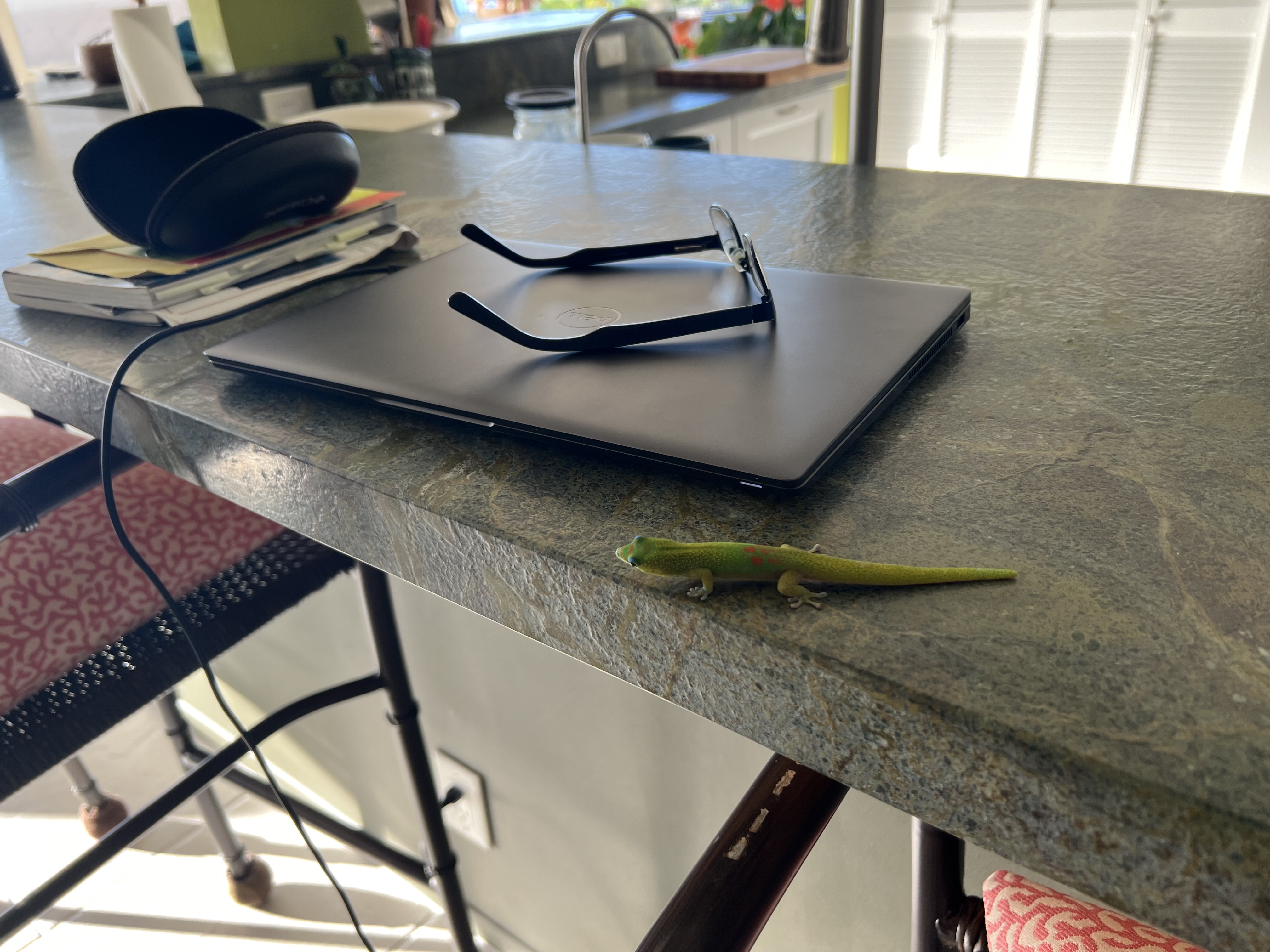
Here’s a gecko trying to either work on or poop on my computer.

*******************************

About a decade or two ago, the concept, “Random acts of kindness” gained traction. Now, about a decade or two later, I’m a little sad that random acts of kindness has become the most common way we talk about kindness. I say this despite the fact that I’m a big fan of randomness and kindness.

For your assignment this week, I’d like all of us to break away from the mentality of randomness and embrace the mentality of intentionality.

Intentional acts give us—as actors in the grand theater of life—greater agency. Instead of being stuck with a script someone else wrote, when we embrace intentionality, we become the author of every scene. Rather than randomly responding to opportunities with kindness, we exert our will. What this means is that when an opportunity for kindness pops up, we already have a plan . . . and that plan involves creatively finding a way to respond with kindness. How cool is that?

Let’s think about this together.

Toward whom would you like to demonstrate kindness? A stranger? If so, it might feel random in that you might act kind in a moment of spontaneity. But your spontaneity—although wonderful—is a moment when your intentionality (to be a person who acts with kindness) meets opportunity. In this way, even acts toward strangers that seem or feel spontaneous, will be acts that reflect your deeper values and character.

Maybe you’d like to intentionally be kind to a friend, a parent, or a sibling. Again, this requires thought and planning and the ability to step outside yourself. Assuming that others want what you want can backfire. You’ll need to step into another person’s world: What would your friend, parent, or sibling appreciate? 

To stay with the theater metaphor, you’re the script-writer and you’ve written yourself into this performance. For this week, the script or plan includes a character who values kindness and who watches for opportunities to share that value with others. You’re that character.

Your job is to translate your character trait of kindness into actions that represent kindness. I don’t what that will look like for you. Maybe you don’t either. That’s the magic—where your character meets opportunity and opportunity meets planned spontaneity.

Your other job is to share about your kindness experiences on social media. You can share your efforts to act with kindness or share your experience of someone acting with kindness toward you.

Have a fabulous and kindness-filled week!

John

For a Win-Win-Win on Giving Tuesday – Support College Student Mental Health

After facing an overwhelming number of choices on Black Friday and Cyber Monday, now we’re faced with another litany of excellent choices for Giving Tuesday. There are so many wonderful charities to support. You can’t go wrong with supporting food banks, shelters, and other organizations that push back against poverty. You also can’t go wrong supporting children, minorities, education, and the environment . . . these are all huge needs.

Along with the preceding charity types, this year Rita and I are wholeheartedly supporting college student mental health. We’ve seen the struggles firsthand and we believe college students can benefit from greater access to mental health services. Specifically, we’re supporting a University of Montana Foundation project called “The University of Montana Mental Health and Happiness Fund.” We see the University of Montana Mental Health and Happiness Fund as a win-win-win. Here’s why.

The first win is that the funds will go to provide more hours of mental health counseling for college students. Unfortunately, more than ever before, college students are stressed and experiencing mental health struggles. These struggles can include suicidal thoughts and behaviors. As far as age groups vulnerable to death by suicide, the college student age group is among the highest (along with older males). Supporting college student mental health can literally save lives and help college students graduate and become significant contributors to their communities. Currently, Counseling Services at the University of Montana needs more counselors to meet increased needs.

The second win is about “workforce development.” In Montana, and around the nation, we need a continuous flow of competent and capable mental health professionals. That’s why the first priority of the University of Montana Mental Health and Happiness Fund is to support a ½ time Counseling Intern for UM’s Counseling Services department. Funding an intern means that the intern gains valuable experience and supervision and can then go out and contribute to mental health in the community. If we receive more funds than expected, we will either fund a second ½ time counseling intern or we will fund happiness promotion projects at UM and within the Western Montana area.

The third win is basic economics. College students contribute to local economies. When they graduate, college students also create capital. College students become entrepreneurs, scientists, grant writers, community leaders, parents, and grandparents. In all these roles, college graduates will do better and be better if they have better mental health.  

Our 2021 fundraising goal is $45,000. We’ve already raised over $22,000. Please help us reach our goal so we can contribute to positive mental health and happiness at the University of Montana.

If you’re interested in joining Rita and me in supporting the University of Montana Mental Health and Happiness fund here are the instructions.

  1. Click on this Link for Support
  2. As you complete the donation form, about halfway down the page, you will see “Designation Choice.” Choose “Other.”
  3. In the Additional Comments/Info Section – type/write University of Montana Mental Health and Happiness Fund

Thanks for considering college student mental health for this Giving Tuesday!