Category Archives: Suicide Assessment and Intervention

Numbers, Men and Suicide in Montana, Liz Plank, and My 42 Seconds of Fame

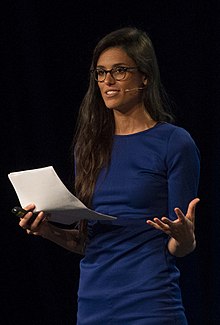
220px-Elizabeth_Plank

Last month in Bozeman, I took a lunch break from a 6.5 hour suicide assessment and treatment workshop for professionals, walked out of the #IwontcallitGianforte Auditorium on the campus of Montana State University where #Idonotteach, up two flights of stairs, where I met Liz Plank and the amazing video recording and production team for the Vox news show Consider It.

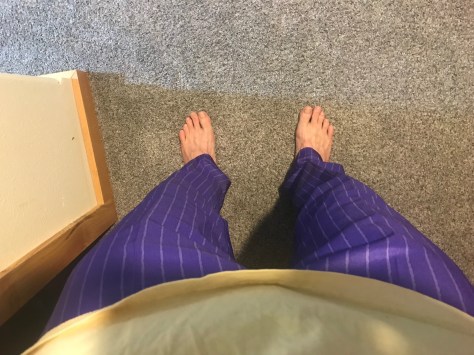
Despite being in the middle of a wardrobe malfunction, I was fascinatingly anxiety-free. After talking about suicide for three hours nothing else really matters much.

Liz Plank is a big deal and a fantastic dresser. All that fits fabulously with her being a fourth wave feminist and 2018 Webby award winner. I was super happy to meet her then, and now, after having met her and done a couple Tick-Tock stunts with her (watch this 9 seconds: https://www.tiktok.com/share/video/6692077388945165573?langCountry=en), I’m still super happy to have met her.

Andy Warhol said we get 15 minutes of fame and Marilyn Manson sang about 15 minutes of shame. What I got in the final Consider It episode was somewhere around 42 seconds of a mix of the two (I’m estimating here because I haven’t timed it). But here’s the good news . . . and there’s lots of good news.

  1. The Consider It episode is now available for public viewing and it’s EXCELLENT. The title: What’s Behind Montana’s Suicide Epidemic? Obviously an incredibly important topic and other than my 42 seconds of fame/shame, very thoughtfully and artfully done (first person to post a comment that accurately identifies my exact wardrobe malfunction on the Consider It site will get a free JSF book of your choice). Yes, you can watch the best ever Consider It episode right here: https://www.facebook.com/consideritshow/videos/1395971993875811/
  2. When Liz Plank got her 2018 Webby, she did a 5 word speech. Listen for her 5 words here: https://www.youtube.com/watch?v=i4pTOQ2YY5Y
  3. Wonder what the heck Liz Plank was talking about in her 5 word speech, find out here (spoiler alert, this video makes fun of Donald Trump): https://www.facebook.com/feministabulous/videos/140217433363072/
  4. If you want Liz to have John S-F back on her show to answer the question of why people vote for Trump against their own best interests, start using the hashtag, #JSFknowstheanswer EVERYWHERE and especially here: https://www.facebook.com/consideritshow/?epa=SEARCH_BOX
  5. For me to get my 15 minutes, all you have to do is watch the Consider It episode 22.5 times. https://www.facebook.com/consideritshow/videos/1395971993875811/

As always, thanks for reading and have a fabulous weekend!

John S-F


What Is a Strength-Based Approach to Suicide Prevention?

Sommers FB 44

Suicide—as a thought, word, or action—usually triggers fear and judgment. Even though suicidal thoughts are common and suicidal behaviors have been part of humanity from as far back as anyone can recall, to think or talk of suicide is saturated with shame and judgment. A strength-based model for suicide prevention is about shifting attitudes toward suicide from negative judgment to compassion and lovingkindness.

Most people who think about suicide are sensitive, intelligent, and self-critical. Typically, they’re judging themselves in negative ways; sometimes they experience self-hatred. All this adds up to the main proposition underlying a strength-based approach to suicide prevention: Because individuals who feel suicidal are already burying themselves in harsh judgments and negativity, what they need from others is empathy for their pain, reassurance that suicidal thoughts are a nearly universal part of human experience, compassion, help for coping with their excruciating psychological distress, and a more or less relentless focus on the positive.

No More Mental Illness and No More Moral Shaming

In 1973, Edwin Shneidman, wrote the Encyclopedia Britannica’s definition of suicide: “Suicide is not a disease (although there are those who think so); it is not, in the view of the most detached observers, an immorality.” Shneidman—often referred to as the father of suicidology (the study of suicide)—capture two harsh judgments popularly linked to suicide: Mental or moral illness. As advocates for suicide prevention, we need to doggedly follow Shneidman’s lead, and show acceptance of the mental and moral condition of people experiencing suicidality.

I like this next quotation from Nanea Hoffman. I’m not sure it fits here, but because this post is about being strength-based when thinking and talking about suicide, and this is my blog and I can include what I want, here it is:

“None of us are getting out of here alive . . . so please stop treating yourself like an afterthought. Eat the delicious food. Walk in the sunshine. Jump in the ocean. Say the truth you’re carrying in your heart like hidden treasure. Be silly. Be kind. Be weird. There’s no time for anything else.” – Nanea Hoffman

Shame surrounding suicide has a long history. By 1000 B.C. most ancient city-states had criminalized suicide. People who died from suicide were sometimes dragged through the streets to enhance their shame and possibly as deterrence for others. Around 400 A.D., Saint Augustine declared suicide an unrepentable sin. I’m not quite sure how that works because I’m guessing that Christian theology would hold up God as the authority on what’s repentable and what’s not repentable.

Contemporary suicide-related policies continue to link shame and suicide. When students die from suicide, many U.S. schools follow a “no memorializing” policy. In New Zealand, the media is prohibited from using the word suicide when reporting on suicide deaths. Most families, when struggling to write obituaries for family members who died by suicide, replace the word suicide with “died suddenly” or some other vague explanation. In an online article, Charlotte Maya wrote of the first time she was able to speak of her husband’s suicide:

“The first time I spoke publicly was about a year and a half after Sam’s death. In many ways, I think Sam would have been appalled. After all, he did not speak a word of his struggles out loud – not to a therapist, not to his friends, not to me. There is so much shame.”

Charlotte is right; there is so much shame. To avoid shame, many people, institutions, and nations have decided that—like Lord Voldemort in the Harry Potter series—suicide is the thing that must not be named.

But it should be named; if we don’t talk about it, the shame linked to suicide grows more powerful, more frightening, and less well understood. It should be named because, hundreds of thousands of people around the world are dying by suicide every year, perhaps dying in shame, perhaps dying unnecessarily, and always leaving loved ones behind who pick up on the theme of shame and begin experiencing it themselves. If we don’t talk openly about suicide, we cannot address it effectively.

Shaming people for thinking about suicide, or for making a suicide attempt, or for completing suicide, magnifies the problem. Shaming people for their suicidal thoughts only makes them less likely to speak openly about their thoughts. And, as in the case of Charlotte Maya’s husband, remaining quiet about emotional pain is linked to tragic outcomes. When people who are suicidal shutter themselves in their private worlds, the suicidal pain and distress doesn’t diminish or evaporate; instead, being alone with suicidal thoughts usually deepens hopelessness and grows desperation, both of which contribute directly to death by suicide.

Shaming individuals who are suicidal is like pouring fuel on an open fire. Suicidal people already feel immense shame. There’s no need to add more. Besides, shaming isn’t an effective deterrent. Further, as I’ll elaborate on later, suicidal thoughts aren’t primarily about death anyway. If our goal is to save lives, there’s a different and more useful emotion to link with suicide.

Instead of shame, the word suicide should evoke compassion—compassion for people who were or are so distressed that they have contemplated or completed suicide; compassion for people who lost someone they loved to suicide; compassion for ourselves, during times when we’re in psychological pain and naturally have thoughts about suicide.

I’ll be writing more about this in the future and so I’ll summarize here. What people who are suicidal need from others includes:

  • Empathy for their pain
  • Reassurance that suicidal thoughts are a nearly universal part of human experience
  • Compassion
  • Help for coping with their excruciating psychological distress
  • A more or less relentless focus on the positive (to help counter their feelings of hopelessness)

Last night I had a chance to engage in a delightful discussion of the strength-based approach with a small group of amazing people at Big Sky, Montana. Thanks to Robin and Jacque for setting that up. As a part of our time together, I flipped through a set of powerpoints. Here are the powerpoints, in case you’re interested: Big Sky Public Lecture 2019

Check out a new “Strengths-Based Suicide Assessment” continuing education course

From M 2019 Spring

This past month I worked on revising our Suicide Assessment chapter from our Clinical Interviewing (6th edition, 2017) textbook so it could function as a stand-alone continuing education course. The continuing education course is finished and now available online.

The Learning Objectives include:

Learning Objectives

This is a beginning to intermediate level course. After completing this course, you will be able to:

  • Explore your own personal reactions to suicide and identify four clinician self-care strategies.
  • Discuss and debunk four common and unhelpful myths about suicide.
  • Describe evidence-based risk/protective factors, warning signs, and cultural issues and how they can be used to deepen empathic understanding of suicidal clients.
  • Identify components of suicide theory that contribute to and guide suicide assessment.
  • Provide a comprehensive suicide assessment interview based on a social constructionist model.
  • Engage in decision-making with suicidal clients.

If you’re interested, here’s a link to the list of courses on ContinuingEdCourses.Net, with the Suicide Assessment course at the top of the list: http://www.continuingedcourses.net/active/courses/courses.php

And here’s a link that takes you deeper . . . all the way to the brand new 3 hour course, go here (I think you can read it for free and only have to pay to take the quiz and get CE credits): Suicide Assessment For Clinicians: A Strength-Based Model

Of course, if you’re interested in a three-part (7.5 hours total) continuing education video experience, here’s your link to Psychotherapy.net: https://www.psychotherapy.net/video/suicidal-clients-series

Have a great day . . . and keep on learning!


Op-Ed Piece — Suicide prevention in Montana: We must do better — In today’s Bozeman Daily Chronicle

Boze Coop

It’s a short piece, but given that I’m in Bozeman tomorrow evening for a public lecture on suicide and spending the day on Friday doing a day-long suicide workshop for professionals, the timing is good.

You can read the Op-Ed piece in the Chronicle: https://www.bozemandailychronicle.com/opinions/guest_columnists/suicide-prevention-in-montana-we-must-do-better/article_0607e973-2b96-500f-93ba-bf9e85f2a7a8.html

Or you can read it right here . . .

In 1973, Edwin Shneidman, widely recognized as the father of American suicidology, was asked to provide the Encyclopedia Britannica’s definition of suicide: He wrote: Suicide is not a disease (although there are those who think so); it is not, in the view of the most detached observers, an immorality (although . . . it has often been so treated in Western and other cultures).

Shneidman’s definition captured two elements of suicide that many of us still get wrong. First, suicidality is neither abnormal nor a product of a mental disorder. At one time or another, many ordinary people think about suicide. Wishing for death is a natural human response to excruciating psychological, social, or emotional distress.

Second, suicidal thoughts or acts are not moral failings. Shneidman noted that society and religion often harshly judge and marginalize anyone who experiences suicidal thoughts and feelings. People who struggle with thoughts of suicide are already feeling immense shame. Adding more shame makes people feel worse, increases the tendency toward isolation, and serves no preventative function.

If you live in Montana, you’re probably aware that news about suicide in the U.S. and suicide in Montana is nearly always bad news. By some estimates, suicide rates have risen 60% over the past 18 years, and Montana has the highest per-capita suicide rates in the nation. Although national and local efforts at suicide prevention have proliferated, these efforts haven’t stemmed the rising tide. There are many reasons for this, some of which are sociological or political and consequently not responsive to suicide prevention programming.

But, as Shneidman emphasized, we need to stop equating suicide with mental or moral weakness. Suicide prevention and intervention efforts shaped around quick, superficial questions or influenced by pathology orientations are unlikely to succeed, and in some cases, may do harm. Compassionate, collaborative, and strength-based models constitute the best path forward for improving the effectiveness of our prevention efforts. If we want people who are in suicidal crisis to open up, talk about their pain, and seek help we must make absolutely sure that we’re communicating the following message—that suicidal thoughts are natural responses to difficult life circumstances, that opening up and talking with others will be met with compassion, not judgment, and that people who seek help from others should be respected for having the strength to reach out and be vulnerable.

To help the Bozeman community learn more about a strength-based model for suicide prevention and treatment, the Big Sky Youth Empowerment Project (BYEP) is sponsoring a free public lecture on Thursday, May 16th from 6:30pm to 8:30pm in SUB Ballroom D on the campus of Montana State University. Please join me for an evening of thinking differently about suicide—with the goal of saving lives in Montana.

****************

John Sommers-Flanagan is a Professor of Counselor Education at the University of Montana, a clinical psychologist, and the author of over 100 professional publications, including eight books. He has a professional resource and opinion blog at https://johnsommersflanagan.com/


Spending Time with the Jackson Contractor’s Group in Big Sky

Missoula-College-Exterior_Web-Op

Have you ever looked at the Jackson Contractor’s Group (JCG) website? You should, it’s filled with statements about values, integrity, company culture, and they talk about “unapologetic authenticity of each Jackson employee.” Pretty cool. Oh yeah, and there are the many astounding projects they’ve done, like the new Missoula College Building, featured above. You can check out their website here: https://jacksoncontractorgroup.com/culture/

JCG is a company that’s all about construction. Other than being an admirer of their website, why are Rita and I hanging out with them in Big Sky, Montana?

The reason is that JCG cares about its employees. They also recognize that the construction industry has one of the highest (or the highest) rate of employee suicides in the U.S., and so they invited me to their corporate retreat to talk about suicide and suicide prevention.

While preparing for tomorrow’s talk, I discovered, among other things, that the Construction Financial Management Association lists several specific employment-related risk factors, including:

  • Tough guy culture
  • High pressure environment with a potential for failure and shame
  • Physical strain and psychological trauma
  • Travel away from family and friends
  • Stressful working hours/conditions
  • Stigma – Activities
  • Access to lethal means

I’m very impressed with JCG and honored to share time with them tomorrow. For those interested, I’m pasting a link to tomorrow’s powerpoints right here: Jackson Understanding and Preventing Suicide

The Pediatric Sleep & Wellness Conference in Seattle and The Suicide Prevention and Intervention in Bozeman: Informational Flyers Flying

In the coming weeks I’m honored to be able to present on two of my favorite topics: Parenting and Suicide Assessment.

These two upcoming events (in Seattle, April 27 and in Bozeman, May 16 and 17) have nice landing urls for information and registration.

If you happen to be in one or both of these areas, I’d be happy to see you. Please let me know, so we can say a real, non-virtual hello.

The links.

Seattle: https://pediatrictrainingacademy.com/conference/?fbclid=IwAR0ov1b6RgqIY3qHRG7qPAC2Nf9PyHpkbI5fOodtp8umUUTMbDW2sh9v438

Bozeman: https://www.byep.org/saw

Boze Coop

Happy Wednesday! JSF


The Montana Suicide Assessment and Treatment Planning Model is Coming to a Location Near You

While hanging out on Twitter, I noticed that E. David Klonsky, a fancy suicide researcher from the University of British Columbia tweeted about a brand new article published in the Journal of Affective Disorders.

The article, titled, “Rethinking suicides as mental accidents” makes a case for what the authors (Drs Ajdacic-Grossab, Hepp, Seifritz, and Bopp from Switzerland) refer to as the starting point for a “Rethink.”

Aside from their very cool use of the term rethink—a term I’m planning to adopt and overuse in the future—the authors’ particular “rethink” has to do with reformulating completed suicides as mental accidents, instead of mental illness. They concluded, “The mental accident paradigm provides an interdisciplinary starting point in suicidology that offers new perspectives in research, prediction and prevention” (p. 141).

For those of you who follow this blog and know me a bit, it will come as no surprise that I commend the authors for moving away from the term mental illness, but that I also think they should move even further away from even the scent of pathologizing suicidal thoughts and behaviors.

All this brings me to an important announcement.

Starting on the evening of May 16 and continuing onto May 17, in partnership with the Big Sky Youth Empowerment Project (thanks Pete and Katie), I’ll begin the launch of some public and professional suicide trainings in Montana. These trainings will include evening public lectures (starting May 16 in Bozeman) and professional trainings on suicide assessment and treatment planning (starting May 17 in Bozeman).

Going back to the “rethink” of suicide as a mental accident, I want to emphasize that my goal with these lectures and workshops is to reshape discussions about suicide from illness-focused to health and wellness focused. Rethink of it as a strength-based approach to suicide assessment and treatment planning. And you can also rethink of it as no accident.

For more information on the public lecture, check out this flyer: BYEPSAWpublic (1)

For more information on the professional suicide assessment and treatment planning workshop, check out this link: https://go.byep.org/advances and flyer: BYEPSAWclinical (1)

And if you can’t make these events, no worries, as I mentioned, this is a launch . . . which means there’s more coming later this year . . . in Billings, in Great Falls, and in Missoula.

Finally, if you want a workshop like this in your city, let me know. The good people of Big Sky Youth Empowerment are committed to delivering a more positive message about suicide assessment and treatment planning to other locations around the state; maybe we can partner up and do some important work together.

Thanks for reading and happy Sunday evening!

data or data

Suicide Assessment and Treatment Planning: Resources for Professionals

The Road

As you probably know, suicide rates are and have been on the rise. Here’s what the Centers for Disease Control said several months ago: “From 1999 through 2017, the age-adjusted suicide rate increased 33% from 10.5 to 14.0 per 100,000” (CDC, November, 2018).

Although the CDC’s report of a 33% increase in the national suicide rate is discouraging, the raw numbers are even worse. In 1999, an estimated 29,180 Americans died by suicide. As a comparison, in 2017 (the latest year for which data are available), there were 47,173 suicide deaths. This represents a 61.9% rise in the raw number of suicide deaths over the past 17 years.

Along with rising suicide rates, there’s also a palpable rise in anxiety and panic among mental health and healthcare professionals, teachers, and the public. Even though suicides still occur at a low rate (14 per 100,000), it’s beginning to feel like a public health crisis. We don’t have much evidence that current intervention and prevention efforts are working, and the continued tragic outcomes (about 129 suicide deaths each day in the U.S.) are painful and frustrating.

The purpose of this post is simply to offer resources. I’ve been working in this area for many years; my sense is that having additional resources to help professionals feel more competent can reduce anxiety and probably increases competence. Here are some resources that might be helpful.

  1. In 2017, I published an article on suicide assessment in Professional Psychology. Here’s a pdf of that: SF and Shaw Suicide 2017.  In 2018 I published an article in the Journal of Health Service Psychology. The purpose of the 2018 article was to be more practical and provide clear ideas about how psychological providers can be more effective in how they work with clients or patients who are suicidal. You can click here to access a pdf of the article. Conversations About Suicide by JSF 2018
  2. I’ve been working with some of my doctoral students on alternatives to the traditional (and failed) approach of using client risk factors to categorize or estimate suicide risk. One product of this work is an evidence-based list of eight potential suicide dimensions. These suicide dimensions can be used with other models (e.g., safety planning) to guide collaborative treatment planning. To see a description of the eight dimensions and a treatment planning form based on the eight dimensions, you can click on the following links. Suicide TPlanning Handout            Suicide TPlanning Handout Blank
  3. Barbara Stanley and Gregory Brown developed the “Safety Planning Intervention.” For information about their intervention and access to their safety planning form, you can go to their website: http://suicidesafetyplan.com/Home_Page.html
  4. Along with Victor Yalom and some other contributors, this past year I helped produce a 7.5 hour professional training video titled, Assessment and Intervention with Suicidal Clients. You can buy this 3-part video series through Psychotherapy.net and can access a preview of the video series here: http://www.psychotherapy.net/video/suicidal-clients-series
  5. I’m a big fan of David Jobes’s work on the collaborative assessment and management of suicide. You can check out his book on Amazon: https://www.amazon.com/Managing-Suicidal-Risk-Second-Collaborative/dp/146252690X/ref=sr_1_1?crid=29DN6ZM2BUCV3&keywords=david+jobes+suicide&qid=1551837394&s=gateway&sprefix=david+jobes%2Caps%2C177&sr=8-1
  6. Later this spring and this fall, in collaboration with the Big Sky Youth Empowerment Program and the University of Montana, I’ll be offering several low-cost six-hour training workshops in four different Montana locations. These trainings will include research data collection, as well as an opportunity to participate in follow up booster trainings—booster sessions that will happen about three months after you attend an initial six-hour session. If you’re interested in participating in these Montana Suicide Assessment and Treatment Planning Workshops, you can email me, send me your email via a comment on this blog, or begin following this blog so you don’t miss out when I share the dates, times, and locations, and registration information in an upcoming post.

I hope this information is helpful to you in your work with clients struggling with suicide. Together, hopefully we can make a difference.

Advances in Suicide Assessment and Treatment . . . just published in the Jubilee Edition of Psychology Aotearoa

Ocean View

Here’s the view from New Zealand.

The professional journal, Psychology Aotearoa is the flagship publication of the New Zealand Psychological Society. Just yesterday I received a copy of the Jubilee Edition of the journal. I’ve got a brief article on pp. 76-80, but the whole journal is an interesting glimpse of psychology, psychotherapy, and counseling at an international level. Here’s the pdf: 2018 November JSF New Zealand Pub