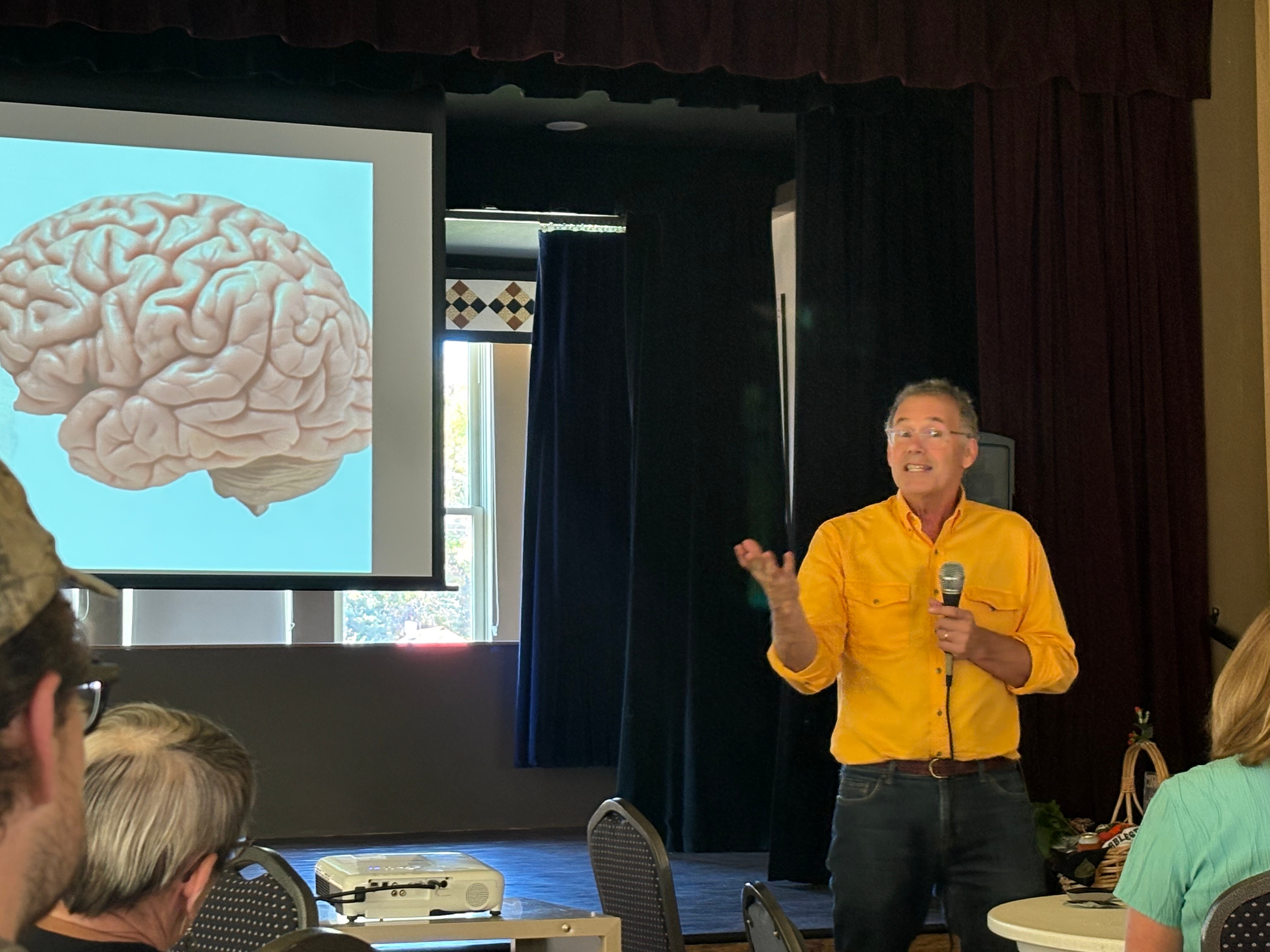
Today, Tammy Tolleson Knee and completed day 1 of a 2-day course on Strengths-Based Suicide Assessment and Interventions in Schools at the Buffalo Hide Academy of Browning Public Schools on the Blackfeet Reservation. We are beyond happy for this opportunity. It’s the first time for Tammy and I to present together (for two days!). As frosting on the presentation cake, Rita is here with us, watching, listening, heckling, and guiding.
In case you haven’t heard, Browning Public Schools and their staff have already started integrating strengths-based suicide prevention work into their programming. Two of our former University of Montana school counseling graduates, Sienna and Charlie Speicher are at the center of this work. Sienna and Charlie have already taught strengths-based courses through Blackfeet Community College, and they founded the Firekeeper Alliance. Here’s the Firekeeper Alliance Mission Statement:
Our mission is to cultivate resources, attention, and awareness to ultimately transform perspectives regarding suicidal distress in Indian Country and to help reduce suicide rates in our communities. We believe that mainstream and current approaches of suicide assessment and intervention struggle to meet the unique needs of Tribal populations. The Firekeeper Alliance promotes a different set of strengths-based, decolonized ideals around suicidal behavior. We believe that systemic and cultural shifts in the clinical community are necessary to truly make a positive change.
The Firekeeper Alliance also focuses on several areas, including offering strengths-based approaches to counseling, as in the following:
Offer individual and group counseling sessions utilizing evidence-based therapies which are effective in addressing suicidality.
Promote assessment techniques and interventions that elicit protective factors and a resilient spirit.
Administer assessment instruments that screen for strengths, character assets, and benevolent experience to depathologize suicidal distress.
Advocate for strengths based assessment and intervention approaches to be used in conjunction with cultural healing mechanisms.
Back to our training. . .here are the ppts that Tammy and I developed. There are SO MANY, but then again, we’re covering two whole days!
In closing, I want to give a big shout-out to Browning Public Schools (BPS) for collaborating with us (the Center for the Advancement of Positive Education; aka CAPE) to bring this training to Browning. Not only do we have a dozen or so school counselors in the room, we’ve also got a dozen or so administrative staff, including principals and the BPS superintendent. We had a blast today and are looking forward to more meaningful fun tomorrow!
I’m looking forward to a morning drive to Bozeman where I’ll meet and talk with healthcare and mental health providers and advocates from all around Montana. In advance of the Summit, I want to say thank you to the Montana Healthcare Foundation and to all the participants for their dedication to the well-being of all Montanans.
I have two talks . . . and the slide decks are linked below:
We had a blast on Saturday afternoon in Absarokee doing a 3-hour workshop on “Tools for Living your Best Life: A Happiness Primer.
Why was it a blast? Let me count the ways.
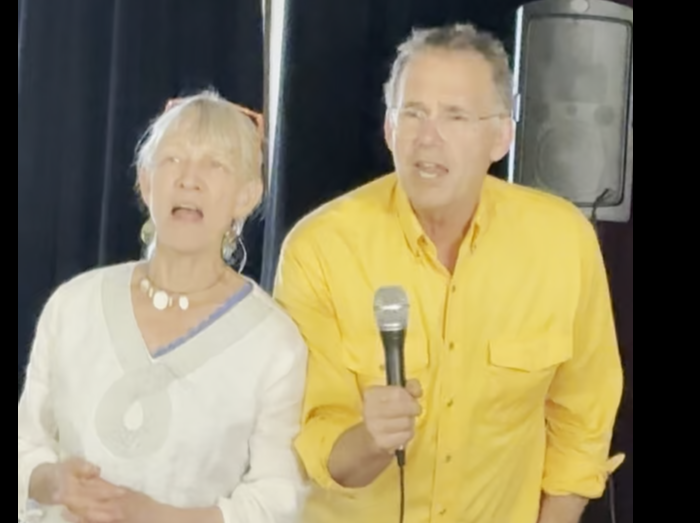
Rita opened the event with a sweet version of the song, “Happiness Runs. . .”
Turnout was awesome with 33 participants packed into the old Cobblestone Schoolhouse.
Rita and the Cobblestone Board orchestrated a “Best Savoring Treat” contest, brought in a judge, and we all applied our savoring skills before, during, and after our designated snack time. There were many deserving entries. I felt for the judge, who had to sample all 14 food options!
The group was a combination of educators and people off the street. I think the person who won the longest travel to attend drove from Jordan, but we also had a teacher from Townsend, and a handful who drove down the hill from Red Lodge.
Questions, comments, and participation was amazing. I was very impressed with the level of engagement.
At the end, I had the honor and opportunity to act as the auctioneer to raise funds for the Cobblestone Building (which needs gutters installed). As an untrained auctioneer who uses his little league “a-batta” skills combined with a complete breakdown of inhibition, it was great fun.
The event was supported by the Cobblestone Board and the Phyllis J. Washington Center for the Advancement of Positive Education (CAPE) at the University of Montana. If your organization would like to host a community event, contact Torey Wetsch at CAPE for information: torey.wetsch@mso.umt.edu.
Tomorrow’s talk is titled, Ten Things Everyone Should Know About Children’s Mental Health and Happiness. Because this talk is about what everyone should know, I suspect everyone will be there. So, I’ll see you soon.
Given the possibility that everyone won’t be there, I’m sharing the list of the 10 things, along with some spiffy commentary.
First, I’ll give a strength warning. If you don’t know what that means, you’re not alone, because I made it up. It might be the coolest idea ever, so watch for more details about it in future blogs.
Then, I’ll say something profound like, “The problems with mental health and happiness are big, and they seem to just be getting bigger.” At which point, I’ll launch into the ten things.
Mental health and happiness are wicked problems. This refers to the fact that mental health and happiness are not easy to predict, control, or influence. They’re what sociologists call “wicked problems,” meaning they’re multidimensional, non-linear, elicit emotional responses, and often when we try to address them, our well-intended efforts backfire.
Three ways your brain works. [This one thing has three parts. Woohoo.]
We naturally look for what’s wrong with us. Children and teens are especially vulnerable to this. In our contemporary world they’re getting bombarded with social media messages about diagnostic criteria for mental disorders so much that they’re overidentifying with mental disorder labels.
We find what we’re looking for. This is called confirmation bias, which I’ve blogged about before.
What we pay attention to grows. This might be one of the biggest principles in all of psychology. IMHO, we’re all too busy growing mental disorders and disturbing symptoms (who doesn’t have anxiety?).
We’re NOT GOOD at shrinking NEGATIVE behaviors. This is so obvious that my therapist friends usually say, “Duh” when I mention it.
We’re better at growing POSITIVE behaviors. Really, therapy is about helping people develop skills and strengths for dealing with their symptoms. More skills, strengths, and resources result in fewer disturbing symptoms.
Should we focus on happiness? The answer to this is NO! Too much preoccupation with our own happiness generally backfires.
What is happiness? If you’ve been following this blog, you should know the answer to this question. Just in case you’re blanking, here’s a pretty good definition: From Aristotle and others – “That place where the flowering of your greatest (and unique) virtues, gifts, skills, and talents intersect (over time) with the needs of the world [aka your family/community].”
You can flip the happiness. This thing flows from a live activity. To get it well, you’ll need to be there!
Just say “No” to toxic positivity. To describe how this works and why we say no to toxic positivity, I’ll take everyone through the three-step emotional change trick.
Automatic thoughts usually aren’t all that positive. How does this work for you? When something happens to you in your life and your brain starts commenting on it, does your brain usually give you automatic compliments and emotional support? I thought not.
How anxiety works. At this point I’ll be fully revved up and possibly out of time, so I’ll give my own anxiety-activated rant about the pathologizing, simplistic, and inaccurate qualities of that silly “fight or flight” concept.
Depending on timing, I may add a #11 (Real Mental Health!) and close with my usual song.
If you’re now experiencing intense FOMO, I don’t blame you. FOMO happens. You’ll just need to lean into it and make a plan to attend one of my future talks on what everyone should know.
Thanks for reading and have a fabulous evening. I’ll be rolling out of Absarokee on my way to Butte at about 5:30am!
This is a fact-focused post. I’d like to be verbally clever, but I’d like even more to get you all this information on what’s happening at the Phyllis J. Washington Center for the Advancement of Positive Education.
We’re building our staff, our website, and plans for this fall. You may want some or all of the following on your calendar. . .or to share them with people whom you think would be interested.
A New University of Montana Course
Kim Parrow and Tammy Tolleson-Knee developed a syllabus for a EDU 291 course called, The Psychology of Happiness. This is a late-start, face-to-face course that begins the week of September 15. If you’re a UM student or know one who might want to experience a positive psych course, here’s the flyer:
Dylan Wright and Kim Parrow will be taking the lead on the fall semester Happiness for Educators (HFE) course. Data attesting to the value of this course continue to pour in. With 150+ enrolled this summer, we’ve now had well over 400 Montana educators complete the course. A big thanks to the Arthur M. Blank Family Foundation for supporting Montana educators. And Go Falcons! Here’s a flyer for the HFE course:
Dylan and Tammy are also working with local schools to infuse principles of positive education as methods to improve educator well-being. They’re starting with the Potomac School District. . . and have named their approach, “The Potomac Model.” Thanks to Emily Sallee, the shiny new Potomac superintendent for collaborating with us. If your school district would like to collaborate with us, Dylan Wright is your best contact: dylan.wright@mso.umt.edu
As for myself, I’ve got a few gigs coming up as well. Below are the ones I’m thinking about today!
September 16 – Youth Summit Keynote in Kalispell – 9:15-10am – Flathead Valley Community College – Thanks to the Nate Chute Foundation for organizing this.
The Bad News Brain: Why It Feels So Hard and What You Can Do
Maintaining positive mental health is naturally difficult—for nearly everyone. The good news is that if you struggle with mental health, you’re not alone. The bad news is that your brain often likes to focus on bad news, bad moods, and bad social interactions. The other good news is that after this presentation, you will know several ways your brain tries to trick you into feeling worse. You will also know several strategies for dealing with your pesky bad-news-brain.
September 25 – Presentation at the State CASA Conference in Butte – 11am-12:30pm – Finlen Hotel. Thanks to the Montana State CASA people for their support of Montana children.
Ten Things Everyone Should Know About Children’s Mental Health and Happiness
After 40+ years as a mental health professional, John Sommers-Flanagan has discovered an array of myths that inadvertently contribute to ever-rising mental health problems in children and teenagers. In this presentation for Montana CASA, we will go on a rollercoaster ride through three principles of positive psychology and 10 (or maybe 11) misconceptions about mental health and happiness that will knock your socks off (not literally). And perhaps, as we engage in the learning process together, you may be inspired to think a little differently about how to grow positive mental health and happiness in youth.
September 27 – Presentation on Happiness in Absarokee, MT – 2-5pm – Cobblestone School. Thanks to the Cobblestone Preservation Committee for sponsoring this event.
Tools for Living Your Best Life: A Happiness Primer
October 9 – Grand Rounds presentation on Strengths-Based Suicide, the University of Arkansas for Medical Sciences (UAMS) in Little Rock, AR – 4pm
October 10 – Full-day workshop on Strengths-Based Suicide for the Arkansas Psychological Association in Little Rock, AR – 8:30am-4pm – Holiday Inn Presidential. Thanks to Dr. Margaret Rutherford, President of the Arkansas Psychological Association for making these presentations happen.
Integrating Strengths-Based and Traditional (Medical Model) Approaches to Suicide Assessment and Treatment
Traditional suicide assessment tends to be a top-down information-gathering process wherein healthcare or prevention professionals use questionnaires and clinical interviews to determine patient or client suicide risk. This approach may not be the best fit for clients who are suicidal, who have experienced historical trauma, or are experiencing current oppression or marginalization. In this presentation, John Sommers-Flanagan will review principles of a strengths-based approach to suicide prevention, assessment, and treatment. He will also discuss how to be more sensitive, empowering, collaborative, and how to leverage individual and cultural strengths when working with people who are potentially suicidal. You will learn at least five practical strengths-based strategies for initiating conversations about suicide, conducting culturally-sensitive assessments, and implementing suicide interventions.
October 11 — Round Table presentation with Tammy Tolleson-Knee and Umit Arslan at the Association for Counselor Education and Supervision conference in Philly.
Shifting from Risk-Focused to Resilience-Oriented Approaches in Youth Mental Health Assessments
Traditional suicide assessments often focus on pathology and risk, overlooking client strengths and resilience. Effective prevention goes beyond simply identifying suicidal thoughts—it involves fostering awareness, developing coping skills, and strengthening a person’s belief in their ability to navigate challenges. This session examines strengths-based suicide assessment from three perspectives: (1) distinguishing scientific research from myths and implementing evidence-based steps, (2) recognizing countertransference as a barrier to strengths-based suicide intervention and developing effective coping strategies, and (3) evaluating how strengths-based approaches can promote a holistic, resilience-oriented approach to youth mental health. Participants will engage in discussions, case vignettes, and interactive learning activities, gaining practical applications for counselor education and supervision.
October 29 – Keynote for Montana Healthcare Foundation in Bozeman – 10:05-10:55am – Strand Union Building, Montana State University. Thanks to the fabulous staff of the Montana Healthcare Foundation for organizing this amazing event.
The Bad News Brain: Why We Must Force Ourselves to Embrace Well-Being and Positivity
The human brain is naturally interested in bad news. Several deep psychological truths make this so. In this keynote speech, we will focus on what makes it so hard to maintain a positive focus. Then, we will force ourselves to orient toward the positive—even if only briefly—to explore practical ways we can grow well-being in Montana together.
October 29 – Breakout Workshop for Montana Healthcare Foundation in Bozeman – 2-3:50pm – Strand Union Building, Montana State University.
Evidence-Based Strategies for Integrating Strengths-Based Approaches into Mental Health Care
Beginning with a cognitive-behavioral model of mood management, this breakout workshop will focus on evidence-based strategies that can complement traditional medical model approaches to mental health care. Evidence-based strategies will include: (a) witnessing inspiration, (b) therapeutic writing, (c) savoring, and more. Discussion and reflection will include how to collaboratively leverage individual, family, community, and cultural strengths when providing mental health support.
November 12-13 – 1 credit college course for Blackfeet Community College in Browning, MT – 8am-4:30pm (two days) at BCC. Thanks to Charlie Speicher WBH school counselor and founder of the Firekeeper Alliance for creating this opportunity.
Strengths-Based Suicide Assessment and Interventions in Schools
Traditional suicide assessments tend to be top-down information-gathering procedures wherein healthcare, school, or prevention professionals use questionnaires and clinical interviews to determine suicide risk. This approach may not be the best fit for schools, students, youth who are suicidal, or people who have experienced historical trauma, or are experiencing current oppression or marginalization. In this course, John Sommers-Flanagan and Tamara Tolleson-Knee will review principles of a strengths-based approach to suicide prevention, assessment, and interventions. They will share background research and historical practice, including the growing rationale for using strengths-based approaches with people who are feeling vulnerable. This course will include counseling and assessment demonstrations, video clips, and opportunities for participants to practice specific strengths-based suicide assessment and intervention strategies. In particular, there will be discussions about how to leverage individual, family, community, and cultural strengths when working with students who may be suicidal. Participants will learn numerous strengths-based strategies for initiating conversations about suicide, conducting strengths-based assessments, and implementing suicide interventions.
December 5 – Zoom Lecture for North Carolina State University – 5:30-7pm EST. Thanks to Dr. Angel Dowden for organizing this presentation.
Effective Approaches to Suicide Intervention and Prevention in Schools
Traditional suicide assessments tend to be top-down information-gathering procedures wherein healthcare, school, or prevention professionals use questionnaires and clinical interviews to determine suicide risk. This approach may not be the best fit for schools, students, youth who are suicidal, or people who have experienced historical trauma, or are experiencing current oppression or marginalization. In this Zoom workshop, John Sommers-Flanagan will review principles of a strengths-based approach to suicide prevention, assessment, and interventions. This workshop will include at least one assessment demonstration, a video clip, and brief opportunities for participants to practice specific strengths-based suicide assessment and intervention strategies. The overall focus is on how to leverage individual, family, community, and cultural strengths when working with students who may be suicidal.
If you’ve read this far, I am completely gob-smacked. Have a fabulous day!
A friend and colleague in the Counseling Department at the University of Montana forwarded me an article by Lucy Foulkes of Oxford University titled, “Mental-health lessons in schools sound like a great idea. The trouble is, they don’t work.”
That is troubling. My friend knows I’ve been thinking about these things for years . . . and I feel troubled about it too.
Children’s behavioral or mental or emotional health has been in decline for decades. COVID made things worse. Even at the University, our collective impression is that current students—most of whom are simply fantastic—are more emotionally fragile than we’ve ever seen before.
As Craig Bryan says in his remarkable book, “Rethinking Suicide,” big societal problems like suicide, homelessness, addiction, and mental health are “wicked problems” that often respond to well-intended efforts by not responding, or by getting worse.
Such is the case that Lisa Foulkes is describing in her article.
I’ve had a front row seat to mental health problems getting worse for about 42 years now. Oh my. That’s saying something. Mostly it’s saying something about my age. But other than my frightening age, my point is that in my 42+ years as a mental health professional, virtually everything in the mental health domain has gotten worse. And when I say virtually, I mean literally.
Anxiety is worse. Depression is worse. ADHD is worse, not to mention bipolar, autism spectrum disorder, suicide, and spectacular rises in trauma. I often wonder, given that we have more evidence-based treatments than ever before in the history of time . . . and we have more evidence-based mental health prevention programming than ever before in the history of time . . . how could everything mental health just keep on going backward? The math doesn’t work.
In her article, Lisa Foulkes points out that mental health prevention in schools doesn’t work. To me, this comes as no big surprise. About 10 years ago, mental health literacy in schools became a big deal. I remember feeling weird about mental health literacy, partly because across my four decades as an educator, I discovered early on that if I presented the diagnostic criteria for ADHD to a class of graduate students, about 80% of them would walk away thinking they had ADHD. That’s just the way mental health literacy works. It’s like medical student’s disease; the more you learn about what might be wrong with you the more aware and focused you become on what’s wrong with you. We’ve known this since at least the 1800s.
But okay, let’s teach kids about mental health disorders anyway. Actually, we’re sort of trapped into doing this, because if we don’t, everything they learn will be from TikTok. . . which will likely generate even worse outcomes.
I’m also nervous about mindful body scans (which Foulkes mentions), because they nearly always backfire as well. As people scan their bodies what do they notice? One thing they don’t notice is all the stuff that’s working perfectly. Instead, their brains immediately begin scrutinizing what might be wrong, lingering on a little gallop in their heart rhythm or a little shortness of breath or a little something that itches.
Not only does mental health education/prevention not work in schools, neither does depression screenings or suicide screenings. Anyone who tells you that any of these programs produces large and positive effects is either selling you something, lying, or poorly informed. Even when or if mental health interventions work, they work in small and modest ways. Sadly, we all go to bed at night and wake up in the morning with the same brain. How could we expect large, dramatic, and transformative positive outcomes?
At this point you—along with my wife and my team at the Center for the Advancement of Positive Education—may be thinking I’ve become a negative-Norman curmudgeon who scrutinizes and complains about everything. Could be. But on my good days, I think of myself as a relatively objective scientist who’s unwilling to believe in any “secret” or public approaches that produce remarkably positive results. This is disappointing for a guy who once hoped to develop psychic powers and skills for miraculously curing everyone from whatever ailed them. My old college roommate fed my “healer” delusions when, after being diagnosed with MS, “I think you’ll find the cure.”
The painful reality was and is that I found nothing helpful about MS, and although I truly believe I’ve helped many individuals with their mental health problems, I’ve discovered nothing that could or would change the negative trajectory of physical or mental health problems in America. These days, I cringe when anyone calls themselves a healer. [Okay. That’s likely TMI.]
All this may sound ironic coming from a clinical psychologist and counselor educator who consistently promotes strategies for happiness and well-being. After what I’ve written above, who am I to recommend anything? I ask that question with full awareness of what comes next in this blog. Who am I to offer guidance and educational opportunities? You decide. Here we go!
*********************************************
The Center for the Advancement of Positive Education (CAPE) and the Montana Happiness Project (that means me and my team) are delighted to be a part of the upcoming Jeremy Bullock Safe Schools Conference in Billings, MT. The main conference will be Aug 5-6. You can register for the conference here: https://jeremybullocksafeschools.com/register. The flyer with a QR code is here:
In the same location, beginning on the afternoon of Aug 6 and continuing for most of Aug 7, CAPE is offering a “Montana Happiness” infused 7-hour bonus training. Using our combined creative skills, we’ve decided to call our workshop: “Happiness for Educators.” Here’s the link to sign up for either a one-credit UM grad course (extra work is required) or 7 OPI units: https://www.campusce.net/umextended/course/course.aspx?C=763&pc=13&mc=&sc=
The flyer for our workshop, with our UM grad course or OPI QR code is at the top of this blog post.
In the final chapter of Rethinking Suicide, Craig Bryan, having reviewed and lamented our collective inability to prevent suicide, turns toward what he views as our most hopeful option: Helping people create lives worth living. Like me, Dr. Bryan has shifted from a traditional suicide prevention perspective to strategies for helping people live lives that are just a little more happy, meaningful, and that include healthy supportive relationships. IMHO, this positive direction provides hope.
In our Billings workshop, we’ll share, discuss, and experience evidence-based happiness strategies. We’ll do this together. We’ll do it together because, in the words of the late Christopher Peterson, “Other people matter. And we are all other people to everyone else.”
Come and join us in Billings . . . for the whole conference . . . or for our workshop . . . or for both.
Some weeks are like that. I’d share the details, but that would spoil the surprise. Besides, I’m really not into giving hate email (or hate mail or hate social media posts) any oxygen.
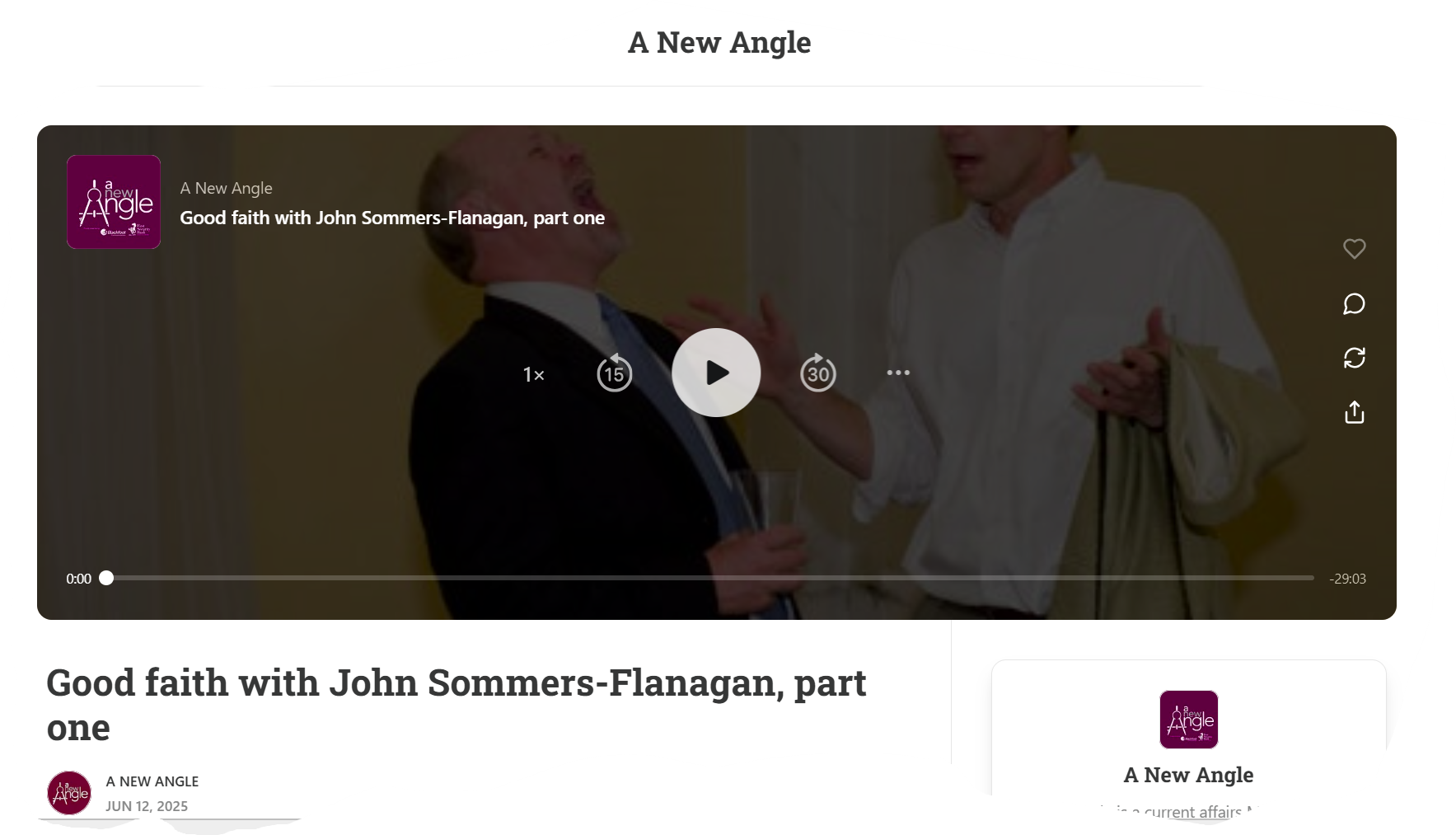
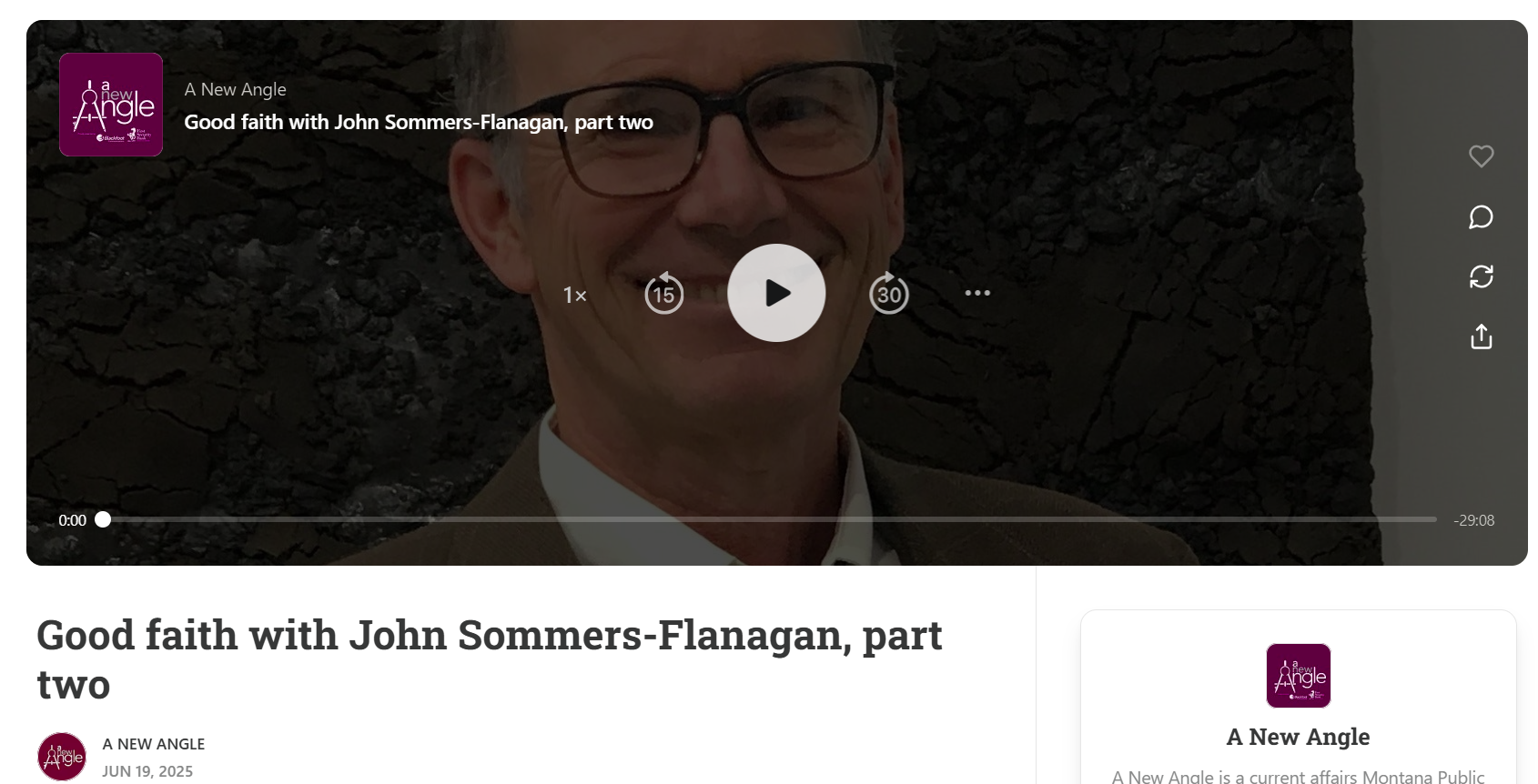
But today I got an email alert from “A New Angle” the radio-podcast show hosted by Dr. Justin Angle, a professor in the College of Business Administration at the University of Montana. The email was alerting me to the imminent airing of Part 2 of my discussion of “Good Faith” with Just on his renowned radio show. I was grateful for the alert; it also reminded me of my hate email, because the hate email came from someone who listened to Part 1 of our Good Faith conversation and consequently felt that special sort of inspiration that moves people to write hate emails.
I’ve known Justin from a distance for a while. We’re both at the University of Montana, so, you know, there’s been a little chat here, a little chat there. I’ve also known of him growing his small podcast into a big deal on Montana Public Radio and Yellowstone Public Radio. Justin’s show is excellent.
What I didn’t know is the depth and breadth of Justin’s intelligence. I also didn’t know that he’s a fabulous interviewer. I discovered his amazing intelligence and fabulousness when I sat down with him this past May to record a show with him on Good Faith. We talked comfortably for what felt like a long time. Not only did it feel like a long time, it was a long time! It was so long that Justin turned our conversation into a two-part episode for his radio show.
Here’s the email I received:
This week is part two of our conversation with John Sommers-Flanagan, director of the Center for the Advancement of Positive Education at the University of Montana’s Phyllis J. Washington College of Education.
John and Justin pick up where they left off last week talking about how lying and parenting intersect, the concept of confirmation bias and the risks of AI-generated content and building relationships with AI.
Here’s a link to Part 2 of our conversation. It’s also live at 7:30pm tonight (Thursday, June 19, 2025) on Montana Public Radio:
To prevent confusion and conflation, I should note that the title of this blog post represents two separate events:
In 1958, Peggy bit me.
Then, in 2025, she wrote a children’s book.
Just so you know, the 2025 children’s book is NOT about that time she bit me. I’m hoping that will be her second book because I’d really love to get to the bottom of what the heck 3-year-old Peggy was thinking right before she tried to bite off my big toe. My guess it was something like, “I’ll show that chubby, whiny infant baby John a thing or two; he’s not bumping me off my youngest child throne. And if he does, he’ll be limping all the way, because he’ll be missing a toe.”
But I digress. This post is about my wonderful sister’s wonderful new children’s book. I don’t want to make a big deal about my toe injury. The “toe incident,” which people are now calling it, although still emotionally painful for me, is ancient history. Although initially a wild-rabid-feral child, my sister Peggy has grown into a gentle, kind, creative, smart, compassionate, and amazing woman. She would never bite my toe again. Right Peggy?
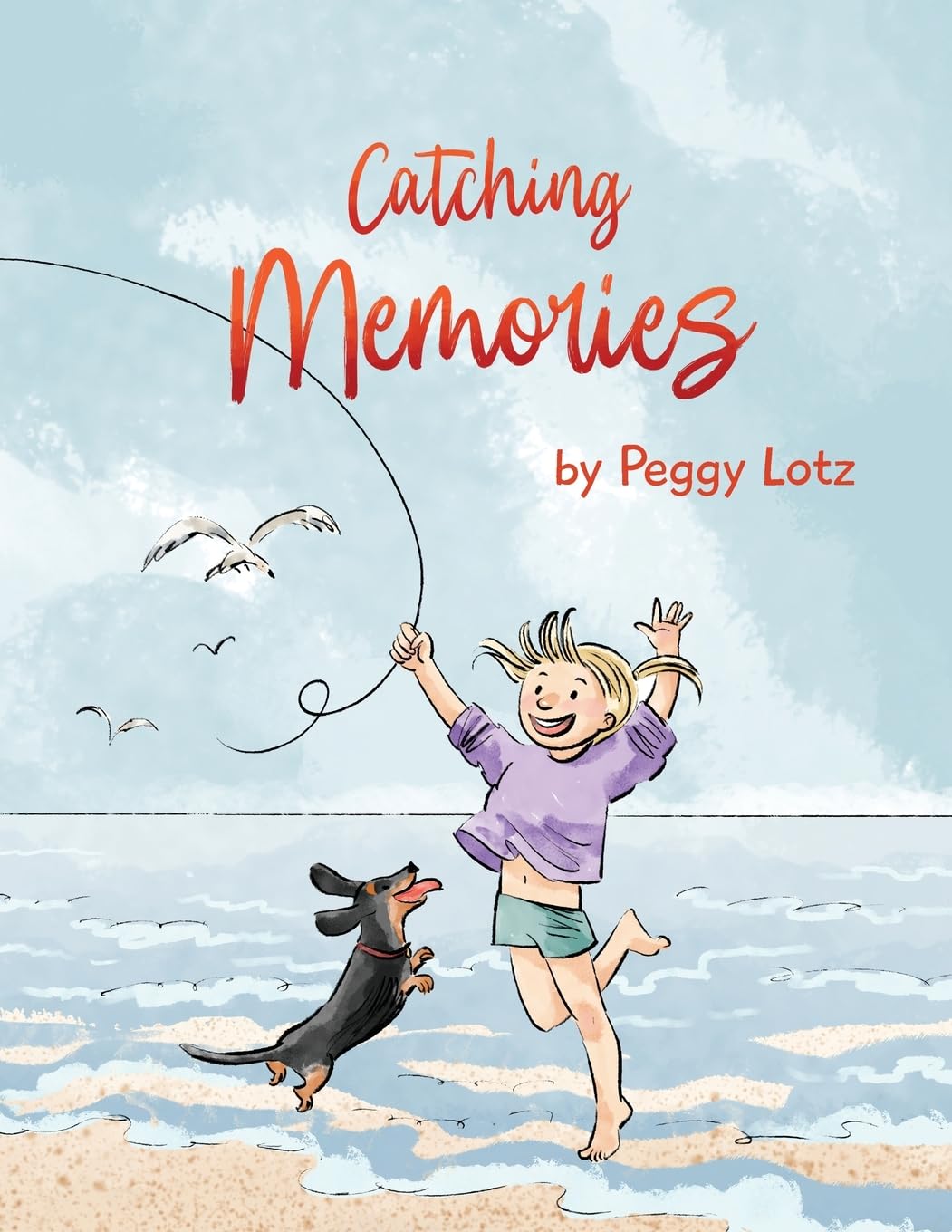
Peggy’s book is titled, “Catching Memories.” It’s about a unique childhood experience she had with our family (with Gayle and Peggy’s favorite brother, John, as key sibling figures), at Arch Cape, a beautiful beach on the Northern Oregon Coast. We spent many weekends at Arch Cape, as it was our maternal grandparents home.
The specific memory Peggy writes about was SO GOOD. I’m not sharing details. You’ll have to pay the big bucks, $14.99 on Amazon, to read the story. Here’s a link. Buy Catching Memories
Peggy just sent me a copy of an INCREDIBLY POSITIVE Falcon Review of her book. The review is great, because the book is great. I’m guessing Peggy did not bite the toe of the reviewer. I say this because right now I’m typing a great review and hoping Peggy will take notice:
“Catching Memories is a fabulous children’s book about a unique family experience, memories, and kindness. Peggy Lotz’s debut children’s book is written with so much love, affection, and grace that you would never suspect she tried to maim her younger brother. The book is so awesome that you’ll want a copy for your children or for yourself or both. Buy it now”
In case Peggy is reading this, I’m trying to make it clear that even though that Falcon Review guy wrote you a great review, I’ve just written and posted a rather fantastic review . . . AND you (Peggy) bit me. This fantastic review should make it clear that I’m better than that Falcon Press guy could ever hope to be . . . because the fact that I’m writing it for someone who bit me speaks to the sort of selfless and forgiving person I am. In summary: My sister bites my toe and I put aside the pain and write her a stellar review. If I haven’t made it obvious yet, I’m campaigning for the position of being Peggy’s favorite brother. Given that I’m her only brother, I have the inside track, but you can’t mess around with favorite brother stuff because one day, just when you think you’re on top of the world, the next minute your big sister might try to gnaw off your big toe with her big teeth.
All I’m saying here (Peggy), is that I’m your favorite brother. Forget about that Falcon Review guy. He’s not your brother. . . let alone your favorite!
In closing, if any of you care about me, please show it by buying a copy of my sister’s book.
P.S. Here’s the best thing. Peggy says there’s a chance that the marketing plan might involve creating “Gayle, Peggy, and John” dolls. . . which is simply the coolest idea ever.
Earlier this week I found a parallel universe wherein I was able to convince three people that it would be terribly fun to sit with me in a classroom for 2+ hours and work through the post-course data from our most recent “Happiness for Educators” class. This involved me figuring out how to screencast my computer onto a big screen where I went through the process of accessing our Qualtrics file and exporting the data to SPSS. Then, while experiencing intermittent fits of joy, we cleaned the data, used the “recode” function to reverse score all the items requiring reverse scoring and then calculated our 16 different outcome variables.
In this parallel universe, the three people who joined me (you know who you are), asked great questions and acted interested the WHOLE time. Of course, one of the “people” is a well-established Missoula actor, so there’s the possibility that I was fooled by some excellent acting or feigning or pretending. That said, finding a parallel universe where people act interested in stats remains a feat to brag about.
We made it through all the post-test data. To maximize the fun and bring us all to a place of breathless excitement, I ran a quick descriptive analysis. At first glance, the data looked okay, but not great. Of course, we didn’t have the pretest outcome variables analyzed, and so we were forced to leave with bated breath.
Today, access to the parallel universe was briefly adversely affected by a slight temporal shift; nevertheless, I found one of the “people” and she enthusiastically embraced another 2 hours of stats. . . . At the end, she shouted from her office, “That was fun!”
I know at this point, I am, as Freud might say, “straining your credulity” but I speak the whole truth and nothing but the truth.
And the rest of the truth gets even better. Tammy (my new best stats friend) and I found the following statistical results.
89 of 100 students completed the pre-post questionnaires.
We had statistical significance on ALL 16 outcomes—at the p < .01 level (or better).
The effect sizes (Cohen’s d with Hedges adjustments) were among our best ever, with top outcomes being:
Improved positive affect (feeling more cheerful, etc): d = .900 (a LARGE effect size)
Reduced negative affect (feeling fewer negative emotional states) d = 885. (a LARGE effect size)
Improved total self-reported physical health (a compilation of better sleep, reduced headaches, reduced gastrointestinal symptoms, fewer respiratory symptoms) d = .821 (a LARGE effect size)
Reduced depression (as measured by the CES-D): d = .732 (an almost LARGE effect size)
If you’re reading this, I hope you’re skeptical. Because if you’re skeptical, then I’m sure you’ll want to know whether this is the first, second, third, or fourth time we’ve found this pattern of results. Nope. It’s the FIFTH consecutive time we’ve had all significant outcomes or nearly all significant outcomes that appear to be happening as a function of our happiness for educators course.
Although I am in constant fear that, next time, the results will be less impressive, I’m getting to the point where I’m thinking: These results are not random error, because we now have data across five cohorts and 267 teachers.
If you’re reading this, I also hope you’re thinking what I’m thinking. That is: You should take this course (if you’re a Montana educator) or you should tell your Montana educator friends to take this course. If you happen to be thinking what I’m thinking, here’s the link to sign up for our summer sections.


 John Sommers-Flanagan