All posts by johnsommersflanagan

The Practically Perfect Parenting Podcast — Episode 2

Hello Parents, Fans of Parents, and Fans of Healthy Child Development:

I need a tiny bit of your time and help.

As you know, the Practically Perfect Parenting Podcast was launched on October 31. Yesterday, Episode 2 became live. The title: Practically Perfect Positive Discipline. Today, I’m flexing my marketing muscles (which, as it turns out, are disappointingly more like Gilligan’s than the Incredible Hulk)

Podcasts are a competitive media genre. One way we can try to improve our status from way out here in little Missoula, Montana is for people to listen, like, and rate.

Here’s how you can help:

If you use iTunes, here’s the link. https://itunes.apple.com/us/podcast/practically-perfect-parenting/id1170841304?mt=2#episodeGuid=2d80f23353e2c7f9d21af865f190d2c4

Please check it out and if you like it, like it, and then give it the rating you think it deserves. We’re trying to get enough ratings to climb up the iTunes rating list.

If you don’t use iTunes, you can get to our podcasts via this link: http://practicallyperfectparenting.libsyn.com/2016

And, either way, we’d love it if you’d like our Facebook page. To do that, go here: https://www.facebook.com/Practically-Perfect-Parenting-Podcast-210732536013377/?notif_t=page_fan&notif_id=1479160427608384

In addition to your social media ratings, we’re ALWAYS interested in your supportive or constructive feedback. We also take questions and suggestions for new show topics. You can provide any or all of that here on my blog or directly to me via email at john.sf@mso.umt.edu

Thanks!

Dr. John and Dr. Sara, The Practically Perfect Podcasters

pppp2

The Morning of November 9, 2016

**This is only a semi-coherent first reaction to the Presidential election. Read if you want. Be aware that I channel a little Albert Ellis at the end.**

****************************************************

In four hours I’m supposed to teach a three-hour course on advanced theories of counseling and psychotherapy. The topic today is emotion-focused therapy for couples. It’s a good day to focus on emotions. I have more than a couple of them bouncing around inside me.

Maybe that’s why I made my way to a coffee shop at 5am this morning. That’s abnormal. But today is abnormal; the new abnormal.

Back in college a fellow student who was from Nepal explained to me the meaning of the greeting, “Namaste.”

“It means,” he said, “I salute the light within you.”

It’s a sad and painful morning. I’m not sure about the light in me. Instead, mostly I’m certain that yesterday and last night was a cosmic mistake. It feels like sexism, racism, and hate have triumphed over “. . . all men (and women) being created equal.” I feel this, even though I’m a White, heterosexual, Jewish-Christian-Agnostic male. Given my privileged status, it’s hard to comprehend the pain this vote has caused women and minorities.

But I can imagine it.

When I woke up to sounds on the street at 3am, my mind created evil agents of Donald Trump gathering outside my home to take me away. It was the sort of paranoid thought that can come in the night—even to those of us who are well endowed with safety and privilege. It makes me wonder if that what’s it like for my Lesbian, Gay, Transgender, Mexican, and Muslim friends and students?

Late last night I got a text from a wealthy White Christian man who described himself as in tears. “What’s happening to our country?” he asked. And then he wondered what he could tell his children in the morning. He had put them to bed with kisses and the anticipation that they would awaken to the first woman President in the history of the United States.

There’s too much pain and sadness and suffering in the world. But there was too much pain and sadness and suffering in the world last week. And there will be too much next week.

I hold vivid memories of suffering through Reagan’s election, and George H. W. Bush’s election, and George W. Bush’s election. Those were difficult times. In each case I was certain that an evil force on the planet had somehow made it possible for the less honest, less compassionate, and less competent candidate to win.

But this is worse.

Even so, I refuse to believe that the majority of Americans are sexist and racist. I see too much kindness. I hope that Donald Trump is only a temporary phenomenon. I hope his existence will motivate us to swing the pendulum back toward justice, kindness, and empathy.

I’m reminded of the alleged words of Jesus, “Forgive them father, they know not what they do.”

Somewhat irrationally, I still have faith.

I have faith in the possibility that, as Jesus said, many people do not know what they’ve done. I have faith that although Donald Trump won the vote, that most people are not inherently sexist and racist at their core. I have faith that we can reach out to, reason with, and love our enemies, even when they’re our neighbors.

I will also follow the advice that I give people for coping with crisis.

  • Take care of yourself.
  • Look around and do what you can do to take care of others, your family, your friends, and your community.
  • And, don’t do anything stupid.

After I woke up at 3 a.m. and shook off my paranoid thoughts of evil Trump agents outside my door, other words emerged.

“Don’t mourn.”

An old memory was knocking at my door.

“But I want to mourn,” was my response. “I want to mourn. I need to mourn. I want to feel the pain for myself, and for my community of friends and family who have had their hopes crushed.”

“Okay. The voice conceded. “Mourn briefly. Do not linger.”

I recognized that this message wasn’t necessarily mine or God’s. It sounded like Joe Hill, the old union activist. He was saying,

“Don’t mourn. Organize.”

Then I was up. I had my hour of mourning. It was 4am. The sun will rise. I will teach my class.

But more important, I will focus. I will organize. I will, in Freud’s words, “Sublimate my emotions.”

I will whisper “Namaste” to everyone I see. I will salute the light within them.

Even though, right now, it’s so fucking hard to see the light.


What My Card-Playing Genius Father Says About Donald Trump

There are so many things in the world I just don’t understand.

One of the biggest mysteries to me is how my 90-year-old father can keep beating me at cards. It happens every time. Often it’s not even close. Yesterday he skunked me in two of three games of Gin. I’d switch to Poker, but I know from experience, it would just be worse.

What’s puzzling is that I have the younger brain. But somehow he still counts and remembers the cards better than I do. I’m also the one with the Ph.D. in psychology. He made it through one semester of college at the University of Portland. Mostly he spent his semester playing football. Despite my eight years of college and graduate school, nine published books, and over 50 professional articles in psychology, he reads me like I’m the book. He knows what’s in my hand better than I do. And then, when he obfuscates and complains that I’ve dealt him a bad hand, my ability to reason fogs over and I don’t know if he’s telling me the truth or setting me up. He’s like a card-playing mystic wrapped in an enigma.

All I can say is that must have been one damn good fall semester at the University of Portland way back in 1945.

When I need a break from repeated stinging defeats, our conversation naturally turns to politics. CNN is on in the background. We complain back and forth about various issues. I tell him that I’m disappointed and don’t understand how and why so many people are planning to vote for Donald Trump. I follow that with an over-analysis of socioeconomic disparities, racial dynamics, and voter motivation.

His eyes meet mine and I know it’s time for me to shut up and listen. As he begins speaking, his analysis—like his card-playing, is simple, incisive, and on-point.

“He’s a cheat and a con man,” my dad says, “and a very good one.”

His words are elegant and precise. As a professor and academic, I’d describe it as parsimonious.

“You can see him do it in every speech. He repeats himself. He says ‘crooked Hillary.’ Then he says it again and the media broadcasts it dozens of times every day. He says our economy is a disaster. He says he’ll make it beautiful. Then he repeats that message. It’s a disaster. It will be beautiful. Even though there’s no evidence for what he’s saying, he’s an actor, he’s convincing, and he’s repetitive. That’s what a good con man does. After a while, the truth doesn’t matter, people believe him. That’s how he’s made money. That’s how he gets votes. He says what some people want to hear. Then he says it again. Truth be damned, people believe him.”

In some ways, I still prefer my intellectual analysis. But part of me knows that my father’s explanation for Trump’s success is better than mine. How can you get people to believe the economy is bad when Obama has successfully cut unemployment in half? How can you get people to believe the country is less safe when overall, crime rates are down? How can you convince people you know more about ISIS than all the generals? How can you get away with saying that if you’re a star you can grab a woman by the pussy? How can you convince people that Hillary Clinton is corrupt and dishonest when your lies outnumber hers five-to-one?

“He’s a cheat and a con man . . . and a very good one.”

This is my father talking. He has 90 years of experience on this planet. I believe him.

Then again, it’s always good to question yourself; maybe I only believe him because he just beat me in Gin again. If I think of him as a psychic superhero it helps comfort my aching ego.

But there’s one other thing. My father is also the most honest man I know. He’s never cheated anyone of anything in his life. He’s a role model and card-playing genius. He reads people like I never could. And so when he says Donald Trump is a cheat and a con man. . . it’s simple.

I believe him.

Shame, Humility, and a New Parenting Podcast

Life is humbling.

Today we launched our first episode of the Practically Perfect Parenting Podcast. http://practicallyperfectparenting.libsyn.com/

Leading up to the launch I was more excited than I thought possible. But today, mostly my feelings are swirling around like toilet water into a sewer of embarrassment and shame. I’m worried everyone will hate it.

But don’t worry. It’s not all bad. Humility is a good thing. I should remember that. The podcast won’t be perfect and neither will I. Duh. That’s even IN THE TITLE.

It’s funny—in the non-giggly sort of funny—how insidious feelings of inadequacy can be. Yep. They pop up like popcorn. Once they start, it’s hard to turn down the heat.

The good news is today I’ve dressed as Albert Ellis for Halloween.

albert-ellis-john

In case you don’t recall, Dr. Ellis invented “shame attacking” exercises. These involve exposing yourself directly to situations (activating events) that might trigger embarrassment or shame. His position was that if you do this, you’ll survive, and in the process prove to yourself that it’s okay to let go of the real triggers for shame: Your underlying irrational beliefs and thoughts.

So today I’m facing my Theories class, dressed in Christmas shorts, and will lead them in singing a couple of Albert Ellis Holiday Carols. At the same time, I’ll be embracing all reactions to the Practically Perfect Parenting Podcast, recognizing that some listeners will love the podcast, while others will hate it and possibly share their negative feelings with me. And, like Ellis said, I will survive.

Fortunately, my friend, colleague, and cohost, Dr. Sara Polanchek sometimes disagrees with me right in the middle of the podcasts. That’s a good shame-attacking thing that happens on a regular basis. It has already been proven that I can experience disagreement and live on.

In the end, the point of these Practically Perfect Parenting Podcasts isn’t for Sara and I to be wise and right all the time anyway. Parenting well is immensely challenging. No one is perfect. The point is to engage parents and parenting educators in ways that inspire reflection and intentionality.

We believe there’s no such thing as a perfect parent. Instead, we believe in practically perfect parents. Our definition: parents who humbly accept their imperfections, develop self-awareness, love their children, and who are open to learning how to be and become a better parent every day, over and over.

That’s nothing to be ashamed about.

Listen to the Practically Perfect Parenting Podcast here: http://practicallyperfectparenting.libsyn.com/


Announcing the WORLD PREMIERE of the Practically Perfect Parenting Podcast

Way back in 1996, I had the honor and privilege of becoming the executive director of Families First in Missoula, MT. Mostly I just empowered parents and stayed out of the way of our awesome staff. By 2003, when I left, the seeds for our Divorce and Shared Parenting programs, the Children’s Museum, and Tamarack Grief Resource Center had been planted and were beginning to thrive.

Then I moved on to the University of Montana.

But while at Families First I learned a ton from parents. I was supposed to be “educating” them, but they were equally effective in educating me. And this education has continued to percolate in me and to look for a way to be expressed.

This brings me to a big announcement.

On Monday, October 31, there will be a WORLD PREMIERE of THE PRACTICALLY PERFECT PARENTING PODCAST.

I invite you to check it out. http://practicallyperfectparenting.libsyn.com/

I also invite you to share it with family, friends, and on social media.

The Practically Perfect Parenting Podcast is about 25 minutes of Dr. Sara Polanchek and me talking about a variety of parenting issues. It will be posted online and new episodes will be available twice monthly. I met Sara back in 1998 when I hired her as a parenting educator at Families First. She’s also known as the Missoula sleep guru because of her keen skills at helping parents help their children sleep better.

The Practically Perfect Parenting Podcast is part fun and part education. Dr. Sara and I hope you’ll like it. We also hope parents benefit from listening to it. Even if you don’t agree with what we say, it doesn’t hurt to listen about parenting options and to think more intentionally about what sort of parent you’d like to be.

Back in our Families First days, the philosophy was to support parents in their efforts to parent just a little bit better every day . . . until eventually they all became perfect parents who were levitated into a special Parenting Hall of Fame. Of course, that’s a ridiculous goal, because there’s no such thing as a perfect parent.

Then again, maybe you can become practically perfect. Give it a listen and see what you think. http://practicallyperfectparenting.libsyn.com/

John and Nora

A New Journal Article on Suicide Assessment Interviewing

Article · Oct 2016 · Professional Psychology Research and Practice
index

My Journey to Neuroscience

For the revision of our Counseling and Psychotherapy text, Rita and I are contemplating how to integrate some neuroscience information in a balanced way. Each chapter would include a short section discussing neuroscience as it pertains to each theoretical perspective. This essay is one effort for beginning or framing the discussion.  Check it out (if you like this sort of thing) and let me know your thoughts (if you do that sort of thing).

From Biological Psychiatry to Interpersonal Neurobiology

In 1980, I (John) began my career in mental health services as a recreation therapist in a 22-bed psychiatric hospital. The patients were experiencing severe depression, manic episodes, and psychotic symptoms.

There was a large and intimidating psychiatrist (Dr. M) on the unit. Dr. M was a fan of biological psychiatry. He would smile as I engaged patients in the “Newly-Friend Game” (like the Newly-Wed Game, only better), relaxation groups, bowling nights, and ice cream socials. Occasionally Dr. M cornered me, explaining how my “cute” recreational programs had absolutely no influence on our hospitalized patients’ mental health. He waxed eloquent about brain chemistry. Never mind that the Thorazine and Haldol he prescribed had nasty side effects. Eventually, he claimed, there would be designer drugs that cured mental disorders from the inside out. Everything else was irrelevant.

I had a fresh, new bachelor’s degree in psychology. Dr. M had his M.D. He knew more than I did. Class dismissed. But it’s funny how encountering a condescending attitude can be motivating. I figured there must be a brain chemistry explanation for that too.

The chemical imbalance theory of mental disorders continued its dominance through the 1980s and 90s. Explanations for psychopathology focused on too much dopamine (causing schizophrenia) and not enough norepinephrine or serotonin (causing depression). No one really knew what caused these so-called imbalances, but biogenetic factors were the prime suspects. Although I kept silent with Dr. M, I held tight to my beliefs that social, psychological, and physical experience could be therapeutic.

Evidence slowly rolled in. While teaching a class on developmental counseling, I found a study showing that testosterone levels vary as a function of winning or losing tennis matches (Booth, Shelley, Mazur, Tharp, & Kittok, 1989). My brain (and the chemicals therein) loved this idea. If our testosterone levels could change based on competitive experiences, what other ways might human behavior influence the brain?

In 1998, while perusing research on serotonin and depression, I discovered that treadmill running increased brain serotonin in rats. The researcher described the complexity of the phenomenon:

Lipolysis-elicited release of free fatty acids displaces the binding of tryptophan to albumin and because exercise increases the ratio of circulating free tryptophan to the sum of the concentrations of the amino acids that compete with tryptophan for uptake at the blood-brain barrier level, tryptophan enters markedly in the brain compartment. (Chaoeloff, 1997, p. 58)

But my take-home message was simple: physical exercise might increase serotonin in human brains and also help alleviate depression.

Then neurogenesis came along. Neurogenesis is the creation of new brain cells. It has been long known that during fetal development, cells are created and migrate to specific places in the brain and body where they engage in their specific role and function. Cells that become rods and cones end up in the eyes, while other cells become bone, and still others end up in the cerebral cortex. In the 1980s and 1990s, everyone agreed that that neurogenesis continued during infancy, but most neuroscientists also believed that after early childhood the brain locked down and neurogenesis stopped. In other words, as adults, we only had neuronal pruning (cell death) in our future.

In the late 1980s, neuroscientists began conducting research that shook long-held assumptions about neurogenesis. For example, Jenkins and colleagues housed adult monkeys in cages where the monkeys had to use their middle finger to rotate a disc to get banana pellets. Even after a short time period (1 week) upon autopsy the monkeys had an enlarged region in their motor cortex. The conclusion: Even in adult monkeys, repeated physical behaviors stimulate neurogenesis in the motor cortex. This seemed like common sense. Not only do our brains shape our experiences, but our experiences shape the brain (literally).

As it turns out, neurogenesis slows with age, but it doesn’t stop. It continues throughout the lifespan. New learning stimulates cell birth and growth in the hippocampus (and other areas involving memory processing and storage). The “new brain research” left open the possibility that counseling and psychotherapy has the potential to stimulate neurochemical changes and cell birth in the human brain.

The evidence is no longer slowly rolling in—it’s popping like popcorn. Neuroscience research is as popular as Beyoncé. Whenever more evidence arrives showing how counseling and psychotherapy might be affecting brain functioning, non-medical mental health professionals get giddy. As you might suspect (or already know) occasionally we’re so excited that our statements about the implications and applications of neuroscience are way ahead of the actual scientific evidence. Counseling and psychotherapy practitioners have created new marketing terminology like “brain-based therapy” and “neurocounseling” and “interpersonal neurobiology” despite the lack of clear scientific evidence to support these terms. In some cases the birthing of this new terminology has caused lament within the neuroscience community (Satel & Lillienfeld, 2015).

Where does all this take us? As Dr. M would say, the brain is central to mood and behavior change. But now we know the reverse is also true: mood and behavior are central to brain development and change. If Dr. M were still alive, I might say, “touche” or “voila” or some other fancy and clever retort to show him that he had the directionality wrong—all these years.

But my retort would be incorrect too. The influence goes both directions at once. Even more importantly, we need to acknowledge that the relationships between and among brain structures, neurotransmitters, hormones, other chemicals, and human behaviors are still complex and mysterious. Even though journalists sometimes write with flourish about our ability to peer directly into the brain and see exactly what’s happening, that’s just not true. And to the extent we can “see” what’s happening, it appears that the brain is simultaneously functioning as a whole, as regions, as inter- and intra-cellular processes, and doing all these activities in particular sequences and all at once. Sure, as many mental health professionals will enthusiastically claim, we now know that meditation and interpersonal empathic experiences appear to stimulate the anterior insular cortex (AIC)! But it’s more complicated than that. The following excerpt from the neuroscience literature helps communicate this complexity (Mutschler, Reinbold, Wankerl, Seifritz, & Ball, 2013).

In summary, we argue that the dorsal AIC plays a pivotal role in empathy (similarly as during emotion processing and pain) by integrating sensory stimuli with its salience, possibly via connections to the cingulate cortex. This assumption is also supported by the fact that ALE-findings related to emotion and empathy for pain and also the DGR—which has been associated with cognition—overlap in the dorsal anterior insula, suggesting that these functions share a common neural substrate . . . . As mentioned above we assume that the overall role of the morphometrically identified area in the dorsal AIC related to individual differences in empathy which overlaps the DGR might be involved in integrating information which is relevant for socio-emotional and cognitive processing. Thus, we assume that empathy is not (only) related to a specific “socio-emotional” interaction area, but to a superordinate “domain-general” area, in line with concepts of empathy that include not only social and emotional, but also cognitive aspects . . . . Whether our findings in the dorsal AIC have also a relation to the “von Economo neurons” [VENs, . . .] remains to be determined. VENs have been hypothesized to play are role in social-emotional processing including empathy . . . .

This excerpt should inspire us all to pause with respect for the density and specificity of neuroscience. It should also inspire us to ramp down our expectations. If we just focus on empathy and the insula, we can see many sources of potential error: (a) much of the empathy research focuses on empathy for pain; (b) empathy is hard to measure; (c) it’s possible for a human brain to “light up” with empathy, but for the human to not express or show empathy toward someone else; (d) while empathy is generally considered a positive quality, some people use empathy to manipulate and hurt others; (e) there is brain structural and functional overlap; (f) the role of the VENs is unknown; and on and on. To use an inappropriate metaphor, it’s likely that the particular blend and balance of neurotransmitters (there may be up to 100) and hormones (there are about 50) and other cellular substances in each individual—along with structural variability—is more unique than a fingerprint on a snowflake.

In every chapter of this text Charles Luke (of Tennessee Tech) and I will share a highlight or update on neuroscience research. These highlights and updates will focus not only on the promise and potential of neuroscience to counseling and psychotherapy, but also on its limitations. A focus on limitations is needed because our ability to imagine what’s happening in the brain greatly outpaces neuroscience research. Although it’s tempting (and terribly fun), we shouldn’t let our imagination get too far in front of the science. As Dr. M might have said, “the brain offers us the greatest opportunity and potential to understand, explain, predict, and manage human behavior.” Of course it does; and it always will.

OLYMPUS DIGITAL CAMERA


Why Learn Theories?

Happy Sunday morning. I’m at my standing desk, working on the revision of our Counseling and Psychotherapy Theories text. What fun. Actually, because I’ve been getting great and constructive feedback from many different reviewers, THIS IS much more fun than it might be otherwise.

Today I’m posting a potential new start to the theories text. It came to me because some academics have questioned the value of teaching counseling and psychotherapy theories. If you’re interested, I’d love to hear your opinion on that. Also, if you have feedback on whether the following piece makes for a good start to a theories text (or not), I’d love to hear your opinion on that too.

Here it is:

Why Learn Theories?

About a decade ago, I (John) was flying back from a professional conference when a professor (we’ll call him Darrell) from a large Midwestern university spotted an empty seat next to me. He sat down, and being aware that I have a book on counseling and psychotherapy theories, initiated the sort of conversation that probably only happens among counseling, psychology, or social work professors.

He plunged right in, “I think counseling and psychotherapy theories are passé. There has to be a better way to teach students how to actually do counseling and psychotherapy.”

When confronted like this, I like to pretend I’m Carl Rogers, so I paraphrased, “You’re thinking there’s a better way.”

“Yes!” he said. “All the textbooks start with Freud and crawl their way to the present. Too much time is wasted reviewing outdated theories that were developed by old White men. What’s the point of that?”

“The old theories seem pointless to you.” I felt congruent with my inner Rogers.

“Worse than pointless,” he glared, “they’re not just unnecessary; they’re destructive! We live in a diverse culture. Those theories weren’t built for today. I’m a White heterosexual male and they don’t even fit for me. We need to focus our students on empirically-supported treatments and then teach them the technical skills they need to implement those approaches. We live in a time and a place that values action and effectiveness. That’s what our clients want and deserve. For the next edition of your theories text you should put traditional theories of counseling and psychotherapy in the dumpster where they belong.”

I lost my connection to Carl Rogers and was about to go all Albert Ellis on him when the intercom crackled to life. The flight attendant directed everyone to return to their seats. My academic colleague reluctantly rose and bid me farewell.

************

On the surface, Darrell’s argument is compelling. Counseling and psychotherapy theories must adjust themselves to address unique issues of women as well as racial, ethnic, sexual, and religious minorities. Theories also need to be more practical. “Crusty” old theories need updating and need to be more user-friendly. Students should be able to read a theories chapter and finish with a clear sense of how to apply that theory in practice.

But Darrell’s argument is also off target. Although he’s advocating an evidence-based (scientific) orientation, he doesn’t seem to appreciate the central role of theory to science. As Carl Zimmer (2016) of the New York Times recently wrote: “Theories are neither hunches nor guesses. They are the crown jewels of science” (p. D6).

Counseling and psychotherapy theories are well-developed systems for understanding, explaining, predicting, and controlling human behavior. When someone on Twitter writes, “I have a theory, that cats are actually in a liquid state some of the time,” it’s not a theory (Zimmer, 2016). More likely, it’s a thought or a guess or a goofy statement pertaining to that person’s idiosyncratic take on reality. It might be a fascinating thought or statement, but it’s still not a theory.

Instead of “crown jewels,” we like to think of theories as the “foundations” from which we build our understanding of human development, suffering, self-destructive behavior, positive change, and other human experiences. Without theory, we can’t understand why people engage in self-destructive behaviors or why they sometimes suddenly stop engaging in those behaviors. If we can’t understand why people behave in certain ways, then our ability to identify and apply effective treatments is compromised. In fact, every evidence-based or empirically-supported approach that exists rests on the shoulders of counseling and psychotherapy theories.

In life and psychotherapy, there are often repeating patterns. I recall making an argument similar to Darrell’s, way back in the 1980s. I complained to a professor that I just wanted to focus on learning the essentials of becoming a great therapist. Her feedback was direct: I could become a technician who applied specific procedures to people with specific problems or I could grapple with deeper issues and become a real therapist with a more profound understanding of human problems, who could articulate the benefits and limitations of specific psychological change strategies, and who could modify those strategies to fit unique and diverse clients.

Just like Darrell, my professor was biased, but in the opposite direction. She valued nuance, human mystery, and existential angst. She devalued what she viewed (at the time) as the superficiality of behavior therapy.

Looking back, I can see both perspectives. Therapists need technical skills for implementing research-based treatments. But we also need respect and empathy for the idiosyncratic individual who comes to us for compassion and insight. We need to be able to view clients and problems from many perspectives—ranging from the indigenous to the contemporary medical model. To be really good at applying specific technical skills, we need to understand the nuance and dynamics of psychotherapy and how human change happens. And in the end, that means we need to study theories.

Contemporary Theories, Not Pop Psychology

Despite Darrell’s argument that traditional theories belong in the dumpster, all the theories in this text—even the old ones—are contemporary and relevant. They’re contemporary because they (a) have research support and (b) have been updated or adapted for working with diverse clients. They’re relevant because they include specific strategies and techniques that facilitate emotional, psychological, and behavioral change. Although some of these theories of human development and change are more popular than others, they shouldn’t be confused with “pop” psychology. In fact, these theories usually aren’t well understood or accurately portrayed in the popular media.

Another reason why these theories don’t belong in the dumpster is because they’re exciting and intellectually stimulating. Put simply, the drama associated with the development and application of these theories rivals anything Hollywood has to offer. The theories in this text are woven into and derived from great literature, myth, religion, and our dominant and minority political and social systems. They can explain and predict ways we interact with each other, including how we define mental health, whether we believe in mental illness, and our views on love, meaning, death, rehabilitation, and personal responsibility. They also help us answer big questions like:

  • What motivates people to do what they do?
  • What disturbs thinking processes, triggers unmanageable anger, diminishes personal productivity, and destroys relationships?
  • What causes one person to be satisfied with a simple and cheerful life, while others claw their way ruthlessly to the top?
  • What makes some people come out stronger after facing tragedy or hardship, while others are weakened or permanently damaged?

If you’ve come this far in your studies of psychology and counseling, you know there’s no single answer to these questions. It’s common for mental health professionals to strongly disagree with each other on just about every topic under the sun. Therefore, it should be no surprise that this book—a book about the major contemporary theories and techniques of psychotherapy and counseling—will contain stunning controversies and conflict. In the following pages, we do our best to bring you more than just the theoretical basics; we also bring you the thrills and disappointments linked to these theories of human motivation, functioning, and change.

20141210_110340

Check Out These Blogs about Counseling Theories

John and Jon on M

Over the past five years I’ve written over 50 blog posts linked to teaching and learning the theory and practice of counseling and psychotherapy. While procrastinating on another project, I decided to organize these blog posts by topic. If you follow the links below, they’ll take you to blog posts relevant to specific theories. Included in some of these are a few links to short (and free) theories-based video examples. If you teach a theories course, you could select some of these links to assign students outside readings or you could peruse them yourself to stimulate a few lecture ideas.

Please note that if you use our Counseling and Psychotherapy Theories in Context and Practice textbook, there’s a bit of redundancy with the textbook’s content. However, if you don’t use the text, the material will be new to you and your students.

Chapter 1 – Opening and Overview

A Plan for Maximizing Positive Counseling and Psychotherapy Outcomes: https://johnsommersflanagan.com/2014/09/07/a-plan-for-maximizing-positive-counseling-and-psychotherapy-outcomes/

Teaching Counseling and Psychotherapy Theories: Reflections on Week 1: https://johnsommersflanagan.com/2012/08/29/teaching-counseling-and-psychotherapy-theories-reflections-on-week-1/

Reformulating Clinical Depression: The Social-Psycho-Bio Model: https://johnsommersflanagan.com/2013/09/03/reformulating-clinical-depression-the-social-psycho-bio-model/

What’s the Difference between Counseling and Psychotherapy? https://johnsommersflanagan.com/2016/07/14/theories-highlights-i-whats-the-difference-between-counseling-and-psychotherapy/

Neuroscience New Year’s Resolutions: https://johnsommersflanagan.com/2016/01/15/neuroscience-new-years-resolutions-for-2016/

Evidence-Based Relationships in Counseling and Psychotherapy: https://johnsommersflanagan.com/2015/09/29/evidence-based-relationships-three-new-case-examples/

Chapter 2 – Psychoanalytic Approaches

Attachment-Informed Psychotherapy: https://johnsommersflanagan.com/2015/08/12/attachment-informed-psychotherapy/

The Story of Freud’s Seduction Hypothesis: https://johnsommersflanagan.com/2016/07/15/theories-highlights-ii-the-story-of-freuds-seduction-hypothesis/

The Working Alliance in Counseling and Psychotherapy: https://johnsommersflanagan.com/2016/04/06/five-recommendations-for-developing-a-positive-working-alliance/

Chapter 3 – Adlerian Approaches: Individual Psychology

The Three-Step Emotional Change Trick: https://johnsommersflanagan.com/2012/09/23/the-three-step-emotional-change-trick/

A Parenting Homework Assignment on Natural and Logical Consequences: https://johnsommersflanagan.com/2011/11/30/a-parenting-homework-assignment-on-natural-and-logical-consequences/

More Than Praise — Other Ways Parents Can Be Positive With Their Children: https://johnsommersflanagan.com/2012/08/16/more-than-praise-other-ways-parents-can-be-positive-with-their-children/

Chapter 4 – Existential Approaches

Reflections on Listening to Irvin Yalom at the ACA Conference: https://johnsommersflanagan.com/2012/03/25/reflections-on-listening-to-irvin-yalom-at-the-aca-conference/

A Short Existential Case Example from Counseling and Psychotherapy Theories . . .: https://johnsommersflanagan.com/2015/08/25/a-short-existential-case-example-from-counseling-and-psychotherapy-theories/

Fun with Existential Theory: https://johnsommersflanagan.com/2016/08/01/fun-with-existential-theory/

Chapter 5 – Person-Centered Approaches

Reflections on Magic: https://johnsommersflanagan.com/2011/11/28/reflections-on-magic/

Listening as Meditation on Psychotherapy.net: https://johnsommersflanagan.com/2014/02/25/listening-as-meditation-on-psychotherapy-net/

An Interview with Natalie Rogers (Daughter of Carl Rogers) about Person-Centered Therapy: https://johnsommersflanagan.com/2015/08/04/an-interview-with-natalie-rogers-daughter-of-carl-rogers-about-person-centered-therapy/

Why Therapists Should Never Say, “I know how you feel”: https://johnsommersflanagan.com/2013/05/30/why-therapists-should-never-say-i-know-how-you-feel/

Carl Rogers and Brain-Science do an Empathy Smackdown in Chapter 3: https://johnsommersflanagan.com/2015/07/09/carl-rogers-and-brain-science-do-an-empathy-smackdown-in-chapter-3/

An Invitation for Collaboration: https://johnsommersflanagan.com/2016/03/27/using-an-invitation-for-collaboration-in-counseling-and-psychotherapy/

Chapter 6 – Gestalt Approaches

Go Go Gestalt: The Theories Video Shoot, Part I: https://johnsommersflanagan.com/2012/04/24/go-go-gestalt-the-theories-video-shoot-part-i-2/

Chapter 7 – Behavioral Approaches

A Black Friday Tribute to Mary Cover Jones and her Evidence-Based Cookies: https://johnsommersflanagan.com/2011/11/25/a-black-friday-tribute-to-mary-cover-jones-and-her-evidence-based-cookies/

Behavioral Activation Therapy: Let’s Just Skip the Cognitions: https://johnsommersflanagan.com/2014/06/30/behavioral-activation-therapy-lets-just-skip-the-cognitions/

Imaginal or In Vivo Exposure and Desensitization: https://johnsommersflanagan.com/2012/05/19/imaginal-or-in-vivo-exposure-and-desensitization-2/

A New Look at Time-Out for Kids and Parents: https://johnsommersflanagan.com/2012/08/04/a-new-look-at-time-out-for-kids-and-parents/

Information on Using Time-Out — Part II: https://johnsommersflanagan.com/2012/08/05/information-on-using-time-out-part-ii/

Talking with Parents about Positive Reinforcement: https://johnsommersflanagan.com/2014/09/06/talking-with-parents-about-positive-reinforcement/

Backward Behavior Modification: https://johnsommersflanagan.com/2012/12/02/backward-behavior-modification/

Behaviorism for Everyone: https://johnsommersflanagan.com/2015/10/06/dont-let-your-philosophical-beliefs-make-you-less-professionally-competent/

Chapter 8 – Cognitive-Behavioral Approaches

Positive Thinking is Not (Necessarily) Rational Thinking: https://johnsommersflanagan.com/2011/12/06/positive-thinking-is-not-necessarily-rational-thinking/

How to Use the Six Column CBT Technique: https://johnsommersflanagan.com/2014/02/18/how-to-use-the-six-column-cbt-technique/

A Quick Look at the Collaborative Cognitive Therapy Process: https://johnsommersflanagan.com/2012/09/30/a-quick-look-at-the-collaborative-cognitive-therapy-process/

Tomorrow’s Election and Confirmation Bias: https://johnsommersflanagan.com/2012/11/05/tomorrows-election-and-confirmation-bias/

Confirmation Bias on My Way to Spearfish, South Dakota: https://johnsommersflanagan.com/2014/04/30/confirmation-bias-on-my-way-to-spearfish-south-dakota/

Chapter 9 – Choice Theory and Reality Therapy

The Seven Magic Words for Parents: https://johnsommersflanagan.com/2012/12/23/the-seven-magic-words-for-parents/

Give Information and then Back-Off: A Choice Theory Parenting Assignment: https://johnsommersflanagan.com/2012/07/09/give-information-and-then-back-off-a-choice-theory-parenting-assignment/

How Parents Can Use Problem-Solving Power: https://johnsommersflanagan.com/2012/10/23/how-parents-can-use-problem-solving-power/

Chapter 10 – Feminist Approaches

Opening Thoughts on Feminism: https://johnsommersflanagan.com/2012/04/03/opening-thoughts-on-feminism-3/

The Girl Code by Ashley Marallo: https://johnsommersflanagan.com/2012/12/03/the-girl-code-by-ashley-marallo/

A Guest Essay on the Girl Code and Feminism: https://johnsommersflanagan.com/2014/12/07/a-guest-essay-on-the-girl-code-and-feminism/

Feminist Culture in Music: https://johnsommersflanagan.com/2013/11/18/feminist-culture-in-music/

Chapter 11 – Constructive (Solution-Based and Narrative) Approaches

Is Solution-Focused Therapy as Powerfully Effective as Solution-Focused Therapists Would Have Us Believe?: https://johnsommersflanagan.com/2012/07/01/is-solution-focused-therapy-as-powerfully-effective-as-solution-focused-therapists-would-have-us-believe-2/

Secrets of the Miracle Question: https://johnsommersflanagan.com/2015/03/04/secrets-of-the-miracle-question/

The Love Reframe: https://johnsommersflanagan.com/2013/04/07/the-love-reframe/

Constructivism vs. Social Constructionism: What’s the Difference? https://johnsommersflanagan.com/2015/12/05/constructivism-vs-social-constructionism-whats-the-difference/

Chapter 12 – Family Systems Approaches

None posted on this topic. Obviously, I need help here.

Chapter 13 – Multicultural Approaches

Four Good Ideas about Multicultural Counseling and Psychotherapy—In Honor of Martin Luther King, Jr.: https://johnsommersflanagan.com/2012/01/16/four-good-ideas-about-multicultural-counseling-and-psychotherapy-in-honor-of-martin-luther-king-jr/

Good Ideas about Multicultural Counseling and Psychotherapy – Part II: https://johnsommersflanagan.com/2012/01/22/good-ideas-about-multicultural-counseling-and-psychotherapy-part-ii/

Cultural Adaptations in the DSM-5: Insert Foot in Mouth Here: https://johnsommersflanagan.com/2014/07/08/cultural-adaptations-in-the-dsm-5-insert-foot-in-mouth-here/

Psychic Communications . . . and Cultural Differences in Mental Status: https://johnsommersflanagan.com/2013/01/02/psychic-communications-and-cultural-differences-in-mental-status/

A White Male Psychologist Reflects on White Privilege: https://johnsommersflanagan.com/2012/09/14/a-white-male-psychologist-reflects-on-white-privilege/

Tips for Counseling Culturally Diverse Youth: https://johnsommersflanagan.com/2015/11/19/counseling-culturally-diverse-youth-research-based-and-common-sense-tips/

Chapter 14 – Integrative Approaches

Making Memories in L.A.: An Interview with Matt Englar-Carlson: https://johnsommersflanagan.com/2016/05/20/making-memories-in-l-a/

My Response to a Petition from a Theories Class at Xavier University: https://johnsommersflanagan.com/2016/04/29/why-xavier-university-students-in-cincinnati-sent-me-a-petition/

With Wubbolding

Ethical and Cultural Considerations in Non-directive Listening

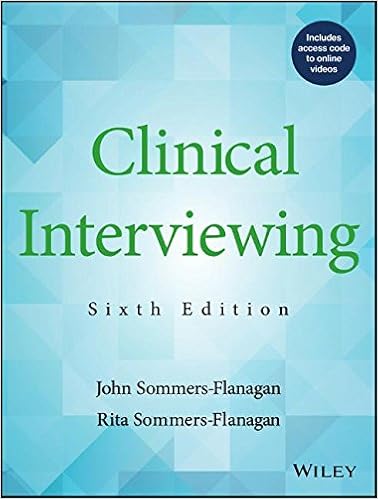
This week I’m back to reviewing the page proofs for the 6th edition of Clinical Interviewing. It’s tons of fun. I’m consistently surprised when I find typos or bad sentences in material that I’ve already reviewed five times previously. Ugh. Oh well. Life is generally good . . . and once in a while I run into some interesting new content that I think is worth sharing. Here’s one excerpt. It’s toward the end of Chapter 4, titled: “Nondirective Listening Skills.” The 6th edition is coming soon: https://www.amazon.com/Clinical-Interviewing-John-Sommers-Flanagan/dp/1119215587/ref=sr_1_5?s=books&ie=UTF8&qid=1470784556&sr=1-5&keywords=clinical+interviewing

Ethical and Multicultural Considerations

It’s likely that each client will respond to you and your listening skills differently. Some clients will love having you as a listener. They’ll be instantly impressed with your excellent interviewing skills. Other clients will be neutral. Still others will think (and possibly tell you) that your education and training are worthless and that they resent having to spend time with you.

The Ethics of Not Directing

Listening well is an essential therapeutic skill, but many clients don’t come for counseling looking for an excellent listener. They come because they want an expert. They desire guidance. They may even want to be told what to do and how to do it.

The desire for an authoritative counselor may be particularly salient within ethnic and cultural groups. For example, Asian American clients tend to want more direct guidance from their counseling professionals (Chang & O’Hara, 2013). Of course this is a generalization, but knowing that some Asian clients want an expert and will be disappointed if you don’t act in more directive ways is valuable information.

Some presenting problems, such as those present in crises or severe mental disorders, also might require more active and directive interventions. Cultural and personal expectations, presenting problem(s), and theoretical orientations can call for more directive, authoritative interactions. If so, it might be unethical for you to persist with nondirective listening and not advance to the skills and techniques described in Chapters 5 and 6. See Case Example 4.2 for a concrete example.

Case Example 4.2: When Being Nondirective Might Be Unethical

While reading the referral information, you discover that your new client is a seventeen-year-old Chinese American female with a history of cutting and parasuicidal behavior. Early in the interview she tells you, “I want to stop cutting.” This is especially good news because you know something about skills training for clients who cut. Although your active listening provides an excellent foundation, if you only listen to her, you’ll be doing her a disservice. The point is this: If you know about something that fits with your client’s specific condition and you withhold it without an exceptionally good rationale, you’re in ethical hot water. In this case, you should actively begin teaching your client alternative emotional management skills.

In another situation, you could make a case for withholding your advice and being less direct. For example, if your client is Native American and rapport development is slow and you’re not certain that she’s motivated to stop cutting, you would have a solid rationale for maintaining a nondirective listening stance with plenty of self-disclosure and a focus on developing a working alliance. Staying less direct with Native clients and respecting their process are reasonable strategies. Your client might not be ready or willing to work on developing alternative coping strategies until session 2 or 3 or 4. If you were to jump in too soon with advice on how to stop cutting, your client might not show up for session 2.

Gender, Culture, and Emotion

Imagine that you’re in an initial clinical interview with a Latino male. Your impression is that he’s angry about his wife’s employment outside the home. You’re aware that some Latinos have more traditional ideas about male and female roles in the home. This knowledge provides you with evidence to support your hypothesis about your client’s emotional state. So you intentionally use a reflection of feeling to focus in on your client’s anger:

I’m getting the sense that you’re a little angry about your wife deciding to go back to work.

He responds,

Nah. She can do whatever she wants.

You hear his words. He seems to be empowering his wife to do as she pleases. But his voice is laden with annoyance. This leads you to try again to connect with him on a deeper level. You say,

Right. But I hear a little annoyance in your voice.

This reflection of feeling prompts an emotional response, but not the one you had hoped for.

Sure. You’re right. I am annoyed. I’m fucking annoyed with you and the fact that you’re not listening to me and keep focusing on all this feelings shit.

This is a dreaded scenario for many clinicians. You take a risk to reflect what seems like an obvious emotion, and you get hostility in return. For several possible reasons, your emotional sensitivity backfires. The client moves to a defensive and aggressive place, and a relationship rupture occurs (see Chapter 7 for more on dealing with relational ruptures).

It’s tempting to use culture and gender to explain this client’s negative reaction to your reflection of feeling. But it’s not that simple.

Although culture, gender, race, and other broad classification-based variables can sometimes predict whether a specific client will be comfortable with emotional expression, individual client differences are probably more substantial determinants. In particular, comfort in expressing emotion is often a function of whether the client comes from a family-neighborhood-cultural context where emotional disclosure was a norm. For example, Knight (2014) reported that black and Latino males who were unlikely to disclose to their peers attributed this tendency directly to their experiences living in violent communities. These young men had learned that emotional expression and trusting others were bad ideas in their neighborhoods. Conversely, emotional disclosure is more likely to be in the comfort range of black and Latino males who are raised in safer community environments. This makes good common sense: Whether clients perceive you as safe to talk with about emotional concerns probably has more to do with the clients’ background and past experiences than it has to do with you.

Overall, it’s likely that clients’ willingness to tolerate feeling reflections is based on a mix of their cultural, gender, and individual experiences. To move these ideas toward application, if you have reason to suspect that your client is less comfortable focusing on emotions, you should avoid words that are emotionally specific and therefore more provocative. Examples of emotionally specific words include angry, sad, scared, and guilty.

Instead of using emotionally specific words, you can initially substitute words that are emotionally vague (and less intense). Later, as trust develops, it may be possible to use more specific emotional words. Consider the following phrases:

  • You found that frustrating.
  • It seems like that bothered you a bit.
  • It’s just a little upsetting to think about that.

Putting It in Practice 4.4 lists examples of emotionally vague words you might use instead of emotionally specific words.

Putting It in Practice 4.4: Using Vague and Emotionally Safe Words

Emotionally Specific Words    Substitute (Safer) Words

Angry                                           Frustrated, upset, bothered, annoyed

Sad                                              Down, bad, unlucky, “that sucked”

Scared                                         Bothered, “didn’t need that,” “felt like leaving”

Guilty                                           Bad, sorry, unfortunate, “bad shit”

Embarrassed                               Less than comfortable, bugged, annoyed

Note: These words may work as substitutes for more emotionally specific words, but they also may not. It will be more effective for you to work with your classmates or work setting to generate less emotionally threatening words and phrases that are culturally and locally specific.

20160702_180444