Hi All,
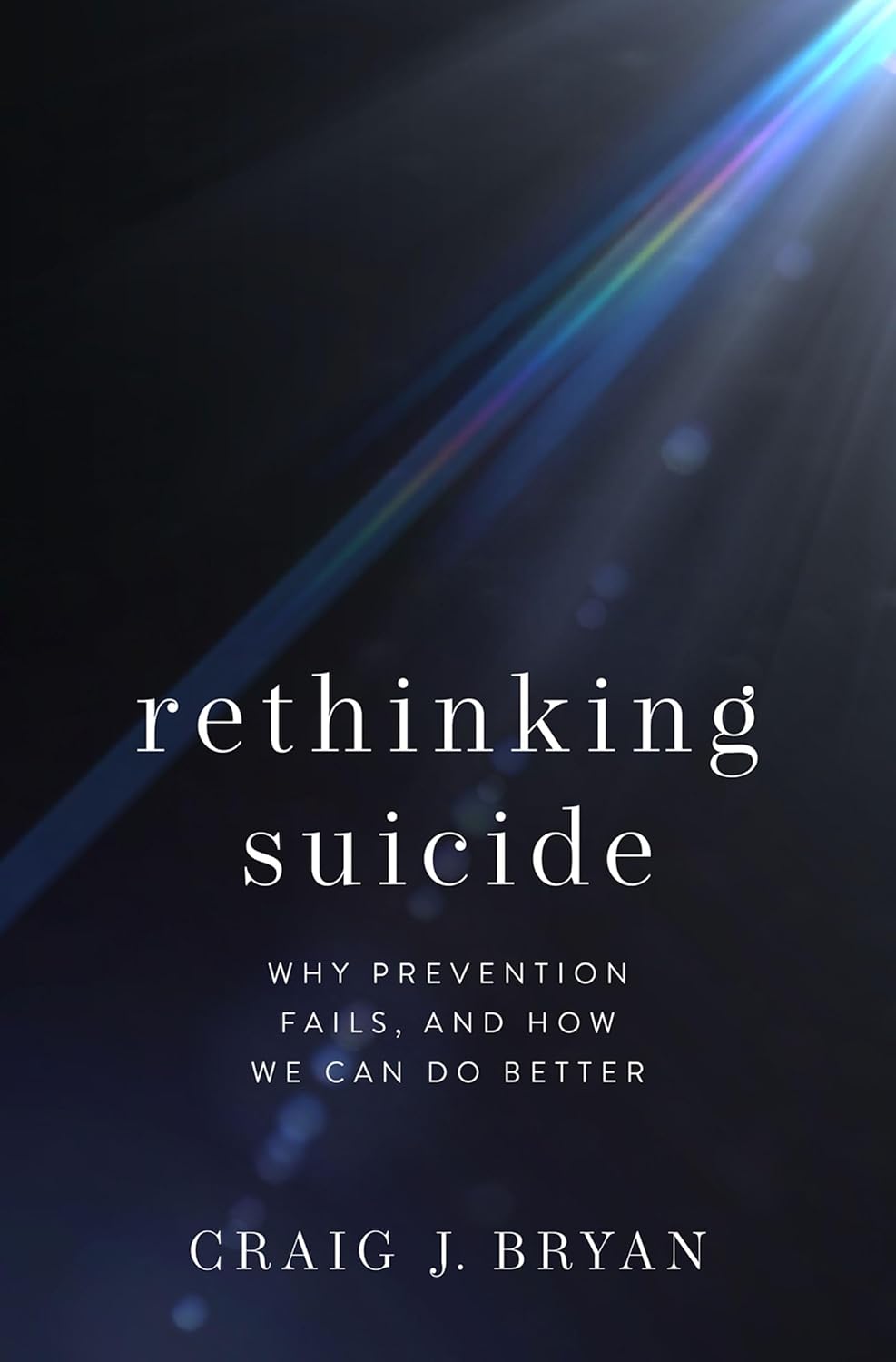
Below, I’ve a pasted LinkedIn post from Dr. Craig Bryan, author of “Rethinking Suicide” and a leading suicide researcher. At the bottom of his comments there’s a link to the article of which he speaks.
Enjoy!
*****************
From Craig Bryan, LinkedIn – 6/29/2026
We keep trying to predict who will attempt suicide. A 15-year study suggests we’re asking the wrong question.
Researchers followed 2,060 Brazilian children from age 10 into their mid-twenties—one of the longest prospective suicide studies ever conducted outside a high-income country. They measured genetics, perinatal history, family psychiatric illness, childhood adversity, cognition, and clinical symptoms, then tested all of it together against who later attempted suicide.
The result: even with multiple domains of risk factors combined, prediction accuracy stayed modest (AUC 0.665), barely above the ceiling seen across 50 years of suicide research. More sophisticated machine learning models didn’t do any better than simple logistic regression.
Three factors stood out as consistent, actionable, and population-relevant: childhood threat exposure (especially bullying), caregiver history of suicide attempts, and childhood externalizing disorders. Bullying alone accounted for the largest share of preventable risk in the entire study.
The authors’ conclusion is blunt: distal childhood risk factors will likely never predict individual suicide attempts with precision, because suicide is driven by acute, fast-moving processes that a baseline assessment can’t capture. Trying to screen our way to safety has a ceiling. We hit it decades ago.
The better investment may not be sharper prediction. It may be quieter, structural prevention like anti-bullying programs, supporting parents with histories of suicidal behavior, and early identification of behavioral disorders, the kind of intervention that helps a population, whether or not we ever know which child needed it most.
**************************
Here’s the article link: https://lnkd.in/eRWtBiXK
I’m excited about Dr. Bryan’s post not because of the difficulties with prediction (which we’ve long know), but because of the idea of moving upstream toward structural prevention. I also feel this fits really well with what we’re trying to do with CAPE.
Obviously, I love this quotation: “Trying to screen our way to safety has a ceiling. We hit it decades ago.”
Have a great evening!
JSF


Dr Bryan’s book widely opened my eyes. His metaphor of seat belts are in all cars cuz we are all at risk truly resonates. In moments I am in my facilitating & mentoring, I emphasis that image and, many tools, advocate using gun locks & safes like seat belts especially to the veteran community. We learn to use them automatically.
And I also find golden nuggets of wisdom in your work, too that I use! Thank you and write on and be well.
Thanks Pappy! Yes, Dr. Bryan’s book and work feel illuminating. Thanks for commenting. I’m glad you can find a golden nugget or two in what I’m writing. Be well!
A dear friend of our took her life from this planet recently. It leaves all of us asking….’why’. Her partner of 30 years said she was under great emotional stress. Her partner is left with guilt because she didn’t see ‘ more clues ‘. We all saw her a week before she was gone…on St Patrick’s Day. We saw a happy woman. It has left us stunned and sad.
K
Oh my, Kaye, I am so sorry. One of the topics I present on to educators and in schools is the fact that there are no good “signs” or “clues” of suicidality. Sure, we can sometimes see them in retrospect, but when people want to hide their suicidality, they can and they do. Sadly, everyone feels guilty . . . and it is tragic. . . and yet I wish that friends and family could let go of some of the guilt and responsibility because even the best suicide scientists can’t predict suicide very well at all! I wish you all peace in this difficult situation. Love to you and your family. JSF
I hope you got my reply. My tablet is acting up!
k☘️
Hi Kaye, I actually don’t think I received your reply. But it might be that I’m farther behind than I think I am. Either way, big hugs to you and your fam. JSF