Tag Archives: Workshop

Eudaimonic Happiness is Coming

This is a fact-focused post. I’d like to be verbally clever, but I’d like even more to get you all this information on what’s happening at the Phyllis J. Washington Center for the Advancement of Positive Education.

We’re building our staff, our website, and plans for this fall. You may want some or all of the following on your calendar. . .or to share them with people whom you think would be interested.

A New University of Montana Course

Kim Parrow and Tammy Tolleson-Knee developed a syllabus for a EDU 291 course called, The Psychology of Happiness. This is a late-start, face-to-face course that begins the week of September 15. If you’re a UM student or know one who might want to experience a positive psych course, here’s the flyer:

Dylan Wright and Kim Parrow will be taking the lead on the fall semester Happiness for Educators (HFE) course. Data attesting to the value of this course continue to pour in. With 150+ enrolled this summer, we’ve now had well over 400 Montana educators complete the course. A big thanks to the Arthur M. Blank Family Foundation for supporting Montana educators. And Go Falcons! Here’s a flyer for the HFE course:

Dylan and Tammy are also working with local schools to infuse principles of positive education as methods to improve educator well-being. They’re starting with the Potomac School District. . . and have named their approach, “The Potomac Model.” Thanks to Emily Sallee, the shiny new Potomac superintendent for collaborating with us. If your school district would like to collaborate with us, Dylan Wright is your best contact: dylan.wright@mso.umt.edu

As for myself, I’ve got a few gigs coming up as well. Below are the ones I’m thinking about today!

September 16 – Youth Summit Keynote in Kalispell – 9:15-10am – Flathead Valley Community College – Thanks to the Nate Chute Foundation for organizing this.

  • The Bad News Brain: Why It Feels So Hard and What You Can Do

Maintaining positive mental health is naturally difficult—for nearly everyone. The good news is that if you struggle with mental health, you’re not alone. The bad news is that your brain often likes to focus on bad news, bad moods, and bad social interactions. The other good news is that after this presentation, you will know several ways your brain tries to trick you into feeling worse. You will also know several strategies for dealing with your pesky bad-news-brain.

September 25 – Presentation at the State CASA Conference in Butte – 11am-12:30pm – Finlen Hotel. Thanks to the Montana State CASA people for their support of Montana children.

  • Ten Things Everyone Should Know About Children’s Mental Health and Happiness

After 40+ years as a mental health professional, John Sommers-Flanagan has discovered an array of myths that inadvertently contribute to ever-rising mental health problems in children and teenagers. In this presentation for Montana CASA, we will go on a rollercoaster ride through three principles of positive psychology and 10 (or maybe 11) misconceptions about mental health and happiness that will knock your socks off (not literally). And perhaps, as we engage in the learning process together, you may be inspired to think a little differently about how to grow positive mental health and happiness in youth.

September 27 – Presentation on Happiness in Absarokee, MT – 2-5pm – Cobblestone School. Thanks to the Cobblestone Preservation Committee for sponsoring this event.

  • Tools for Living Your Best Life: A Happiness Primer

October 9 – Grand Rounds presentation on Strengths-Based Suicide, the University of Arkansas for Medical Sciences (UAMS) in Little Rock, AR – 4pm

October 10 – Full-day workshop on Strengths-Based Suicide for the Arkansas Psychological Association in Little Rock, AR – 8:30am-4pm – Holiday Inn Presidential. Thanks to Dr. Margaret Rutherford, President of the Arkansas Psychological Association for making these presentations happen.

  • Integrating Strengths-Based and Traditional (Medical Model) Approaches to Suicide Assessment and Treatment

Traditional suicide assessment tends to be a top-down information-gathering process wherein healthcare or prevention professionals use questionnaires and clinical interviews to determine patient or client suicide risk. This approach may not be the best fit for clients who are suicidal, who have experienced historical trauma, or are experiencing current oppression or marginalization. In this presentation, John Sommers-Flanagan will review principles of a strengths-based approach to suicide prevention, assessment, and treatment. He will also discuss how to be more sensitive, empowering, collaborative, and how to leverage individual and cultural strengths when working with people who are potentially suicidal. You will learn at least five practical strengths-based strategies for initiating conversations about suicide, conducting culturally-sensitive assessments, and implementing suicide interventions.

October 11 — Round Table presentation with Tammy Tolleson-Knee and Umit Arslan at the Association for Counselor Education and Supervision conference in Philly.

  • Shifting from Risk-Focused to Resilience-Oriented Approaches in Youth Mental Health Assessments

Traditional suicide assessments often focus on pathology and risk, overlooking client strengths and resilience. Effective prevention goes beyond simply identifying suicidal thoughts—it involves fostering awareness, developing coping skills, and strengthening a person’s belief in their ability to navigate challenges. This session examines strengths-based suicide assessment from three perspectives: (1) distinguishing scientific research from myths and implementing evidence-based steps, (2) recognizing countertransference as a barrier to strengths-based suicide intervention and developing effective coping strategies, and (3) evaluating how strengths-based approaches can promote a holistic, resilience-oriented approach to youth mental health. Participants will engage in discussions, case vignettes, and interactive learning activities, gaining practical applications for counselor education and supervision.

October 29 – Keynote for Montana Healthcare Foundation in Bozeman – 10:05-10:55am – Strand Union Building, Montana State University. Thanks to the fabulous staff of the Montana Healthcare Foundation for organizing this amazing event.

  • The Bad News Brain: Why We Must Force Ourselves to Embrace Well-Being and Positivity

The human brain is naturally interested in bad news. Several deep psychological truths make this so. In this keynote speech, we will focus on what makes it so hard to maintain a positive focus. Then, we will force ourselves to orient toward the positive—even if only briefly—to explore practical ways we can grow well-being in Montana together.

October 29 – Breakout Workshop for Montana Healthcare Foundation in Bozeman – 2-3:50pm – Strand Union Building, Montana State University.

  • Evidence-Based Strategies for Integrating Strengths-Based Approaches into Mental Health Care

Beginning with a cognitive-behavioral model of mood management, this breakout workshop will focus on evidence-based strategies that can complement traditional medical model approaches to mental health care. Evidence-based strategies will include: (a) witnessing inspiration, (b) therapeutic writing, (c) savoring, and more. Discussion and reflection will include how to collaboratively leverage individual, family, community, and cultural strengths when providing mental health support.

November 12-13 – 1 credit college course for Blackfeet Community College in Browning, MT – 8am-4:30pm (two days) at BCC. Thanks to Charlie Speicher WBH school counselor and founder of the Firekeeper Alliance for creating this opportunity.

  • Strengths-Based Suicide Assessment and Interventions in Schools

Traditional suicide assessments tend to be top-down information-gathering procedures wherein healthcare, school, or prevention professionals use questionnaires and clinical interviews to determine suicide risk. This approach may not be the best fit for schools, students, youth who are suicidal, or people who have experienced historical trauma, or are experiencing current oppression or marginalization. In this course, John Sommers-Flanagan and Tamara Tolleson-Knee will review principles of a strengths-based approach to suicide prevention, assessment, and interventions. They will share background research and historical practice, including the growing rationale for using strengths-based approaches with people who are feeling vulnerable. This course will include counseling and assessment demonstrations, video clips, and opportunities for participants to practice specific strengths-based suicide assessment and intervention strategies. In particular, there will be discussions about how to leverage individual, family, community, and cultural strengths when working with students who may be suicidal. Participants will learn numerous strengths-based strategies for initiating conversations about suicide, conducting strengths-based assessments, and implementing suicide interventions.

December 5 – Zoom Lecture for North Carolina State University – 5:30-7pm EST. Thanks to Dr. Angel Dowden for organizing this presentation.

  • Effective Approaches to Suicide Intervention and Prevention in Schools

Traditional suicide assessments tend to be top-down information-gathering procedures wherein healthcare, school, or prevention professionals use questionnaires and clinical interviews to determine suicide risk. This approach may not be the best fit for schools, students, youth who are suicidal, or people who have experienced historical trauma, or are experiencing current oppression or marginalization. In this Zoom workshop, John Sommers-Flanagan will review principles of a strengths-based approach to suicide prevention, assessment, and interventions. This workshop will include at least one assessment demonstration, a video clip, and brief opportunities for participants to practice specific strengths-based suicide assessment and intervention strategies. The overall focus is on how to leverage individual, family, community, and cultural strengths when working with students who may be suicidal.

If you’ve read this far, I am completely gob-smacked. Have a fabulous day!
The Handout for this Friday’s Strengths-Based Suicide Workshop

Sorry for all the posts, but apparently there’s lots happening in early 2025.

The big NEWS post won’t be until tomorrow.

As you know, on this Friday, January 10, I’ll be doing an online, two-hour workshop on Strategies for Integrating Traditional and Strengths-Based Approaches to Suicide for the Cognitive Behavior Institute.

I’m posting the workshop handouts here, in advance, for anyone interested.

You may recall that this workshop is ALMOST FREE. Only $25. There’s still time to register here:

https://cbicenterforeducation.com/courses/strategies-for-integrating-traditional-and-strengths-based-approaches-to-suicide-january-2025

I hope to see you there!

Coming this Friday: Online Workshop — “Strategies for Integrating Traditional and Strengths-Based Approaches to Suicide”

Happy Sunday Evening,

Last week I shared my 2025 predictions with you. This week, I’ve got another prediction . On Friday, January 10, I’ll be doing an online, two-hour workshop (title listed above) for the Cognitive Behavior Institute. I predict that if you sign up, you’ll be happy you did.

The other good news about this workshop is that it’s ALMOST FREE. Only $25. Here’s the link to register:

https://cbicenterforeducation.com/courses/strategies-for-integrating-traditional-and-strengths-based-approaches-to-suicide-january-2025

I hope to see you there!

If you’re interested in this topic and can’t make it (or even if you can make it), here’s a pdf of an article I wrote about suicide assessment for a Psych journal in 2018:

And here’s a link to the first journal article that Rita and I wrote on suicide assessment way back in the 20th century (in 1995!):

The Parenting Consultation Workshop is Postponed to Next Week

Hey There,

I’m sorry to announce that because I’ve come down with COVID, tomorrow’s “pop-up” Parenting Consultation workshop is postponed for one week.

We will convene online NEXT Wednesday, September 11, at 9am and keep going until about 4pm. We will have a morning and afternoon break, and a lunch break.

We will be able to provide Montana Behavioral Health CEUs. Also, because I’m a psychologist, the training will likely qualify for Board of Psychology CEUs. We will issue certificates about one week after the workshop.

My apologies for the delay on this workshop. The main thing I have to say about that is: “COVID sucks.”

As noted before, although this is FREE, we’re asking participants to:

  1. Register at this link (it might take you one minute): https://forms.office.com/r/kY0zCZ3ELg
  2. Commit to attending the whole workshop (I think having people pop in and out would be disruptive)
  3. Join the workshop on Wednesday, September 11, from 9am to 4pm (Mountain time) with this Zoom link: https://umontana.zoom.us/j/3667738452
  4. If you find the workshop useful, make a donation to Families First in an amount that represents the value of the workshop to you. Here’s the link for that: https://donorbox.org/familiesfirstdonate
  5. Do what you can—in the future—to support parents as they face unusually difficult challenges.

I would also like participants to engage, volunteer for role plays, participate in break-out rooms, and discuss what they’re experiencing and learning.

Information on the workshop is below

Using a Consultation Model to Work Effectively with Parents

John Sommers-Flanagan, Ph.D.

Parenting has always been challenging, but now, with ubiquitous social media influences, the aftermath of the global pandemic, and increasing rates of children’s mental disorder diagnoses, parenting in the 21st century is more stressful and demanding than ever before. As a consequence, many parents turn to mental health, healthcare, and school professionals for help with their children’s behavior and family problems. However, partly because parents can be selective or picky consumers and partly because children’s problems can be complex and overwhelming, many professionals feel ill-prepared to work effectively with parents. This workshop will teach participants a model for working effectively with parents. The model, which has supporting research, can be used for brief individual consultations or longer-term parent counseling. Practitioners who want to work with parents will learn methods for developing rapport, collaborating on problem formulation, initial interventions, and optional follow-up strategies.

Learning Objectives:

  • Describe a consultation model, with supporting research, for working effectively with parents.
  • Apply skills for brief individual consultations or longer-term parent counseling.
  • Utilize methods for rapport, collaborative problem formulation, initial interventions, and optional follow-up strategies.

Thanks for your flexibility!

Here are two journal articles on the approach we’ll be learning:

Geographically Exclusive Strengths-Based Suicide Workshops: First Stop (Virtually) – Kalispell, Montana

In partnership with Montana Pediatrics and the Nate Chute Suicide Prevention Foundation, the Montana Happiness Project is launching its “Geographically Exclusive” strengths-based suicide assessment and treatment planning workshop series. The purpose of this workshop series is to work with mental health and school counselors from specific geographic regions to further develop community-based professional competence in suicide assessment, treatment planning, and intervention. Our goal is to train professionals to provide excellent care to students, clients, and patients who are experiencing suicidality. At the same time, similar to Dr. Marsha Linehan’s dialectical behavior therapy model, we hope to build professional communities that will support one another in facing this challenging and stressful professional activity. We believe that if practitioners within a single community feel more competent AND more supported, they’ll be able to be more effective, more available, and better able to handle the stress associated with suicide assessment and intervention work.

Our first geographically exclusive workshop is scheduled for two consecutive Tuesday evenings: April 13 and 20 from 4:15pm-7:15pm. Here’s the description:

Interested in learning a new approach to suicide assessment and treatment? John Sommers-Flanagan, professor of counseling at the University of Montana, will be leading an innovative professional development opportunity on strengths-based suicide prevention.

Founded on current research and national best-practices, this workshop will help you:
Understand the limits of suicide risk factor assessment

  • Use creative approaches to connect with distressed clients, while collecting useful assessment information
  • Respond compassionately and effectively to client hopelessness, irritability, passive suicidality, and more
  • Initiate collaborative safety and treatment planning protocols

If you’re from the Kalispell area, you can still register for the workshop through the Nate Chute Foundation website: https://www.natechutefoundation.org/events/suicide-assessment-and-treatment-planning-a-strengths-based-approach-for-clinicians-virtual

If you’re interested in hosting a geographically exclusive suicide workshop in your region (via Zoom or in-person), please email me at john.sf@mso.umt.edu

Hanging out with the Virginia School Counseling Association in Richmond: The Extra Handout

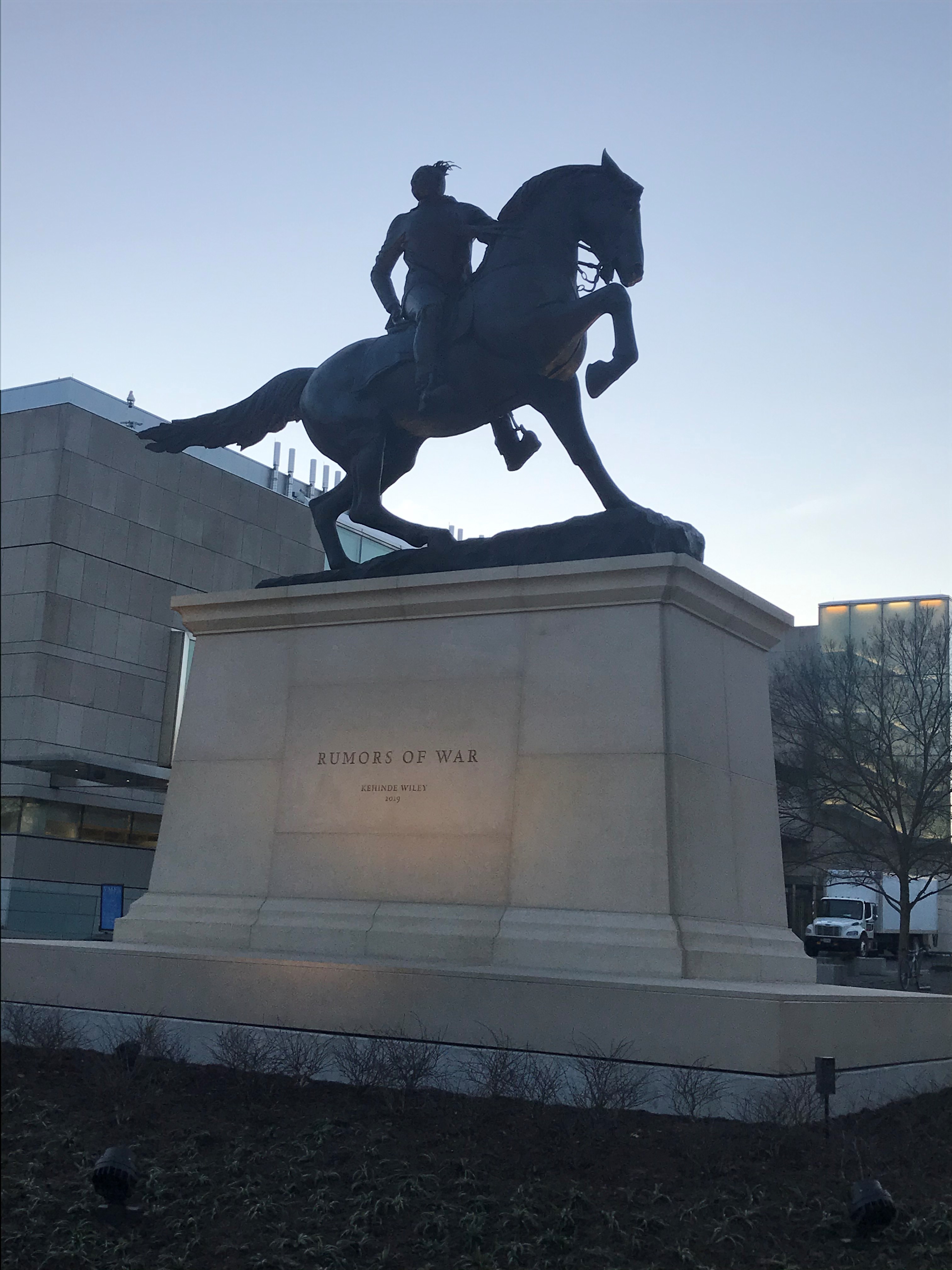
Richmond Statue

I just had an awesome day with about 260 Virginia School Counselors. You know who you are, and you know you’re incredible.

Just FYI, the state of Virginia is making a big investment in adding school counselors. . . which IMHO, is a very smart and reasonable decision. Other states might want to take note and follow their lead. The problem is that many school age youth are suffering from extremely challenging home, neighborhood, and school situations. Having more competent school counselors available to support student success, student mental health, and teachers is a wise move.

For all of the VSCA members I met today, thank you for coming, but more importantly, thanks for the deeply important commitment you make to the well-being of students in your schools. You are amazing!

Here’s the extra handout, with more details than the powerpoint slides: VSCA 2020 Extra Handout


What You Missed in Cincinnati: Part II

While in Cincinnati, I ran short on time and we missed a chance to watch a video clip on “Generating Behavioral Alternatives.” And so as a substitute, I’m posting the verbatim script of the clip we were supposed to watch, and although we’ll miss out on discussing, the clip is fun on its own. Here it’s an excerpt from our Counseling and Psychotherapy Theories book and placed in the context of “Problem-Solving Therapy.”

Generating Behavioral Alternatives With an Aggressive Adolescent

As noted previously, problem-solving therapy (PST) focuses on teaching clients steps for rational problem solving. In this case vignette, the therapist (John) is trying to engage a 15-year-old White male client in stage 2 (generating solutions) of the problem-solving model. At the beginning of the session, he client had reported that the night before, a male schoolmate had tried to rape his girlfriend. The client was angry and planning to “beat the s*** out” of his fellow student. During the session, John worked on helping the boy identify behavioral alternatives to retributive violence.

The transcript below begins 10 minutes into the session.

Boy: He’s gotta learn sometime.

JSF: I mean. I don’t know for sure what the absolute best thing to do to this guy is . . . but I think before you act, it’s important to think of all the different options you have.

Boy: I’ve been thinking a lot.

JSF: Well, tell me the other ones you’ve thought of and let’s write them down so we can look at the options together.

Boy: Kick the shit out of him.

JSF: Okay, I know 2 things, actually maybe 3, that you said. One is kick the [crap] out of him, the other one is to do nothing . . .

Boy: The other is to shove something up his a**.

JSF: And, okay—shove—which is kinda like kicking the s*** out of him. I mean to be violent toward him. [Notice John is using the client’s language.]

Boy: Yeah, Yeah.

JSF: So, what else?

Boy: I could nark on him.

JSF: Oh.

Boy: Tell the cops or something.

JSF: And I’m not saying that’s the right thing to do either. [Although John thinks this is a better option, he’s trying to remain neutral, which is important to the brainstorming process; if the client thinks John is trying to “reinforce” him for nonviolent or prosocial behaviors, he may resist brainstorming.]

Boy: That’s just stupid. [This response shows why it’s important to stay neutral.]

JSF: I’m not saying that’s the right thing to do . . . all I’m saying is that we should figure out, cause I know I think I have the same kind of impulse in your situation. Either, I wanna beat him up or kinda do the high and righteous thing, which is to ignore him. And I’m not sure. Maybe one of those is the right thing, but I don’t know. Now, we got three things—so you could nark on him. [John tries to show empathy and then encourages continuation of brainstorming.]

Boy: It’s not gonna happen though.

JSF: Yeah, but I don’t care if that’s gonna happen. So there’s nark, there’s ignore, there’s beat the s**. What else?

Boy: Um. Just talk to him, would be okay. Just go up to him and yeah . . . I think we need to have a little chit-chat. [The client is able to generate another potentially prosocial idea.]

JSF: Okay. Talk to him.

Boy: But that’s not gonna happen either. I don’t think I could talk to him without, like, him pissing me off and me kicking the s*** . . . [Again, the client is making it clear that he’s not interested in nonviolent options.]

JSF: So, it might be so tempting when you talk to him that you just end up beating the s*** out of him. [John goes back to reflective listening.]

Boy: Yeah. Yeah.

JSF: But all we’re doing is making a list. Okay. And you’re doing great. [This is positive reinforcement for the brainstorming process—not outcome.]

Boy: I could get someone to beat the s*** out of him.

JSF: Get somebody to beat him up. So, kind of indirect violence—you get him back physically—through physical pain. That’s kind of the approach.

Boy: [This section is censored.]

JSF: So you could [do another thing]. Okay.

Boy: Someone like . . .

JSF: Okay. We’re up to six options. [John is showing neutrality or using an extinction process by not showing any affective response to the client’s provocative maladaptive alternative that was censored for this book.]

Boy: That’s about it. . . .

JSF: So. So we got nark, we got ignore, we got beat the s*** out of him, we got talk to him, we got get somebody else to beat the shit out of him, and get some. . . . [Reading back the alternatives allows the client to hear what he has said.]

Boy: Um . . . couple of those are pretty unrealistic, but. [The client acknowledges he’s being unrealistic, but we don’t know which items he views as unrealistic and why. Exploring his evaluation of the options might be useful, but John is still working on brainstorming and relationship-building.]

JSF: We don’t have to be realistic. I’ve got another unrealistic one. I got another one . . . Kinda to start some shameful rumor about him, you know. [This is a verbally aggressive option which can be risky, but illustrates a new domain of behavioral alternatives.]

Boy: That’s a good idea.

JSF: I mean, it’s a nonviolent way to get some revenge.

Boy: Like he has a little dick or something.

JSF: Yeah, good, exactly. [John inadvertently provides positive reinforcement for an insulting idea rather than remaining neutral.]

Boy: Maybe I’ll do all these things.

JSF: Combination.

Boy: Yeah.

JSF: So we’ve got the shameful rumor option to add to our list.

Boy: That’s a good one. (Excerpted and adapted from J. Sommers-Flanagan & R. Sommers-Flanagan, 1999)

This case illustrates what can occur when therapists conduct PST and generate behavioral solutions with angry adolescents. Initially, the client appears to be blowing off steam and generating a spate of aggressive alternatives. This process, although not producing constructive alternatives, is important because the boy may be testing the therapist to see if he will react with judgment (during this brainstorming process it’s very important for therapists to remain positive and welcoming of all options, no matter how violent or absurd; using judgment can be perceived and experienced as a punishment, which can adversely affect the therapy relationship). As the boy produced various aggressive ideas, he appeared to calm down somewhat. Also, the behavioral alternatives are repeatedly read back to the client. This allows the boy to hear his ideas from a different perspective. Finally, toward the end, the therapist joins the boy in brainstorming and adds a marginally delinquent response. The therapist is modeling a less violent approach to revenge and hoping to get the boy to consider nonphysical alternatives. This approach is sometimes referred to as harm reduction because it helps clients consider less risky behaviors (Marlatt & Witkiewitz, 2010). Next steps in this problem-solving process include:

  • Decision making
  • Solution implementation and verification

As the counseling session proceeds, John employs a range of different techniques, including “reverse advocacy role playing” where John plays the client and the client plays the counselor and provides “reasons or arguments for [particular attitudes] being incorrect, maladaptive, or dysfunctional” (A. M. Nezu & C. M. Nezu, 2013).