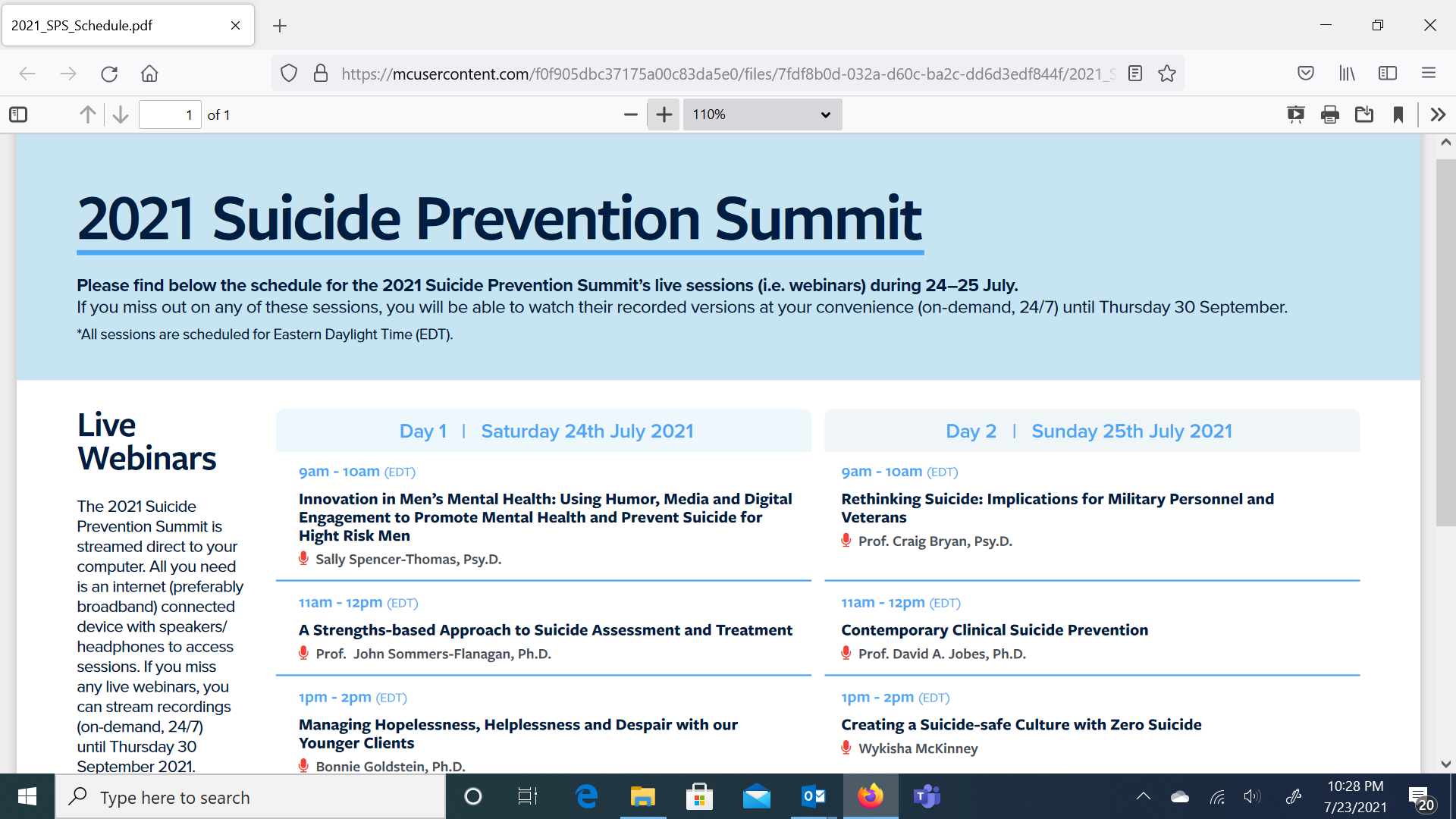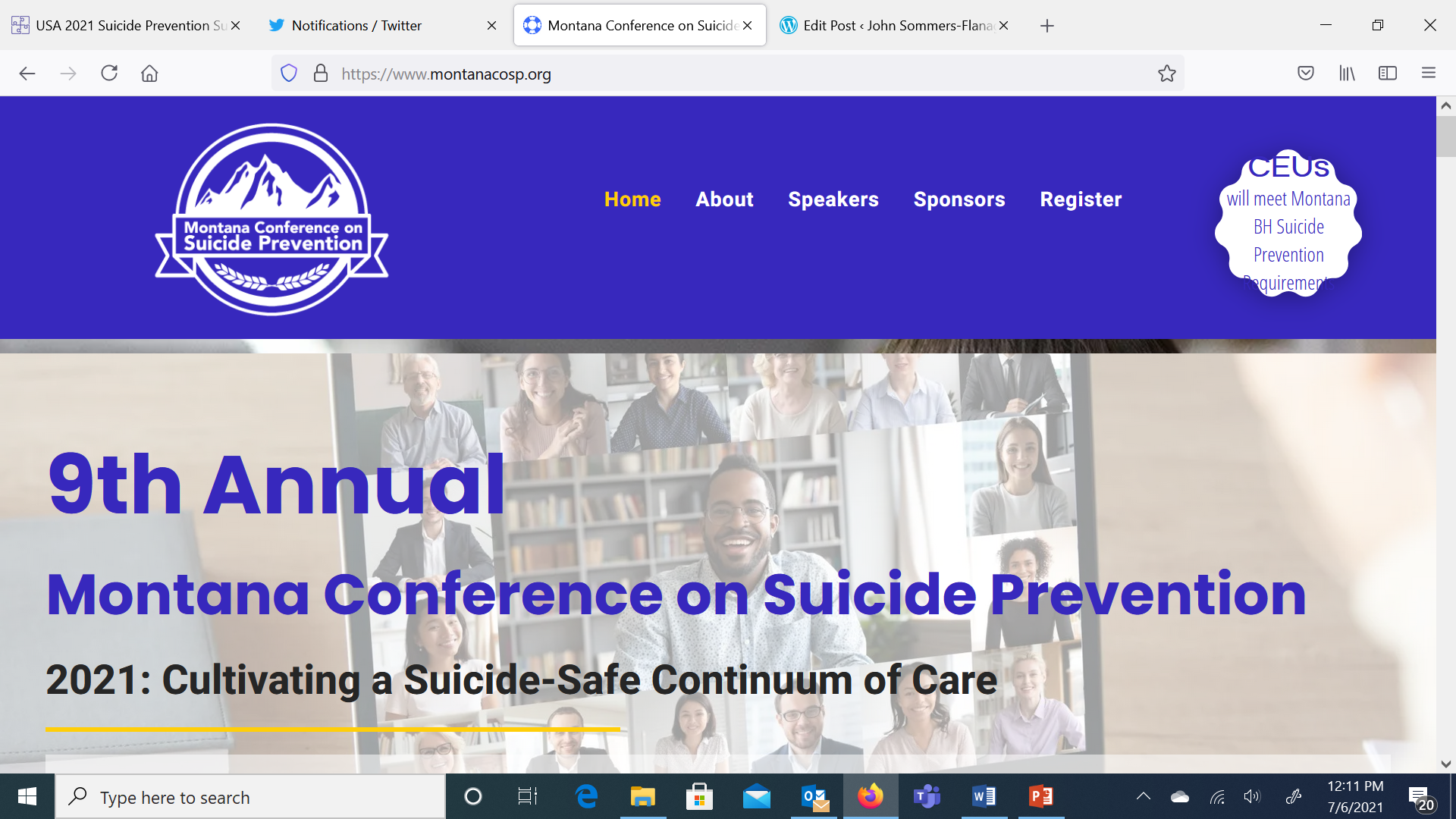

The second of two consecutive suicide prevention conferences with free CEUs is tomorrow! Just in case you didn’t know, this conference, the Montana Conference on Suicide Prevention, has two full hours of David Jobes–the creator of CAMS–in the afternoon. How often do you get to listen to Dr. Jobes for two hours, for free, and get CEUs? Not often, I suspect.
In related news, I just got an email from the Association for Humanistic Counseling about an upcoming all-day conference on Strengths-Based Suicide Assessment and Treatment (with me presenting!). The date is: 9.24.21. This one has a small fee for CEUs . . . but it’s cheaper if you become an AHC member. Here’s the registration link for that one: https://events.r20.constantcontact.com/register/eventReg?oeidk=a07eibjc7x5afb40bd4&oseq=&c=&ch=
Have a great evening and I hope to “see” you tomorrow at the Montana conference.
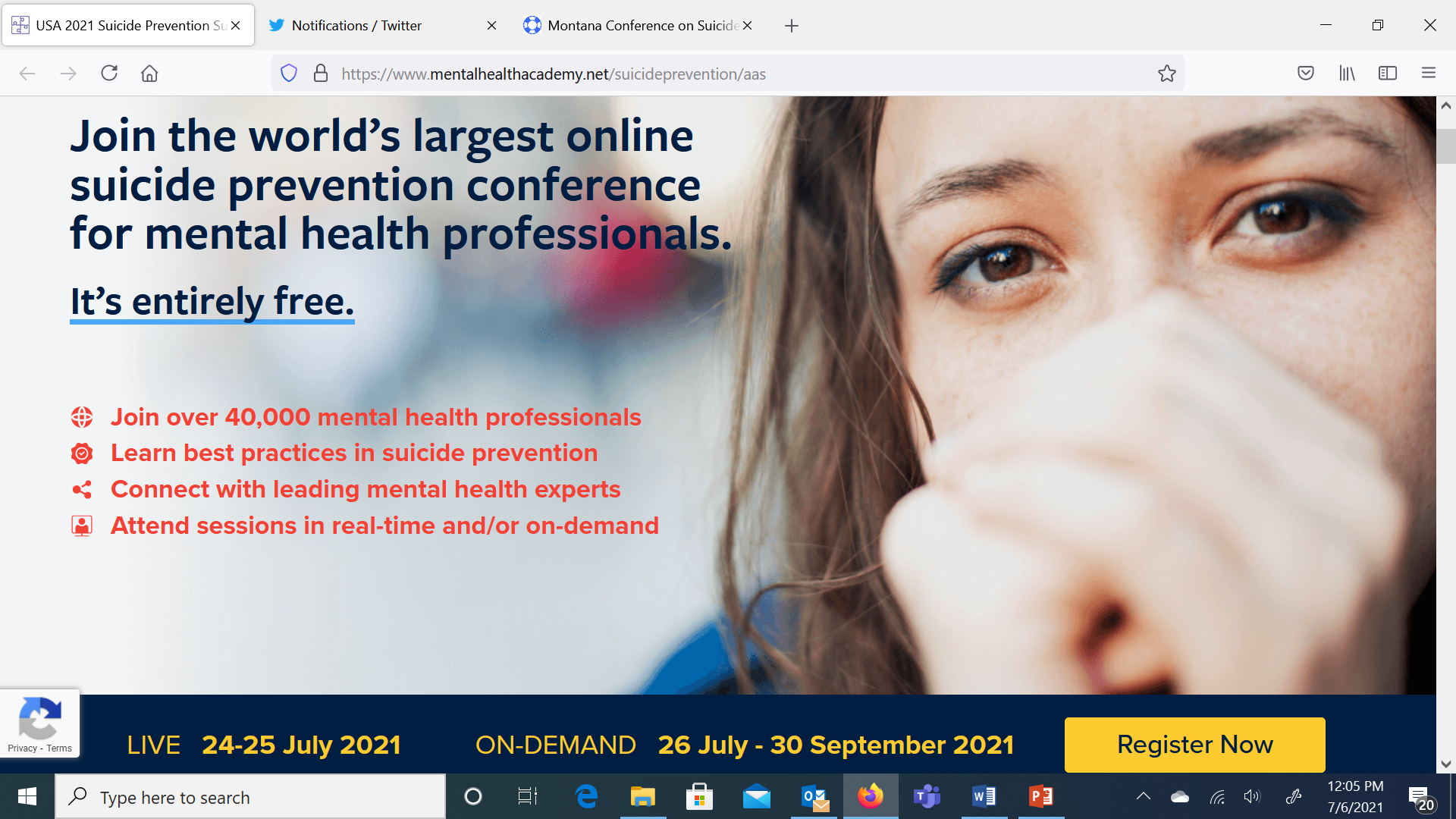
Good morning! The 2021 MHA Suicide Summit has started (see below) and I’ll be up in less than an hour.
Sometimes I think the hardest part about doing workshops is writing the workshop blurb. My problem-and maybe it’s just my problem—is that the process of writing workshop blurbs nearly always impairs my judgment. I start out writing like a sensible and rational person, but eventually I decompensate into displaying delusions of grandeur. For the Mental Health Academy Suicide Summit, I completely lost touch with reality and claimed that I would,
Describe strengths-based principles for suicide assessment and treatment
Be able to implement three strengths-based assessment tools (and recognize the limits of risk and protective factor assessment)
Identify suicide drivers (and goals) linked to seven common life dimensions
Describe at least one wellness and mood management positive psychology strategy for patients and practitioners.
Of course, all of this is great, but, here’s the catch. I’m only presenting for 45 minutes!
If anyone out there can help me become more realistic, I would appreciate the input.
In the meantime, here are the ppts for the presentation today.
In this post I’m sharing a link to an article I just had published in Psychotherapy Networker. Although I had hoped it would be the Networker’s “lead article,” instead, they put Shankar Vedantam first? And then a bunch of other people, like David Burns and Martha Manning? Seriously? All jokes aside, the truth is, I’m humbled to be included.
The article—titled “The Myth of Infallibility”—is about my immediate and ongoing emotional reactions to the loss of a client to suicide. I hope the article provides useful information and emotional support for counselors and psychotherapists who have experienced—or will experience—a similar loss.
You can use the following link to bypass the paywall and read the article for free.
Thanks for reading this. Please share the link if you feel so moved. One of my counseling colleagues shared it with all her students, which seemed great to me, mostly because IMHO, we don’t talk much or get formal training on how to cope when or if we have a client who dies by suicide.
Today, I’m especially grateful for all the people in my life who have supported me in one way or another, over so many years.
For those of you interested in gathering FREE professional continuing education hours AND because I’m terrible at updating my blog upcoming events calendar, here’s a quick preview of two talks I’m giving later this month.
On Saturday, July 24, I’ll be doing an hour-long live, online presentation and Q & A for the Mental Health Academy’s 2021 Suicide Prevention Summit. The cool thing (among many cool things) about this summit is that it’s completely free. . . and you can get up to 10 CEUs. You can tune in live, or register and then watch recorded versions of the presentations (that’s what I did last year and getting my 10 CEUs was smooth as butter). You can learn more about the event and how to register here: https://www.mentalhealthacademy.net/suicideprevention/aas
On Friday, July 30, I’m providing a short (30 minute) presentation on the Montana Happiness Project and strengths-based approaches, and then participating on a panel for the 9th Annual Montana Conference on Suicide Prevention. As with the Mental Health Academy Summit, this event is free, although you must register in advance. For information on speakers, registration, and the conference schedule, click on this link: https://www.montanacosp.org/
Let me know if you have questions and I hope you’re staying as safe and as cool as you can . . .
Here’s a glimpse of what the garden looks like this morning.
In most of life, most of the time, there’s not much completely new or original. People tend to gather inspiration from others and build on or rediscover old ideas. This my way of acknowledging that, although I wish I always had a boatload of original ideas to share in the blog, more often than not, I’m embracing the green new deal and . . . re-using, recycling, and repurposing old ideas.
The following Table describes the seven dimension model that Rita and I use to aid clinicians in conducting assessments and interventions with clients or patients who are suicidal. These seven dimensions aren’t original, but the idea that suicide drivers (and risk/protective factors) can emerge and influence people from any or all of these dimensions is helpful in a more or less original way. Check out the Table to see if it’s useful for you.
Dimension:In this column, we define the dimensions
Evidence-Based Suicide Drivers: In this column, we identify risk factors or suicide drivers that can push or pull individuals toward suicidality. The key to this model is to identify and treat the main sources of distress (aka psychache). In the next columns (not included here), you would find wellness goals and specific interventions.
Emotional: all human emotions.
Excruciating emotional distress
Specific disturbing emotions (guilt, shame, anger, sadness)
Emotional dysregulation
Cognitive: All forms of human thought, including imagery.
Hopelessness
Problem-solving impairments
Maladaptive thoughts
Negative core beliefs
Interpersonal: All human relationships.
Social disconnection and perceived burdensomeness
Interpersonal loss and grief
Social skill deficits
Repeating dysfunctional relationship patterns
Physical: All human biogenetics and physiology.
Biogenetic predispositions and physical illness
Sedentary lifestyle; poor nutrition
Agitation, arousal, anxiety
Trauma, nightmares, insomnia
Spiritual-Cultural: All religious, spiritual, cultural values that provide meaning and purpose.
Religious or spiritual disconnection
Cultural disconnection or dislocation
Meaninglessness
Behavioral: All human action and activity.
Using substances or self-harm for desensitization
Suicide planning, intent, and preparation
Impulsivity
Contextual: All factors outside of the individual that influence human behavior.
No connection to place or nature
Chronic exposure to unhealthy environmental conditions
Socioeconomic oppression or resource scarcity (e.g., poverty)
You may have a form to screen clients for a trauma history. However, more often than not, you’ll need to ask directly about trauma, just like you need to ask directly about suicidality. In many cases, as discussed in Chapter 3, it may be beneficial to wait and ask about trauma until the second or third session, or until there’s a logical opportunity. Although insomnia and nightmares don’t always signal trauma, when they co-exist, they provide an avenue to ask about trauma.
Counselor: Miguel, I’d like to ask a personal question. Would that be okay?
Miguel: Okay.
Counselor: Almost always, when people have nightmares about guns and death, it means they’ve been through some bad, traumatic experiences. When you’ve been through something bad or terrible, nightmares get stuck in your head and get on a sort of repeating cycle. Is that true for you?
Miguel: Yeah. I went through some bad shit back in Denver.
Counselor: I’m guessing that bad shit is stuck in your brain and one ways it comes out is through nightmares.
Miguel: Yeah. Probably.
Even when clients know their trauma experiences are causing their nightmares, they can still be reluctant to talk about the details. Physical and emotional discomfort associated with trauma is something clients often want to avoid. To reassure clients, you can tell them about specific evidence-based approaches—approaches that don’t require detailed recounting of trauma or nightmare experiences. Two examples include eye movement desensitization reprocessing (EMDR; Shapiro, 2001) and imagery rehearsal therapy (Krakow & Zadra, 2010).
Miguel: If I talk about the nightmares, they get more real. I have enough trouble keeping them out of my head now.
Counselor: That’s a good point. But right now your dreams are so bad that you’re barely sleeping. It’s worth trying to work through them. How about this? I’ve got a simple protocol for working with nightmares. You don’t even have to talk about the details of your nightmares. I think we should try it and watch to see if your dreams get better, worse, or stay the same? What do you think?
Miguel: I guess maybe my nightmares can’t get much worse.
Evidence-Based Trauma Treatments
In Miguel’s case, the first step was to get him to talk about his insomnia, nightmares, and trauma. Without details about his experiences, there was no chance to dig in and start treatment. The scenario with Miguel illustrates one method for getting clients to open up about trauma. Other clinical situations may be different. We’ve had Native American clients who were having dreams (or not having dreams, but wishing for them), and we needed to begin counseling by seeking better understanding of the role and meaning of dreams in their particular tribal culture.
Counselors who work with clients who are suicidal should obtain training for treating insomnia, nightmares, and trauma. Depending on your clients’ age, symptoms, culture, the treatment setting, and your preference, several different evidence-based treatments may be effective for treating trauma. The following bulleted list includes treatments recommended by the American Psychological Association (2017) or the VA/DoD Clinical Practice Guideline Working Group (2017), or both (Watkins et al., 2018).
Cognitive Processing Therapy (Resick et al., 2017).
Trauma-Focused Cognitive Behavioral Treatment (Cohen et al., 2012).
Although the preceding list includes the scientifically supported approaches to treating trauma, you may prefer other approaches, many of which are suitable for treating trauma (e.g., body-centered therapies, narrative exposure therapy for children [KID-NET], etc.).
Specific treatments for insomnia and nightmares are also essential for reducing arousal/agitation. Evidence-based treatments for insomnia and nightmares include:
Cognitive-Behavioral Therapy for Insomnia (CBT-I; Cunningham & Shapiro, 2018).
Targeting trauma symptoms in general, and physical symptoms in particular (e.g., arousal, insomnia, nightmares) can be crucial to your treatment plan. Addressing physical symptoms in your treatment instills hope and provides near-term symptom relief.
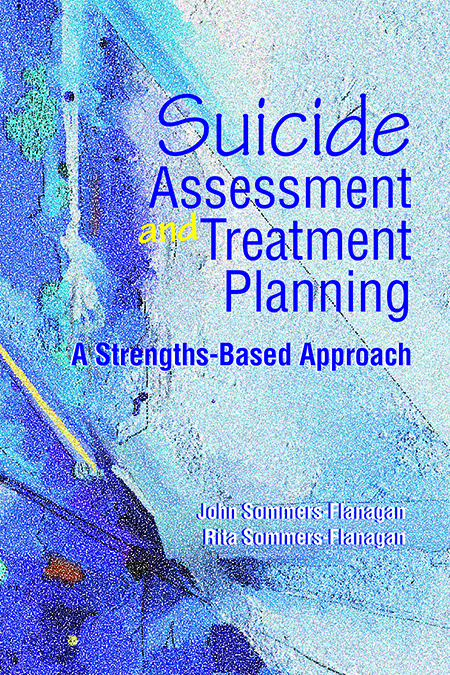
What follows is an excerpt from, Suicide Assessment and Treatment Planning: A Strengths-Based Approach (American Counseling Association, 2021). We address insomnia and nightmares in Chapter 7 (the Physical Dimension). This is just a glimpse into the cool content of this book.
Insomnia and nightmares directly contribute to client distress in general and suicidal distress in particular. In this section, we use a case example to illustrate how counselors can begin with a less personal issue (insomnia), use empathy, psychoeducation, and curiosity to track insomnia symptoms, eventually arrive at nightmares, and then inquire about trauma. Focusing first on insomnia, then on nightmares, and later on trauma can help counselors form an alliance with clients who are initially reluctant to talk about death images and trauma experiences.
Focusing on Insomnia
Miguel was a 19-year-old cisgender heterosexual Latino male working on vocational skills at a Job Corps program. He arrived for his first session in dusty work clothes, staring at the counselor through squinted eyes; it was difficult to tell if Miguel was squinting to protect his eyes from masonry dust or to communicate distrust. However, because the client was referred by a physician for insomnia, he also might have just been sleepy.
Counselor: Hey Miguel. Thanks for coming in. The doctor sent me a note. She said you’re having trouble sleeping.
Miguel: Yeah. I don’t sleep.
Counselor: That sucks. Working all day when you’re not sleeping well must be rough.
Miguel: Yeah. But I’m fine. That’s how it is.
To start, Miguel minimizes distress. Whether you’re working with Alzheimer’s patients covering their memory deficits or five-year-olds who get caught lying, minimizing is a common strategy. When clients say, “I’m fine” or “It is what it is” they may be minimizing.
But Miguel was not fine. For many reasons (e.g., pride, shame, or age and ethnicity differences), he was reluctant to open up. However, given Miguel’s history of being in a gang and his estranged relationship with his parents, the expectation that he should quickly trust and confide in a white male adult stranger is not appropriate.
Rather than pursuing anything personal, the counselor communicated empathy and interest in Miguel’s insomnia experiences.
Counselor: Not being able to sleep can make for very long nights. What do you think makes it so hard for you sleep?
Miguel: I don’t know. I just don’t sleep.
When asked directly, Miguel declines to describe his sleep problems. Rather than continue with questioning, the counselor fills the room with words (i.e., psychoeducation). Psychoeducation is a good option because sitting in silence is socially painful and because multicultural experts recommend that counselors speak openly when working with clients from historically oppressed cultural groups (Sue & Sue, 2016). The reasoning goes: If counselors are open and transparent, culturally diverse clients can evaluate their counselor before sharing more about themselves. As Miguel’s counselor talks, Miguel can decide, based on what he hears, whether his counselor is safe, trustworthy, and credible.
Counselor: Miguel, there are three main types of insomnia. There’s initial insomnia—that’s when it takes a long time, maybe an hour or more, to get to sleep. They call that difficulty falling asleep. There’s terminal insomnia—that’s when you fall asleep pretty well and sleep until maybe 3am and then wake up and can’t get back to sleep. They call that early morning awakening. Then there’s intermittent insomnia—that’s like being a light sleeper who wakes up over and over all night. They call that choppy sleep. Which of those fits for you?”
Miguel: I got all three. I can’t get to sleep. I can’t stay asleep. I can’t get back to sleep.
Counselor: That’s sounds terrible. It’s like a triple dose of bad sleep.
As Miguel begins opening up, he says “I haven’t slept in a week.” Although it’s obvious that zero minutes of sleep over a week isn’t accurate, for Miguel, it feels like he hasn’t slept in a week, and that’s what’s important.
Exploring Nightmares
After Miguel yawns, the counselor asks permission to share his thoughts.
Counselor: Miguel, if you don’t mind, I’d like to tell you what I’m thinking. Is that okay?
Miguel: Sure. Fine.
Counselor: When someone says they’re having as much trouble sleeping as you’re having, there are usually two main reasons. The first is nightmares. Have you been having nightmares?
Miguel: Shit yeah. Like every night. When I fall asleep, nightmares start.
Counselor: Okay. Thanks. I’m pretty sure I can help you with nightmares. We can probably make them happen less often and be less bad in just a few meetings.
The counselor’s confidence is based on previous successful experiences, including using a nightmare treatment protocol that has empirical support (Imagery Rehearsal Therapy; Krakow & Zadra, 2010). Although evidence-based treatments aren’t effective for all clients, they can establish credibility and instill hope. Nevertheless, Miguel doesn’t immediately experience hope.
Miguel: Yeah. But these aren’t normal nightmares.
Counselor: What’s been happening?
Miguel: I keep having this dream where I’m sticking a gun in my mouth. People are all around me with their voices and shit telling me, “pull the trigger.” Then I wake up, but I can’t get it out of my head all day? What the hell is that all about?”
Counselor: That’s a great question.
When the counselor says, “That’s a great question,” his goal is to start a discussion about all the reasons why someone (Miguel in this case), might have a “gun in the mouth” dream. If Miguel and his counselor can brainstorm different explanations and possible meanings for the dream images, it’s less likely for Miguel to interpret his dream as a sign that he should die by suicide. What’s important, we tell our clients, is to look at many different possible meanings the unconscious or God or the Great Spirit or the universe or indigestion might be sending to the dreamer. To help clients expand their thinking and loosen up on their conclusions about their dream’s meaning, we’ve used statements like the following:
You may be right. Your dream might be about you dying or killing yourself. But our goal is to listen to the message your brain sent you and be open to what it might mean. It’s perfectly normal to think your dream was about you dying by suicide—but that’s not necessarily true. That’s not the way the brain and dreams usually work. Some counselors use self-disclosure about dreams or nightmares they’ve had themselves. Others offer hypothetical or historical dream examples. Either way, normalizing nightmares helps clients become more comfortable talking about their bad dreams and nightmares.
To be continued . . . NEXT TIME . . . we ask about trauma.
Today I’ve been putting together my powerpoints for the upcoming Nate Chute Foundation workshop. The NCF workshop is on two consecutive Tuesday evenings, starting this coming Tuesday.
While reviewing content for the ppts, I tried to pull all the intervention strategies from my brain, and failed. My excuse is that there are too many possible interventions for my small brain to memorize. As a consequence, I was forced to check out the “Practitioner Guidance and Key Points to Remember” sections at the end of all the intervention chapters. To give you a taste, here’s a photo of the “summary” page at the end of the cognitive chapter.
The Cognitive Dimension – Chapter Summary
Each of these bulleted items represents a potential method or strategy for intervening in the cognitive dimension with clients or students who are experiencing suicidality. I’m looking forward to talking about these strategies at the Nate Chute workshop, but rather than trying to commit them to memory (like Ebbinghaus would have), I’ll be using my powerpoint slides as a memory aid.
In partnership with Montana Pediatrics and the Nate Chute Suicide Prevention Foundation, the Montana Happiness Project is launching its “Geographically Exclusive” strengths-based suicide assessment and treatment planning workshop series. The purpose of this workshop series is to work with mental health and school counselors from specific geographic regions to further develop community-based professional competence in suicide assessment, treatment planning, and intervention. Our goal is to train professionals to provide excellent care to students, clients, and patients who are experiencing suicidality. At the same time, similar to Dr. Marsha Linehan’s dialectical behavior therapy model, we hope to build professional communities that will support one another in facing this challenging and stressful professional activity. We believe that if practitioners within a single community feel more competent AND more supported, they’ll be able to be more effective, more available, and better able to handle the stress associated with suicide assessment and intervention work.
Our first geographically exclusive workshop is scheduled for two consecutive Tuesday evenings: April 13 and 20 from 4:15pm-7:15pm. Here’s the description:
Interested in learning a new approach to suicide assessment and treatment? John Sommers-Flanagan, professor of counseling at the University of Montana, will be leading an innovative professional development opportunity on strengths-based suicide prevention.
Founded on current research and national best-practices, this workshop will help you: Understand the limits of suicide risk factor assessment
Use creative approaches to connect with distressed clients, while collecting useful assessment information
Respond compassionately and effectively to client hopelessness, irritability, passive suicidality, and more
Initiate collaborative safety and treatment planning protocols
If you’re interested in hosting a geographically exclusive suicide workshop in your region (via Zoom or in-person), please email me at john.sf@mso.umt.edu
Earlier today I had a 90-minute Zoom meeting with the staff from Bridgercare of Bozeman, Montana. Bridgercare is a medical clinic focusing on sexual and reproductive health. Our meeting’s purpose was to provide staff with training on how to integrate a strengths-based approach to suicide assessment and treatment into their usual patient care.
It’s probably no big surprise to hear this, but even through Zoom, the Bridgercare staff was fabulous. They’re clearly dedicated to the safety and wellbeing of their patients. I enjoyed meeting them and wish I could have been there live and in-person (but, having gotten my second vaccine shot today, more live and in-person events are in my future!).
One member of the medical staff asked if I had material on how to enhance the safety planning process with patients. After fumbling the question for a while, I remembered that I included a safety planning case example in Chapter 8 of our suicide book. I’ve included the excerpt below. Although the case is written in my voice, as you read through, think about how you might put it into your voice.
This case description illustrates a positive working relationship and outcome. Just to make sure you know that I’m not too Pollyannaish about suicide-related work, the whole book also includes cases and situations with less positive scenarios and outcomes.
**********************
Below, the counselor is discussing a safety plan with a 21-year-old cisgender female college senior named Kayla. Kayla was attending a large state university and living off campus in a small apartment. In this case, Kayla was social distancing in compliance with state stay-at-home orders; the session was conducted remotely, via an online video-based HIPAA-compliant platform (e.g., Doxy.me, SimplePractice, etc.).
The Opening and Unique Suicide Warning Signs
Counselor: Kayla, I’m putting your name on the top of this form [holds form up to camera]. It’s called a safety planning form. Some very smart people made up this form to help people stay safe. There are six questions. We’re supposed to fill it out together. If you hate it when we’re done, we can toss it in the trash. Okay?
Kayla: Okay. That’s possible.
Counselor: That would be fine. Here’s the first question. I’m just going to read them to you. Then you answer, I’ll write down your answers, and then we talk about your answer. What are the signs, in yourself or in your environment that will be a warning that tells you that you need to do something to keep yourself safe?
Kayla: I just like feel a wave of sadness and defeat. Like my life means nothing. Like I’m a damaged, bad person who should die.
Counselor: Okay. A wave of sadness and defeat. How will you know that wave has come? What do you feel in your body or think in your brain?
Kayla: I feel a physical ache. I think about being abused. I think horrible thoughts.
Counselor: I’m writing down, “Wave of sadness and defeat, and physical ache, and thoughts of being damaged, bad, and abused.” Those are all signs that you should follow this safety plan.
Kayla: Also, being home alone at night.
In this initial exchange the counselor empowers Kayla to reject the plan if she wants to. Offering to let Kayla reject the plan probably makes it more likely for her to take ownership of the plan. If Kayla ends up rejecting the plan, that information becomes part of the overall assessment and guides treatment decision-making.
Kayla immediately engages in the process. Specifically, her trauma-based thoughts of being damaged and bad could be fruitful therapeutic grist for cognitive processing therapy or EMDR, both of which address trauma and focus on beliefs about the self. However, when using the SPI, it’s best to stay focused on the SPI, and save the deeper therapeutic content for later. The counselor could (and should) have said, “For now, we’re working on this plan. But later on, if you want, we can start working on your feelings of being damaged and bad.”
Personal Coping Strategies
Counselor: What can you do in the moment to cope with suicidal thoughts and feelings?
Kayla: Look. I could cut myself to feel better, but nobody wants me to do that.
Counselor: I’m sure it’s true that people don’t want you cutting. I also think it’s true that people would rather have you cut yourself than kill yourself. If cutting keeps you alive, we should put it in the plan, at least for now.
Kayla: I think it should be there then.
Counselor: Okay. So, cutting goes on here as a method for calming or soothing yourself. Have I got that right?
Kayla: Yeah. It calms me down when I’m upset.
Counselor: What else could calm you down or distract you from suicidal thoughts?
Kayla: I could listen to music or call a friend.
Counselor: Great. I’m writing those ideas into the plan right now.
Brainstorming coping responses is similar to other processes discussed in chapter 5 (problem-solving and alternatives to suicide). One key principle is to accept all responses before evaluating them later. In the preceding interaction, the counselor accepts that cutting might be a viable (even if not preferred) short-term coping strategy, and then continues to nudge Kayla to generate additional coping ideas. Although cutting isn’t addressed in this case example, after developing the safety plan, therapeutic conversations about cutting and alternatives to cutting, should become a part of ongoing counseling (see Kress et al., 2008; Stargell et al., 2017).
Social Contacts and Settings
Counselor: I’m wondering about those times when you’re alone. Who could you be with to stay safe? Even if it’s only for you to distract yourself?
Kayla: I have a friend named Monroe. He’s crazy. He’s always happy. Sometimes he annoys me, but he’s a good distraction.
Counselor: Monroe sounds like a great distraction. He’s in the plan. Are you able to see him in person, or would you do Facetime or a Zoom call.
Kayla: He lives in the apartment building and we could meet up outside.
Counselor: That sounds great. Who else?
Kayla: I can always call my parents, but when I do, I feel like failure. I’m an adult.
Counselor: If you’re feeling suicidal, would your parents want you to call?
Kayla: Yeah.
Counselor: Okay then. Let’s put your parents down. We can talk more later about how calling them might make you feel.
The counselor does a good job of getting Kayla to be specific about how she could connect with Monroe. Overall, Kayla doesn’t have an extensive social support network. Expanding that network will likely become an important goal for counseling.
People Whom I Can Ask Help
Counselor: This question is similar to the last one, but a little different. Instead of people who are distracting, now I’m wondering who you can turn to if you’re in crisis?
Kayla: Monroe wouldn’t be the right person for that.
Counselor: Not Monroe. But who would be right for that?
Kayla: My parents, I guess. And my aunt, Sarah. She’s always been there for me. I could call her if I need to. And my grandma.
Counselor: Good. That’s four. Your mom, your dad, your aunt Sarah, and your grandma. Are they around here, or would you call or text them?
Kayla: My parents and aunt live close by, but we’d probably just Facetime because they’re older I don’t want them to get COVID. My grandma lives in Minnesota.
While generating lists, it’s useful to draw clients into being even more specific than illustrated in this exchange. For example, as Kayla identifies people to call, getting specific about texting or calling, where the person might be, and what to do if there’s no answer, is good practice. Role playing a call or text can be useful, because rehearsing behaviors make them more likely to occur.
Mental Health Professionals or Agencies to Contact
Counselor: How about professionals or agencies that you can call if you’re in a crisis?
Kayla: I don’t have anyone.
Counselor: Wait. You need to put me here. I should be on the list. I can be available for short calls Sunday through Thursday evenings up until 9pm.
Kayla: Okay.
Counselor: And there’s 9-1-1, right? You can always call 9-1-1. In an emergency, that’s what you do. There’s also a new suicide hotline number, 9-8-8. I’m going to write that number down too. You don’t have to call any number, but it’s good to have them just in case you do want to call for professional help during a crisis. The other thing to remember about calling hotlines is that you may get someone you don’t like or don’t connect with. If that happens, keep trying, but also, jot down a few notes so you can tell me about it.
In the preceding exchange, the counselor offers to be a limited option. Whether you provide a personal contact number is up to you. Whatever you do, spell it out in your informed consent and have boundaries around the times when communications with you are acceptable. Because calling hotlines may or may not feel helpful, empowering Kayla to critique her hotline experience and then report it to the counselor might increase her willingness to call.
How Can I Make My Environment Safe?
Counselor: This last question has to do with how you can make your environment safe. We’ve talked about various things, like how you can cope and who you can call. Now we need to talk about whether there’s anything dangerous in your home, anything that could be used to kill yourself if you were suddenly suicidal.
Kayla: Yeah. Well I bought a hand-gun last year. That’s how I would do it.
Counselor: Right. Thanks for telling me about the gun. Can I just tell you what I’m thinking right now?
Kayla: Sure.
Counselor: With guns and suicide, there are two good options. One is for you to give it to someone for now, until you’re feeling better. The other is for you to safely store the gun or get a trigger lock. I’m just being totally honest with you about this. The reason we should get your gun locked up or given to your parents or someone else, is because most of the time, people are intensely suicidal for only 5 or 10 or maybe 30 minutes. During that intense time, people can do things they later regret. Most people who make a suicide attempt don’t make another attempt. It’s usually a one-time thing. My main goal is for you to be safe.
Kayla: But I’m not planning to use the gun or anything.
Counselor: Right. That’s great. But let’s say your Aunt Sarah was suicidal and she had a gun, would you be willing to keep it for her if it made her safer?
Kayla: Of course I would.
Counselor: So, whether it’s you or your Aunt Sarah, we want to make sure suicide doesn’t happen because of one terrible moment.
The preceding is an example of psychoeducation around suicidality and safety planning. If you have a good rapport and connection with your client, the psychoeducation is likely to be well-received. If your rapport and connection is less good, then you’ll either need to work on the relationship, or take a more directive and authoritative role to promote your client’s safety.
Counselor: All right. I’ve written down your ideas for the safety plan. Now, I’m going to scan it and send it to you through our secure portal. As we’ve already discussed, we’re going to make a bigger plan for your counseling. But in the meantime, we need to keep you safe so we can do the counseling. Right now, you’ve got this safety plan you can use, and we can revise it if we need to. Okay?
Kayla: Okay.
Counselor: Kayla, thank you very much for working with me on this safety plan. I think we made a good plan together.
Kayla: Me too. I guess I won’t throw it in the trash.
Counselor: You’re pretty funny.
Please excuse any typos or bad grammar. The preceding is a pre-published (and pre-copyedited) version from my computer. To check out and possibly purchase the whole darn book, you can go here: https://imis.counseling.org/store/detail.aspx?id=78174
The place to click if you want to learn about psychotherapy, counseling, or whatever John SF is thinking about.