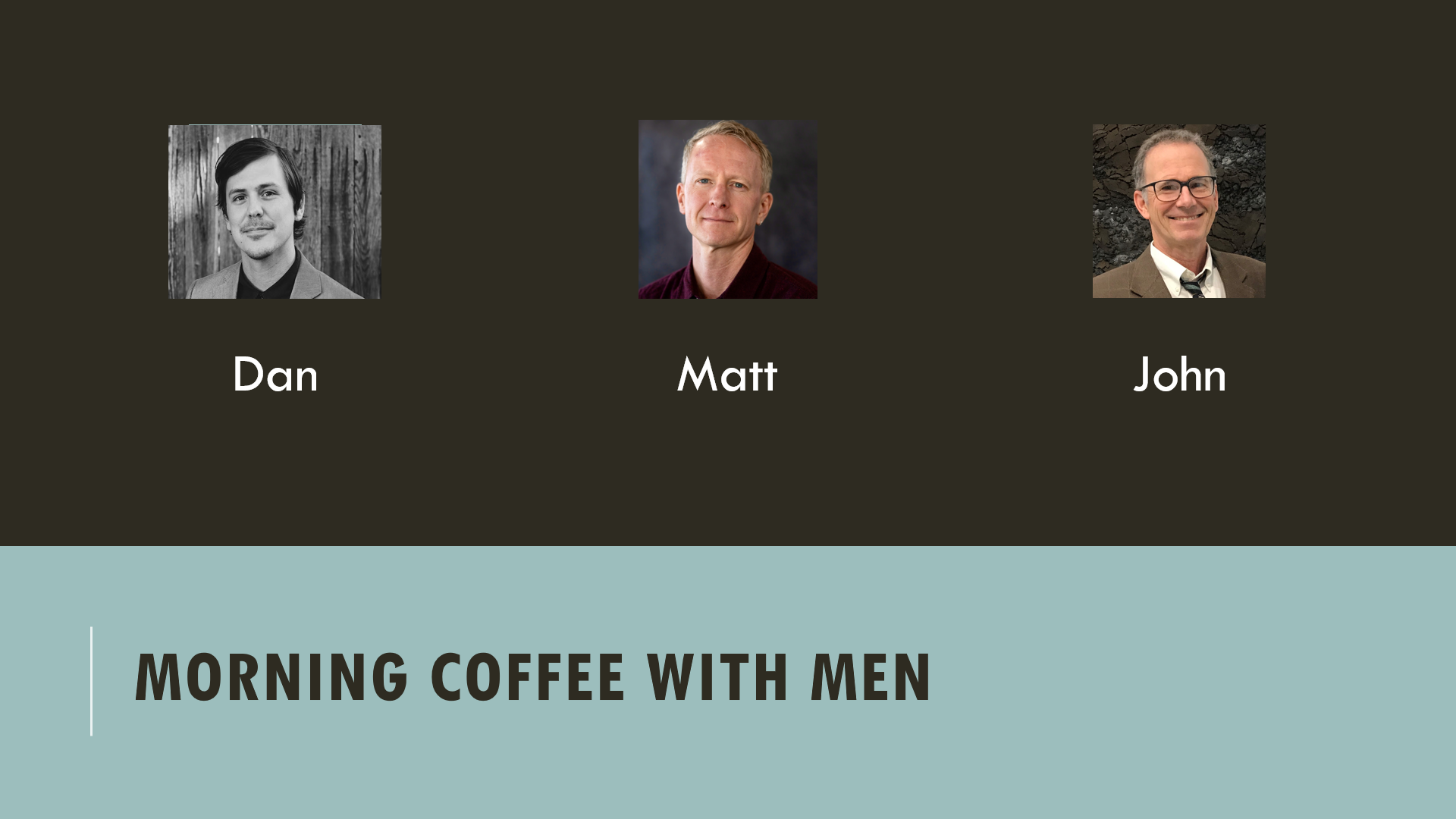
I just finished a nice session on the strengths-based approach to suicide with the NDCA. They asked for a little extra info/emphasis on working with men, because men are particularly vulnerable to suicide, and so I wove in some of the content from my ACA presentation with Matt Englar-Carlson and Dan Salois (thanks Matt and Dan!).
The ppt below is a big one because it includes an embedded video featuring a young man who articulates a number of potential suicide related drivers, including trauma (be forewarned: the content is intense and potentially triggering).
A big thanks to the NDCA organizers and to the attendees who were very impressive.
This morning I’m doing a one-hour webinar for Division 17 of the American Counseling Association. The focus is on how we can do suicide assessment, treatment, and prevention with people from historically and currently marginalized or oppressed communities. To deal with this immense issue, it would help if we had some superpowers.
We know, from decades of sociological and psychological research that many different factors contribute to global and regional changes in suicide rates. We also know that, in general, suicide is at least in part driven by individual experiences and perceptions of high personal distress (Shneidman’s “psychache”). Researchers have also identified how poverty, racism, and factors like neighborhood safety/climate can contribute to suicidality. In our suicide book, we call these factors–factors that are typically outside of the self, but that can be internalized–as “contextual.” What follows is an excerpt on contextual factors from Suicide Assessment and Treatment Planning: A Strengths-Based Approach.
Externalizing the External
At age 82, in an interview with the Los Angeles Times (Stein, 1986), B. F. Skinner said: “I have to tell people that they are not responsible for their behavior. They’re not creating it; they’re not initiating anything. It’s all found somewhere else.”
We find Skinner’s words reassuring. All humans are influenced—to some extent—by factors outside themselves. This is not to say people are helpless victims of their environments; there are methods for coping with external stressors. But the first step, even though the stressor is obviously external, is to re-externalize it, because all too often, it’s all too easy, to internalize the external.
Coping Strategies for Toxic or Malignant Stressors
When clients are exposed to larger sociological and uncontrollable stressors, they can experience frustration, helplessness, and hopelessness. As a counselor, mostly you’re unable to change the unchangeable for your clients. Within the counseling relationship, you can express both empathy for your client’s situation, and indignation that society can be so painful and difficult to change. Depending on the counseling goals, you can provide empathy, commiseration, assistance in discerning achievable goals, learning opportunities, and advocacy or support for activism.
Empathic Commiseration
News events pertaining to racism, climate change, global pandemics, and other topics activate and agitate some clients (and counselors). When this happens, empathic commiseration is a good first step. Empathy from you can universalize client emotional reactions and help clients feel more normal. Simple statements like, “I agree. It’s so hard to watch the news” can facilitate recognition that excessive media exposure heightens feelings of helplessness and depression.
Other scenarios where clients are exposed to environmental toxicity, but unable to extricate themselves from the situation, can be especially demoralizing. In such cases, brainstorming about how to mobilize community resources, how to gain access to safe spaces, and how to engage in self-advocacy can be important and empowering. As with goal-setting in other dimensions, helping clients evaluate their own behaviors and the factors over which they have control, may mitigate frustration. Having you to resonate with their frustration and show compassion is crucial.
Discernment and Goal-Setting
People associated with Alcoholics Anonymous are familiar with Richard Neibauer’s (1932) serenity prayer: God, grant me the serenity to accept the things I cannot change, courage to change the things I can, and wisdom to know the difference. Similar guidance comes from Shantideva, an 8th century Indian Buddhist Scholar, who put it this way: If there’s a remedy when trouble strikes, what reason is there for dejection? And if there is no help for it, what use is there in being glum? (Shantideva, The way of the Bodhisattva, p. 130). Clients who are religious or spiritually oriented may find particular comfort and insight in the words of Neibauer or Shantideva.
Yet another version of the Serenity Prayer comes from 20th century Philosopher W. W. Bartley. Bartley took a break from writing about philosophical rationalism, to put the message of the Serenity Prayer into a Mother Goose nursery rhyme format:
For every ailment under the sun
There is a remedy, or there is none;
If there be one, try to find it;
If there be none, never mind it.
When it comes to helping clients deal with complex contextual difficulties, these prayers or philosophies can be a good place to start, both for professionals, and for clients. Recognizing and accepting that some problems in life are unchangeable can bring solace. Trying to change that which is unchangeable generally fuels unhappiness.
The developers of mindfulness-based cognitive therapy (MBCT; Segal, Williams, & Teasdale, 2013) put their own brain-based 21st century spin on the Serenity Prayer. To summarize, they say the brain has two basic modes of functioning. The first mode is problem-solving. The brain is quite good at problem-solving. But some problems are unsolvable. When faced with insoluble problems, rather than letting go of the problem-solving process, the brain naturally persists, relentlessly continuing to problem-solve, ruminate, and chew on old ideas and failures. Anxiety and fear escalates. If the brain gets hooked on unsolvable problems, it can take clients down into bottomless rabbit-holes and exacerbate emotional discomfort.
What about that second basic brain modality? Mindfulness practitioners say that engaging the second mode can unhitch our brains from the out-of-control problem-solving train. The second brain modality operates on a less natural principle: The principle of acceptance. MBCT practitioners emphasize shifting into noticing, or nonjudgmental acceptance. Although the brain is capable of intermittent nonjudgmental acceptance, shifting into that modality is tough. Most clients can’t make that switch in the moment. That’s okay. Accepting failure to switch into nonjudgmental mindfulness is part of mindful acceptance. Coaching clients to make efforts at mindfulness and then to accept their failings and inadequacies might facilitate client self-acceptance and grow mindful parts of the brain, like the insula (Haase et al., 2016). Nonjudgmental acceptance requires regular practice. No one ever gets it right all the time.
Opportunity Ameliorates
James Garbarino (2001) wrote: “Stress accumulates; opportunity ameliorates” (p. 361). Within the trauma literature, it’s clear that toxic stress increases illness (Shern et al., 2016); it’s also clear that providing traumatized youth and adults with physical, social, and academic opportunities mitigates trauma and increases health. In part, your role with clients who have experienced trauma and who are chronically reactivated by socio-political events, is to assist them in finding and participating in local resources and opportunities.
Clients who are suicidal and in the midst of toxic and uncontrollable contextual factors, may feel they don’t have the time or energy for new opportunities. Like Katie from chapter 5, they may need support, assistance, and resources to step outside of their survival mode. Practical problems like childcare, transportation, and inaccessible community organizations can loom large. In such situations, you may need to engage in advocacy or activism to help your clients get connected to the resources and opportunities they need.
During a couple of my presentations at the ACA conference in Toronto (pictured above) I wasn’t able to fit in some short demonstration videos. To address my time management problems, I’m posting links to them here, along with a short description. Note: All of the videos for suicide demonstrations are non-scripted simulations.
Video 1: An example of an opening of a session with Kennedy, a 15-year-old cisgender white female with a history of suicidal ideation. Key things to watch for include how I immediately mention suicide, focus on sources of distress in Kennedy’s life, and acknowledge things I know and things I don’t know. If we think about emotional distress (aka Shneidman’s psychache) as contributing to suicidality, contemplate what you think is the driver of Kennedy’s feelings of suicidality. The link: https://www.youtube.com/watch?v=gR7YU0VrHqw&t=5s
Video 2: An example of me closing the session with Kennedy using Stanley & Brown’s (2013) Safety Planning Intervention. As always, I’m not perfect in the video, but it shows a process during which I’m trying to cover the safety planning categories in an interpersonally engaging and pleasant manner. The link: https://www.youtube.com/watch?v=jd7PM9HFDO4&t=10s
Video 3: I’m working with Chase, a 35-year-old Gay cisgender male. In this video, I try to get Chase to see a potential pattern of him being suicidal in response to bullying in the past and being interpersonally invalidated in the present. Chase dismisses my “light interpretation” with something like, “That’s the hand I was dealt.” Again, although I’m imperfect in this video, I do take the hint and shift from an abstract interpretation to a concrete assessment process I call the “Social Universe.” During that process, it becomes clear that Chase is spending too much time with “toxic” people in his life and not much time with people who accept him. Additionally, he presents as quite depressed and unable to come up with anyone “validating” and so I shift to a process called, “Building hope from the bottom up” by asking him, “Who’s the least validating or most toxic?” Chase responds pretty well to a process that starts at the bottom or most negative place.” The link: https://www.youtube.com/watch?v=UNBR3bKyE4I&t=7s
Thanks to everyone who attended the ACA conference, for being the kind of professionals who are pursuing awareness, knowledge, and skills in order to be more effective in helping others life meaningful lives. I was humbled by your engagement with the learning process.
Tomorrow morning, March 31, 2023, at 8am, I’m co-presenting with Matt Englar-Carlson and Dan Salois on suicide and happiness with men at the American Counseling Association World Conference in Toronto.
Here’s the session blurb:
Men and boys account for nearly 80% of all suicide deaths in the U.S. Factors contributing to high suicide rates include: constricted emotional expression, reluctance to seek help, firearms, alcohol abuse, and narrowly defined masculinity. In this educational session, we will use a case demonstration to illustrate suicide assessment counseling methods to help boys and men liberate themselves from narrow masculine values, while embracing alternative and meaningful paths to happiness.
If you’re in Toronto, I hope to see you there. . . and for anyone interested, here’s the Powerpoint presentation:
I’m really not sure what’s happening with WordPress, but because of tech and formatting issues, this is my third effort to post this blog. Now, I’m trying an approach that requires me to separately copy and paste each paragraph into this post. I used to be able to paste the whole document and it worked just fine. Now, if I do that, it makes all 10 paragraphs into one long paragraph and I look technologically even dumber than I am. Next month, WordPress will likely make me copy and paste the blog word by word.
You may be wondering, “How are you doing John?”
I think I’ll pass on answering that for now because WordPress is now graying out each sentence I type as soon as I press “enter.” And it’s repeating some short paragraphs and even though I delete them and they appear to be gone, when I try to publish this, the deleted paragraphs re-appear. I don’t know what any of this means other than WordPress must be angry with me because I asked them for help.
What I’ve been wanting to post is that I’m honored to be speaking several times at the American Counseling Association World Conference in Toronto next week. Here’s what’s happening. . .
Bright and early Friday morning, March 31 from 8am to 9:30am, I’ll be joined by Matt Englar-Carlson of Cal State Fullerton and Dan Salois of the University of Montana, for an educational session titled, “Men, Suicide, and Happiness: Helping Men Live Meaningful Lives.” We’ll be starting our talk by wondering why there isn’t more focus on the fact that men die by suicide at 3+ the rates of women and by wondering who gets to define what constitutes intimacy and intimate conversations among men. If you come to our talk and are not fully satisfied, you just might win an evening out getting a beer with us as we lament the unpopularity of masculine psychology. Or you might not. Life is like that.
At 1pm to 1:30pm on Friday I have the great fortune of joining Amanda Evans and Kenson Hiatt of James Madison University for a poster session titled, “Wellness and Social Justice: A Positive, Liberation-Oriented Approach.” Among the many things that are cool about this presentation is the fact that Dr. Evans has creatively combined social justice, positive psychology, and liberation psychology in ways that—as far as I know—have never been done before. Given the usual awkward nature of poster sessions, I hope you’ll drop by for some conversations about how we can integrate these important perspectives and facilitate social justice. But if you’re the type who prefers walking and studiously avoiding eye-contact with poster presenters, that works too.
From 3:30pm to 5pm on Friday, I have the privilege of offering an “Author Session” titled, “Top Tips for Weaving a Strengths-Based Approach to Suicide into Your Practice.” This session—based on our ACA book by nearly the same name, I will offer strengths-based tips about viewing suicidality as an unparalleled counseling opportunity, making your assessments therapeutic, building hope from the bottom-up, and much more. Right afterward, there will be a book-signing session . . . and I hope you’ll come to that, if only to talk to me and save me from the embarrassing situation of sitting alone next to a pile of books.
On Saturday, April 1 (and this is no joke), I’ll be presenting an education session on “Counseling for Happiness: Facilitating Client and Student Wellness.” Here’s the blurb:
Most people who seek counseling not only want to deal with their problems and distress, they also want to live happier and more meaningful lives. In this education session, the presenter will describe and demonstrate six evidence-based happiness strategies that professional counselors can use with clients and with themselves. The discussion will also address how specific happiness interventions may be more or less culturally appropriate. Using an open and collaborative experimental mindset is encouraged.
In addition to these formal appearances, I will also be hanging out at the John Wiley and Sons booth in the exhibition hall (especially on Thursday, March 30, from 2-5pm for the Expo Grand Opening). If you happen to be in Toronto for the ACA Conference, I hope to see you there.
Engaging clients in a collaborative safety planning process is an evidence-based suicide intervention. The typical gold standard for safety planning is the Safety Planning Intervention (SPI) by Stanley and Brown (2012). You can access free material on the SPI and learn how to obtain professional training for using SPIs at this link: https://suicidesafetyplan.com/
As a part of the 7.5-hour Assessment and Intervention with Suicidal Clients video published by psychotherapy.net, I did a short (about 7 minute) demonstration of safety planning with a 15-year-old cisgender female client. The demo comes at the end of the session and naturally, I already know lots of information that can be integrated into the safety plan. Nevertheless, introducing and completing the safety plan is an excellent organizing experience.
In part, safety planning emerged as an alternative to what were called “No-suicide contracts.” No suicide contracts fell out of favor in the mid-to-late 1990s, because many clients/patients viewed them as coercive and liability-dodging behaviors by clinicians, and because they focused on what NOT TO DO, instead of what clients/patients should do, when feeling suicidal. Safety planning involves proactive planning for what clients can do to effectively cope during a suicidal crisis.
Victor Yalom of psychotherapy.net has given me permission to offer this video clip to everyone as a free resource to guide and inspire you as you work to develop your skills for collaborative safety planning. You can find a glittering array of videos, including the previously mentioned, three-part 7.5 hour classic at: https://www.psychotherapy.net/ and https://www.psychotherapy.net/video/suicidal-clients-series
Reframing, as a counseling and psychotherapy intervention, involves nudging clients toward viewing their thoughts, emotions, behaviors, and life situations from a different or new perspective. Reframing is an especially popular technique among cognitive, existential, and solution-focused therapists. In the following excerpt from our book on the strengths-based approach to suicide assessment and treatment, we discuss reframing . . . and what to do when it fails.
***********************
Framing Pain and Suicidality as Evidence of a Normal Self-Care Impulse
Another reframe involves viewing suicidality as coming from a place of self-care or self-compassion. Using your own words, you might try a reframe like this:
As you talk about wanting to die, I’m struck that your wish for death also comes from your wish to feel better . . . and your wish to feel better is normal, natural, and healthy. What I’d like to do for now, is to partner with you on the healthy goal of feeling better. I need your help on this. For now, we can put your wish to die on the sidelines, and focus on feeling better. We can’t expect immediate positive results. Will you work with me to battle your pain, and little by little, to help you feel better?
This reframing message is intentionally repetitive, and almost hypnotic. The purpose is to engage with and activate the healthy part of the self that wants to feel better. When clients respond to this message, hope for positive outcomes may increase. If clients reject this reframing message, suicide risk may be high.
Framing Pain as Meaningful
Victor Frankl (1967) used reframing to address depressive symptoms in the following case.
An old doctor consulted me in Vienna because he could not get rid of a severe depression caused by the death of his wife. I asked him, “What would have happened, Doctor, if you had died first, and your wife would have had to survive you?” Whereupon he said: “For her this would have been terrible; how she would have suffered!” I then added, “You see, Doctor, such a suffering has been spared her, and it is you who have spared her this suffering; but now you have to pay for it by surviving and mourning her.” The old man suddenly saw his plight in a new light, and reevaluated his suffering in the meaningful terms of a sacrifice for the sake of his wife. (1967, pp. 15–16)
Consistent with Frankl’s existential perspective, his reframe involves viewing suffering as meaningful. If clients view suffering as meaningful, life can feel more bearable.
When Reframes Fail
Reframing and redefining client emotional distress takes many forms. But, sometimes reframes don’t fit and don’t work. Reframes may be ineffective due to: (a) cultural insensitivity, (b) symptom severity, (c) inadequate rapport or alliance, and (d) countertransference (Lenes et al., 2020; Parrow et al., 2019). When your efforts to reframe fail, clients may withdraw or become agitated and you may risk a relationship rupture (Safran & Kraus, 2014). If the reframe doesn’t fit, process the issue (e.g., “Based on your reaction, it doesn’t seem like the idea I shared fits well for you”). After listening to your client’s response, you might need to proceed with strategies for rupture repair (see Sommers-Flanagan & Sommers-Flanagan, 2017). Relationship repair might include a direct apology and further processing. For example,
I’m sorry my idea for how to think about your pain wasn’t a good fit. But I’m glad you let me know it doesn’t fit. Lots of counseling is like an experiment. Sometimes we discover something doesn’t work. If you think something doesn’t fit or work for you, I will always want to know. Thank you for telling me.
When it comes to using reframing and redefinitions, your theoretical foundation is less important than the pragmatics of finding something that works for your client. The process involves: (a) identifying a potential reframe, (b) asking clients permission to try it out; (c) sharing the reframe; (d) observing client reactions, (e) verbally checking on client reactions and goodness of fit; (f) continuing to collaboratively experiment with the reframe or collaboratively discard it as a bad idea; and (g) addressing the relationship rupture—if one occurred.
********************
If you’re interested in our suicide book, give it a Google. Given the our unique hyphenated last name, it’s not hard to find.
I’m in Helena today, learning and presenting at the Montana CBT Conference. This is a very cool event, organized by Kyrie Russ, M.A., LCPC, and including about 35 fantastic Montana professionals interested in deepening their knowledge of CBT principles and practice.
I’m presenting twice; below I’ve included links to my two sets of ppts (which may be redundant/overlapping with ppts I’ve posted here before).
Exploring the Potential of Evidence-Based Happiness
While searching for updated guidance on cross-cultural eye contact in counseling and psychotherapy (for the 7th edition revision of Clinical Interviewing), I came across a young therapist with over 1 million YouTube subscribers. She was perky, articulate, and very impressive in her delivery of almost-true information about the meaning of eye contact in counseling (from about 5 years ago). There were so many public comments on her video . . . I couldn’t possibly read or track them all. Sadly, although she waxed eloquent about trauma and eye contact, she never once mentioned culture, or how the meaning of eye contact varies based on cultural, familial, and individual factors. Part of my takeaway was her retelling a version of a John Wayne-esq sort of message wherein we should all strive to look the other person in the eye. Ugh. I’m sad we have so many perky, articulate influencers who share information that’s NOT inclusive or deep or particularly accurate. Oh well.
Curious, and TBH, perhaps a bit jealous of this therapist’s YouTube fame, I clicked on her most recent video. I discovered her in tears, describing how she needs a break, and detailing a range of symptoms that fit pretty well with major depressive disorder. Oh my. This time I felt sad for her and her life because it must have turned into a runaway train of influencer-related opportunities and demands. My jealousy of her particular type of fame evaporated.
Many therapists—including me—aren’t as good at practicing as we are preaching. Every day I try to get better and fail a little and succeed a little. Life is a marathon. Small changes can make their way into our lives and become bigger changes.
Because of our Clinical Interviewing revision, I’m saying “No” to presentation opportunities more often than usual. That’s a good thing. Setting limits and taking care of business at home is essential. However, in about one month, I’ve set aside a week for a gamut of presentations and appearances. These presentations and appearances all include some content related to positive psychology, positive coping, and how we can all live better lives in the face of challenging work. Here they are:
On Friday, November 4 at 8:30am, I’ll be doing an opening keynote address for the Montana CBT conference. The keynote is titled, “Exploring the Potential of Evidence-Based Happiness.” The whole conference looks great (12.75 CEs available). I’ve also got a break-out session from 1:15pm to 3:15pm, titled, “Using a Strengths-Based Approach to Suicide Assessment and Treatment in Your Counseling Practice.” You can register for the two-day Montana CBT conference here: https://www.eventbrite.com/e/montana-cbt-conference-registration-367811452957Helena
On Monday, November 7 at 11am in Missoula I’ll be presenting for the University of Montana Molli Program. Although in-person seats are sold-out, people can still register to attend online. https://www.missoulaevents.net/11/07/2022/the-art-science-and-practice-of-meaningful-happiness/ The presentation title is: The Art, Science, and Practice of Meaningful Happiness. Molli is the Osher Lifelong Learning Institute at UM – which focuses on educational offerings for folks 50+ years-old.






 John Sommers-Flanagan