Category Archives: Personal Reflections

The Whole Truth and Nothing But the Truth

One Wipe Charlies

This post includes psychology and politics. If you don’t like psychology or you don’t like politics, you can stop reading. If you continue reading, you should know that I’m not focusing on political ideology; I’m focusing on the corrosive effect of lies on trust, relationships, history, and the social contract between government and the people.

*******************************

I thought I was having a very bad dream.

Donald J. Trump was speaking. He said,

“Well, it turns out I’m the most — and I think most of you would agree to this — I’m the most transparent president, probably in the history of this country.” 

That was two days ago.

Yesterday, Trump summoned his staff, claimed (again) to be a stable genius (who even makes up bullshit like that?). Then he called on people to speak out in support of him in his temperamental tiff with Nancy Pelosi. Shortly thereafter he posted a spliced video designed to make Pelosi look bad.

Sadly, none of what I experienced had anything to do with an altered mental state. I was listening to the radio when Trump’s fictitious words floated into my brain. This is a big problem, not just for me. There are far too many fictitious words floating around, and far too many people having them drift into their brains, which brings me to my central point: Even though most of us would readily agree that saying or thinking or writing something doesn’t make it so, sometimes, over time and with help from others (e.g., Fox news and spliced videos), and this is the dangerous part, saying something can—and often does—make it so.

My non-dream left me with two powerful insights.

  1. Never before, probably in the history of this country, have I been more of a social constructionist.
  2. Now I know the EXACT strategy for beating Donald Trump in the upcoming presidential election.

Some of you may wonder what being a social constructionist means. Let me quote some experts:

“There are two main branches of constructive theory . . . both perspectives hold firmly to the postmodern idea that knowledge and reality is subjective. Constructivists . . . believe knowledge and reality are constructed within individuals. In contrast, social constructionists . . . believe knowledge and reality are constructed through discourse or conversation. . . . social constructionists focus on what’s happening between people as they join together to create realities (Sommers-Flanagan & Sommers-Flanagan, 2018, pp. 283-284).

Right now, as I type and as you read, we’re in the midst of a dangerous social deconstruction and reconstruction. Every morning, we awaken to new savage attacks on conventional truth. We’re facing the most chronic and pathological liar probably in the history of this country.

George Orwell might put it this way:

. . . if all others accepted the lie which the [Trump] imposed – if all records told the same tale—then the lie passed into history and became truth. ‘Who controls the past’ ran the [Trump] slogan, ‘controls the future: who controls the present controls the past’ (from the novel, 1984).

Lies corrode trust. Lies destroy relationships. Lies re-write history and shape the future. We all know this from our direct personal experiences.

But there’s a method to Trump’s madness; the method is all about using social constructionism to divide and conquer. Trump is a master at creating new realities through conversation. He’s a master at using dishonesty and the misrepresentation of facts to destroy trust, incite hatred, and gain power. Trump has a nearly reflexive capacity for steering conversations away from conventional reality and toward his subjective perspective.

Trump is engaging us all in a re-write of past, present, and future realities to meet his own narcissistic perceptions. He can’t do it alone, but he has many proponents who support his views. Big money can do that. Sometimes the mainstream media contributes too, albeit inadvertently. For example, when Rachel Martin on NPR’s Morning Edition interviewed Kristen Gillibrand, she referred to Trump as “formidable.” Her words contribute to Trump being perceived as formidable, as if that’s a constructed reality. In fact, Trump is something far less than formidable, which leads me to the recipe for Trump’s defeat.

Trump’s Achilles’ heel is his deep fear of weakness and his compensating wishes for strength, power, and ultimate authority. What this means is that Trump’s so-called strengths are also his weaknesses. To defeat Trump, we must relentlessly target his lies, his weakness, and his inadequacy.

Everything he says should be viewed through the lens of weakness. He wants to drop the mother of all bombs, mostly to compensate for his inner terrpr over being seen as weak. He insists on complete obedience from his administration because he’s too weak to cope with hearing dissent. He’s deeply afraid of being discovered as a fraud, and so he cannot share his tax returns. He must fight to resist the Mueller probe and legal efforts to get at his personal finances, because he’s not man enough to be open, honest, and forthright about who he is and how he does business. He pays off porn stars because he wants to maintain his delusion and a false cover up of who he really is . . . a man who has to pay a porn star for sex and then has to pay for her silence.

The press consistently refers to Trump as an unconventional politician. Other than his lack of political experience, governing experience, and foreign policy experience, I can’t figure out what they mean. Trump is a political caricature. He lies with abandon, buys himself out of trouble, and takes on the persona of an attack dog who attacks people whom he sees as beneath him, principally because he’s scared shitless that his inner weakling-fraud will be exposed.

A small sampling of his lies helps capture his focus.

In the beginning he mocked people with disabilities (is that what strong people do?). He was caught on tape degrading and debasing women (more strength; so much strength). He called Hillary “Crooked,” when his most dominant trait is all about being crooked. His lies are mostly about his desperation to appear strong. Often, they’re obvious projections. Projection happens when a behavior or trait of someone else stirs an impulse in you, so you end up accusing others of something that’s really about you. For example, when Trump claims Nancy Pelosi is “mess” or “crazy” what he’s really saying is “I’m a mess” and “I’m crazy.” Projection is an old-fashioned Freudian defense mechanism that thrives on oversensitivity to criticism, combined with an inability to restrain impulses to say whatever comes to mind. A simpler way of thinking about projection is that the traits of others that really disturb you, may often be your own. And so when Trump refers to little Marco Rubio and little Bob Corker and little Adam Schiff, he’s speaking of his preoccupation with their smallness of stature, but he’s also speaking of his unrestrained preoccupation with and fear of being small and weak. In every one of the preceding scenarios, Trump’s purpose was to put down individuals or groups. Think about the people you know in your life who compulsively put everyone down. Are they the strong people?

That Trump would accuse the media of being fake is another in his legion of lies and projections. Who’s fake? Let’s see, there was the fake Trump University, the fake marriages, the fake condolences that he offered to school shooting victims, the fake losses on his tax returns, the fake claims about his wealth, his fake foundation with fake and unsubstantiated charitable giving, and his fake claims of being “completely exonerated.” There are so many fake things, including his skin color, his physical examination reports, his bone spurs, and his claims of being a stable genius that it’s hard to know what’s underneath. There’s also his fake courage, the fake 91 billion in aid to Puerto Rico, fake statements about Democrats executing babies “after birth,” fake promises about Mexico paying for a border wall, fake claims that Democrats want “open borders,” fake announcements that U.S. Steel is building six new steel mills, fake claims that opioid deaths are down, and, as you know, I could go on and on into his thousands of lies.

To defeat Trump, we must attack two things.

We must attack his compulsive and manipulative dishonesty and his fake news about himself and the world. Every word he and his staff utters should be scrutinized and laid side-by-side with the truth.

We must also attack the perception that he’s anything other than a weak, pathetic, inadequate man who has to pay porn stars to get laid. We cannot ever, for the sake of truth, exonerate him for his lies. We need to pierce his armor of narcissism with the whole truth and nothing but the truth over and over again. In this defense of truth, we must not waver.

 

Op-Ed Piece — Suicide prevention in Montana: We must do better — In today’s Bozeman Daily Chronicle

Boze Coop

It’s a short piece, but given that I’m in Bozeman tomorrow evening for a public lecture on suicide and spending the day on Friday doing a day-long suicide workshop for professionals, the timing is good.

You can read the Op-Ed piece in the Chronicle: https://www.bozemandailychronicle.com/opinions/guest_columnists/suicide-prevention-in-montana-we-must-do-better/article_0607e973-2b96-500f-93ba-bf9e85f2a7a8.html

Or you can read it right here . . .

In 1973, Edwin Shneidman, widely recognized as the father of American suicidology, was asked to provide the Encyclopedia Britannica’s definition of suicide: He wrote: Suicide is not a disease (although there are those who think so); it is not, in the view of the most detached observers, an immorality (although . . . it has often been so treated in Western and other cultures).

Shneidman’s definition captured two elements of suicide that many of us still get wrong. First, suicidality is neither abnormal nor a product of a mental disorder. At one time or another, many ordinary people think about suicide. Wishing for death is a natural human response to excruciating psychological, social, or emotional distress.

Second, suicidal thoughts or acts are not moral failings. Shneidman noted that society and religion often harshly judge and marginalize anyone who experiences suicidal thoughts and feelings. People who struggle with thoughts of suicide are already feeling immense shame. Adding more shame makes people feel worse, increases the tendency toward isolation, and serves no preventative function.

If you live in Montana, you’re probably aware that news about suicide in the U.S. and suicide in Montana is nearly always bad news. By some estimates, suicide rates have risen 60% over the past 18 years, and Montana has the highest per-capita suicide rates in the nation. Although national and local efforts at suicide prevention have proliferated, these efforts haven’t stemmed the rising tide. There are many reasons for this, some of which are sociological or political and consequently not responsive to suicide prevention programming.

But, as Shneidman emphasized, we need to stop equating suicide with mental or moral weakness. Suicide prevention and intervention efforts shaped around quick, superficial questions or influenced by pathology orientations are unlikely to succeed, and in some cases, may do harm. Compassionate, collaborative, and strength-based models constitute the best path forward for improving the effectiveness of our prevention efforts. If we want people who are in suicidal crisis to open up, talk about their pain, and seek help we must make absolutely sure that we’re communicating the following message—that suicidal thoughts are natural responses to difficult life circumstances, that opening up and talking with others will be met with compassion, not judgment, and that people who seek help from others should be respected for having the strength to reach out and be vulnerable.

To help the Bozeman community learn more about a strength-based model for suicide prevention and treatment, the Big Sky Youth Empowerment Project (BYEP) is sponsoring a free public lecture on Thursday, May 16th from 6:30pm to 8:30pm in SUB Ballroom D on the campus of Montana State University. Please join me for an evening of thinking differently about suicide—with the goal of saving lives in Montana.

****************

John Sommers-Flanagan is a Professor of Counselor Education at the University of Montana, a clinical psychologist, and the author of over 100 professional publications, including eight books. He has a professional resource and opinion blog at https://johnsommersflanagan.com/


Why You Should Avoid Small Talk with God — Short visits with an honest God

Happy Mother’s Day Rita!

“Hey big fella,” I said, making small talk with my co-author–the entity commonly referred to as God in many parts of the world. “What’s your favorite name for yourself?” At that moment, one of God’s legs was flung across the valley, the other tucked up like a mountain under his stubbly chin. Wild, unruly hair […]

via Why You Should Avoid Small Talk with God — Short visits with an honest God

Spending Time with the Jackson Contractor’s Group in Big Sky

Missoula-College-Exterior_Web-Op

Have you ever looked at the Jackson Contractor’s Group (JCG) website? You should, it’s filled with statements about values, integrity, company culture, and they talk about “unapologetic authenticity of each Jackson employee.” Pretty cool. Oh yeah, and there are the many astounding projects they’ve done, like the new Missoula College Building, featured above. You can check out their website here: https://jacksoncontractorgroup.com/culture/

JCG is a company that’s all about construction. Other than being an admirer of their website, why are Rita and I hanging out with them in Big Sky, Montana?

The reason is that JCG cares about its employees. They also recognize that the construction industry has one of the highest (or the highest) rate of employee suicides in the U.S., and so they invited me to their corporate retreat to talk about suicide and suicide prevention.

While preparing for tomorrow’s talk, I discovered, among other things, that the Construction Financial Management Association lists several specific employment-related risk factors, including:

  • Tough guy culture
  • High pressure environment with a potential for failure and shame
  • Physical strain and psychological trauma
  • Travel away from family and friends
  • Stressful working hours/conditions
  • Stigma – Activities
  • Access to lethal means

I’m very impressed with JCG and honored to share time with them tomorrow. For those interested, I’m pasting a link to tomorrow’s powerpoints right here: Jackson Understanding and Preventing Suicide

The Brain-Based Truth of Donald Trump’s Social Dominance

Snowy Sunset

Although everyone is arguing with everyone else about everything—especially everything involving presidential politics, no one argues about whether Donald Trump can work a room, work up an audience, and dominate a news cycle. Love or hate him, Trump has a special talent.

But what is that talent? How can it be that despite clear evidence of Trump lying at unprecedented rates, despite the small blue wave that swept the House of Representatives this past November, and despite substantial evidence that his policies are not benefiting rural Americans, Trump’s approval ratings continue to hover at around 40%. Given his flirtation with the Russians, his legal problems with the Department of Justice and in the Southern District of New York, and his incessant outrageous and vulgar tweeting, why don’t his approval ratings dip even lower?

Perhaps even more puzzling is the apparent inability or unwillingness of previously powerful republicans to push back on Trump’s wanton disregard for family values and morality. Many of Trumps tweets are, at best, rated PG-13. The fact that Googling “bullshit” and “circle jerk” takes us to commentaries about Trump’s tweets is a testimony to his ubiquitous disrespect for whatever moral codes republicans have retreated behind.

Never mind the well-documented porn star payments, “shithole” references, and stories about bullets dipped in pig’s blood. Unless they’re still commenting on Obama, the Clintons, or other targets designed to distract from rational argument, the collective chorus of outrage among republican politicians is no louder than you’d expect from a band of Buddhists practicing mindful acceptance at a silent retreat.

Sure, Mitt Romney and a few others have occasionally (and carefully) expressed their sickened feelings. And although Bill Kristol and other #neverTrumpers have held forth—even purchasing political advertisings to counter Trump rhetoric—to date, no current republican office-holder has publicly confronted Trump and provided an alternative leadership narrative. What’s up with the formerly assertive republican leaders? Whether we’re watching blank looks from Chris Christie, John Kelly, or Rod Rosenstein, republican power brokers appear frightened, intimidated, and only a meek shadow of their former selves.

What’s the best explanation for Trump’s stable approval ratings and the continued shriveling of republican leadership? You might be inclined to consider favorable economic indicators, or the Fox News phenomenon, or some other rational explanation. But I’m leaning a different direction—toward a theory to explain the irrational.

Like all dangerous populist politicians, Trump is a master manipulator. He can bend minds like psychics bend spoons. Although many—including my father—refer to him as a run-of-the-mill con man, Trump is much more than that. Trump is no expert on the art of the deal; but he’s a wizard at the art of mass hypnosis.

Among others, two Canadian academics, Drs. Erik Woody and Henry Szechtman, have written about how mass hypnosis works. They say it involves the activation of a particular evolutionarily-important part of the brain. They’ve labeled this neural network in the brain as the “security motivation system.” Essentially, the security motivation system is an ancient part of the brain that scans for “hints, inklings, whiffs, and foreshadowings” of danger. The problem, as Woody and Szechtman put it, is that contemporary human brains are now connected to the internet, and the internet is filled with perpetual news, Facebook forwards, Russian bot activity, and political messages. Much of this instant information has hints and whiffs of danger and those hints and whiffs activate the security motivation system. The louder the call of dark, scary, danger, the more activated our collective security motivation systems become. And what do our collectively activated security motivational systems want? Action! Specifically, action leading to safety. All this can direct us to embrace politicians who offer big actions that will hypothetically protect us from danger. Woody and Szectman wrote: “. . . support for politicians promoting bold action [like building a big, impenetrable border wall] is itself an action . . . which may help” de-activate our heightened security motivation.

In contrast to Reagan’s message of the late 1970s and early 1980s, Trump’s message has been consistently about doom, gloom, and danger. His speech at the 2016 Republican National Convention was a bleak frightening portrait of America. But, in contrast to Trump’s portrait of America as under attack from Mexican rapists, Muslim terrorists, and international commerce, he simultaneously promised (and continues to promise) to make America great again with big, albeit unrealistic and unfounded, actions.

For a substantial minority of Americans, Trump is a charismatic speaker. He ramps up crowds to an emotional fever-pitch. He combines extremes. On the one hand, America is under attack from Mexicans, Muslims, and Democrats. On the other hand, he—and only he—can offer a future filled with beauty, safety, and financial success. As he speaks, he sometimes riffs like a hypnotist employing a specific hypnotic induction procedure called the “confusion technique.” When he employs this strategy, Trump’s words barely make sense. He offers a rhythmic narrative absent any real content. Take this example from the 2016 campaign trail:

You are going to be so proud of your country. Because we’re gonna turn it around, and we’re gonna start winning again! We’re gonna win so much! We’re going to win at every level. We’re going to win economically. We’re going to win with the economy. We’re gonna win with military. We’re gonna win with healthcare and for our veterans. We’re gonna win every single facet.

We’re gonna win so much, you may even get tired of winning. And you’ll say, “Please, please. It’s too much winning. We can’t take it anymore. Mr. President, it’s too much.” And I’ll say, “No, it isn’t!”

We have to keep winning. We have to win more! We’re gonna win more. We’re gonna win so much.

Ashley Feinberg of Gawker, described this verbal dispatch from Trump as: “His best Howard Dean impression if Howard Dean had been given a whole lot of cocaine and also a thesaurus with just the word “winning” followed by the word “winning” again in progressively larger fonts.” Not surprisingly, Woody and Szechtman described it differently, noting nuanced differences between the oral and written word:

Through repetition, this type of communication stays “on message,” almost to the point of caricature. More importantly, it presents no line of argument or supporting material whatever that would call for higher thought. Such communication, which can be effective in person, is similarly effective when replayed on media as video [or audio]. By contrast, it becomes ineffective in print, where its paucity of intellectual content is painfully obvious. (p. 14)

Most observers agree, Trump is best when on the stump. When it comes to governing or foreign policy or role-modeling moral behavior, Trump is less effective. On the stump Trump uses other hypnotic methods, beyond the previously mentioned confusion technique. He continually pounds away messages about current dissatisfaction, combined with an orientation to the future. Under him, future life will always be better, more beautiful, a Shangri-La for the masses. He uses the words “believe me” and “trust me” like a mantra. Even though nearly every rational person in the U.S. knows they should quickly run away whenever a salesperson (or con-man) says “trust me” Trump’s hypnotic reverie has weakened the rational mind to the point where the words believe me and trust me actually work. As Roger Cohen opined in the New York Times,

Tolstoy wrote of “epidemic suggestion” to describe those moments when humanity seems to be gripped by a mass hypnosis that no force can counter. . . . We find ourselves in such a moment.

But there is a countering force. There always has been. And there always will be.

Let’s go back to Woody and Szechtman, and their ideas about the brain’s security motivation system.

When activated, the security motivation system directs humans toward actions that enhance safety. When looking for safety, nearly always, humans follow their evolutionary noses. And where do their evolutionary noses point . . . toward the person with the most social dominance.

Think about it. Who can keep us safe? Then, think about Trump’s hulking figure looming in the background as Hillary Clinton speaks in one of the televised debates. Then, think of what he has (wealth and property) and think of what he offers in his hollow narratives (winning, beauty, and safety, so much winning).

Republican politicians are cowed like never before. They can’t match Trump’s verbal skills and hypnotic persona. They can’t match his wealth and connections. And republicans have historically been motivated by fear. Trump’s presence activates their security motivation systems. On their own, most White, male republicans fear immigration. On their own, most White, male republicans are drawn to wealth and power. For them, Trump stokes their fears and activates their security motivation system in a way that goes back to primitive human thinking: “Save yourself” . . . is the irresistible unconscious motive that weakens republicans. Open conflict with Trump is too dangerous. Alone, individual republicans don’t have the verbal or financial prowess to compete with Trump. So, they slink into the background and do what frightened people have done since the beginning of time—they follow a socially dominant and powerful leader.

The answer to the problem of Trump is simple, but not easy.

There are two roads to countering a socially dominant, hypnotically adept bully. Both roads necessarily include an alternative socially dominant discourse. How to get there? Republicans, if they can find their courage, might band together to push back against Trump. This would be risky. And the outcome is dicey.

The other road is to latch our trailer to an alternative socially dominant political figure. The hazard here is we could end up jumping from the socially dominant frying pan into the socially dominant fire. Consequently, we need to be very careful when selecting the socially forceful leader who can take on Trump and win. Perhaps of greatest importance, along with powerful messaging, to ensure safety of all Americans, our new leader needs to have two characteristics that Trump lacks and that make Trump dangerous. We need a leader who can be a team player (and not just deputize family members) and we need a leader who is able to experience and express compassion.

Methods for resisting and awakening from a hypnotic trance exist. They begin as all things begin, with awareness. Now is the time to wake up. Listen closely as I count backward from five to one. When I get to the number one, you’ll awaken, you’ll stretch, look around, and realize that finding an alternative socially dominant and yet compassionate leader is urgent.

5

4

3

2

1

You can wake up now. If you stay asleep, you face a greater danger. If you stay asleep, you may act in ways that are incompatible with your deep values. If you stay asleep, you may need forgiveness, because although you will act, you . . . will . . . know . . . not . . . what . . . you . . . do.

The Seven Secret Steps to Filling out a Perfect March Madness Bracket

IMG-4487

All this depends on how you define the words “Secret” and “Perfect.” Don’t let linguistic precision interfere with what your heart really wants. You’ve never considered these seven steps yourself, and I’m confident that doing this will help you feel blissfully perfect, albeit briefly, in our palpably imperfect world.

Step 1: Find your special magic hat. Wear your hat around the house or office for at least 10 minutes. Doing this will sync the hat with your brainwaves. Ideally, while wearing your special magic hat, you will read an article or two that includes statistical guidance on how to make great March Madness picks. Even if you don’t understand the articles, your magic hat will absorb the pertinent knowledge through a process that I’m not authorized to share.

Step 2: Find a friend or two who would like to participate with you. You may need to offer food, drinks, or money. Encourage them to wear their own special magic hat. Don’t let them wear yours. Everyone sometimes needs to set limits.

Step 3: Create a bunch of cards or slips of paper with the names of all 64 teams. Even though upsets are fun and feel good, honor reality by creating more slips of paper with the favored team names than the underdogs. For example, put in more little slips of paper with the name “Duke” than “Abilene Christian.” Also, when deciding who’s favored, go with the Vegas odds-makers. Unlike the NCAA selection committee, the Vegas odds-makers actually pay attention to which teams are better; in contrast, the NCAA committee, Ken Pomernutz, ESPN’s “Bogus Power Index” (BPI), Joe Lunaticardi, and other people interested in power, control, and attention, put more emphasis on who they thought was good before the season started, and who won games way back in November and December. Although their information might be helpful, it’s more outdated than Vegas.

Step 4: Take off your special magic hat. You might want to simultaneously bow and say your favorite Harry Potter incantation; or you can just blow on the hat like you might blow on dice. Belching on the hat will not help. Don’t do that. Don’t even think of doing that. Then, put all the small cards or slips of paper into the hat. This is a good time, if you haven’t already started, to have a drink of your favorite beverage . . . but not too many drinks of said beverage. Sit still for a few minutes with your hat filled with team names, your best friend(s) filled with joy and anticipation, your favorite glass or mug filled with your favorite beverage, and a blank copy of the March Madness brackets. This scene is essential for creating magic, miracles, madness, and the right moment. Believe me.

IMG-4490

Step 5: Begin drawing team names out of the hat. Let’s say you shout out the words, “Mona Lisa!” and reach in and pick Cincinnati. If that happens, you write Cincinnati down as beating Iowa in the first round. You should feel good about that pick since Cincinnati will be playing Iowa in Columbus, Ohio . . . sort of like a Bearcat home game, which is why you should have more “Cincinnati’s” in the hat than “Iowas.” Feel that goodness, and then put the “Cincinnati” slip to the side. When (or if) you happen to pick Iowa later, just put it aside in a separate loser pile, because you won’t need it until you put all the slips back in the hat for selecting your next bracket. Now, suppose you pick Iona before you pick North Carolina. That’s okay. Write down Iona. You need to trust me, trust the process, and trust the magic. Just remember what happened to Virginia last year. If you knew these seven steps back then, you could have gotten that pick right and you’d already be living in paradise by now.

Step 6: Continue this process until you’ve selected all 32 first round winners. If you pick any additional Cincinnati slips (or more than one of any team), just put them aside. Then, after round one ends, put all the extra “winner” slips back into the hat to start round two, while keeping any the first round “loser” slips in a separate pile outside of the magic hat. Don’t let those losers touch the magic hat (until later). Losers don’t have any magic. Don’t be a loser.

Step 7: Use the same procedure to complete round two, the sweet sixteen, the elite eight, the final four, and the national championship. Get behind the process. Say nice things to the hat. Welcome and cheer whichever slips (teams) get picked. Feel free to trash talk with your friends. Soon, everyone will be jealous of you. Don’t let that go to your head. Remember that magic likes big, beautiful hearts, not big egos

Once you’ve filled out your first bracket, put all the slips of paper back in the hat (even the losers) . . . and repeat this procedure until you’ve filled out as many brackets as you want.

If this procedure doesn’t work, clearly, you’ve done something wrong. Although I feel sad that you’re a loser who couldn’t even manage to get this magic hat thing right the first time, you shouldn’t feel bad. Also, do not contact me for a refund, especially since I just gave you the secrets of filling out a perfect March Madness bracket for free.

IMG-4491

If you don’t get a perfect bracket this time, maybe you can fix your mistakes and do the Magic Hat procedure right next year.

Good luck with that.

My Acceptance Speech for the George M. Dennison Presidential Faculty Award for Distinguished Accomplishment at the University of Montana

Dennison Award

Last Wednesday I received an award on Charter Day at the University of Montana. Getting the award was a big deal and I am humbled and happy. Unfortunately, I couldn’t be at the Charter Day event because I was presenting workshops at the National Association for School Psychologists in Atlanta. Below, is a slightly extended version of the acceptance speech that I video-recorded for the event. I’m fairly certain that the following version is more coherent than the video. What surprised me most about the whole thing (and made me feel silly) is that when I rehearsed this acceptance speech, I couldn’t make it through without crying.

********************

It’s an honor and a privilege to receive the George Dennison Presidential award for distinguished accomplishment at the University of Montana. A big thanks to Roni Johnson my department chair and Adrea Lawrence, dean of the college of education and human sciences, for their nomination.

Back in August, at the State of the University address here at the University of Montana, the theme was about how the college experience transforms lives. To give you a sense of how honored I feel about this award, I want to briefly share with you how my college and graduate school experiences have transformed my life.

I grew up knowing virtually nothing about college, except that it was where you went to play college sports . . . and that was all I wanted to do. After high school, I attended Mount Hood community college in Gresham, Oregon, to play football and baseball. At that point, the only work I had done was manual labor. I had no identity linked to being intellectually capable.

I was a mediocre college student who initially cut corners, fell asleep in class, and was terrified about speaking up in groups. Oddly, my Linebacker coach (who doubled as a ceramics and jewelry making instructor) at Mount Hood was probably the first person who helped me realize I was smart. Very quickly after meeting me he started referring to me as “the rocket scientist.” Seriously, this was the first time in my life that I thought I could do something with my brain, other than slam it into other people.

And then I went on to Oregon State University, to, of course, play football. By then I had begun feeling more comfortable in college; I was building my academic identity. The most important thing is that I had learned how to learn. I remember bragging to my best friend and roommate who was taking a large undergraduate nutrition class with me: “I’ve studied this and I know everything that could possibly be on the exam.” I told him I would be getting a perfect score on the upcoming midterm. I can still feel the experience of the professor personally handing me my paper (in a class of about 75) and whispering, “I never thought anyone would get this score.” This was all new to me. Before, all my peak experiences had to do with sports. After taking human nutrition at Oregon State University, I suddenly had a peak experiential memory related to academics.

Although I had grown more confident about my intellectual ability, I was still very uncomfortable in lecture-type classroom settings. In 4 ½ years of college I only spoke up once during a lecture class, and when I did, the professor shamed me. I felt shy, nervous, and unable to translate thoughts I had in my brain into words and sentences in front of groups. Fortunately, in my small pre-practicum and practicum classes, I had a Native American psychology professor who was amazing, encouraging, and who helped me believe in my counseling skills and abilities.

After getting my undergraduate degree at Oregon State and working a year at a psychiatric hospital, I chose the University of Montana over several other institutions, including the University of Virginia. And then, when I stepped onto campus in the fall of 1981, I found myself. I also found best friends, my wife, and in less than a year had my first publication in a shabby little journal called the New England Journal of Medicine. In a turn of events that I cannot explain, I also found my voice. My anxiety about public speaking went away. In the fall of 1982 I asked to teach Introductory Psychology; I told stories, I made jokes, I danced, and sang in my classes, and I loved it. I found my career home.

Now here I am getting an award named after former UM President George Dennison. Thank you George.

Earlier in my life I had no idea these sorts of awards existed; I never would have imagined being in the running. I never would’ve imagined being able to hang out with cool and smart people like Roni Johnson and Adrea Lawrence. I never would have imagined looking out and seeing the faces of faculty, staff, and administrators here at UM and getting to say that somehow I’ve found myself in this club, in this community, and in this Academy. Before I got here I didn’t even know academies existed. Now, I get to think of you all as friends and colleagues. This is what a college education did for me. I have loved my graduate student and faculty experiences at the University of Montana. I am grateful far beyond what I can express.

I know the words “Thank you” seem very small. I hope you know that I mean them in a very big way.

Thank you.

The End of Mental Illness, Part I

Irrigation Sunrise

For years I’ve planned to write a scintillating review of the words and phrases I now, as a wise and mature adult, refuse to use. The “c-word” (expelled in 1976) and “r-word,” (out forever in 1980), and “n-word” (never used) are notable, but they’re old and tired targets that most self-respecting people in the 21th century have also banished.

BTW, I got rid of tireless in 1988 (who doesn’t get tired, especially after the birth of a child, an all-nighter, or a long day’s work?). On a related note, I got rid of countless in the early 1980s, when, while studying statistics, it became obvious to me that everything was countable, unless you got too tired or too lazy to do the counting. But, even then it didn’t make much sense to just stop counting or to lose track and suddenly declare something countless. More than anything else, the word countless struck me as lazy. I would go with the lazy explanation for countless were it not for the fact that I also eliminated lazy from my vocabulary about 15 years ago when I read about Alfred Adler’s description of people who are lazy as not lazy, but instead people whose goals are beyond their reach and consequently, they experience discouragement (and not laziness).

More recently, I’ve grown weary of “the new brain-science” (how can it be that the media continues to refer to science from the 1990s as perpetually “new” but somehow the pleats in my pants have become so “old-fashioned” that I can no longer wear them in public?). On a related note, neurocounseling and neuropsychotherapy would be on my list for potential banishment, but because they’re new terms that people invented (along with polyvagal), purely for marketing purposes, they can’t be banished, because quite conveniently, I refuse to acknowledge their existence.

All this silly ranting about words makes me sound like a crank—even to myself. But as I get older, I find that worries over sounding like a crank are, in fact, more motivating than worrisome. Indeed, I’m embracing my intellectually snooty crankiness as evidence that I’m fully addressing the crisis inherent in Erik Erikson’s seventh psychosocial developmental stage: Generativity vs. Stagnation. Yes, that’s right, instead of stagnating, I’m cranking my generativity up to a level commensurate with my age.

In contrast to all these aforementioned banished or unacknowledged words, most people (who are otherwise reasonably intelligent) continue to use the term mental illness. As a consequence, the words mental illness have now risen to the coveted #1 spot on my billboard of eliminated words.

My preoccupation with avoiding term mental illness isn’t a news flash, as my University of Montana students would happily attest. For well over a decade, I’ve been explaining to students that I don’t use the term mental illness, and warn them, with what little roguish power I can muster, that perhaps when handing in their various papers throughout the semester, they also, at least for the time being and so as to not irritate their paper-grader, ought to follow my lead.

In my social life, whenever mental illness comes up in conversation, I like to cleverly state, “I never use the term mental illness unless I’m using it to explain why I never use the term mental illness.” This repartee typically piques the interest (or ire) of my conversational cohort, usually stimulating a question like, “Why don’t you ever use the term mental illness?”

“Wow. Thanks.” I say. “I thought you’d never ask.”

Three main cornerstones form the foundation for why I’ve made a solemn oath to stop privileging the words mental illness. But first, a tangential example.

This morning, once again, I’m awake at 3:30am, despite my plan to sleep until 7:00am. I know this awakening experience very well; I also know the label for this experience is insomnia, or, more specifically, terminal insomnia, or more casually known as, early morning awakening.

After this particular early morning awakening, I briefly engaged in meditative breathing until my thoughts crowded out the meditation. Having thoughts bubble up and crowd out meditative breathing is probably a common phenomenon, because neurotic thoughts, spiritual thoughts, existential thoughts, and nearly any thoughts at all, are nearly always far more interesting than meditative breathing.

A favorite statement among existentialists is that humans are meaning makers. As with many things existential, the appropriate response is something my teenage clients have modeled for me, “Well, duh.” Channeling my ever-present inner-teen, I want to respond to my inner-existentialist with a pithy retort like, “Yeah. Of course. Humans are meaning makers. Maybe we should talk about something even more obvious, like, we all die.”

What I find fascinating about the existential claim that humans are meaning makers is that existentialists always say it with gravity and amazement, as if being a meaning-maker is a profoundly good thing.

But, like life, meaning-making is not all good, and sometimes, not good at all. As I lay in bed along with my early morning awakening, it’s nearly impossible not to begin wondering about the meaning of the dream that woke me up (there was a broken anatomical bust of Henry David Thoreau in a small ocean-side creek at Arch Cape, Oregon); even more engaging however, is the so-called lived experience of terminal insomnia, and so my middle-of-the-night dream interpretation gets pushed aside for a more pressing question. “What’s the meaning of my regular waking in the middle of the night?” My brain, without consent, calls out this question, in an all-natural and completely unhelpful lived meaning-making experience. The explanations parade through my hippocampus: Could my awakening be purely physiological? Could it be that I missed my daily caffeine curfew by 30 minutes? Perhaps this is the natural consequence. But if so, why would I awaken now, after falling asleep as my head hit the pillow and sleeping for 4½ hours, instead of having a more easily explained experience of initial insomnia.

Of course, the most common explanation for early morning awakening is neurochemically filed in my brain and easily accessible. Without effort, I recall that terminal insomnia is a common symptom of clinical depression. I’ve known that for about 40 years. Now, by 3:45am, the various competing theories have completely crowded out my breathing meditation and will settle for nothing less than my full attention.

Is my terminal insomnia simply a product of the half-life of caffeine, or a full-bladder, or primary insomnia? Or is it something even more malignant, a biological indicator of clinical depression? Do I have a mental disorder? Although that might be the case, after briefly depressing myself with the contemplation of being depressed, I also begin refuting that hypothesis. My memory of taking an online “depression” test emerges, along with my score in the mild-to-moderate depression range. I might have believed the online questionnaire result, had it not been conveniently placed on the website of a pharmaceutical company and had it not culminated in the message, “Your score indicates you may be experiencing clinical depression. Check with your doctor. Lexapro may be right for you?”

Given that I’m absolutely certain that Lexapro isn’t right for me, the pattern analysis and search for deeper meaning breaks down here. I am a meaning-maker. I woke up at 3:30am. Now it’s 4am and I’m still awake. So what? It happens. When it does, I like to get up and write. It’s productive time. My stunning meaning-making conclusion is my usual conclusion: believing that I have a mental disorder is unproductive; in contrast, believing that I’m creatively inspired to write at 3:30am is vastly preferable and consistent with what Henry David Thoreau would want me to do in this moment.

What does all this have to do with eliminating the term mental illness from the human vocabulary?

Mental Illness Lacks a Suitable Professional Definition

Mental illness is a term without a professional or scientific foundation. Even the American Psychiatric Association doesn’t use mental illness in its latest edition of the Diagnostic and Statistical Manual of Mental Disorders (DSM-5). The World Health Organization doesn’t use it either. I pointed out this fun fact while attending a public journalism lecture at the University of Montana. I asked the journalist-speaker why she used “mental illness” when the American Psychiatric Association and World Health Organization don’t use it. Initially taken aback, she quickly recovered, explaining that she and other journalists were trying to put mental health problems on par with physical health problems. That’s not a bad rationale. Mostly I want mental and physical health parity too, but what I don’t want is an assumption that all mental health problems are physical illnesses and therefore require medical treatments. Besides, whenever people make up (or embrace) non-professional and scientifically unfounded terminology to further their goals, their goals begin to seem more personal and political and less pure. In the end, I don’t think it’s right to make up words to negatively classify a group of fellow humans.

A side note: The American Psychiatric Association and World Health Organization are not left-leaning bleeding hearts; they would happily use mental illness if they felt it justified. Back in 2000, the authors of the 4th edition of the Diagnostic and Statistical Manual explained their reasoning:

The term “disorder” is used throughout the classification, so as to avoid even greater problems inherent in the use of terms such as “disease” and “illness.” “Disorder” is not an exact term, but it is used here to imply the existence of a clinically recognizable set of symptoms or behavior associated in most cases with distress and with interference with personal functions. Social deviance or conflict alone, without personal dysfunction, should not be included in mental disorder as defined here.

Broadly, my first reason for refusing to use the term mental illness is that it’s not used in the definitive publications that define mental disorders. It’s too broad and consequently, unhelpful. If mental illness isn’t good enough for the American Psychiatric Association and the World Health Organization, it’s not good enough for me.

Mental Illness is Too Judgmental

When asked about diverse sexualities, Pope Francis summarized my second reason for not using the term mental illness. He famously responded, “Who am I to judge?” I love this message and believe it’s a good guide for most things in life. Who am I (or anyone) to judge (or label) someone as having a mental illness?

You might answer this question by recognizing that I’m a mental health professional and therefore empowered to judge whether someone has a mental disorder; I’m empowered to apply specific mental disorder labels (after an adequate assessment). Sure, that’s all true. But I also have a duty to be helpful; although the communication of a diagnostic label might be helpful for professional discourse, insurance reimbursement, and scientific research, I don’t see how it’s helpful to categorize a whole group of individuals as “the mentally ill.” Hippocrates founded medical science. His first rule was “Do no harm.” As fun and entertaining as diagnosing other people and myself may be, I’ve come to the conclusion that doing so is often more harmful and limiting than good.

Think about it this way. Would it be any LESS helpful for us to delete the words “the mentally ill” and replace them with “people with mental health issues?” I think not. But you can decide what fits for you.

To the extent that it’s helpful to individual clients or patients, I’m perfectly fine with, after an adequate collaborative assessment process, diagnosing individuals with specific mental disorders. I believe that process, when done well, can help. What I’m against is using a broad-brush to label a large group of fellow humans in a way that can be used for oppression and marginalization. Why not just say that everyone has mental health problems and that some people have bigger and harder to deal with mental health problems. As Carl Jung used to say, “We’re all in the soup together.”

Mental Illness Resists De-stigmatization

Mental illness and its proxies, mental disease and brain disease, are inherently, deeply, and irretrievably stigmatizing. I know several different national and local organizations that are explicitly dedicated to de-stigmatizing mental illness. My problems with this is that the words mental illness are already so saturated with negative meaning that they resist de-stigmatization. The words mental illness instantly and systematically shrink the chance for therapeutic change and positive human transmorgrification.

If you look back in time, you’ll find that mental illness was created by people who typically have a political or personal interest in labeling and placing individuals into a less-than, worse-than, not-as-good-as, category. The terminology of brain disease and brain-disabling conditions are even worse. What I’m wishing for are kinder, gentler, and less stigmatizing words to describe the natural human struggle with psychological, emotional, and behavioral problems. If you’ve got some, please send them my way. I need help in my tireless efforts to let go of my crankiness and embrace hope, especially when I wake up in the middle of the night.


My Incredibly Insightful Comments on Self-Disclosure in Therapy from Counseling Today Magazine

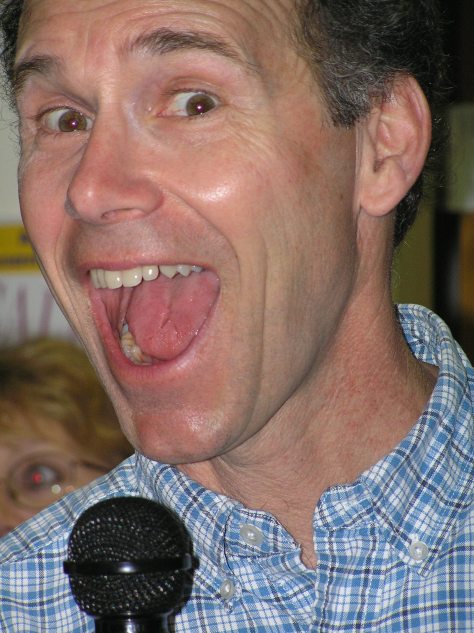
Here’s a photo of me talking too much.

OLYMPUS DIGITAL CAMERA

Now imagine that I finally realize I’m talking too much, and to control myself, I place my hand over my mouth

***************************

Along with 10 other professionals, I was asked to write 300 words on using self-disclosure in counseling. All the comments were published this morning in the Counseling Today magazine.

I liked all the commentaries. You can read them here: https://ct.counseling.org/2019/01/counselor-self-disclosure-encouragement-or-impediment-to-client-growth/

But I was especially happy to see that three of the 11 selected professionals were linked to the University of Montana. Kim Parrow (doc student) and Sidney Shaw (former doc student) both provided their insights for the article. How cool is that?

Speaking of cool, and I know this isn’t appropriate, but I really liked my own commentary. I liked it partly because it sounds pretty smart and partly because I do a nice job of making fun of myself. And so here’s my short comment about self-disclosure in counseling:

My first thought about self-disclosure is that it’s a multidimensional, multipurpose and creative counselor response (or technique) that includes a fascinating dialectic. On one hand, self-disclosure should be intentional. If counselors aren’t aware that they’re using self-disclosure and why they’re using it, then they’re probably just chatting. On the other hand, self-disclosure should be a spontaneous interpersonal act.

Self-disclosure is an act that involves revealing oneself. As Carl Rogers would likely say, if your words aren’t honest and authentic, then your words aren’t therapeutic. From my perspective — which is mostly person-centered — the purest (but not only) purpose of self-disclosure is to deepen interpersonal connection. As multicultural experts have noted, self-disclosure can facilitate trust more effectively than a blank slate, because transparency helps clients know who you are and where you stand. What’s less often discussed is that it’s impossible to not self-disclose; we’re constantly disclosing who we are through our clothing, mannerisms, informed consent form, office accoutrements and questions.

I remember working with a 19-year-old white, cisgender, heterosexual male. He told me he was diagnosed as having reactive attachment disorder. After listening for 15 minutes, I was convinced that there was no possible way he could meet the diagnostic criteria for reactive attachment disorder. First, I used an Adlerian-inspired question/disclosure: “What if it turned out you didn’t really have reactive attachment disorder?”

You might not consider a question as self-disclosure, but every question you ask doesn’t simply inquire, it simultaneously reveals your interests.

Later, I disclosed directly, using immediacy: “As I sit and listen to all your positive relationships, it makes me think you don’t have reactive attachment disorder.” Despite my interpersonally clever use of an educational intervention embedded in a self-disclosure, my client didn’t budge, countering with, “That doesn’t make any sense, because I’m diagnosed with reactive attachment disorder.”

At that point, I wanted to use self-disclosure to share with him all the ways in which I was a smarter and better health care professional than whoever had originally misdiagnosed him. Fortunately, I experienced a flash of self-awareness. Instead of using disclosure to enhance my credibility, I spontaneously disclosed, “I’ve been talking way too much. I’m just going to put my hand over my mouth and listen to you for a while.”

As I put my hand over my mouth, my client smiled. The rest of the session was — in both our opinions — a rousing success.


Peggy Bit Me

Peggy Ellen (Sommers) Lotz was born on a cool, crisp day in Vancouver, Washington. The high temperature was 45 degrees. I know that because I read it in the Farmer’s Almanac. The date was January 28, 1955. That makes today her birthday. Happy Birthday Peggy!

Peggy is my older sister (but not the oldest; that distinction goes to Gayle, who will get her story later).

According to family legend, Peggy first introduced herself to me by biting my big toe. I was a newborn, my mother was holding me. Apparently, at age 2¾, Peggy didn’t appreciate me stealing all of our mother’s attention. I very much wish this incident had been video-recorded, not just for historical posterity, but also because I know it would go viral on the internet, just like the “Charlie bit me” video. Besides, if I had the video it would also mark the only time in recorded history that Peggy ever did anything mean toward anyone else.

I’ve long since forgiven Peggy for biting me. It was easy because of who she was, is, and always will be.

Throughout my childhood and teen years, Peggy would say terrible things to me like, “I’m busting with pride over you” and “I’m you’re biggest fan.” Seriously. And she meant it. I’ve read about this thing called sibling rivalry; I just never experienced it. There’s a famous psychologist named Alfred Adler who wrote about how children who are encouraged can do nearly anything. Peggy is the most flat-out encouraging person I’ve ever met. She helped me believe in myself. And that biting incident . . . well, knowing Peggy, I probably deserved it.

Peggy is pure of heart. From age 2¾—to whatever age she’s turning today—Peggy has acted toward others with kindness. Everything she does is laced with good intentions. Teach special education children. Check. Get your Master’s degree and become a school counselor. Check. Be a force for defending children from abuse. Check. Be a fantastic mom. Check. Return to the regular classroom and teach another decade because you love teaching and you love children and they love you. Check. Take care of our mother who needs caretaking. Check.

Growing up, our mom always said Peggy would become a social worker because she had empathy for everyone, took care of injured animals, and was naturally the most amiable person in our family, on our block, and maybe on the planet. If you need something, call Peggy.

Peggy is also smart and funny. Like most of us, she’s at her funniest when she’s not even trying. Take, for example, some profound “Peggy sayings.” My favorites are, “Nobody’s gonna pull the wool over my shoulders” and “You just gotta keep your shoulder to the grindstone.”

When you see her next, you might want to ask her if she has a thing about shoulders.

She also loves it when I tell the story of how surprised she was that they didn’t make her get a new driver’s license when she moved to Pullman to go to Washington State University. Be sure to ask about that too.

Peggy, today is your birthday. You being born was a happy day in the world.

I hope you know I’ve forgiven you for the biting thing. I also hope you know how much I admire you for who you are and the kindness you spread in the world. I hope you know that I know, you are a gift to me, our family, and so many more people.

And I hope you know I’m busting with pride over you, because, as you probably already know, nobody’s pulling any wool over my shoulders.

I love you Peggy. Have a fantastic birthday. You deserve it.