In group class, we’re covering content related to group stage called “Storming.” The Coreys’, who’ve written about and led many groups, call this the “Transition” stage. During the storming or transition stage, group members start to push against or question group norms and/or the group leader’s authority. Not to be trite, but like roses, no matter what name it, the smell and tension of storming feels the same.
I’ve been waiting and watching for storming to emerge within my class. I know group process unfolds during class groups, just as it unfolds in psychoeducational, counseling, and psychotherapy groups. I thought I might ignite storming, by asking my counseling graduate students to focus on positive psychology. I did get a little push-back from students who emailed me about their “mixed” feelings about positive psychology. My response was to share that I also hold mixed feelings about positive psychology, along with mixed feelings about psychoanalytic theory, behavioral theory, CBT, feminist theory, acceptance and commitment therapy, and every other theory or approach I can think of.
This past week an ever-so-minor edge of a storm found its way into class. After class started, one student expressed negative feelings about a reading I’d assigned, noting that she thought the article was “shaming” to mandated clients. As often occurs with storming, I had an immediate and complex emotional and impulse-ridden response. Rather than acting on my emotions or defending the reading, I managed to welcome the critique. When I say “managed” I mean to communicate that IMHO, welcoming critiques is not easy, and maybe not natural. A few minutes later, I acknowledged that although I wished everyone would love all the class readings, I also wanted people to feel they had permission to not love the readings and speak openly about their opinions. Later that evening, I received an email takeaway from the student who didn’t like the reading. As you may recall, one of my group class assignments is for students to email me two takeaways in the days following class. Because she expressed what I want to communicate better than I can, here’s her email (shared with her permission).
Hey John,
My biggest takeaway from today was watching your modeling of working with storming, both with myself and [with another student]. The way that you allowed for expression of our feelings, were vulnerable with your own, and then used the material to create more conversations, norms, etc., was really helpful to see. I also want to share on this topic that when my oldest kiddo and I were talking this morning about what our days were looking like, I was talking to her about my feelings about an article we read for class that I didn’t agree with, and that I was going to bring it up in class. And her response was, “You’re going to tell your professor that?!?!” She was shocked that I felt like I could say that in class, and I wanted to thank you for creating a space where I felt like that was alright.
My other takeaway is your quote from class today, “We want to give people the chance to be interesting.” I think there are so few opportunities that people have to be seen and heard by others in a way that is meaningful. Coupled with the big, sort of inherent opportunity as a group leader to take up ‘too much space,’ your advice feels like a really important nugget that I want to take with me into leading groups in the future.
What I love best about this email (and I love a lot of it) is my student’s anecdote about her daughter’s reaction: “You’re going to tell your professor that?!?!” And what I love best about that is—consistent with other conversations we’ve been having in class—we should not run groups like cults. As leaders, professors, administrators, clergy, and politicians, we need to be open to independence of thought and listen to unique perspectives. What I think is not the truth and what I value is not necessarily the correct moral philosophy for everyone.
Today. . . I am very happy to have handled a little storming with acceptance and openness. Tomorrow may be different. But for today, I get to feel the good feelings of being able to live my best group leader values—even if it didn’t involve me being right about anything.
Imagine the possibility of a scalable single-session intervention that has been shown to be effective with a wide range of mental health issues. In these days of widespread mental health crisis and overwhelmed healthcare and mental health providers, you might think that effective single-session interventions are a fantasy. But maybe not.
This morning, my older daughter emailed me a link to two videos from the lab of Dr. Jessica Schleider of Northwestern University. Dr. Schleider’s focus is on single-session therapeutic interventions. Although I hadn’t seen the website and videos, I was familiar with Dr. Schleider’s work and am already a big fan. Just to give you a feel for the range and potential of single-session interventions, below I’m sharing a bulleted list of titles and dates of a few of Dr. Schleider’s recent publications:
Realizing the untapped promise of single‐session interventions for eating disorders – 2023
In-person 1-day cognitive behavioral therapy-based workshops for postpartum depression: A randomized controlled trial – 2023
A randomized trial of online single-session interventions for adolescent depression during COVID-19 – 2022
An online, single-session intervention for adolescent self-injurious thoughts and behaviors: Results from a randomized trial – 2021
A single‐session growth mindset intervention for adolescent anxiety and depression: 9‐month outcomes of a randomized trial – 2018
Reducing risk for anxiety and depression in adolescents: Effects of a single-session intervention teaching that personality can change – 2016
Single-session therapy or interventions aren’t for everyone. Many people need more. However, given the current mental health crisis and shortage of available counselors and psychotherapists, having a single-session option is a great thing. As you can see from the preceding list, single-session interventions have excellent potential for effectively treating a wide range of mental health issues. Given this good news about single-session interventions, I’m now sharing with you that link my daughter shared with me: https://www.schleiderlab.org/labdirector.html
I’ve been interested in single-session interventions for many years. Just in case you’re interested, here’s a copy of my first venture into single-session research (it’s an empirical evaluation of a single-session parenting consultation intervention, published in 2007).
Humans are thinking and meaning-making beings. You can argue the opposite, but that would require thinking and meaning-making.
Somewhere around 1637, René Descartes said it this way,
“Cogito, ergo sum.”
The English translation,
“I think, therefore I am.”
Cool stuff. I wish I’d known Descartes.
After several decades of studying psychological theories, I’m ready to make my own fancy Cartesian philosophical statement about human thinking. It’s less succinct than Descartes, because, well, I’m not Descartes. Here we go.
First, in Latin (because even though I had to type the words into the Google Latin translator, using Latin makes everyone sound smarter).
“Cogito ergo sum ego possit cogitare et in tempore angustiae triumphi.”
Now, in English.
“I think therefore I am able to think myself into trouble or triumph.”
Inevitably, the more we think, the more we’re able to create personal misery. Alternatively, as we know all too well from political or romantic or employment or online relationships, we’re also quite capable of rationalizing behaviors and describing ourselves in ways that makes us feel and sound better than we are in reality. We easily and naturally think our way toward trouble and triumph.
One popular contemporary term that speaks to miserable and unhelpful thinking is “overthinking.” Overthinking refers to excessive analysis around actions or decision-making. Overthinking is usually considered a less-than-optimal style that sometimes leads to paralysis by analysis.
Unfortunately, although life is better when we avoid overthinking, “underthinking” is equally bad. Underthinking results in impulsive and thoughtless behaviors and decisions.
As if life wasn’t already hard enough, like Goldilocks, now we have to avoid overthinking and underthinking, and find just the right amount of thinking.
This brings us to our happiness activity for the week.
Think of a recent time you felt significant emotional distress. . . and then answer the following questions.
Using emotion words and a rating scale of 0-100, how would you label the emotions and sensations you experienced? [For example, “I felt anger at 80, sadness at 60, and my body was very tense and physically agitated]
Describe the situation that triggered your emotions and sensations. [For example, “I ran into my ‘ex’ at the store”]
Identify and give words to the thoughts you have in response to the situation-trigger and that contribute to your emotions-sensations [“I thought, that asshole is one cold and mean person. I hate that he/she/they looks so smug” and/or “Stupidly, I still miss him/her/they.”]
Identify and give words to different thoughts you could use to “feel” better and different behaviors you could do that would be positive coping [You could think, “I sure dodged a bullet there” and/or “I think I’ll go for a run and have a healthy salad for lunch because that always helps me feel good about myself.”]
Re-rate your emotions and re-describe your sensations after you’ve tried out your alternative thoughts and behaviors.
Hardly anyone with common sense or social skills ever argues about whether or not relationship factors are crucial to effective counseling and psychotherapy. Nevertheless, some scientists are reluctant to put relationship factors on par with counseling and psychotherapy techniques or procedures. IMHO, relationship factors are every bit as essential as so-called empirically-supported treatments.
This post is a pitch. Or it might be a pitch in a post. Either way, I am honored to share with you a hot-off-the-presses new book, titled Relationship Factors in Counseling, by Dr. Kimberly Parrow. Here’s the publisher’s link: https://titles.cognella.com/relationship-factors-in-counseling-9781793578754. The book is also available on Amazon and other booksellers.
Below, I’m pasting the Foreword to this book. Not only am I jazzed about the book, I’m also jazzed about the Foreword. You should read it. It’s really good. You’ll learn about Kimberly Parrow, as well as a bit of trivia about relationship factors that you should definitely know. I haven’t mentioned who wrote the Foreword, but I’m sure you’ll figure it out.
I first met Kimberly Parrow, before she was Dr. Kimberly Parrow, in a letter of recommendation from a psychology professor at the University of Montana. Having read well over 1,000 letters of recommendation over the years, this one imprinted in my brain. The professor wrote something like, “Kimberly Parrow is the real deal. You should admit her to master’s program in clinical mental health counseling. You will never regret it.”
We did (admit her into our master’s program . . . and our doctoral program). And we didn’t (ever regret it).
Kim Parrow was, is, and continues to be one of the most enthusiastic learners I’ve encountered. She walked onto our campus at 44-years-old, as a first-generation college student, having waited with bated breath for the money and opportunity to pursue her college degree. Nine years later she strolled off campus with her bachelor’s, master’s, and doctoral degrees. If we were Notre Dame, we’d call her a triple domer (n.b., that’s what you call people with three degrees from Notre Dame). At the University of Montana, we just call her amazing.
In one of her first doctoral classes, I introduced Kim to the concept of evidence-based relationship factors (EBRFs). She was hooked; hooked in the way that only graduate students get hooked. She was hooked by an idea. So hooked that she immediately wanted more; she wanted to write a journal article on EBRFs (so we did). She wanted to do her dissertation on EBRFs (so she did). She wanted to do extra additional trainings for practicum and internship students on EBRFs (and so she did). Kim’s attraction to EBRFs stemmed from her belief that relationships constitute the core of what’s therapeutic. As we explored EBRFs together, noting all the research supporting the idea that relationships drive counseling and psychotherapy, I came to see that Kim’s judgment was, and continues to be, practically perfect.
I’ve been reading dissertations for 30+ years. I’m embarrassed to say that I find reading most dissertations—even those written by students whom I love—drudgery. But Kim’s dissertation was electric. Page by page, she kept surprising me with new content and new learning; it was more than I expected. Kim had taken the basic knowledge and skills linked to EBRFs, contextualized them within the scientific literature, and then wrote about them in ways that inspired me to keep reading and keep learning. As she wrote more, her writing got better and better, and the content more illuminating.
About a month ago, I was unable to make it to my initial lecture for an advanced counseling theories course. I asked Kim to fill in. She quickly said yes. I offered to pay her. She quickly said no. To stick with the money theme, if I now had a dollar for every time one of my students has, since Kim’s lecture, mentioned Kim Parrow, eyes agog, and referenced the central role of relationship factors in counseling and psychotherapy, I would have many dollars. What I’m trying to say is that Kim is a natural and talented clinician-teacher. That’s a rare version of the real deal her former developmental psychology professor was trying to tell us about.
And now, a few words about this book. Kim has done what most scholars and professionals are unable to do. She has taken theoretical principles, empirical research findings, blended them with her common-sense-salt-of-the-earth style, and created a practical guide for helping counselors and psychotherapists be better. The book is aimed to slide into the educational development of practicum and/or internship students who have learned microskills and are facing their first clients. This particular point in student development is crucial; it’s a time when students sometimes lose their way as they try to make the improbable leap from microskills to counseling and psychotherapy techniques. In making that leap, they often fall prey to the urge to quickly “prove up” and “do something” with clients. In this process, they often abandon their microskills and forget about the therapeutic relationship. Kim’s overall point is this: Don’t forget about the therapeutic relationship because relationship factors are every bit as evidence-based as theory-based or research-based technical strategies. The renowned writer-researcher John C. Norcross put it this way:
Anyone who dispassionately looks at effect sizes can now say that the therapeutic relationship is as powerful, if not more powerful, than the particular treatment method a therapist is using.
The fact that therapeutic relationships are empirically supported makes Kim’s content relevant not only to students early in their clinical development, but also to all of us. Having taught this content with Kim, and to groups of professional counselors, psychologists, and social workers across the United States, I can say without hesitation that the content in this book can and will make all of us better therapists.
Kim covers 10 specific, evidence-based interactive relationship skills. What unique—and possibly the best thing about Kim’s coverage of relationship skills—is that she provides specific, actionable guidance for how to enact these 10 skills. As a preview, the 10 skills include:
Cultural humility
Congruence
Unconditional Positive Regard
Empathic Understanding
The Emotional Bond
Mutual Goal-Setting
Collaborative Therapeutic Tasks
Rupture and Repair
Countertransference Management
Progress Monitoring
In the pages that follow, you will get a taste of Kim Parrow’s relational orientation and a glimpse of the evidence supporting these 10 relationship factors as therapeutic forces that innervate counseling process. You will also experience the magic of a talented clinician-teacher. The magic—or, if you prefer, secret sauce—is Kim’s ability to make these distant intellectual relationship concepts real, practical, and actionable. To help make relationship concepts real, she has engaged several contributers (and herself) to write pedagogical break-out boxes titled, “Developing Your Skills.” Engaging with these skill development activities will, as the neuroscience fans like to say, “Change your brain” and help you develop neural pathways to enhance your relational connections.
As I write about skills and skill development, I’m aware that Carl (and Natalie) Rogers would view the reduction of his core conditions to “skills” as blasphemy. This awareness makes me want to emphasize that Kim “gets” Rogerian core conditions and does not reduce them into simple skills. Instead, she embraces the attitudinal and intentional dimensions of Rogerian core conditions, while simultaneously offering behaviors and words that counselors and psychotherapists can try on in hopes of expressing congruence, unconditional positive regard, and empathy.
I’ve had a few conversations with Derald Wing Sue over the years and he has always emphasized that culture in counseling and psychotherapy shouldn’t be relegated to a separate chapter at the end of the book—as if culture is ever a separate or standalone issue. Reading how Kim handles culture reminded me of Derald Wing Sue’s message. Instead of relegating it to the end, Kim begins with the relationship factor of cultural humility. That makes for a beautiful start. Cultural humility involves, above all else, the adoption of a non-superiority interpersonal stance. . . which is a simple and excellent anti-racist message. But Kim doesn’t stop talking about culture after Chapter 1. She does what Derald Wing Sue recommends: She integrates cultural awareness, knowledge, and skill development into the whole book. This stance—non-superiority and anti-racist—is consistent with Kim’s interpersonal style and is also the right place to start as counselors set about the journey to collaborate and co-create positive outcomes.
One of Kim’s writing goals is to offer ideas and activities that are likely to increase counselor cognitive complexity. You can see that in the two preceding paragraphs. Instead of reducing Rogerian core conditions into skills, she honors how they can become both attitudes and skills. And instead of putting culture into a silo, she spreads seeds of culture through all her chapters.
This book is a remarkable accomplishment. The language, the examples, the science, the skill development activities, and the tone, welcome readers to engage with this book, and bring the material to life. I believe if you read this book and engage in the activities, your counselor self-efficacy will grow.
For anyone who has gotten this far in reading this foreword, I have some reading tips to share. First, read this book with your heart wide open. I say this because this book is about the heart of the counselor or psychotherapist. Second, as you read, keep yourself in relationship with Kim. The book is about relational factors and the details Kim shares will not only help you in your relationships with clients, but, as she often reminded me and other people whom she cornered so she could talk to us about relational factors, these relationship factors are relevant and applicable to all relationships.
Obviously, I respect Dr. Kimberly Parrow and believe she has produced an excellent book. Obviously, I think you should read this book and do as so many of us have already done, learn about evidence-based relationship factors from someone who is a remarkably talented clinician-teacher. To paraphrase what that developmental psychology professor wrote about Kim many years ago, you should accept Kim Parrow into your personal program of learning immediately, and begin learning from her as soon as you can. You will not regret it.
All my best to you in your counseling and psychotherapy work.
What’s new about anger? Everything and nothing. You will feel angry over and over in your life. Each time it will be your familiar anger, which may come to feel old, tired, and boring. But each time it also will be new and compelling—as if you’ve been charged with energy to change the world.
Here’s one big truth about anger; it will come around again.
Here’s another: when doing anger management, it’s helpful to develop awareness of your usual triggers because if you see it coming, you may have a better chance to handle your anger in ways that are less embarrassing or destructive.
Here’s a third. This one I like to tell my clients and students: One good thing about having anger problems is that—and you can count on this—you will get many opportunities to work on your anger in the future, because it won’t be long until your anger visits you again (and again).
To summarize: Anger is repetitive; it’s good to develop self-awareness of your personal triggers; you will be presented with many opportunities to deal with your anger differently.
What follows is a slight revision of a post from seven years ago.
The speedometer reads 82 miles per hour. The numbers 8 and 2, represent to me, a reasonable speed on I-90 in the middle of Montana. Our speed limit signs read eight-zero. So technically, I’m breaking the law by two miles per hour. But the nearest car is a quarter mile away. The road is straight. Having ingested an optimal dose of caffeine, my attention is focused. All is well.
In my rear-view mirror, I notice a car slowly creeping up on me from behind. He gets a little to close to my rear bumper, and then slowly drifts into the left lane past me, lingering beside me and edging ahead. Then, with only three car lengths between us, he puts on his blinker and drifts in front of me. Now, with no other cars in sight, there’s just me and Mr. 83 mph on I-90, three car lengths apart.
An emotion rises into awareness. It’s anger, from a distance. I see it coming slowly, as if it’s in the rear-view mirror of my brain. At this distance, it’s only annoyance. I feel it and see it coming and immediately know it can go in one of three directions: My annoyance could sit there and remain unpleasant, until I tire of it. If I provide it with oxygen, could rise up and blossom into full-blown anger. Or, I can send it away, leaving room for other—more pleasant—thoughts and actions.
That’s not to say annoyance and anger is wholly unpleasant. Part of me likes it; part of me feels so damn aggrieved and indignant and justified.
All this self-awareness is fabulous. This is the Sweet Spot of Self-Control.
Without moving or speaking, “Hello anger,” I say, to myself, in my brain.
In this sweet spot, I experience expanding awareness, a pinch of energy, along with unfolding possibilities. I love this place. I love the strength and power. I also recognize anger’s best buddy, the behavioral impulse. This particular impulse (they vary of course), is itching for me to reset my cruise control to 84 mph. It’s coming to me in the shape of a desire—a desire to send the driver in front of me a clear message. Isn’t that what anger, in its behavioral manifestation, aggression, is all about—sending a message?
“You should cut him off,” the impulse says, “and let him know he should give you some space.”
The sweet spot is sweet because it includes the empowered choice to say “No thanks” to the impulse and “See you later” to anger.
Now I’m listening to a different voice in my head. It’s smaller, softer, steadier. “It doesn’t matter” the voice whispers. “Let him move on ahead. Revenge is only briefly sweet. Those who seek revenge should dig two graves.”
I smile remembering an anger management workshop. With confidence, I had said to the young men in attendance, “No other emotion shifts as quickly as anger. You can go from feeling completely justified and vindicated, but as soon as you act, you can feel overwhelmed with shame, regret, or embarrassment.”
One participant said, “Lust. Lust is like anger. One second you want something more than anything, but the next second you might wish you hadn’t.”
“Maybe so,” I said.
There are many rational reasons why acting on aggressive behavioral impulses is ill-advised. Maybe the biggest is that the man in the car wouldn’t understand my effort to communicate with him. This gap of understanding is common across many efforts to communicate. But it’s especially linked to retaliatory impulses. When angry, I can’t provide nuance in my communication; I can’t make it constructive.
The quiet voice in my brain murmurs: “You’re no victim to your impulses. You drive the car; the car doesn’t drive you.” That doesn’t make much sense. Sometimes the voice in my head speaks in analogy and metaphor. It’s a common problem. I want straight talk, but instead I get some silly metaphor from my elitist and intellectual conscience.
But here’s what I get. I get that my conscience is telling me that this sweet spot is sweet because I get to see and feel my self-control. Not only do I see my behavioral options, I get to see into the future and evaluate their likely outcomes. I get to reject poor choices and avoid negative outcomes. I’m not a victim of annoyance, anger, or aggressive impulses. I make the plan. I drive the car.
The other driver is now far ahead. I recognize that I could resurrect my anger. I choose to let it go instead.
I haven’t always let go of my anger. In my teen years I developed a temper. I had many sport-related fits of embarrassing anger. I went to psychotherapy. My therapist listened, and helped me grow my better judgment. He said, “I don’t believe in the bowel movement theory of anger control.” That was a little indirect, and interesting. We don’t have to expel it. We can sit with it. We can reflect on it. We can watch it go away. We can put it in the rear-view mirror, or let it pass us by. Using our functional frontal lobes, we can experience the joy of the Sweet Spot of Self-Control.
My anger is like an old, greedy, needy, and fickle friend. It has an all-or-nothing mentality. My anger wants attention and power, because it values power over long-term happiness.
Anger is also a source of energy; it can fuel us to be assertive, to fight injustice, to be clear on our values. Anger has its place, and is sometimes a useful partner: a partner whom we should keep in the passenger seat, never letting it get behind the wheel and drive—even on a wide-open Montana highway.
Today I’ll be online providing a 2-hour workshop titled “Evidence-Based Relationship Factors in Supervision and Practice” on behalf of the Cognitive Behavioral Institute and Geneva College. This workshop content is related to the excellent work of John Norcross, Michael Lambert, and other prominent professionals who have advocated (and researched!) the scientific truth that RELATIONSHIPS are powerful influencers of positive treatment outcomes in counseling and psychotherapy. This topic is also the focus of a forthcoming book authored by a former doc student of mine, Kimberly Parrow (more on her excellent work in a future blog).
For now, I’m posting the ppts for today’s online workshop here:
And here’s the workshop description: Counselors and psychotherapists have a long and storied history of arguing with one another over what makes therapy effective. Some say: We should teach and supervise our students to use empirically-supported treatments (i.e., procedures, as in medicine). Others say: We should teach and supervise our students to establish therapeutic relationships. Although it’s clear that specific treatments and therapeutic relationships both contribute to outcomes, when supervisors and practitioners think of empirically-supported approaches, they tend to think of manualized treatments or procedures. However, in recent years, specific relationship factors have been identified and linked to positive counseling and psychotherapy outcomes (Norcross & Lambert, 2018). These factors include: cultural humility, congruence, unconditional positive regard, empathic understanding, emotional bonds, mutual goal-setting, and more. In this workshop, participants will learn to identify, describe, and apply evidence-based relationship factors in supervision and practice. Video-clips, live demonstrations, and reflective opportunities will be used to facilitate learning.
I hope you have an excellent day and weekend wherein you are enacting as many evidence-based relationship factors as you can fit into your life!
During a couple of my presentations at the ACA conference in Toronto (pictured above) I wasn’t able to fit in some short demonstration videos. To address my time management problems, I’m posting links to them here, along with a short description. Note: All of the videos for suicide demonstrations are non-scripted simulations.
Video 1: An example of an opening of a session with Kennedy, a 15-year-old cisgender white female with a history of suicidal ideation. Key things to watch for include how I immediately mention suicide, focus on sources of distress in Kennedy’s life, and acknowledge things I know and things I don’t know. If we think about emotional distress (aka Shneidman’s psychache) as contributing to suicidality, contemplate what you think is the driver of Kennedy’s feelings of suicidality. The link: https://www.youtube.com/watch?v=gR7YU0VrHqw&t=5s
Video 2: An example of me closing the session with Kennedy using Stanley & Brown’s (2013) Safety Planning Intervention. As always, I’m not perfect in the video, but it shows a process during which I’m trying to cover the safety planning categories in an interpersonally engaging and pleasant manner. The link: https://www.youtube.com/watch?v=jd7PM9HFDO4&t=10s
Video 3: I’m working with Chase, a 35-year-old Gay cisgender male. In this video, I try to get Chase to see a potential pattern of him being suicidal in response to bullying in the past and being interpersonally invalidated in the present. Chase dismisses my “light interpretation” with something like, “That’s the hand I was dealt.” Again, although I’m imperfect in this video, I do take the hint and shift from an abstract interpretation to a concrete assessment process I call the “Social Universe.” During that process, it becomes clear that Chase is spending too much time with “toxic” people in his life and not much time with people who accept him. Additionally, he presents as quite depressed and unable to come up with anyone “validating” and so I shift to a process called, “Building hope from the bottom up” by asking him, “Who’s the least validating or most toxic?” Chase responds pretty well to a process that starts at the bottom or most negative place.” The link: https://www.youtube.com/watch?v=UNBR3bKyE4I&t=7s
Thanks to everyone who attended the ACA conference, for being the kind of professionals who are pursuing awareness, knowledge, and skills in order to be more effective in helping others life meaningful lives. I was humbled by your engagement with the learning process.
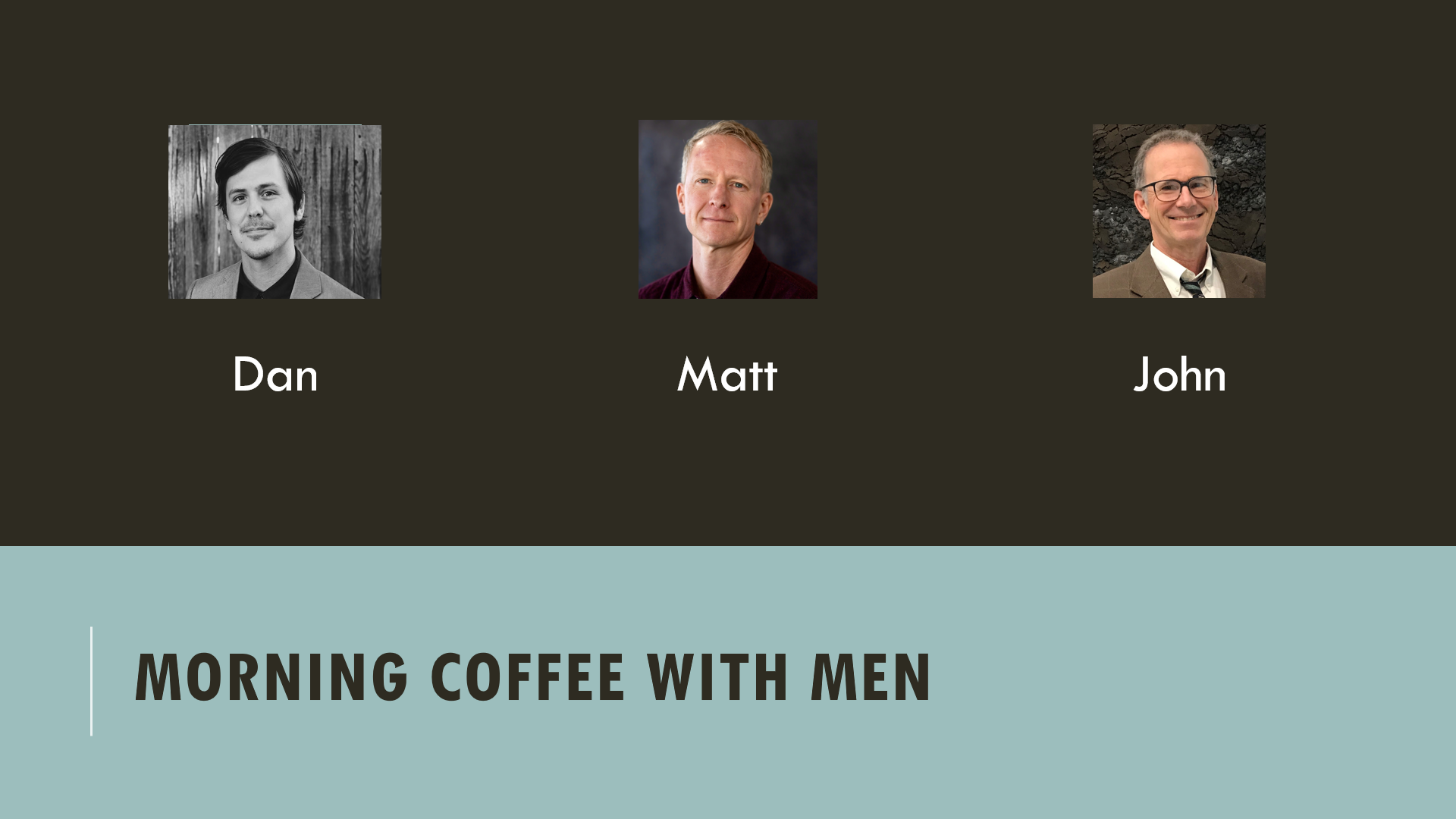
Tomorrow morning, March 31, 2023, at 8am, I’m co-presenting with Matt Englar-Carlson and Dan Salois on suicide and happiness with men at the American Counseling Association World Conference in Toronto.
Here’s the session blurb:
Men and boys account for nearly 80% of all suicide deaths in the U.S. Factors contributing to high suicide rates include: constricted emotional expression, reluctance to seek help, firearms, alcohol abuse, and narrowly defined masculinity. In this educational session, we will use a case demonstration to illustrate suicide assessment counseling methods to help boys and men liberate themselves from narrow masculine values, while embracing alternative and meaningful paths to happiness.
If you’re in Toronto, I hope to see you there. . . and for anyone interested, here’s the Powerpoint presentation:
Yesterday I had a marvelous day with a group of about 35 wonderful mental health professionals and students in Ypsilante, Michigan. I was hosted by generous and kind faculty of Eastern Michigan University. I learned about the historical significance of “Ipsy,” along with anecdotes pertaining to the Ipsy water tower on post-cards, details of which—obviously because I’m so classy and sophisticated—I will not mention here.
The weather was marginally dreadful. We worried the in-person workshop would be cancelled and replaced with Zoom. Despite the weather, some people drove 90 minutes or more to arrive, which was just one small measure of their commitment to learning and their commitment to serving youth and families in counseling and psychotherapy. Whenever I’m in a room with professionals like the group yesterday, I have renewed hope in the world and in the future. The participants were: Just. Good. People.
As is my practice, I’m posting the ppts from the workshop here:
And here’s a PG-rated image of the Ypsilante water tower.
Toward the end of the workshop I engaged two participants in an activity that involved shaking imaginary soda pop bottles and opening them. One participant had brought her five-year-old daughter for the day (because of a school closure). As her mother and the woman next to her pretended to shake their imaginary bottles, and I was saying, “Shake, shake, shake,” the five-year-old, who had been incredibly well-behaved for the preceding 8 hours, began giggling in a way that couldn’t be described as representing anything other than pure joy.
In honor of my new five-year-old friend, I encourage you all to find time to giggle this weekend. Even better, find a child to giggle with; it will be time well-spent.
And here’s a photo of me having a giggle with a young person.
To start, I should say that I generally dislike pop-psych articles and promotional efforts that include cute sayings like, you can “Train (or re-wire) your Brain.” Most of you know this about me, partly because I like to make pithy comments about how, in fact, our brains actually don’t have any wires.
Despite overuse of the “wiring” analogy, I’m all-in on the principle that our behavior influences our brain structure, function, including a vast array of neurochemicals, hormones, and yada, yada, yada. In the following excerpt from our forthcoming Clinical Interviewing text, we provide a brief scientific commentary and recommendations for what we might oversimplify as “empathy training.”
*****
Neurogenesis refers to the birth of neurons and is one of the biggest revelations in brain research. Although neurogenesis primarily occurs during prenatal brain development, humans and other mammals generate new neurons (brain cells) throughout the life span (Jenkins et al., 1990). When adult neurogenesis occurs, new neurons are integrated into existing neurocircuitry.
Over 30 years ago, researchers demonstrated that repeated tactile experiences produced functional reorganization in the primary somatosensory cortex of adult owl monkeys (Jenkins et al., 1990). This finding and subsequent research supporting neurogenesis underscore a commonsense principle: Whatever behavior you practice or repeat is likely to stimulate neural growth and strengthen skills in that area. This is our explanation and prescription for how you can become more like Carl Rogers.
Multiple brain regions are activated during an empathic experience. Kim and colleagues (2020) summarized the complexity of what’s happening in the brain during empathic or compassionate responding, “Our analysis of sixteen fMRI studies revealed activation across seven broad regions, with the largest peaks localized to the Periaqueductal Grey, Anterior Insula, Anterior Cingulate, and Inferior Frontal Gyrus” (p. 112). In a similar review, Sezer and colleagues (2022) wrote:
If we focus in (somewhat inappropriately) on a particular brain structure, the anterior insula or insular cortex, a small structure residing deep within the fissure that separates the temporal lobe from the frontal and parietal lobes, seems particularly linked to empathy experiences, self-regulation, and other compassionate counseling-type responses (Chen et al., 2022).
Compassion meditation (aka lovingkindness meditation) is also associated with neural activity and structural development (or thickening) of the insula. Individuals who engage in regular compassion meditation have thicker insula, and when they view or hear someone in distress, they show more insula-related neural activity than individuals without compassion meditation experience (Hölzel et al., 2011). Other researchers have conducted meta-analyses and written reviews indicating that several brain structures are activated during cognitive-emotional perception, regulation, and response, and the relationships among them are highly complex (Kim et al., 2020; Pernet et al., 2021).
To oversimplify a complex neurological process, it appears generally safe to conclude that compassion meditation and other human activities related to empathy may contribute in some way to the thickening of the insula and development of other brain processes that enhance empathic responsiveness.
Although our knowledge about what’s actually happening in the brain is limited, these findings imply that you should engage in rigorous training to strengthen and grow your insula—as well as some of its empathic and self-regulating buddies like the posterior cingulate cortex, dorsolateral prefrontal cortex, rostral anterior cingulate cortex region, and dorsomedial prefrontal cortex (Sezer et al., 2022). This “training regimen” might contribute to you becoming more empathic and therefore, more therapeutic. In addition to practicing mindfulness or lovingkindness meditation, such a regimen could include:
Committing to the intention of becoming a person who listens to others in ways that are accepting, empathic, and respectful.
Developing an empathic listening practice. This would involve regular interpersonal experiences where you devote time to using active listening skills described in this chapter. As you practice, it’s important to have listening with compassion as your primary goal.
Engaging in the active listening, multicultural, and empathy development activities sprinkled throughout this text, offered in your classes, and obtained from additional outside readings.
When watching videos/television/movies, reading literature, and obtaining information via technology, lingering on and experiencing emotions that these normal daily activities trigger.
Reflecting on these experiences and then… repeating… repeating… and repeating them over time and across situations
Rogers wrote in personal ways about his core conditions for counseling and psychotherapy. Contemplating his perspective is part of our prescription for developing an empathic orientation toward the variety of individuals with whom you will work.
“I come now to a central learning which has had a great deal of significance for me. I can state this learning as follows: I have found it of enormous value when I can permit myself to understand another person. The way in which I have worded this statement may seem strange to you. Is it necessary to permit oneself to understand another? I think that it is. Our first reaction to most of the statements which we hear from other people is an immediate evaluation or judgment, rather than an understanding of it. When someone expresses some feeling or attitude or belief, our tendency is, almost immediately, to feel “That’s right”; or “That’s stupid”; “That’s abnormal”; “That’s unreasonable”; “That’s incorrect”; “That’s not nice.” Very rarely do we permit ourselves to understand precisely what the meaning of [the] statement is to him [or her or them]. I believe this is because understanding is risky. If I let myself really understand another person, I might be changed by that understanding.” (Rogers, 1961, p. 18; italics in original)
As always, send me your thoughts on this content, as well as any ideas for improvement. Thanks and happy Friday!
The place to click if you want to learn about psychotherapy, counseling, or whatever John SF is thinking about.









 John Sommers-Flanagan