Category Archives: Clinical Interviewing

Suicide Myths — Part Two

From M 2019 Spring

This is part two of my “Four Suicide Myths” blog post. If you read part one, you probably noticed that it ended abruptly. Apparently, that’s how I do two-part blog posts. Thinking back, I should have added something like, “end of part one.” 

And so, as an introduction, here’s the beginning of part two . . .

Myth #2: Suicide and suicidal thinking are signs of mental illness.

Philosophers and research scientists agree: nearly everyone on the planet thinks about suicide at one time or another—even if briefly. The philosopher Friedrich Nietzsche referred to suicidal thoughts as a coping strategy, writing, “The thought of suicide is a great consolation: by means of it one gets through many a dark night.” Additionally, the rates of suicidal thinking among high school and college students is so high (estimates of 20-40% annual incidence) that it’s more appropriate to label suicidal thoughts as common, rather than a sign of deviance or illness.

Edwin Shneidman—the American “Father” of suicidology—denied a relationship between suicide and so-called mental illness in the 1973 Encyclopedia Britannica, stating succinctly:

“Suicide is not a disease (although there are those who think so); it is not, in the view of the most detached observers, an immorality (although . . . it has often been so treated in Western and other cultures).”

A recent report from the U.S. Centers for Disease Control (CDC) supported Shneidman’s perspective. The CDC noted that 54% of individuals who died by suicide did not have a documented mental disorder. Keep in mind that the CDC wasn’t focusing on people who think about or attempt suicide; their study focused only on individuals who died by suicide. If most individuals who die by suicide don’t have a mental disorder, it’s even more unlikely that people who think about suicide (but don’t act on their thoughts), meet diagnostic criteria for a mental disorder.  As one of my mentors used to say, “Having the thought of suicide is not dangerous and is not the problem.”

Truth #2: Suicidal thoughts are not—in and of themselves—a sign of illness. Instead, suicidal thoughts arise naturally, especially during times of excruciating distress.

Myth #3: Scientific knowledge about suicide risk factors and warning signs allows for the prediction and prevention of suicide.

In 1995, renowned suicidologist, Robert Litman wrote:

At present it is impossible to predict accurately any person’s suicide. Sophisticated statistical models . . . and experienced clinical judgments are equally unsuccessful. When I am asked why one depressed and suicidal patient commits suicide while nine other equally depressed and equally suicidal patients do not, I answer, “I don’t know.” (p. 135)

Litman’s comments remain true today. Part of the problem stems from the fact that suicide is what is referred to as a low base rate event. When something occurs at a low base rate, it becomes mathematically very difficult to predict. Suicide is a prime example of a low base rate event. According to the CDC, in 2017, only about 14 of every 100,000 citizens died by suicide.

Imagine you’re at the Neyland football stadium at the University of Tennessee. The stadium is filled with 100,000 fans. Your job is to figure out which 14 of the 100,000 fans will die by suicide over the next 365 days.

A good first step would be to ask everyone in the stadium the question that many suicide prevention specialists ask, “Have you been thinking about suicide?” Assuming the usual base rates and assuming that every one of the 100,000 fans answer you honestly, you might rule out 85,000 people (because they say they haven’t been thinking about suicide) and ask them to leave the stadium. Now you’re down to identifying which 14 of 15,000 will die by suicide.

For your next step you decide to do a quick screen for the diagnosis of clinical depression. Let’s say you’re highly efficient, taking only 20 minutes to screen and diagnose each of the 15,000 remaining fans. Only 50% of the 15,000 fans meet the diagnostic criteria for clinical depression.

At this point, you’ve reduced your population to 7,500 University of Tennessee fans, all of whom are depressed and thinking about suicide. How will you accurately identify the 14 fans who will die by suicide? Mostly, based on mathematics and statistics, you won’t. Every effort to do this in the past has failed. Your best bet might be to provide aggressive psychological treatment for the remaining 7,500 people. However, many of the fans will refuse treatment, including some of whom will later die by suicide. Further, as the year goes by, you’ll discover that several of the 85,000 fans who denied having suicidal thoughts, and whom you immediately ruled out as low risk, will confound your efforts at prediction and die by suicide.

To gain a broader perspective, imagine there are 3,270 stadiums across the U.S., each with 100,000 people, and each with 14 individuals who will die by suicide over the next year. All this points to the magnitude of the problem. Most professionals who try to predict and prevent suicide realize that, at best, they will help some of the people some of the time.

Truth #4: Although there’s always the chance that future research will enable us to predict suicide, decades of scientific research doesn’t support suicide as a predictable event. Even if you know all the salient suicide predictors and warning signs, odds are, in the vast majority of cases, you won’t be able to efficiently predict or prevent suicide attempts or suicide deaths.

Myth #4: Suicide prevention and intervention should focus on eliminating suicidal thoughts.

Logical analysis implies that if suicidal thoughts within an individual are eliminated, then suicide will be prevented. Why then, do the most knowledgeable psychotherapists in the U.S. advise against directly targeting suicidal thoughts in psychotherapy? The first reason is because most people who think about suicide never make a suicide attempt. But that’s only the tip of the iceberg.

After his son died by suicide, Rick Warren, a famous pastor and author, created a Youtube video titled, “Rick Warren’s Message for Those Considering Suicide.” The video summary reads, “If you have ever struggled with depression or suicide, Pastor Rick has a message for you. The pain you are experiencing will not last forever. There is hope!”

Although over 1,000 viewers clicked on the “thumbs up” sign for the video, there were 535 comments; these comments mostly pushed back on Pastor Warren’s well-intended message. Examples included:

  • Are you kidding me??? You’ve clearly never been suicidal or really depressed.
  • To say “Suicide is a permanent solution to a temporary problem” is like saying: “You couldn’t possibly have suffered long enough, even if you’ve suffered your entire life from many, many issues.”
  • This is extremely disheartening. With all due respect. Pastor, you just don’t get it.

Pastor Rick isn’t alone in not getting it. Most of us don’t really get the excruciating distress, deep self-hatred, and chronic shame linked to suicidal thoughts and impulses. And because we don’t get it, most of us try to use rational persuasion to encourage individuals with suicidal thoughts to regain hope and embrace life. Unfortunately, a nearly universal phenomenon called psychological reactance helps explain why rational persuasion—even when well-intended—rarely makes for an effective intervention.

While working with chronically suicidal patients for over two decades, Dr. Marsha Linehan of the University of Washington made an important discovery: when psychotherapists try to get their patients to stop thinking about suicide, the opposite usually happens—the patients become more suicidal.

Linehan’s discovery has played out in my clinical practice. Nearly every time I’ve actively pushed clients to stop thinking about suicide—using various psychological ploys and techniques—my efforts have backfired.

Truth #4: Most individuals who struggle with thoughts of suicide resist outside efforts to make them stop thinking about suicide. Using direct persuasion to convince people they should cheer up, have hope, and embrace life is rarely effective.

Starting Over

Individuals who are suicidal are complex, unique, and in deep distress. Judging them as ill is unhelpful. Believing that we can successfully predict and prevent suicide borders on delusional. Direct persuasion usually backfires. Letting go of the four common suicide myths might make you feel nervous. At least they provided guidance for action, right? But just like having the female on top to prevent pregnancy, clinging to unhelpful myths won’t, in the end, be effective. How do we start over? Where do we go from here?

All solutions—or at least most of them—begin with a clear understanding of the problem. As someone who has worked directly with suicidal individuals for decades, there’s no better person to start us on the journey toward a deeper understanding of suicide than Dr. Marsha Linehan.

Dr. Linehan is the developer of dialectical behavior therapy (DBT for short). DBT is widely hailed as the most effective evidence-based approach for working with chronically suicidal patients. To help her students at the University of Washington better understand the dynamics of suicide, Dr. Linehan begins her teaching with this story:

The suicidal person [is] trapped in a small, dark room with no windows and high walls (in my mind always with stark white walls reaching very, very high). The room is excruciatingly painful. The person searches for a door out to a life worth living but, alas, cannot find it. Scratching and clawing on the walls does no good. Screaming and banging brings no help. Falling to the floor and trying to shut down and feel nothing gives no relief. Praying to God and all the saints one knows brings no salvation. The only door out the individual can find is the door to death. The task of the therapist in this situation, as I always tell my clients also, is to somehow find a way to get into the room with the person, to see the person’s world from his or her point of view; to get inside the person, so to speak, and then together search again for that door to life that the therapist knows must be there.

Efforts to understand someone else’s reality are destined to fall short. You can’t always get it right, but that’s okay, because empathy is more about being with and feeling with others, than it is about perfectly understanding them. Trying to understand the inner world of others is an act of courage and compassion. Thus, our next step is to suspend judgment and begin our descent into that small, dark room with no windows.

The Clinical Interview as an Assessment Tool

Chair

The following is another excerpt from a chapter I wrote with my colleagues Roni Johnson and Maegan Rides At The Door. This excerpt focuses on ways in which clinical interviews are used as assessment tools. The full chapter is forthcoming in the Cambridge Handbook of Clinical Assessment and Diagnosis. For more (much more) information on clinical interviewing, see our textbook, creatively titled, Clinical Interviewing, now in its 6th edition. If you’re a professor or college instructor, you can get a free evaluation copy here: https://www.wiley.com/en-us/Clinical+Interviewing%2C+6th+Edition-p-9781119215585

The clinical interview often involves more assessment and less intervention. Interviewing assessment protocols or procedures may not be limited to initial interviews; they can be woven into longer term assessment or therapy encounters. Allen Frances (2013), chair of the DSM-IV task force, recommended that clinicians “be patient,” because accurate psychiatric diagnosis may take “five minutes. . .”  “five hours. . .”  “five months, or even five years” (p. 10).

Four common assessment interviewing procedures are discussed next: (1) the intake interview, (2) the psychodiagnostic interview, (4) mental status examinations, and (4) suicide assessment interviewing.

The Intake Interview

The intake interview is perhaps the most ubiquitous clinical interview; it may be referred to as the initial interview, the first interview, or the psychiatric interview. What follows is an atheoretical intake interview model, along with examples of how theoretical models emphasize or ignore specific interview content.

Broadly speaking, intake interviews focus on three assessment areas: (1) presenting problem, (2) psychosocial history, and (3) current situation and functioning. The manner in which clinicians pursue these goals varies greatly. Exploring the client’s presenting problem could involve a structured diagnostic interview, generation and analysis of a problem list, or clients free associating to their presenting problem. Similarly, the psychosocial history can be a cursory glimpse at past relationships and medical history or a rich and extended examination of the client’s childhood. Gathering information about the client’s current situation and functioning can range from an informal query about the client’s typical day to a formal mental status examination (Yalom, 2002).

Psychodiagnostic Interviewing

The psychodiagnostic interview is a variant of the intake interview. For mental health professionals who embrace the medical model, initial interviews are often diagnostic interviews. The purpose of a psychodiagnostic interview is to establish a psychiatric diagnosis. In turn, the purpose of psychiatric diagnosis is to describe the client’s current condition, prognosis, and guide treatment.

Psychodiagnostic interviewing is controversial. Some clinicians view it as essential to treatment planning and positive treatment outcomes (Frances, 2013). Others view it in ways similar to Carl Rogers (1957), who famously wrote, “I am forced to the conclusion that … diagnostic knowledge is not essential to psychotherapy. It may even be … a colossal waste of time” (pp. 102–103). As with many polarized issues, it can be useful to take a moderate position, recognizing the potential benefits and liabilities of diagnostic interviewing. Benefits include standardization, a clear diagnostic focus, and identification of psychiatric conditions to facilitate clinical research and treatment (Lilienfeld, Smith, & Watts, 2013). Liabilities include extensive training required, substantial time for administration, excess structure and rigidity that restrain experienced clinicians, and questionable reliability and validity, especially in real-world clinical settings (Sommers-Flanagan & Sommers-Flanagan, 2017).

Clinicians who are pursuing diagnostic information may integrate structured or semi-structured diagnostic interviews into an intake process. The research literature is replete with structured and semi-structured diagnostic interviews. Clinicians can choose from broad and comprehensive protocols (e.g., the Structured Clinical Interview for DSM-5 Disorders – Clinician Version; First et al., 2016) to questionnaires focusing on a single diagnosis (e.g., Autism Diagnostic Interview – Revised; Zander et al., 2017). Additionally, some diagnostic interviewing protocols are designed for research purposes, while others help clinicians attain greater diagnostic reliability and validity. Later in this chapter we focus on psychodiagnostic interviewing reliability and validity.

The Mental Status Examination

The MSE is a semi-structured interview protocol. MSEs are used to organize, assess, and communicate information about clients’ current mental state (Sommers-Flanagan, 2016; Strub & Black, 1977). To achieve this goal, some clinicians administer a highly structured Mini-Mental State Evaluation (MMSE; Folstein, Folstein, & McHugh, 1975), while others conduct a relatively unstructured assessment interview but then organize their observations into a short mental status report. There are also clinicians who, perhaps in the spirit of Piaget’s semi-clinical interviews, combine the best of both worlds by integrating a few structured MSE questions into a less structured interview process (Sommers-Flanagan & Sommers-Flanagan, 2017).

Although the MSE involves collecting data on diagnostic symptoms, it is not a psychodiagnostic interview. Instead, clinicians collect symptom-related data to communicate information to colleagues about client mental status. Sometimes MSEs are conducted daily or hourly. MSEs are commonly used within medical settings. Knowledge of diagnostic terminology and symptoms is a prerequisite to conducting and reporting on mental status.

Introducing the MSE. When administering an MSE, an explanation or role induction is needed. A clinician might state, “In a few minutes, I’ll start a more formal method of getting … to know you. This process involves me asking you a variety of interesting questions so that I can understand a little more about how your brain works” (Sommers-Flanagan & Sommers-Flanagan, 2017, pp. 580–581).

Common MSE domains. Depending on setting and clinician factors, the MSE may focus on neurological responses or psychiatric symptoms. Nine common domains included in a psychiatric-symptom oriented MSE are

  1. Appearance
  2. Behavior/psychomotor activity
  3. Attitude toward examiner (interviewer)
  4. Affect and mood
  5. Speech and thought
  6. Perceptual disturbances
  7. Orientation and consciousness
  8. Memory and intelligence
  9. Reliability, judgment, and insight.

Given that all assessment processes include error and bias, mental status examiners should base their reports on direct observations and minimize interpretive statements. Special care to cross-check conclusive statements is necessary, especially when writing about clients who are members of traditionally oppressed minority groups (Sommers-Flanagan & Sommers-Flanagan, 2017). Additionally, using multiple assessment data sources (aka triangulation; see Using multiple (collateral) data sources) is essential in situations where patients may have memory problems (e.g., confabulation) or be motivated to over- or underreport symptoms (Suhr, 2015).

MSE reports. MSE reports are typically limited to one paragraph or one page. The content of an MSE report focuses specifically on the previously listed nine domains. Each domain is addressed directly with at least one statement.

Suicide Assessment Interviewing

The clinical interview is the gold standard for suicide assessment and intervention (Sommers-Flanagan, 2018). This statement is true, despite the fact that suicide assessment interviewing is not a particularly reliable or valid method for predicting death by suicide (Large & Ryan, 2014). The problem is that, although standardized written assessments exist, they are not a stand-alone means for predicting or intervening with clients who present with suicide ideation. In every case, when clients endorse suicide ideation on a standardized questionnaire or scale, a clinical interview follow-up is essential. Although other assessment approaches exist, they are only supplementary to the clinical interview. Key principles for conducting suicide assessment interviews are summarized below.

Contemporary suicide assessment principles. Historically, suicide assessment interviewing involved a mental health professional conducting a systematic suicide risk assessment. Over the past two decades, this process has changed considerably. Now, rather than taking an authoritative stance, mental health professionals seek to establish an empathic and collaborative relationship with clients who are suicidal (Jobes, 2016). Also, rather than assuming that suicide ideation indicates psychopathology or suicide risk, clinicians frame suicide ideation as a communication of client distress. Finally, instead of focusing on risk factors and suicide prediction, mental health professionals gather information pertaining to eight superordinate suicide dimensions or drivers and then work with suicidal clients to address these dimensions through a collaborative and therapeutic safety planning process (Jobes, 2016). The eight superordinate suicide dimensions include:

  • Unbearable emotional or psychological distress: Unbearable distress can involve one or many trauma, loss, or emotionally disturbing experiences.
  • Problem-solving impairments: Suicide theory and empirical evidence both point to ways in which depressive states can reduce client problem-solving abilities.
  • Interpersonal disconnection, isolation, or feelings of being a social burden: Joiner (2005) has posited that thwarted belongingness and perceiving oneself as a burden contributes to suicidal conditions.
  • Arousal or agitation: Many different physiological states can increase arousal/agitation and push clients toward using suicide as a solution to their unbearable distress.
  • Hopelessness: Hopelessness is a cognitive variable linked to suicide risk. It can also contribute to problem-solving impairments.
  • Suicide intent and plan: Although suicide ideation is a poor predictor of suicide, when ideation is accompanied by an active suicide plan and suicide intent, the potential of death by suicide is magnified.
  • Desensitization to physical pain and thoughts of death: Fear of death and aversion to physical pain are natural suicide deterrents; when clients lose their fear of death or become desensitized to pain, suicide behaviors can increase.
  • Access to firearms: Availability of a lethal means, in general, and access to firearms, in particular, substantially increase suicide risk.

(For additional information on suicide assessment interviewing and the eight suicide dimensions, see other posts on this site).

Five Stages of a Clinical Interview – Updated


The following is an excerpt from a chapter I wrote with my colleagues Roni Johnson and Maegan Rides At The Door. The full chapter is in the Cambridge Handbook of Clinical Assessment and Diagnosis . . .

*********************************

The clinical interview is a fundamental assessment and intervention procedure that mental and behavioral health professionals learn and apply throughout their careers. Psychotherapists across all theoretical orientations, professional disciplines, and treatment settings employ different interviewing skills, including, but not limited to, nondirective listening, questioning, confrontation, interpretation, immediacy, and psychoeducation. As a process, the clinical interview functions as an assessment (e.g., neuropsychological or forensic examinations) or signals the initiation of counseling or psychotherapy. Either way, clinical interviewing involves formal or informal assessment. [For a short video on how to address client problems and goals in the clinical interview, see below]

Clinical interviewing is dynamic and flexible; every interview is a unique interpersonal interaction, with interviewers integrating cultural awareness, knowledge, and skills, as needed. It is difficult to imagine how clinicians could begin treatment without an initial clinical interview. In fact, clinicians who do not have competence in using clinical interviewing as a means to initiate and inform treatment would likely be considered unethical (Welfel, 2016).

Clinical interviewing has been defined as

a complex and multidimensional interpersonal process that occurs between a professional service provider and client [or patient]. The primary goals are (1) assessment and (2) helping. To achieve these goals, individual clinicians may emphasize structured diagnostic questioning, spontaneous and collaborative talking and listening, or both. Clinicians use information obtained in an initial clinical interview to develop a [therapeutic relationship], case formulation, and treatment plan” (Sommers-Flanagan & Sommers-Flanagan, 2017, p. 6)

A Generic Clinical Interviewing Model

All clinical interviews follow a common process or outline. Shea (1998) offered a generic or atheoretical model, including five stages: (1) introduction, (2) opening, (3) body, (4) closing, and (5) termination. Each stage includes specific relational and technical tasks.

Introduction

The introduction stage begins at first contact. An introduction can occur via telephone, online, or when prospective clients read information about their therapist (e.g., online descriptions, informed consents, etc.). Client expectations, role induction, first impressions, and initial rapport-building are central issues and activities.

First impressions, whether developed through informed consent paperwork or initial greetings, can exert powerful influences on interview process and clinical outcomes. Mental health professionals who engage clients in ways that are respectful and culturally sensitive are likely to facilitate trust and collaboration, consequently resulting in more reliable and valid assessment data (Ganzini et al., 2013). Technical strategies include authentic opening statements that invite collaboration. For example, the clinician might say something like, “I’m looking forward to getting to know you better” and “I hope you’ll feel comfortable asking me whatever questions you like as we talk together today.” Using friendliness and small talk can be especially important to connecting with diverse clients (Hays, 2016; Sue & Sue, 2016). The introduction stage also includes discussions of (1) confidentiality, (2) therapist theoretical orientation, and (3) role induction (e.g., “Today I’ll be doing a diagnostic interview with you. That means I’ll be asking lots of questions. My goal is to better understand what’s been troubling you.”). The introduction ends when clinicians shift from paperwork and small talk to a focused inquiry into the client’s problems or goals.

Opening

The opening provides an initial focus. Most mental health practitioners begin clinical assessments by asking something like, “What concerns bring you to counseling today?” This question guides clients toward describing their presenting problem (i.e., psychiatrists refer to this as the “chief complaint”). Clinicians should be aware that opening with questions that are more social (e.g., “How are you today?” or “How was your week?”) prompt clients in ways that can unintentionally facilitate a less focused and more rambling opening stage. Similarly, beginning with direct questioning before establishing rapport and trust can elicit defensiveness and dissembling (Shea, 1998).

Many contemporary therapists prefer opening statements or questions with positive wording. For example, rather than asking about problems, therapists might ask, “What are your goals for our meeting today?” For clients with a diverse or minority identity, cultural adaptations may be needed to increase client comfort and make certain that opening questions are culturally appropriate and relevant. When focusing on diagnostic assessment and using a structured or semi-structured interview protocol, the formal opening statement may be scripted or geared toward obtaining an overview of potential psychiatric symptoms (e.g., “Does anyone in your family have a history of mental health problems?”; Tolin et al., 2018, p. 3).

Body

The interview purpose governs what happens during the body stage. If the purpose is to collect information pertaining to psychiatric diagnosis, the body includes diagnostic-focused questions. In contrast, if the purpose is to initiate psychotherapy, the focus could quickly turn toward the history of the problem and what specific behaviors, people, and experiences (including previous therapy) clients have found more or less helpful.

When the interview purpose is assessment, the body stage focuses on information gathering. Clinicians actively question clients about distressing symptoms, including their frequency, duration, intensity, and quality. During structured interviews, specific question protocols are followed. These protocols are designed to help clinicians stay focused and systematically collect reliable and valid assessment data.

Closing

As the interview progresses, it is the clinician’s responsibility to organize and close the session in ways that assure there is adequate time to accomplish the primary interview goals. Tasks and activities linked to the closing include (1) providing support and reassurance for clients, (2) returning to role induction and client expectations, (3) summarizing crucial themes and issues, (4) providing an early case formulation or mental disorder diagnosis, (5) instilling hope, and, as needed, (6) focusing on future homework, future sessions, and scheduling (Sommers-Flanagan & Sommers-Flanagan, 2017).

Termination

Termination involves ending the session and parting ways. The termination stage requires excellent time management skills; it also requires intentional sensitivity and responsiveness to how clients might react to endings in general or leaving the therapy office in particular. Dealing with termination can be challenging. Often, at the end of an initial session, clinicians will not have enough information to establish a diagnosis. When diagnostic uncertainty exists, clinicians may need to continue gathering information about client symptoms during a second or third session. Including collateral informants to triangulate diagnostic information may be useful or necessary.

See the 7th edition of Clinical Interviewing for MUCH more on this topic:

https://www.wiley.com/en-sg/Clinical+Interviewing%2C+7th+Edition-p-9781119981985

Why You Should Open with a Focus on the Negative When Using a Strength-Based Suicide Treatment Model

Keno Horse

I’m working on a book manuscript tentatively titled something like: Strength-Based Suicide Assessment and Treatment. As I do more work and professional training in this area, I’m struck by the natural dialectic involved in the whole area of suicide (I’m sure Marsha Linehan discovered this long ago).

One dialectic on my mind today involves the fact that although I’m calling the approach that I’m writing about “Strength-Based,” I often (but not always) advise clinicians to open their sessions with a focus on negative distress. The following excerpt takes a bit of content from my 7.5 hour (3-part) published video with Psychotherapy.net and explains my rationale for opening a session with a focus on negative or painful emotions. You can access the 3-part training video here: https://www.psychotherapy.net/video/suicidal-clients-series

Here’s the case example:

In the following excerpt, I’m working with Kennedy, a 15-year-old girl whose parents referred her to me for suicide ideation (see https://www.psychotherapy.net/video/suicidal-clients-series, Sommers-Flanagan, 2018). Although I might meet with her parents first, or with the whole family, in this case I chose to start therapy with her as an individual. My opening exchange with Kennedy is important because, in contrast to what you might expect from a “strength-based” approach, my focus with her is distinctly negative. Pay close attention to the italicized words and [bracketed explanation].

John:  Kennedy, thank you for meeting with me. Let me just tell you what I know, okay, because I know that you’re not exactly excited to be here. But the thing is that I know that your parents have said you’ve been talking about suicide off and on for a little while, and so they wanted me to talk with you. [I already know that suicide ideation is an issue with Kennedy, so I share that immediately. If I pretend that I don’t already know about her and her situation, it will adversely affect our rapport. This is a basic principle for working with teens, but also true for adults: Lead with a statement of what you know . . . and be clear about what you don’t know.]

And I don’t know exactly what’s happening in your life. I don’t know how you’re feeling. And I would like to be of help. And so I guess if you’re even willing to talk to me, the first thing I’d love to hear would be what’s going on in your life, and what’s making you feel bad or sad or miserable or whatever it is that you’re feeling? [You’ll notice that my opening question has a negative focus. The reason I’m starting with a question that focuses on Kennedy’s negative affect and pulls for what makes her feel bad or sad or miserable is because (a) I want to start with Kennedy’s emotional distress, because that’s what brings her to therapy, and (b) I want to immediately begin linking her emotional distress to situations or experiences that trigger her distress. By doing this, I’m focusing on the presumptive primary treatment goal (according to Shneidman) for all clients who are suicidal, and that is to reduce the perceived intolerable or excruciating emotional distress. In Kennedy’s case, one of my very first treatment targets is to reduce the frequency and intensity of whatever it is that’s triggering Kennedy’s suicide ideation. We’ll get to the positive, strength-based stuff later.]

Kennedy: I think I’m just like really busy every day. I am in volleyball, and I got a lot of homework, and I don’t get a lot of sleep. So, it’s really stressful getting up early, and my parents are always fighting, and sometimes I miss the bus, and they don’t want to drive me. So, I have to call one of my older friends to drive me, and sometimes I’m late, and I just – it’s stressful, and the teachers get mad, but it’s not my fault.

John:   Yeah. So, you’ve got some stress piling up, volleyball, school, sometimes being late, and your parents arguing. Of those, which one adds the most misery into your life? [Again, my focus is purposefully on the negative. I want to know what adds the most misery to Kennedy’s life so that I can work with her and her family or her and her school to decrease the stimulus or trigger for her misery.]

Kennedy: I think being at home is the hardest. In volleyball at least I find some joy. Like I like enjoy being on the court and playing with my team. They’re there to lift me up. But like my parents, I don’t like being at home.

John:  Okay. What do you hate about it? [When Kennedy says, “I don’t like being at home” she’s not providing me with specific information about the trigger for her distress, so I continue with that focus and stay with the negative and use a word (hate) that I think is a good match for how a teenage girl might sometimes feel about being with her family.]

Kennedy: I just – they’re always fighting. Sometimes my dad will leave, and my mom cries, and I’ll cry. And he’s just mean, and she’s mean, and they’re both mean to each other. And I just lock myself in my room.

John:   Yeah. So, even as I listen to you talk, it feels like this is a – just being around them – I don’t know what the feeling is, maybe of just being alone. Like they’re fighting, and you retreat to your room. Any other feelings coming up when that happens? [Although I’m trying to tune into specific feeling words to link to what’s happening for Kennedy, I’m also being tentative and vague and wanting to collaboratively explore the right words to use with Kennedy.]

Kennedy: I don’t know. Just sometimes I don’t feel like – I don’t feel like I have a home, or my family is not there for me, and sometimes I just don’t feel like living anymore. [Kennedy uses the term “feel like” which often is a signal that she’s talking about a cognition and not an emotion. For example, “I don’t feel like I have a home” is likely more of a cognition that leaves her with an emotion like sadness. But it’s too soon to be that emotionally nuanced with Kennedy and the important part of what she’s saying is that there’s a pattern that’s something like this: her parents’ fighting triggers a cognition, that triggers an unspecified emotion, and that triggers the cognition of “I just don’t feel like living anymore.”]

John:   Yeah. So, there are times when the family stuff feels so bad, that’s when you start to think about suicide?

Kennedy: Yeah.

Using Shneidman’s (1980) model to guide my initial interactions with Kennedy leads me to focus on her immediate emotional distress and the triggers for her distress. Exploring her distress and the triggers takes me to an early treatment plan (that will likely be revised and refined).

  1. I will focus on Kennedy’s immediate distress and collaboratively work with her on a plan to reduce her distress and create more positive affect.
  2. I will focus on specific situational variables that trigger Kennedy’s suicide ideation. Part of the treatment plan is likely to involve her parents and to try to get them to stop their intense “fighting” in her presence.
  3. As I aim toward distress reduction and reducing or eliminating the distress trigger, I will keep in mind that—like most teenagers—it may be very difficult for me to get Kennedy to agree to let me work directly with her parents on their fighting. Getting Kennedy on board for an intervention with her parents will test my therapeutic and relational skills.

While I’m working on this next book, I’ll be posting excerpts like this. As always, I would love your feedback and input on this content. Please post comments here, or email me directly at: john.sf@mso.umt.edu.

Check out a new “Strengths-Based Suicide Assessment” continuing education course

From M 2019 Spring

This past month I worked on revising our Suicide Assessment chapter from our Clinical Interviewing (6th edition, 2017) textbook so it could function as a stand-alone continuing education course. The continuing education course is finished and now available online.

The Learning Objectives include:

Learning Objectives

This is a beginning to intermediate level course. After completing this course, you will be able to:

  • Explore your own personal reactions to suicide and identify four clinician self-care strategies.
  • Discuss and debunk four common and unhelpful myths about suicide.
  • Describe evidence-based risk/protective factors, warning signs, and cultural issues and how they can be used to deepen empathic understanding of suicidal clients.
  • Identify components of suicide theory that contribute to and guide suicide assessment.
  • Provide a comprehensive suicide assessment interview based on a social constructionist model.
  • Engage in decision-making with suicidal clients.

If you’re interested, here’s a link to the list of courses on ContinuingEdCourses.Net, with the Suicide Assessment course at the top of the list: http://www.continuingedcourses.net/active/courses/courses.php

And here’s a link that takes you deeper . . . all the way to the brand new 3 hour course, go here (I think you can read it for free and only have to pay to take the quiz and get CE credits): Suicide Assessment For Clinicians: A Strength-Based Model

Of course, if you’re interested in a three-part (7.5 hours total) continuing education video experience, here’s your link to Psychotherapy.net: https://www.psychotherapy.net/video/suicidal-clients-series

Have a great day . . . and keep on learning!


What is Motivational Interviewing? A brief description and demonstration video

The following content is adapted from Clinical Interviewing (6th ed., 2017).

********************************

In their 2013 edition of Motivational Interviewing, Miller and Rollnick offer “Layperson’s,” Practitioner’s,” and “Technical” definitions of MI.  For practitioners, Motivational interviewing is:

. . . a person-centered counseling style for addressing the common problem of ambivalence about change. (p. 29)

As a person-centered approach to therapy, MI relies substantially on four central listening skills, referred to as OARS (open questions, affirming, reflecting, and summarizing). MI is designed to help clients change from less healthy to more healthy behavior patterns. However, consistent with PCT, MI practitioners don’t interpret, confront, or pressure clients in any way. Instead, they use listening skills to encourage clients to talk about reasons for engaging in healthy or positive behaviors.

Moving Away From Confrontation and Education

In his research with problem drinkers, William R. Miller was studying the efficacy of behavioral self-control techniques. To his surprise, he found that structured behavioral treatments were no more effective than an encouragement-based control group. When he explored the data for an explanation, he found that regardless of treatment protocol, therapist empathy ratings were the strongest predictors of positive outcomes at 6 months (r = .82), 12 months (r = .71), and 2 years (r = .51; W. R. Miller, 1978; W. R. Miller & Taylor, 1980). Consequently, he concluded that positive treatment outcomes with problem drinkers were less related to behavioral treatment and more related to reflective listening and empathy. He also found that active confrontation and education generally triggered client resistance. These discoveries led him to develop motivational interviewing (MI).

Miller met Stephen Rollnick while on sabbatical in Australia in 1989. Rollnick was enthused about MI and its popularity in the UK. Miller and Rollnick began collaborating and subsequently published the first edition of Motivational Interviewing in 1991. Rollnick is credited with identifying client ambivalence as a central focus for change (Jones-Smith, 2016, p. 320).

Client Ambivalence

Client ambivalence is a primary target of MI. Miller and Rollnick (2013) have consistently noted that ambivalence is a natural part of individual decision-making. They wrote: “Ambivalence is simultaneously wanting and not wanting something, or wanting both of two incompatible things. It has been human nature since the dawn of time” (2013, p. 6).

Although MI has been used as an intervention for a variety of problems and integrated into many different treatment protocols, it was originally a treatment approach for addictions and later became popular for influencing other health-related behaviors. This focus is important because ambivalence is especially prevalent among individuals who are contemplating their personal health. Smokers, problem drinkers, and sedentary individuals often recognize they could choose more healthy behaviors, but they also want to keep smoking, drinking, or being sedentary. This is the essence of ambivalence as it relates to health behaviors. When faced with clients who are ambivalent about whether to make changes, it’s not unusual for professional helpers to be tempted to push those clients toward health. Miller and Rollnick (2013) call this the “righting reflex” (p. 10). They described what happens when well-meaning helping professionals try to nudge clients toward healthy behaviors (note that this description is an apt rationale for a person-centered approach, but that it’s also consistent with the Gestalt therapy ideas of polarizing forces within individuals):

[The therapist] then proceeds to advise, teach, persuade, counsel or argue for this particular resolution to [the client’s] ambivalence. One does not need a doctorate in psychology to anticipate [how clients are likely to respond] in this situation. By virtue of ambivalence, [clients are] apt to argue the opposite, or at least point out problems and shortcomings of the proposed solution. It is natural for [clients] to do so, because [they] feels at least two ways about this or almost any prescribed solution. It is the very nature of ambivalence. (2002, pp. 20–21)

The ubiquity of ambivalence leads to Miller and Rollnick’s (2013) foundational person-centered principle of treatment:

Ideally, the client should be voicing the reasons for change (p. 9).

MI is both a set of techniques and a person-centered philosophy. The philosophical MI perspective emphasizes that motivation for change is not something therapists should impose on clients. Change must be drawn out from clients, gently, and with careful timing. Motivational interviewers do not use direct persuasion.

The Spirit of MI

The “underlying spirit” of MI “lies squarely within the long-standing tradition of person-centered care” (Miller & Rollnick, 2013, p. 22). They identified four overlapping components that the spirit of MI “emerges” from. These include:

  • Collaboration
  • Acceptance
  • Compassion
  • Evocation

MI involves partnership or collaboration. It’s described as dancing, not wrestling. Your goal is not to “pin” the client; in fact, you should even avoid stepping on their toes. This is consistent with the first principle of person-centered therapy. The counselor and client make contact, and in that contact there’s an inherent or implied partnership to work together on behalf of the client.

Person centered (and MI) counselors de-emphasize their expertness. Miller and Rollnick refer to this as avoiding the expert trap. Expert traps occur when you communicate “that, based on your professional expertise, you have the answer to the person’s dilemma” (p. 16). In writing about collaboration, Miller and Rollnick (2013) sound very much like Carl Rogers, “Your purpose is to understand the life before you, to see the world through this person’s eyes rather than superimposing your own vision” (p.16).

Consistent with Rogerian philosophy, MI counselors hold an “attitude of profound acceptance of what the client brings” (p. 16). This profound acceptance includes four parts:

  1. Absolute Worth: This is Rogerian unconditional positive regard
  2. Accurate Empathy: This is pure Rogerian.
  3. Autonomy Support: This part of acceptance involves honoring each person’s “irrevocable right and capacity of self-direction” (p. 17)
  4. Affirmation: This involves an active search or focus on what’s right with people instead of what’s wrong or pathological about people.

In the third edition of Motivational Interviewing, Miller and Rollnick added compassion to their previous list of the three elements of MI spirit. Why? Their reasoning was that it was possible for practitioners to adopt the other three elements, but still be operating from a place of self-interest. In other words, practitioners could use collaboration, acceptance, and evocation to further their self-interest to get clients to change. By adding compassion and defining it as “a deliberate commitment to pursue the welfare and best interests of the other” Miller and Rollnick are protecting against practitioners confusing self-interest with the client’s best interests.

Evocation is somewhat unique, but also consistent with person-centered theory. Miller and Rollnick contend that clients have already explored both sides of their natural ambivalence. As a consequence, they know the arguments in both directions and know their own positive motivations for change. Additionally, they note, “From an MI perspective, the assumption is that there is a deep well of wisdom and experience within the person from which the counselor can draw” (p. 21). It’s the counselor’s job to use evocation to draw out (or evoke) client strengths so these strengths can be used to initiate and maintain change.

A Sampling of MI Techniques

One distinction between MI and classical PCT is that Miller and Rollnick (2013) identify techniques that practitioners can and should use. These techniques are generally designed to operate within the spirit of MI and to help clients engage in change talk instead of sustain talk. Change talk is defined as client talk that focuses on their desire, ability, reason, and need to change their behavior, as well as their commitment to change.  Sustain talk is the opposite; clients may be talking about lack of desire, ability, reason, and need to change. Overall, researchers have shown that clients who engage in more MI change talk are more likely to make efforts to enact positive change.

MI appears simple, but it’s a complicated approach and challenging to learn (Atkinson & Woods, 2017). Miller and Rollnick (2013) have noted that having a solid foundation of person-centered listening skills makes learning MI much easier. The following content is only a sampling of MI techniques.

MI practitioners use techniques from the OARS listening skills. In particular, there’s a strong emphasis on skillful and intentional use of reflections, instead of questions or directives. Here are examples.

Simple reflections stick very closely to what the client said.

Client: I’ve just been pretty anxious lately.

Simple Reflection: Seems like you’ve been feeling anxious.


Client: Being sober sucks.

Simple Reflection: You don’t like being sober.

Simple reflections have two primary functions. First, they convey to clients that you’ve heard what they said. This usually enhances rapport and interpersonal connection. Second, as you provide a simple reflection, it lets clients hear what they’ve said. Hearing their words back—from the outside in—can be illuminating for clients.

Complex reflections add meaning, focus, or a particular emphasis to what the client said.

Client: I haven’t had an HIV test for quite a while.

Complex reflection: Getting an HIV test has been on your mind.


Client: I only had a couple drinks. Even when I got pulled over, I didn’t think I was over the limit.

Complex reflection: That was a surprise to you. You might have assumed “I can tell when I’m over the limit” but in this case you couldn’t really tell.

Complex reflections go beyond the surface and make educated guesses about what clients are thinking, feeling, or doing. Clients tend to talk more and get deeper into their issues when MI therapists use complex reflections effectively. Also, if your complex reflection is correct, it’s likely to deepen rapport and might evoke change talk.

An amplified reflection involves an intentional overstatement of the client’s main message. Generally, when therapists overstate, clients make an effort to correct the reflection.

Client: I’m pissed at my roommate. She won’t pick up her clothes or do the dishes or anything.

Interviewer: You’d like to fire her as a roommate.

Client: No. Not that. There are lots of things I like about her, but her messiness really annoys me. (from Sommers-Flanagan & Sommers-Flanagan, 2017, p. 440)


Client: My child has a serious disability and so I have to be home for him.

Interviewer: You really need to be home 24/7 and have to turn off any needs you have to get out and take a break.

Client: Actually, that’s not totally true. Sometimes, I think I need to take some breaks so I can do a better job when I am home. (from Sommers-Flanagan & Sommers-Flanagan, 2017, p. 441)

Sometimes MI practitioners accidentally amplify a reflection. Other times amplification is intentional. When intentionally amplifying reflections, it’s important to be careful because it can feel manipulative.

The opposite of amplified reflection is undershooting. Undershooting involves intentionally understating what your client is saying.

Client: I can’t stand it when my mom criticizes my friends right in front of me.

Therapist: You find that a little annoying.

Client: It’s way more than annoying. It pisses me off.

Therapist: What is it that pisses you off when your mom criticizes your friends?

Client: It’s because she doesn’t trust me and my judgment. (from Sommers-Flanagan & Sommers-Flanagan, 2017, p. 441)

In this example, the therapist undershoots the client’s emotion and then follows with an open question. Clients often elaborate when therapists undershoot.

As noted, the preceding content is a small taste of MI technical strategies; if you want to become a competent MI practitioner, advanced training is needed (see Atkinson & Woods, 2017; Miller & Rollnick, 2013).

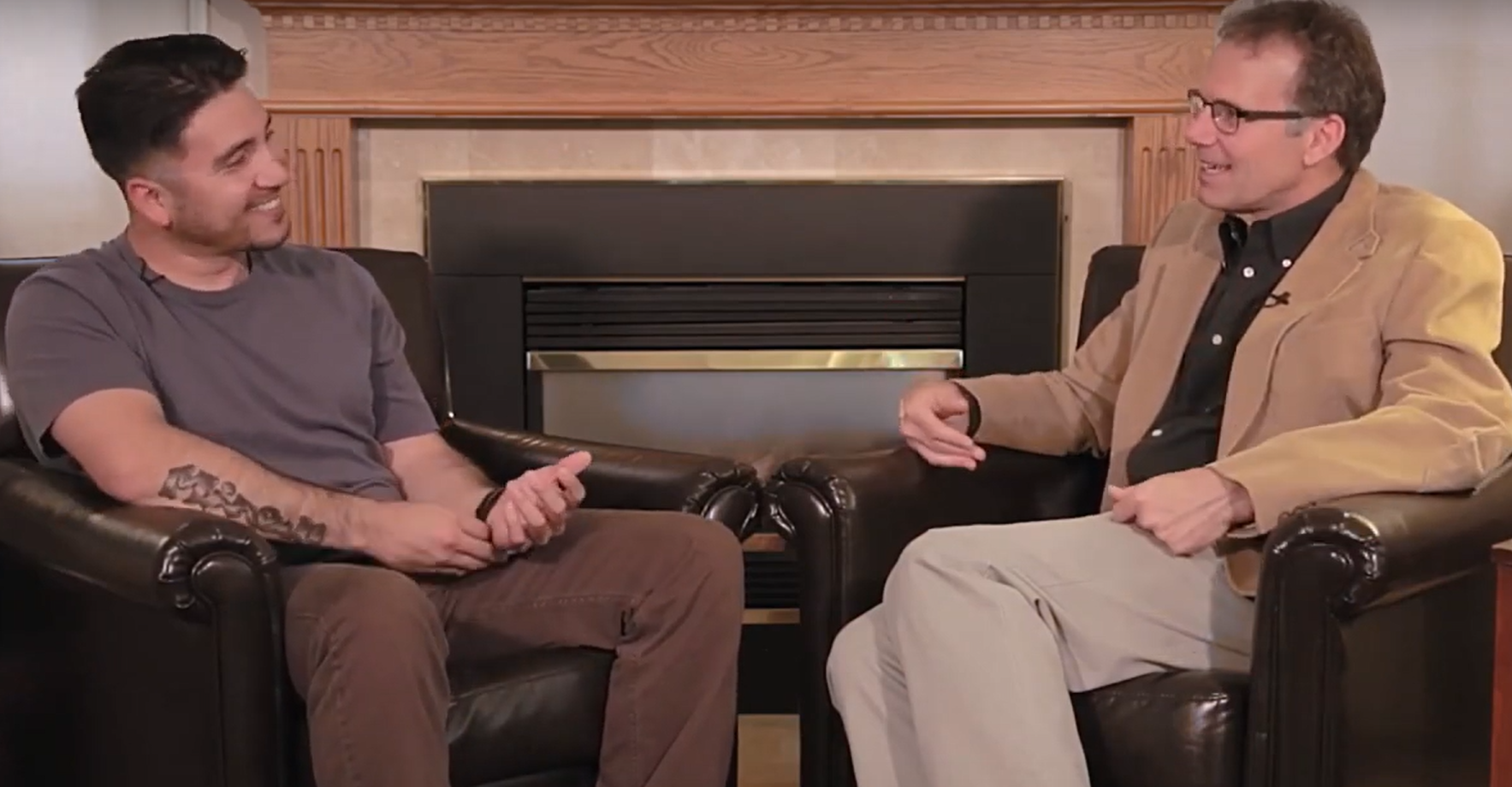
Now that you’ve read a brief summary of MI, check out the following video link. In this link, John S-F is using a few MI techniques/strategies with a client who has a history of excessive alcohol use. The video is part of our published video package accompanying our Clinical Interviewing textbook, and includes me weaving in a few more traditional clinical interviewing questions (e.g., the CAGE) along with the MI content. There’s also light commentary by Rita and me, as well as a short clip in the middle of me interviewing a Licensed Addictions Counselor on the topic of how to handle clients who are probably lying. Here’s the link to the approximately 22 minute video: https://youtu.be/rtN7kEk0Sv4

If you have questions, comments, praise, or constructive feedback on this blog or the video, I’d love to hear from you. You can post here, on Youtube, or email me directly at john.sf@mso.umt.edu.

Happy Tuesday.

John S-F

 

The Montana Suicide Assessment and Treatment Planning Model is Coming to a Location Near You

While hanging out on Twitter, I noticed that E. David Klonsky, a fancy suicide researcher from the University of British Columbia tweeted about a brand new article published in the Journal of Affective Disorders.

The article, titled, “Rethinking suicides as mental accidents” makes a case for what the authors (Drs Ajdacic-Grossab, Hepp, Seifritz, and Bopp from Switzerland) refer to as the starting point for a “Rethink.”

Aside from their very cool use of the term rethink—a term I’m planning to adopt and overuse in the future—the authors’ particular “rethink” has to do with reformulating completed suicides as mental accidents, instead of mental illness. They concluded, “The mental accident paradigm provides an interdisciplinary starting point in suicidology that offers new perspectives in research, prediction and prevention” (p. 141).

For those of you who follow this blog and know me a bit, it will come as no surprise that I commend the authors for moving away from the term mental illness, but that I also think they should move even further away from even the scent of pathologizing suicidal thoughts and behaviors.

All this brings me to an important announcement.

Starting on the evening of May 16 and continuing onto May 17, in partnership with the Big Sky Youth Empowerment Project (thanks Pete and Katie), I’ll begin the launch of some public and professional suicide trainings in Montana. These trainings will include evening public lectures (starting May 16 in Bozeman) and professional trainings on suicide assessment and treatment planning (starting May 17 in Bozeman).

Going back to the “rethink” of suicide as a mental accident, I want to emphasize that my goal with these lectures and workshops is to reshape discussions about suicide from illness-focused to health and wellness focused. Rethink of it as a strength-based approach to suicide assessment and treatment planning. And you can also rethink of it as no accident.

For more information on the public lecture, check out this flyer: BYEPSAWpublic (1)

For more information on the professional suicide assessment and treatment planning workshop, check out this link: https://go.byep.org/advances and flyer: BYEPSAWclinical (1)

And if you can’t make these events, no worries, as I mentioned, this is a launch . . . which means there’s more coming later this year . . . in Billings, in Great Falls, and in Missoula.

Finally, if you want a workshop like this in your city, let me know. The good people of Big Sky Youth Empowerment are committed to delivering a more positive message about suicide assessment and treatment planning to other locations around the state; maybe we can partner up and do some important work together.

Thanks for reading and happy Sunday evening!

data or data

Upcoming Webinars (without Spiderman)

Spiderman II

As a Marvel Comics fan since 1963, I’ve always felt uncomfortable doing webinars without mentioning Spiderman. Now that I’m on record for my Spiderman-influenced childhood, I feel my comfort-level returning to normal.

Somehow, in the next month or so, I’ve gotten myself involved in a plethora of webinars, as long as you define “plethora” as five.

Although it’s sticky business, the purpose of this blog post is to gently promote said webinars. You might be interested. I think they’re mostly free, or accessible through a particular professional association (e.g., WSASP).

Here’s the line-up (starting tomorrow!), along with webinar titles and links.

  1. Wednesday, March 13 – 2pm EDT (12pm MDT):

Transforming Therapeutic Relationships into Evidence-Based Practice: Practical Skills for Challenging Therapy Situations

Sponsored by TherapySites. To register, go to:    https://register.gotowebinar.com/register/2888908924358696194?source=Association

Many counselors and psychotherapists deeply believe in the therapeutic power of relationships, but feel mandated to practice using empirically-supported technical procedures. In this presentation, John will illustrate how relational approaches to counseling are also specific treatment methods.

Specifically, in this webinar, Dr. Sommers-Flanagan will be discussing:

– 9 different evidence-based relationship factors with practical examples of how to use these factors in challenging situations

– Using self-disclosure effectively and how to respond to difficult questions

– Recognizing relational ruptures and make repairs

– How to respond to clients who are not cooperating with the counseling process

– What to say when clients have suicidal thoughts and feel hopeless

All participants will have access to a handout describing and illustrating how to use evidence-based relationship factors to enhance counseling and psychotherapy practice.

  1. Friday, March 15, 2019, from 1pm-4pm PDT (12pm to 3pm MDT):

Tough Kids, Cool Counseling: Part I, Assessment and Engagement

Sponsored by the Washington State Association of School Psychologists (WSASP). To participate, you’ll need to be a WSASP member. https://www.wsasp.org/event-3158525?CalendarViewType=1&SelectedDate=3/12/2019

Counseling adolescent students can be immensely frustrating or splendidly gratifying. To address this challenge, participants in this workshop will refine their skills for managing resistance and implementing specific brief counseling techniques. Using video clips, live demonstrations, and other learning activities, the workshop presents four essential principles and 10 assessment and engagement strategies for influencing “tough students.” Group discussion, breakout skill-building, and other learning activities will be integrated.

  1. Thursday, April 4, 2019, from 12pm to 1pm (somewhere, TBA).

Adlerian Psychology and Cognitive-Behavioral Therapy

Sponsored by Adler University. To participate, go to: https://www.adler.edu/page/community-engagement/center-for-adlerian-practice-and-scholarship/calendar/upcoming-events

Most Adlerian theorists view Individual Psychology as the foundation for modern cognitive-behavior therapy. But most modern cognitive-behavior therapists rarely credit Adler or know much about his theory. In this webinar, John Sommers-Flanagan, author of Counseling and Psychotherapy Theories in Context and Practice (Wiley, 2018) will present two short case vignettes, while engaging in a lively debate with himself over the similarities and distinctions of Adlerian therapy and CBT.

  1. Thursday, April 18, 2019 – 1pm EDT (11am MDT): “Breathing New Life into Your Dead, White Counseling and Psychotherapy Theories Course”

Sponsored by WileyPlus. To register, go to:  https://www.wileyplus.com/wiley-webinar-series/

Teaching traditional counseling and psychotherapy theories courses can feel dull and boring. In this webinar session, John Sommers-Flanagan will share pedagogical strategies for integrating culture into theory, and engaging students with here-now activities that bring the dusty old theories to life. This webinar will include specific recommendations for how to integrate culture and feminist ideas into traditional theories. Learning activities will be demonstrated, including: (a) early intercultural memories; (b) sex, feminism, and psychoanalytic defense mechanisms; (c) empowered narrative storytelling; and (d) spiritual and behavioral forms of relaxation. Handouts for each activity will be available on https://johnsommersflanagan.com/.

  1. Friday, April 19, 2019, from 1pm-4pm PDT (12pm to 3pm MDT):

Tough Kids, Cool Counseling: Part II, Specific Counseling Techniques and Strategies

Sponsored by the Washington State Association of School Psychologists (WSASP). To participate, you’ll need to be a WSASP member. https://www.wsasp.org/event-3158525?CalendarViewType=1&SelectedDate=3/12/2019

In this advanced workshop, participants will learn 10 (or more) specific counseling techniques designed to promote positive change in middle and high school students. Using video clips, live demonstrations, and role-playing practice, participants will refine their skills for implementing change strategies with students. Techniques include problem solving, empowered storytelling, cognitive storytelling, cognitive–behavioral therapy for anger management, the three-step emotional change trick, early interpretations, and the fool-in-the-ring. Diversity-sensitive approaches will be highlighted.

In closing, I randomly selected the words of Spiderman (from 1966, #36, p. 20). “You’ll have to make it a solo the rest of the way down, Lootie! This is where I get off!”

Wow! I never realized Spiderman was a quotation machine or that he used so many exclamation points!

Have a great week!

John


Suicide Assessment and Treatment Planning: Resources for Professionals

The Road

As you probably know, suicide rates are and have been on the rise. Here’s what the Centers for Disease Control said several months ago: “From 1999 through 2017, the age-adjusted suicide rate increased 33% from 10.5 to 14.0 per 100,000” (CDC, November, 2018).

Although the CDC’s report of a 33% increase in the national suicide rate is discouraging, the raw numbers are even worse. In 1999, an estimated 29,180 Americans died by suicide. As a comparison, in 2017 (the latest year for which data are available), there were 47,173 suicide deaths. This represents a 61.9% rise in the raw number of suicide deaths over the past 17 years.

Along with rising suicide rates, there’s also a palpable rise in anxiety and panic among mental health and healthcare professionals, teachers, and the public. Even though suicides still occur at a low rate (14 per 100,000), it’s beginning to feel like a public health crisis. We don’t have much evidence that current intervention and prevention efforts are working, and the continued tragic outcomes (about 129 suicide deaths each day in the U.S.) are painful and frustrating.

The purpose of this post is simply to offer resources. I’ve been working in this area for many years; my sense is that having additional resources to help professionals feel more competent can reduce anxiety and probably increases competence. Here are some resources that might be helpful.

  1. In 2017, I published an article on suicide assessment in Professional Psychology. Here’s a pdf of that: SF and Shaw Suicide 2017.  In 2018 I published an article in the Journal of Health Service Psychology. The purpose of the 2018 article was to be more practical and provide clear ideas about how psychological providers can be more effective in how they work with clients or patients who are suicidal. You can click here to access a pdf of the article. Conversations About Suicide by JSF 2018
  2. I’ve been working with some of my doctoral students on alternatives to the traditional (and failed) approach of using client risk factors to categorize or estimate suicide risk. One product of this work is an evidence-based list of eight potential suicide dimensions. These suicide dimensions can be used with other models (e.g., safety planning) to guide collaborative treatment planning. To see a description of the eight dimensions and a treatment planning form based on the eight dimensions, you can click on the following links. Suicide TPlanning Handout            Suicide TPlanning Handout Blank
  3. Barbara Stanley and Gregory Brown developed the “Safety Planning Intervention.” For information about their intervention and access to their safety planning form, you can go to their website: http://suicidesafetyplan.com/Home_Page.html
  4. Along with Victor Yalom and some other contributors, this past year I helped produce a 7.5 hour professional training video titled, Assessment and Intervention with Suicidal Clients. You can buy this 3-part video series through Psychotherapy.net and can access a preview of the video series here: http://www.psychotherapy.net/video/suicidal-clients-series
  5. I’m a big fan of David Jobes’s work on the collaborative assessment and management of suicide. You can check out his book on Amazon: https://www.amazon.com/Managing-Suicidal-Risk-Second-Collaborative/dp/146252690X/ref=sr_1_1?crid=29DN6ZM2BUCV3&keywords=david+jobes+suicide&qid=1551837394&s=gateway&sprefix=david+jobes%2Caps%2C177&sr=8-1
  6. Later this spring and this fall, in collaboration with the Big Sky Youth Empowerment Program and the University of Montana, I’ll be offering several low-cost six-hour training workshops in four different Montana locations. These trainings will include research data collection, as well as an opportunity to participate in follow up booster trainings—booster sessions that will happen about three months after you attend an initial six-hour session. If you’re interested in participating in these Montana Suicide Assessment and Treatment Planning Workshops, you can email me, send me your email via a comment on this blog, or begin following this blog so you don’t miss out when I share the dates, times, and locations, and registration information in an upcoming post.

I hope this information is helpful to you in your work with clients struggling with suicide. Together, hopefully we can make a difference.

How to Make a Collaborative Plan for Terminating Counseling without Ever Using the Word Termination

Stone Smirk

Not long ago I noticed some of my excellent and well-intended supervisees talking with their clients about “termination.” They would say things like, “We need to prepare for termination” or “Let’s talk about termination today.” When this happened, I’d get nervous, squirm a bit, and eventually find a way to tell my supervisees that, although we use the word termination all the time when talking with each other ABOUT counseling, we shouldn’t use it when talking with clients DURING counseling.

Instead of saying termination, it’s preferable to talk about final sessions, or the ending of counseling, or to use normal and jargon-free words that speak to the reality that all good things—including counseling—must end. Sometimes the number of counseling sessions possible is dictated in advance by employee assistance program guidelines or insurance companies; other times, clients and counselors have more freedom to work together as long as the work is helpful or productive. Either way, ongoing conversations linking goals to progress is a part of an evidence-based approach to counseling and psychotherapy. Effective counselors connect the “ending” of counseling with the goals that were, in the beginning of counseling, collaboratively identified (and then possibly modified as needed).

Although you should use your own words, statements like some of the following can help you talk with clients or students about termination without using the word termination.

  • “Let’s talk about how our counseling is going and whether we’re making progress toward your goals”
  • “How do you feel about our counseling together?”
  • “I’d love to talk about what I can do differently to keep helping you move forward toward your goals.”

Speaking of termination—and now I’m speaking to you and not my clients—below you’ll find a Termination Checklist that you might find helpful as you talk with your students about preparing for termination. As with everything, this checklist is imperfect, but it’s a good start to help all of us address the ending of counseling, before counseling actually ends.

Termination Checklist

[Adapted from Sommers-Flanagan, J., and Sommers-Flanagan, R., (2007).
Tough Kids, Cool Counseling: User-Friendly Approaches with Challenging Youth.
Alexandria, VA: American Counseling Association]

This is a guide to help you think about termination—even though some of the details will be different for you and your client(s).

_____ 1. At the outset and throughout counseling, identify progress in the movement toward termination (e.g., “Before our meeting today, I noticed we have 4 more sessions left,” or “You are doing so well at home, at school, and with your friends. . . let’s talk about how much longer you’ll want or need to come for counseling”).

_____ 2. Reminisce about early sessions or the first time you and your client met. For example: “I remember something you said when we first met, you said: ‘there’s no way in hell I’m gonna talk with you about anything important.’ Remember that? I have it right here in my notes. You weren’t exactly excited about coming for counseling.”

_____ 3. Identify and describe positive behaviors, attitude, and/or emotional changes. This is part of the process of providing feedback regarding problem resolution and goal attainment: “I’ve noticed something about you that has changed. Do you mind if I share what I’ve noticed?” [Client gives permission]. It used to be that you wouldn’t let adults get close to you. And you wouldn’t accept compliments from adults. Now, from what you and your parents tell me and from how you act in here, it’s obvious that you give adults a chance. You don’t automatically push adults away from you. I think that’s a good thing.”

_____ 4. You should acknowledge, in advance, that the end of counseling is coming up, but there’s a possibility you’ll see each other in the future. “Our next session will be our last session. I guess there’s a chance we might see each other sometime, at the mall or somewhere. If we do see each other, I hope it’s okay for me to say hello. But I want you to know that I’ll wait for you to say hello first. And of course, if we see each other in public, I’ll never say anything about you having been in counseling.”

_____ 5. Identify a positive personal attribute that you noticed during counseling. This should be a personal characteristic separate from your client’s goals: “From the beginning of our time together, I’ve always enjoyed your sense of humor. You’re really creative and really funny, but you can be serious too. Thanks for letting me see both those sides. It took courage for you to get serious and tell me how you’ve been feeling about your mom.”

_____ 6. If there’s unfinished business (and there always will be) provide encouragement for continued work and personal growth: “Of course, your life isn’t perfect, but I have confidence that you’ll keep working on communicating well with your sister and those other things we’ve been talking about.” You may want to say that even though your client doesn’t “need” counseling, choosing to come back for counseling in the future might be helpful: “You know some people come to counseling to work on big problems; other people come because they find counseling helps them be a better person; and other people just like counseling. You might decide you want start up again for any of these reasons.”

_____ 7. Provide opportunities for feedback to you: “I’d like to hear from you. What did you think was most helpful about coming to counseling? What did you think was least helpful?” You can add to this any genuine statements about things you wish you’d done differently. For example, if your client got angry at you for misunderstanding something and this was processed earlier, you might say: “And of course I wish I had heard you correctly and understood you the first time around on that [issue], but I’m glad we were able to talk through it and keep working together.”

_____ 8. If it’s possible, let the client know that he or she may return for counseling in the future: “I hope you know you can come back for a meeting sometime in the future if you want or need to.”

_____ 9. Make a statement about your hope for the client’s positive future: “I’ll be thinking of you and hoping that things work out for the best. Of course, like I said in the beginning, I’m hoping you get what you want out of life, just as long as it’s legal and healthy.”

_____ 10. As needed, listen to and discuss how your client is feeling about ending counseling. Don’t make this into a big deal, but offer opportunities for the client to say “I can hardly wait for the end of this counseling crap” or “I wish we could keep meeting.” Whatever your client is feeling about termination warrants respectful listening.

_____ 11. Consider a parting gift. Although I don’t routinely recommend this with adults, with young clients you might give a meaningful gift at the end of counseling. It could be anything from a painted rock to a blank notebook for writing or a written card. The point is to give a gift that’s not especially expensive, but that might hold meaning for your client in the future.

For more information on termination with youth, go to: https://www.amazon.com/Tough-Kids-Cool-Counseling-User-Friendly-ebook/dp/B00QYU630Q/ref=sr_1_7?s=books&ie=UTF8&qid=1550512844&sr=1-7&keywords=sommers-flanagan