I like knowing a little trivia. It’s probably related to wanting to maintain a positive view of myself. If I know a little trivia, maybe that makes me more competent.
Trivia of the day: Hardly any of you know that my friends Mike Bevill, Neil Balholm, Greg Hopkins, and I invented Karaoke in Mike Bevill’s basement back in 1974. Neil had a portable microphone system. We’d plug it in, put on background music, and belt out tunes, as if we were Crosby, Stills, Nash, Young, Bevill, Balhoum, Hopkins, and Sommers. We created a fake band, named ourselves the “Nugget Brothers,” and sang with great enthusiasm, but little talent, along with a variety of pop musicians.
One odd outcome of this was my continued preoccupation with creating fake bands into and after college, despite nearly complete lack of talent. As an example of the awkwardness of youth, I could “fake perform” to large groups, but I was unable to speak up in classes. Weird, I know. My guess is it was safer to publicly perform with no talent that it was to do so in areas where I was serious.
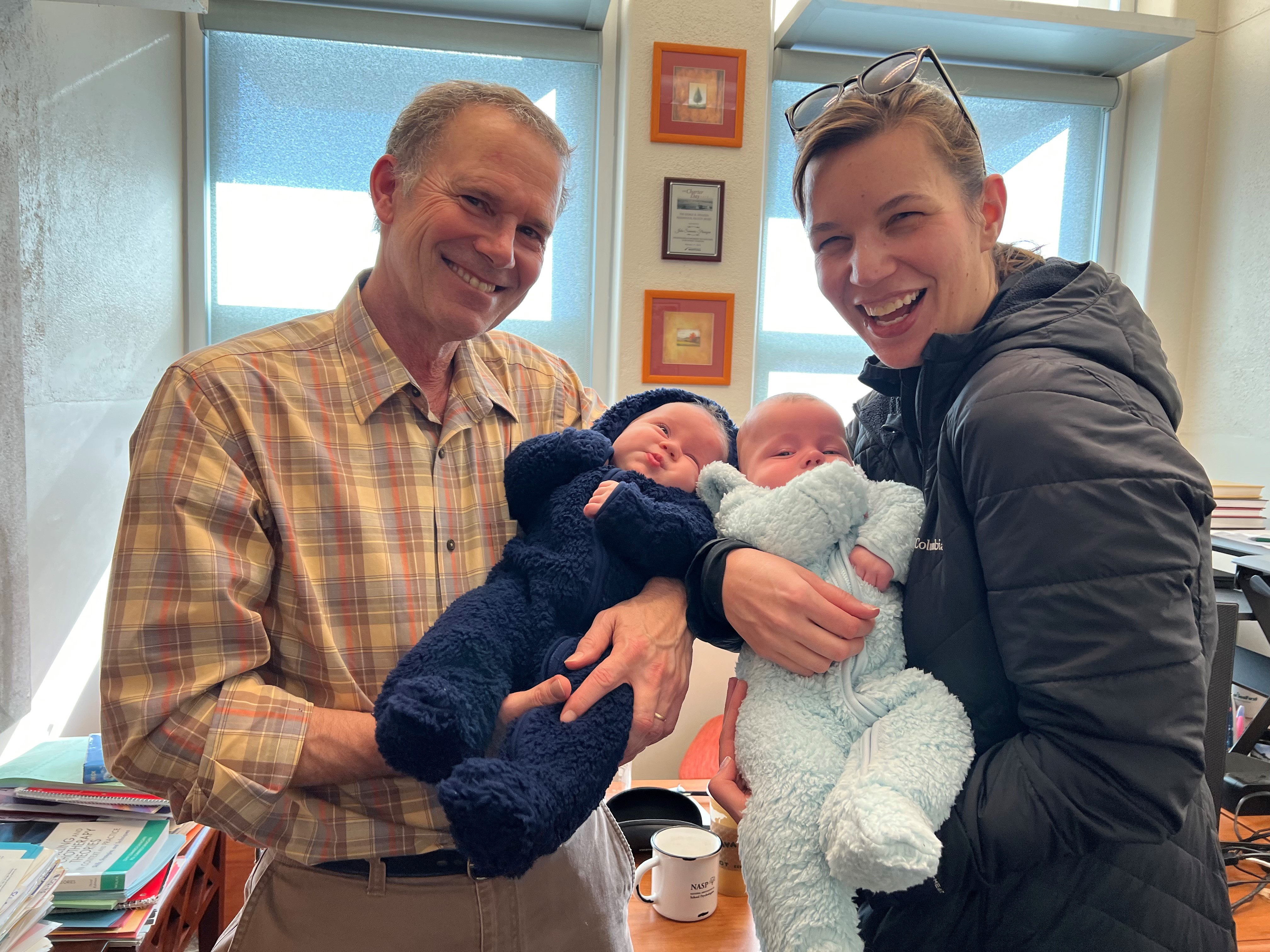
Here’s a photo attesting to my fake band performance legacy.
As a part of the Montana Happiness Challenge, we’ve been encouraging people to share their favorite songs. . . and now we’re taking it to the next step. Please, if you will, share yourself singing a song that makes you happy, or that you find meaningful. Post it on social media and give us a tag or hashtag: #MHPHappinessChallenge or #MontanaHappiness.
You may wonder, other than embarrassment and social media humiliation, what’s the point? The point is that singing is nearly always therapeutic, partly because of what’s happening in the brain. Think about it.
Singing involves movement, creativity, feedback and adjustment, listening, planning, memory, and language. Some researchers emphasize that singing triggers the release of the so-called “feel-good” neurotransmitter dopamine, which is a limited view, because there’s also more serotonin at the synapse, an oxytocin shower, and more or less involvement by 100s of other neurotransmitters, neuromodulators, and brain structures (including, but not limited to the hippocampus, insula, frontal lobe, Wernicke’s region, occipital cortex, and motor cortex). If you want to light up your brain, sing!
For the Montana Happiness Challenge, we highly recommend singing out loud. Although we would love to watch and listen to you singing on social media, if that’s not your thing, go ahead and sing in the shower, while housecleaning, in the car, or anywhere else you can let your joy happen.
One last point. Research on positive emotions indicate that we don’t need to have BIG positive emotions to experience happiness and well-being benefits. What’s important is to weave in many intermittent small positive emotions. IMHO, singing privately or publicly is one way to give yourself frequent positive emotional boosts.
For my part, I’ve recorded three videos on my social media singing. These videos are silly and embarrassing, which I’m completely embracing. I got nervous for each of these videos and didn’t even say all of what I planned to say. Feel free to skip them and/or #neverspeakofthem.
Thanks for reading this. Please share everything you can about the Montana Happiness Project. Our goal is to reach MANY people with free ideas about positive emotions and meaningful happiness.
Today is the official launch of the Montana Happiness Challenge. For the next 20 weeks we’ll be trying to spread happiness from social media into classrooms, kitchens, boardrooms, ballrooms, and everywhere else you’ll help us spread it.
The concept is simple.
Happiness takes work and involves behavior. We’re not JUST talking about “smiley” hedonic happiness; we’re also talking about eudaimonic, meaning-filled happiness.
Today’s activity involves music. You can interpret this and share this in nearly any way you like. You can just post your #Happysong somewhere, or share it with a friend, family, coworker, or classroom. You can also sing. . . and post it on Youtube or Facebook or Insta or wherever you like. You can include our cumbersome hashtags #MHPHappinessChallenge and #MontanaHappiness and Tag us, or just stay quiet. But, if you like, don’t shy away from posting photos of yourself singing, even if they’re slightly embarrassing, like this one.
Below is the full description of the first Happiness Activity. Please engage and experience and experiment as you wish. . . all week long!
Happiness Activity 1 – Music, Mood, and Meaning
John Sommers-Flanagan, Ph.D.
University of Montana
Music in general, and songs in particular, trigger happiness, sadness, other emotions, and life memories. Sometimes our emotional responses to music are all about the music. Other times our emotional responses are about personal emotions and memories that the songs trigger. For example, when I listen to “Joy to the World” by Three Dog Night, I’m transported back to positive memories I had playing 9th grade basketball. The song, “Put the Lime in the Coconut” by Harry Nilsson will forever take me back to a car accident with my sister in 1973. It’s not unusual for us to turn to music for help regulating our emotions, or to deepen particular feelings. The connection between music and mood is so powerful that psychological researchers frequently use music when they want to manipulate the mood of their research participants.
For this assignment, do the following:
Part One: Your Happy Song(s)
Select a song or songs that trigger positive emotions. We’ll call that your #HappySong.
Listen to your happy song once or twice, or whatever it takes to let the song do its work. You can do this with your family or a friend or by yourself. Consider how you might use that song to intentionally elevate your mood.
At minimum, share your #HappySong on social media or with your friends/family. You can just share the name and artist, provide a link to the song.
Because creating music and singing can be especially powerful, consider making a clip of yourself performing your #HappySong.
If you want to get deeper, you can share on your favorite social media platform why that’s a happy song for you or how you use it as a “go-to” happy song when you need an emotional lift, or you can share your personal memories around the song.
Part Two: Your Meaningful Songs
Sometimes music gives us an emotional boost. Other times, it helps us go deeper into challenging emotions or allows us to find meaning in hard times. When I was struggling in graduate school, I would often listen to Paul Simon’s “American Tune” or “Immigrant Song.” I very much resonated with these (and other) lyrics “I don’t know a dream that’s not been shattered, or driven to its knees.” Often the tears would flow. [I love this version, with Simon and Rhiannon Giddens: https://www.youtube.com/watch?v=67pyIglP79U]
For the meaning part of this activity, consider the following:
Share a song that holds meaning for you. This might be a song you listen to when feeling sad or angry or scared. While I was teaching a Happiness Class at the University of Montana, a student shared a beautiful song by Mandoline Orange (now Watchhouse) titled, “Golden Embers” Golden Embers is about the death of the singer’s mother. My mother died not long after I heard this song, and even though the lyrics don’t perfectly fit my experience or my mother, when I listen I think of her and let myself feel the grief I have around the loss of her presence in my life and in the world. You can listen to Golden Embers here: https://www.youtube.com/watch?v=fEt2lf7L13g
As with the Happy Songs above, you can just share the song with your friends/family/colleagues or share it on your favorite social media platform. You can also go into details about why the song is emotionally meaningful for you. Do this is whatever way you find meaningful and share what you’re comfortable sharing.
Obviously, this is a much more vulnerable activity than the Happy Song version . . . and so participate only to the extent that feels okay for you. Also, if you notice others posting their emotionally meaningful songs, please find ways to offer support and respect for their insights and vulnerability.
Thanks for reflecting on how music affects our emotions, life meaning, and quality of life. I hope you’ll stay tuned for our next Happiness Activity coming out Sunday, October 8.
P.S.: for those of you who want to read more about music, mood, and meaning, here’s a recent Washington Post article, compliments of Lillian Martz from the University of Montana:
Back in the day, I was so into person-centered (aka nondirective) listening that I coauthored a 1989 article in the journal Teaching of Psychology titled, “Thou Shalt Not Ask Questions.” The point was that by temporarily eliminating questions from our therapeutic repertoire, we grow more aware of how to listen without using directive methods for facilitating client talk.
I’m still a fan of limiting therapist questions, if only to become more aware of their power. Even in the case of solution-focused or narrative therapies, when questions are the central therapeutic strategy, we should be as person-centered as possible when asking questions.
Below, I’ve included an excerpt of our coverage of listening from the forthcoming 7th edition of Clinical Interviewing. In the early 1990s, along with the first edition of Clinical Interviewing, we described a concept called the listening continuum. The excerpt starts there and then focuses in on what’s likely the most non-directive skill of all, therapeutic silence.
Here’s the excerpt. I hope you enjoy it and find it useful.
The Listening Continuum in Three Parts
Nondirective listening behaviors give clients responsibility for choosing what to talk about. Consistent with person-centered approaches, using nondirective behaviors is like handing your clients the reins to the horse and having them take the lead and choose where to take the session. In contrast, directive listening behaviors (Chapter 5) and directive action behaviors (Chapter 6) are progressively less person-centered. These three categories of listening behaviors (and the corresponding chapters) are globally referred to as the listening continuum. To get a visual sense of the listening continuum, see Table 4.1.
Nondirective Listening Behaviors on the LEFT Edge (Chapter 4)
Directive Listening Behaviors in the MIDDLE (Chapter 5)
Directive Action Behaviors on the RIGHT Edge (Chapter 6)
Attending behaviors or minimal encouragers
Feeling validation
Closed and therapeutic questions
Therapeutic silence
Interpretive reflection of feeling
Psychoeducation or explanation
Paraphrase
Interpretation (classic or reframing)
Suggestion
Clarification
Confrontation
Agreement/disagreement
Reflection of feeling
Immediacy
Giving advice
Summary
Open questions
Approval/disapproval
Urging
The ultimate goal is for you to use behavioral skills along the whole listening continuum. We want you to be able to apply these skills intentionally and with purpose. That way, when you review a video of your session with a supervisor, and your supervisor stops the recording and asks, “What exactly were you doing there?” you can respond with something like this:
I was doing an interpretive reflection of feeling. The reason I chose an interpretive reflection is that I thought the client was ready to explore what might be under their anger.
Trust us; this will be a happy moment for both you and your supervisor.
Hill (2020) organized the three listening continuum categories in terms of their primary purpose:
We hope you still (and will always) remember the Rogerian attitudes and have placed them firmly in the center of your developing therapeutic self. In addition, at this point we hope you understand the two-way nature of communication, the four different types of attending behaviors, and how your listening focus can shift based on a variety of factors, including culture and theoretical orientation.
Next, we begin coverage of technical skills needed to conduct a clinical interview. See Table 4.2 for a summary of nondirective listening behaviors and their usual effects. Having already reviewed attending behaviors, we now move to therapeutic silence.
Therapeutic Silence
Most people feel awkward about silence in social settings. Some researchers have described that therapists-in-training view silence as a “mean” response (Kivlighan & Tibbits, 2012). Despite the angst it can produce, silence can be therapeutic.
Therapeutic silence is defined as well-timed silence that facilitates client talk, respects the client’s emotional space, or provides clients with an opportunity to find their own voice regarding their insights, emotions, or direction. From a Japanese perspective,
Silence gives forgiveness and generosity to human dialogues in our everyday life. Without silence, our conversation tends to easily become too clever. Silence is the place where “shu”… (to sense the feeling of others, and forgive, show mercy, absolve, which represents an act of benevolence and altruism) arises, which Confucius said was the most important human attitude. (Shimoyama, 1989/2012, p. 6; translation by Nagaoka et al., 2013, p. 151)
Table 4.2 Summary of Nondirective Listening Behaviors and Their Usual Effects
Listening Response
Description
Primary Intent/Effect
Attending behaviors
Eye contact, leaning forward, head nods, facial expressions, etc.
Facilitates or inhibits client talk.
Therapeutic silence
Absence of verbal activity
Allows clients to talk. Provides “cooling off ” or introspection time. Allows clinician time to consider next response.
Paraphrase
Reflecting or rephrasing the content of what the client said
Assures clients that you heard them accurately and allows them to hear what they said.
Clarification
Restating a client’s message, preceded or followed by a closed question (e.g., “Do I have that right?”)
Clarifies unclear client statements and verifies the accuracy of what the clinician heard.
Reflection of feeling
Restatement or rephrasing of clearly stated emotion
Enhances clients’ experience of empathy and encourages further emotional expression.
Summary
Brief review of several topics covered during a session
Enhances recall of session content and ties together or integrates themes covered in a session.
Silence also allows clients to reflect on what they just said. Silence after a strong emotional outpouring can be therapeutic and restful. In a practical sense, silence also allows therapists time to intentionally select a response rather than rush into one.
In psychoanalytic psychotherapy, silence facilitates free association. Psychoanalytically oriented therapists use role induction to explain to clients that psychoanalytic therapy involves free expression, followed by occasional therapist comments or interpretations. Explaining therapy or interviewing procedures to clients is always important, but especially so when therapists are using potentially anxiety-provoking techniques, such as silence (Meier & Davis, 2020).
CASE EXAMPLE 4.2: EXPLAIN YOUR SILENCE
While on a psychoanalytically oriented internship, I (John) noticed one supervisor had a disturbing way of using silence during therapy sessions (and in supervision). He would routinely begin sessions without speaking. He sat down, looked at his client (or supervisee), and leaned forward expectantly. His nonverbal behavior was unsettling. He wanted clients and supervisees to free associate and say whatever came to mind, but he didn’t explain, in advance, what he was doing. Consequently, he came across as intimidating and judgmental. The moral of the story: Use role induction—if you don’t explain the purpose of your silence, you risk scaring away clients.
[End of Case Example 4.2]
Examples of How to Talk About Silence
Part of the therapist’s role involves skilled explanations of process and technique. This includes talking about silence. Case Example 4.2 is a good illustration of how therapist and client would have been better served if the therapist had explained why he started his sessions with silence.
Here’s another example of how a clinician might use silence therapeutically:
Katherine (they/them) is conducting a standard clinical intake interview. About 15 minutes into the session the client begins sobbing about a recent romantic relationship break-up. Katherine provides a reflection of feeling and reassurance that it’s okay to cry, saying, “I can see you have sad feelings about the break-up. It’s perfectly okay to honor those feelings in here and take time to cry.” They follow this statement with about 30 seconds of silence.
There are several other ways Katherine could handle this situation. They might prompt the client,
Let’s take a moment to sit with this and notice what emotions you’re feeling and where you’re feeling them in your body.
Or they might explain their purpose more clearly.
Sometimes it’s helpful to sit quietly and just notice what you’re feeling. And sometimes you might have emotional sensations in a particular part of your body. Would you be okay if we take a few moments to be quiet together so you can tune in to your emotions and where you’re feeling them?
In each of these scenarios, Katherine explains, at least briefly, the use of silence. This is crucial because when clinicians are silent, pressure is placed on clients to speak. When silence continues, the pressure mounts, and client anxiety may increase. In the end, clients may view their experience with an excessively silent therapist as aversive, lowering the likelihood of rapport and a second meeting.
Guidelines for Using Silence Therapeutically
Using silence may initially feel uncomfortable. With practice, you’ll increase your comfort level. Consider the following suggestions:
When a client pauses after making a statement or after hearing your paraphrase, let a few seconds pass rather than jumping in verbally. Given an opportunity, clients can move naturally into important material without guidance or urging.
As you’re waiting for your client to resume speaking, tell yourself that this is the client’s time for self-expression, not your time to prove you can be useful.
Try not to get into a rut regarding silence. When silence occurs, sometimes wait for the client to speak next and other times break the silence yourself.
Be cautious with silence if you believe your client is confused, psychotic, or experiencing an acute emotional crisis. Excessive silence and the anxiety it provokes can exacerbate these conditions.
If you feel uncomfortable during silent periods, use attending skills and look expectantly toward clients. This helps them understand it’s their turn to talk.
If clients appear uncomfortable with silence, give them instructions to free associate (e.g., “Just say whatever comes to mind”). Or you can use an empathic reflection (e.g., “It’s hard to decide what to say next”).
Remember, sometimes silence is the most therapeutic response available.
Read the interview by Carl Rogers (Meador & Rogers, 1984). It includes examples of how Rogers handled silence from a person-centered perspective.
Remember to monitor your body and face while being silent. There’s a vast difference between a cold silence and an accepting, warm silence. Much of this difference results from body language and an attitude that welcomes silence.
Use your words to explain the purpose of your silence (e.g., “I’ve been talking quite a lot, so I’m just going to be quiet here for a few minutes so you can have a chance to say whatever you like”). Clients may be either happy or terrified at the chance to speak freely.
Shortly after Beth Brown, Managing Director of Mental Health and Well Being at The Arthur M. Blank Family Foundation (https://blankfoundation.org/) called the meeting to order, she asked us to introduce ourselves and share one word to represent how we were feeling in that moment.
Having taught my fair share of group counseling and psychotherapy courses at the University of Montana, I immediately recognized Ms. Brown’s icebreaking trickery. The trickery is, while ostensibly asking about the emotional tone of participants, the “one word” question simultaneously evaluates participants’ ability and willingness to comply with group leader requests.
It was a raucous group. People immediately began bending, breaking, and straying from Ms. Brown’s one-word rule. Some participants took 30 words to introduce themselves; others took 50 words to frame the rationale for their one-word choice. One participant (who spoke second, and may or may not have been me), immediately displayed annoying attention-seeking behavior by interjecting an anecdote about the worst icebreaker activity ever in the history of time.
Had Sigmund Freud been a Mental Health and Wellness grantee (and therefore invited to the two-day event), he might have used the word delighted. Not only was the one-word activity intrinsically projective, Freud also once famously quipped,
Words were originally magic, and . . . retain much magical power, even today. With words people can make others blessed, or drive them to despair; by words the teacher transfers . . . knowledge to the pupil; by words the speaker sweeps away the audience and determines its judgments and decisions. Words call forth affects and are the universal means of influencing human beings [n.b., this is not a perfect quote because I engaged in minor editing to make Freud more quippy and less sexist].
I have some magic words to describe the participants. They were smart, fun, funny, dedicated, committed, clever, brilliant, generous, compassionate, empathic, connected, passionate, and cool. During Lyft rides, some of them even engaged with each other as if they were live podcasters. My particular program officer is so kind and generous that I now just think of her as Saint Natalie.
Words were the theme and the tool. On the afternoon of Day One Michael Susong, PR Lead at Intrepid, taught us how to use asset-based, instead of deficit-based words on our websites. His presentation was complemented by a gallery-walk through an adjacent room where life-sized word cloud posters of the words in our websites were set up and numbered; we perused the clouds, absorbing the language and seeking to discern which cloud belonged to which organization. I, of course, quickly found the Montana Happiness Project (MHP) word cloud, primarily because the biggest word was SUICIDE, which may or may not have implied that we (the MHP) have a bit of work to do on using more asset-based language on our website. I also felt jealousy because other organizations had way cooler words, like “Nintendo” and “LBGTQ+” and “Youth of color” and “Belonging.”
At the close of Day 1, the prevailing descriptive words were “Tired” and “Exhausted” not principally, but partly because this was a group of people who had likely added this retreat into their already too busy lives and consequently were emailing and doing business-related calls during breaks and lunch and on the airplane the day before and possibly into the night.
Looking back at the previous paragraph, I notice I used the word “business” which connotes a particular entrepreneurial feel, which requires a particular explanation. All of the organizations and people in attendance had a shared passion for the business of helping others achieve greater well-being, mental health, and happiness. IMHO, that’s good business. . . which leads me to sharing a few words about the man behind the curtain.
We all convened at the Arthur M. Blank Foundation headquarters for two days because of one man’s business. That man is Arthur M. Blank, co-founder of Home Depot and owner of the Atlanta Falcons, the Atlanta United professional soccer club, and PGA Superstores. But along with his businesses, Arthur Blank has expanded his service mentality into the business of philanthropy. On the evening of the first day, Arthur Blank joined us as we listened to renowned Harvard researcher Robert Waldinger talk about the world’s longest study of Happiness [n.b., in his usual buoyantly optimistic style, Freud once noted that a main goal of psychotherapy is to move patients from neurotic misery, to common unhappiness].
Although I didn’t get a chance to meet Mr. Blank and impress him with my witty repartee, knowledge of icebreakers, or arcane Freudian quotes (I wish I could have told him, “Where id was, there shall ego be!), I did hear him speak. In one long, hyphenated word, I’d describe his message as gracious-supportive-humble-encouraging-empowering. Had Freud been there, he might have just said, “Arthur Blank’s words were magic.”
The Arthur Blank Foundation has given well over $500 million to philanthropic causes. None of this is required. Arthur Blank could take his money and keep it to himself and his family. Instead, he has embraced philanthropy. Arthur Blank also has a book titled “Good Company.” In a word (or maybe 20 words), if I were offering a New York Times Book Review (which will never happen because the NYT always rejects my editorial pieces, and yes, I’m clearly hanging on too tightly to my resentment toward the NYT), I’d describe his book as: A rather surprising treatise on companies doing values-based good work in the world as a part of a larger philosophy/vision of service-oriented capitalism paradoxically infused with egalitarianism in the workplace. In other (or additional) words, I enjoyed, appreciated, and valued the book and its philosophy WAY more than I expected. Now I want to become as wealthy as Arthur Blank so I can join him in contributing to the culture and welfare of places like West Atlanta, South Chicago, North Philly, Livingston Montana, and East Missoula.
In the end, Beth Brown asked us for a final, departing single word. I cleverly used my hyphenated last name as an excuse to say “overwhelmed-hopeful” but I might have just as easily used “connected-inspired” or “challenged-to-do-more-good” or “I’m-on-a-rocket-ship-headed-to-a-city-called-mental-health-and-wellbeing” or, given the fire of inspiration lit under my feet, I could have decided to demonstrate the worst icebreaker of all time, and just spell out my name and feelings with my hip movements.
Thank you, Arthur Blank, thank you to the AMBFF team, and thank you to the grantees. I am humbled by your generosity and vision of greater mental health and wellbeing for all.
John Wiley and Sons recently informed me of the excellent and exciting news that the 7th edition of Clinical Interviewing (CI7) has gone to press and will drop in the U.S. on or before September 30. Our wish for this edition is the same as previous editions: To provide research-based, theoretically supported, clinically insightful, and culturally informed education and training on how to conduct basic and advanced clinical interviews.
The Resource
Part of CI7 includes video updates. Most of the updates offer greater representation of culturally diverse counselors and psychotherapists. For example, the video link below features Dr. Devika “Dibya” Choudhuri describing a “grounding” technique that she uses when conducting tele-mental health (aka virtual) clinical interviews, the topic of Chapter 14.
Although you may have your own approaches to facilitating grounding during tele-mental health sessions, I believe Dr. Choudhuri’s idea is innovative and may be a resource that you can add to your toolkit.
Stay tuned, because over the next several weeks I’ll be posting additional fresh new text and video content from CI7.
The Request
Traditionally, publishers ask authors to gather promotional endorsements for new books. This time around, maybe because it’s the 7th edition, neither Wiley nor the absent-minded authors of CI7 thought about gathering endorsements. In the past, we’ve had Derald Wing Sue, John Norcross, Victor Yalom, Pamela Hays, Barbara Herlihy, Allen Ivey, David Jobes, and Marianne and Jerry Corey write short blurbs. Here’s what Derald Wing Sue said about the 6th edition:
The most recent edition of Clinical Interviewing is simply outstanding. It not only provides a complete skeletal outline of the interview process in sequential fashion, but fleshes out numerous suggestions, examples, and guidelines in conducting successful and therapeutic interviews. Well-grounded in the theory, research and practice of clinical relationships, John and Rita Sommers-Flanagan bring to life for readers the real clinical challenges confronting beginning mental health trainees and professionals. Not only do the authors provide a clear and conceptual description of the interview process from beginning to end, but they identify important areas of required mastery (suicide assessment, mental status exams, diagnosis and treatment electronic interviewing, and work with special populations). Especially impressive is the authors’ ability to integrate cultural competence and cultural humility in the interview process. Few texts on interview skills cover so thoroughly the need to attend to cultural dimensions of work with diverse clients. This is an awesome book written in an engaging and interesting manner. I plan to use this text in my own course on advanced professional issues. Kudos to the authors for producing such a valuable text.
―Derald Wing Sue, Ph.D., Professor of Psychology and Education, Teachers College, Columbia University
This time around, we’re less than two weeks from publishing and are without formal endorsements. As a consequence, I’m asking: “Is there ANYBODY out there who has read a portion of the CI7 manuscript or used a previous edition, who would like to share their thoughts about how the book influenced you or how the videos helped with your training?
[I know this last paragraph sounds pathetic. However, if you know me, you probably know my sense of humor, and the “Is there anybody out there?” call is BOTH a sincere request for your input AND me mocking myself for making this request.]
To be completely serious: If you want to share something positive about your experience—from any point in time—with the Clinical Interviewing text, I hope you’ll write a sentence or two or three (you don’t have to write half a page, like Derald Wing Sue) on the particular ways in which you found the book and/or videos meaningful to you.
To share your thoughts on any edition of the text, please post them here on this blog, or send them to me at john.sf@mso.umt.edu.
Thanks very much for considering this request. Please, please, I hope someone “out there” is listening!
I’m taking the opportunity this fine Sunday afternoon to post a blog piece that Rita wrote earlier this week. Oddly, or perhaps not that oddly for those who know her, Rita has an alter-identity that she refers to as “Dr. Bossypants.” In this alternate voice, Rita refers to herself in third person and lets herself be a bit more pedantic than she is in real life.
In this blog post, Dr. Bossypants jumps into the domain of forgiveness and offers up ideas that I found exquisitely interesting and very helpful.
Without further ado, I’d like you to meet, my friend, Dr. Bossypants.
Turns out, yesterday was Tuesday, not Friday. I got so disoriented yesterday that by the day’s end, I was emailing people and telling them to have a great Labor Day weekend. My excuse is that I got 17 new stitches in my forehead during a 4.5 hour marathon Mohs surgery on Monday. Sheesh. Now I’m a poster-boy for sun block. See the photo at the bottom of this post for the evidence.
I’m posting today (Wednesday, not Saturday!) to let you know about a unique opportunity, and to ask for your support.
Beginning this September (National Suicide Prevention Month), the Montana Happiness Project, L.L.C., in collaboration with Families First Learning Lab, is launching a 20-week Happiness Activity Challenge. Using various social media platforms, this campaign guides participants through 20 distinct evidence-based positive psychology interventions designed to increase personal happiness and life meaning.
This Campaign will be available for free, online, through social media. Because we’re offering it for free, we’re looking for two levels of support.
Collaborator: Being a collaborator costs you nothing. All it means is that you’re publicly saying that you support our efforts at spreading evidence-based happiness and will share our happiness activities with colleagues, friends, and perhaps formally engage your organization to participate. If you’re a collaborator, we’ll put your name or organization name and logo on our website.
Sponsor: We’re asking specific organizations to partner with us to sponsor each week. To sponsor a week, we ask for a $500 contribution. In return, we’ll include your Logo and our Thanks in our social media posts for the week. This will include posts on Instagram, Facebook, Youtube, WordPress, and on our Squarespace Montana Happiness Project website. If you’re a sponsor, we’d love for you to encourage your staff to participate in this happiness promotion activity, talk about it with each other, and post about it on social media.
You may wonder, if we can be collaborators and my staff and colleagues can participate for free, why be a sponsor? That’s a great question. We’re doing our Happiness Challenge as an act of kindness for the people of Montana and beyond and acts of kindness are evidence-based happiness strategies. We hope you’ll join us, perform an act of kindness, and sponsor at least one homework week.
Whether you’re a collaborator, sponsor, or evesdropper, we hope you’ll engage with our happiness challenge to see if participation in some or all of our 20-day happiness project helps you (and your staff, friends, family, etc.) feel happier.
Below, I’ve answered a few questions:
Who can participate? – Anyone. Our primary focus is Montana, but our goal is to reach out and promote positivity and happiness to anyone and everyone who is interested.
Howmuch does it cost? – Nothing. Nada. Nil. This is free because we believe life is hard and people need support, skills, and to have hope for greater happiness.
Do I have to commit to all 20 homework assignments? – Nope. We’re doing this on social media. You can participate as much or as little as possible. You can be explicitly active by posting and sharing about your experiences, but you can also keep your experiences to yourselves.
Are the homework assignments really evidence-based? – Yes. Nearly all of the assignments have direct scientific support as “interventions” that increase happiness and decrease depression. That doesn’t mean increased happiness and decreased depression are guaranteed, because even “effective” interventions don’t work for everyone. . . but they’re worth a try. A few of the assignments don’t have direct experimental support, but they’re based on concepts shown to increase happiness and meaningfulness.
What’s the catch? – No catch. We’re offering this experience as an act of kindness because we think it’s a good thing. We also recognize that positive psychology or evidence-based happiness interventions are not a great fit for everyone. Just do what you can when you can if you can.
How can I contribute to the idea of sharing evidence-based happiness knowledge and skills? – We hope you will do this activity with co-workers, friend, and/or family. We hope you’ll share it on social media, or talk with your children about your experiences over dinner. If you’re especially inspired by our 20-week Happiness Challenge, you’re welcome to donate (not required, but appreciated) to Families First Learning Lab. Just let the good people at Families First know that your donation is to support the FFLL Happiness Project.
I’d end with “Mark your calendars!” but given that I’m still not certain that I’m fully oriented to time, I’ll just say, thanks for reading all this and considering full engagement with our Happiness Challenge.
I’ll be online in about 75 minutes to present a workshop for the TexChip folks from TAMU-CC. The title of the workshop is: “Tough Kids, Cool Counseling: Strategies for Engaging and Influencing Youth.”
Here’s the link to the workshop . . . where the CEUs are free!:
You may be aware of the irony in the workshop title. . . which is the fact that very soon into the workshop I tell everyone that we should never even “think” the words “Tough kids.” The reason we drop the terminology “Tough kids” is because it blames and labels the young people with whom we’re working, and they may sense that. Instead, all we have are “Kids in tough situations” and one of the tough situations is being in counseling or therapy.
Whether I’ll see you in 75 minutes or not, here are the ppts:
As a part of a virtual symposium offered by Texas A&M University – Corpus Christi, this coming Saturday, August 26, I’m doing a 2-hour free continuing education workshop from 12-2pm Mountain time (2pm-4pm Eastern). The cool thing is that the CEUs for this workshop are FREE. The less cool thing is that the workshop is on a Saturday.
My talk is: Tough Kids, Cool Counseling: Strategies for Engaging and Influencing Youth. Even better, I’ll be preceded by Dr. Russ Curtis and Dr. Katie Goetz (9am-11am Mountain time), who are presenting a 2-hour workshop on The Mindset and Clinical Skills Needed to Thrive in Integrated Care. . . and that’s 2 more FREE CEUs.
Below, I’ve pasted the blurbs and Zoom information for these online workshops.
You are invited to join Tex-Chip Virtual Symposium on Saturday, August 26, 2023, at 10am – 3pm (CST).
Dr. Russ Curtis & Dr. Katie Goetz is scheduled to present from 10am – 12pm CST on “The Mindset and Clinical Skills Needed to Thrive in Integrated Care.” In this interactive presentation, participants will learn how to integrate clinical skills with enlightening philosophical premises to expand their understanding of providing inclusive whole-person care. Attendees will develop their clinical voice through lecture, case examples, and discussions to begin asking the right questions about how to provide next-generation integrated care.
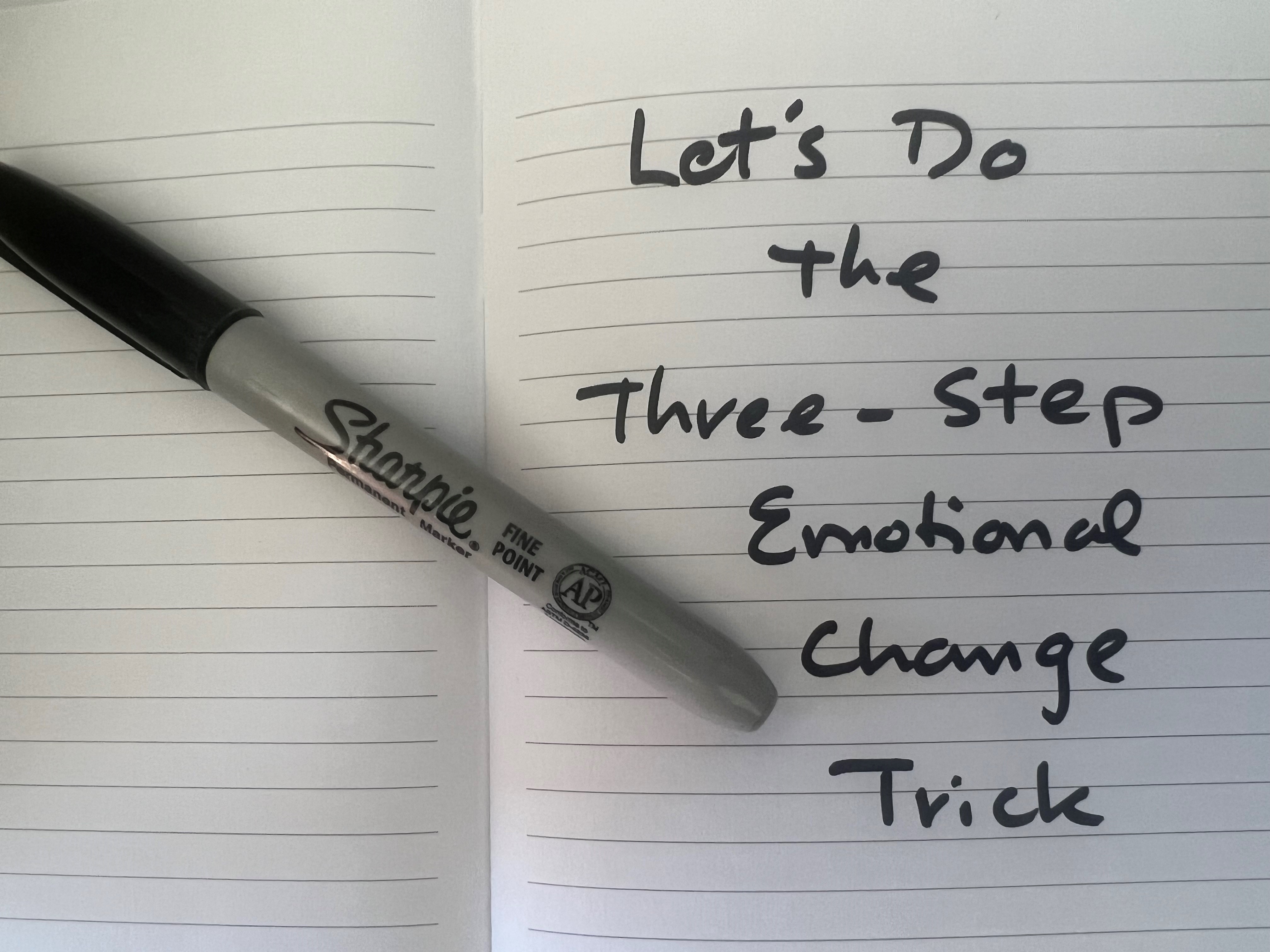
Dr. Sommers-Flanagan is scheduled to present from 1pm – 3pm CST on “Tough Kids, Cool Counseling: Strategies for Engaging and Influencing Youth.” Engaging “tough kids” in behavioral health can be immensely frustrating or splendidly gratifying. The truth of this statement is so obvious that the supportive reference, at least according to many teenagers is “Duh!” In this 2-hour workshop, participants will learn, experience, and practice several strategies for engaging and influencing youth. Several cognitive, emotional, and constructive brief counseling techniques will be described and demonstrated. Examples include acknowledging reality, positive questioning, wishes and goals, the affect bridge, the three-step emotional change trick, what’s good about you?/asset flooding, and more. Essential counseling principles, countertransference, and cultural issues will be included.
Last week I did a little cliff-jumping into the Stillwater River with my twin 13-year-old grandchildren. It was only about 20 feet, but high enough to feel the terror and exhilaration of a brief free-fall.
This week I’m having a different kind of buzz. Dr. Margaret Rutherford reached out to me with a link to her TEDx Boca Raton talk. Previously I was a guest on her video podcast show (here’s the link to her podcast page: https://drmargaretrutherford.com/podcast-2-2/, and a link to her website and book, “Perfectly Hidden Depression” https://drmargaretrutherford.com/perfectlyhiddendepressionbook/). We’ve stayed in touch via email. Along with her link, she apologetically noted that she “barely” got a plug in for my work on strengths-based suicide assessment. I thought it was incredibly nice for her to give a nod, even a brief one, to my work. But then I watched and discovered that she had only mentioned three professionals: Edwin Shneidman (the “Father of Suicidology), Sidney Blatt (a renowned suicide and depression researcher from Yale), and some obscure guy from the University of Montana (that would be me).
Aside from feeling honored, humbled, and flattered to even get a mention, Dr. Margaret’s talk is fantastic. She makes the point–with a couple of articulate cases–for moving away from a strictly medical model perspective and toward working with people who may be suicidal through a lens of no judgment and acceptance. Here’s the link to her talk, which is well-worth a watch: https://www.youtube.com/watch?v=lXZ5Bo5lafA
There are other signs that how professionals (and hopefully the public) view suicidal ideation and behavior may be shifting toward greater acceptance. I’ll go into these other signs in a future post, but right now I want to emphasize that the point is not to replace the medical model, but to move the needle toward less pathologizing and more acceptance of the fact that having suicidal thoughts is often a normal part of life. To the extent that we can approach people who are thinking about suicide with, as Dr. Margaret said, “non-judgment and acceptance,” the more likely they are to be open with us about their pain. . . and . . . when people are open about their pain and suffering, then we have a chance to listen with empathy and a greater opportunity to be of help. . . which, I think, is the main point.
The place to click if you want to learn about psychotherapy, counseling, or whatever John SF is thinking about.