Tag Archives: youth

Why I’m Mostly Against Universal Suicide Screenings in Schools

I’ve been in repeated conversations with numerous concerned people about the risks and benefits of suicide screenings for youth in schools. Several years ago, I was in a one-on-one coffee shop discussion of suicide prevention with a local suicide prevention coordinator. She said, more as a statement than a question, “Who could be against school-based depression and suicide screenings?”

I slowly raised my hand, forced a smile, and confessed my position.

The question of how and why I’m not in favor of school-based mental health and suicide screenings is a complex one. On occasion, screenings will work, students at high-risk will be identified, and tragedy is averted. That’s obviously a great outcome. But I believe the mental health casualties from broad, school-based screenings tend to outweigh the benefits. Here’s why.

  1. Early identification of depression and suicide in youth will result in early labeling in school systems; even worse, young people will begin labeling themselves as being “ill” or “defective.” Those labels are sticky and won’t support positive outcomes.
  2. Most youth who experience depressive symptoms and suicide ideation are NOT likely to die by suicide. Odds are that students who don’t report suicidal ideation are just as likely to die by suicide. As the scientists put it, suicidal ideation is not a good predictor of suicide. Also, depression symptoms generally come and go among teenagers. Most teens will recover from depressive symptoms without intensive interventions.
  3. After a year or two of school-based screenings, the students will know the drill. They will realize that if they endorse depression symptoms and suicidal items that they’ll have to experience a pretty horrible assessment and referral process. When I talk to school personnel, they tell me that, (a) they already know the students who are struggling, and (b) in year 2 of screenings, the rates of depression and suicidality plummet—because students are smart and they want to avoid the consequences of being open about their emotional state.
  4. About 10-15% of people who complete suicide screenings feel worse afterward. We don’t really want that outcome.
  5. There’s no evidence that school-based screenings are linked to reductions in suicide rates.   

For more info on this, you can check out a brief commentary I published in the American Psychologist with my University of Montana colleague, Maegan Rides At The Door. The commentary focuses on suicide assessment with youth of color, but our points work for all youth. And, citations supporting our perspective are included.

Here are a few excerpts from the commentary:

 Standardized questionnaires, although well-intended and sometimes helpful, can be emotionally activating and their use is not without risk (Bryan, 2022; de Beurs et al., 2016).

In their most recent recommendations, the United States Preventive Services Task Force (2022) concluded that the evidence supporting screening for suicide risk among children and adolescents was “insufficient” (p. 1534). Even screening proponents acknowledge, “There is currently little to no data to show that screening decreases suicide attempt or death rates” (Cwik et al., 2020, p. 255). . . . Across settings, little to no empirical evidence indicates that screening assessments provide accurate, predictive, or useful information for categorizing risk (Bryan, 2022).

And here’s the link to the commentary:

So-Called “Tough Kids” in Vermont: The PPTs

Hi All,

I’m virtually in Vermont tomorrow doing an all-day-long workshop on working with so-called challenging youth in counseling and psychotherapy. We start at 8am Mountain Time . . . and 10am on the East coast. Here’s the link to register for the workshop for anyone who suddenly has found themselves with a wide open day. The cost is: $195.

https://twinstates.ce21.com/item/tough-kids-cool-counseling-131540

And for those of you attending the workshop (or anyone who’s feeling nosy) here are the generic ppts (without the active video links):

Tough Kids, Cool Counseling — An Online Workshop – Dec 6, 2024

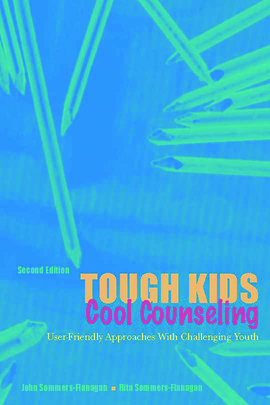
My wife (Rita) and I used to argue over who came up with the catchy “Tough Kids, Cool Counseling” title for our 1997/2007 book with the American Counseling Association. I would swear it was MY grand idea; she would swear back that it was HER idea. If any of you are in–or have been in–romantic partnerships, perhaps you can relate to disagreements over who has all the best ideas. I doubt that this dynamic is unique to Rita and me.

Years passed . . . and now I’ve come to very much dislike the title. . . leading me to give Rita ALL THE CREDIT! You’ve got it Rita! It was all you!

Despite my dislike for the title, I still sometimes use it for workshops. Why might that be, you may be wondering? Good question. I use it so I can make the point, early in the workshop, that we should NEVER use language that blames young people for their problems or their problem behaviors. In fact, we should never even “think” thoughts that assign blame to them for being “tough.”

My reasoning for this is informed by constructive theory and narrative therapy. When we assign blame and responsibility to young people for being “tough” or “difficult” or “challenging,” we risk contributing to them holding a tough, difficult, or challenging identity–which is exactly the opposite of what we want to be doing. Instead, I tell my workshop participants that we should recognize, there are no “tough kids” . . . there are only kids in tough situations . . . and being in counseling or psychotherapy is just another tough situation that young people have to face. Consequently, it’s NOT their fault if they engage in so-called tough or challenging behaviors.

All this leads me to share that I’ll be online all day on December 6, 2024, doing a workshop for mental health professionals. The workshop, anachronistically titled, “Tough Kids, Cool Counseling” is sponsored by the Vermont Psychological Association. You can register for the workshop here: https://twinstates.ce21.com/item/tough-kids-cool-counseling-131540

Even if I do say so myself, I’m proclaiming here and now that this will be a very engaging online workshop. If you work with youth (ages 10-18) in counseling or psychotherapy, and you need/want some year-ending CEUs, we’ll be having some virtual fun on December 6, and I hope you can join in.

Notes on My Favorite New Article

It can be good to have an IOU. I knew I owed my former student and current colleague, Maegan Rides At The Door, a chance to publish something together. We had started working on a project several years ago, but I got busy and dropped the ball. For years, that has nagged away at me. And so, when I read an article in the American Psychologist about suicide assessment with youth of color, I remembered my IOU, and reached out to Maegan.

The article, written by a very large team of fancy researchers and academics, was really quite good. But, IMHO, they neglected to humanize the assessment process. As a consequence, Maegan and I prepared a commentary on their article that would emphasize the relational pieces of the assessment process that the authors had missed. Much to our good fortune, after one revision, the manuscript was accepted.

I saw Maegan yesterday as she was getting the President Royce Engstrom Endowed Prize in University Citizenship award (yes, she’s just getting awards all the time). She said, with her usual infectious smile, “You know, I re-read our article this morning and it’s really good!”

I am incredibly happy that Maegan felt good about our published article. I also re-read the article, and felt similar waves of good feelings—good feelings about the fact that we were able to push forward an important message about working with youth of color. Because I know I now have your curiosity at a feverish pitch, here’s our closing paragraph:

In conclusion, to improve suicide assessment protocols for youth of color, providers should embrace anti-racist practices, behave with cultural humility, value transparency, and integrate relational skills into the assessment process. This includes awareness, knowledge, and skills related to cultural attitudes consistent with local, communal, tribal, and familial values. Molock and colleagues (2023) addressed most of these issues very well. Our main point is that when psychologists conduct suicide assessments, relational factors and empathic attunement should be central. Overreliance on standardized assessments—even instruments that have been culturally adapted—will not suffice.

And here’s the Abstract:

Molock and colleagues (2023) offered an excellent scholarly review and critique of suicide assessment tools with youth of color. Although providing useful information, their article neglected essential relational components of suicide assessment, implied that contemporary suicide assessment practices are effective with White youth, and did not acknowledge the racist origins of acculturation. To improve suicide assessment process, psychologists and other mental health providers should emphasize respect and empathy, show cultural humility, and seek to establish trust before expecting openness and honesty from youth of color. Additionally, the fact that suicide assessment with youth who identify as White is also generally unhelpful, makes emphasizing relationship and development of a working alliance with all youth even more important. Finally, acculturation has racist origins and is a one-directional concept based on prevailing cultural standards; relying on acculturation during assessments with youth of color should be avoided.

And finally, if you’re feeling inspired for even more, here’s the whole Damn commentary:

Tough Kids, Cool Counseling in Ypsilante

Yesterday I had a marvelous day with a group of about 35 wonderful mental health professionals and students in Ypsilante, Michigan. I was hosted by generous and kind faculty of Eastern Michigan University. I learned about the historical significance of “Ipsy,” along with anecdotes pertaining to the Ipsy water tower on post-cards, details of which—obviously because I’m so classy and sophisticated—I will not mention here.

The weather was marginally dreadful. We worried the in-person workshop would be cancelled and replaced with Zoom. Despite the weather, some people drove 90 minutes or more to arrive, which was just one small measure of their commitment to learning and their commitment to serving youth and families in counseling and psychotherapy. Whenever I’m in a room with professionals like the group yesterday, I have renewed hope in the world and in the future. The participants were: Just. Good. People.

As is my practice, I’m posting the ppts from the workshop here:

I’m also posting the “Extra” and more detailed handout here:

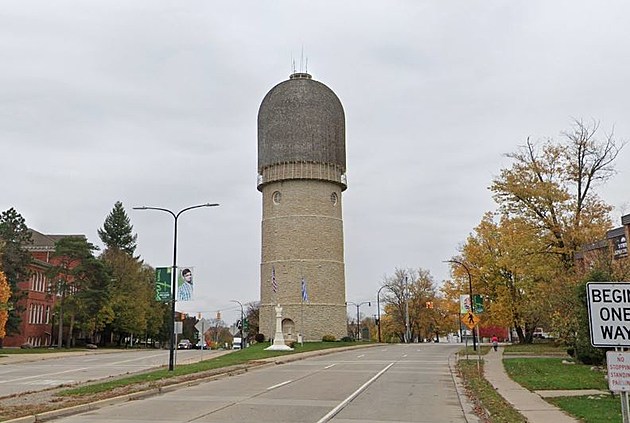
And here’s a PG-rated image of the Ypsilante water tower.

Toward the end of the workshop I engaged two participants in an activity that involved shaking imaginary soda pop bottles and opening them. One participant had brought her five-year-old daughter for the day (because of a school closure). As her mother and the woman next to her pretended to shake their imaginary bottles, and I was saying, “Shake, shake, shake,” the five-year-old, who had been incredibly well-behaved for the preceding 8 hours, began giggling in a way that couldn’t be described as representing anything other than pure joy.

In honor of my new five-year-old friend, I encourage you all to find time to giggle this weekend. Even better, find a child to giggle with; it will be time well-spent.

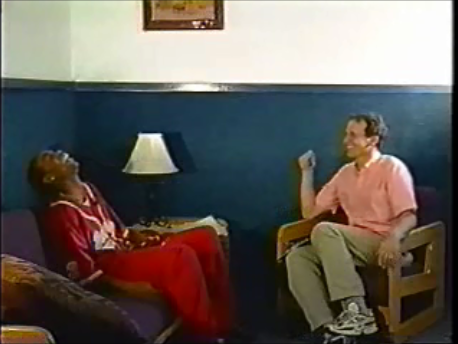
And here’s a photo of me having a giggle with a young person.

Hanging out with the Virginia School Counseling Association in Richmond: The Extra Handout

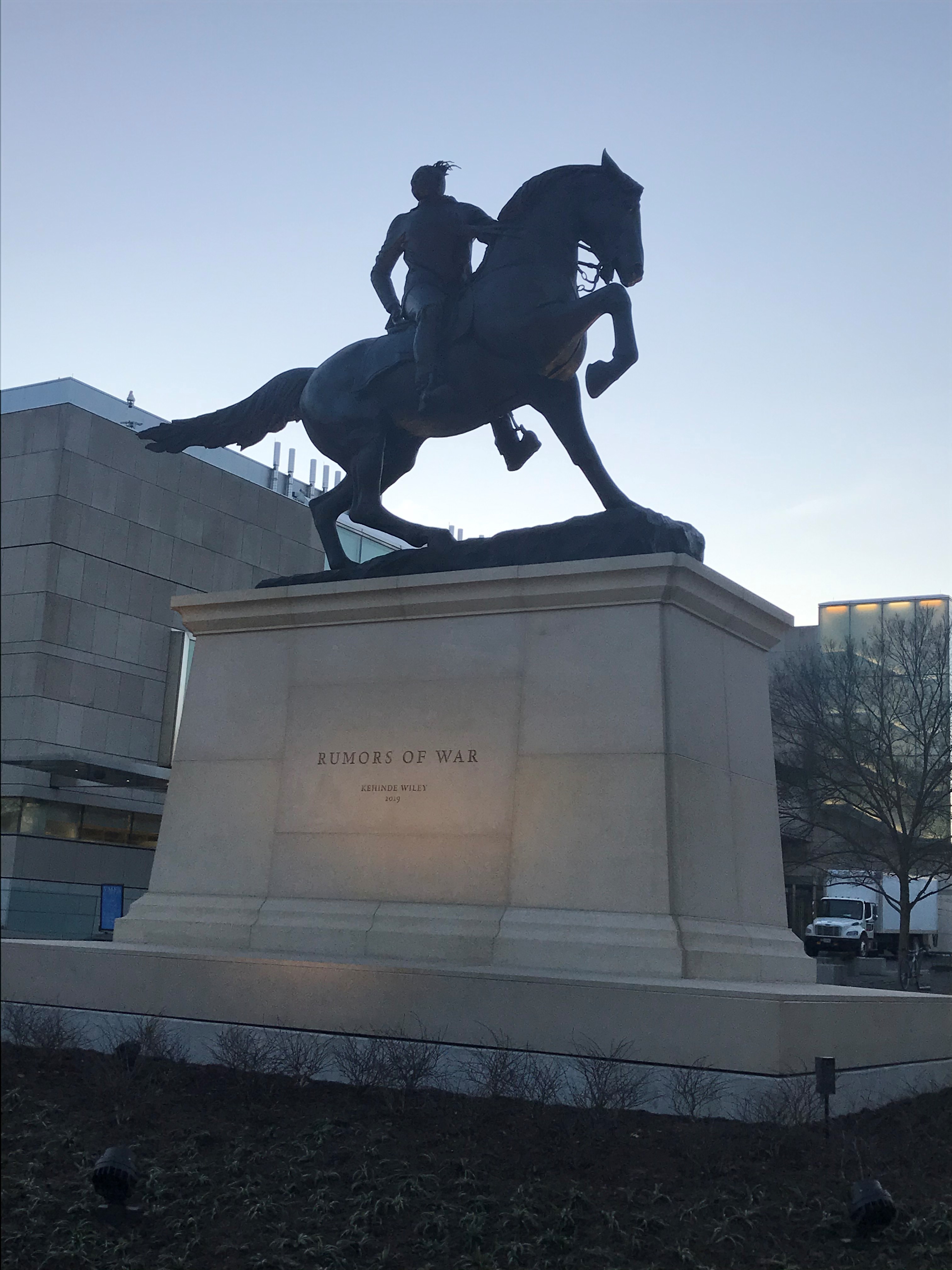
Richmond Statue

I just had an awesome day with about 260 Virginia School Counselors. You know who you are, and you know you’re incredible.

Just FYI, the state of Virginia is making a big investment in adding school counselors. . . which IMHO, is a very smart and reasonable decision. Other states might want to take note and follow their lead. The problem is that many school age youth are suffering from extremely challenging home, neighborhood, and school situations. Having more competent school counselors available to support student success, student mental health, and teachers is a wise move.

For all of the VSCA members I met today, thank you for coming, but more importantly, thanks for the deeply important commitment you make to the well-being of students in your schools. You are amazing!

Here’s the extra handout, with more details than the powerpoint slides: VSCA 2020 Extra Handout


Please Support Trapper Creek Job Corps and the Other Job Corps Designated as Civilian Conservation Corps

Hi All.

I’m asking for help. All of the Job Corps designated as Civilian Conservation Corps are slated to be cut.

Below, I’m pasting information about Trapper Creek Job Corps. I’m also providing a link to a form letter with talking points, as well as an Excel sheet with contact info for various Senate Offices.

Thanks in advance for your help. Job Corps was started as part of LBJ’s war on poverty. It’s a program that gives youth and young adults ages 16-24 a chance to learn a trade and become a taxpayer who contributes to our country in positive ways.

I hope you will spread this message far and wide!

Here’s the letter:

Dear Friend of Job Corps.

This is not a drill. This is 911.

The media is out there; Secretary Acosta (Department of Labor) and Secretary Purdue (USDA) have made the agreement to eliminate the USDA’s role in the Job Corps Program. This means that Trapper Creek (as well as the other 24 Forest Service Centers, or CCCs) will be transferred to DOL, and Trapper Creek will be more or less eliminated as we know it. Our students will no longer be served by this program. Our communities will no longer be served by the extensive support of our amazing students. Our 55 hard working staff at Trapper Creek (and over 1,200 Nation-wide) who have dedicated their professional lives to helping disadvantaged youth will lose their jobs. It is clear this is an assault on our youth, our communities and our people.

My understanding is as such: the decision is to eliminate operations of the CCCs by September 30, 2019. This is not an arbitrary date: it is the last day of the fiscal year. Should this movement take place successfully, the contingent will have won; Trapper and the CCCs are over and done for. We lose our jobs and the thousands of young people served by the CCCs ever year will be without services. However, Congress was just notified today of this decision and, frankly, are not happy. The Forest Service Job Corps program has always had huge support from both sides of Congress; Democrats believe in the humanitarian component while Republicans believe in the fiscal responsibility of training young adults in poverty to learn the hard skills to get a living wage job and the soft skills to stay employed.

WHAT I NEED YOU TO DO: below are two documents.  The spreadsheet attached has contact information for Congressional folks in your states. Please make as many contacts as you can to them as well as to local political folks; mayors, city council, etc. We need as many calls and emails as possible from as many folks as possible. Democrats are already putting things in writing; Republicans are on board but all together too quiet. These folks need to hear of your displeasure of this decision.

Also attached is a form letter (5.23.19 CCC Agency Letter), talking points if you will, to use when visiting with these folks.

Please forward this message to all parties you know that care about our youth, our communities, our staff and the program at large. Facebook is a great tool to move information as well.

FEDERAL EMPLOYEES: do not use government time, equipment or material to move this information. You are welcome to use Facebook if you do not identify yourself as a Federal Employee.

The Talking Points letter is here: 5.23.19 CCC Agency Form Letter with Talking Points

The Excel spreadsheet with contact info is here: Copy of CCC Contact Sheet


Upcoming Workshops: L.A., Chicago, Morgantown, and Greensburg (outside Pittsburg)

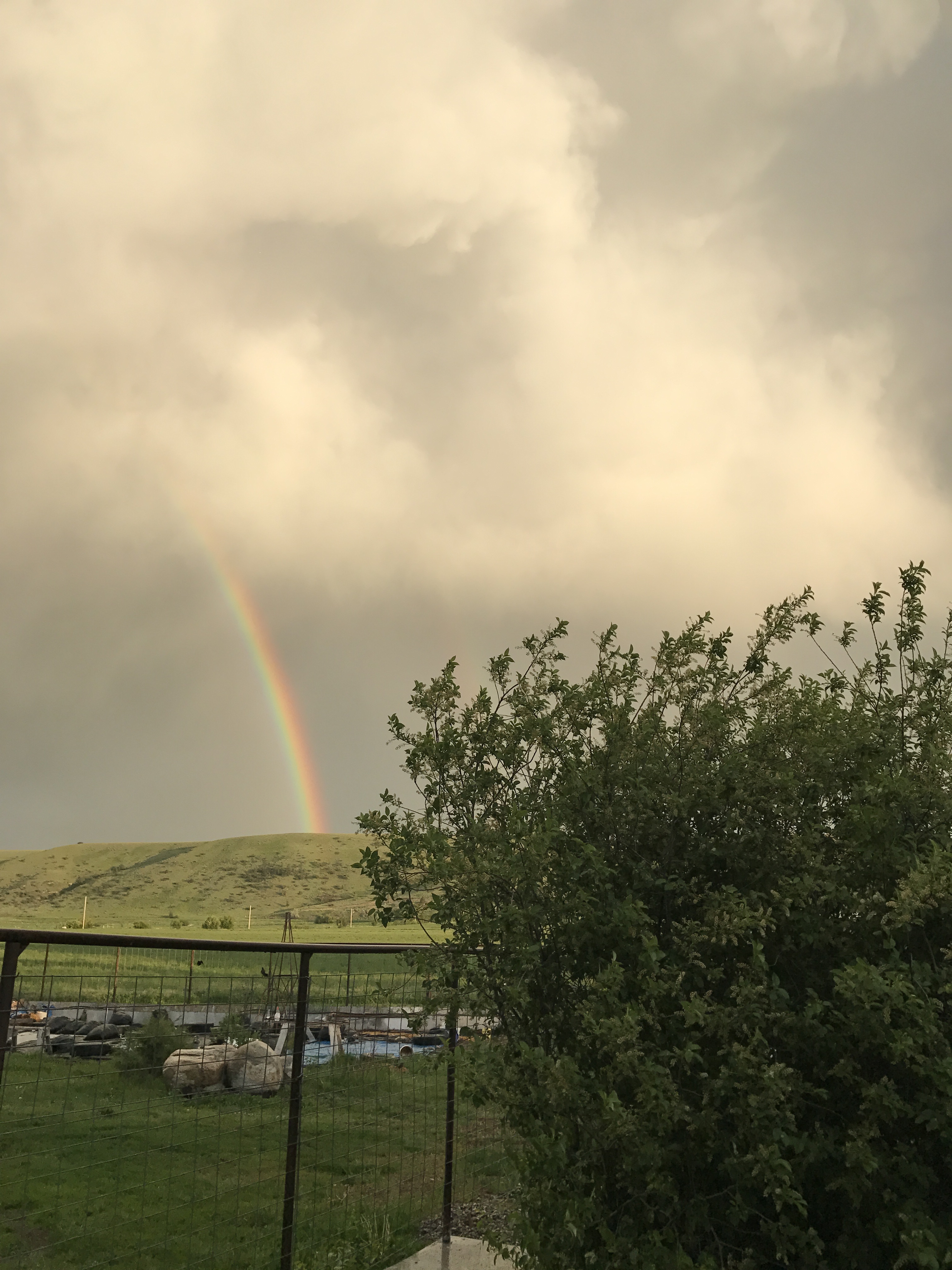
Rainbow 2017

October is almost always a big month for counseling and psychology conferences and workshops. This October is no exception. I’m posting my October workshop presentation schedule here, just in case you want to say hello and possible collect some continuing education credit.

On Thursday, October 5, I’ll be in Orange County for the California Association for School Psychologists conference. Here’s a link: https://event.casponline.org/#intro

On Sunday, October 8, I’ll be in Chicago for the Association of Counselor Educators and Supervisors to present on the Mental Status Examination with Thom Field of the City University of Seattle.

On Thursday, October 12, I’ll be in Morgantown, WV for an afternoon workshop with counseling and psychology students from West Virginia University.

On Friday, October 13, I’ll be in Greensburg, PA (just outside Pittsburgh) for an all-day workshop sponsored by Indiana University of Pennsylvania. The link: https://www.iup.edu/counseling/centers/upcoming-workshops-and-events/

Today is the first day of Autumn . . . I hope this signals the end of hurricanes, floods, fires, and other challenges so many people are facing.


Goodnight, South Carolina

Some days . . . the news is discouraging. Some days . . . evidence piles up suggesting that nearly everyone on the planet is far too greedy and selfish. On those days, I can’t help but wonder how our local, national, and worldwide communities survive. It feels like we’re a hopeless species heading for a cataclysmic end.

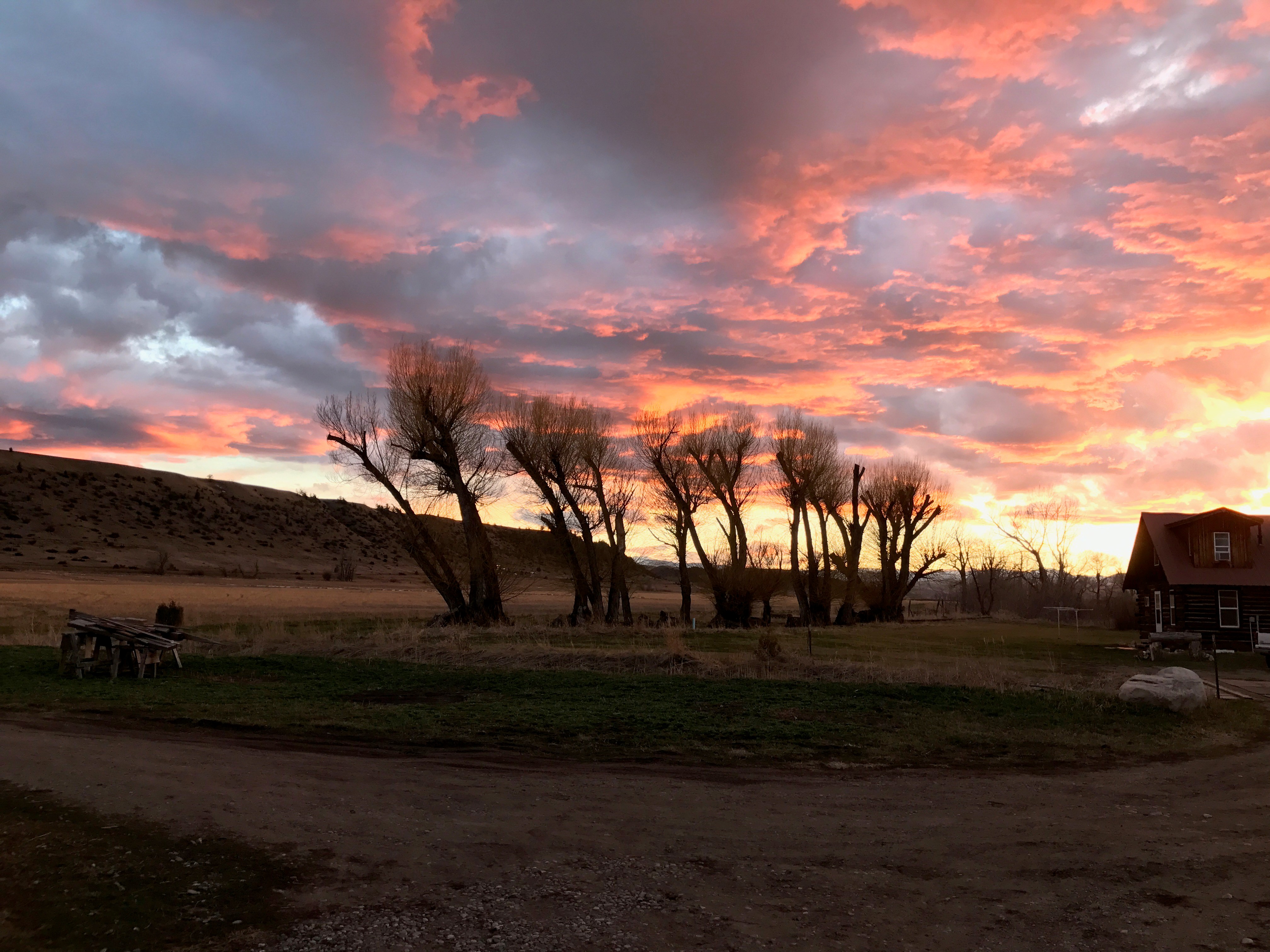
Sunset on StillwaterBut then I have a day like yesterday. A day where I had the honor and privilege to spend time hanging out with people who are professional, smart, compassionate, and dedicated to helping children learn, thrive, and get closer to reaching their potentials. I’m sure you know what I mean. If you turn off the media and peek under the surface, you’ll find tons of people “out there” who wake up every day and work tremendously hard to make the world just a little bit better, for everyone.

For me, yesterday’s group was the South Carolina Association of School Psychologists. They were amazing. They were kind. About 110 of them listened to me drone on about doing counseling with students who, due, in part, to the quirky nature of universe, just happen to be living lives in challenging life and school situations. The school psychologists barely blinked. They rarely checked their social media. They asked great questions and made illuminating comments. They were committed to learning, to counseling, to helping the next generation become a better generation.

All day yesterday and into the night I had an interesting question periodically popping up in the back of my mind. Maybe it was because while on my flight to South Carolina, I sat next to a Dean of Students from a small public and rural high school in Wisconsin. Maybe it was because of the SCASP’s members unwavering focus and commitment to education. The question kept nipping at my psyche. It emerged at my lunch with the Chair of the Psychology Department at Winthrop University.  It came up again after my dinner with four exceptionally cool women.

The question: “How did we end up with so many people in government who are anti-education?”

Yesterday, I couldn’t focus in on the answer. I told someone that–even though I’m a psychologist–I don’t understand why people do the things they do. But that was silly. This morning the answer came flowing into my brain like fresh spring Mountain run-off. Of course, of course, of course . . . the answer is the same as it always has been.

The question is about motivation. Lots of people before me figured this out. I even had it figured out before, but, silly me, I forgot. Why do people oppose education when, as John Adams (our second President) said, “Laws for the liberal education of youth, especially for the lower classes of people, are so extremely wise and useful that to a humane and generous mind, no expense for this purpose would be thought extravagant.”

The answer is all about money and power and control and greed and revenge and ignorance. Without these motivations, nearly everyone has a “humane and generous mind” and believes deeply in funding public education.

Thanks to all the members of the South Carolina Association of School Psychologists, for giving me hope that more people can be like you, moving past greed and ignorance and toward a more educated and better world.

Good night, South Carolina. It’s been a good day.


Counseling Culturally Diverse Youth: Research-Based and Common Sense Tips

This is a rough preview of a section from the 6th edition Clinical Interviewing. As always, your thoughts and feedback are welcome.

Counseling Culturally Diverse Youth: Research-Based and Common Sense Tips

Research on how to practice with culturally diverse youth is especially sparse. To make matters more complex, youth culture is already substantially different from adult culture. This means that if you’re different from young clients on traditional minority variables, you’ll be experiencing a double dose of the cultural divide. These complications led one writer to title an article “A knot in the gut” to describe the palpable transference and countertransference that can arise when working with race, ethnicity, and social class in adolescents (Levy-Warren, 2014).

To help reduce the size of the knot in your gut, we’ve developed a simple research- and common-sense list to guide your work with culturally diverse youth (Bhola & Kapur, 2013; Norton, 2011; Shirk, Karver, & Brown, 2011; Villalba, 2007):

1. Use the interpersonal skills (e.g., empathy, genuineness, respect) that are known to work well with adult minority group members. Keep in mind that interpersonal respect is an especially salient driver in smoothing out intercultural relationships.

2. Find ways to show genuine interest in your young clients, while also focusing on their assets or strengths.

3. Treat the meeting, greeting, and first session with freshness and eagerness. There’s evidence that young clients find less experienced therapists easier to form an alliance with.

4. Use a genuine and clear purpose statement. It should capture your “raison d’etre” (your reason for being in the room). We like a purpose statement that’s direct and has intrinsic limits built in. For example: “My goal is to help you achieve your goals . . . just as long as your goals are legal and healthy.” One nice thing about this purpose statement is that sometimes young clients think the “legal and healthy” limitations are funny.

5. Don’t use a standardized approach to always talking with youth about your cultural differences. Instead, wait for an opening that naturally springs up from your interactions. For example, when a teen says something like, “I don’t think you get what I’m saying” it’s a natural opening to talk about how you probably don’t get what the youth is saying. Then you can discuss some of your differences as well as you’re desire to understand as much as you can. For example: “You’re right. I probably don’t get you very well. It’s obvious that I’m way older than you and I’m not a Native American. But I’d like to understand you better and I hope you’ll be willing to help me understand you better. Then, in the end, you can tell me how much I get you and how much I don’t get you.”

6. Provide clear explanations of your procedure and rationale and then linger on those explanations as needed. If young clients don’t understand the point of what you’re doing, they’re less likely to engage.

7. Be patient with your clients; research with young clients and diverse clients indicate that alliance-building (and trust) takes extra time and won’t necessarily happen during an initial session

8. Be patient with yourself; it may take time for you to feel empathy for young clients who engage in behaviors outside your comfort zone (e.g., cutting)

I hope these ideas can help you make connections with youth from other cultures. The BIG summary is to BE GENUINE and BE RESPECTFUL. Nearly everything else flows from there.