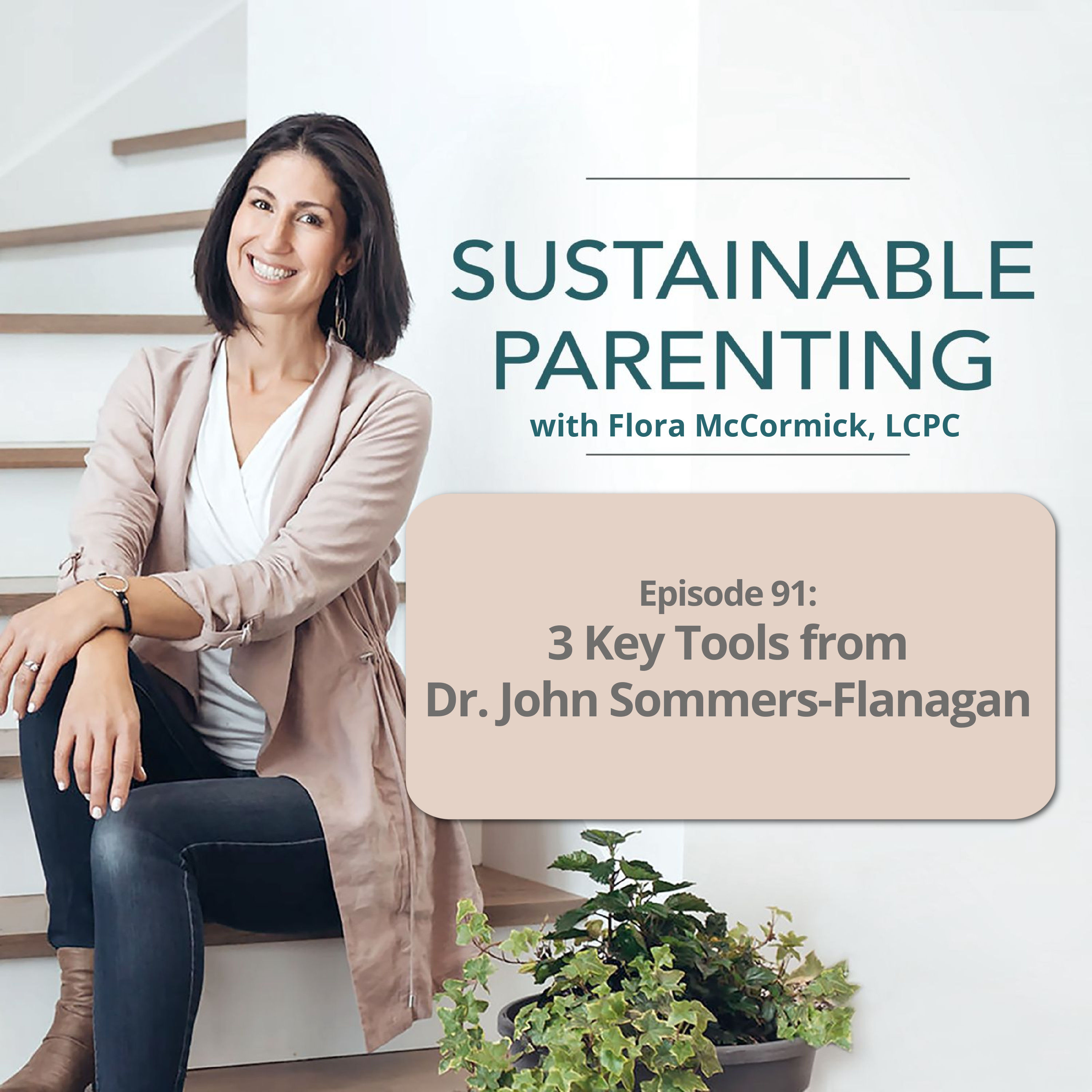
Just before the big news about our $9.4M gift from the Dennis and Phyllis J. Washington Foundation, I had a chance to sit with Flora McCormick as a guest on her very cool podcast, “Sustainable Parenting.” I’ve known Flora for at least 15 years, and she is a focused, dedicated, knowledgeable, kind, and EXCELLENT parenting educator. Talking with her was, as usual, fun and insightful.
In this podcast, we cover three big ideas about parenting. You’ll notice, as in the attached video clips below, Flora is very good at getting me to talk. . . and at zeroing in on what’s the most important information for parents.
I’m sorry to announce that because I’ve come down with COVID, tomorrow’s “pop-up” Parenting Consultation workshop is postponed for one week.
We will convene online NEXT Wednesday, September 11, at 9am and keep going until about 4pm. We will have a morning and afternoon break, and a lunch break.
We will be able to provide Montana Behavioral Health CEUs. Also, because I’m a psychologist, the training will likely qualify for Board of Psychology CEUs. We will issue certificates about one week after the workshop.
My apologies for the delay on this workshop. The main thing I have to say about that is: “COVID sucks.”
As noted before, although this is FREE, we’re asking participants to:
If you find the workshop useful, make a donation to Families First in an amount that represents the value of the workshop to you. Here’s the link for that: https://donorbox.org/familiesfirstdonate
Do what you can—in the future—to support parents as they face unusually difficult challenges.
I would also like participants to engage, volunteer for role plays, participate in break-out rooms, and discuss what they’re experiencing and learning.
Information on the workshop is below
Using a Consultation Model to Work Effectively with Parents
John Sommers-Flanagan, Ph.D.
Parenting has always been challenging, but now, with ubiquitous social media influences, the aftermath of the global pandemic, and increasing rates of children’s mental disorder diagnoses, parenting in the 21st century is more stressful and demanding than ever before. As a consequence, many parents turn to mental health, healthcare, and school professionals for help with their children’s behavior and family problems. However, partly because parents can be selective or picky consumers and partly because children’s problems can be complex and overwhelming, many professionals feel ill-prepared to work effectively with parents. This workshop will teach participants a model for working effectively with parents. The model, which has supporting research, can be used for brief individual consultations or longer-term parent counseling. Practitioners who want to work with parents will learn methods for developing rapport, collaborating on problem formulation, initial interventions, and optional follow-up strategies.
Learning Objectives:
Describe a consultation model, with supporting research, for working effectively with parents.
Apply skills for brief individual consultations or longer-term parent counseling.
Utilize methods for rapport, collaborative problem formulation, initial interventions, and optional follow-up strategies.
Thanks for your flexibility!
Here are two journal articles on the approach we’ll be learning:
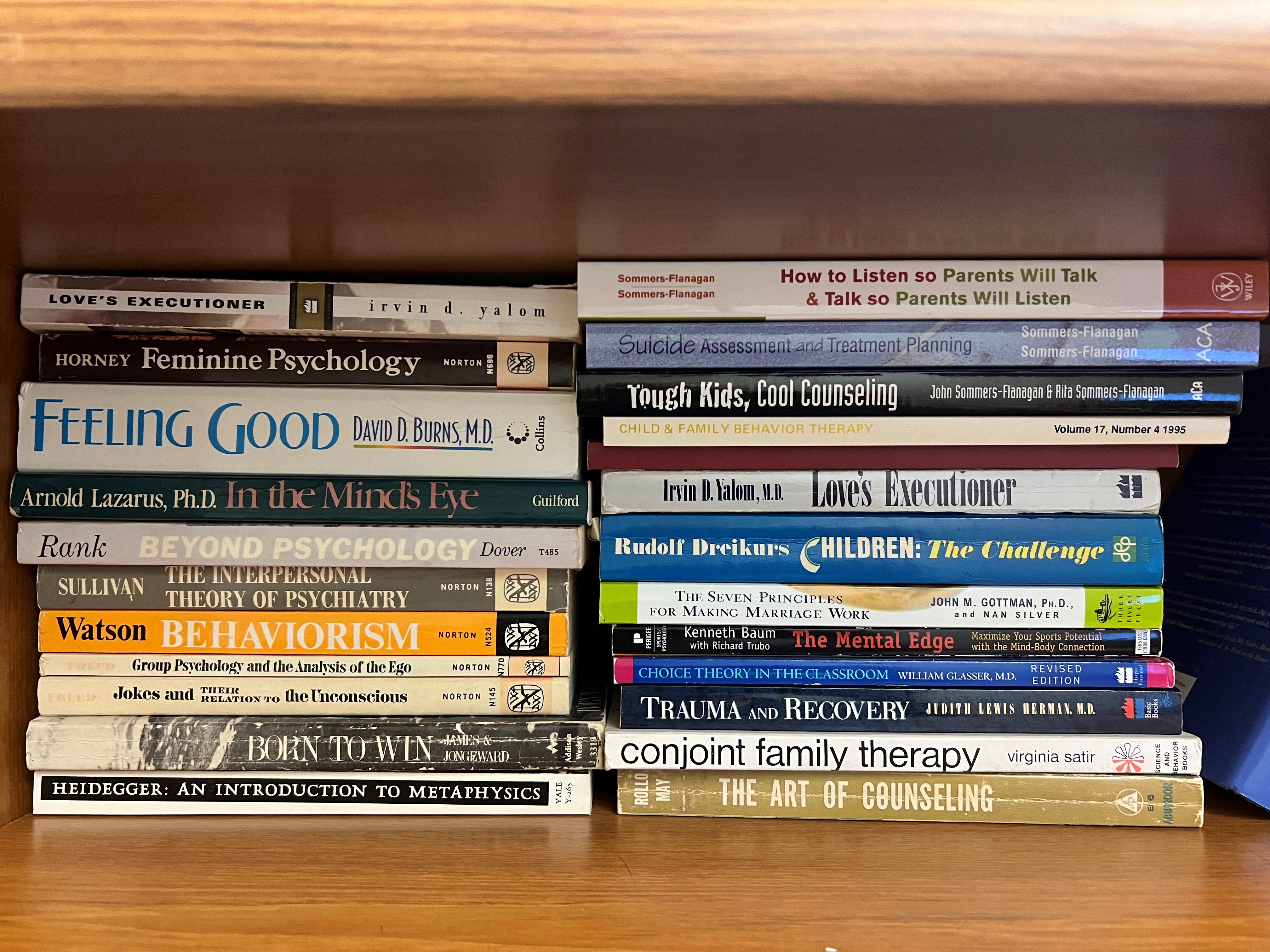
Parenting books are ubiquitous; they vary greatly by population (e.g., teens, toddlers, LGBTQ+, culture), problem (e.g., ADHD, autism, sleep, etc.) and approach. This is a field where nearly everyone has very strong (and often opposing) opinions and feelings and very much believe THEY ARE RIGHT. Think of Tiger Parenting vs. Free Range Parenting and the fights that might start between adherents to those approaches. You’ll notice I don’t include books on Tiger or Free Range parenting (which may or may not be a statement), but I do capture some of the extremes and nuances of the different approaches to helping babies and children sleep.
I’m not necessarily advocating the books on this list. In fact, I think some of them are pretty silly. For those of you who know me, you know that I dislike hype, and I dislike it when authors write and act like they’re the ones who have suddenly developed a new and revolutionary paradigm shift. Many contemporary parenting book authors are de-emphasizing compliance and behavioral control, and focusing instead on the underlying neurological states that are contributing to disruptive or undesirable behaviors. Although I don’t dispute the value of these approaches, they sound very Adlerian—other than the use of fancy pseudo-neuroscience terminology. They also sound like my mentor, Linda Braun, of Families First Boston, who always taught parents to “Get Curious, Not Furious.” Yes, I am now officially an old crank.
Many of these newer so-called “paradigm-shifting” approaches are very anti-behaviorism. That’s perfectly okay; after all, John Watson began the behavioral movement in parenting by advising parents not to hug or show too much affection to their children. His children suffered. Watson was a whack (and a genius); his form of behavioral parenting belongs only in the history books. On the other hand, parents need to pay attention to the repeating contingency patterns happening in their homes. Whether or not you buy into behaviorism, ignoring environmental contingencies happening in your home is a recipe for repeated parenting disasters. We need the knowledge of behavioral approaches, if only to make sure we’re not engaging in backward behavior modification. [for more on backward behavior modification, see: https://johnsommersflanagan.com/2012/12/02/backward-behavior-modification/ or https://johnsommersflanagan.com/2018/02/02/doing-behavior-modification-right/]
Many years ago, Sigmund Freud said something like, “There are many ways and means of conducting psychotherapy, all that lead to recovery are good.” The same might be said about parenting books. There are—truly—many ways and means of parenting. As you explore this field, you may want to focus your search on your particular interest. There’s great (and not so great) stuff out there on LGBTQ+ parenting, Indigenous parenting, and many other foci. You may want to find curated lists (like mine). For example,Maryam Abdullah and Megan Bander’s (of Berkeley’s Greater Good Magazine) favorite parenting books of 2023, see: https://greatergood.berkeley.edu/article/item/our_favorite_parenting_books_of_2023
My own list, which I’m sharing with my parenting consultation workshop participants is below.
Bryson, T. P., & Siegel, D. J. (2015). No-drama discipline: The whole-brain way to calm the chaos and nurture your child’s developing mind. Bantam.
Chiaramonte, N., & Chiaramonte, K. J. (2024). Embracing queer family: Learning to live authentically in our families and communities. Broadleaf Books.
Clarke-Fields, H. (2020). Raising good humans: A mindful guide to breaking the cycle of reactive parenting and raising kind, confident kids. New Harbinger.
Delahooke, M. (2019). Beyond behaviors: Using brain science and compassion to understand and solve children’s behavioral challenges. PESI Publishing.
Eriksen, T. (2022). Unconditional: A guide to loving and supporting your LGBTQ child. Mango.
Healy, G. (2023). Regulation and co-regulation: Accessible neuroscience and connection strategies that bring calm into the classroom. National Center for Youth Issues.
Lansford, J. E., Rothenberg, W. A., & Bornstein, M. H. (2021). Parenting across cultures from childhood to adolescence development in nine countries. Routledge.
Tyler, S., & Makokis, L. (2021). Ohpikinâwasowin/Growing a child: Implementing Indigenous ways of knowing with indigenous families. Fernwood Publishing.
Weissbluth, M. (2022). Healthy sleep habits, happy child: A new step-by-step guide for a good night’s sleep (5th ed.). Ballantine Books.
West, K., & Kenen, J. (2020). The sleep lady’s good night, sleep tight: Gentle proven solutions to help your child sleep without leaving them to cry it out (rev. ed.). Hatchet
FYI: Below is an annotated list of older parenting classics.
Ackerman, M. (1998). Does Wednesday mean Mom’s house or Dad’s? Wiley.
This book is written by a nationally renowned expert on child custody evaluations. It includes broad coverage of how parents can co-parent in a manner that is less confusing and more healthy for children. One of the book’s strengths is a chapter on developing parenting and custodial schedules, which is a practical problem often plaguing parents who are divorced or divorcing.
Brazelton, T. B., & Sparrow, J. D. (2006). Touchpoints: Birth to 3(2nd ed.). MA: Da Capo Press.
T. Berry Brazelton is one of the most renowned parenting experts in the world. His Touchpoints books (there is also a Touchpoints: 3–6 years) are packed with critical information about how to deal with parenting challenges. Although you may not agree with every recommendation in the book, it’s difficult to find a more comprehensive, balanced, and gentle approach to parenting. The book includes three main sections: Touchpoints of Development; Challenges to Development; and Allies in Development. The breadth and depth of these books are very impressive.
Cline, F., & Fay, J. (2006). Parenting with love and logic(rev. ed.). NavPress.
The love-and-logic model for parenting and teaching is extremely popular, particularly among educators. Cline and Fay are master storytellers and they bring home the lesson that parents need to give children increasing responsibility and stand by them (but not in for them) with empathy when they make mistakes or fail. The underlying premise of this model is that children learn best from their own mistakes and natural consequences and that we should all avoid being “helicopter” parents who rescue our children from real-world learning.
Coloroso, B. (2009). The bully, the bullied, and the bystander: From preschool to high school—How parents and teachers can help break the cycle (rev. ed.). Harper.
Barbara Coloroso is a popular parent educator from the Pacific Northwest. She has written several well-received books and this is her latest. It focuses on how parents and teachers can help children cope with bullying. Coloroso paints the bully, the bullied, and the bystander as “three characters in a tragic play.” Her focus on the bystander is especially important because of its consistency with research suggesting that the best bullying interventions focus not only on the bully and victim, but also on bystanders, parents, and teachers.
Dreikurs, R., & Soltz, V. (1991). Children: The challenge. Plume.
This is an early parenting classic, originally published in 1964. It’s based on Adlerian theory and emphasizes natural consequences and other methods through which parents can encourage, but not spoil, their children. The book provided foundational concepts for many parenting books that followed. For example, it discussed the goals of misbehavior, the family council, and natural consequences—all of which have been used as basic principles and strategies in many different contemporary parenting books.
Faber, A., & Mazlish, E. (1999). How to talk so kids will listen and listen so kids will talk. Harper.
This classic book, originally published in 1980, focuses on enhancing parent–child communication and remains immensely popular. As of this writing it was ranked #149 overall and #5 in the parenting book category on Amazon.com. The book includes communication strategies for helping children deal with their feelings, engaging cooperation, and dealing with misbehavior without punishment. It includes cartoons illustrating positive and negative communication strategies.
Faber, A., & Mazlish, E. (2005). Siblings without rivalry. New York: Harper.
Originally published in 1988, the latest edition of Faber and Mazlish’s second parenting classic begins with an excellent story that helps parents see that sibling rivalry can stem from jealousy similar to the jealousy a spouse might feel if asked to welcome another husband or wife into the home. The book provides clear ideas about how to avoid comparing, assigning roles, or taking sides and suggests specific alternative strategies to avoid conflict and promote more peaceful interactions.
Ferber, R. (1985). Solve your child’s sleep problems. Simon & Schuster.
This is a very distinct approach to helping very young children sleep better. It has been called the “Ferber approach” or the “cry-it-out solution.” About a two decades ago it was featured on the comedy series, Mad About You. Many parents swear by this approach while other parents believe it could be emotionally damaging. Research indicates it is effective in improving sleep onset, but there is no clear evidence about whether “crying it out” causes emotional damage. Sleep is such a common issue that we also recommend you be familiar with the extreme opposite approach (Tine Thevenin’s The family bed), and a more moderate approach (Pantley & Sears, The no-cry sleep solution).
Fields, D., & Brown, A. (2009). Baby 411: Clear answers & smart advice for your baby’s first year (4th ed.). Windsor Peak Press.
This book was recommended to us by a colleague who swears by its authoritative guidance. She raved about the precision of the authors’ advice . . . ranging from sleep to teething to illness to feeding. Not surprisingly, we also found it helpful both in terms of comprehensiveness and clarity. It’s a practical book designed as a much needed instruction manual for new parents. There are also additional 411 books by the same authors focused on handling pregnancy and parenting your toddler.
Fisher, B., & Alberti, R. E. (1999). Rebuilding: When your relationship ends. Impact Publishers.
This book is designed to help adults deal with the emotional side of divorce. It is highly acclaimed as a self-help book for parents and a good recommendation for parents who are suffering emotionally from divorce. As discussed in Chapter 11, many parents struggle deeply with divorce and knowing about a book that can help navigate this process is important.
Ginott, H. G., Ginott, A., Goddard, H. W. (2003). Between parent and child: The bestselling classic that revolutionized parent-child communication (rev ed.). Three Rivers Press.
This is another classic book focusing on parent–child communication. The main emphasis is on respecting and understanding children’s emotional states. Like Adler and Dreikurs, Haim Ginott’s work was a foundation for many to follow. For example, Faber and Mazlich attribute their approach to their experiences in workshops with Ginott.
Glasser, W. (2002). Unhappy teenagers. HarperCollins.
Glasser developed choice theory and in this book he applies it to raising teenagers. Similar to Dreikurs (and Adler), he believes all children (and teens) strive for love and belonging, but that if they feel excessively controlled or criticized they will rebel and begin seeking freedom and fun and their primary goals. Glasser’s approach in this book is very liberal and it may make some parents and consultants uncomfortable, but he provides a worthwhile and stimulating perspective.
Gordon, T. (2000). Parent Effectiveness Training: The proven program for raising responsible children. Three Rivers Press.
Thomas Gordon’s Parent Effectiveness Training (PET) was originally published in 1970. You can find many copies of these original editions on used-book shelves. PET quickly became very popular and still has a substantial following. Gordon’s PET is a very non-authoritarian approach that emphasizes listening and communication. Gordon is strongly opposed to using force, coercion, or power when parenting children. Instead, he emphasizes using active listening and interactive problem-solving when conflicts arise.
Gottman, J. & DeClaire, J. (1998). The heart of parenting: Raising an emotionally intelligent child. Simon & Schuster.
John Gottman is a renowned marriage researcher at the University of Washington. Apparently, in his spare time, he produced an excellent book on helping parents deal with their children’s emotions. This book emphasizes emotion-coaching, which is a procedure through which parents can teach their children how to cope with challenging and uncomfortable emotions. Gottman and DeClaire encourage parents to view their children’s meltdowns and tantrums as opportunities for positive and educational interactions. This book uses Daniel Goleman’s concept of emotional intelligence as a founding principle.
Kazdin, A. E. (2008). The Kazdin method for parenting the defiant child. Mariner Books.
Alan Kazdin is a past-president of the American Psychological Association and a highly respected researcher in the area of behavior therapy for teenagers and families. Not surprisingly, his approach to parenting the defiant child is strongly behavioral. Although behavioral approaches can be overly tedious and impersonal, Kazdin’s approach is relatively user-friendly (and perhaps more importantly, child-friendly). His substantial hands-on experience with children and families make this book a reasonable choice for parents and consultants. In particular, he does a fabulous job discussing challenging issues like punishment and provides immensely clarifying comments about timeout.
Kohn, A. (2006). Unconditional parenting. Atria Books.
Alfie Kohn is a well-known and controversial writer who is strongly against using behavioral psychology to control children’s behavior. Author of Punished by rewards, he emphasizes that children do best with unconditional love, respect, and the opportunity to make their own choices. He also emphasizes that most parents don’t really want compliance and obedience from their children in the long run and so they should work more on establishing positive relationships than on controlling their children. He believes controlling and authoritarian parenting methods communicate a destructive message of conditional love.
Kurcinka, M. S. (2001). Kids, parents, and power struggles. Harper.
Kurcinka’s book gives a concise, practical, and engaging account of how to use non-authoritarian approaches to attain children’s compliance and cooperation. The focus is on parents as emotion coaches (see Gottman for another resource) and does not offer immediate or magical solutions. Instead, it covers a range of creative techniques for using power struggles as pathways to better parent–child relationships and mutual understanding. There is a strong emphasis on firm guidelines and mutual respect.
Kurcinka, M. S. (2016). Raising your spirited child: A guide for parents whose child is more intense, sensitive, perceptive, persistent, and energetic(3rd ed.). William Morrow.
When we get feedback on books especially designed for parents of children who have very active and challenging temperaments, parents generally rate this as their favorite. Of course, spirited children have been called a variety of less positive names in the literature, including but not limited to: active alert, challenging, difficult, explosive, and strong-willed. These are also children who might be labeled as having attention-deficit/hyperactivity disorder. Kurcinka takes a masterful approach to relabeling and accommodating spirited children in a way that focuses on their personal strengths and avoids unnecessary power struggles.
Mack, A. (1989). Dry all night: The picture book technique that stops bedwetting. New York: Little, Brown.
There are several different approaches to address bedwetting in children. This is our favorite. The author takes a gentle approach to helping parents work through their own bedwetting reactions (which she refers to as sleepwetting). The book includes two main sections: (1)stet ten steps that will help your child become dry all night, and (2)stet a picture book with a story to read to your child. In contrast to more behavioral and medical approaches, this book offers reasonable guidance that parents are likely to understand and implement without much ambivalence.
McKenzie, R. G. (2001). Setting limits with your strong-willed child: Eliminating conflict by establishing clear, firm, and respectful boundaries. Three Rivers Press.
This book is hailed by many parents as a kinder and gentler approach to being a firm parent and limit-setter. Parents are educated about how they partake in the “dance” of noncompliance, and taking disciplinary action rather than using repeated warnings is emphasized. McKenzie helps parents move beyond using the constant reminders that erode parental authority and teach children to ignore their parents.
The lead author of this book, Jane Nelsen, is the author of the original, and very popular, ‘positive discipline’ book, published in the 1980s. Like many other parenting authorities, Nelsen bases much of her advice for parents on the theoretical perspective of Alfred Adler and Rudolf Dreikurs. The main emphasis is on mutual respect and helping children learn from the natural consequences of their behaviors.
Pantley, E., & Sears, W. (2002). The no-cry sleep solution: Gentle ways to help your baby sleep through the night. McGraw Hill.
This is the middle-of-the-road book for helping parents cope with their young child’s sleeping difficulties. Pantley and Sears help parents study their child’s sleep patterns and discover how to work with the baby’s biological sleep rhythms. They also articulate a “Persistent Gentle Removal System” that teaches babies to fall asleep without the breast, bottle, or pacifier.
Phelan, T. (2004). 1-2-3 magic: Effective discipline for children 2 through 12 (3rd ed.). Parentmagic.
This book and its accompanying video describes and advocates a simple approach for parents to set limits and take back control from children. Phelan coaches parents on avoiding the endless arguments with children. He also does a great job pointing out that one of the best ways to get your child to continue misbehaving is to have an extreme emotional reaction to the misbehavior.
Popkin, M. (2005). Doc Pop’s 52 weeks of Active Parenting. Active Parenting.
Michael Popkin is a popular contemporary parenting expert who has authored most books in the “Active Parenting” series. His approach is highly democratic and, like many parenting authorities, he follows the work of Adler and Dreikurs. In this book (there are many other Active Parenting books you could become familiar with), Popkin provides 52 weekly family activities designed to promote parenting skill development and family bonds. Sample activities include actively listening to children, methods for monitoring and limiting television/computer time, sharing stories from family history, as well as playful activities.
Reichlin, G., & Winkler, C. (2001). The pocket parent. Workman Publishing.
This is a handy, pocket-sized book filled with tips on how to deal with challenging parenting situations. It’s organized in an A–Z format and includes quick, bulleted suggestions on what to try when facing specific behaviors and situations (e.g., anger, bad words, lying, morning crazies, etc.). This book provides direct advice in ways that can help expand the repertoire of parenting consultants.
Ricci, I. (1997). Mom’s house, Dad’s house (2nd ed.). Fireside
Originally published in 1980, this is the classic book for establishing a joint custodial or shared parenting arrangement. Generally, if we recommend only one book for divorcing parents, this is it. The author clearly addresses many biases that our society and individual parents have about divorce and shared parenting. She articulates clear ways parents can modify their thinking and develop more healthy and adaptive post-divorce attitudes. She also includes a sample parenting plan and excellent chapters on how ex-spouses can work to establish a productive business relationship for managing their joint parenting interests more effectively. In 2006, Ricci published a second book, titled Mom’s house, Dad’s house for kids.
Samalin, N., & Whitney, C. (2003). Loving without spoiling: And 100 other timeless tips for raising terrific kids. McGraw-Hill.
Nancy Samalin, a well-known parenting expert, includes 100 mini-chapters in this book of tips. Similar to the Pocket parent, she covers a wide range of parenting challenges. Her focus often acknowledges the intense love and concern that parents have for their children, which can make it easy for parents to become too lenient, spoil their children, and then end up dealing with repeated bratty behavior. Samalin help parents recognize how they can give their children responsibility, maintain their authority, and raise well-mannered children.
Sears, W., Sears, M., Sears, R., & Sears, J. (2003). The baby book: Everything you need to know about your baby from birth to age two(revised and updated edition). Little, Brown.
This is a great resource for parents of very young children. The focus is on developing a strong attachment and raising a healthy baby. It’s written by the Sears family, three of whom are physicians and one a registered nurse. William and Martha Sears (the parents) are strong advocates of attachment parenting, a style that emphasizes touch and connection.
Siegel, D., & Hartzell, M. (2014). Parenting from the inside out. Tarcher
Daniel Siegel is a child psychiatrist and Mary Hartzell is an early childhood expert. In this book they explore recent developments in neurobiology and attachment research and discuss how interpersonal relationship patterns can affect brain development. They also address the interesting phenomenon of parents suddenly noticing that they’re unintentionally repeating their parents’ parenting patterns. This book helps parents look at their own lives in an effort to become parents who provide more optimal levels of love and security for their children.
Thevenin, T. (1987). The family bed. Avery Publishing Group.
Getting babies to sleep well can be challenging. This approach emphasizes that it’s natural and nurturing for babies/children and their parents to sleep together. The family bed is viewed as a very helpful solution to children’s sleeping problems. As you may recognize, this approach is the polar opposite to the Ferber or “cry-it-out” approach described previously (see Ferber). We don’t endorse either the cry-it-out or the family bed approach (both of which will raise heated emotions from some parents), but believe it’s very important for parenting consultants to know the ends of the spectrum when it comes to dealing with sleep problems.
And if you want a pdf of this to print, it’s here:
This past Thursday, I heard the U.S. Surgeon General, Dr. Vice Admiral Vivek H. Murthy, MD, MBA, talking about the unprecedented challenges that contemporary parents are facing. As he talked, I thought maybe he had stolen some of the ideas from the slides I’ll be using (and have used before) for my day-long Zoom-based parenting consultation workshop. Of course, I’m joking. I really don’t think Dr. Vice Admiral Murthy has been surreptitiously peeking at my ppt slides (or has he?).
His comments were insightful and inspiring (and that’s not ONLY because he was copying me). He inspired me to decide to offer our upcoming workshop as a spontaneous “pop-up” free opportunity for interested professionals.
The workshop will be: Wednesday, September 4, from 9am to 4pm (Mountain time) via Zoom
Here’s the workshop description and learning objectives:
Using a Consultation Model to Work Effectively with Parents
John Sommers-Flanagan, Ph.D.
Parenting has always been challenging, but now, with ubiquitous social media influences, the aftermath of the global pandemic, and increasing rates of children’s mental disorder diagnoses, parenting in the 21st century is more stressful and demanding than ever before. As a consequence, many parents turn to mental health, healthcare, and school professionals for help with their children’s behavior and family problems. However, partly because parents can be selective or picky consumers and partly because children’s problems can be complex and overwhelming, many professionals feel ill-prepared to work effectively with parents. This workshop will teach participants a model for working effectively with parents. The model, which has supporting research, can be used for brief individual consultations or longer-term parent counseling. Practitioners who want to work with parents will learn methods for developing rapport, collaborating on problem formulation, initial interventions, and optional follow-up strategies.
Learning Objectives:
Describe a consultation model, with supporting research, for working effectively with parents.
Apply skills for brief individual consultations or longer-term parent counseling.
Utilize methods for rapport, collaborative problem formulation, initial interventions, and optional follow-up strategies.
Presenter Bio:
John Sommers-Flanagan is a professor of counseling at the University of Montana, a clinical psychologist, and author or coauthor of over 100 publications, including nine books and numerous professional training videos. His books, co-written with his wife Rita, include Tough Kids, Cool Counseling, How to Listen so Parents will Talk and Talk so Parents will Listen, Clinical Interviewing, the forthcoming Suicide Assessment and Treatment Planning: A Strengths-Based Approach, and more. John is a sought out keynote speaker and professional workshop trainer in the areas of (a) counseling youth, (b) working with parents, (c) suicide assessment, and (d) happiness. He has published many newspaper columns, Op-Ed pieces, and an article in Slate Magazine. He is also co-host of the Practically Perfect Parenting Podcast and is renowned for his dancing skills (https://www.youtube.com/watch?v=fippweztcwg) and his performance as Dwight, in the University of Montana Counseling Department’s parody of The Office (https://www.youtube.com/watch?v=eM8-I8_1CqQ&t=19s).
I realize this is terribly late notice. It’s so late that I’m not sure if we can offer official CEUs for attendance (although we can provide certificates of attendance). If you’re interested, here’s all you need to do:
If you find the workshop useful, make a donation to Families First in an amount that represents the value of the workshop to you. Here’s the link for that: https://donorbox.org/familiesfirstdonate
Do what you can—in the future—to support parents as they face unusually difficult challenges.
I had an awesome day yesterday with many amazing Missoula educators. I always respect and admire educators for their willingness to enter classrooms with large groups of young people. I have many reasons upon which I base the belief–that educators deserve respect and admiration–not the least of which is my lived experience of having occasionally stepped into a classroom with young people. One of my memories is of hearing panic in my own voice, while asking the regular classroom teacher, “You’re not leaving me alone in here, are you?”
Sadly, now is a time in American society when teachers seem not to receive the respect and admiration I think they deserve. For multiple reasons (many of which strike me as misleading and political), it seems like there has been distrust sown between teachers and parents. Yesterday, I spent the day with over 400 teachers, counselors, psychologists, administrators, custodians, and other school personnel who attended sessions I offered. I was honored to be there. Being with them not only strengthened my trust in them, but also renewed my hope in the world.
Here are the powerpoints for my workshop on “Working Effectively with Parents”:
FYI: My biggest takeaway from the Summit was that teachers and other school personnel who dedicate themselves to educating our future generations are simply amazing.
IMHO, usually parents spank their children for one (or more) of several reasons.
They have come to believe that spanking “works.”
They have been told or educated about reasons for spanking, such as the old “spare the rod, spoil the child” message.
They experienced spanking themselves and have concluded, “I got spanked and I turned out okay.”
They are unaware of other discipline strategies they can use to get positive results, without hitting their children.
Each of these reasons are myths or the results of misinformation. If I wanted to get into a debate with parents who spank their children, I could easily win the argument based on logical and scientific reasoning. But, ironically, in winning the argument, I would lose the debate . . . principally because most parents who spank aren’t open to logical argument about whether or not spanking is a good thing. Instead of winning the debate, I’d be rupturing my relationship with the parents.
Over the years, I’ve learned to avoid rational argument and scientific evidence, and tell parents about these 7 “secrets” instead:
Acknowledge that parents and child development researchers agree on one point: Spanking is usually effective at stopping or suppressing misbehavior in the moment.
If you have spanked your child in the past, you are not a bad person; you’re just a parent who’s trying to make a positive difference.
Most parents who spank their children have mixed feelings about hitting their child before, during, and after the spanking.
I’ve never met a parent who wants to spank their children more; nearly all parents are looking for ways to spank their children less
Even though it’s hard for some parents to believe, from the scientific perspective, spanking is linked to far too many negative outcomes to justify its use. In particular, spanking has adverse effects on mental health, emotional well-being, and child, adolescent and adult behaviors. The science on this is very one-sided in that there’s lots of science indicating spanking has negative long-term effects and very little evidence linking spanking to anything positive in the long run.
If you want to spank less, you’ll need to identify, practice, and implement alternative discipline strategies. . . and that will be hard; it will take time, energy, and patience.
It might help to think about learning to spank less as a sacrifice you make because you love your children. No doubt, learning and practicing alternatives to spanking won’t be the first or last sacrifice you make to be a parent. But, using alternatives to spanking might be the most long-lasting contribution you can make to your child’s future well-being and success.
Medical and scientific organizations, including the American Academy of Pediatrics, the American Psychological Association, and nearly every professional group on the planet, advise against using corporal punishment (including no spanking). However—and this is incredibly important—the recommendations are NOT anti-discipline. In fact, mainstream scientific views are consistent with parents as leaders, authority figures who set limits and deliver natural and logical consequences to help children learn what’s acceptable and what’s not acceptable. Children need their parents to set limits, because children (including teenagers) are not very good at setting healthy limits for themselves.
As my former doctoral students would attest, I’m passionate about teaching parents not to spank their children. I’m also passionate about teaching parents how to use constructive and educational approaches to discipline.
Several years ago, doc students in our Counseling and Supervision program started teasing me for being preoccupied with corporal punishment in general and spanking in particular. Somehow they found my concerns about adverse mental health outcomes linked to spanking as entertaining. They were very funny about it, and so although I was somewhat puzzled, mostly I was entertained by their response, and so it was, as they say . . . all good.
Despite their occasional heckling about spanking and despite my BIG concerns about the adverse outcomes of corporal punishment, I haven’t really done any direct research on the effects of spanking. Maybe one reason I haven’t done any spanking research is because Elizabeth Gershoff of UT-Austin has already done so much amazing work. In an effort to help make her work more mainstream, today I published an article with the Good Men Project titled, “How to Discipline Children Better Without Spanking.” The article begins . . .
“As children across the country headed back to school, some students in Missouri returned to find corporal punishment, with parental approval, reinstated in their district. They joined students in 19 other states where corporal punishment is still legal in schools. At home, most American parents—an estimated 52%—agree or strongly agree that “it is sometimes necessary to discipline a child with a good, hard spanking” Parents hold this opinion despite overwhelming scientific evidence that spanking is linked to mental, emotional, and behavioral problems. In a well-known and highly regarded study of over 1,000 twins, Elizabeth Gershoff of the University of Texas at Austin found that spanking was linked to lying, stealing, fighting, vandalism, and other delinquent behaviors. Gershoff’s findings are not new.”
Over the past several weeks I’ve provided a flurry of short professional talks. In an effort to keep up, I’m posting a one-page handout from my presentation at the Pediatric Mental Health conference in Fairmont on April 29, 2022. If you’re into parenting and/or working with parents, this handout and content may be of interest.
Remember: Parents are Facing Immense Challenges: Many parents are isolated and reluctant to reach out for support they need. Many parents feel super self-conscious and judged by American society, not to mention grocery story onlookers. Some children can access porn on the internet before they can tie their shoes. Children have more mental health problems than ever before in the history of time. No wonder parents are just a bit hypersensitive to criticism.
Use Your Common Wisdom and Take Time to Make Empathic Statements: Never say, “I know how you feel” or imply that parents are being silly or dumb (even if you think they are), or react to parents out of irritation. Instead, make empathic statements like, “You’re managing a lot” or “The challenges parents face today are bigger than ever.” As time permits, listen to a story the parent tells you and follow that with an empathic summary before offering ideas.
Know Your Buttons – Cultivate Self-Awareness: Be aware of things parents say that push your buttons and be aware of how you react. Make a personal plan to deal with these a little better every day. Replace your judgments with compassion for parents. Stay calm.
Teach Parents to Use Child-Directed Play AND to Set Limits: Nondirective play with young children is like a developmental vitamin pill, especially in situations involving sibling rivalry and separation/divorce. Just 15-20 minutes of child-directed play twice a week can help build parent-child connection and address children’s needs for control (see “Special Time” tipsheet: https://johnsommersflanagan.com/tip-sheets/). Limit setting (along with love😊) is essential to development. Using techniques like “Grandma’s Rule” (When you . . . then you. . .; https://johnsommersflanagan.com/2012/10/12/grandmas-rule-an-example-of-using-direct-parenting-power-and-influence/ and clear limits (up-front) and small consequences will help with consistency in limit-setting.
Teach Parents a Brief Problem-Solving Model They Can Use with Their Children: Join with parents to discuss problems and solutions. Hope and believe along with parents for positive outcomes: “I know you can do this.” Remember the five steps: (1) identify the problem, (2) generate alternatives, (3) review and rank the alternatives, (4) select one or more, and (5) evaluate what you tried. Consider giving a mutual problem-solving tip sheet: https://johnsommersflanagan.com/tip-sheets/
**Content of this presentation is mostly taken from the book, How to Listen so Parents will Talk and Talk so Parents will Listen. You can find it on online.
Last week I got a press query to answer a few questions for an upcoming article in Parents magazine. The questions were sent to a broad spectrum of media reps and professionals. There was understandably no guarantee I would be quoted in the magazine.
No surprise, I wasn’t quoted. But my media connection was thoughtful enough to send me the article (it came out a couple days ago). IMHO commentary in the article was really good, and so I’m including a link to the article below.
Although I like the article, I have one objection. The authors immediately pathologize children’s anxiety. In the second sentence of the article, they write, “Both conditions (separation anxiety and social anxiety) are treatable with the proper diagnosis.” Using words like “conditions” and “treatable” and “diagnosis” deeply medicalizes children’s anxiety and is a bad idea. Separation anxiety and social anxiety are NOT necessarily mental disorders. It would have been better to start the article by noting that given our current global situation of uncertainty–with COVID, and other sources of angst all around us–it’s normal and natural for children to feel anxiety.
This blog post has three parts. First, I’m including a link to the article. Second, I’m including my responses to the media query. Third—and I think the best part—is a old handout I wrote for helping parents deal with children’s anxiety and fear.
Here are my responses to the magazine’s questions:
What is anxiety, in a nutshell?
Anxiety is a natural human emotional response to stress, danger, or threat. One thing that makes anxiety especially distinctive and problematic is that it comes with strong physiological components. Other words used to describe anxiety states include, nervous, worried, jittery, jumpy, scared, and afraid.
Anxiety usually has a trigger or is linked to an activating situation, thought, or physical sensation. Hearing about COVID in the news or seeing someone fall ill can activate anxiety in children (and adults too!).
Anxiety is often, but not always, about the future because people tend to worry about what will happen or what is unfolding in the present. Even when children feel anxious about the past, they tend to worry about how the past will play out in the future.
How has COVID-19 affected children mentally? Has there been an uptick in anxiety-related conditions?
COVID-19 is a stressor or threat because of its implications (it can kill you and your loved ones) and because of how it affects children situationally. During my 30+ years as a professional psychologist, anxiety in children, teens, and adults has done nothing but increase. COVID-19 is another factor in contemporary life that has increased anxiety.
In some ways, the fact that more children are feeling anxious can be a positive thing. I know that sounds weird, but anxiety is mostly normal. A professor of mine used to say that the old saying “Misery loves company” isn’t quite true. What is true (and supported by data) is that misery loves miserable company. In other word, people feel a little better when their problems are more universal. When it comes to COVID-related anxiety, we should all recognize we’re in good company.
What are the symptoms of social anxiety in kids?
Social anxiety is defined as fear of being scrutinized or negatively evaluated by others. Symptoms can be physical (headaches, stomach aches, shaking, etc.), emotional (feeling scared), mental (thinking something terrible will happen), and behavioral (running away). Social anxiety is usually most intense in anticipation and during exposure to potential social evaluation. Of course, almost always, anxiety will make us imagine that everyone is staring at us—even though many other kids are also feeling anxious and as if everyone is staring at them.
What are the symptoms of separation anxiety in kids?
Separation anxiety occurs when children leave or part from a safe person or a safe place. Leaving the home or leaving mom or dad or grandma or grandpa will often trigger anxiety. The symptoms—because it’s anxiety—are the same as above (physical, emotional, mental, behavioral); they’re just triggered by a different situation.
How can you help children cope with anxiety–both in general and specific to each condition?
Children should be assured that anxiety is a message from your brain and your body. When anxiety spikes, there may be a good reason for it, just like when a fire alarm goes off and there’s really a fire and there’s physical danger and getting to a safe place is important. Children should be encouraged to identify their safe places and their safe people.
However, sometimes anxiety spikes and instead of a real fire alarm, the body and the brain are experiencing a false alarm. When there’s no immediate danger and the anxiety builds up anyway, it’s crucial for children to have a plan for how they’ll handle the anxiety. Having a plan to approach and deal with anxiety is nearly always preferable to letting the anxiety be the boss. Leaning into, facing, and embracing anxiety as a normal part of life is very important. We should all avoid taking actions designed to run away from or avoid anxiety. Developing a personal plan (along with parents, teachers, and counselors) for dealing with anxiety is the best strategy.
And, finally, here’s my tip sheet for helping with children’s anxiety
How to Help Children Deal with Fears and Anxiety
Manage Your Own Anxiety and Negative Expectations: If you don’t have and display confidence in your own preparation and skills, YOUR WORRIES and negative expectations will leak into the child. Additionally, if you don’t show confidence in your child’s coping abilities, that lack of confidence will leak into them too!
Use Storytelling for Preparation and to Teach Coping Strategies: “Let’s read, Where the Wild Things Are.” Afterwards, launch into a discussion of how people deal with fears.
Focus on Problem-Solving and Coping (especially as preparation): “How do you suppose people manage or get over their fears?”
Instead of Dismissing Feelings, Use Soothing Empathy: “It’s no fun to be feeling so scared.”
Show Gentle Curiosity: “You seem scared. Want to talk about it?”
Provide Comforting Reassurance or Universality (after using empathy and listening with interest): “Lots of people get afraid of things. I remember being really afraid of dogs.”
Offer Positive (Optimistic) Encouragement: “I know it’s hard to be brave, but I know you can do it.”
Have and Show Enormous Patience (connection—and holding hands—reduces anxiety): “Yes, I’ll help you walk by Mr. Johnson’s dog again. I think we’re both getting better at it, though.”
Set Reasonable Limits: “Even though you’re scared of monsters sometimes, you still have to be brave and go to bed.”
Model how to Sit with and through Fear (No negative reinforcement!): One thing that’s always true is when fear is big, it always gets smaller, eventually. “Hey. Let’s sit here together and watch our fear go away. Let’s pay attention to what makes it get smaller.” (This might include direct coping skill work . . . or simple distraction and funny stories).
Plan and Model Anxiety Management Skills: Specific skills, like deep breathing, aid with coping. Once you find some techniques or skills that are better than nothing, start to practice and rehearse using them. This can be for preparation, coping during the anxiety, or afterwards. “Let’s sit together and count our breaths. Just count one and then another. And we’ll try to find our sweet spot.”
In anticipation of my upcoming workshop, I’m posting this short excerpt from our book: How to Listen so Parents will Talk and Talk so Parents will Listen.
Theory into Practice: The Three Attitudes in Action
In the following example, Cassandra is discussing her son’s “strong-willed” behaviors with a parenting professional.
Case: “Wanna Piece of Me?”
Cassandra: My son is so stubborn. Everything is fine one minute, but if I ask him to do something, he goes ballistic. And then I can’t get him to do anything.
Consultant: Some kids seem built to focus on getting what they want. It sounds like your boy is very strong-willed. [A simple initial reflection using common language is used to quickly formulate the problem in a way that empathically resonates with the parent’s experience.]
Cassandra: He’s way beyond strong-willed. The other day I asked him to go upstairs and clean his room and he said “No!” [The mom wants the consultant to know that her son is not your ordinary strong-willed boy.]
Consultant: He just refused? What happened then? [The consultant shows appropriate interest and curiosity, which honors the parent’s perspective and helps build the collaborative relationship.]
Cassandra: I asked him again and then, while standing at the bottom of the stairs, he put his hands on his hips and yelled, “I said no! You wanna piece of me??!”
Consultant: Wow. You’re right. He is in the advanced class on how to be strong-willed. What did you do next? [The consultant accepts and validates the parent’s perception of having an exceptionally strong-willed child and continues with collaborative curiosity.]
Cassandra: I carried him upstairs and spanked his butt because, at that point, I did want a piece of him! [Mom discloses becoming angry and acting on her anger.]
Consultant: It’s funny how often when our kids challenge our authority so directly, like your son did, it really does make us want a piece of them. [The consultant is universalizing, validating, and accepting the mom’s anger as normal, but does not use the word anger.]
Cassandra: It sure gets me! [Mom acknowledges that her son can really get to her, but there’s still no mention of anger.]
Consultant: I know my next question is a cliché counseling question, but I can’t help but wonder how you feel about what happened in that situation. [This is a gentle and self-effacing effort to have the parent focus on herself and perhaps reflect on her behavior.]
Cassandra: I believe he got what he deserved. [Mom does not explore her feelings or question her behavior, but instead, shows a defensive side; this suggests the consultant may have been premature in trying to get the mom to critique her own behavior.]
Consultant: It sounds like you were pretty mad. You were thinking something like, “He’s being defiant and so I’m giving him what he deserves.” [The consultant provides a corrective empathic response and uses radical acceptance; there is no effort to judge or question whether the son “deserved” physical punishment, which might be a good question, but would be premature and would likely close down exploration; the consultant also uses the personal pronoun I when reflecting the mom’s perspective, which is an example of the Rogerian technique of “walking within.”]
Cassandra: Yes, I did. But I’m also here because I need to find other ways of dealing with him. I can’t keep hauling him up the stairs and spanking him forever. It’s unacceptable for him to be disrespectful to me, but I need other options. [Mom responds to radical acceptance and empathy by opening up and expressing her interest in exploring alternatives; Miller and Rollnick (2002) might classify the therapist’s strategy as a “coming alongside” response.]
Consultant: That’s a great reason for you to be here. Of course, he shouldn’t be disrespectful to you. You don’t deserve that. But I hear you saying that you want options beyond spanking and that’s exactly one of the things we can talk about today. [The consultant accepts and validates the mom’s perspective—both her reason for seeking a consultation and the fact that she doesn’t deserve disrespect; resonating with parents about their hurt over being disrespected can be very powerful.]
Cassandra: Thank you. It feels good to talk about this, but I do need other ideas for how to handle my wonderful little monster. [Mom expresses appreciation for the validation and continues to show interest in change.]
As noted previously, parents who come for professional help are often very ambivalent about their parenting behaviors. Although they feel insecure and want to do a better job, if parenting consultants are initially judgmental, parents can quickly become defensive and may sometimes make rather absurd declarations like, “This is a free country! I can parent any way I want!”
In Cassandra’s case, she needed to establish her right to be respected by her child (or at least not disrespected). Consequently, until the consultant demonstrated respect or unconditional positive regard or radical acceptance for Cassandra in the session, collaboration could not begin.
Another underlying principle in this example is that premature educational interventions can carry an inherently judgmental message. They convey, “I see you’re doing something wrong and, as an authority, I know what you should do instead.” Providing an educational intervention too early with parents violates the attitudes of empathy, radical acceptance, and collaboration. Even though parents usually say that educational information is exactly what they want, unless they first receive empathy and acceptance and perceive an attitude of collaboration, they will often resist the educational message.
To summarize, in Cassandra’s case, theory translates into practice in the following ways:
Nonjudgmental listening and empathy increase parent openness and parent–clinician collaboration.
Radical acceptance of undesirable parenting behaviors or attitudes strengthens the working relationship.
Premature efforts to provide educational information violate the core attitudes of empathy, radical acceptance, and collaboration and therefore are likely to increase defensiveness.
Without an adequate collaborative relationship built on empathy and acceptance, direct educational interventions with parents will be less effective.







 John Sommers-Flanagan