Tag Archives: Health

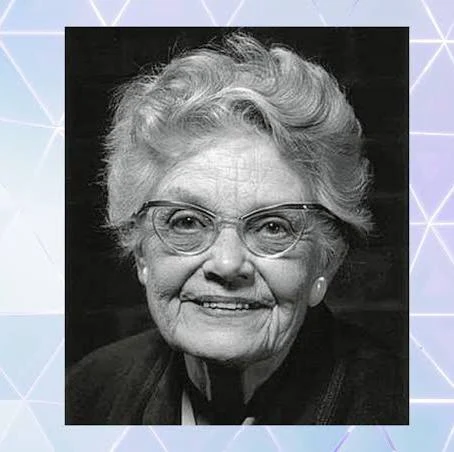
Revisiting the Genius of Mary Cover Jones

While reviewing and revising the behavior therapy chapter from our Theories textbook, I found myself revisiting my awe of Mary Cover Jones. I think too many contemporary therapists don’t know about Mary Cover Jones and don’t understand the behavioral (classical conditioning) model for understanding and treating anxiety disorders, including OCD and PTSD.

In most chapters, we include a feature called a “Brain Box.” Here’s the box from Chapter 7, Behavior Theory and Therapy.

7.1 Brain Science May be Shiny, but Exposure Therapy is Pure Gold

In honor of Joseph Wolpe, let’s start with mental imagery.

***********

Imagine you’ve travelled back in time to your first week of high school. You look around and see that one of your classmates is named Mary Jones.

Mary is an ordinary girl with an ordinary name. Over the years, you don’t notice her much. She seems like a nice person, a fairly good student, and someone who doesn’t get in trouble or draw attention to herself.

Four years pass. A new student joined your class during senior year. His name is Daniel Tweeter. Toward the end of the year, Daniel does a fantastic Prezi presentation about a remarkable new method for measuring reading outcomes. He includes cool video clips and boomerang Snapchat. When he bows at the end, he gets a standing ovation. Daniel is a good student and a hard worker; he partnered up with a college professor and made a big splash. Daniel deserves recognition.

However, as it turns out, over the whole four years of high school, Mary Jones was quietly working at a homeless shelter; week after week, month after month, year after year, she was teaching homeless children how to read. In fact, based on Daniel’s measure of reading outcomes, Mary had taught over 70 children to read.

Funny thing. Mary doesn’t get much attention. All everybody wants to talk about is Daniel. At graduation, he wins the outstanding graduate award. Everyone cheers.

Let’s stop the visualization and reflect on what we imagined.

***********

Like birds and raccoons, humans tend to like shiny things. Mary did incredible work, but hardly anyone noticed. Daniel did good work, and got a standing ovation and the top graduate award.

The “shiny-thing theory” is my best explanation for why we tend to get overly excited about brain science. It’s important, no doubt, but brain imaging isn’t therapy; it’s just a cool way to measure or validate therapy’s effects.

Beginning from at least 1924, when Mary Cover Jones was deconditioning fear out of little children, behavior therapy has shown not only great promise, but great outcomes. However, when researchers showed that exposure therapy “changes the brain,” most of the excitement and accolades were about the brain images; exposure therapy was like background noise. Obviously, the fact that exposure therapy (and other therapies) change the brain is great news. It’s great news for people who have anxiety and fear, and it’s great news for practitioners who use exposure therapy.

This is all traceable to neuroscience and human evolution. We get distracted by shiny objects and miss the point because our neural networks and perceptual processes are oriented to alert us to novel (new) environmental stimuli. This is probably because change in the form of shiny objects might signal a threat or something new and valuable. We therefore need to exercise self-discipline to focus in and not overlook that behavior therapy in general, and exposure therapy in particular, has been, is, and probably will continue to be, the most effective approach on the planet for helping people overcome anxiety and fear. In addition, you know what, it doesn’t really matter that it changes the brain (although that’s damn cool and affirming news). What matters is that it changes clients’ lives.

Exposure therapy, no matter how you package it, is highly effective for treating anxiety. This statement is true whether we’re talking about Mary Cover Jones and her evidence-based counterconditioning cookies or Francine Shapiro and eye movement desensitization reprocessing (EMDR). It’s also true whether we’re talking about virtual reality exposure, imaginal exposure, massed exposure, spaced exposure, in vivo exposure, interoceptive exposure, response prevention (in obsessive-compulsive disorder), or the type of exposure that acceptance and commitment therapists use (note that they like to say it’s “different” from traditional classical conditioning exposure, but it works, and that’s what counts).

In the end, let’s embrace and love and cheer brain imaging and neuroscience, but not forget the bottom line. The bottom line is that exposure therapy works! Exposure therapy is the genuine article. Exposure therapy is pure gold.

Mary Cover Jones is the graduate of the century; she was amazing. Because of her, exposure therapy has been pure gold for 93+ years, and now we’ve got cool pictures of the brain to prove it.

Mary Cover Jones passed away in 1987. Just minutes before her death, she said to her sister: “I am still learning about what is important in life” (as cited in Reiss, 1990).

We should all be more like Mary.

Tomorrow’s Presentation at the Montana CASA Conference in Butte

Tomorrow’s talk is titled, Ten Things Everyone Should Know About Children’s Mental Health and Happiness. Because this talk is about what everyone should know, I suspect everyone will be there. So, I’ll see you soon.

Given the possibility that everyone won’t be there, I’m sharing the list of the 10 things, along with some spiffy commentary.

First, I’ll give a strength warning. If you don’t know what that means, you’re not alone, because I made it up. It might be the coolest idea ever, so watch for more details about it in future blogs.

Then, I’ll say something profound like, “The problems with mental health and happiness are big, and they seem to just be getting bigger.” At which point, I’ll launch into the ten things.

  1. Mental health and happiness are wicked problems. This refers to the fact that mental health and happiness are not easy to predict, control, or influence. They’re what sociologists call “wicked problems,” meaning they’re multidimensional, non-linear, elicit emotional responses, and often when we try to address them, our well-intended efforts backfire.
  2. Three ways your brain works. [This one thing has three parts. Woohoo.]
    1. We naturally look for what’s wrong with us. Children and teens are especially vulnerable to this. In our contemporary world they’re getting bombarded with social media messages about diagnostic criteria for mental disorders so much that they’re overidentifying with mental disorder labels.
    1. We find what we’re looking for. This is called confirmation bias, which I’ve blogged about before.
    1. What we pay attention to grows. This might be one of the biggest principles in all of psychology. IMHO, we’re all too busy growing mental disorders and disturbing symptoms (who doesn’t have anxiety?).
  3. We’re NOT GOOD at shrinking NEGATIVE behaviors. This is so obvious that my therapist friends usually say, “Duh” when I mention it.
  4. We’re better at growing POSITIVE behaviors. Really, therapy is about helping people develop skills and strengths for dealing with their symptoms. More skills, strengths, and resources result in fewer disturbing symptoms.
  5. Should we focus on happiness? The answer to this is NO! Too much preoccupation with our own happiness generally backfires.
  6. What is happiness? If you’ve been following this blog, you should know the answer to this question. Just in case you’re blanking, here’s a pretty good definition: From Aristotle and others – “That place where the flowering of your greatest (and unique) virtues, gifts, skills, and talents intersect (over time) with the needs of the world [aka your family/community].”
  7. You can flip the happiness. This thing flows from a live activity. To get it well, you’ll need to be there!
  8. Just say “No” to toxic positivity. To describe how this works and why we say no to toxic positivity, I’ll take everyone through the three-step emotional change trick.
  9. Automatic thoughts usually aren’t all that positive. How does this work for you? When something happens to you in your life and your brain starts commenting on it, does your brain usually give you automatic compliments and emotional support? I thought not.
  10.  How anxiety works. At this point I’ll be fully revved up and possibly out of time, so I’ll give my own anxiety-activated rant about the pathologizing, simplistic, and inaccurate qualities of that silly “fight or flight” concept.

Depending on timing, I may add a #11 (Real Mental Health!) and close with my usual song.

For those interested, here’s the slide deck:

If you’re now experiencing intense FOMO, I don’t blame you. FOMO happens. You’ll just need to lean into it and make a plan to attend one of my future talks on what everyone should know.

Thanks for reading and have a fabulous evening. I’ll be rolling out of Absarokee on my way to Butte at about 5:30am!

Come Join Us in Early August in Billings Montana for a Workshop on Happiness for Educators

A friend and colleague in the Counseling Department at the University of Montana forwarded me an article by Lucy Foulkes of Oxford University titled, “Mental-health lessons in schools sound like a great idea. The trouble is, they don’t work.”

That is troubling. My friend knows I’ve been thinking about these things for years . . . and I feel troubled about it too.

Children’s behavioral or mental or emotional health has been in decline for decades. COVID made things worse. Even at the University, our collective impression is that current students—most of whom are simply fantastic—are more emotionally fragile than we’ve ever seen before.

As Craig Bryan says in his remarkable book, “Rethinking Suicide,” big societal problems like suicide, homelessness, addiction, and mental health are “wicked problems” that often respond to well-intended efforts by not responding, or by getting worse.

Such is the case that Lisa Foulkes is describing in her article.  

I’ve had a front row seat to mental health problems getting worse for about 42 years now. Oh my. That’s saying something. Mostly it’s saying something about my age. But other than my frightening age, my point is that in my 42+ years as a mental health professional, virtually everything in the mental health domain has gotten worse. And when I say virtually, I mean literally.

Anxiety is worse. Depression is worse. ADHD is worse, not to mention bipolar, autism spectrum disorder, suicide, and spectacular rises in trauma. I often wonder, given that we have more evidence-based treatments than ever before in the history of time . . . and we have more evidence-based mental health prevention programming than ever before in the history of time . . . how could everything mental health just keep on going backward? The math doesn’t work.

In her article, Lisa Foulkes points out that mental health prevention in schools doesn’t work. To me, this comes as no big surprise. About 10 years ago, mental health literacy in schools became a big deal. I remember feeling weird about mental health literacy, partly because across my four decades as an educator, I discovered early on that if I presented the diagnostic criteria for ADHD to a class of graduate students, about 80% of them would walk away thinking they had ADHD. That’s just the way mental health literacy works. It’s like medical student’s disease; the more you learn about what might be wrong with you the more aware and focused you become on what’s wrong with you. We’ve known this since at least the 1800s.

But okay, let’s teach kids about mental health disorders anyway. Actually, we’re sort of trapped into doing this, because if we don’t, everything they learn will be from TikTok. . . which will likely generate even worse outcomes.

I’m also nervous about mindful body scans (which Foulkes mentions), because they nearly always backfire as well. As people scan their bodies what do they notice? One thing they don’t notice is all the stuff that’s working perfectly. Instead, their brains immediately begin scrutinizing what might be wrong, lingering on a little gallop in their heart rhythm or a little shortness of breath or a little something that itches.

Not only does mental health education/prevention not work in schools, neither does depression screenings or suicide screenings. Anyone who tells you that any of these programs produces large and positive effects is either selling you something, lying, or poorly informed. Even when or if mental health interventions work, they work in small and modest ways. Sadly, we all go to bed at night and wake up in the morning with the same brain. How could we expect large, dramatic, and transformative positive outcomes?

At this point you—along with my wife and my team at the Center for the Advancement of Positive Education—may be thinking I’ve become a negative-Norman curmudgeon who scrutinizes and complains about everything. Could be. But on my good days, I think of myself as a relatively objective scientist who’s unwilling to believe in any “secret” or public approaches that produce remarkably positive results. This is disappointing for a guy who once hoped to develop psychic powers and skills for miraculously curing everyone from whatever ailed them. My old college roommate fed my “healer” delusions when, after being diagnosed with MS, “I think you’ll find the cure.”

The painful reality was and is that I found nothing helpful about MS, and although I truly believe I’ve helped many individuals with their mental health problems, I’ve discovered nothing that could or would change the negative trajectory of physical or mental health problems in America. These days, I cringe when anyone calls themselves a healer. [Okay. That’s likely TMI.]

All this may sound ironic coming from a clinical psychologist and counselor educator who consistently promotes strategies for happiness and well-being. After what I’ve written above, who am I to recommend anything? I ask that question with full awareness of what comes next in this blog. Who am I to offer guidance and educational opportunities? You decide. Here we go!

*********************************************

The Center for the Advancement of Positive Education (CAPE) and the Montana Happiness Project (that means me and my team) are delighted to be a part of the upcoming Jeremy Bullock Safe Schools Conference in Billings, MT. The main conference will be Aug 5-6. You can register for the conference here: https://jeremybullocksafeschools.com/register. The flyer with a QR code is here:

In the same location, beginning on the afternoon of Aug 6 and continuing for most of Aug 7, CAPE is offering a “Montana Happiness” infused 7-hour bonus training. Using our combined creative skills, we’ve decided to call our workshop: “Happiness for Educators.” Here’s the link to sign up for either a one-credit UM grad course (extra work is required) or 7 OPI units: https://www.campusce.net/umextended/course/course.aspx?C=763&pc=13&mc=&sc=

The flyer for our workshop, with our UM grad course or OPI QR code is at the top of this blog post.

In the final chapter of Rethinking Suicide, Craig Bryan, having reviewed and lamented our collective inability to prevent suicide, turns toward what he views as our most hopeful option: Helping people create lives worth living. Like me, Dr. Bryan has shifted from a traditional suicide prevention perspective to strategies for helping people live lives that are just a little more happy, meaningful, and that include healthy supportive relationships. IMHO, this positive direction provides hope.  

In our Billings workshop, we’ll share, discuss, and experience evidence-based happiness strategies. We’ll do this together. We’ll do it together because, in the words of the late Christopher Peterson, “Other people matter. And we are all other people to everyone else.”

Come and join us in Billings . . . for the whole conference . . . or for our workshop . . . or for both.

I hope to see you there.

Why I’m Mostly Against Universal Suicide Screenings in Schools

I’ve been in repeated conversations with numerous concerned people about the risks and benefits of suicide screenings for youth in schools. Several years ago, I was in a one-on-one coffee shop discussion of suicide prevention with a local suicide prevention coordinator. She said, more as a statement than a question, “Who could be against school-based depression and suicide screenings?”

I slowly raised my hand, forced a smile, and confessed my position.

The question of how and why I’m not in favor of school-based mental health and suicide screenings is a complex one. On occasion, screenings will work, students at high-risk will be identified, and tragedy is averted. That’s obviously a great outcome. But I believe the mental health casualties from broad, school-based screenings tend to outweigh the benefits. Here’s why.

  1. Early identification of depression and suicide in youth will result in early labeling in school systems; even worse, young people will begin labeling themselves as being “ill” or “defective.” Those labels are sticky and won’t support positive outcomes.
  2. Most youth who experience depressive symptoms and suicide ideation are NOT likely to die by suicide. Odds are that students who don’t report suicidal ideation are just as likely to die by suicide. As the scientists put it, suicidal ideation is not a good predictor of suicide. Also, depression symptoms generally come and go among teenagers. Most teens will recover from depressive symptoms without intensive interventions.
  3. After a year or two of school-based screenings, the students will know the drill. They will realize that if they endorse depression symptoms and suicidal items that they’ll have to experience a pretty horrible assessment and referral process. When I talk to school personnel, they tell me that, (a) they already know the students who are struggling, and (b) in year 2 of screenings, the rates of depression and suicidality plummet—because students are smart and they want to avoid the consequences of being open about their emotional state.
  4. About 10-15% of people who complete suicide screenings feel worse afterward. We don’t really want that outcome.
  5. There’s no evidence that school-based screenings are linked to reductions in suicide rates.   

For more info on this, you can check out a brief commentary I published in the American Psychologist with my University of Montana colleague, Maegan Rides At The Door. The commentary focuses on suicide assessment with youth of color, but our points work for all youth. And, citations supporting our perspective are included.

Here are a few excerpts from the commentary:

 Standardized questionnaires, although well-intended and sometimes helpful, can be emotionally activating and their use is not without risk (Bryan, 2022; de Beurs et al., 2016).

In their most recent recommendations, the United States Preventive Services Task Force (2022) concluded that the evidence supporting screening for suicide risk among children and adolescents was “insufficient” (p. 1534). Even screening proponents acknowledge, “There is currently little to no data to show that screening decreases suicide attempt or death rates” (Cwik et al., 2020, p. 255). . . . Across settings, little to no empirical evidence indicates that screening assessments provide accurate, predictive, or useful information for categorizing risk (Bryan, 2022).

And here’s the link to the commentary:

Positive Psychology and Eudaimonia for Greater Happiness and Health

Some late-breaking news . . .

Tomorrow morning, from 7:30am-8:30am (Mountain time), I’ll be presenting for the online Friday Medical Conference at St. Patrick Hospital. It’s free. All you need to do is click on the link below a couple minutes before the start time and join in.

When: Friday, 1/31
Time: 730am-830am
Where: Register Here: https://umontana.zoom.us/meeting/register/BvxjQYKCTY2Yybbh4bhltw

Below are the presentation ppts:

Writing Your Way to Better Health

Nothing works for everyone. Not everyone is comfortable writing about their experiences and not everyone can benefit from therapeutic writing. But, for those keen on the expressive writing modality, you can get out your pen or laptop and make a little therapeutic magic.

For this week’s Montana Happiness Challenge, I phrased it this way: What if, by engaging in a simple procedure for three consecutive days, you could obtain the following benefits?

  • A reduced need to go see a physician
  • Improved immune functioning
  • Fewer physical ailments or symptoms
  • Less distress
  • Less negative affect
  • Less depression
  • Improved GPA
  • Less absenteeism from work

As it turns out, according to social psychologist and prominent researcher, James Pennebaker, there is a simple procedure for accomplishing all of the above, right at your fingertips. Literally. At. Your. Fingertips. All you have to do is write about hard, difficult, or traumatic experiences. Here’s an example (summarized) of his instructions:

For the next three days write about your very deepest thoughts and feelings about an extremely important emotional issue that has affected you and your life. When writing, really let go and explore your deepest emotions and thoughts. You might want to tie your writing into your relationships with others or to your past/present/future, or to who you’ve been, who you are, and who you’d like to be in the future. You can write about the same topic every day or a new one every day. Keep your writing confidential. Don’t worry about spelling, grammar, etc., just write for 15-30 minutes straight. (adapted from Pennebaker, 1997) 

I’ve been gobsmacked (aka astounded) by Pennebaker’s research for three decades. So much so that I remember where I was when I first read his 1986 article. Despite my gob-smacked-ness, I think it’s important to remember that Pennebaker is a social psychologist; he isn’t a clinical or counseling psychologist, a clinical mental health counselor, or a clinical social worker. As a consequence, I’m not asking you to leap right into his assignment without support. In fact, most researchers, including Pennebaker, believe you can gain the same benefits by talking about painful emotional experiences with a counselor or psychotherapist. One additional caveat: Pennebaker has also found that when writing or talking about traumatic experiences, often people feel distressed or emotionally worse to start, but over time they begin feeling better than they did in the beginning.

To do this activity, just think about Pennebaker’s method and his claims, and notice: (a) what you think of his idea, (b) whether you would ever like to try his technique, and (c) if you chose to try to process some deeper emotional issues, whether you would prefer writing or talking about them.

If you decide to really try Pennebaker’s method (that’s up to you), remember that your first reaction might be to feel worse. Therefore, having someone you trust to confide in about how you’re feeling through the process might be a good idea.

For me–and I know I’m weird–I like to go back and read some of the early research on these “therapeutic techniques.” Sometimes there’s no research to be found (think: somatic approaches or polyvagal theory); other times, the gaps between what was studied and what the media and popular psychology reports is huge (think: adverse childhood experiences and the research on predicting divorce); but on occasion, the original research is stunningly good. Here’s one of Pennebaker’s early studies. It’s really worth a read:

If you want to dive into Pennebaker’s method, you could use one of his books as a guide. Here’s one example: https://www.abebooks.com/Opening-Writing-Down-Expressive-Improves-Health/22531442075/bd?cm_mmc=ggl-_-US_Shopp_Trade-_-new-_-naa&gclid=CjwKCAjw4pT1BRBUEiwAm5QuR4ZmBWoiw2FhWHexwZiPtAnyDc9frTptZr9dimZhEWcsE4HUl70gzxoCd60QAvD_BwE

John S-F