I’ve spent the morning learning. At this point in my life, learning requires simultaneous regulation of my snarky irreverence. Although I intellectually know I don’t know everything, when I discover, as I do ALL. THE. TIME., that I don’t know something, I have to humble myself unto the world.
Okay. I know I’m being a little dramatic.
After pushing “submit” on our latest effort to publish Round 1 of our happiness class data, less than an hour later I received a message from the very efficient editor that our manuscript had been “Unsubmitted.” Argh! The good news is that the editor was just letting us know that we needed to follow the manuscript submission guidelines and include a “Structured Abstract.” Who knew?
The best news is I wrote a structured abstract and discovered that I like structured abstracts way more than I like traditional abstracts. So, that’s cool.
And, here it is!
Abstract
Background: University counseling center services are inadequate to address current student mental health needs. Positive psychology courses may be scalable interventions that address student well-being and mental health.
Objective: The purpose of this study was to evaluate the effects of a multi-component positive psychology course on undergraduate student well-being, mental health, and physical health.
Method: We used a quantitative, quasi-experimental, pretest-posttest design. Participants in a multi-component positive psychology course (n = 38) were compared to a control condition (n = 41). All participants completed pre-post measures of well-being, physical health, and mental health.
Results: Positive psychology students reported significant improved well-being and physical health on eight of 18 outcome measures. Although results on the depression scale were not statistically significant, a post-hoc analysis of positive psychology students who were severely depressed at pretest reported substantial depression symptom reduction at posttest, whereas severely depressed control group students showed no improvement.
Conclusion:Positive psychology courses may produce important salutatory effects on student physical and mental health. Future research should include larger samples, random assignment, and greater diversity.
Teaching Implications: Psychology instructors should collaborate with student affairs to explore how positive psychology courses and interventions can facilitate student well-being, health, and mental health.
Now that we’ve sent the 7th edition of our Clinical Interviewing textbook to the publisher, I’ve got more time on my hands. So, along with springtime mowing, gardening, weed-eating, NYT games, and hanging upside down in our basement, I did the natural thing that people do when they’ve got extra time: I Googled “What is Clinical Interviewing?”
Along with a few links to our books and videos, I also find lots of new (to me) and interesting information and resources. Cool.
Then I realized I should probably create a blogpost titled, “What is Clinical Interviewing?” because I’m pretty sure I’m not the only one who wants to know the answer to that scintillating question.
Because we’ve already written a ton on this topic, rather than re-invent the wheel, below, I’ve excerpted a couple pages from Chapter 1, where we discuss and define the clinical interview. Here we go . . .
*********************************
Chapter Orientation
Clinical interview is a common phrase used to identify an initial and sometimes ongoing contact between a mental health professional and client. Depending on many factors, this contact includes varying proportions of psychological assessment and biopsychosocial intervention. For many different mental health disciplines, clinical interviewing begins the treatment process. In this chapter we focus on the definition of clinical interviewing, foundational multicultural competencies, and a model for learning how to conduct clinical interviews.
Welcome to the Journey
When we blend our unique talent with service to others, we experience the ecstasy and exultation of our own spirit, which is the ultimate goal of all goals. — Deepak Chopra, The Seven Spiritual Laws for Parents, 1997, p. 23
Imagine you’re face-to-face with your first client. You’ve carefully chosen your clothing. You intentionally arranged the seating, set up the camera, and completed introductory paperwork. In the opening moments of your session, you’re communicating warmth, acceptance, and compassion through your body posture and facial expressions. Now, imagine your client
Immediately offends you with language, gestures, or hateful beliefs
Refuses to talk
Talks so much you can’t get a word in
Asks to leave early
Starts crying
Says you can never understand or be helpful because of ethnic, religious, or sexual differences
Suddenly gets angry (or scared) and storms out
These are all possible client behaviors in a first interview. If one of these scenarios occurs, how will you respond? What will you say? What will you do? Will you be able to have kindness, honesty, and compassion guide your response?
Every client presents unique challenges. Your goals are to establish rapport, build a working alliance, gather information, instill hope, maintain a helpful yet nonjudgmental attitude, identify treatment goals, develop a case formulation, and, if appropriate, provide therapy interventions. You also want to gracefully end the interview on time. And sometimes, you’ll need to do all this with clients who don’t trust you or who don’t want to work with you.
These are no small tasks—which is why it’s important to be patient with yourself. Becoming a competent mental health professional takes time and practice. Being imperfect is natural. You’ll need persistence, an interest in developing your intellect, interpersonal skills, emotional awareness, therapeutic skills, compassion, authenticity, and courage. Due to the ever-evolving nature of this business, you’ll need to be a lifelong learner to stay current and skilled. Despite all these demands, most mental health professionals who practice self-care and stress management are satisfied with their career choice (Bellamy et al., 2019).
The clinical interview is the most fundamental component of mental health training in professional counseling, psychiatry, psychology, and social work (Allen & Becker, 2019; Sommers-Flanagan et al., 2020). The clinical interview is the basic unit of connection between the helper and the person seeking help; it is the beginning of a therapeutic relationship and the cornerstone of psychological assessment; it is also the focus of this book.
This text will help you acquire fundamental and advanced clinical interviewing skills. The chapters guide you through elementary listening skills onward to more advanced, complex professional activities, such as mental status examinations, suicide assessment, and diagnostic interviewing. We enthusiastically welcome you as new colleagues and fellow learners.
For many of you, this text accompanies your first taste of practical, hands-on mental health training experience. For those of you who already possess substantial clinical experience, this book may place your previous experiences in a new or different learning context. Whichever the case, we hope this text challenges you and helps you develop excellent skills for conducting professional clinical interviews.
What Is a Clinical Interview?
VIDEO 1.2**
Clinical interviewing is a flexible procedure that mental health professionals use to initiate treatment. In 1920, Jean Piaget first used the words “clinical” and “interview” together in a way similar to contemporary practitioners. He believed existing psychiatric interviewing procedures were inadequate for studying cognitive development in children, so he invented a “semi-clinical interview.”
Piaget’s approach was novel. His semi-clinical interview combined tightly standardized interview questions with unstandardized or spontaneous questioning to explore the richness of children’s thinking processes (Elkind, 1964; J. Sommers-Flanagan et al., 2015). Interestingly, the tension between these two different interviewing approaches (i.e., standardized vs. spontaneous) continues today. Psychiatrists and research psychologists primarily use structured, or semi-structured clinical interviewing approaches. Structured clinical interviews involve asking the same questions in the same order with every client. Structured interviews are designed to gather reliable and valid assessment data. Virtually all researchers agree that a structured clinical interview is the best approach for collecting reliable and valid assessment data.
In contrast, clinical practitioners, especially those who embrace post-modern and social justice perspectives, generally use less structure. Unstructured clinical interviews involve a subjective and spontaneous relational experience. These less structured relational experiences are typically used to collaboratively initiate an assessment or counseling process. Murphy and Dillon (2015) articulated the latter (less structured) end of the interviewing spectrum:
We believe that clinical interviewing is—or should be—a conversation that occurs in a relationship characterized by respect and mutuality, by immediacy and warm presence, and by emphasis on strengths and potential. Because clinical interviewing is essentially relational, it requires ongoing attention to how things are said and done, as well as to what is said and done. . . . we believe that clinicians need to work in collaboration with clients . . . (p. 4)
Research-oriented psychologists and psychiatrists who value structured clinical interviews for diagnostic purposes would likely view Murphy and Dillon’s description of this “conversation” as a bane to reliable assessment. In contrast, clinical practitioners often view highly structured diagnostic interviewing procedures as too sterile and impersonal. Perhaps what’s most interesting is that despite these substantial conceptual differences—differences that are sometimes punctuated with passion—structured and unstructured approaches represent legitimate methods for conducting clinical interviews. A clinical interview can be structured, unstructured, or a thoughtful combination of both. (See Chapter 11 for a discussion of clinical interviewing structure.)
Formal definitions of the clinical interview emphasize its two primary functions or goals (J. Sommers-Flanagan, 2016; J. Sommers-Flanagan et al., 2020):
Assessment
Helping (including referrals)
To achieve these goals, all clinical interviews involve the development of a therapeutic relationship or working alliance. Optimally, the therapeutic relationship provides leverage for obtaining valid and reliable assessment data and/or providing effective interventions.
With all this background in mind, we define clinical interviewing as…
a complex, multidimensional, and culturally sensitive interpersonal process that occurs between a professional service provider and client. The primary goals are (a) assessment and (b) helping. To achieve these goals, clinicians may emphasize structured diagnostic questioning, spontaneous talking and listening, or both. Clinicians use information obtained in an initial clinical interview to develop a collaborative case formulation and treatment plan.
Given this definition, students often ask: “What’s the difference between a clinical interview and counseling or psychotherapy?” This is an excellent question that deserves a nuanced response.
**********************************
Sorry to leave you hanging with such an exciting question.
As many of you know, over the past year or so I’ve been frustrated in my efforts to publish a couple of journal articles. I know I’m not the only one who has experienced this, but this morning we got another rejection (the third for this manuscript) that triggered me in a way that, as the feminists might say, raised my consciousness.
Three colleagues and I are trying to publish the outcomes from a short online “happiness workshop” I did a couple years ago for counseling students. Mostly the results were nonsignificant, except for the depression scale we used, which showed our workshop participants were less depressed than a non-random control group. Also, based on open-ended responses, participants seemed to find the workshop experience helpful and relevant to them in their lives.
Problems with the methodology in this study are obvious. In this most recent rejection, one reviewer noted the lack of “generalizability” of our data. I totally agree. The study has a relatively small n, nonrandom group assignment, yada, yada, yada. We acknowledge all this in the manuscript. Having a reviewer point out to us what we have readily acknowledged is annoying, but accurate. In fact, this rejection was accompanied by the most informed and reasonable reviews we’ve gotten yet.
Nevertheless, I immediately sent out a response email to the editor . . . which, because I’m partially all about entertainment, I’m sharing below. As you’ll see, for this rejection, my concerns are less with the reviews, and more about WHAT IS BEING PUBLISHED IN SO-CALLED SCIENTIFIC JOURNALS. Although I don’t think it’s necessary, I’ve anonymized my email so as to not incriminate anyone.
Dear Editor,
Thanks for your timely processing of our manuscript.
Overall, I believe your reviewers did a nice job of reading the manuscript, noting problems, and providing feedback. Being very familiar with the journal submission and feedback process, I want to compliment you and your reviewers on your evaluation of our manuscript. Compared to the quality of feedback I’ve obtained from other journals, you and your team did well.
Now I’d like to apologize in advance for the rest of this email because it’s a critique not only of your journal, but of counseling research more generally.
Despite your professional review, I have concerns about the decision, and rather than sit on them, I’m going to share them.
Although the reviews were accurate, and, as Reviewer 1 noted, there are generalizability concerns (but aren’t there always), I looked at the most recent online articles published in [your journal], to get a feel for the journal’s standards for generalizability, among other issues. What I found was disturbing.
In the seven published 2023 articles from your most recent issue, none have data that are even close to generalizable, and yet all of the articles offer recommendations, as if there were generalizable data. In the [first] article there’s an n of 8; [the second article] has an n of 6 and use a made-up questionnaire. I know these are qualitative studies, but, oh my, they don’t shy away from widely offering recommendations (is that not generalizing?), based on minimal data. Four of the articles in the most recent issue have no data; that’s okay, they’re interesting and may be useful. The only “empirical” study is a survey with n = 165, using a correlational analysis. But no information is provided on the % response to the survey, and so any justification for generalization is absent. Overall, some of these articles are interesting, and written by people I know and like. But none of them have anything close to what might be considered “generalizability.”
What’s most concerning to me is that none of the published articles employ an experimental design. My impression is that “Counselor Education and Preparation” (not just the journal, but the whole profession) mostly avoids experimental or quasi-experimental designs, and privileges qualitative research, or correlational designs that, of course, are really just open inquiries about the relationships among 2 or more variables.
This is the third rejection of this manuscript from counseling journals that, to be frank, essentially have no scientific impact factor. Maybe the manuscript is unpublishable. I would be open to that possibility if I didn’t read any of the published articles from [your journal and other journals]. My best guess (hypothesis) is that counseling journals have double standards; they allow generalizing statements from qualitative studies, but they hold experimental designs to inappropriately high standards. I say inappropriate here because all experimental designs are flawed in one way or another, and finding those flaws is easier than understanding them.
I know I’m biased, but my last problem with the rejection of this manuscript has to do with relevance. We tried to offer counseling students a short workshop intervention to help them cope with their COVID-related distress and distress in general–something that I think more counseling programs should do, and something that I think is innately relevant and potentially very meaningful to counseling students and practitioners.
Sorry again, for this email and it’s length, but I hope some of what I’ve shared is food for thought for you in your role as journal editor.
Thanks again for the timely review and feedback. I do appreciate the professionalism.
Sincerely,
John SF
If you’re still reading and following my incessant complaining, for your continued pleasure, now I’m pasting my email response to my coauthors, one of whom wrote us all this morning beginning with the word “Bummer.”
Hi There,
Yes! Another bummer.
For entertainment purposes, I kept you all on my email to the editor.
Although I’m clearly triggered, because I just read some articles in the [Journal], I now know, more about self-care, because in their [most recent lead published article], the authors wrote:
“Most participants also offered some recommendations for self-care practices to process crisis counseling. One participant (R2) indicated, “I keep a journal with prayers, thoughts and feelings, complaints and poetry.”
Now that I’ve done my complaining, I need to take time off to pray and write a poem or two, but then, yes . . . I will continue to send this out into the world in hopes of eventual validation.
Happy Friday to you all,
John
I hope you all caught my clever utilization of recommendations from the offending journal to cope with this latest rejection. The good news is, like most rejections, this one was clarifying and inspired me with even more snark energy than I usually have.
What’s new about anger? Everything and nothing. You will feel angry over and over in your life. Each time it will be your familiar anger, which may come to feel old, tired, and boring. But each time it also will be new and compelling—as if you’ve been charged with energy to change the world.
Here’s one big truth about anger; it will come around again.
Here’s another: when doing anger management, it’s helpful to develop awareness of your usual triggers because if you see it coming, you may have a better chance to handle your anger in ways that are less embarrassing or destructive.
Here’s a third. This one I like to tell my clients and students: One good thing about having anger problems is that—and you can count on this—you will get many opportunities to work on your anger in the future, because it won’t be long until your anger visits you again (and again).
To summarize: Anger is repetitive; it’s good to develop self-awareness of your personal triggers; you will be presented with many opportunities to deal with your anger differently.
What follows is a slight revision of a post from seven years ago.
The speedometer reads 82 miles per hour. The numbers 8 and 2, represent to me, a reasonable speed on I-90 in the middle of Montana. Our speed limit signs read eight-zero. So technically, I’m breaking the law by two miles per hour. But the nearest car is a quarter mile away. The road is straight. Having ingested an optimal dose of caffeine, my attention is focused. All is well.
In my rear-view mirror, I notice a car slowly creeping up on me from behind. He gets a little to close to my rear bumper, and then slowly drifts into the left lane past me, lingering beside me and edging ahead. Then, with only three car lengths between us, he puts on his blinker and drifts in front of me. Now, with no other cars in sight, there’s just me and Mr. 83 mph on I-90, three car lengths apart.
An emotion rises into awareness. It’s anger, from a distance. I see it coming slowly, as if it’s in the rear-view mirror of my brain. At this distance, it’s only annoyance. I feel it and see it coming and immediately know it can go in one of three directions: My annoyance could sit there and remain unpleasant, until I tire of it. If I provide it with oxygen, could rise up and blossom into full-blown anger. Or, I can send it away, leaving room for other—more pleasant—thoughts and actions.
That’s not to say annoyance and anger is wholly unpleasant. Part of me likes it; part of me feels so damn aggrieved and indignant and justified.
All this self-awareness is fabulous. This is the Sweet Spot of Self-Control.
Without moving or speaking, “Hello anger,” I say, to myself, in my brain.
In this sweet spot, I experience expanding awareness, a pinch of energy, along with unfolding possibilities. I love this place. I love the strength and power. I also recognize anger’s best buddy, the behavioral impulse. This particular impulse (they vary of course), is itching for me to reset my cruise control to 84 mph. It’s coming to me in the shape of a desire—a desire to send the driver in front of me a clear message. Isn’t that what anger, in its behavioral manifestation, aggression, is all about—sending a message?
“You should cut him off,” the impulse says, “and let him know he should give you some space.”
The sweet spot is sweet because it includes the empowered choice to say “No thanks” to the impulse and “See you later” to anger.
Now I’m listening to a different voice in my head. It’s smaller, softer, steadier. “It doesn’t matter” the voice whispers. “Let him move on ahead. Revenge is only briefly sweet. Those who seek revenge should dig two graves.”
I smile remembering an anger management workshop. With confidence, I had said to the young men in attendance, “No other emotion shifts as quickly as anger. You can go from feeling completely justified and vindicated, but as soon as you act, you can feel overwhelmed with shame, regret, or embarrassment.”
One participant said, “Lust. Lust is like anger. One second you want something more than anything, but the next second you might wish you hadn’t.”
“Maybe so,” I said.
There are many rational reasons why acting on aggressive behavioral impulses is ill-advised. Maybe the biggest is that the man in the car wouldn’t understand my effort to communicate with him. This gap of understanding is common across many efforts to communicate. But it’s especially linked to retaliatory impulses. When angry, I can’t provide nuance in my communication; I can’t make it constructive.
The quiet voice in my brain murmurs: “You’re no victim to your impulses. You drive the car; the car doesn’t drive you.” That doesn’t make much sense. Sometimes the voice in my head speaks in analogy and metaphor. It’s a common problem. I want straight talk, but instead I get some silly metaphor from my elitist and intellectual conscience.
But here’s what I get. I get that my conscience is telling me that this sweet spot is sweet because I get to see and feel my self-control. Not only do I see my behavioral options, I get to see into the future and evaluate their likely outcomes. I get to reject poor choices and avoid negative outcomes. I’m not a victim of annoyance, anger, or aggressive impulses. I make the plan. I drive the car.
The other driver is now far ahead. I recognize that I could resurrect my anger. I choose to let it go instead.
I haven’t always let go of my anger. In my teen years I developed a temper. I had many sport-related fits of embarrassing anger. I went to psychotherapy. My therapist listened, and helped me grow my better judgment. He said, “I don’t believe in the bowel movement theory of anger control.” That was a little indirect, and interesting. We don’t have to expel it. We can sit with it. We can reflect on it. We can watch it go away. We can put it in the rear-view mirror, or let it pass us by. Using our functional frontal lobes, we can experience the joy of the Sweet Spot of Self-Control.
My anger is like an old, greedy, needy, and fickle friend. It has an all-or-nothing mentality. My anger wants attention and power, because it values power over long-term happiness.
Anger is also a source of energy; it can fuel us to be assertive, to fight injustice, to be clear on our values. Anger has its place, and is sometimes a useful partner: a partner whom we should keep in the passenger seat, never letting it get behind the wheel and drive—even on a wide-open Montana highway.
I’m really not sure what’s happening with WordPress, but because of tech and formatting issues, this is my third effort to post this blog. Now, I’m trying an approach that requires me to separately copy and paste each paragraph into this post. I used to be able to paste the whole document and it worked just fine. Now, if I do that, it makes all 10 paragraphs into one long paragraph and I look technologically even dumber than I am. Next month, WordPress will likely make me copy and paste the blog word by word.
You may be wondering, “How are you doing John?”
I think I’ll pass on answering that for now because WordPress is now graying out each sentence I type as soon as I press “enter.” And it’s repeating some short paragraphs and even though I delete them and they appear to be gone, when I try to publish this, the deleted paragraphs re-appear. I don’t know what any of this means other than WordPress must be angry with me because I asked them for help.
What I’ve been wanting to post is that I’m honored to be speaking several times at the American Counseling Association World Conference in Toronto next week. Here’s what’s happening. . .
Bright and early Friday morning, March 31 from 8am to 9:30am, I’ll be joined by Matt Englar-Carlson of Cal State Fullerton and Dan Salois of the University of Montana, for an educational session titled, “Men, Suicide, and Happiness: Helping Men Live Meaningful Lives.” We’ll be starting our talk by wondering why there isn’t more focus on the fact that men die by suicide at 3+ the rates of women and by wondering who gets to define what constitutes intimacy and intimate conversations among men. If you come to our talk and are not fully satisfied, you just might win an evening out getting a beer with us as we lament the unpopularity of masculine psychology. Or you might not. Life is like that.
At 1pm to 1:30pm on Friday I have the great fortune of joining Amanda Evans and Kenson Hiatt of James Madison University for a poster session titled, “Wellness and Social Justice: A Positive, Liberation-Oriented Approach.” Among the many things that are cool about this presentation is the fact that Dr. Evans has creatively combined social justice, positive psychology, and liberation psychology in ways that—as far as I know—have never been done before. Given the usual awkward nature of poster sessions, I hope you’ll drop by for some conversations about how we can integrate these important perspectives and facilitate social justice. But if you’re the type who prefers walking and studiously avoiding eye-contact with poster presenters, that works too.
From 3:30pm to 5pm on Friday, I have the privilege of offering an “Author Session” titled, “Top Tips for Weaving a Strengths-Based Approach to Suicide into Your Practice.” This session—based on our ACA book by nearly the same name, I will offer strengths-based tips about viewing suicidality as an unparalleled counseling opportunity, making your assessments therapeutic, building hope from the bottom-up, and much more. Right afterward, there will be a book-signing session . . . and I hope you’ll come to that, if only to talk to me and save me from the embarrassing situation of sitting alone next to a pile of books.
On Saturday, April 1 (and this is no joke), I’ll be presenting an education session on “Counseling for Happiness: Facilitating Client and Student Wellness.” Here’s the blurb:
Most people who seek counseling not only want to deal with their problems and distress, they also want to live happier and more meaningful lives. In this education session, the presenter will describe and demonstrate six evidence-based happiness strategies that professional counselors can use with clients and with themselves. The discussion will also address how specific happiness interventions may be more or less culturally appropriate. Using an open and collaborative experimental mindset is encouraged.
In addition to these formal appearances, I will also be hanging out at the John Wiley and Sons booth in the exhibition hall (especially on Thursday, March 30, from 2-5pm for the Expo Grand Opening). If you happen to be in Toronto for the ACA Conference, I hope to see you there.
Long before Freud said “words were originally magic,” nearly everyone already knew that words, language, and gestures were emotionally powerful. Perhaps this is why someone eventually made up the famous (and not evidence-based) “Sticks and stones . . .” saying. Using words to deny or disempower other words is an age-old social and emotional strategy. But generally, if you have to use words to disempower other words, you’ve probably already felt the pain.
In Montana, some politicians are especially sensitive to words. We’ve seen efforts to eliminate particular words from the lexicon. Instead of—or in addition to—banning books, banning words is in vogue. I’d give you a list, but I’d rather not waste my words on the efforts of others to limit my words.
Although efforts at prohibition have nearly always ended badly (no citations needed here), people who crave power still act on the idea that prohibiting others from using certain words or reading certain books or attending certain parties will achieve their ends.
Words are also powerful in shaping identity. Identity labels are motivating, popular, and often limiting. When I worked as a mental health consultant at a Job Corps, most of the students had absorbed labels like bipolar, learning disabled, clinically depressed, suicidal, and attention-deficit for the better part of a decade. When I told them that we believed they were much more than any label, they would either look at me with confusion or elation. IMHO, when we free young people from limiting labels, we increase their chances of thriving. But letting go of negative labels can be difficult.
Another common label involves victimhood. Some people label others as victims—even though the so-called victims view being labelled as a victim as insulting and limiting. Ironically, other people like to play the victim, taking on the label for particular purposes. What seems especially puzzling about this is that some people who play the victim have plenty of justification for feeling like a victim, while others embrace victimhood, despite appearing more privileged than anything else.
The obvious and immediate example of a wealthy, white man playing victim is the former president, Donald Trump. He seems to see himself as a victim, and regularly complains about it. This is in contrast to many young adults with whom I’ve worked in counseling; they eschewed the victim label. In one way or another, they would tell me to stop feeling sorry for them. These young adults came from poverty, were members of underrepresented and generally oppressed groups, and had experienced suffering that Mr. Trump has likely never imagined.
The Trump phenomenon—we might call it “representational victimhood”—is the traditional enigma wrapped in a mystery. He brags about his accomplishments. He asserts that only he can save the country from its imminent demise. His fans idolize him as a sort of superhero. All the while, he whines and complains—and then hops into a golf cart to ride around golf courses—that he happens to own. That’s a pretty rough scene; it’s easy to see why he claims great oppression and victimhood (n.b., the preceding is complete sarcasm).
Trump’s song and dance was old and worn years ago. Rather than being cryptic, in this moment I hope you can feel my effort to use words to call Mr. Trump’s schtick boring and onerous. That he continues to be over-covered in the media is banal tedium (more words). This week on NPR they noted he was engaging in a media stunt—and then proceeded to thoroughly cover his media stunt, in depth, and repeatedly, all week (and it’s only Wednesday!). Jon Stewart described the Trump and media relationship back in 2015. Trump is like a train wreck in a dumpster fire; the media cannot look away.
Trump is unquestionably a sore loser, a liar, and willing to say anything to retain or regain power. He’s also probably a serial philanderer, sexual predator, Russian comrade, and card-carrying racist and sexist. To top it off, he’s become enchantingly boring. . . so much so that I can barely force myself to write 500 words about him. Although I hope he gets arrested, I’ve also stopped caring much. Mostly, I want him to slip quietly into the night. But since he’s completely unable to embrace his quieter self, I keep rooting for the press to start giving him the attention and number of words he deserves . . . which is none, zero, nada, zip, or nil.
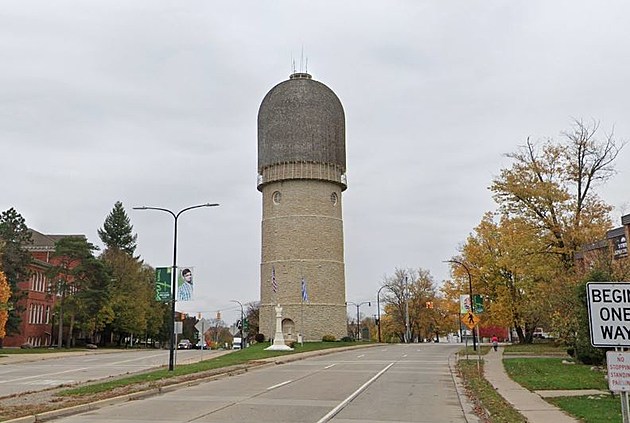
Yesterday I had a marvelous day with a group of about 35 wonderful mental health professionals and students in Ypsilante, Michigan. I was hosted by generous and kind faculty of Eastern Michigan University. I learned about the historical significance of “Ipsy,” along with anecdotes pertaining to the Ipsy water tower on post-cards, details of which—obviously because I’m so classy and sophisticated—I will not mention here.
The weather was marginally dreadful. We worried the in-person workshop would be cancelled and replaced with Zoom. Despite the weather, some people drove 90 minutes or more to arrive, which was just one small measure of their commitment to learning and their commitment to serving youth and families in counseling and psychotherapy. Whenever I’m in a room with professionals like the group yesterday, I have renewed hope in the world and in the future. The participants were: Just. Good. People.
As is my practice, I’m posting the ppts from the workshop here:
And here’s a PG-rated image of the Ypsilante water tower.
Toward the end of the workshop I engaged two participants in an activity that involved shaking imaginary soda pop bottles and opening them. One participant had brought her five-year-old daughter for the day (because of a school closure). As her mother and the woman next to her pretended to shake their imaginary bottles, and I was saying, “Shake, shake, shake,” the five-year-old, who had been incredibly well-behaved for the preceding 8 hours, began giggling in a way that couldn’t be described as representing anything other than pure joy.
In honor of my new five-year-old friend, I encourage you all to find time to giggle this weekend. Even better, find a child to giggle with; it will be time well-spent.
And here’s a photo of me having a giggle with a young person.
In 2017, I collaborated with Dr. Charles Palmer and Daniel Salois (now Dr. Daniel Salois) on a creative, one-of-a-kind research study evaluating and comparing the effectiveness of an educational intervention vs. a hypnotic induction transporting people to the future in for improving the accuracy of March Madness NCAA Basketball Tournament bracket picks. The results were stunning (but I can’t share them right now because I want to recruit anyone and everyone in the Missoula area to participate in our planned replication of this amazing study). The study has been approved by the University of Montana IRB.To participate, follow these instructions:1.Email Marchmadnessresearch2023@gmail.com and say “Yes, I’m in!”2.We will email you back a confirmation.3.Upon arrival at the study location, you will be randomly assigned to one of two “March Madness Bracket Training” groups:a.Hypnosis to enhance your natural intuitive powersb.Educational information from a UM professor4.All participants will meet in room 123 of the Phyllis J. Washington College of Education building at 7pm on Tuesday, 3/14/23. Enter on the East end of the building. From there, we’ll send you to a room for either the education or hypnosis intervention.5.When you arrive in your room, you will fill out an informed consent form, a March Madness bracket, and complete a short questionnaire. 6.Then you will participate in either they educational or hypnosis training.7.After the training, you will complete another bracket and short questionnaire8.You will leave your completed packet and your brackets with the researchers; they will be uploaded into the ESPN Tournament Challenge website using the “Team Name” you provide. If you bring a device, we will provide a password so you can upload your own selections into the ESPN system.9.You will receive information at the “Training” on how to login and track your bracket. On or around April 15, we will post a summary of the research results at: https://johnsommersflanagan.com/Once again, to sign up for this research project, email: Marchmadnessresearch2023@gmail.com I’m posting this because we’re trying to recruit as many participants as possible. If you live near Missoula, please consider participating. If you know someone who might be interested, please share this with them. Thanks for reading and have a fabulous day.John S-F
On TikTok, people often post challenges. A couple years ago, one of my former students reached out to me for a consultation because he was getting an unusual number of young clients reporting psychotic symptoms. Turns out there was a TikTok challenge to see if kids could trick their counselor or psychotherapist into thinking they were psychotic. This sort of “challenge” just turns me speechless.
But, no worries. I’m never speechless for long.
Today I’m issuing my own non-TikTok challenge. Along with wishing you all Happy Random Acts of Kindness Day, I’m challenging you to adopt an attitude of kindness.
Random Acts of Kindness Day has been celebrated since 1995. Although I love randomness and kindness, as some of you already know, I believe our efforts toward kindness should be more than just random. We should put value into being a kind person, have a kindness intention, and then be waiting and watching for kindness opportunities around every corner.
Just in case you want a copy of my “Intentional Acts of Kindness Homework Assignment,” here it is:
Good luck with the Intentional Acts of Kindness challenge. If you do something kind and feel an impulse to share it, please share it as a comment on this blog, or through your preferred social media platform.
And now, I present you with a kindness opportunity.
Hana Meshesha, one of our University of Montana doctoral students in counseling, is conducting a qualitative research study. I’m posting her call for participants below. If you or someone you know meets the criteria to participate in her study, please contact Hana. Her contact information is also below.
Hello!
My name is Hana Meshesha and I am a doctoral candidate in the Counselor Education and Supervision program at the University of Montana. I am conducting a qualitative research study on the experience and process of surviving from sexual trauma for individuals identifying as part of a minority/underrepresented group. My goal is to develop a framework to better support survivors of sexual trauma. This research is approved by the University of Montana Institutional Review Board #213-22.
If you experienced sexual trauma and identify as a part of a minority/underrepresented group based on your sexual orientation, gender, race, and/or ability status, I would appreciate your participation in this study. You are eligible for this study if you meet all of the following criteria:
Identify as a survivor of adulthood sexual violence and the sexual trauma is no longer intruding on your daily functioning
Have disclosed your experience to another person prior to participating in this study
Are 20 years of age or older
Identify as part of a minority/underrepresented group based on your gender, sexual orientation, disability status and/or race
Have not experienced childhood sexual abuse/trauma.
Participating in this study involves two 60-minute interviews focused on your process of surviving and healing from the experience of sexual trauma. If you are interested and willing, you will also be asked to share a poem, picture, song, or any artwork that represents your journey of surviving from sexual trauma. To participate or ask any questions related to this study, please contact me at hana.meshesha@umconnect.umt.edu or 406-303-1794.
I had an awesome day yesterday with many amazing Missoula educators. I always respect and admire educators for their willingness to enter classrooms with large groups of young people. I have many reasons upon which I base the belief–that educators deserve respect and admiration–not the least of which is my lived experience of having occasionally stepped into a classroom with young people. One of my memories is of hearing panic in my own voice, while asking the regular classroom teacher, “You’re not leaving me alone in here, are you?”
Sadly, now is a time in American society when teachers seem not to receive the respect and admiration I think they deserve. For multiple reasons (many of which strike me as misleading and political), it seems like there has been distrust sown between teachers and parents. Yesterday, I spent the day with over 400 teachers, counselors, psychologists, administrators, custodians, and other school personnel who attended sessions I offered. I was honored to be there. Being with them not only strengthened my trust in them, but also renewed my hope in the world.
Here are the powerpoints for my workshop on “Working Effectively with Parents”:
FYI: My biggest takeaway from the Summit was that teachers and other school personnel who dedicate themselves to educating our future generations are simply amazing.
Pass it on.
The place to click if you want to learn about psychotherapy, counseling, or whatever John SF is thinking about.




 John Sommers-Flanagan