This past week I spent four days at West Creek Ranch, where I was forced to eat gourmet food, do sunrise yoga, experience a ropes course (briefly becoming a “flying squirrel”), watch a reflective horse session, dance away one night, hike in the beautiful Paradise Valley, and hang out, converse, and learn from about 25 very smart/cool/fancy people. Yes, it was a painful and grueling experience—which I did not deserve—but of which I happily partook.
On the first morning, I provided a brief presentation to the group on the concept of belonging, from the perspective of the Montana Happiness Project. Despite having shamefully forgotten to take off my socks during the sunrise morning yoga session, and having anxiety about whether or not I belonged with this incredible group of people, they let me belong. They also laughed at all the right moments during my initial mini-comedy routine, and then engaged completely in a serious reflective activity involving them sharing their eudaimonic belongingness sweet-spots with each other.
If you don’t know what YOUR eudaimonic belongingness sweet-spot is, you’re not alone (because hardly anyone knows what I mean by that particular jumble of words). That’s because, as a university professor, I took the liberty of making that phrase up, while at the same time, noting that it’s derived from some old Aristotelean writings. Yes, that’s what university professors do. Here’s the definition that I half stole and half made up.
That place where the flowering of your greatest (and unique) virtues, gifts, skills, talents, and resources intersect (over time) with the needs of the world [or your community or family].
I hope you take a moment to reflect on that definition and how it is manifest in who you are, and how you are in your relationships with others. If you’re reading this blog post, I suspect that you’re a conscious and sentient entity who makes a positive difference in the lives of others in ways that are uniquely you. Because we can’t and don’t always see ourselves as others see us, in our University of Montana Happiness course, we have an assignment called the Natural Talent Interview designed to help you gain perspective on your own distinct and distinctive positive qualities. You can find info on the Natural Talent Interview here: https://johnsommersflanagan.com/2023/12/26/what-do-you-think-of-me/
And my West Creek presentation powerpoint slides (all nine of them) are here:
You may have missed the main point of this blog post—which would be easy because I’m writing like a semi-sarcastic and erudite runaway loose association train that’s so busy whistling that it can’t make a point. My main point is GRATITUDE. Big, vast, and immense gratitude. Gratitude for the Arthur M. Blank Family Foundation (AMBFF) and our massively helpful program officers. Gratitude for our retreat facilitators. Gratitude for the staff at West Creek Ranch. Gratitude for the presence of everyone at the gathering. And gratitude for the therapeutic feelings of belonging I had the luxury of ruminating on all week. My experience was so good that I’m still savoring it like whatever you think might be worth savoring and then end up savoring even more than you expected.
Thank you AMBFF and Arthur Blank for your unrelenting generosity and laser-focus on how we can come together as community and make the world a better place.
************
*Note: At the Montana Happiness Project, we do not support toxic positivity. What I mean by that is: (a) no one should ever tell anyone else to cheer up (that’s just offensive and emotionally dismissive), and (b) although we reap benefits from shifting our thinking and emotions in positive directions, we also reap similar benefits from writing and talking about trauma, life challenges, and social injustice. As humans, we are walking dialectics, meaning we grow from exploring the negative as well as the positive in life. We are multitudes, simultaneously learning and growing in many directions.
Parenting books are ubiquitous; they vary greatly by population (e.g., teens, toddlers, LGBTQ+, culture), problem (e.g., ADHD, autism, sleep, etc.) and approach. This is a field where nearly everyone has very strong (and often opposing) opinions and feelings and very much believe THEY ARE RIGHT. Think of Tiger Parenting vs. Free Range Parenting and the fights that might start between adherents to those approaches. You’ll notice I don’t include books on Tiger or Free Range parenting (which may or may not be a statement), but I do capture some of the extremes and nuances of the different approaches to helping babies and children sleep.
I’m not necessarily advocating the books on this list. In fact, I think some of them are pretty silly. For those of you who know me, you know that I dislike hype, and I dislike it when authors write and act like they’re the ones who have suddenly developed a new and revolutionary paradigm shift. Many contemporary parenting book authors are de-emphasizing compliance and behavioral control, and focusing instead on the underlying neurological states that are contributing to disruptive or undesirable behaviors. Although I don’t dispute the value of these approaches, they sound very Adlerian—other than the use of fancy pseudo-neuroscience terminology. They also sound like my mentor, Linda Braun, of Families First Boston, who always taught parents to “Get Curious, Not Furious.” Yes, I am now officially an old crank.
Many of these newer so-called “paradigm-shifting” approaches are very anti-behaviorism. That’s perfectly okay; after all, John Watson began the behavioral movement in parenting by advising parents not to hug or show too much affection to their children. His children suffered. Watson was a whack (and a genius); his form of behavioral parenting belongs only in the history books. On the other hand, parents need to pay attention to the repeating contingency patterns happening in their homes. Whether or not you buy into behaviorism, ignoring environmental contingencies happening in your home is a recipe for repeated parenting disasters. We need the knowledge of behavioral approaches, if only to make sure we’re not engaging in backward behavior modification. [for more on backward behavior modification, see: https://johnsommersflanagan.com/2012/12/02/backward-behavior-modification/ or https://johnsommersflanagan.com/2018/02/02/doing-behavior-modification-right/]
Many years ago, Sigmund Freud said something like, “There are many ways and means of conducting psychotherapy, all that lead to recovery are good.” The same might be said about parenting books. There are—truly—many ways and means of parenting. As you explore this field, you may want to focus your search on your particular interest. There’s great (and not so great) stuff out there on LGBTQ+ parenting, Indigenous parenting, and many other foci. You may want to find curated lists (like mine). For example,Maryam Abdullah and Megan Bander’s (of Berkeley’s Greater Good Magazine) favorite parenting books of 2023, see: https://greatergood.berkeley.edu/article/item/our_favorite_parenting_books_of_2023
My own list, which I’m sharing with my parenting consultation workshop participants is below.
Bryson, T. P., & Siegel, D. J. (2015). No-drama discipline: The whole-brain way to calm the chaos and nurture your child’s developing mind. Bantam.
Chiaramonte, N., & Chiaramonte, K. J. (2024). Embracing queer family: Learning to live authentically in our families and communities. Broadleaf Books.
Clarke-Fields, H. (2020). Raising good humans: A mindful guide to breaking the cycle of reactive parenting and raising kind, confident kids. New Harbinger.
Delahooke, M. (2019). Beyond behaviors: Using brain science and compassion to understand and solve children’s behavioral challenges. PESI Publishing.
Eriksen, T. (2022). Unconditional: A guide to loving and supporting your LGBTQ child. Mango.
Healy, G. (2023). Regulation and co-regulation: Accessible neuroscience and connection strategies that bring calm into the classroom. National Center for Youth Issues.
Lansford, J. E., Rothenberg, W. A., & Bornstein, M. H. (2021). Parenting across cultures from childhood to adolescence development in nine countries. Routledge.
Tyler, S., & Makokis, L. (2021). Ohpikinâwasowin/Growing a child: Implementing Indigenous ways of knowing with indigenous families. Fernwood Publishing.
Weissbluth, M. (2022). Healthy sleep habits, happy child: A new step-by-step guide for a good night’s sleep (5th ed.). Ballantine Books.
West, K., & Kenen, J. (2020). The sleep lady’s good night, sleep tight: Gentle proven solutions to help your child sleep without leaving them to cry it out (rev. ed.). Hatchet
FYI: Below is an annotated list of older parenting classics.
Ackerman, M. (1998). Does Wednesday mean Mom’s house or Dad’s? Wiley.
This book is written by a nationally renowned expert on child custody evaluations. It includes broad coverage of how parents can co-parent in a manner that is less confusing and more healthy for children. One of the book’s strengths is a chapter on developing parenting and custodial schedules, which is a practical problem often plaguing parents who are divorced or divorcing.
Brazelton, T. B., & Sparrow, J. D. (2006). Touchpoints: Birth to 3(2nd ed.). MA: Da Capo Press.
T. Berry Brazelton is one of the most renowned parenting experts in the world. His Touchpoints books (there is also a Touchpoints: 3–6 years) are packed with critical information about how to deal with parenting challenges. Although you may not agree with every recommendation in the book, it’s difficult to find a more comprehensive, balanced, and gentle approach to parenting. The book includes three main sections: Touchpoints of Development; Challenges to Development; and Allies in Development. The breadth and depth of these books are very impressive.
Cline, F., & Fay, J. (2006). Parenting with love and logic(rev. ed.). NavPress.
The love-and-logic model for parenting and teaching is extremely popular, particularly among educators. Cline and Fay are master storytellers and they bring home the lesson that parents need to give children increasing responsibility and stand by them (but not in for them) with empathy when they make mistakes or fail. The underlying premise of this model is that children learn best from their own mistakes and natural consequences and that we should all avoid being “helicopter” parents who rescue our children from real-world learning.
Coloroso, B. (2009). The bully, the bullied, and the bystander: From preschool to high school—How parents and teachers can help break the cycle (rev. ed.). Harper.
Barbara Coloroso is a popular parent educator from the Pacific Northwest. She has written several well-received books and this is her latest. It focuses on how parents and teachers can help children cope with bullying. Coloroso paints the bully, the bullied, and the bystander as “three characters in a tragic play.” Her focus on the bystander is especially important because of its consistency with research suggesting that the best bullying interventions focus not only on the bully and victim, but also on bystanders, parents, and teachers.
Dreikurs, R., & Soltz, V. (1991). Children: The challenge. Plume.
This is an early parenting classic, originally published in 1964. It’s based on Adlerian theory and emphasizes natural consequences and other methods through which parents can encourage, but not spoil, their children. The book provided foundational concepts for many parenting books that followed. For example, it discussed the goals of misbehavior, the family council, and natural consequences—all of which have been used as basic principles and strategies in many different contemporary parenting books.
Faber, A., & Mazlish, E. (1999). How to talk so kids will listen and listen so kids will talk. Harper.
This classic book, originally published in 1980, focuses on enhancing parent–child communication and remains immensely popular. As of this writing it was ranked #149 overall and #5 in the parenting book category on Amazon.com. The book includes communication strategies for helping children deal with their feelings, engaging cooperation, and dealing with misbehavior without punishment. It includes cartoons illustrating positive and negative communication strategies.
Faber, A., & Mazlish, E. (2005). Siblings without rivalry. New York: Harper.
Originally published in 1988, the latest edition of Faber and Mazlish’s second parenting classic begins with an excellent story that helps parents see that sibling rivalry can stem from jealousy similar to the jealousy a spouse might feel if asked to welcome another husband or wife into the home. The book provides clear ideas about how to avoid comparing, assigning roles, or taking sides and suggests specific alternative strategies to avoid conflict and promote more peaceful interactions.
Ferber, R. (1985). Solve your child’s sleep problems. Simon & Schuster.
This is a very distinct approach to helping very young children sleep better. It has been called the “Ferber approach” or the “cry-it-out solution.” About a two decades ago it was featured on the comedy series, Mad About You. Many parents swear by this approach while other parents believe it could be emotionally damaging. Research indicates it is effective in improving sleep onset, but there is no clear evidence about whether “crying it out” causes emotional damage. Sleep is such a common issue that we also recommend you be familiar with the extreme opposite approach (Tine Thevenin’s The family bed), and a more moderate approach (Pantley & Sears, The no-cry sleep solution).
Fields, D., & Brown, A. (2009). Baby 411: Clear answers & smart advice for your baby’s first year (4th ed.). Windsor Peak Press.
This book was recommended to us by a colleague who swears by its authoritative guidance. She raved about the precision of the authors’ advice . . . ranging from sleep to teething to illness to feeding. Not surprisingly, we also found it helpful both in terms of comprehensiveness and clarity. It’s a practical book designed as a much needed instruction manual for new parents. There are also additional 411 books by the same authors focused on handling pregnancy and parenting your toddler.
Fisher, B., & Alberti, R. E. (1999). Rebuilding: When your relationship ends. Impact Publishers.
This book is designed to help adults deal with the emotional side of divorce. It is highly acclaimed as a self-help book for parents and a good recommendation for parents who are suffering emotionally from divorce. As discussed in Chapter 11, many parents struggle deeply with divorce and knowing about a book that can help navigate this process is important.
Ginott, H. G., Ginott, A., Goddard, H. W. (2003). Between parent and child: The bestselling classic that revolutionized parent-child communication (rev ed.). Three Rivers Press.
This is another classic book focusing on parent–child communication. The main emphasis is on respecting and understanding children’s emotional states. Like Adler and Dreikurs, Haim Ginott’s work was a foundation for many to follow. For example, Faber and Mazlich attribute their approach to their experiences in workshops with Ginott.
Glasser, W. (2002). Unhappy teenagers. HarperCollins.
Glasser developed choice theory and in this book he applies it to raising teenagers. Similar to Dreikurs (and Adler), he believes all children (and teens) strive for love and belonging, but that if they feel excessively controlled or criticized they will rebel and begin seeking freedom and fun and their primary goals. Glasser’s approach in this book is very liberal and it may make some parents and consultants uncomfortable, but he provides a worthwhile and stimulating perspective.
Gordon, T. (2000). Parent Effectiveness Training: The proven program for raising responsible children. Three Rivers Press.
Thomas Gordon’s Parent Effectiveness Training (PET) was originally published in 1970. You can find many copies of these original editions on used-book shelves. PET quickly became very popular and still has a substantial following. Gordon’s PET is a very non-authoritarian approach that emphasizes listening and communication. Gordon is strongly opposed to using force, coercion, or power when parenting children. Instead, he emphasizes using active listening and interactive problem-solving when conflicts arise.
Gottman, J. & DeClaire, J. (1998). The heart of parenting: Raising an emotionally intelligent child. Simon & Schuster.
John Gottman is a renowned marriage researcher at the University of Washington. Apparently, in his spare time, he produced an excellent book on helping parents deal with their children’s emotions. This book emphasizes emotion-coaching, which is a procedure through which parents can teach their children how to cope with challenging and uncomfortable emotions. Gottman and DeClaire encourage parents to view their children’s meltdowns and tantrums as opportunities for positive and educational interactions. This book uses Daniel Goleman’s concept of emotional intelligence as a founding principle.
Kazdin, A. E. (2008). The Kazdin method for parenting the defiant child. Mariner Books.
Alan Kazdin is a past-president of the American Psychological Association and a highly respected researcher in the area of behavior therapy for teenagers and families. Not surprisingly, his approach to parenting the defiant child is strongly behavioral. Although behavioral approaches can be overly tedious and impersonal, Kazdin’s approach is relatively user-friendly (and perhaps more importantly, child-friendly). His substantial hands-on experience with children and families make this book a reasonable choice for parents and consultants. In particular, he does a fabulous job discussing challenging issues like punishment and provides immensely clarifying comments about timeout.
Kohn, A. (2006). Unconditional parenting. Atria Books.
Alfie Kohn is a well-known and controversial writer who is strongly against using behavioral psychology to control children’s behavior. Author of Punished by rewards, he emphasizes that children do best with unconditional love, respect, and the opportunity to make their own choices. He also emphasizes that most parents don’t really want compliance and obedience from their children in the long run and so they should work more on establishing positive relationships than on controlling their children. He believes controlling and authoritarian parenting methods communicate a destructive message of conditional love.
Kurcinka, M. S. (2001). Kids, parents, and power struggles. Harper.
Kurcinka’s book gives a concise, practical, and engaging account of how to use non-authoritarian approaches to attain children’s compliance and cooperation. The focus is on parents as emotion coaches (see Gottman for another resource) and does not offer immediate or magical solutions. Instead, it covers a range of creative techniques for using power struggles as pathways to better parent–child relationships and mutual understanding. There is a strong emphasis on firm guidelines and mutual respect.
Kurcinka, M. S. (2016). Raising your spirited child: A guide for parents whose child is more intense, sensitive, perceptive, persistent, and energetic(3rd ed.). William Morrow.
When we get feedback on books especially designed for parents of children who have very active and challenging temperaments, parents generally rate this as their favorite. Of course, spirited children have been called a variety of less positive names in the literature, including but not limited to: active alert, challenging, difficult, explosive, and strong-willed. These are also children who might be labeled as having attention-deficit/hyperactivity disorder. Kurcinka takes a masterful approach to relabeling and accommodating spirited children in a way that focuses on their personal strengths and avoids unnecessary power struggles.
Mack, A. (1989). Dry all night: The picture book technique that stops bedwetting. New York: Little, Brown.
There are several different approaches to address bedwetting in children. This is our favorite. The author takes a gentle approach to helping parents work through their own bedwetting reactions (which she refers to as sleepwetting). The book includes two main sections: (1)stet ten steps that will help your child become dry all night, and (2)stet a picture book with a story to read to your child. In contrast to more behavioral and medical approaches, this book offers reasonable guidance that parents are likely to understand and implement without much ambivalence.
McKenzie, R. G. (2001). Setting limits with your strong-willed child: Eliminating conflict by establishing clear, firm, and respectful boundaries. Three Rivers Press.
This book is hailed by many parents as a kinder and gentler approach to being a firm parent and limit-setter. Parents are educated about how they partake in the “dance” of noncompliance, and taking disciplinary action rather than using repeated warnings is emphasized. McKenzie helps parents move beyond using the constant reminders that erode parental authority and teach children to ignore their parents.
The lead author of this book, Jane Nelsen, is the author of the original, and very popular, ‘positive discipline’ book, published in the 1980s. Like many other parenting authorities, Nelsen bases much of her advice for parents on the theoretical perspective of Alfred Adler and Rudolf Dreikurs. The main emphasis is on mutual respect and helping children learn from the natural consequences of their behaviors.
Pantley, E., & Sears, W. (2002). The no-cry sleep solution: Gentle ways to help your baby sleep through the night. McGraw Hill.
This is the middle-of-the-road book for helping parents cope with their young child’s sleeping difficulties. Pantley and Sears help parents study their child’s sleep patterns and discover how to work with the baby’s biological sleep rhythms. They also articulate a “Persistent Gentle Removal System” that teaches babies to fall asleep without the breast, bottle, or pacifier.
Phelan, T. (2004). 1-2-3 magic: Effective discipline for children 2 through 12 (3rd ed.). Parentmagic.
This book and its accompanying video describes and advocates a simple approach for parents to set limits and take back control from children. Phelan coaches parents on avoiding the endless arguments with children. He also does a great job pointing out that one of the best ways to get your child to continue misbehaving is to have an extreme emotional reaction to the misbehavior.
Popkin, M. (2005). Doc Pop’s 52 weeks of Active Parenting. Active Parenting.
Michael Popkin is a popular contemporary parenting expert who has authored most books in the “Active Parenting” series. His approach is highly democratic and, like many parenting authorities, he follows the work of Adler and Dreikurs. In this book (there are many other Active Parenting books you could become familiar with), Popkin provides 52 weekly family activities designed to promote parenting skill development and family bonds. Sample activities include actively listening to children, methods for monitoring and limiting television/computer time, sharing stories from family history, as well as playful activities.
Reichlin, G., & Winkler, C. (2001). The pocket parent. Workman Publishing.
This is a handy, pocket-sized book filled with tips on how to deal with challenging parenting situations. It’s organized in an A–Z format and includes quick, bulleted suggestions on what to try when facing specific behaviors and situations (e.g., anger, bad words, lying, morning crazies, etc.). This book provides direct advice in ways that can help expand the repertoire of parenting consultants.
Ricci, I. (1997). Mom’s house, Dad’s house (2nd ed.). Fireside
Originally published in 1980, this is the classic book for establishing a joint custodial or shared parenting arrangement. Generally, if we recommend only one book for divorcing parents, this is it. The author clearly addresses many biases that our society and individual parents have about divorce and shared parenting. She articulates clear ways parents can modify their thinking and develop more healthy and adaptive post-divorce attitudes. She also includes a sample parenting plan and excellent chapters on how ex-spouses can work to establish a productive business relationship for managing their joint parenting interests more effectively. In 2006, Ricci published a second book, titled Mom’s house, Dad’s house for kids.
Samalin, N., & Whitney, C. (2003). Loving without spoiling: And 100 other timeless tips for raising terrific kids. McGraw-Hill.
Nancy Samalin, a well-known parenting expert, includes 100 mini-chapters in this book of tips. Similar to the Pocket parent, she covers a wide range of parenting challenges. Her focus often acknowledges the intense love and concern that parents have for their children, which can make it easy for parents to become too lenient, spoil their children, and then end up dealing with repeated bratty behavior. Samalin help parents recognize how they can give their children responsibility, maintain their authority, and raise well-mannered children.
Sears, W., Sears, M., Sears, R., & Sears, J. (2003). The baby book: Everything you need to know about your baby from birth to age two(revised and updated edition). Little, Brown.
This is a great resource for parents of very young children. The focus is on developing a strong attachment and raising a healthy baby. It’s written by the Sears family, three of whom are physicians and one a registered nurse. William and Martha Sears (the parents) are strong advocates of attachment parenting, a style that emphasizes touch and connection.
Siegel, D., & Hartzell, M. (2014). Parenting from the inside out. Tarcher
Daniel Siegel is a child psychiatrist and Mary Hartzell is an early childhood expert. In this book they explore recent developments in neurobiology and attachment research and discuss how interpersonal relationship patterns can affect brain development. They also address the interesting phenomenon of parents suddenly noticing that they’re unintentionally repeating their parents’ parenting patterns. This book helps parents look at their own lives in an effort to become parents who provide more optimal levels of love and security for their children.
Thevenin, T. (1987). The family bed. Avery Publishing Group.
Getting babies to sleep well can be challenging. This approach emphasizes that it’s natural and nurturing for babies/children and their parents to sleep together. The family bed is viewed as a very helpful solution to children’s sleeping problems. As you may recognize, this approach is the polar opposite to the Ferber or “cry-it-out” approach described previously (see Ferber). We don’t endorse either the cry-it-out or the family bed approach (both of which will raise heated emotions from some parents), but believe it’s very important for parenting consultants to know the ends of the spectrum when it comes to dealing with sleep problems.
And if you want a pdf of this to print, it’s here:
This past Thursday, I heard the U.S. Surgeon General, Dr. Vice Admiral Vivek H. Murthy, MD, MBA, talking about the unprecedented challenges that contemporary parents are facing. As he talked, I thought maybe he had stolen some of the ideas from the slides I’ll be using (and have used before) for my day-long Zoom-based parenting consultation workshop. Of course, I’m joking. I really don’t think Dr. Vice Admiral Murthy has been surreptitiously peeking at my ppt slides (or has he?).
His comments were insightful and inspiring (and that’s not ONLY because he was copying me). He inspired me to decide to offer our upcoming workshop as a spontaneous “pop-up” free opportunity for interested professionals.
The workshop will be: Wednesday, September 4, from 9am to 4pm (Mountain time) via Zoom
Here’s the workshop description and learning objectives:
Using a Consultation Model to Work Effectively with Parents
John Sommers-Flanagan, Ph.D.
Parenting has always been challenging, but now, with ubiquitous social media influences, the aftermath of the global pandemic, and increasing rates of children’s mental disorder diagnoses, parenting in the 21st century is more stressful and demanding than ever before. As a consequence, many parents turn to mental health, healthcare, and school professionals for help with their children’s behavior and family problems. However, partly because parents can be selective or picky consumers and partly because children’s problems can be complex and overwhelming, many professionals feel ill-prepared to work effectively with parents. This workshop will teach participants a model for working effectively with parents. The model, which has supporting research, can be used for brief individual consultations or longer-term parent counseling. Practitioners who want to work with parents will learn methods for developing rapport, collaborating on problem formulation, initial interventions, and optional follow-up strategies.
Learning Objectives:
Describe a consultation model, with supporting research, for working effectively with parents.
Apply skills for brief individual consultations or longer-term parent counseling.
Utilize methods for rapport, collaborative problem formulation, initial interventions, and optional follow-up strategies.
Presenter Bio:
John Sommers-Flanagan is a professor of counseling at the University of Montana, a clinical psychologist, and author or coauthor of over 100 publications, including nine books and numerous professional training videos. His books, co-written with his wife Rita, include Tough Kids, Cool Counseling, How to Listen so Parents will Talk and Talk so Parents will Listen, Clinical Interviewing, the forthcoming Suicide Assessment and Treatment Planning: A Strengths-Based Approach, and more. John is a sought out keynote speaker and professional workshop trainer in the areas of (a) counseling youth, (b) working with parents, (c) suicide assessment, and (d) happiness. He has published many newspaper columns, Op-Ed pieces, and an article in Slate Magazine. He is also co-host of the Practically Perfect Parenting Podcast and is renowned for his dancing skills (https://www.youtube.com/watch?v=fippweztcwg) and his performance as Dwight, in the University of Montana Counseling Department’s parody of The Office (https://www.youtube.com/watch?v=eM8-I8_1CqQ&t=19s).
I realize this is terribly late notice. It’s so late that I’m not sure if we can offer official CEUs for attendance (although we can provide certificates of attendance). If you’re interested, here’s all you need to do:
If you find the workshop useful, make a donation to Families First in an amount that represents the value of the workshop to you. Here’s the link for that: https://donorbox.org/familiesfirstdonate
Do what you can—in the future—to support parents as they face unusually difficult challenges.
Over and over—probably because I have a friend who once told me “Redundancy works!”—I told my group class that ending groups is about “learning consolidation.” In other words, we want group members to learn something from group. At the end of each session, and especially during the final session, we want to facilitate experiences that will help group members take their key learning beyond group, and into their lives.
Because role-modeling is a central part of being a group leader, to close our group class, I gave my students a learning consolidation assignment. Although we had been in a group (of 34) together all semester, the “final paper” was, idiographic (like Adlerian theory); students got to do their final paper in their own way. I mentioned poetry as an option, and then told the story of my own risky graduate school strategy of responding to my Advanced Learning professor’s weekly homework prompts with limericks. Turned out, my professor loved the limericks, shared them with his wife who was a writer-aficionado, and I got an “A” in Advanced Learning, while polishing my limerick skills.
Several students took me seriously and sent me fun and creative final papers. But the very last paper I read, by Astrid Santana, was BEYOND MY WILDEST DREAMS! She incorporated Haiku, knock-knock jokes, and a few limericks into her reflections on our group counseling course. I was gobsmacked, and I think you will be too. Happily, I’m here to report that I have her permission to share the paper.
Because WordPress has some difficulty in handling Haiku, I’m excerpting a sampling of Astrid’s work: First, some Haiku; second, a knock-knock joke; third, a limerick. Thanks Astrid!!
Her whole paper is available in a pdf at the bottom of this post.
My Attempt at Brevity:
Reflections on My Reflections
By Astrid Santana
Universality
Even if it sinks,
we’re in this boat together.
I’m grateful for that.
Development of Socializing Techniques
Finally realizing
I was the asshole, and not
everybody else.
Imitative Behavior
They’re so curious,
insightful, calm, and funny.
Could I do this, too?
Phases of Group Therapy
Forming
Knock knock.
Who’s there?
Hugo.
Hugo who?
Hugo first. I feel uncomfortable sitting in this circle and I don’t know if I want to be here
I’m writing for a little social marketing assistance to support Montana Educators.
As I’ve written before, because of the generosity and funding from the Arthur M. Blank Family Foundation, we have funding to support Montana educators. The main way we’ve chosen to support Montana educators is to offer a highly subsidized three-credit course on “Happiness for Teachers” through the fantastically helpful UMOnline people at the University of Montana.
We believe this course supports Montana Educators in three ways:
The course can be used to help increase educator pay (because we believe educators should be paid more).
The course can help educators feel positive feelings more often, savor them, increase their sense of meaning, and possibly reduce depression and improve physical health.
Educators can use the information to support their students’ happiness and well-being.
We’ve got a large section of the course open and starting on June 17. I’d love to get it all filled up.
Most people intuitively know that emotions are a central, complex, and multidimensional part of human experience. Emotions are typically in response to perceptions, include sensations, and are at the root of much of our existential meaning-making. Emotions are at the heart (not literally, of course) of much of the motivation that underlies behavior.
What follows is another excerpt from Clinical Interviewing (7th edition). In this excerpt, we define and explore the use of an interpretive reflection of feeling as a tool to go deeper into emotion and meaning with clients. As with all things interpretive, I recommend proceeding with caution, respect, and humility. . . because sometimes clients aren’t interested in going deeper and will push back in one way or another.
**********************************
Interpretive Reflection of Feeling (aka Advanced Empathy)
Interpretive reflections of feeling are emotion-focused statements that go beyond obvious emotional expressions. Sometimes referred to as advanced empathy (Egan, 2014), interpretive reflection of feeling is based on Rogers’s (1961) idea that sometimes person-centered therapists work on emotions that are barely within or just outside the client’s awareness.
By design, interpretive reflections of feeling go deeper than surface feelings or emotions, uncovering underlying emotions and potentially producing insight (i.e., the client becomes aware of something that was previously unconscious or partially conscious). Nondirective reflections of feeling focus on obvious, clear, and surface emotions; in contrast, interpretive reflections target partially hidden, deeper emotions.
Consider again the 15-year-old boy who was so angry with his teacher.
Client: That teacher pissed me off big time when she accused me of stealing her phone. I wanted to punch her.
Counselor: You were pretty pissed off. (reflection of feeling)
Client: Damn right.
Counselor: I also sense that you have other feelings about what your teacher did. Maybe you were hurt because she didn’t trust you. (interpretive reflection of feeling)
The counselor’s second statement probes deeper feelings that the client didn’t directly articulate.
An interpretive reflection of feeling may activate client defensiveness. Interpretations require good timing (Fenichel, 1945; Freud, 1949). That’s why, in the preceding example, the counselor initially used a nondirective reflection of feeling and then, after that reflection was affirmed, used a more interpretive response. W. R. Miller and Rollnick (2002) made this point in Motivational Interviewing:
Skillful reflection moves past what the person has already said, though not jumping too far ahead. The skill is not unlike the timing of interpretations in psychodynamic psychotherapy. If the person balks, you know you’ve jumped too far, too fast. (p. 72)
Interpretive reflections of feeling assume clients will benefit from going “vertical” or deeper into understanding underlying emotions; they can have many effects, the most prominent include the following:
If offered prematurely or without a good rationale, they may feel foreign or uncomfortable; this discomfort can lead to client resistance, reluctance, denial, or a relationship rupture (Parrow, 2023).
When well stated and when a positive therapy relationship exists, interpretive reflections of feeling may feel supportive because therapists are “hearing” clients at deeper emotional levels; this can lead to enhanced therapist credibility, strengthening of the therapeutic relationship, and collaborative pursuit of insight.
Interpretive reflections of feeling are naturally invasive. That’s why timing and a good working alliance are essential. When using interpretive reflections of feeling, follow these principles.
Wait until:
You have good rapport or a positive working alliance.
Your clients have experienced you accurately hearing and reflecting their surface emotions.
You have evidence (e.g., nonverbal signals, previous client statements) that provide a reasonable foundation for your interpretation.
Phrase your interpretive statement:
Tentatively (e.g., “If I were to guess, I’d say…”)
Collaboratively (e.g., “Correct me if I’m wrong, but…”)
The need to phrase statements tentatively and collaboratively is equally true when using any form of feedback or interpretation. Many different phrasings can be used to make such statements more acceptable.
I think I’m hearing that you’d like to speak directly to your father about your sexuality, but you’re afraid of his response.
Correct me if I’m wrong, but it sounds like your anxiety in this relationship is based on a deeper belief that she’ll eventually discover you’re unlovable.
If I were to guess, I’d say you’re wishing you could find your way out of this relationship. Does that fit?
This may not be accurate, but the way you’re sitting seems to communicate not only sadness but also some irritation.
*************************************
I hope this content has been of some interest or use to you in your work. If you want a bit more, a couple of emotion-related case examples are at the link below (and you can always buy the book:)).
In my Group Counseling class, I’ve experienced predictable questioning of or resistance to evidence-based happiness ideas from positive psychology. . . and so I wrote out some of my thoughts . . . which went on and on and ended with a video clip.
Hello Group Class,
I’m writing my group takeaway to your all this week. Feel free to read at your leisure . . . or not at all . . . because I’m a writer and obviously, sometimes I get carried away and write too much.
When I responded to a question last week expressing reservations about the use of positive psychology—perhaps generally and perhaps more specifically with oppressed populations—I launched into a psychoeducational lecture. Upon reflection, I wish I had been more receptive to the concerns and encouraged the class as a group chew on the pros and cons of positive psychology in general and positive psychology with oppressed populations, in particular. I suspect this would have been an excellent discussion.
Given that we have limited time for discussion in class, I’ll share more reflections on this topic here.
1. The concerns that were expressed (and others have expressed in your takeaways) are absolutely legitimate. I’m glad you all spoke up. Some people have used positive psychology as a bludgeon (claiming things like “happiness is a choice”) in ways that make people feel worse about themselves. Never do that!
2. Positive psychology is poorly named (even the great positive psych researcher, Sonja Lyubomirsky, hates the name). Among its many naming problems, the word positive implies that it’s better, preferable, and the opposite of negative—which must then be the correct descriptor for all other psychology. None of this is true; positive psychology is not “better” and, in fact, it’s not even exclusively positive.
3. The point of positive psychology is not to “take over” psychology, but to balance our focus from being nearly always on psychopathology, to being equally about strengths, joy, happiness, etc., and psychopathology. If you think of it as an effort to balance how we work with individuals, it makes more sense. The point isn’t, and never has been, that we should only focus on positive mental health regardless of how our clients and students are feeling. That would be silly and insensitive.
4. As someone reminded me in the takeaways, the sort of happiness we focus on in positive psych is called eudaimonic happiness. This term comes from Aristotle. It refers to a longer form of happiness that emphasizes meaning, interpersonal connection, and finding the sweet spot where our own virtues intersect with the needs of the community. The other side of happiness is referred to as “hedonic” happiness. Hedonic happiness is more about hedonism, which involves immediate pleasure and material acquisitions. Nearly everyone in positive psychology advocates primarily for eudaimonic happiness, but also recognizes that we all usually need some pleasure as well.
5. Individuals and groups who have been historically (and currently) oppressed are naturally sensitive to coercion, judgment, and possibility of repeated oppression. What this means for counselors (among many things) is that we need to careful, sensitive, and responsive to their needs and not our assumptions of their needs. They may appreciate us being positive and supportive. Or they may appreciate us explicitly acknowledging their pain and affirming the legitimacy of the reasons for their pain. There’s substantial research indicating that certain ethnic group expect counselors to be experts and offer guidance. If that’s the case, should we avoid offering guidance because a particular theorist (or supervisor) said not to offer guidance? I think not. Many clients benefit from going deep and processing their disturbing emotions and sensations. There are probably just as many who don’t really want to go deep and would prefer a surface-focused problem-solving approach. Either way, my point is that we respond to them, rather than forcing them to try to benefit from a narrow approach we learned in grad school.
6. Good counselors . . . and you will all become good counselors . . . can use virtually any approach to make connection, begin collaborating, remain sensitive to what clients and students are saying (verbally and non-verbally), and work constructively with them on their emotions, thoughts, sensations/somatics, behaviors, and the current and/or historical conditions contributing to their distress.
7. We should not blame clients for their symptoms or distress, because often their symptoms and distress are a product of an oppressive, traumatic, or invalidating environment. This is why reflections of feeling can fall flat or be resisted. Feeling reflections are tools for having clients sit with and own their feelings. While that can be incredibly important, if you do a feeling reflection and you don’t have rapport or a rationale, feeling reflections will often create defensiveness. Instead, it can be important to do what the narrative and behavioral folks do, and externalize the problem. When it comes to issues like historical trauma, often clients or students have internalized negative messages from a historically oppressive society, and so it makes perfect sense to NOT contribute to their further internalization of limits, judgments, discrimination, and trauma that has already unjustly taken hold in their psyche. The problem is often not in the person.
8. I know I said this in class, but it bears repeating that many people practice simple, superficial, and educational positive psychology using bludgeon-like strategies. Obviously, I’m not in support of that. That said, many people practice simplistic implementation of technical interventions in counseling (think: syncretism from theories class), and many counselors do bad CBT, bad ACT, bad DBT, bad behaviorism, bad existentialist therapy, and bad versions of every form of counseling out there. No matter which approach you embrace, you should do so using your excellent fundamental listening skills . . . so that if your client or student doesn’t like or isn’t benefiting from your approach, you can change it!
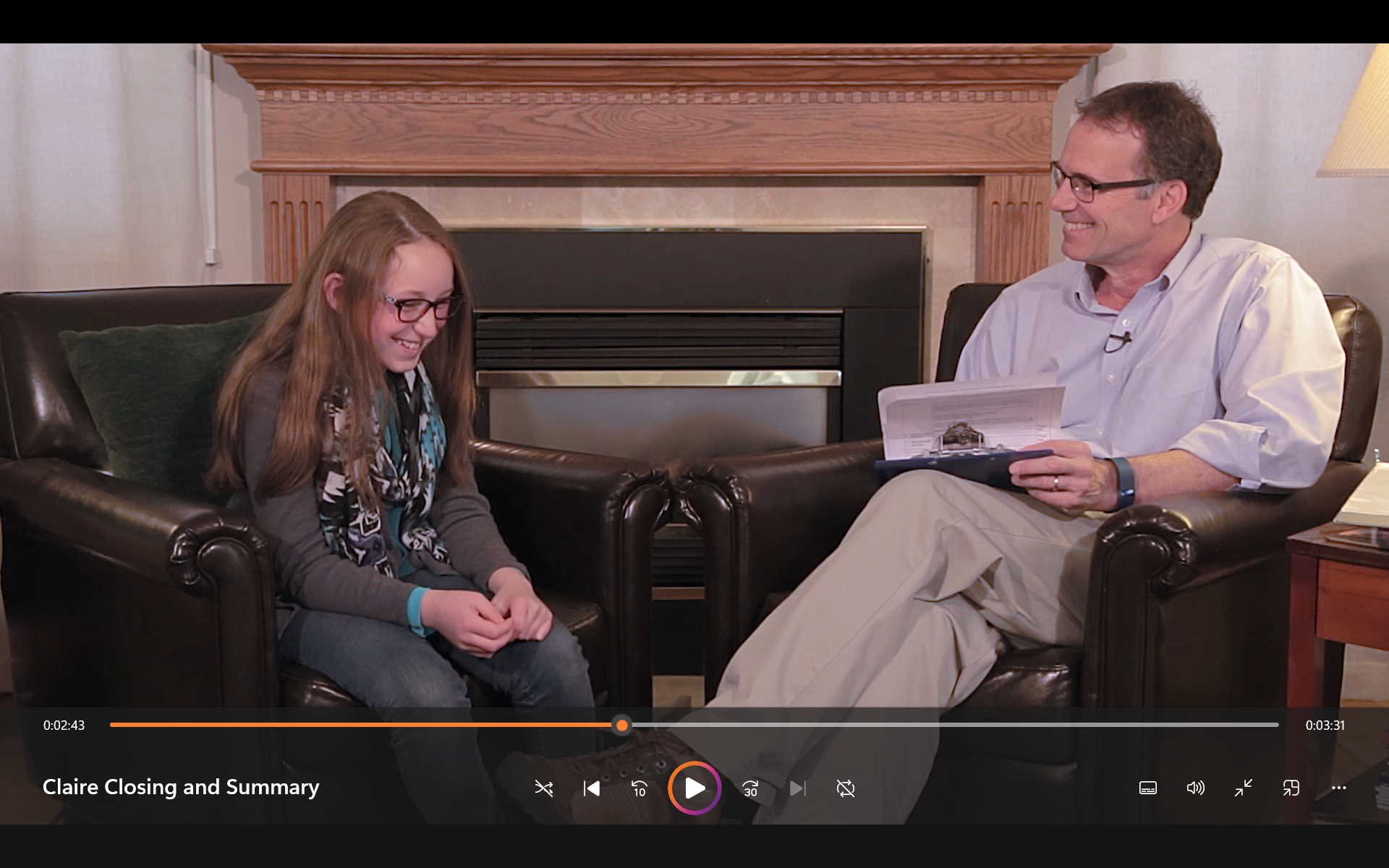
I want to end this little 1K word writing project with a video. In the linked clip, I’m doing about a 3 1/2 minute opening demonstrating a “Strengths-based approach” to suicide assessment and treatment planning with a 15-year-old. As you watch, ask yourself, “Is this strengths-based?” Can you identify anything that makes this approach strengths-based or as including even a whiff of positive psychology. [Again, you’re not required to watch this, I’m just rambling.]
In group class, we’re covering content related to group stage called “Storming.” The Coreys’, who’ve written about and led many groups, call this the “Transition” stage. During the storming or transition stage, group members start to push against or question group norms and/or the group leader’s authority. Not to be trite, but like roses, no matter what name it, the smell and tension of storming feels the same.
I’ve been waiting and watching for storming to emerge within my class. I know group process unfolds during class groups, just as it unfolds in psychoeducational, counseling, and psychotherapy groups. I thought I might ignite storming, by asking my counseling graduate students to focus on positive psychology. I did get a little push-back from students who emailed me about their “mixed” feelings about positive psychology. My response was to share that I also hold mixed feelings about positive psychology, along with mixed feelings about psychoanalytic theory, behavioral theory, CBT, feminist theory, acceptance and commitment therapy, and every other theory or approach I can think of.
This past week an ever-so-minor edge of a storm found its way into class. After class started, one student expressed negative feelings about a reading I’d assigned, noting that she thought the article was “shaming” to mandated clients. As often occurs with storming, I had an immediate and complex emotional and impulse-ridden response. Rather than acting on my emotions or defending the reading, I managed to welcome the critique. When I say “managed” I mean to communicate that IMHO, welcoming critiques is not easy, and maybe not natural. A few minutes later, I acknowledged that although I wished everyone would love all the class readings, I also wanted people to feel they had permission to not love the readings and speak openly about their opinions. Later that evening, I received an email takeaway from the student who didn’t like the reading. As you may recall, one of my group class assignments is for students to email me two takeaways in the days following class. Because she expressed what I want to communicate better than I can, here’s her email (shared with her permission).
Hey John,
My biggest takeaway from today was watching your modeling of working with storming, both with myself and [with another student]. The way that you allowed for expression of our feelings, were vulnerable with your own, and then used the material to create more conversations, norms, etc., was really helpful to see. I also want to share on this topic that when my oldest kiddo and I were talking this morning about what our days were looking like, I was talking to her about my feelings about an article we read for class that I didn’t agree with, and that I was going to bring it up in class. And her response was, “You’re going to tell your professor that?!?!” She was shocked that I felt like I could say that in class, and I wanted to thank you for creating a space where I felt like that was alright.
My other takeaway is your quote from class today, “We want to give people the chance to be interesting.” I think there are so few opportunities that people have to be seen and heard by others in a way that is meaningful. Coupled with the big, sort of inherent opportunity as a group leader to take up ‘too much space,’ your advice feels like a really important nugget that I want to take with me into leading groups in the future.
What I love best about this email (and I love a lot of it) is my student’s anecdote about her daughter’s reaction: “You’re going to tell your professor that?!?!” And what I love best about that is—consistent with other conversations we’ve been having in class—we should not run groups like cults. As leaders, professors, administrators, clergy, and politicians, we need to be open to independence of thought and listen to unique perspectives. What I think is not the truth and what I value is not necessarily the correct moral philosophy for everyone.
Today. . . I am very happy to have handled a little storming with acceptance and openness. Tomorrow may be different. But for today, I get to feel the good feelings of being able to live my best group leader values—even if it didn’t involve me being right about anything.
Last summer, when I taught our Happiness for Teachers course along with Lillian Martz, one of the most powerful assignments involved forgiveness. Even though we emphasized that the teachers taking our class didn’t need to actually engage in a forgiveness process, they shared incredibly deep and profound stories of betrayal, forgiveness, and the struggles in between. Here’s the assignment. Again, we’re not saying you need to engage in a forgiveness process. All we’re suggesting is for you to read this and think about forgiveness. Here’s the assignment:
Whether we’re talking self-forgiveness, forgiving others, or spiritual forgiveness, forgiveness is a big deal and a big ask.
For this learning activity, we don’t expect you to purge yourself of all personal guilt or become free from all resentments. Nevertheless, for this assignment, your job is to explore what forgiving yourself, forgiving others, and being forgiven might look like AND how forgiving yourself, forgiving others, and being forgiven might feel to you.
To do this activity, you’re not expected to actually do the forgiveness work; instead, you get to think about doing the forgiveness work and speculate on its effects. . . FOR YOU. Although forgiveness is probably the biggest issue we’ve tackled in this Happiness Challenge, the plan is for you to just take a small sip from the very large cup of potential forgiveness issues that we all have. If you want to go deeper and take a bigger drink, that’s perfectly fine, but that’s all up to you.
To get yourself oriented toward forgiveness you could (if you want) consider and access some of the following ideas and online resources:
Consider that forgiving others can improve your physical health. As Anne Lamott wrote in Traveling Mercies: “Not forgiving is like drinking rat poison and then waiting for the rat to die.” Is there anyone other there toward whom you might offer forgiveness? You don’t even have to talk with them (although you can, if that works for you). You can just bring yourself to a place where you’ve let go of any lingering anger or resentment that you’re holding.
Nothing works for everyone. Not everyone is comfortable writing about their experiences and not everyone can benefit from therapeutic writing. But, for those keen on the expressive writing modality, you can get out your pen or laptop and make a little therapeutic magic.
For this week’s Montana Happiness Challenge, I phrased it this way: What if, by engaging in a simple procedure for three consecutive days, you could obtain the following benefits?
A reduced need to go see a physician
Improved immune functioning
Fewer physical ailments or symptoms
Less distress
Less negative affect
Less depression
Improved GPA
Less absenteeism from work
As it turns out, according to social psychologist and prominent researcher, James Pennebaker, there is a simple procedure for accomplishing all of the above, right at your fingertips. Literally. At. Your. Fingertips. All you have to do is write about hard, difficult, or traumatic experiences. Here’s an example (summarized) of his instructions:
For the next three days write about your very deepest thoughts and feelings about an extremely important emotional issue that has affected you and your life. When writing, really let go and explore your deepest emotions and thoughts. You might want to tie your writing into your relationships with others or to your past/present/future, or to who you’ve been, who you are, and who you’d like to be in the future. You can write about the same topic every day or a new one every day. Keep your writing confidential. Don’t worry about spelling, grammar, etc., just write for 15-30 minutes straight. (adapted from Pennebaker, 1997)
I’ve been gobsmacked (aka astounded) by Pennebaker’s research for three decades. So much so that I remember where I was when I first read his 1986 article. Despite my gob-smacked-ness, I think it’s important to remember that Pennebaker is a social psychologist; he isn’t a clinical or counseling psychologist, a clinical mental health counselor, or a clinical social worker. As a consequence, I’m not asking you to leap right into his assignment without support. In fact, most researchers, including Pennebaker, believe you can gain the same benefits by talking about painful emotional experiences with a counselor or psychotherapist. One additional caveat: Pennebaker has also found that when writing or talking about traumatic experiences, often people feel distressed or emotionally worse to start, but over time they begin feeling better than they did in the beginning.
To do this activity, just think about Pennebaker’s method and his claims, and notice: (a) what you think of his idea, (b) whether you would ever like to try his technique, and (c) if you chose to try to process some deeper emotional issues, whether you would prefer writing or talking about them.
If you decide to really try Pennebaker’s method (that’s up to you), remember that your first reaction might be to feel worse. Therefore, having someone you trust to confide in about how you’re feeling through the process might be a good idea.
For me–and I know I’m weird–I like to go back and read some of the early research on these “therapeutic techniques.” Sometimes there’s no research to be found (think: somatic approaches or polyvagal theory); other times, the gaps between what was studied and what the media and popular psychology reports is huge (think: adverse childhood experiences and the research on predicting divorce); but on occasion, the original research is stunningly good. Here’s one of Pennebaker’s early studies. It’s really worth a read:







 John Sommers-Flanagan