Category Archives: Personal Reflections

Happy Birthday to Me

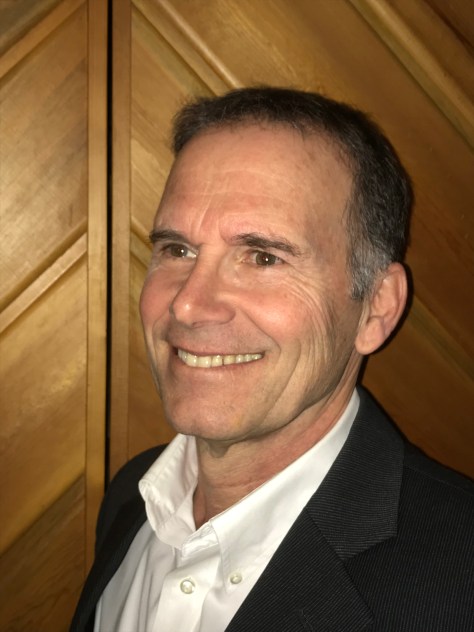
John Prof 2018

It’s political season.

Political season brings lots of things, including relentless television advertisings featuring creepy deep voices saying things that almost might be true, but are mostly unverifiable. One example, among many, accuses a candidate of “Voting against Montana.” Could that be true? It’s impossible to tell because it’s impossible to even know what voting against Montana even means? Obviously, the purpose of that sort of advertising is to mislead and influence.

Right now I’m on a bus from Missoula to Billings. It’s my birthday, which makes it a funny day for a bus ride. I could have stayed in Missoula, but today “he who shall not be named” is speaking there . . . and so I’m happily and anonymously riding this WiFi supplied Jefferson Lines Bus to Billings, where Rita will pick me up for a birthday dinner and poetry reading.

Political season always brings me fantasies of running for office. Today, while walking to the Missoula bus station, the fantasy was of me doing a political television advertisement. I might say something like this:

“Hey, I’m not featuring a creepy deep voice or attacking my opposition. All I want to do is look into this camera and talk directly to you. So let’s talk. Let’s talk about what you want in a Senator or Representative.

I grew up on the rural edge of Vancouver, Washington. My father owned a small business, installing window coverings. He was (and is at 92) the most honest person I’ve ever known. My mother was a traditional homemaker and worked along with my father in the family business. She was (and is) the kindest person I’ve ever known.

I’ve only got about 10 or 15 more years of a healthy active life left. And so, in honor of my parents and their values, I’d like to be a politician who will represent you with honesty and kindness. My parents also embraced the value of hard work. So let’s throw that in. I won’t be spending money on attack ads or misinformation. If you want to know where I stand on something, let’s talk. I’ll work hard to be an honest and kind representative of you and the whole state. In this advertising, all I’m asking is that you look at me, talk to me, compare me to my opponent, and then vote for the person who you think will be the most honest, kind, and hardworking person to represent you and this great state of Montana.”

Enough of the silly fantasies. My point is my birthday wish. I’m wishing today, for my birthday and for my birthday year, for a political takeover by politicians who are honest, kind, and hardworking. That’s all. They don’t have to be rich or powerful. They don’t have to have high IQs. Let’s just concentrate. Let’s just elect the honest and kind candidates and then see what happens.

Happy birthday to me.

A Book Review of Trauma-Sensitive Mindfulness by David A. Treleaven

Ocean ViewThis weekend in Missoula is the Annual Montana Book Festival, so I’ve got books on my mind. In a stroke of good fortune (and thanks to Susan O’Connor and Rita), last night I got to meet David James Duncan, the author of my all-time favorite book, The Brother’s K.  Talking with DJD was ALMOST as fun as reading The Brother’s K, which, if you haven’t read yet, should be on your reading list.

Speaking of Davids and books, several days ago one of our fantastic UM Doc students and I had a book review published in the Journal of Contemporary Psychotherapy. The Doc student’s name is Ariel Goodman (not David), and I have the bragging rights (and honor) of being the co-author of her first (of many to come) publication.

Our review is of Trauma-Sensitive Mindfulness by David A. Treleaven. Ariel and I both liked the book. Although we take him to task a bit for less than perfect scientific rigor, overall the book is very well written and has many excellent ideas about how to safely employ mindfulness with individuals who have previously experienced trauma.

Here’s the review: Goodman-Sommers-Flanagan2018_Article_DavidATreleavenTrauma-Sensitiv

Also, thanks to James Overholser, editor of the Journal of Contemporary Psychotherapy, for giving us the opportunity to do this book review.

We Don’t Always Have to Get Along, But Let’s Strive to NOT Hurt Each Other: Lessons from Alfred Adler

ShoesUnless you’re in my Counseling and Psychotherapy Theories class and studying for your first exam, you probably don’t know much about Alfred Adler. Hence, this post–which happens to simultaneously be part of a study guide for Counseling Theories and part of what we need more of in American discourse.

Adler was a popular psychiatrist in the early 1900s. He was Freud’s contemporary. He wrote about Gemeinschaftsgefühl. But like lots of Adlerian things, Gemeinschaftsgefühl has been overlooked. Adler believed humans were naturally predisposed to work together, cooperatively, in community, with empathy, and positive social feelings. Lydia Sicher, an Adlerian follower, captured his ideas with one of the best professional journal article titles of all time: A Declaration of Interdependence.

Interdependence and Gemeinschaftsgefühl are so natural that, unless we’re broken in some way, we cannot stop ourselves from experiencing empathy; we cannot stop ourselves from helping others in need.

If you know something about Freud, or if you read Chapter 2 of the textbook, you probably recall that Freud was rather competitive. From his conflicts with Janet to his “booting” Adler out of the Psychoanalytic Society, Freud seemed focused on proving himself and holding a dominant position over others. In Freudian psychosexual terms, we might think of this as a fixation at the phallic developmental stage. From an Adlerian perspective, Freud’s behavior represents an excessive striving for superiority. Think about that as you think about contemporary American politics. Might there be an excessive striving for superiority in politics? I often wonder, if you’re already in a position of dominance, why is it necessary to “put down” others as they strive to have their voices heard?

The explanations for this consistent phenomenon across all political parties might be Freudian or they might be Adlerian. Either way, it’s important to learn something about how Adler’s responses to competition and superiority issues were much different than Freud’s. Even as a youth, Adler didn’t obtain gratification from dominating others. Mosak and Maniacci (1999) described a story about what was perhaps Adler’s one and only physical conflict:

Adler became embroiled in a conflict with a classmate, and a fight broke out. Adler struck the boy, and hurt him. He vowed not to fight again (p. 2).

Consider this. It appears Adler won the fight. He hurt the other boy. But instead of obtaining gratification from dominating or hurting someone else and wanting to repeat that behavior, he vowed never to fight again.

I share this story because it captures some of Adler’s theory of individual psychology. Perhaps because he already felt useful and as if he belonged, Adler obtained no additional gratification from having physical power over another. Instead, his aggressive outburst appeared to activate his social interest and compassion. He discovered he did not want to hurt other people. We could all use a little more Adler in our psyches. Not wanting to hurt others would generally be helpful in friendships, romantic relationships, and when conflict occurs. We can always argue and debate over ideas—but how about if we do that with respect and without any intent or motivation to hurt the other person?

In the anecdote about his fight, Adler is clearly not motivated or pulled toward proving his superiority. In another Adler anecdote, his biographer, Phyllis Bottome, described him as “very ordinary.” She wrote:

[He was] a very ordinary 57-year-old man who simply possessed a deep and abiding interest in the lives of ordinary people (Bottome, 1962 #234).

On that note, let’s review the theory and practice of Alfred Adler, an ordinary man who had an interest in ordinary people like you and me.

Theory Review: Dr. John’s Study Tips on Adlerian Theory

Adlerian theory is a little like an iceberg. It’s seems simple and manageable on the surface, but gets more complex as you dive down and try to explore it more completely. As a consequence, I recommend that you stay with the basics; if you decide to go the Adlerian path, there are many ways to explore the theory in greater depth. The following statements about people will help you get in touch with your inner Adlerian—at least for now.

  1. People are unique (idiographic) whole beings (holistic) who act with a sense of purpose (purposeful behavior). This sense of purpose is there whether the person realizes it or not.
  2. Part of an Adlerian therapist’s goals is to help clients have insight or become aware of their purposeful behavior. This insight generates motivation. In some cases clients may not be able to become aware of their deeper behavioral purpose. If so, just becoming aware of the behavior and its negative price can be enough to ignite motivation for change.
  3. Not only is the concept of social interest unique to Adlerian therapy, but the idea that developing social interest, a community feeling or spirit, and having compassion and empathy for others as a therapeutic goal is radical.
  4. Social interest flows from or is related to Adler’s inferiority concept. Think about it this way: We all feel inferior in some ways. But if we focus too much on our own inferiority, it will almost always lead down the dead end of excessive self-interest in compensating for inferiority (e.g., acting superior) or buckling under to our inferiority feelings and complexes (e.g., chronic low self-esteem or depression). This is why focusing on others—and even on their natural inferiority feelings—can help move clients away from the narcissistic or depressive extremes associated with excessive self-interest.
  5. Everyone’s overall way of being is highly subjective. Our style of life (or cognitive schema about self, others, and the world) is created or constructed from our subjective experiences. If you have siblings or caretakers and you sit down and talk about shared memories, you may discover you hold differing perceptions of what happened—even though you were all there together!! This is an example of the subjectivity filter that affects our individual experiences (phenomenology) and that then contributes or feeds back into our style of life.
  6. Therapy is all about fixing our internal, cognitive map (style of life) so it works as perfectly as possible. This requires feedback, awareness, and motivation to fix the distortions in our subjective internal map. The therapist’s role is to guide or assist clients in looking at these distortions (basic mistakes) and making appropriate changes. Therapists explicitly encourage (or give courage to) clients so that clients can feel encouraged (and have courage).
  7. When clients are encouraged and motivated (because they see the maladaptive nature of parts of their lifestyle), they naturally move forward toward a more complete or perfect self that is able to better face and manage the six Adlerian tasks of life.

This is probably enough Adler for now. But if you’re interested in more, you can find it on a new and exciting website called AdlerPedia: https://www.adlerpedia.org/


The Long Version of the Trump Personality Slate Magazine Article


Publishing a piece in Slate Magazine was fun and interesting. The editor did a nice job reining me in and trimming the piece to an appropriate length. However, for anyone interested in the long-winded JSF version of the article, here it is. As you’ll notice, I included the examples of Trump’s behavior that fit the Millon personality descriptors.

My dad helped inspire the Slate article with his clear and concise comments about DJT’s “con man” skills. Here’s a picture of us when we were NOT talking about DJT.

John and Max Seattle

Preparing for and Containing a Trumpian Endgame

Pundits and professionals regularly express concerns about Donald Trump’s mental health. Most speculations focus on Narcissistic Personality Disorder (NPD). It’s easy to see why. If you look at the DSM-5 criteria for NPD, Trump’s public behaviors are obviously consistent with all nine diagnostic criteria. Even further, because only five of nine criteria are needed for an NPD diagnosis, Trump getting nine of nine is huge; perhaps no one has ever seen a narcissism quite so beautiful. Nevertheless, we still can’t diagnose Trump with NPD. That’s because it’s unethical to diagnose anyone without first conducting a professional evaluation. Also, Trump doesn’t meet the distress or impairment criteria required for a mental disorder diagnosis.

As disturbing as observations of Trump’s narcissism may be, what’s frightening about his personality isn’t narcissism. Narcissistic traits among politicians and presidential candidates—who often have big personalities—are common. Far more worrisome and dangerous is that his statements and behaviors fit so well with a different personality style. This style is what the renowned psychologist, Theodore Millon, called “The Aggrandizing-Devious-Antisocial Personality” (aka antisocial personality).

Millon summarized these personalities as “driven by a need to . . . achieve superiority.” They act “to counter expectation of derogation and disloyalty at the hands of others,” and do this by “actively engaging in clever, duplicitous, or illegal behaviors in which they seek to exploit others for self-gain.” Sound familiar?

What follows are summary descriptions of Millon’s antisocial personality style. Keep in mind that Millon’s statements are not diagnostic criteria for a mental disorder. The purpose here is not psychiatric diagnosis. Instead, my goal is to describe Trump’s personality, speculate on his future behaviors, and discuss strategies for how antisocial behaviors can be contained. To invoke a cliché, knowledge confers power; the more we understand Trump’s personality, the better prepared we can be for the directions his behaviors may take us.

Impulsive Imprudence. Millon described antisocial personalities as “. . . shortsighted, incautious, and imprudent. There is minimal planning, limited consideration of alternative actions, and consequences are rarely examined.”

Reading this, you may immediately think of Trump’s impetuous meetings with Kim Jong Un and Vladimir Putin, his sudden decision to impose international tariffs, or a different example. Whatever the case, it’s easy to spot incautious patterns in Trump’s behavioral repertoire. Now, and going forward, Trump needs continuous supervision and monitoring. This is especially the case when he meets with authoritarian leaders. Millon further described this impulsive style, “There is a tendency to jump from one exciting and momentarily gratifying escapade to another, with little or no care for potentially detrimental consequences.” Trump will probably need a clean-up team to finish his work or conduct damage control following his various escapades.

Blaming Others for Shirked Obligations. Antisocial personalities “frequently fail to meet or intentionally negate obligations of a marital, parental, employment, or financial nature.” When negative outcomes arise, Trump will be inclined to blame external forces or subordinates. This is the equivalent of a personal philosophy in direct opposition to President Harry Truman’s, “The buck stops here.” Holding Trump responsible for his behaviors has been, is, and will be extremely challenging.

Pathological Lying. Millon wrote, “Untroubled by guilt and loyalty, they develop a talent for pathological lying. Unconstrained by honesty and truth, they weave impressive talks of competency and reliability. Many . . . become skillful swindlers and imposters.”

Trump’s disregard for truth and fact is already legendary, with over 4,200 Trump lies since his inauguration. Millon also noted that antisocial personalities “play their games of deception with considerable skill” and “experience a degree of pleasure” from their deceptions, gaining “special joy in . . . taking from others.” These descriptions underline the need for the press and Congress to continually monitor and report the accuracy of Trump’s statements.

Declarations of Innocence. During times of trouble, antisocial personality types employ an innocence strategy. “When . . . caught in obvious and repeated lies and dishonesties, many will affect an air of total innocence, claiming without a trace of shame that they have been unfairly accused.”

Trump has repeatedly proclaimed his innocence, calling the Mueller investigation a “witch hunt” and frequently tweeting, “No collusion!” As he feels increasingly threatened, Trump’s claims of innocence will likely escalate, along with spirited efforts to arouse support by pinning the blame on individuals who are well-hated by his populist base—like President Obama or Hillary Clinton.

Empathy Deficits. Antisocial personalities are devoid of empathy and compassion. Millon called this “A wide-ranging deficit in social charitability, in human compassion, and in personal remorse and sensitivity.” He added that “many have a seeming disdain for human compassion.” Going forward, Trump’s efforts to display empathy or sustain charitable behaviors will sound and feel much less genuine than his glowing statements about himself or his aggressive attacks on his detractors.

Counterattacks. Millon noted that antisocial personalities are hyper-alert to criticism. He “sees himself as the victim, an indignant bystander subjected to unjust persecution and hostility” feeling “free to counterattack and gain restitution and vindication.” For Trump, the urge to counterattack appears irresistible. He often uses a favorite attack or counterattack strategy among antisocials—projecting their own malicious ideas and behaviors onto others through name-calling and accusations of illegal (or crooked) behavior. Trump’s pattern of lashing out at others will only continue to escalate.

Moral Emptiness. Antisocial personalities have no ethical or moral compass. As Millon described, they “are contemptuous of conventional ethics and values” and “right and wrong are irrelevant abstractions.” Antisocials may feign religiosity—when it suits their purpose. But the moral litmus test will always involve whether they stand to gain from a particular behavior, policy, or government action. For instance, adopting an anti-abortion stance could serve as a calculated strategy, despite having a history of being “very pro-choice.” In all likelihood, no method for Trump to achieve his ends—including separating children from parents—will be morally beneath him.

Clinicians have observed that some individuals with antisocial personalities burn out. Over time, negative family and legal consequences take a toll, prompting antisocials to conform to social and legal expectations. However, as in Trump’s case, when antisocial personalities wield power, burning out is unlikely. Power provides leverage to evade personal responsibility for financial maleficence and sexual indiscretions. Antisocial personalities who have the upper hand will increase their reckless, impulsive, and self-aggrandizing behaviors in an effort to extend their ever-expanding need for power and control. Trump will continue to be drawn toward authoritarian leaders, because they symbolize his interpersonal goal of gaining power and authority over everyone.

Because antisocial personalities don’t change on their own and don’t respond well to interventions, containment is the default management strategy. Without firm, unwavering limits, deception, law-breaking, greed, manipulation, and malevolent behaviors will increase. An antisocial person in a position to self-pardon or self-regulate is a recipe for disaster. Containment must be forceful and uncompromising, because if an antisocial personality locates a crack or loophole, he will exploit it. Staff interventions, comprehensive law enforcement, and judicial systems that mandate accountability must be in place.

Three main containment strategies remain in play: Republican control; the Mueller investigation, and a November blue wave.

Unfortunately, although many Republicans are concerned about Trump’s behaviors, they’re no match for Trump’s populist charisma. Defying Trump is too costly; he can make Republicans pay with electoral consequences and his populist base will pelt defectors with threatening hate mail. Like him or not, Republicans have little motivation for clashing with a powerful leader who promises them judicial appointments and legislative opportunities, the likes of which they’ve not seen in their lifetimes.

Recruiting independent actors to resist Trump is also difficult. Trump skillfully uses intimidation, direct and indirect threats, and offers of power to recruit new supporters who will walk to the microphone, as Brett Kavanaugh did, and speak to the world of Trump’s unprecedented greatness. Exhibiting a glaring lack of judicial independence, Kavanaugh opened his nomination speech with a no holds barred endorsement of Trump’s character, stating, “No president has ever consulted more widely, or talked with more people from more backgrounds, to seek input about a Supreme Court nomination.” Never mind that reflective consultation is anathema to antisocial personalities or that Kavanaugh would have had to review 230 years of Supreme Court nominations to support his statement. Soliciting others to lie for them is a common antisocial strategy. Kavanaugh‘s genuflection to Trump is a foreboding example of how far and deep Trump’s power and influence run.

The Mueller investigation and November blue wave are in danger of being outpaced by Trump’s unmatched speed and skill for playing “games of deception.” Trump’s talent for quickly tweeting divisive messages and propaganda is well-established. Without organized political opposition and a massive public movement for truth, justice, and integrity, Trump will continue winning and most Americans will continue losing.

Even if one or more of these containment strategies succeeds, it’s difficult to envision the American public emerging unscathed. Trump and his followers have shredded civil discourse and elevated division, distrust, and hatred. If he is dethroned, Trump has all but ensured that public conflict over his fall from grace will be painful and violent. Preparation for a Trumpian “call to arms” is necessary.

Coming together to contain a common threat is the best path forward. Trump’s personality and probable future behaviors are inconsistent with American virtues and values and the rule of law. Our youth don’t need a presidential role model who pays off porn stars, locks up children, and locks out the press if they ask him hard questions. For all Americans who crave integrity, honesty, and civil discourse, it’s time to gather together under a large (metaphorical) tent, where all are welcome and respected. We can sort out our differences on climate change, guns, and abortion later. If we don’t come together now—as Mr. Trump himself might say—we’ll soon be facing a huge national and global crisis like no one has ever seen before.

****************************************

John Sommers-Flanagan (johnsommersflanagan.com) is a clinical psychologist, professor of counselor education at the University of Montana, and author of eight books, including Clinical Interviewing (6th edition, John Wiley & Sons). The views expressed here are not representative of the University of Montana or the Montana University System.

 

My Slate Article on Donald Trump’s Dangerous Personality Dimensions

Hi All.

The Slate Magazine article where I use Theodore Millon’s personality descriptions to articulate possible challenges linked to Trump and the U.S. Presidency is out. Here’s the link: https://slate.com/technology/2018/08/no-matter-how-bad-it-gets-trump-will-never-give-up.html

As always, feel free to comment. You can do that here or on the Slate article itself.

John SF

The Rest of the Story on Trump’s Personality

AOIP6519

The Slate article on Donald Trump and his personality is coming out tomorrow morning. Of course, as with all things writing, it was wonderful and challenging. Writing for a popular online magazine like Slate is a new venue for me, so I learned plenty, and was honored to work with Slate’s Health and Science editor, Susan Matthews. She helped me be more focused and more articulate.

I’ll post a link to the article here tomorrow.

The main focus of the article was to look at Donald Trump’s personality through the lens of Theodore Millon’s antisocial personality formulations. Millon’s perspective is fascinating and I think some of his descriptive phrases fit Trump “beautifully,” but one of the  points of the article is for you to be the judge.

In the meantime, I want to share a paragraph that got cut. As we made revisions, it fell slightly outside the focus, but it was one of my favorite paragraphs. . . so here it is:

Recruiting independent actors to resist Trump is difficult. Trump skillfully uses intimidation, direct and indirect threats, and offers of power to recruit new supporters who will walk to the microphone, as Brett Kavanaugh did, and speak to the world of Trump’s unprecedented greatness. Exhibiting a glaring lack of judicial independence, Kavanaugh opened his nomination speech with a no holds barred endorsement of Trump’s character, stating, “No president has ever consulted more widely, or talked with more people from more backgrounds, to seek input about a Supreme Court nomination.” Never mind that reflective consultation is anathema to antisocial personalities or that Kavanaugh would have had to review 230 years of Supreme Court nominations to support his statement. Soliciting others to lie for them is a common antisocial strategy. Kavanaugh‘s genuflection to Trump is a foreboding example of how far and deep Trump’s power and influence run.

After the article is out, I’ll be posting more content that wasn’t quite ready for prime time.


More Musings on Donald Trump’s Personality: Spoiler Alert, We’re Not Talking Narcissism Anymore . . . Because it’s Worse than That

Irrigation SunriseAs I mentioned in Part One, much of the focus on DJT has been on whether he meets the diagnostic criteria for Narcissistic Personality Disorder. Allen Francis, who helped write the personality disorder criteria, has expressed many times that DJT is “bad, not mad.” His reasoning is that DJT’s narcissistic traits don’t cause Trump personal distress and haven’t adversely affected his functioning; in fact, DJT was elected president! In diagnostic terminology, Dr. Frances is saying that DJT doesn’t meet either the distress or impairment criteria, at least one of which is needed to make a formal diagnosis.

Despite the objections of Dr. Francis, if you look at the DSM-5 criteria for NPD, it’s easy to see that DJT’s public behaviors could have served as the prototype for the DSM’s authors as they developed the NPD diagnostic criteria. But it still doesn’t mean DJT has NPD. In addition to not meeting the distress or impairment criteria, individuals (even DJT) cannot be diagnosed without a clinical interview, principally because all behaviors occur in context (or within a subculture). What’s even more interesting is that given DJT’s context of being a reality television star, running for president, and being elected president, who are we to say whether his apparent NPD characteristics are diagnosable. In those contexts, having NPD behaviors might be adaptive (at least sometimes).

In particular, the context of U.S. President is of special intrigue. Generally, anyone who runs for president probably has some (or many) narcissistic traits. I’m not saying that all U.S. Presidential candidates are, by definition, narcissistic. I am saying that narcissistic traits in a U.S. President are not especially distinguishing features. It’s sort of like saying, “Hey, I found this fish and I also discovered that it can swim!!” Narcissistic traits in a U.S. President does not a news-flash make.

Besides . . . and here’s where I go down a more frightening path. My sense is that what’s unique and distinguishing about DJT isn’t his narcissism (although his narcissism is palpable, but not diagnosable); instead, I think he behaves in ways consistent with individuals who have antisocial personalities. Again, I’m not making the claim here that DJT should be diagnosed with Antisocial Personality Disorder (APD). Below, I’ll elaborate on my thinking about this.

As I explore how DJT manifests an antisocial personality style (not APD), I’ll be quoting liberally from the amazing work of the late Theodore Millon (see: Disorders of Personality, 3rd ed., 2011). Millon was a psychologist famous for his writings on personology in general, and personality disorders, in particular.

Just FYI: The following quotations and comments don’t refer to APD diagnostic criteria. Millon (2011) believed those criteria were too concrete and simple and therefore inconsistent with the concept of personality. Instead, my focus is on individuals who think and behave in ways consistent with Millon’s formulation of “Aggrandizing-Devious-Antisocial Personality.” These individuals, although not necessarily diagnosable in the DSM or ICD sense, exhibit a style consistent with antisocial psychological and interpersonal dynamics.

Before I dive into Millon’s descriptions, which are fantastic, by the way, let’s take a brief historical tour.

Way back in Aristotle’s time, his student, Theophrastus (371 – 287 B.C.), wrote about specific personalities, one of which was “The Unscrupulous Man.” Here’s one of Theophrastus’s descriptions.

The Unscrupulous Man will go and borrow more money from a creditor he has never paid . . . . When marketing he reminds the butcher of some service he has rendered him and, standing near the scales, throws in some meat, if he can, and a soup-bone. If he succeeds, so much the better; if not, he will snatch a piece of tripe and go off laughing (from Widiger, Corbitt, & Millon, p. 63).

If you recall Aristotelian philosophy, Aristotle was big into virtues or virtuous behaviors. Here we have his student describing someone who isn’t especially virtuous. Theophrastus’s description involves a pattern of taking from others; The Unscrupulous Man apparently thinks that theft of others’ goods and property is acceptable, and perhaps laudable. Serendipitously, I’m reminded of a few examples of this attitude and unscrupulous behaviors in DJT. Specifically, there are well-publicized bankruptcies, reports of non-payment to contracted employees, and a statement in one of his debates with Hillary Clinton that not paying any federal income taxes “makes me smart.” Hardly anyone (other than Sarah Huckabee Sanders) would step up and contend that DJT is neglecting himself because of his interest and focus on the welfare of others. That DJT frequently works systems and people to his advantage is relatively unarguable.

About 2000 years later, interest in The Unscrupulous Man re-emerged. The famous American physician, Benjamin Rush wrote about “perplexing cases characterized by lucidity of thought combined with socially deranged behavior. He spoke of these individuals as possessing an ‘innate, preternatural moral depravity’” (p. 425). Millon summarized Rush’s description: “He claimed that a lifelong pattern of irresponsibility was displayed by these individuals without a corresponding feeling of shame or hesitation over the . . . destructive consequences of their actions” (p. 425). Rush himself wrote: “Persons thus diseased cannot speak the truth upon any subject” (1812, p. 124).

Earlier this year, the Washington Post (May 31, 2018) reported, “President Trump has made 3,251 false or misleading claims in 497 days.” Of course, the Post limited their analysis to public statements, so their estimate is probably low. Rush’s description of someone who “cannot speak the truth on any subject,” has some surface validity in that it sometimes seems that DJT tells unnecessary lies. Given an opportunity to speak freely, it’s not unusual to hear DJT begin exaggerating about inaugural (or other) crowd sizes or to completely dissemble, “I never fired James Comey because of Russia!” or “I’m the only politician that produced more than I said I was going to produce, and we’re only 1 1/2 years in” or ________________. You can fill in the blank, I’m sure.

The history of APD as an entity is peppered with commentary of astonishment (an astonishment similar to the mainstream press) and their repeated surprise that DJT was behaving in ways that were unprecedented, over and over, and in a sense, normalizing combat between the  Office of the President and the Press Corps, who were quickly labeled as “the enemy of the people.” Historically, there was a similar repeated surprise over discovering (and rediscovering) that there was a “type” of mental patient who, in many ways seemed perfectly normal, but in the place where moral values existed for others, there was only emptiness. The usual signs of insanity were missing, but constructs of ethics and morals were viewed as quaint ideas existing only on other planets or in alternative universes. Given this moral lacunae, early on, the condition was referred to as “moral insanity.” This term emphasized the consistent observation that these people appeared sane in all other respects—and often charming. Henry Maudsley (1874), put it this way:

“As there are persons who cannot distinguish certain colours, having what is called colour blindness, so there are some who are congenitally deprived of moral sense” (p. 11).

In the early 1900s, Emil Kraepelin, upon whose work forms the foundation for modern diagnostic systems, described a personality type that he referred to as “morbid liars and swindlers.” These types “were glib and charming, but lacking in inner morality and as sense of responsibility to others; they made frequent use of aliases, were inclined to be fraudulent con men, and often accumulated heavy debts that were invariably unpaid” (Millon, 2011, p. 428). One of Kraepelin’s disciples, a German physician, later added, “. . . that many of these individuals were unusually successful in positions of either political or material power” (Millon, p. 429)

Obviously, DJT has been “unusually successful” both politically and materially. Of greater prescience is a quotation from Jimmy Kimmel Live (May 25, 2016) where DJT described his used of aliases. “Over the years I’ve used alias (sic), and when I’m in real estate and especially when I was out in Brooklyn with my father and I’d want to buy something . . . I would never want to use my name because you’d have to pay more money for the land. If you’re trying to buy land, you use different names.”

Also in 2016, but on a less grand stage, consistent with Kraepelin’s formulation of morbid liars and swindlers, my 90-year-old poker-playing father quickly identified DJT as “a con man” (https://johnsommersflanagan.com/2016/11/05/what-my-card-playing-genius-father-says-about-donald-trump/).

One final note before ending Part Two.

A Kraepelin disciple from Germany made an interesting point . . . and one that Millon repeatedly emphasizes. Not only is it that individuals with antisocial characteristics may not be disordered, in fact, they may be very successful: “Schneider observed that many of these individuals were unusually successful in positions of either political or material power.” (Millon, p. 429).

Part Three is coming . . . although I’m hoping that my Slate Magazine article is coming sooner.

On Psychiatric Diagnosis and Whether Donald J. Trump has a Personality Disorder

IMG_3063Note — This is a three or four part series focusing on complexities of psychiatric diagnosis; then I ramble into an exploration of what specific psychological and interpersonal dynamics might be driving Donald Trump’s behaviors. This piece and the next two or three are a lead-up to an essay I’m doing for Slate Magazine.

Psychiatric diagnosis looks easy.

All you need is a diagnostic manual. In the U.S., you can use the 5th edition of the Diagnostic and Statistical Manual of Mental Disorders (DSM-5; published by the American Psychiatric Association) or the 10th edition of the International Classification of Diseases (ICD-10; published by the World Health Organization). Even easier, you can search for and find online diagnostic criteria for virtually every mental disorder. The power to diagnose is at your fingertips.

If you think your friend has panic disorder, you can type “panic disorder” into your favorite search engine, find the criteria, and confirm your suspicions. The same goes for diagnosing children. Finding the criteria for attention-deficit/hyperactivity disorder (ADHD) is simple. Of special convenience is the fact that if you look at the ADHD criteria, you’ll discover that nearly every child on the planet has ADHD. Odds are, if you look closely at the ADHD criteria, you’ll end up diagnosing yourself. I mean, who really likes waiting in lines?

Technically, you should study the different diagnostic categories and the various checklists of symptoms for each disorder, do a formal observation or interview with the person you want to diagnose, match their behaviors to the checklist, and come to your diagnostic conclusion. But we’re living in a fast-paced world where, like our president, whatever you think must be true because you thought it; never mind that you should recuse yourself from diagnosing your friends, your family, and yourself. Who has time to fact check? Besides, you can just ask, “Siri, do I have obsessive-compulsive disorder?”

Contrary to popular solipsistic fantasies and what you’ll learn from Siri, psychiatric diagnosis may look easy, but in the real world, it’s complex and sticky.

Not only are there 300 different diagnoses (and 947 pages in the DSM-5), many psychiatric conditions overlap, meaning one symptom could be associated with several different diagnoses. For example, having a depressed or irritable mood could qualify your or your romantic partner for bipolar disorder or various depressive disorders, but because bad moods are also associated with ADHD, oppositional defiant disorder, substance use disorders, and many different physical/medical conditions, you’ll need to assess for and rule out these other possible disorders. Then again, there’s the likely chance that you and your romantic partner are bugging the hell out of each other and so your depressed and irritable moods are simply a natural product of your poor judgment, incompatibility, or desperate need for couple counseling.

Sorting out diagnostic signs and symptoms is especially difficult because people will often intentionally or unintentionally minimize or exaggerate their symptoms, depending on the setting and their motivation. Think about your son. He’s a hellion at home, but when you take him to the pediatrician, you come unglued trying to tell the doctor about your hyperactive child. All the while, he sits there, hands folded like a little cherub. You leave the office with a new prescription for valium for yourself.

If you make an effort to go beyond using the diagnosis-is-easy approach, in the end, or in the middle, or somewhere in the diagnostic process you may find the symptoms have changed. You mother may have seemed bipolar and you were closing in on a diagnosis of intermittent explosive disorder for your father, but suddenly, right after you move out, their symptoms vanish. Or maybe they just aged and became more mature or maybe they got out of their miserable jobs, and consequently became less emotionally volatile? This is the nature of working with humans; as much as you’d like them to hold still for a clear snapshot, they move, their relationships change, their employment situation shifts, and you end up with what the venerable psychologist Paul Meehl might have called, a fuzzy notion, rather than diagnostic certainty. Looking back, Meehl might have added that diagnosis is also a sticky notion because, once applied, psychiatric diagnoses are difficult to remove. This is why psychiatric diagnosis is best left to trained professionals. This is also why professionals often get it wrong, and someone ends up labeled with a sticky diagnosis that follows them into the future despite new and contradictory diagnostic information.

As an example, many people and some professionals have concluded that Donald J. Trump has a mental disorder called narcissistic personality disorder (NPD). As satisfying as it might feel to diagnose Donald Trump with NPD, the NPD conclusion is erroneous on two counts. First, no one can or should diagnose Trump without conducting a diagnostic interview. Even then, diagnosing him would be difficult. As Allen Francis, Chair of the DSM-IV Task Force wrote, diagnosticians should “be patient,” because accurate psychiatric diagnosis may take five minutes, five hours, five months, or five years. In the real world of psychiatric diagnosis, accurate and useful diagnoses take much longer and are much more involved than a 5 minute armchair social media diagnosis. Competent and ethical mental health professionals always go beyond diagnostic checklists.

Now, don’t get me wrong, labeling Trump with NPD feels good and feels right. Check it out. There are many, many obvious examples of how Trump fits the NPD criteria. However, other than being fun, entertaining, and gratifying (not to mention offensive), the process and outcome of armchair social media diagnosis is neither fair nor honest.

Beyond simply matching DJT’s behaviors with the NPD diagnostic criteria, over the past two years, many articles and books have been written about Donald J. Trump’s mental health. For some odd reason, I’ve been preoccupied with reading many of these articles and books lately. Although not “fun” content, reading about DJT’s mental state was a welcome shift away from my first impulse after his election—which was to start reading about the death instinct in Freud’s Civilization and It’s Discontents. I’m having way more fun now.

For another odd reason, after reading about DJT’s mental health, I found myself fantasizing that I might have something to add to the conversation.

To be continued . . .

Feeling Anxious? Learn the One and Only Method for Self-Regulation

Back in 1980, one of my supervisors at Woodside Hospital in Vancouver, WA, gave me a big compliment. At the time, I was a recreational therapist in a 22-bed psychiatric hospital. In a letter of recommendation, the supervisor described me as having a special knack for translating complex psychological phenomena into concrete activities from which patients could learn. To be honest, I really had no idea what I was doing.

But I think he was onto something about me and my personality. I like to integrate, summarize, and boil down information into digestible bits. Sometimes I have to get the facts to play Twister to get otherwise incompatible perspectives to fit together. This tendency is probably why I’ve written textbooks on clinical interviewing and counseling theories.

Today, I’m tackling anxiety, anxiety reduction, and self-regulation. This feels more personal than usual, mostly because I’ve been dysregulated, more or less, since November 9, 2016.

After reading and thinking about anxiety and anxiety reduction for 30+ years, I’m strongly leaning toward the position that there’s only one, single, universal method to achieve self-regulation. The method is Mary Cover Jones’s counterconditioning. You probably already know that I think Mary Cover Jones is fabulous.

As a means of exploring this unifying method, I recently did a podcast on it with Sara Polanchek. I’ll write more later, but for now, if you’re interested, check out the podcast. It’s the latest episode (7/19/18 release date). You can listen on iTunes: https://itunes.apple.com/us/podcast/practically-perfect-parenting-podcast/id1170841304?mt=2

Or Libsyn: http://practicallyperfectparenting.libsyn.com/

If you do listen, please let me know what you think. That way I can continue with integration and synthesis by incorporating your thoughts into my thoughts. I’ll bet you can find many different ways to communicate with me.

If you don’t listen, no worries, I’ll just keep hanging out here in my personal echo chamber.

Mental Health or Mental Illness: Defining Mental Disorders

East Rosebud

For a while, I’ve been engaged in a debate (sometimes just with myself) about the use of the term “mental illness.” [More on this at a later date]. Civil debates are good for the brain. There doesn’t have to be a winner or loser. Recently I remembered that we addressed this issue briefly in our 2017 revision (6th edition) of Clinical Interviewing. Here’s an excerpt, beginning on page 396:

Defining Mental Disorders

The concept of mental disorder, like many other concepts in medicine and science, lacks a consistent operational definition that covers all situations. From the DSM-IV-TR (American Psychiatric Association, 2000, p. xxx)

It’s often difficult to draw a clear line between mental problems and physical illness. When you become physically ill, it’s obvious that stress, lack of sleep, or mental state may be contributing factors. Other times, when experiencing psychological distress, your physical state can be making things worse (Witvliet et al., 2008).

Why Mental Disorder and not Mental Illness?

Many professionals, organizations, and media sources routinely use “mental illness” to describe diagnostic entities included in the ICD and DSM classification systems. This practice, although popular, is inconsistent with the ICD and DSM. Both manuals explicitly and intentionally use and plan to continue using the term mental disorder. From the ICD-10:

The term “disorder” is used throughout the classification, so as to avoid even greater problems inherent in the use of terms such as “disease” and “illness”. “Disorder” is not an exact term, but it is used here to imply the existence of a clinically recognizable set of symptoms or behaviour associated in most cases with distress and with interference with personal functions. (1992, p. 11)

The ICD and DSM systems are descriptive, atheoretical classification systems. They rely on the presence or absence of specific signs (observable indicators) and symptoms (subjective indicators) to establish diagnoses. Other than disorders in the F00-F09 ICD-10 block (e.g., F00: Dementia in Alzheimer’s disease, F01: Vascular Dementia, etc.), there is no assumption of any physical, organic, or genetic etiology among ICD mental disorders.

Consistent with the ICD and DSM, we don’t use the term mental illness in this text. We also believe mental illness to be a more problematic term than mental disorder. In fact, often we step even further away from an illness perspective and use the phrase “mental health problems” instead. However, in the end, no matter what we call them, mental disorders are fairly robust, cross-cultural concepts that can be identified and often treated effectively.

General Criteria for Mental Disorders

The DSM-5 includes a general definition of mental disorder:

A mental disorder is a syndrome characterized by clinically significant disturbance in an individual’s cognition, emotion regulation, or behavior that reflects a dysfunction in the psychological, biological, or developmental processes underlying mental functioning. Mental disorders are usually associated with significant distress or disability in social, occupational, or other important activities. (American Psychiatric Association, 2013, p. 20)

This definition is consistent with ICD-10-CM. Nevertheless, significant vagueness remains. If you go back and read through the DSM-5 definition of mental disorder several times, you’ll find substantial lack of clarity. There’s room for debate regarding what constitutes “a clinically significant disturbance.” Additionally, how can it be determined if human behavior “reflects a dysfunction in the psychological, biological, or developmental processes underlying mental functioning” (p. 20)? Perhaps the clearest components of mental disorder include one of two relatively observable phenomena:

  1. Subjective distress: Individuals themselves must feel distressed.
  2. Disability in social, occupational, or other important activities: The cognitive, emotional regulation, or behavioral disturbance must cause impairment.

Over the years the DSM system has received criticism for being socially and culturally oppressive (Eriksen & Kress, 2005; Horwitz & Wakefield, 2007). Beginning in the 1960s Thomas Szasz claimed that mental illness was a myth perpetuated by the psychiatric establishment. He wrote:

Which kinds of social deviance are regarded as mental illnesses? The answer is, those that entail personal conduct not conforming to psychiatrically defined and enforced rules of mental health. If narcotics-avoidance is a rule of mental health, narcotics ingestion will be a sign of mental illness; if even-temperedness is a rule of mental health, depression and elation will be signs of mental illness; and so forth. (1970, p. xxvi)

Szasz’s point is well taken. But what’s most fascinating is that the ICD and DSM systems basically agree with Szasz. The ICD includes this statement: “Social deviance or conflict alone, without personal dysfunction, should not be included in mental disorder as defined here” (p. 11). And the DSM-5 authors wrote:

Socially deviant behavior (e.g., political, religious, or sexual) and conflicts that are primarily between the individual and society are not mental disorders unless the deviance or conflict results from a dysfunction in the individual . . . . (p. 20)

The ICD’s and DSM’s general definitions of mental disorder and criteria for each individual mental disorder consist of carefully studied, meticulously outlined, and politically influenced subjective judgments. Science, logic, philosophy, and politics are involved. This is an important perspective to keep in mind as we continue down the road toward clinical interviewing as a method for diagnosis and treatment planning.

Why Diagnose?

Like Szasz (1961, 1970), many of our students want to reject diagnosis. They’re critical of and cynical about diagnostic systems and believe that applying diagnoses dehumanizes clients, ignoring their individual qualities. We empathize with our students’ complaints, commiserate about problems associated with diagnosing unique individuals, and criticize inappropriate diagnostic proliferation (e.g., bipolar disorder in young people). But, in the end, we continue to value and teach diagnostic assessment strategies and procedures, justifying ourselves with both philosophical and practical arguments.

Some of the benefits of education and training in diagnosis follow:

  • Clinicians are encouraged to closely observe and monitor specific client symptoms and diagnostic indicators
  • Accurate diagnosis improves prediction of client prognosis
  • Treatments can be developed for specific diagnoses
  • Communication with other professionals and third-party payers can be more efficient
  • Research on the detection, prevention, and treatment of mental disorders is facilitated

Although we advise maintaining skepticism regarding diagnostic labels, having knowledge about mental disorders is a professional requirement.

It seems ironic, but sometimes labels are a great relief for clients. When clients experience confusing and frightening symptoms, they often feel alone and uniquely troubled. It can be a big relief to be diagnosed, to have their problems named, categorized, and defined. It can be comforting to realize that others—many others—have reacted to trauma in similar ways, experienced depression in similar ways, or developed similar irrational thoughts or problematic compulsions. Diagnosis can imply hope (Mulligan, MacCulloch, Good, & Nicholas, 2012).