For the first time in seven years, I’m teaching group counseling this semester. This forces me to think about, “What’s the latest scoop on teaching group counseling?” I’ve been reading and talking and gaining information, but if anyone out there has particular insights to share with me, please do.
In my prep, I’ve decided that there’s tons of content out there, in professional journals, books, book chapters, and everywhere else I look. Nevertheless, to break free from the oppression of content, one of my first decisions is to go experiential. This isn’t much different from seven years ago, but my plan is to be even MORE experiential.
Based on previous experiences teaching group, talking with faculty, and talking with students, the Group course is a place with a complex mix of anxiety, vulnerability, and potential conflict. To manage this exciting and challenging mix, I’ve got several plans.
- After my infamous “Group is open” anecdote, I will share my philosophy on brain development and counselor skill development. In the Moodle shell, I wrote: “Hey Everybody, Welcome to our group counseling course at U of M. I love group counseling and I love teaching group counseling. More than any other approach, group work requires that we maintain an attitude of acceptance and hold the statements and disclosures that others make with sensitivity and grace. One big goal in this class is for all of us to continue to grow those parts of our brain that makes us excellent listeners. Mostly, we need to let go of other parts of our brain that wants to debate, argue, and express our opinions. I look forward to this adventure and journey with you. See you Tuesday, John SF”
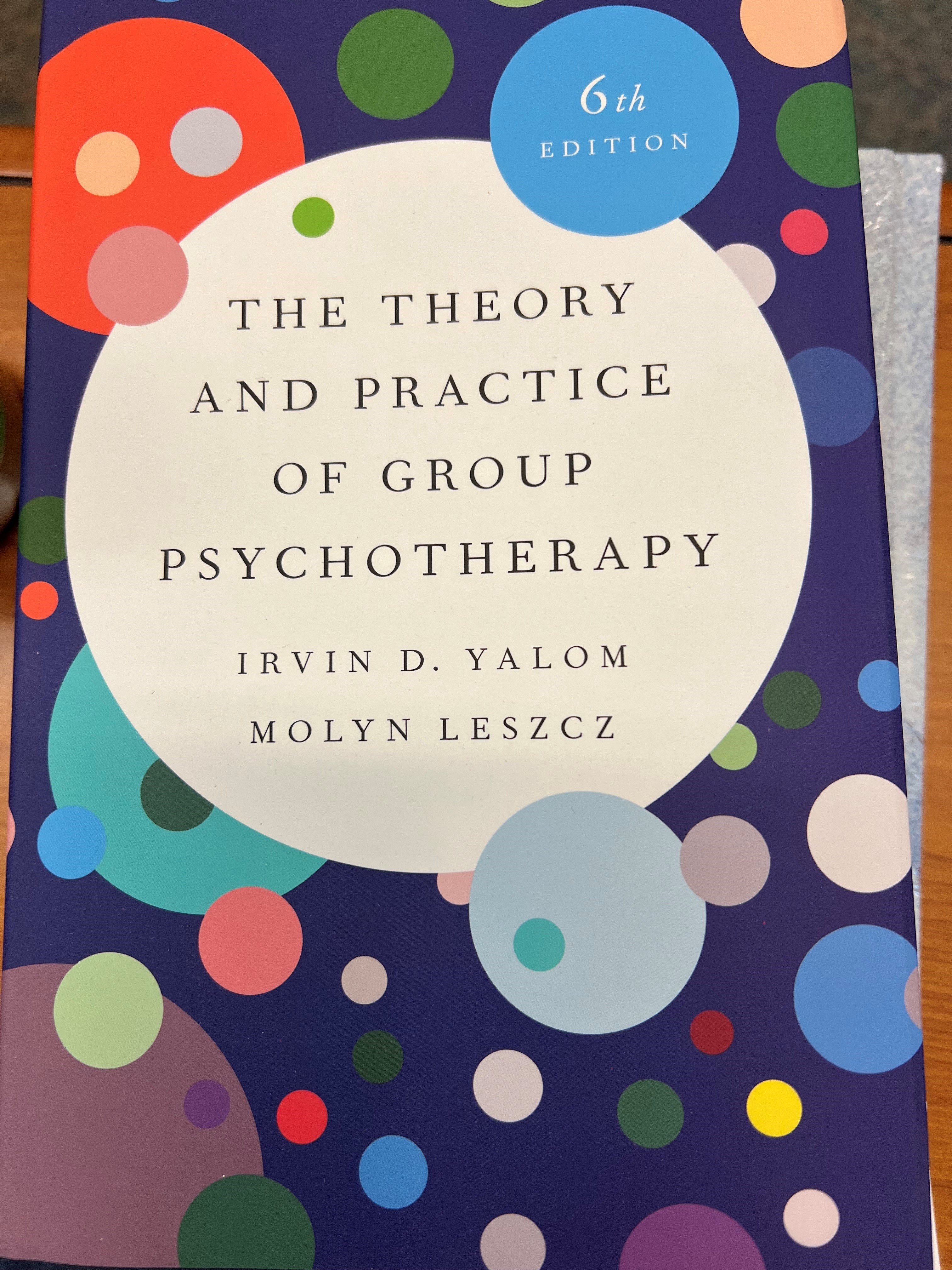
- TBH, I’m not sure how my philosophy will fly with students . . . but sharing it fits with Irvin Yalom’s mantra that the group leader is instantly the primary norm setter and role model. Along with my philosophy, I will also disclose some of my anxieties and insecurities. Yes . . . even after 40+ years as a mental health professional, I still feel the creep of imposter anxiety.
- Then we’ll circle up and jump into two rounds of experiential introductions. I do two rounds of experiential introductions to give students a chance to “feel” the difference between more structured and less structured group process. I’ve done this before; it feels like a relatively safe, fun, and process-oriented opening.
- Then, in the spirit of Yalom’s “self-reflective loop,” we will debrief and debrief some more.
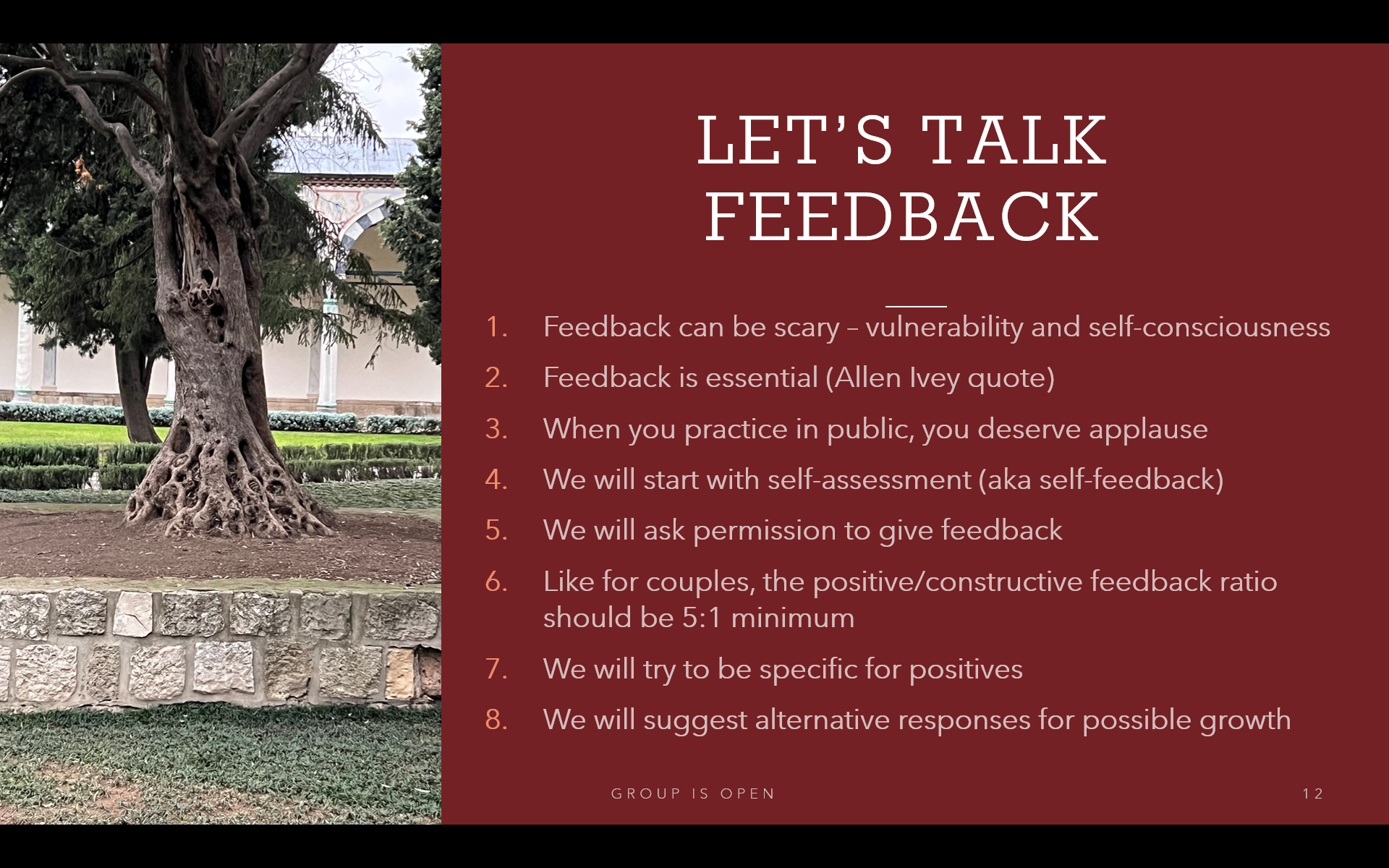
- After exiting the experiential introductions, we’ll stay in the circle, review the course syllabus (assignments), and then talk about our planned feedback process. Once, when I asked Allen Ivey for his best advice on learning counseling skills, he said he could summarize his advice in six words: “Practice, practice, practice, feedback, feedback, feedback.” I thought that was a pretty cool answer. You can check out my ideas about feedback on a previous blog post: https://johnsommersflanagan.com/2020/08/18/guidelines-for-giving-and-receiving-feedback/
- The last part of class #1 (time permitting) will be me reviewing a few group counseling basics (e.g., group types, group stages, cultural humility, under-confidence, overconfidence, and the wonder and narrowness of the dialectic of lived experience. Should be a blast.
I’m hoping to blog every week about my Group Counseling class and the teaching and learning experience. Of course, that will depend on my time management skills. I’m thinking maybe I’ll coax one of my students into running a psychoeducational group on time management—and then maybe I’ll actually achieve my weekly Group Counseling goals.
Here’s a screenshot of my feedback prompt (aka ppt slide).