Category Archives: Counseling and Psychotherapy Theory and Practice

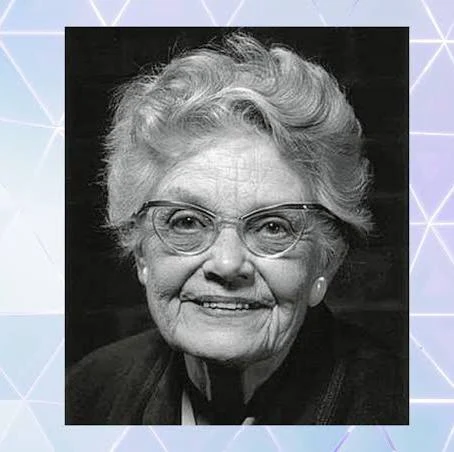
A Glimpse and Quote from Laura Perls (co-developer of Gestalt Therapy) . . . and the Suicide Prevention Slides for North Carolina State University

You may be wondering (I know I am), what does a glimpse and quote from the illustrious Laura Perls have to do with suicide prevention slides for North Carolina State University?

If you have thoughts on the connection, please share. I see a connection, but maybe it’s just because I wanted to post both these things. First, here’s a bit of content from Laura Perls from our Counseling and Psychotherapy Theories text.

***************************************

Although the contributions of Laura Posner Perls to Gestalt therapy practice were immense, she never receives much credit, partly due to the flamboyant extraversion of Fritz and partly because her name, somewhat mysteriously (at least to us), is not on many publications. She does, however, comment freely on Fritz’s productivity at the twenty-fifth anniversary of the New York Institute for Gestalt Therapy (an organization that she co-founded with Fritz).

Without the constant support from his friends, and from me, without the constant encouragement and collaboration, Fritz would never have written a line, nor founded anything. (L. Perls, 1990, p. 18)

REFLECTIONS

We hear resentment in the preceding quotation from Laura Perls. We feel it too, because we’d like to know more about Laura and for her to have gotten the credit she deserved. If you want more Laura, here’s a nice tribute webpage: https://gestalt.org/laura.htm?ya_src=serp300. And here’s a quotation from her (obtained from the webpage and compiled by Anne Leibig): “Real creativeness, in my experience, is inextricably linked with the awareness of mortality. The sharper this awareness, the greater the urge to bring forth something new, to participate in the infinitely continuing creativeness in nature. This is what makes out of sex, love; out of the herd, society; out of wheat and fruit, bread and wine; and out of sound, music. This is what makes life livable and incidentally makes therapy possible.”

Now, don’t you want to hear more from Laura?

*******************************************

And here’s the North Carolina State University link:

Who Are You? A Request

We’re in the throes of editing our Theories text, meaning I’m so deep into existential, feminist, and third wave counseling and psychotherapy theories that I may have lost myself. If any of you find me somewhere on the street babbling about Judith Jordan and Frantz Fanon and Bryan Cochran, please guide me home.

This brings me to a big ask.

As part of 4th wave feminism, we’re more deeply integrating intersectionality into the practice of feminist therapy. Among other things, intersectionality is about identity. I’m interested in using a variation of Irvin Yalom’s “Who are you?” group technique to explore identity in anyone willing to respond to this post.

To participate, follow these instructions.

  1. Clear a space for thinking, writing, and exploring your identity.
  2. Ask yourself the question: “Who am I?” and write down the response as it flows into your brain/psyche.
  3. Repeat this process nine more times, for a total of 10 responses, numbering each response. One rule about this: You can’t use the same response twice.
  4. After you finish your list of 10, write a paragraph or two about how you were affected by this activity.
  5. If you’re comfortable sharing, send me your list of 10 identities along with your reflections (email: john.sf@mso.umt.edu). If you prefer the more public route, you can post your responses here on my blog. Either way, because I’m in 24/7 theories mode, you may not hear back from me until middle November!

There’s a chance I might want to quote one or more of you in the theories text, instructor’s manual, student guide, or in this blog. If that’s the case, I will email you and request permission.

Thanks for considering this activity and request. Identity and identity development are fascinating. Whether we’re talking about multiple identities (intersectionality), emotions and behaviors (Blake), or the “microbes within us” (Yong), we all contain multitudes.

Revisiting the Genius of Mary Cover Jones

While reviewing and revising the behavior therapy chapter from our Theories textbook, I found myself revisiting my awe of Mary Cover Jones. I think too many contemporary therapists don’t know about Mary Cover Jones and don’t understand the behavioral (classical conditioning) model for understanding and treating anxiety disorders, including OCD and PTSD.

In most chapters, we include a feature called a “Brain Box.” Here’s the box from Chapter 7, Behavior Theory and Therapy.

7.1 Brain Science May be Shiny, but Exposure Therapy is Pure Gold

In honor of Joseph Wolpe, let’s start with mental imagery.

***********

Imagine you’ve travelled back in time to your first week of high school. You look around and see that one of your classmates is named Mary Jones.

Mary is an ordinary girl with an ordinary name. Over the years, you don’t notice her much. She seems like a nice person, a fairly good student, and someone who doesn’t get in trouble or draw attention to herself.

Four years pass. A new student joined your class during senior year. His name is Daniel Tweeter. Toward the end of the year, Daniel does a fantastic Prezi presentation about a remarkable new method for measuring reading outcomes. He includes cool video clips and boomerang Snapchat. When he bows at the end, he gets a standing ovation. Daniel is a good student and a hard worker; he partnered up with a college professor and made a big splash. Daniel deserves recognition.

However, as it turns out, over the whole four years of high school, Mary Jones was quietly working at a homeless shelter; week after week, month after month, year after year, she was teaching homeless children how to read. In fact, based on Daniel’s measure of reading outcomes, Mary had taught over 70 children to read.

Funny thing. Mary doesn’t get much attention. All everybody wants to talk about is Daniel. At graduation, he wins the outstanding graduate award. Everyone cheers.

Let’s stop the visualization and reflect on what we imagined.

***********

Like birds and raccoons, humans tend to like shiny things. Mary did incredible work, but hardly anyone noticed. Daniel did good work, and got a standing ovation and the top graduate award.

The “shiny-thing theory” is my best explanation for why we tend to get overly excited about brain science. It’s important, no doubt, but brain imaging isn’t therapy; it’s just a cool way to measure or validate therapy’s effects.

Beginning from at least 1924, when Mary Cover Jones was deconditioning fear out of little children, behavior therapy has shown not only great promise, but great outcomes. However, when researchers showed that exposure therapy “changes the brain,” most of the excitement and accolades were about the brain images; exposure therapy was like background noise. Obviously, the fact that exposure therapy (and other therapies) change the brain is great news. It’s great news for people who have anxiety and fear, and it’s great news for practitioners who use exposure therapy.

This is all traceable to neuroscience and human evolution. We get distracted by shiny objects and miss the point because our neural networks and perceptual processes are oriented to alert us to novel (new) environmental stimuli. This is probably because change in the form of shiny objects might signal a threat or something new and valuable. We therefore need to exercise self-discipline to focus in and not overlook that behavior therapy in general, and exposure therapy in particular, has been, is, and probably will continue to be, the most effective approach on the planet for helping people overcome anxiety and fear. In addition, you know what, it doesn’t really matter that it changes the brain (although that’s damn cool and affirming news). What matters is that it changes clients’ lives.

Exposure therapy, no matter how you package it, is highly effective for treating anxiety. This statement is true whether we’re talking about Mary Cover Jones and her evidence-based counterconditioning cookies or Francine Shapiro and eye movement desensitization reprocessing (EMDR). It’s also true whether we’re talking about virtual reality exposure, imaginal exposure, massed exposure, spaced exposure, in vivo exposure, interoceptive exposure, response prevention (in obsessive-compulsive disorder), or the type of exposure that acceptance and commitment therapists use (note that they like to say it’s “different” from traditional classical conditioning exposure, but it works, and that’s what counts).

In the end, let’s embrace and love and cheer brain imaging and neuroscience, but not forget the bottom line. The bottom line is that exposure therapy works! Exposure therapy is the genuine article. Exposure therapy is pure gold.

Mary Cover Jones is the graduate of the century; she was amazing. Because of her, exposure therapy has been pure gold for 93+ years, and now we’ve got cool pictures of the brain to prove it.

Mary Cover Jones passed away in 1987. Just minutes before her death, she said to her sister: “I am still learning about what is important in life” (as cited in Reiss, 1990).

We should all be more like Mary.

Today’s Rabbit Hole: What Constitutes Scientific Evidence for Psychotherapy Efficacy?

On July 24, in Helena, I attended a fun and fascinating meeting sponsored by the Carter Center. I spent the day with a group of incredibly smart people dedicated to improving mental health in Montana.

The focus was twofold. How do we promote and establish mental health parity in Montana and how do with improve behavioral health in schools? Two worthy causes. The discussions were enlightening.

We haven’t solved these problems (yet!). In the meantime, we’re cogitating on the issues we discussed, with plans to coalesce around practical strategies for making progress.

During our daylong discussions, the term evidence-based treatments bounced around. I shared with the group that as an academic psychologist/counselor, I could go deep into a rabbit-hole on terminology pertaining to treatment efficacy. Much to everyone’s relief, I exhibited a sort of superhuman inhibition and avoided taking the discussion down a hole lined with history and trivia. But now, much to everyone’s delight (I’m projecting here), I’m sharing part of my trip down that rabbit hole. If exploring the use of terms like, evidence-based, best practice, and empirically supported treatment is your jam, read on!

The following content is excerpted from our forthcoming text, Counseling and Psychotherapy Theories in Context and Practice (4th edition). Our new co-author is Bryan Cochran. I’m reading one of his chapters right now . . . which is so good that you all should read it . . . eventually. This text is most often used with first-year students in graduate programs in counseling, psychology, and social work. Consequently, this is only a modestly deep rabbit hole.

Enjoy the trip.

*************************************

What Constitutes Evidence? Efficacy, Effectiveness, and Other Research Models

We like to think that when clients or patients walk into a mental health clinic or private practice, they will be offered an intervention that has research support. This statement, as bland as it may seem, would generate substantial controversy among academics, scientists, and people on the street. One person’s evidence may or may not meet another person’s standards. For example, several popular contemporary therapy approaches have minimal research support (e.g., polyvagal theory and therapy, somatic experiencing therapy).

Subjectivity is a palpable problem in scientific research. Humans are inherently subjective; humans design the studies, construct and administer assessment instruments, and conduct the statistical analyses. Consequently, measuring treatment outcomes always includes error and subjectivity. Despite this, we support and respect the scientific method and appreciate efforts to measure (as objectively as possible) psychotherapy outcomes.

There are two primary approaches to outcomes research: (1) efficacy research and (2) effectiveness research. These terms flow from the well-known experimental design concepts of internal and external validity (Campbell et al., 1963). Efficacy research employs experimental designs that emphasize internal validity, allowing researchers to comment on causal mechanisms; effectiveness research uses experimental designs that emphasize external validity, allowing researchers to comment on generalizability of their findings.

Efficacy Research

Efficacy research involves tightly controlled experimental trials with high internal validity. Within medicine, psychology, counseling, and social work, randomized controlled trials (RCTs) are the gold standard for determining treatment efficacy. RCTs statistically compare outcomes between randomly assigned treatment and control groups. In medicine and psychiatry, the control group is usually administered an inert placebo (i.e., placebo pill). In the end, treatment is considered efficacious if the active medication relieves symptoms, on average, at a rate significantly higher than placebo. In psychotherapy research, treatment groups are compared with a waiting list, attention-placebo control group, or alternative treatment group.

To maximize researcher control over independent variables, RCTs require that participants meet specific inclusion and exclusion criteria prior to random assignment to a treatment or comparison group. This allows researchers to determine with greater certainty whether the treatment itself directly caused treatment outcomes.

In 1986, Gerald Klerman, then head of the National Institute of Mental Health, gave a keynote address to the Society for Psychotherapy Research. During his speech, he emphasized that psychotherapy should be evaluated through RCTs. He claimed:

We must come to view psychotherapy as we do aspirin. That is, each form of psychotherapy must have known ingredients, we must know what these ingredients are, they must be trainable and replicable across therapists, and they must be administered in a uniform and consistent way within a given study. (Quoted in Beutler, 2009, p. 308)

Klerman’s speech advocated for medicalizing psychotherapy. Klerman’s motivation for medicalizing psychotherapy partly reflected his awareness of heated competition for health care dollars. This is an important contextual factor. Events that ensued were an effort to place psychological interventions on par with medical interventions.

The strategy of using science to compete for health care dollars eventually coalesced into a movement within professional psychology. In 1993, Division 12 (the Society of Clinical Psychology) of the American Psychological Association (APA) formed a “Task Force on Promotion and Dissemination of Psychological Procedures.” This task force published an initial set of empirically validated treatments. To be considered empirically validated, treatments were required to be (a) manualized and (b) shown to be superior to a placebo or other treatment, or equivalent to an already established treatment in at least two “good” group design studies or in a series of single case design experiments conducted by different investigators (Chambless et al., 1998).

Division 12’s empirically validated treatments were instantly controversial. Critics protested that the process favored behavioral and cognitive behavioral treatments. Others complained that manualized treatment protocols destroyed authentic psychotherapy (Silverman, 1996). In response, Division 12 held to their procedures for identifying efficacious treatments but changed the name from empirically validated treatments to empirically supported treatments (ESTs).

Advocates of ESTs don’t view common factors in psychotherapy as “important” (Baker & McFall, 2014, p. 483). They view psychological interventions as medical procedures implemented by trained professionals. However, other researchers and practitioners complain that efficacy research outcomes do not translate well (aka generalize) to real-world clinical settings (Hoertel et al., 2021; Philips & Falkenström, 2021).

Effectiveness Research

Sternberg, Roediger, and Halpern (2007) described effectiveness studies:

An effectiveness study is one that considers the outcome of psychological treatment, as it is delivered in real-world settings. Effectiveness studies can be methodologically rigorous …, but they do not include random assignment to treatment conditions or placebo control groups. (p. 208)

Effectiveness research focuses on collecting data with external validity. This usually involves “real-world” settings. Effectiveness research can be scientifically rigorous but doesn’t involve random assignment to treatment and control conditions. Inclusion and exclusion criteria for clients to participate are less rigid and more like actual clinical practice, where clients come to therapy with a mix of different symptoms or diagnoses. Effectiveness research is sometimes referred to as “real world designs” or “pragmatic RCTs” (Remskar et al., 2024). Effectiveness research evaluates counseling and psychotherapy as practiced in the real world.

Other Research Models

Other research models also inform researchers and practitioners about therapy process and outcome. These models include survey research, single-case designs, and qualitative studies. However, based on current mental health care reimbursement practices and future trends, providers are increasingly expected to provide services consistent with findings from efficacy and effectiveness research (Cuijpers et al., 2023).

In Pursuit of Research-Supported Psychological Treatments

Procedure-oriented researchers and practitioners believe the active mechanism producing positive psychotherapy outcomes is therapy technique. Common factors proponents support the dodo bird declaration. To make matters more complex, prestigious researchers who don’t have allegiance to one side or the other typically conclude that we don’t have enough evidence to answer these difficult questions about what ingredients create change in psychotherapy (Cuijpers et al., 2019). Here’s what we know: Therapy usually works for most people. Here’s what we don’t know: What, exactly, produces positive changes.

For now, the question shouldn’t be, “Techniques or common factors?” Instead, we should be asking “How do techniques and common factors operate together to produce positive therapy outcomes?” We should also be asking, “Which approaches and techniques work most efficiently for which problems and populations?” To be broadly consistent with the research, we should combine principles and techniques from common factors and EST perspectives. We suspect that the best EST providers also use common factors, and the best common factors clinicians sometimes use empirically supported techniques.

Naming and Claiming What Works

When it comes to naming and claiming what works in psychotherapy, we have a naming problem. Every day, more research information about psychotherapy efficacy and effectiveness rolls in. As a budding clinician, you should track as much of this new research information as is reasonable. To help you navigate the language of researchers and practitioners use to describe “What works,” here’s a short roadmap to the naming and claiming of what works in psychotherapy.

When Klerman (1986) stated, “We must come to view psychotherapy as we do aspirin” his analogy was ironic. Aspirin’s mechanisms and range of effects have been and continue to be complex and sometimes mysterious (Sommers-Flanagan, 2015). Such is also the case with counseling and psychotherapy.

Language matters, and researchers and practitioners have created many ways to describe therapy effectiveness.

  • D12 briefly used the phrase empirically validated psychotherapy. Given that psychotherapy outcomes vary, the word validated is generally avoided.
  • In the face of criticism, D12 blinked once, renaming their procedures as empirically supported psychotherapy. ESTs are manualized and designed to treat specific mental disorders or specific client problems. If it’s not manualized and doesn’t target a disorder/problem, it’s not an EST.
  • ESTs have proliferated. As of this moment (August 2025), 89 ESTs for 30 different psychological disorders and behavior problems are listed on the Division 12 website (https://div12.org/psychological-treatments/). You can search the website to find the research status of various treatments.
  • To become proficient in providing an EST requires professional training. Certification may be necessary. It’s impossible to obtain training to implement all the ESTs available.
  • In 2006, an APA Presidential Task Force (2006) loosened D12’s definition, shifting to a more flexible term, Evidence-Based Practice (EBP), and defining it as ‘‘the integration of the best available research with clinical expertise in the context of patient characteristics, culture, and preferences’’ (p. 273).
  • In 2007, the Journal of Counseling and Development, the American Counseling Association’s flagship journal, inaugurated a new journal section, “Best Practices.” As we’ve written elsewhere, best practice has grown subjective and generic and is “often used so inconsistently that it is nearly meaningless” (Sommers-Flanagan, 2015, p. 98).
  • In 2011, D12 relaunched their website, relabeling ESTs as research-supported psychological treatments (n.b., most researchers and practitioners continue to refer to ESTs instead of research-supported psychological treatments).
  • As an alternative source of research updates, you can also track the prolific work of Pim Cuijpers and his research team for regular meta-analyses on psychological treatments (Cuijpers et al., 2023; Harrer et al., 2025).
  • Other naming variations, all designed to convey the message that specific treatments have research support, include evidence-based treatment, evidence-supported treatment, and other phrasings that, in contrast to ESTs and APA’s evidence-based practice definition, have no formal definition.

Manuals, Fidelity, and Creativity

Manualized treatments require therapist fidelity. In psychotherapy, fidelity means exactness or faithfulness to the published procedure—meaning you follow the manual. However, in the real world, when it comes to treatment fidelity, therapist practice varies. Some therapists follow manuals to the letter. Others use the manual as an outline. Still others read the manual, put it aside, and infuse their therapeutic creativity.

A seasoned therapist (Bernard) we know recently provided a short, informal description of his application of exposure therapy to adult and child clients diagnosed with obsessive-compulsive disorder. Bernard described interactions where his adult clients sobbed with relief upon getting a diagnosis. Most manuals don’t specify how to respond to clients sobbing, so he provided empathy, support, and encouragement. Bernard described a therapy scenario where the client’s final exposure trial involved the client standing behind Bernard and holding a sharp kitchen knife at Bernard’s neck. This level of risk-taking and intimacy also isn’t in the manual—but Bernard’s client benefited from Bernard trusting him and his impulse control.

During his presentation, Bernard’s colleagues chimed in, noting that Bernard was known for eliciting boisterous laughter from anxiety-plagued children and teenagers. There’s no manual available on using humor with clients, especially youth with overwhelming obsessional anxiety. Bernard used humor anyway. Although Bernard had read the manuals, his exposure treatments were laced with empathy, creativity, real-world relevance, and humor. Much to his clients’ benefit, Bernard’s approach was far outside the manualized box (B. Balleweg, personal communication, July 14, 2025).    

As Norcross and Lambert (2018) wrote: “Treatment methods are relational acts” (p. 5). The reverse is equally applicable, “Relational acts are treatment methods.” As you move into your therapeutic future, we hope you will take the more challenging path, learning how to apply BOTH the techniques AND the common factors. You might think of this—like Bernard—as practicing the science and art of psychotherapy.

**********************************

Note: This is a draft excerpt from Chapter 1 of our 4th edition, coming out in 2026. As a draft, your input is especially helpful. Please share as to whether the rabbit hole was too deep, not deep enough, just right, and anything else you’re inspired to share.

Thanks for reading!

Counseling and Psychotherapy Theories: The 4th Edition Revision is Underway

At long last, we’ve begun work on revising our Counseling and Psychotherapy Theories text for its 4th edition. Over the past several weeks, I’ve been putting in an hour or two a day, chipping away on chapter revisions, reaching out to reviewers, and planning with our new and very exciting co-author, Dr. Bryan Cochran, a highly esteemed psychology professor at the University of Montana. If you’re reading this, I want you to know of Bryan’s awesomeness (and if you’re Bryan, I want you to feel the pressure of this public announcement of your awesomeness) [hahahaha!]

You all probably know that our Theories textbook is far and away the Theories textbook with the most hilarity. No doubt, this is a rather low bar, given that I can’t find any funny stories in any other theories texts. We view theories hilarity to be extremely important in a theories text, because reading many theories texts can parallel the proverbial experience of watching paint dry.

Bryan’s addition to the writing team will give us something we need—an expert in the LGBTQ+ domain, and someone with a talent for telling stories that are simultaneously engaging, informative, and fun to read. Right now, he’s busy writing a “Lenses” chapter (to be Chapter 2) to orient readers to important theory-related lenses like (a) Queer theory, (b) Critical Race theory, (c) Intersectionality, and more. I, for one, can hardly wait for his Queer theory quips.  

News Flash: In the past, I’ve put out broad calls for chapter reviewers. This time, I’m being selective and directly asking prominent theories experts to review chapters and offer guidance. Some examples: For the Adlerian chapter we’ve got Marina Bluvshtein (woohoo!) and Jon Sperry (wow!). For the Psychoanalytic chapter, we got Nancy McWilliams (amazing!) and Pratyusha Tammala-Narra (fantastic!).

If you happen to be a specific theories subject matter expert, you should email me at john.sf@mso.umt.edu to get in on the fun. Or if you have a prominent theories friend/colleague to recommend, have them email me.

As one last theories teaser, below I’m pasting a few excerpts from Nancy McWilliams’s 2021 article titled, “Diagnosis and Its Discontents: Reflections on Our Current Dilemma.” I love this article as it gives a glimpse into problems with contemporary diagnoses and how psychodynamic therapists use individualized assessment in ways to honor the real-life complexities clients bring into psychotherapy. The excerpts below are from her article, which is linked at the end of this post.

On Labeling

The idea that one is anxious (or depressed or obsessive) about something that has meaning is being lost. Fitting an individual into a category tends to foreclose exploration of what is unique to a patient; it especially prevents insights into unexpected aspects of a person’s psychology or exploration of areas that are felt as shameful – the very areas that are of particular value in planning and carrying out psychotherapy.

On the vexing ways in which patients think about themselves and their diagnoses

It used to be that a socially avoidant woman would come for therapy saying something like, “I’m a painfully shy person, and I need help learning how to deal better with people in social situations.” Now a person with that concern is likely to tell me that she “has” social phobia – as if an alien affliction has invaded her otherwise problem-free subjective life. People talk about themselves in acronyms oddly dissociated from their lived experience: “my OCD,” “my eating disorder,” “my bipolar.” There is an odd estrangement from one’s sense of an agentic self, including one’s own behavior, body, emotional and spiritual life, and felt suffering, and consequently one’s possibilities for solving a problem. There is a passive quality in many individuals currently seeking therapy, as if they feel that the prototype for making an internal psychological change is to describe their symptoms to an expert and wait to be told what medicine to take, what exercises to do, or what self-help manual to read.

On “chemical imbalances”

. . . viewing psychological suffering as a set of disorders that can be fixed or improved chemically can easily invite the obverse assumption that those painful experiences are ultimately caused by random or genetically based chemical differences among individuals. This is a false conclusion, of course, something like saying that because marijuana improves appetite, the cause of low appetite is lack of marijuana. But it is nevertheless a frequent leap of illogic – in the thinking of nonprofessionals and of some professionals as well – to ascribe much severe psychological suffering to a “chemical imbalance.” Such a construction tempts us to ignore all the painful other sources of psychological suffering, such as poverty, neglect, trauma, and the myriad ways in which human beings can injure each other psychologically.

On not overgeneralizing research findings/recommendations to unique patients

. . . consider patients at the extreme end of the obsessive-compulsive continuum, whose obsessions border on delusional beliefs, who suffer profound annihilation anxiety, who wholeheartedly believe they will die if they fail to carry out their rituals, and who regard the therapist with suspicion for not sharing their conviction – in other words, the subgroup of obsessive patients that Kernberg (1984) would consider as psychologically organized at the low borderline or psychotic level. My experience suggests that with this group exposure therapy not only fails, it demoralizes the patients, makes them feel like failures personally, and kills any hope they may have that psychotherapy can help. It also demoralizes therapists, who have been told again and again that exposure therapy is the treatment of choice for OCD. If they believe their teachers, such clinicians can easily conclude they are simply not good enough therapists.

If I’ve piqued your interest in “Diagnosis and its discontents” by Nancy McWilliams, here’s a pdf of the article.

Stay tuned for more theories revision (we’re calling it T4) updates.

John SF

Coughing My Way Through Montana

Last week was a blur. On Wednesday, I did a break-out session for the Montana Prevent Child Abuse and Neglect conference in Helena. I’ve been to this conference multiple times and always deeply appreciate the amazing people in Montana and beyond who are dedicated to the mission of preventing child abuse and neglect. For the break-out, I presented on “Ten Things Everyone Should Know About Mental Health, Suicide, and Happiness.” This is one of my favorite newish topics and I felt very engaged with the 120+ participants. A big thanks to them.

Before the session, I felt a bit physically “off.” Overnight, the “off” symptoms developed into a sore throat and cough. This would NOT have been a problem, except I was scheduled for the hour-long closing conference keynote on Thursday. The good news is that I had zero fever and it was NOT Covid. The bad news was my voice was NOT good. I did the talk “In Pursuit of Eudaimonia” with 340ish attendees and got through it, but only with the assistance of a hot mic.

I had to cancel my Friday in Missoula and ended up in Urgent Care, with a diagnosis of bronchitis or possibly pneumonia, which was rather unpleasant over the weekend.

Having recovered (mostly), by yesterday, I recorded a podcast (Justin Angle’s “A New Angle” on Montana Public Radio) at the University of Montana College of Business. Thanks to a helpful pharmaceutical consult with a helpful woman at Albertsons, I had just the right amount of expectorant, later combined with a strong cough suppressant, to make it through 90 minutes of fun conversation with Justin without coughing into the podcast microphone. We talked about “Good Faith” in politics, society, and relationships. The episode will air in early June.

And now . . . I’m in beautiful Butte, Montana, where I’m doing an all-day (Thursday) workshop for the Montana Sex Offender Treatment Association. . . on Strengths-Based Suicide Assessment and Treatment . . . at the Copper King Hotel and Convention Center. Not surprisingly, having slept a bit extra the past five days, I’m up and wide awake at 4:30am, with not much to do other than post a pdf of my ppts for the day. Here they are:

Thanks for reading and thanks for being the sort of people who are, no doubt, doing what you can to make Montana and the world a little kinder and more compassionate place to exist.

Be well.

Ten Things Everyone Should Know about Mental Health, Suicide, and Happiness

I’ve spent the better part of the past two weeks doing presentations in various locations and venues. I did five presentations in Nebraska, and found myself surprisingly fond of Lincoln and Kearney Nebraska. On Thursday I was at a Wellness “Reason to Live” conference with CSKT Tribal Services at Kwataqnuk in Polson. Just now I finished an online talk with the Tex-Chip program. One common topic among these talks was the title of this blog post. I have found myself interestingly passionate about the content of this particular. . . so much so that I actually feel energized–rather than depleted–after talking for two hours.

Not surprisingly, I’ve had amazingly positive experiences throughout these talks. All the participants have been engaged, interesting, and working hard to be the best people they can be. Beginning with the Mourning Hope’s annual breakfast fundraiser, extending into my time with Union Bank employees, and then being with the wonderful indigenous people in Polson, and finally the past two hours Zooming with counseling students in Texas . . . I have felt hope and inspiration for the good things people are doing despite the challenges they face in the current socio-political environment.

If you were at one of these talks (or are reading this post), thanks for being you, and thanks for contributing your unique gifts to the world.

For your viewing pleasure, the ppts for this talk are linked here.

Two Upcoming Events

Hi All,

I’ve got two events coming up, one sooner and one later.

This Friday, I’m doing the closing talk for Tamarack’s Grief Institute (which is on Thursday and Friday in Missoula, and available online too!).

This is late notice, as the end of day tomorrow (March 3) is the registration deadline. The whole Institute is worth attending. The fantastic Dr. Joyce Mphande-Finn kicks things off on Thursday morning. Then, the amazing Dr. Micki Burns takes over . . . and I’ll be bringing it home Friday afternoon. Check it out. Here’s a registration link:

**********************

This June, I have the incredible fortune of joining Dr. Jeff Linkenbach and the renowned Montana Summer Institute in Big Sky, Montana (and Livestream) from June 17-20. Here’s a description of what’s happening!

Reimagining Community Health:

Uncovering Positive Norms and & Activating Hidden

Protective Factors

In Big Sky, Montana and via Livestream: June 17-20, 2025

Join us at the 2025 Montana Summer Institute for three and a half transformative days dedicated to advancing community well-being. Through thought-provoking keynotes, interactive workshops, and engaging discussions, you’ll explore innovative strategies that leverage positive norms and amplify protective factors.

Learn to uncover hidden community strengths, identify untapped opportunities, and craft impactful communications that drive meaningful change. With insights from leading experts and experienced practitioners, you’ll gain practical tools to reimagine your approach to data, messaging, and the people you serve—all through a positive, effective frame.

Don’t miss this opportunity to expand your expertise, deepen your impact, and shape healthier, more resilient communities. For more information, visit www.montanainstitute.com

Is there any chance you will join us in June? It would be wonderful to have you there! Here is the Montana Discount Code to give $100 off the price:  MSIMONT which would give $100 off registration

***********************

And here’s a fancy flyer for the Montana Summer Institute:

Five Stages of a Clinical Interview – Updated – with Video


The following is an excerpt from a chapter I wrote with my colleagues Roni Johnson and Maegan Rides At The Door. The full chapter is in the Cambridge Handbook of Clinical Assessment and Diagnosis . . .

*********************************

The clinical interview is a fundamental assessment and intervention procedure that mental and behavioral health professionals learn and apply throughout their careers. Psychotherapists across all theoretical orientations, professional disciplines, and treatment settings employ different interviewing skills, including, but not limited to, nondirective listening, questioning, confrontation, interpretation, immediacy, and psychoeducation. As a process, the clinical interview functions as an assessment (e.g., neuropsychological or forensic examinations) or signals the initiation of counseling or psychotherapy. Either way, clinical interviewing involves formal or informal assessment. [For a short video on how to address client problems and goals in the clinical interview, see below]

Clinical interviewing is dynamic and flexible; every interview is a unique interpersonal interaction, with interviewers integrating cultural awareness, knowledge, and skills, as needed. It is difficult to imagine how clinicians could begin treatment without an initial clinical interview. In fact, clinicians who do not have competence in using clinical interviewing as a means to initiate and inform treatment would likely be considered unethical (Welfel, 2016).

Clinical interviewing has been defined as

a complex and multidimensional interpersonal process that occurs between a professional service provider and client [or patient]. The primary goals are (1) assessment and (2) helping. To achieve these goals, individual clinicians may emphasize structured diagnostic questioning, spontaneous and collaborative talking and listening, or both. Clinicians use information obtained in an initial clinical interview to develop a [therapeutic relationship], case formulation, and treatment plan” (Sommers-Flanagan & Sommers-Flanagan, 2017, p. 6)

A Generic Clinical Interviewing Model

All clinical interviews follow a common process or outline. Shea (1998) offered a generic or atheoretical model, including five stages: (1) introduction, (2) opening, (3) body, (4) closing, and (5) termination. Each stage includes specific relational and technical tasks.

Introduction

The introduction stage begins at first contact. An introduction can occur via telephone, online, or when prospective clients read information about their therapist (e.g., online descriptions, informed consents, etc.). Client expectations, role induction, first impressions, and initial rapport-building are central issues and activities.

First impressions, whether developed through informed consent paperwork or initial greetings, can exert powerful influences on interview process and clinical outcomes. Mental health professionals who engage clients in ways that are respectful and culturally sensitive are likely to facilitate trust and collaboration, consequently resulting in more reliable and valid assessment data (Ganzini et al., 2013). Technical strategies include authentic opening statements that invite collaboration. For example, the clinician might say something like, “I’m looking forward to getting to know you better” and “I hope you’ll feel comfortable asking me whatever questions you like as we talk together today.” Using friendliness and small talk can be especially important to connecting with diverse clients (Hays, 2016; Sue & Sue, 2016). The introduction stage also includes discussions of (1) confidentiality, (2) therapist theoretical orientation, and (3) role induction (e.g., “Today I’ll be doing a diagnostic interview with you. That means I’ll be asking lots of questions. My goal is to better understand what’s been troubling you.”). The introduction ends when clinicians shift from paperwork and small talk to a focused inquiry into the client’s problems or goals.

Opening

The opening provides an initial focus. Most mental health practitioners begin clinical assessments by asking something like, “What concerns bring you to counseling today?” This question guides clients toward describing their presenting problem (i.e., psychiatrists refer to this as the “chief complaint”). Clinicians should be aware that opening with questions that are more social (e.g., “How are you today?” or “How was your week?”) prompt clients in ways that can unintentionally facilitate a less focused and more rambling opening stage. Similarly, beginning with direct questioning before establishing rapport and trust can elicit defensiveness and dissembling (Shea, 1998).

Many contemporary therapists prefer opening statements or questions with positive wording. For example, rather than asking about problems, therapists might ask, “What are your goals for our meeting today?” For clients with a diverse or minority identity, cultural adaptations may be needed to increase client comfort and make certain that opening questions are culturally appropriate and relevant. When focusing on diagnostic assessment and using a structured or semi-structured interview protocol, the formal opening statement may be scripted or geared toward obtaining an overview of potential psychiatric symptoms (e.g., “Does anyone in your family have a history of mental health problems?”; Tolin et al., 2018, p. 3).

Body

The interview purpose governs what happens during the body stage. If the purpose is to collect information pertaining to psychiatric diagnosis, the body includes diagnostic-focused questions. In contrast, if the purpose is to initiate psychotherapy, the focus could quickly turn toward the history of the problem and what specific behaviors, people, and experiences (including previous therapy) clients have found more or less helpful.

When the interview purpose is assessment, the body stage focuses on information gathering. Clinicians actively question clients about distressing symptoms, including their frequency, duration, intensity, and quality. During structured interviews, specific question protocols are followed. These protocols are designed to help clinicians stay focused and systematically collect reliable and valid assessment data.

Closing

As the interview progresses, it is the clinician’s responsibility to organize and close the session in ways that assure there is adequate time to accomplish the primary interview goals. Tasks and activities linked to the closing include (1) providing support and reassurance for clients, (2) returning to role induction and client expectations, (3) summarizing crucial themes and issues, (4) providing an early case formulation or mental disorder diagnosis, (5) instilling hope, and, as needed, (6) focusing on future homework, future sessions, and scheduling (Sommers-Flanagan & Sommers-Flanagan, 2017).

Termination

Termination involves ending the session and parting ways. The termination stage requires excellent time management skills; it also requires intentional sensitivity and responsiveness to how clients might react to endings in general or leaving the therapy office in particular. Dealing with termination can be challenging. Often, at the end of an initial session, clinicians will not have enough information to establish a diagnosis. When diagnostic uncertainty exists, clinicians may need to continue gathering information about client symptoms during a second or third session. Including collateral informants to triangulate diagnostic information may be useful or necessary.

See the 7th edition of Clinical Interviewing for MUCH more on this topic:

https://www.wiley.com/en-sg/Clinical+Interviewing%2C+7th+Edition-p-9781119981985