
Category Archives: Clinical Interviewing

Working with Emotions in Counseling and Psychotherapy – Part 1

We’ve been talking about emotions in our Group Counseling course at the University of Montana. Even though focusing on emotions has grown immensely in popularity within contemporary counseling and psychotherapy, some students seem to be missing a few basics. Last week, when I took time to talk about the differences between (a) reflection of feeling, (b) interpretive reflection of feeling, and (c) feeling validation most of the students found the information useful. Consequently, I’m including here (and in a following blog post or two) excerpts from the latest edition of our Clinical Interviewing textbook. https://www.wiley.com/en-us/Clinical+Interviewing%2C+7th+Edition-p-9781119981985

The foundation that guides how clinicians respond to clients is described in our “Listening Continuum” (see below).

This excerpt is from the section in Chapter 4 on Reflection of Feeling.  

*****************************

Reflection of Feeling (aka Empathy)

The primary purpose of a reflection of feeling is to let clients know, through an emotionally focused paraphrase, that you’re tuned in to their emotional state. Nondirective reflections of feeling encourage further emotional expression. Consider the following example of a 15-year-old male (he/him) talking about his teacher:

Client: That teacher pissed me off big time when she accused me of stealing her phone. I wanted to punch her.

Counselor: You were pretty pissed off.

Client: Damn right.

In this example, the feeling reflection focuses only on what the client clearly articulated. This is the rule for nondirective feeling reflections: Restate or reflect only the emotional content that you clearly heard the client say. No probing, interpreting, or speculation are included. Although we might guess at underlying dynamics contributing to this boy’s fury, a nondirective feeling reflection focuses on obvious emotions.

Emotions are personal. Every attempt to reflect feelings is a move toward closeness or intimacy. Some clients who don’t want relational connection with you may react negatively to reflections of feeling. You can minimize negative reactions to reflections of feeling by phrasing them tentatively, especially during an initial interview:

When using reflection to encourage continued personal exploration, which is the broad goal of reflective listening, it is often useful to understate slightly what the person has offered. This is particularly so when emotional content is involved. (W. R. Miller & Rollnick, 2013, p. 59)

Emotional accuracy is your ultimate goal. However, if you miss the emotional target, it’s better to miss with an understatement than an overstatement. If you overstate emotional intensity, clients will often backtrack or deny their feelings. As we’ll discuss in Chapter 12, there’s a proper time to intentionally overstate client emotions. Generally, however, you should aim for accuracy while proceeding tentatively and understating rather than overstating clients’ emotions. Rogers (1961) would sometimes use clarification with clients after giving a reflection of feeling (e.g., “I’m hearing sadness and pain in your voice… am I getting that right?”).

If you understate a reflection of feeling, your client may correct you.

Client: That teacher pissed me off big time when she accused me of stealing her watch. I wanted to punch her.

Counselor: Seems like you were a little irritated about that. Is that right?

Client: Irritated? Fuck no—I was pissed.

Counselor: You were way more than irritated. You were pissed.

In this example, a stronger emotional descriptor is better because the client expressed more than irritation. However, any adverse effect of “missing” the emotion is minimized because the counselor phrased the reflection tentatively with “Seems like…” and then added a clarifying question at the end. Then, perhaps most important, when the client corrected the counselor, the counselor repaired the reflection to fit with the client’s emotional experience. From a psychoanalytic perspective, the repairing of emotional mirroring or empathy might be the most therapeutic part of listening (Kohut, 1984; see Practice and Reflection 4.3 to practice emotional responses to clients).

Reflections of feeling are often labeled as empathy. If only empathy were so simple. As Clark noted, “Rogers . . . was appalled by this . . . as the rich and nuanced process of empathy was reduced to trivial and repetitive expressions of a therapist identifying a client’s feelings” (p. 23). As we move forward through this chapter and other content on more directive interviewer responses, remember that empathy should be woven into nearly every therapist utterance, including confrontation, advice, and behavioral homework (Clark, 2023). 

With clients, mental health professionals engage in emotional clarification, exploration, validation, and education. Your role varies depending on your clients’ needs and situation. As a technique, reflection of feeling aids clients in clarifying and exploring their emotions.  For this chapter and reflection of feeling, the best path is a tentative one, wherein you function as a mirror to help clients experience and articulate their emotions with greater clarity. Doing so can serve to help clients explore and gain greater understanding of their emotional worlds. To accomplish your interviewing goals, you don’t need to know everything about the academic and popular debates over emotions; instead, you partner with clients to deepen your mutual understanding of the emotional experiences. 

[Several pages of the text are skipped here]

Gender, Culture, and Emotion

Imagine you’re in an initial clinical interview with a Latino (he/him) cisgender male husband and father. He looks unhappy and your impression is that he’s angry about his wife’s employment outside the home. You’re aware that some Latine/x people have traditional ideas about male and female family roles. This knowledge provides you with a foundation for using a reflection of feeling to focus on his anger:

I’m getting the sense that you’re a little angry about your wife deciding to go back to work.

He responds,

Nah. She can do whatever she wants.

You hear his words. He seems to be empowering his wife to do as she pleases. But his voice is laden with annoyance. This leads you to try again to connect with him on a deeper level. You say,

Right. But I hear a little annoyance in your voice.

This reflection of feeling prompts an emotional response, but not the one you hoped for.

Sure. You’re right. I am annoyed. I’m fucking annoyed with you and the fact that you’re not listening to me and keep focusing on all this feelings shit.

This is a dreaded scenario for many clinicians. You take a risk to reflect what seems like an obvious emotion, and you get hostility in return. Your emotional sensitivity and effort at empathy backfires. The client moves to a defensive and aggressive place, and a relationship rupture occurs (see Chapter 7 for more on dealing with relationship ruptures).

It’s tempting to use culture and gender to explain this client’s negative reaction to your reflection of feeling. But it’s not that simple.

Although culture, gender, race, and other broad classification-based variables can sometimes predict whether specific clients will be comfortable with emotional expression, individual client differences are probably more substantial determinants. Comfort in expressing emotion is often a function of whether the client comes from a family-neighborhood-cultural context where emotional disclosure was a norm. For example, Knight (2014) reported that Black and Latino males who were unlikely to disclose to their peers attributed this tendency to their experiences living in violent communities. These young men learned that emotional expression and trusting others were bad ideas in their neighborhoods. Conversely, emotional disclosure is more likely in the comfort range of Black and Latine/x males raised in safer communities. This makes good common sense: Whether clients perceive you as safe to talk with about emotional concerns probably has more to do with their backgrounds and past experiences than you.

Overall, it’s likely that clients’ willingness to tolerate feeling reflections is based on a mix of their cultural, gender, and individual experiences. Although biogenetics may be involved too, how people handle emotions is largely socialized (McDermott et al., 2019). If you have reason to suspect that your client is socialized to be uncomfortable with emotions, you should avoid emotionally specific words. Examples of emotionally specific words include angry, sad, scared, and guilty.

Instead of emotionally specific words, you can substitute words that are emotionally vague (and less intense). Later, as trust develops, you might be able to use specific emotional words. Consider the following phrases:

  • You found that frustrating.
  • It seems like that bothered you a bit.
  • It’s a little upsetting to think about that.

Practice and Reflection 4.4 lists examples of emotionally vague words you might use instead of emotionally specific words.

PRACTICE AND REFLECTION 4.4: USING VAGUE AND EMOTIONALLY SAFE WORDS

Emotionally Specific WordsSubstitute (Safer) Words
AngryFrustrated, upset, bothered, annoyed
SadDown, bad, unlucky, “that sucked”
ScaredBothered, “didn’t need that,” “felt like leaving”
GuiltyBad, sorry, unfortunate, “bad shit”

Note: These words may work as substitutes for more emotionally specific words, but they also may not. It will be more effective for you to work with your classmates or in your work setting to generate less emotionally threatening words and phrases that are culturally and locally specific.

[End of Practice and Reflection 4.4]

Gender diverse clients may be emotionally sensitive in ways different than clients on the gender binary. Due to their neutrality, reflections of feeling—even when accurate—can be activating if clients are sensing you’re coming from a place of judgment. Consider the following:

Counselor: You said your family is rejecting your sexual identity, and you’re feeling terribly sad about that.

Client: Wouldn’t you?

When clients have a substantial history of interpersonal rejection, emotional invalidation, and/or oppression, neutral comments from clinicians can be perceived as judgmental. In this exchange, the counselor uses an accurate simple paraphrase along, with an emotional reflection, but the client feels judged and responds defensively. Given the client’s history, feeling judged in response to neutral reflections is natural. What the client needs (to feel connected and supported) is a response that’s explicitly affirming or validating (Alessi et al., 2019). In this case, at least until rapport is established, rather than a feeling reflection, the client would likely react better to a feeling validation (“Your sadness in response to your family’s rejection of your sexual identity seems totally normal”; see Chapter 5 for information on feeling validations). 

*******************************

Thanks for reading. In the coming week, there will be additional posts on the basics and nuances of working with emotions in counseling and psychotherapy.

The Effectiveness and Potential of Single-Session Therapeutic Interventions

Imagine the possibility of a scalable single-session intervention that has been shown to be effective with a wide range of mental health issues. In these days of widespread mental health crisis and overwhelmed healthcare and mental health providers, you might think that effective single-session interventions are a fantasy. But maybe not.

This morning, my older daughter emailed me a link to two videos from the lab of Dr. Jessica Schleider of Northwestern University. Dr. Schleider’s focus is on single-session therapeutic interventions. Although I hadn’t seen the website and videos, I was familiar with Dr. Schleider’s work and am already a big fan. Just to give you a feel for the range and potential of single-session interventions, below I’m sharing a bulleted list of titles and dates of a few of Dr. Schleider’s recent publications:

  • Realizing the untapped promise of single‐session interventions for eating disorders – 2023
  • In-person 1-day cognitive behavioral therapy-based workshops for postpartum depression: A randomized controlled trial – 2023
  • A randomized trial of online single-session interventions for adolescent depression during COVID-19 – 2022
  • An online, single-session intervention for adolescent self-injurious thoughts and behaviors: Results from a randomized trial – 2021
  • A single‐session growth mindset intervention for adolescent anxiety and depression: 9‐month outcomes of a randomized trial – 2018
  • Reducing risk for anxiety and depression in adolescents: Effects of a single-session intervention teaching that personality can change – 2016

Single-session therapy or interventions aren’t for everyone. Many people need more. However, given the current mental health crisis and shortage of available counselors and psychotherapists, having a single-session option is a great thing. As you can see from the preceding list, single-session interventions have excellent potential for effectively treating a wide range of mental health issues. Given this good news about single-session interventions, I’m now sharing with you that link my daughter shared with me: https://www.schleiderlab.org/labdirector.html

I’ve been interested in single-session interventions for many years. Just in case you’re interested, here’s a copy of my first venture into single-session research (it’s an empirical evaluation of a single-session parenting consultation intervention, published in 2007).

I hope you all have an inspiring Martin Luther King, Jr. weekend.

JSF

Thoughts on Ethnic Matching From Clinical Interviewing (7th edition)

Every chapter in Clinical Interviewing has several pop-out boxes titled, “Practice and Reflection.” In this–the latest–edition, we added many that include the practice and perspective of diverse counselors and psychotherapists. Here’s an example from Chapter One.

PRACTICE AND REFLECTION 1.3: AM I A GOOD FIT? NAVIGATING ETHNIC MATCHING IN PRIVATE PRACTICE

The effects of ethnic matching on counseling outcomes is mixed. In some cases and settings, and with some individuals, ethnic matching improves treatment frequency, duration, and outcomes; in other cases and settings, ethnic matching appears to have no effects in either direction (Olaniyan et al., 2022; Stice et al., 2021). Overall, counseling with someone who is an ethnic/cultural match is meaningful for some clients, while other clients obtain equal meaning and positive outcomes working with culturally different therapists.

For clients who want to work with therapists who have similar backgrounds and experiences, the availability of ethnically-diverse therapists is required. In the essay below, Galana Chookolingo, Ph.D., HSP-P, a licensed psychologist, writes of personal and professional experiences as a South Asian person in independent practice.

On a personal note, being from a South Asian background in private practice has placed me in a position to connect with other Asians/South Asians in need of culturally-competent counseling. In my two years in solo private practice, I have had many individuals reach out to me specifically because of my ethnicity and/or the fact that I am also an immigrant to the U.S. (which I openly share on my website). These individuals hold an assumption that I would be able to relate to a more collectivistic worldview. Because I offer free consultations prior to meeting with clients for an intake, I have had several clients ask directly about my ability to understand certain family dynamics inherent to Asian cultures. I have responded openly to these questions, sharing the similarities and differences I am aware of, as well as my limitations, since I moved to the U.S. before age 10. For the most part, I have been able to connect with many clients of Asian backgrounds; this tends to be the majority of my caseload at any given time.

As you enter into the multicultural domain of counseling and psychotherapy, reflect on your ethnic, cultural, gender, sexual, religious, and ability identities. As a client, would you prefer working with someone with a background or identity similar to yours? What might be the benefits? Alternatively, as a client, might there be situations when you would prefer working with someone who has a background/identity different than yours? If so, why and why not?

Reflecting on Dr. Chookolingo’s success in attracting and working with other Asian/South Asian people . . . what specific actions did she take to build her caseload? How did she achieve her success?

[End of Practice and Reflection 1.3]

For more info on ethnic matching, see these articles:

Olaniyan, F., & Hayes, G. (2022). Just ethnic matching? Racial and ethnic minority students and culturally appropriate mental health provision at British universities. International Journal of Qualitative Studies on Health and Well-being, 17(1), 16. doi:https://doi.org/10.1080/17482631.2022.2117444

https://www.tandfonline.com/doi/full/10.1080/17482631.2022.2117444

Stice, E., Onipede, Z. A., Shaw, H., Rohde, P., & Gau, J. M. (2021). Effectiveness of the body project eating disorder prevention program for different racial and ethnic groups and an evaluation of the potential benefits of ethnic matching. Journal of Consulting and Clinical Psychology, 89(12), 1007-1019. doi:https://doi.org/10.1037/ccp0000697

https://psycnet.apa.org/doiLanding?doi=10.1037%2Fccp0000697

The Definition of a Clinical Interview

The following excerpt is from our freshly published textbook, Clinical Interviewing (2024, 7th edition, Wiley).

What Is a Clinical Interview?

Clinical interviewing is a flexible procedure that mental health professionals use to initiate treatment. In 1920, Jean Piaget first used the words “clinical” and “interview” together in a way similar to contemporary practitioners. He believed existing psychiatric interviewing procedures were inadequate for studying cognitive development in children, so he invented a “semi-clinical interview.”

Piaget’s approach was novel. His semi-clinical interview combined tightly standardized interview questions with unstandardized or spontaneous questioning to explore the richness of children’s thinking processes (Elkind, 1964; J. Sommers-Flanagan et al., 2015). Interestingly, the tension between these two different interviewing approaches (i.e., standardized vs. spontaneous) continues today. Psychiatrists and research psychologists primarily use structured, or semi-structured clinical interviewing approaches. Structured clinical interviews involve asking the same questions in the same order with every client. Structured interviews are designed to gather reliable and valid assessment data. Virtually all researchers agree that a structured clinical interview is the best approach for collecting reliable and valid assessment data.

In contrast, clinical practitioners, especially those who embrace post-modern and social justice perspectives, generally use less structure. Unstructured clinical interviews involve a subjective and spontaneous relational experience. These less structured relational experiences are typically used to collaboratively initiate an assessment or counseling process. Murphy and Dillon (2015) articulated the latter (less structured) end of the interviewing spectrum:

We believe that clinical interviewing is—or should be—a conversation that occurs in a relationship characterized by respect and mutuality, by immediacy and warm presence, and by emphasis on strengths and potential. Because clinical interviewing is essentially relational, it requires ongoing attention to how things are said and done, as well as to what is said and done. . . . we believe that clinicians need to work in collaboration with clients . . . (p. 4)

Research-oriented psychologists and psychiatrists who value structured clinical interviews for diagnostic purposes would likely view Murphy and Dillon’s description of this “conversation” as a bane to reliable assessment. In contrast, clinical practitioners often view highly structured diagnostic interviewing procedures as too sterile and impersonal. Perhaps what’s most interesting is that despite these substantial conceptual differences—differences that are sometimes punctuated with passion—structured and unstructured approaches represent legitimate methods for conducting clinical interviews. A clinical interview can be structured, unstructured, or a thoughtful combination of both. (See Chapter 11 for a discussion of clinical interviewing structure.)

Formal definitions of the clinical interview emphasize its two primary functions or goals (J. Sommers-Flanagan, 2016; J. Sommers-Flanagan et al., 2020):

  1. Assessment
  2. Helping (including referrals)

To achieve these goals, all clinical interviews involve the development of a therapeutic relationship or working alliance. Optimally, the therapeutic relationship provides leverage for obtaining valid and reliable assessment data and/or providing effective interventions.

With all this background in mind, we define clinical interviewing as…

a complex, multidimensional, and culturally sensitive interpersonal process that occurs between a professional service provider and client. The primary goals are (a) assessment and (b) helping. To achieve these goals, clinicians may emphasize structured diagnostic questioning, spontaneous talking and listening, or both. Clinicians use information obtained in an initial clinical interview to develop a collaborative case formulation and treatment plan.

Given this definition, students often ask: “What’s the difference between a clinical interview and counseling or psychotherapy?” This is an excellent question that deserves a nuanced response. . . . [to be continued]

*************************************

For MUCH more information about the clinical interview, check out the 7th edition of our textbook, creatively titled, Clinical Interviewing. https://www.wiley.com/en-us/Clinical+Interviewing,+7th+Edition-p-9781119981992

To Hospitalize or Not to Hospitalize? A Suicide Assessment Conundrum

Yesterday I had a chance to do a 3-hour online workshop with a very cool group of about 22 smart, skilled, and dedicated professionals. They engaged with the content and consequently, we had some great discussions. One of the discussions has kept percolating for me today. The topic: How do we handle situations where clients are clearly suicidal, but are reluctant or unwilling to develop and agree to a collaborative safety plan.  

We talked about how, often, the knee-jerk impulse is to pursue hospitalization. While that’s a viable and reasonable option, the problem is that hospitalization and discharge is a notable risk factor for death by suicide. The other problem is that it’s pretty much impossible for us to know if the client’s resistance to a safety plan indicates increased risk, or just resistance to what s/he/they view as a coercive mandate.

There’s no perfect clinician response to this dilemma. Hospitalization helps some clients, and causes demoralization and regression in others. Not hospitalizing can feel too risky for practitioners.

We talked about a few guidelines in dealing with this conundrum. They include: (a) consulting with colleagues, (b) reflecting on the client’s engagement in other aspects of treatment (increased engagement in treatment is a protective factor), (c) evaluating client intent and client impulsivity, and (d) documenting your decision-making process (including citations indicating that psychiatric hospitalization may not be the best alternative). But again, there’s no perfect guideline.

Below is an excerpt from a CEU course I wrote about a year ago. For the whole CEU (actually there are two different CE courses), you can check out this link: https://www.continuingedcourses.net/active/courses/course114.php

Similar content is also in our brand new Clinical Interviewing textbook: https://www.wiley.com/en-cn/Clinical+Interviewing%2C+7th+Edition-p-9781119981992

Here’s the CEU excerpt:

Decision-Making Dilemmas

When discussing Kate’s situation and other scenarios that involve outpatient work with highly suicidal clients, the following question usually comes up, “What if your judgment is wrong and she either makes a suicide attempt, or she kills herself before your next session?” This is a great question and gets to the core of practitioner anxiety.

The answer is that, yes, she could kill herself, and if she does, I’ll feel terrible about my clinical judgment. Also, I might get sued. And, if I’m inclined toward suicidal thoughts myself, Kate killing herself might precipitate a suicidal crisis in me. Sometimes suicide tragedies happen, and sometimes we will feel like the tragedy was our fault and that we should have or could have prevented it. That said, most suicides are more or less unpredictable. Even if you think you’re correct in categorizing someone as high or low risk, chances are you’ll be wrong; many high-risk clients don’t die by suicide and some low-risk clients do (see Sommers-Flanagan, 2021, for a personal essay on coping with the death of a client to suicide; https://www.psychotherapynetworker.org/magazine/article/2565/the-myth-of-infallibility).

More depressing is the reality that hospitalization – the main therapeutic option we turn to when clients are highly suicidal – isn’t very effective at treating suicidality and preventing suicide (Large & Kapur, 2018). Hospitalization sometimes causes clients to regress and destabilize, and suicide risk is often higher after hospitalization (Kessler et al., 2020). Because hospitalization isn’t a good fit for many clients who are suicidal and because we can’t predict suicide very well anyway, some cutting edge suicide researchers recommend intensive safety planning as a viable (and often preferred) alternative to hospitalization. In the case of Kate, as long as she’s willing to collaborate, and I’m able to contact her husband, and we can construct a plan that provides safety, then I’m on solid professional ground (or at least as solid as professional ground gets when working with highly suicidal clients).

Kessler, R. C., Bossarte, R. M., Luedtke, A., Zaslavsky, A. M., & Zubizarreta, J. R. (2020). Suicide prediction models: A critical review of recent research with recommendations for the way forward. Molecular Psychiatry, 25(1), 168-179. doi:http://dx.doi.org/10.1038/s41380-019-0531-0

Large, M. M., & Kapur, N. (2018). Psychiatric hospitalisation and the risk of suicide. The British Journal of Psychiatry, 212(5), 269-273.

Sommers-Flanagan, J. (2021, July/August). The myth of infallibility: A therapist comes to terms with a client suicide. Psychotherapy Networker. https://www.psychotherapynetworker.org/magazine/article/2565/the-myth-of-infallibility

And here’s an excerpt from Clinical Interviewing.

Collaborate with Clients Who Are Suicidal

The idea that healthcare professionals must take an authoritarian role when evaluating and treating suicidal clients has proven problematic (Konrad & Jobes, 2011). Authoritarian clinicians can activate oppositional or resistant behaviors (Miller & Rollnick, 2013). If you try arguing clients out of suicidal thoughts and impulses, they may shut down and become less open.

For decades, no-suicide contracts were a standard practice for suicide prevention and intervention (Drye et al., 1973). These contracts consisted of signed statements such as: “I promise not to commit suicide between my medical appointments.” In a fascinating turn of events, during the 1990s, no-suicide contracts came under fire as (a) coercive and (b) as focusing more on practitioner liability than client well-being (Edwards & Sachmann, 2010; Rudd et al., 2006). Suicide experts no longer advocate using no-suicide contracts.

Instead, collaborative approaches to working with suicidal clients are strongly recommended. One such approach is the collaborative assessment and management of suicide (CAMS; Jobes, 2016). CAMS emphasizes suicide assessment and intervention as a humane encounter honoring clients as experts regarding their suicidal thoughts, feelings, and situation. Jobes and colleagues (2007) wrote:

CAMS emphasizes an intentional move away from the directive “counselor as expert” approach that can lead to adversarial power struggles about hospitalization and the routine and unfortunate use of coercive “safety contracts.” (p. 285)

Interviewing for Happiness: How to Weave Positive Psychology Magic into the Initial Clinical Interview

Yesterday I had the honor of presenting for the Mental Health Academy’s Mental Health Super Summit. My presentation, titled “Interviewing for Happiness: How to Weave Positive Psychology Magic into the Initial Clinical Interview” is still available, along with the other presentations, through this link: https://www.mentalhealthacademy.com.au/summit. There were 24 hours of possible continuing education for an incredibly low cost. Presenters included, Dr. Judith Beck and Dr. Cirecie West-Olatunji Professor, Xavier University of Louisiana, and me! You can access my powerpoints here:

Participating in this event was an honor also because the event is a fundraiser for “Act for Kids,” an Australian charity “that delivers evidence-led professional therapy and support services to children and families who have experienced or are at risk of harm.” Over $110K has already been raised. Here’s the Act for Kids link: https://www.actforkids.com.au/.

Thanks for reading!

John SF

Listening and Therapeutic Silence in the Clinical Interview

Back in the day, I was so into person-centered (aka nondirective) listening that I coauthored a 1989 article in the journal Teaching of Psychology titled, “Thou Shalt Not Ask Questions.” The point was that by temporarily eliminating questions from our therapeutic repertoire, we grow more aware of how to listen without using directive methods for facilitating client talk.

I’m still a fan of limiting therapist questions, if only to become more aware of their power. Even in the case of solution-focused or narrative therapies, when questions are the central therapeutic strategy, we should be as person-centered as possible when asking questions.

Below, I’ve included an excerpt of our coverage of listening from the forthcoming 7th edition of Clinical Interviewing. In the early 1990s, along with the first edition of Clinical Interviewing, we described a concept called the listening continuum. The excerpt starts there and then focuses in on what’s likely the most non-directive skill of all, therapeutic silence.

Here’s the excerpt. I hope you enjoy it and find it useful.

The Listening Continuum in Three Parts

Nondirective listening behaviors give clients responsibility for choosing what to talk about. Consistent with person-centered approaches, using nondirective behaviors is like handing your clients the reins to the horse and having them take the lead and choose where to take the session. In contrast, directive listening behaviors (Chapter 5) and directive action behaviors (Chapter 6) are progressively less person-centered. These three categories of listening behaviors (and the corresponding chapters) are globally referred to as the listening continuum. To get a visual sense of the listening continuum, see Table 4.1.

Table 4.1 The Listening Continuum

Nondirective Listening Behaviors on the LEFT Edge (Chapter 4)Directive Listening Behaviors in the MIDDLE (Chapter 5)Directive Action Behaviors on the RIGHT Edge (Chapter 6)
Attending behaviors or minimal encouragersFeeling validationClosed and therapeutic questions
Therapeutic silenceInterpretive reflection of feelingPsychoeducation or explanation
ParaphraseInterpretation (classic or reframing)Suggestion
ClarificationConfrontationAgreement/disagreement
Reflection of feelingImmediacyGiving advice
SummaryOpen questionsApproval/disapproval
  Urging

The ultimate goal is for you to use behavioral skills along the whole listening continuum. We want you to be able to apply these skills intentionally and with purpose. That way, when you review a video of your session with a supervisor, and your supervisor stops the recording and asks, “What exactly were you doing there?” you can respond with something like this:

I was doing an interpretive reflection of feeling. The reason I chose an interpretive reflection is that I thought the client was ready to explore what might be under their anger.

Trust us; this will be a happy moment for both you and your supervisor.

Hill (2020) organized the three listening continuum categories in terms of their primary purpose:

  1. Nondirective listening behaviors facilitate client talk.
  2. Directive listening behaviors facilitate client insight.
  3. Directive action behaviors facilitate client action.

Skills for Encouraging Client Talk

We hope you still (and will always) remember the Rogerian attitudes and have placed them firmly in the center of your developing therapeutic self. In addition, at this point we hope you understand the two-way nature of communication, the four different types of attending behaviors, and how your listening focus can shift based on a variety of factors, including culture and theoretical orientation.

Next, we begin coverage of technical skills needed to conduct a clinical interview. See Table 4.2 for a summary of nondirective listening behaviors and their usual effects. Having already reviewed attending behaviors, we now move to therapeutic silence.

Therapeutic Silence

Most people feel awkward about silence in social settings. Some researchers have described that therapists-in-training view silence as a “mean” response (Kivlighan & Tibbits, 2012). Despite the angst it can produce, silence can be therapeutic.

Therapeutic silence is defined as well-timed silence that facilitates client talk, respects the client’s emotional space, or provides clients with an opportunity to find their own voice regarding their insights, emotions, or direction. From a Japanese perspective,

Silence gives forgiveness and generosity to human dialogues in our everyday life. Without silence, our conversation tends to easily become too clever. Silence is the place where “shu”… (to sense the feeling of others, and forgive, show mercy, absolve, which represents an act of benevolence and altruism) arises, which Confucius said was the most important human attitude. (Shimoyama, 1989/2012, p. 6; translation by Nagaoka et al., 2013, p. 151)

Table 4.2 Summary of Nondirective Listening Behaviors and Their Usual Effects

Listening ResponseDescriptionPrimary Intent/Effect
Attending behaviorsEye contact, leaning forward, head nods, facial expressions, etc.Facilitates or inhibits client talk.
Therapeutic silenceAbsence of verbal activityAllows clients to talk. Provides “cooling off ” or introspection time. Allows clinician time to consider next response.
ParaphraseReflecting or rephrasing the content of what the client saidAssures clients that you heard them accurately and allows them to hear what they said.
ClarificationRestating a client’s message, preceded or followed by a closed question (e.g., “Do I have that right?”)Clarifies unclear client statements and verifies the accuracy of what the clinician heard.
Reflection of feelingRestatement or rephrasing of clearly stated emotionEnhances clients’ experience of empathy and encourages further emotional expression.
SummaryBrief review of several topics covered during a sessionEnhances recall of session content and ties together or integrates themes covered in a session.

Silence also allows clients to reflect on what they just said. Silence after a strong emotional outpouring can be therapeutic and restful. In a practical sense, silence also allows therapists time to intentionally select a response rather than rush into one.

In psychoanalytic psychotherapy, silence facilitates free association. Psychoanalytically oriented therapists use role induction to explain to clients that psychoanalytic therapy involves free expression, followed by occasional therapist comments or interpretations. Explaining therapy or interviewing procedures to clients is always important, but especially so when therapists are using potentially anxiety-provoking techniques, such as silence (Meier & Davis, 2020).

CASE EXAMPLE 4.2: EXPLAIN YOUR SILENCE

While on a psychoanalytically oriented internship, I (John) noticed one supervisor had a disturbing way of using silence during therapy sessions (and in supervision). He would routinely begin sessions without speaking. He sat down, looked at his client (or supervisee), and leaned forward expectantly. His nonverbal behavior was unsettling. He wanted clients and supervisees to free associate and say whatever came to mind, but he didn’t explain, in advance, what he was doing. Consequently, he came across as intimidating and judgmental. The moral of the story: Use role induction—if you don’t explain the purpose of your silence, you risk scaring away clients.

[End of Case Example 4.2]

Examples of How to Talk About Silence

Part of the therapist’s role involves skilled explanations of process and technique. This includes talking about silence. Case Example 4.2 is a good illustration of how therapist and client would have been better served if the therapist had explained why he started his sessions with silence.

Here’s another example of how a clinician might use silence therapeutically:

Katherine (they/them) is conducting a standard clinical intake interview. About 15 minutes into the session the client begins sobbing about a recent romantic relationship break-up. Katherine provides a reflection of feeling and reassurance that it’s okay to cry, saying, “I can see you have sad feelings about the break-up. It’s perfectly okay to honor those feelings in here and take time to cry.” They follow this statement with about 30 seconds of silence.

There are several other ways Katherine could handle this situation. They might prompt the client,

Let’s take a moment to sit with this and notice what emotions you’re feeling and where you’re feeling them in your body.

Or they might explain their purpose more clearly.

Sometimes it’s helpful to sit quietly and just notice what you’re feeling. And sometimes you might have emotional sensations in a particular part of your body. Would you be okay if we take a few moments to be quiet together so you can tune in to your emotions and where you’re feeling them?

In each of these scenarios, Katherine explains, at least briefly, the use of silence. This is crucial because when clinicians are silent, pressure is placed on clients to speak. When silence continues, the pressure mounts, and client anxiety may increase. In the end, clients may view their experience with an excessively silent therapist as aversive, lowering the likelihood of rapport and a second meeting.

Guidelines for Using Silence Therapeutically

Using silence may initially feel uncomfortable. With practice, you’ll increase your comfort level. Consider the following suggestions:

  • When a client pauses after making a statement or after hearing your paraphrase, let a few seconds pass rather than jumping in verbally. Given an opportunity, clients can move naturally into important material without guidance or urging.
  • As you’re waiting for your client to resume speaking, tell yourself that this is the client’s time for self-expression, not your time to prove you can be useful.
  • Try not to get into a rut regarding silence. When silence occurs, sometimes wait for the client to speak next and other times break the silence yourself.
  • Be cautious with silence if you believe your client is confused, psychotic, or experiencing an acute emotional crisis. Excessive silence and the anxiety it provokes can exacerbate these conditions.
  • If you feel uncomfortable during silent periods, use attending skills and look expectantly toward clients. This helps them understand it’s their turn to talk.
  • If clients appear uncomfortable with silence, give them instructions to free associate (e.g., “Just say whatever comes to mind”). Or you can use an empathic reflection (e.g., “It’s hard to decide what to say next”).
  • Remember, sometimes silence is the most therapeutic response available.
  • Read the interview by Carl Rogers (Meador & Rogers, 1984). It includes examples of how Rogers handled silence from a person-centered perspective.
  • Remember to monitor your body and face while being silent. There’s a vast difference between a cold silence and an accepting, warm silence. Much of this difference results from body language and an attitude that welcomes silence.
  • Use your words to explain the purpose of your silence (e.g., “I’ve been talking quite a lot, so I’m just going to be quiet here for a few minutes so you can have a chance to say whatever you like”). Clients may be either happy or terrified at the chance to speak freely.

One Resource and One Request

John Wiley and Sons recently informed me of the excellent and exciting news that the 7th edition of Clinical Interviewing (CI7) has gone to press and will drop in the U.S. on or before September 30. Our wish for this edition is the same as previous editions: To provide research-based, theoretically supported, clinically insightful, and culturally informed education and training on how to conduct basic and advanced clinical interviews.

The Resource

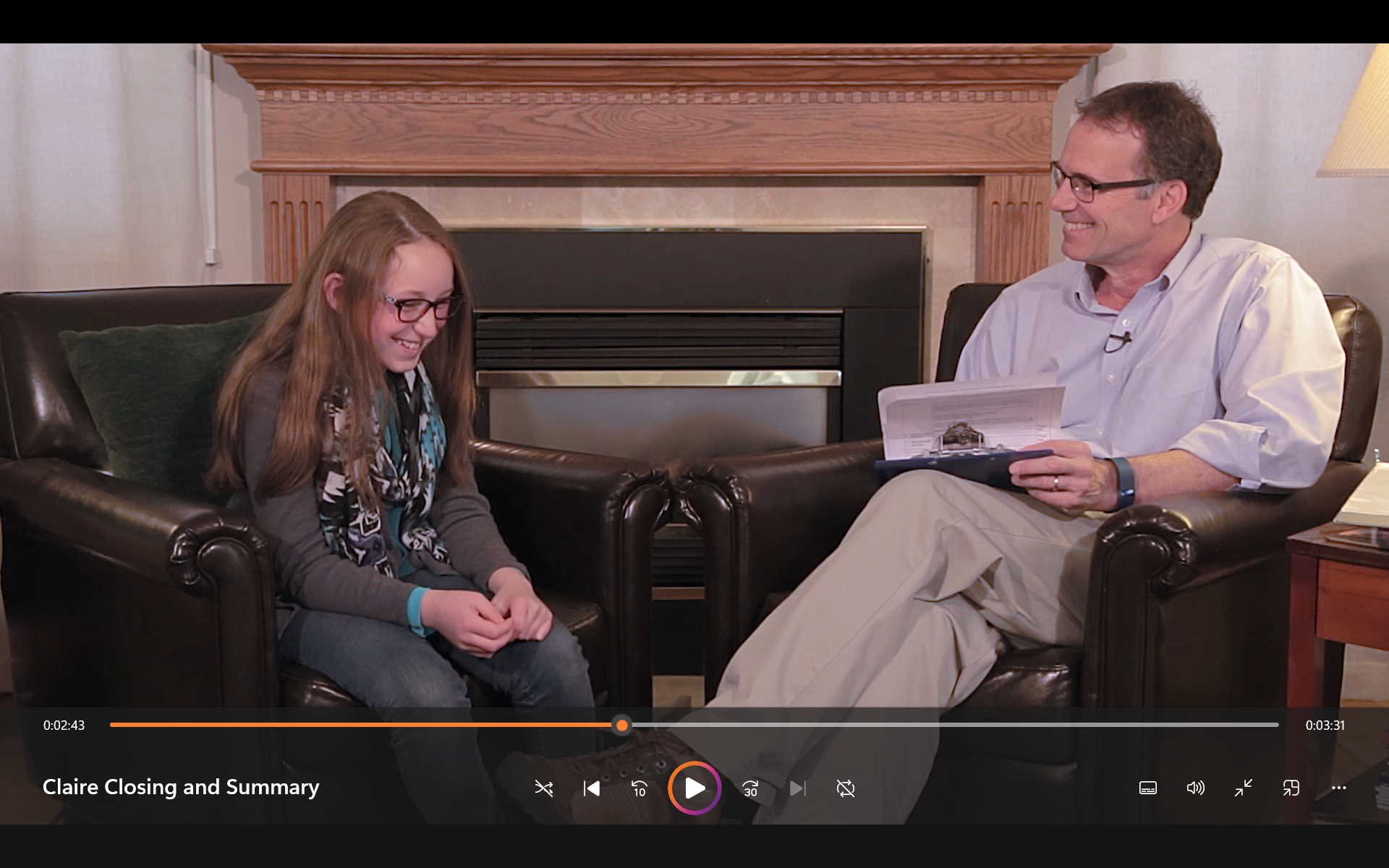
Part of CI7 includes video updates. Most of the updates offer greater representation of culturally diverse counselors and psychotherapists. For example, the video link below features Dr. Devika “Dibya” Choudhuri describing a “grounding” technique that she uses when conducting tele-mental health (aka virtual) clinical interviews, the topic of Chapter 14.

Although you may have your own approaches to facilitating grounding during tele-mental health sessions, I believe Dr. Choudhuri’s idea is innovative and may be a resource that you can add to your toolkit.

Stay tuned, because over the next several weeks I’ll be posting additional fresh new text and video content from CI7.

The Request

Traditionally, publishers ask authors to gather promotional endorsements for new books. This time around, maybe because it’s the 7th edition, neither Wiley nor the absent-minded authors of CI7 thought about gathering endorsements. In the past, we’ve had Derald Wing Sue, John Norcross, Victor Yalom, Pamela Hays, Barbara Herlihy, Allen Ivey, David Jobes, and Marianne and Jerry Corey write short blurbs. Here’s what Derald Wing Sue said about the 6th edition:

The most recent edition of Clinical Interviewing is simply outstanding.  It not only provides a complete skeletal outline of the interview process in sequential fashion, but fleshes out numerous suggestions, examples, and guidelines in conducting successful and therapeutic interviews.  Well-grounded in the theory, research and practice of clinical relationships, John and Rita Sommers-Flanagan bring to life for readers the real clinical challenges confronting beginning mental health trainees and professionals.  Not only do the authors provide a clear and conceptual description of the interview process from beginning to end, but they identify important areas of required mastery (suicide assessment, mental status exams, diagnosis and treatment electronic interviewing, and work with special populations).  Especially impressive is the authors’ ability to integrate cultural competence and cultural humility in the interview process.  Few texts on interview skills cover so thoroughly the need to attend to cultural dimensions of work with diverse clients.  This is an awesome book written in an engaging and interesting manner.  I plan to use this text in my own course on advanced professional issues.  Kudos to the authors for producing such a valuable text.

Derald Wing Sue, Ph.D., Professor of Psychology and Education, Teachers College, Columbia University

This time around, we’re less than two weeks from publishing and are without formal endorsements. As a consequence, I’m asking: “Is there ANYBODY out there who has read a portion of the CI7 manuscript or used a previous edition, who would like to share their thoughts about how the book influenced you or how the videos helped with your training?

[I know this last paragraph sounds pathetic. However, if you know me, you probably know my sense of humor, and the “Is there anybody out there?” call is BOTH a sincere request for your input AND me mocking myself for making this request.]

To be completely serious: If you want to share something positive about your experience—from any point in time—with the Clinical Interviewing text, I hope you’ll write a sentence or two or three (you don’t have to write half a page, like Derald Wing Sue) on the particular ways in which you found the book and/or videos meaningful to you.

To share your thoughts on any edition of the text, please post them here on this blog, or send them to me at john.sf@mso.umt.edu.

Thanks very much for considering this request. Please, please, I hope someone “out there” is listening!

Strengths-Based Suicide, with a Little Stuff on Men, for the North Dakota Counseling Association

I just finished a nice session on the strengths-based approach to suicide with the NDCA. They asked for a little extra info/emphasis on working with men, because men are particularly vulnerable to suicide, and so I wove in some of the content from my ACA presentation with Matt Englar-Carlson and Dan Salois (thanks Matt and Dan!).

The ppt below is a big one because it includes an embedded video featuring a young man who articulates a number of potential suicide related drivers, including trauma (be forewarned: the content is intense and potentially triggering).

A big thanks to the NDCA organizers and to the attendees who were very impressive.

Have a great evening!

Relationship Factors in Counseling and Psychotherapy

Hardly anyone with common sense or social skills ever argues about whether or not relationship factors are crucial to effective counseling and psychotherapy. Nevertheless, some scientists are reluctant to put relationship factors on par with counseling and psychotherapy techniques or procedures. IMHO, relationship factors are every bit as essential as so-called empirically-supported treatments.

This post is a pitch. Or it might be a pitch in a post. Either way, I am honored to share with you a hot-off-the-presses new book, titled Relationship Factors in Counseling, by Dr. Kimberly Parrow. Here’s the publisher’s link: https://titles.cognella.com/relationship-factors-in-counseling-9781793578754. The book is also available on Amazon and other booksellers.

Below, I’m pasting the Foreword to this book. Not only am I jazzed about the book, I’m also jazzed about the Foreword. You should read it. It’s really good. You’ll learn about Kimberly Parrow, as well as a bit of trivia about relationship factors that you should definitely know. I haven’t mentioned who wrote the Foreword, but I’m sure you’ll figure it out.

I first met Kimberly Parrow, before she was Dr. Kimberly Parrow, in a letter of recommendation from a psychology professor at the University of Montana. Having read well over 1,000 letters of recommendation over the years, this one imprinted in my brain. The professor wrote something like, “Kimberly Parrow is the real deal. You should admit her to master’s program in clinical mental health counseling. You will never regret it.”

We did (admit her into our master’s program . . . and our doctoral program). And we didn’t (ever regret it).

Kim Parrow was, is, and continues to be one of the most enthusiastic learners I’ve encountered.  She walked onto our campus at 44-years-old, as a first-generation college student, having waited with bated breath for the money and opportunity to pursue her college degree. Nine years later she strolled off campus with her bachelor’s, master’s, and doctoral degrees. If we were Notre Dame, we’d call her a triple domer (n.b., that’s what you call people with three degrees from Notre Dame). At the University of Montana, we just call her amazing.

In one of her first doctoral classes, I introduced Kim to the concept of evidence-based relationship factors (EBRFs). She was hooked; hooked in the way that only graduate students get hooked. She was hooked by an idea. So hooked that she immediately wanted more; she wanted to write a journal article on EBRFs (so we did). She wanted to do her dissertation on EBRFs (so she did). She wanted to do extra additional trainings for practicum and internship students on EBRFs (and so she did).  Kim’s attraction to EBRFs stemmed from her belief that relationships constitute the core of what’s therapeutic. As we explored EBRFs together, noting all the research supporting the idea that relationships drive counseling and psychotherapy, I came to see that Kim’s judgment was, and continues to be, practically perfect.

I’ve been reading dissertations for 30+ years. I’m embarrassed to say that I find reading most dissertations—even those written by students whom I love—drudgery. But Kim’s dissertation was electric. Page by page, she kept surprising me with new content and new learning; it was more than I expected. Kim had taken the basic knowledge and skills linked to EBRFs, contextualized them within the scientific literature, and then wrote about them in ways that inspired me to keep reading and keep learning. As she wrote more, her writing got better and better, and the content more illuminating.

About a month ago, I was unable to make it to my initial lecture for an advanced counseling theories course. I asked Kim to fill in. She quickly said yes. I offered to pay her. She quickly said no. To stick with the money theme, if I now had a dollar for every time one of my students has, since Kim’s lecture, mentioned Kim Parrow, eyes agog, and referenced the central role of relationship factors in counseling and psychotherapy, I would have many dollars. What I’m trying to say is that Kim is a natural and talented clinician-teacher. That’s a rare version of the real deal her former developmental psychology professor was trying to tell us about.

And now, a few words about this book. Kim has done what most scholars and professionals are unable to do. She has taken theoretical principles, empirical research findings, blended them with her common-sense-salt-of-the-earth style, and created a practical guide for helping counselors and psychotherapists be better. The book is aimed to slide into the educational development of practicum and/or internship students who have learned microskills and are facing their first clients. This particular point in student development is crucial; it’s a time when students sometimes lose their way as they try to make the improbable leap from microskills to counseling and psychotherapy techniques. In making that leap, they often fall prey to the urge to quickly “prove up” and “do something” with clients. In this process, they often abandon their microskills and forget about the therapeutic relationship. Kim’s overall point is this: Don’t forget about the therapeutic relationship because relationship factors are every bit as evidence-based as theory-based or research-based technical strategies. The renowned writer-researcher John C. Norcross put it this way:

Anyone who dispassionately looks at effect sizes can now say that the therapeutic relationship is as powerful, if not more powerful, than the particular treatment method a therapist is using.

The fact that therapeutic relationships are empirically supported makes Kim’s content relevant not only to students early in their clinical development, but also to all of us. Having taught this content with Kim, and to groups of professional counselors, psychologists, and social workers across the United States, I can say without hesitation that the content in this book can and will make all of us better therapists.

Kim covers 10 specific, evidence-based interactive relationship skills. What unique—and possibly the best thing about Kim’s coverage of relationship skills—is that she provides specific, actionable guidance for how to enact these 10 skills. As a preview, the 10 skills include:

  1. Cultural humility
  2. Congruence
  3. Unconditional Positive Regard
  4. Empathic Understanding
  5. The Emotional Bond
  6. Mutual Goal-Setting
  7. Collaborative Therapeutic Tasks
  8. Rupture and Repair
  9. Countertransference Management
  10. Progress Monitoring

In the pages that follow, you will get a taste of Kim Parrow’s relational orientation and a glimpse of the evidence supporting these 10 relationship factors as therapeutic forces that innervate counseling process. You will also experience the magic of a talented clinician-teacher. The magic—or, if you prefer, secret sauce—is Kim’s ability to make these distant intellectual relationship concepts real, practical, and actionable. To help make relationship concepts real, she has engaged several contributers (and herself) to write pedagogical break-out boxes titled, “Developing Your Skills.” Engaging with these skill development activities will, as the neuroscience fans like to say, “Change your brain” and help you develop neural pathways to enhance your relational connections.

As I write about skills and skill development, I’m aware that Carl (and Natalie) Rogers would view the reduction of his core conditions to “skills” as blasphemy. This awareness makes me want to emphasize that Kim “gets” Rogerian core conditions and does not reduce them into simple skills. Instead, she embraces the attitudinal and intentional dimensions of Rogerian core conditions, while simultaneously offering behaviors and words that counselors and psychotherapists can try on in hopes of expressing congruence, unconditional positive regard, and empathy.

I’ve had a few conversations with Derald Wing Sue over the years and he has always emphasized that culture in counseling and psychotherapy shouldn’t be relegated to a separate chapter at the end of the book—as if culture is ever a separate or standalone issue. Reading how Kim handles culture reminded me of Derald Wing Sue’s message. Instead of relegating it to the end, Kim begins with the relationship factor of cultural humility. That makes for a beautiful start.  Cultural humility involves, above all else, the adoption of a non-superiority interpersonal stance. . . which is a simple and excellent anti-racist message. But Kim doesn’t stop talking about culture after Chapter 1. She does what Derald Wing Sue recommends: She integrates cultural awareness, knowledge, and skill development into the whole book. This stance—non-superiority and anti-racist—is consistent with Kim’s interpersonal style and is also the right place to start as counselors set about the journey to collaborate and co-create positive outcomes.

One of Kim’s writing goals is to offer ideas and activities that are likely to increase counselor cognitive complexity. You can see that in the two preceding paragraphs. Instead of reducing Rogerian core conditions into skills, she honors how they can become both attitudes and skills. And instead of putting culture into a silo, she spreads seeds of culture through all her chapters.

This book is a remarkable accomplishment. The language, the examples, the science, the skill development activities, and the tone, welcome readers to engage with this book, and bring the material to life. I believe if you read this book and engage in the activities, your counselor self-efficacy will grow.

For anyone who has gotten this far in reading this foreword, I have some reading tips to share. First, read this book with your heart wide open. I say this because this book is about the heart of the counselor or psychotherapist. Second, as you read, keep yourself in relationship with Kim. The book is about relational factors and the details Kim shares will not only help you in your relationships with clients, but, as she often reminded me and other people whom she cornered so she could talk to us about relational factors, these relationship factors are relevant and applicable to all relationships. 

Obviously, I respect Dr. Kimberly Parrow and believe she has produced an excellent book. Obviously, I think you should read this book and do as so many of us have already done, learn about evidence-based relationship factors from someone who is a remarkably talented clinician-teacher.  To paraphrase what that developmental psychology professor wrote about Kim many years ago, you should accept Kim Parrow into your personal program of learning immediately, and begin learning from her as soon as you can. You will not regret it.

All my best to you in your counseling and psychotherapy work.

John Sommers-Flanagan

Missoula, Montana