And here’s my grandson’s performance for those who haven’t seen it yet.
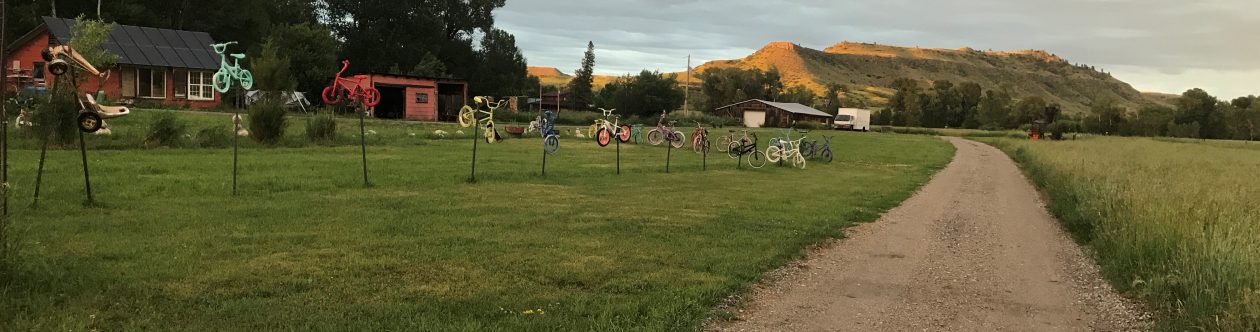
And here’s my grandson’s performance for those who haven’t seen it yet.
This morning I woke up tumbling through a dream of Margaret and Davis and Chelsea and Seth and Rita. We were all walking together and I got the honor of carrying Margaret on the way home. . . her 21 month old arms around my neck and then—poof—I am awake in Montana and the twins are in Connecticut.
And Rylee is in Scotland.
This past Thursday, as a part of my closing Keynote speech for the Montana Prevent Child Abuse and Neglect Conference, I managed to weave in a 90 second video clip of my grandson Davis walking around with a bucket on his head. I thought my speech was awesome. I was on fire, stringing together clear, clean, and polished sentences. But afterwards most people seemed to think the best part was watching that little boy with the bucket on his head.
This morning instead of reading and grading papers I’m reading Rylee’s blog. http://thecolorlime.wordpress.com/
Yesterday we Skyped, which was fine, but sometimes it’s even better to sift through her blog and catch a little glimpse of what she’s thinking, feeling, and doing across the pond. Freud said “Words were originally magic.” This morning my little Rylee’s magical words make me smile and miss her more than usual.
What makes people so desperate and disturbed that they would abuse children? I have a few academic answers to that question. Maybe it’s their old abuse history, their new stress, emotional troubles, needs for power and control, frustration, misdirected anger, twisted inner worlds of confusion about what they want and what they’re doing. But you know what they say: There are many good excuses, but no good reasons.
On this rainy Missoula morning I’m missing the children in my life and wanting to offer tribute to the human service providers and foster parents I met this past week in Helena who have dedicated their lives to protecting children from abuse and neglect. You all deserve a raise. Even better, you deserve to have your dream of preventing child abuse and neglect come true.
Thanks to Mary Peterson, who asked if I could return to Helena again this year to do a break-out session and closing keynote, I’m heading to Helena tomorrow morning for the 2012 Prevent Child Abuse and Neglect Conference. This is a conference attended by an array of social workers, foster parents, and a ranger of other professionals who work hard to prevent and reduce child abuse in Montana. This is a fantastic group of people and I’m honored to spend a few hours with them tomorrow and Thursday. The title of my break-out session is: “How to Get Parents to Listen to your Excellent Advice” and the Keynote is “Your Wild and Precious Life” (in honor of the Mary Oliver poem). Wherever you are and whoever you are spend a moment to think about how to contribute to reducing child abuse . . . an all too frequent and disturbing pattern of behavior that gets very little focus or attention in the media.
The big sports event of this past weekend was the Master’s Golf Tournament at Augusta National Golf Course in Augusta, GA. As usual, the hyped advertising slogan included the phrase, “A tradition like no other.” This is especially ironic and basically such a good lie that would make post-modern theorists proud.
In fact, the Master’s is a tradition like nearly all other traditions. It’s run by an all male club that doesn’t allow women to be members and only allowed Blacks membership in 1990. It’s about money and power and exclusivity. According to Wikipedia (I know I’m not elevating my research reputation here), “. . . club co-founder Clifford Roberts is reputed to have said, ‘As long as I’m alive, golfers will be white, and caddies will be black.'”
This year’s Master’s champion got $1,440,000. When Martha Burk tried protesting the tournament in 2004, tournament officials decided to air the entire tournament without commercials. This is just a taste of the money and power linked to these particular links.
Now don’t get me wrong. I like sports. I enjoy golf. I even get excited about watching a bit of the Master’s golf tourney on television. It’s good theater, a beautiful venue, and there are some amazing golfers out there. But it’s a little hard to justify Augusta not allowing women members. . . and I say this not because I think men only and women only organizations shouldn’t exist . . . but because excluding women from something that is so prestigious and so associated with money and power smacks too much of discrimination. When I watch the Master’s I always feel a little dirty.
And so I’m hoping that one of these years an excellent golfer (think Tiger or Phil) will decide to skip a tourney held at a club that wouldn’t let their daughters, girlfriends, wives, mothers, or grandmothers be members. Somebody besides Martha Burk and this insignificant blogger should take a stand to do the right thing. Please pass this message the next time you bump into a great professional golfer.
Anger Management Homework for Parents
We give the following assignment to parents interested in controlling or managing their anger.
Step 1: Before starting, make a clear commitment. Think about it. Do you really want to express your anger differently? If so, make a list of the top five or ten reasons why you want to change your anger behaviors. Also, make a list of the benefits you’ll experience from changing this behavior.
Step 2: Get curious before you get furious (an idea from Families First Boston). Take time to contemplate the “buttons” or “triggers” that, when pushed or pulled, result in an angry reaction. Draw some big buttons on a sheet of paper and label them. Common parent buttons include: (a) child disobedience, (b) children having a “smart mouth,” (c) children who lag behind when you’re in a hurry. Try to identify a reasonably long list of the main child behaviors that trigger your anger. Remember, when it comes to dealing with anger constructively, knowledge is power.
Step 3: Identify the signs and symptoms of your increasing anger. Some people say they become angry very quickly and that it’s hard to identify the signs. This may be the case for you. If so, study your anger patterns and ask for feedback from someone who knows you well. Your anger signals may include (a) feeling hot; (b) muscular tension; or (c) thinking angry thoughts. The purpose of knowing your anger signs is so you can begin derailing the process as soon as possible.
Step 4: Think prevention and self-care. We’re all more likely to get angry when stressed or when short on sleep. For some parents, prevention will help you move from having anger flareups to anger sparks. Prevention ideas include:
Many other self-care strategies are available. Make your own best prevention and self-care list and then incorporate your unique self-care strategies into your life on a regular basis.
Step 5: Make an excellent plan for what you want to do instead of engaging in negative anger behaviors. Excellent plans are specific, clear, and easy to immediately implement. For example, you might decide—because music is a natural emotional shifter—that you’ll take a three-minute break to listen to one of your favorite calming songs if you feel yourself getting angry. To accomplish this, it will help to have a preplanned statement to make (“Daddy needs a quick break”) and a prerecorded playlist on your iPod or other music device to immediately listen to.
Step 6: Practice your plan. The best-laid plans aren’t likely to happen unless you practice them. Brain research suggests that whatever we practice (even as adults) generates changes in our brains to make us better at whatever we’re practicing (Jenkins, et. al., 1990). This also makes good common sense. Whether you repeatedly bite your fingernails or repeatedly get very angry and yell, you’ve developed neural pathways in your brain that make these patterns more likely. The best way to address this neural pattern is to develop a new neural pattern by practicing new anger behaviors. For example, if your plan is to use your spouse as a partner and for one of you to tag the other when you get too stressed and need a break, don’t just say, “How about if we tag each other when we’re stressed?” Instead, say it and then physically practice it like you’re preparing to perform in an upcoming drama production. It will feel silly, but practicing or rehearsing is one of the best ways to change an undesirable repeating behavior pattern.
Step 7: Reward yourself. Many people make the mistake of thinking they should be able to change pesky, habitual behavior patterns solely on the basis of willpower. If that were the case, most of us would be practically perfect. Instead of completely relying on willpower, develop a reward system for yourself. For example, if you make it an hour or a day or a week without an undesirable anger explosion, give yourself a reward. Your reward can be as simple as thinking a positive thought (“I’m doing very well at this”), or a much more elaborate system of awarding yourself points for handling life’s challenges calmly and taking them away when you blow up. If you have a spouse or romantic partner, the two of you can develop a program for supporting and rewarding each other. Self-behavior management is one of the best uses for behavioral techniques.
This is the opening section from our feminist chapter in Counseling and Psychotherapy Theories in Context and Practice — written with help from Maryl Baldridge, M.A.
For years, psychiatric journals have touted the salutary effects of antidepressants by printing “before” and “after” pictures showing a woman leaning on a mop looking despondently at her kitchen floor, and then happily mopping it after taking her medication.
—E. Kaschak, Engendered Lives (1992, p. 22)
At the American School Counselor Association National Conference in 2011, Georgie Bright Kunkel, a 90-year-old woman, delivered a keynote address. She bounded onto the stage—not looking a day over 80. She introduced herself as the oldest stand-up comic in Washington state (Was there an older stand-up comic somewhere else on the planet?). She proceeded to crack jokes about everything from sex to . . . well . . . sex, and then sex again. In the middle of her routine, she slipped in a serious story that went something like this:
I was working as a school counselor at an elementary school. To kick off our career day, I contacted a woman friend of mine who was an airplane pilot. She agreed to land her one-person plane in the middle of our schoolyard. We were all very excited. We gathered the students outside and watched as she guided the plane down and smoothly landed on the playground. The students crowded around as she emerged from the tiny plane, helmet in hand. When it became apparent she was a woman, one of our male students turned to me and asked, “Where’s the pilot?” It was clearly a one-person plane, but in this boy’s mind, men were pilots and women were stewardesses. This was a sad truth for many of our students. But what interested me more was the impact of this event on our students’ career ambitions. We had decided to take a student survey before and after career day. Before my friend landed on our playground, exactly 0% of our female students listed “airplane pilot” as one of their potential career choices. After career day, about 40% of the girls listed airline pilot as a career to consider in the future.
This is an example of a feminist working therapeutically to bring about development, change, options, and liberation. Feminist therapy can be transformative. It was designed, in part, to break down unhelpful stereotypes and free all humans to fulfill their potentials.
This is a poem that came to me at about 30K feet. It’s about aging and memory.
If you don’t like poetry or metaphor — it might be good to stop reading here:).
If you like poetry, you might want to read it twice.
Another Visitation
One armed men
And withered women
Hold candles where their teeth should be
Wax dripping
Burning
Staining
Carpet that needs replacing
It’s hard to find your way
This way
Because wrinkles
Will not slacken
And carpets
Will not give up the floor
Stubbornly
Refusing to move
As successors greedily lie in wait
Rolled into a consciousness contracting
In a universe expanding
Small orbits
Are especially strong
And wrinkles, old carpets,
Even dimming candlelight
Are intriguingly pleasant
As drops of hot wax
Blister your fingers
Partly because scars
Last longer
Than memories
After a few hectic and overstimulating days at the ACA World Conference in San Francisco, I’ve now secured the back table at a Starbucks in Vancouver, WA for brief written reflection. This reflection weaves quotations (and paraphrases) from the great Irvin Yalom into my own personal conference experiences.
My formal conference highlight was watching and listening as NPR’s Craig Windham interviewed Yalom onstage for the keynote. After listening to Yalom’s keynote six years ago, I think the interview format was an ingenious method for capturing a more personal glimpse into Yalom and his writing than a stand and deliver keynote speech.
I especially enjoyed listening to Yalom reflect on his early years. Two statements stand out:
On his career decision-making as a child of Russian immigrants: “We had two choices: We could become a doctor or a failure.”
On his unparalleled greatness within the field of group psychotherapy: “My wife thinks it’s rather ironic that I became an expert in group psychotherapy, because I’m really quite uncomfortable in groups.”
Early in his “speech” Yalom emphasized the importance of counselors to the field of psychotherapy. In several ways he made curiously stimulating statements emphasizing (I’m paraphrasing now) that counselors are the future of psychotherapy. As a hybrid counselor and psychologist, I wonder if he would have made the same statements had he been keynoting at the annual American Psychological Association meeting.
My reactions to Yalom’s claim about counselors being the future of psychotherapy are free-ranging like the chickens in our backyard, but here are two:
Yes, I think counselors will be the future of psychotherapy, but only if we’re able to stop getting in our own way . . . And psychologists will undoubtedly be the future of measuring psychotherapy efficacy . . . if they (or we) can manage to focus on issues more meaningful than pharmacology and neuroscience.
For those curious about where Yalom finds his writing inspiration, in response to Windham’s questioning, he disclosed that as a Californian he has mastered the evening hot tub experience. Subsequently, he’s able to write most productively in the morning about “what I’ve learned in the hot tub.” I suspect there’s a bit more to it than that . . . but for those of us aspiring toward more writing greatness it makes for a solid rationale for nightly inspirational hot-tubbing.
On the popularity of his Group Psychotherapy text, Yalom stated: “I suspect it’s because of the stories in the book that I smuggled in . . .”
On his personal experience of fame (keep in mind that about 4K of us had to line up like rock concert fans to see him), he shared his own sort of dissociated imposter feelings:
“There’s a part of this that is very unreal. I don’t have any foundation. My parents were uneducated. They had very little schooling. I don’t have any foundation behind me. It’s a little shaky for me. I compare it to a lily growing in a swamp. There’s no foundation underneath. No matter how successful I am, I question . . . is this really me. Am I really successful?”
As an existential psychotherapist, it’s not surprising that Yalom believes deeply in helping clients pursue meaning. This is where it gets personal for all of us. He said, “Cancer cures psychoneurosis” and that “Life cannot be postponed.” Over the years he has helped many clients focus on their regrets—which often translate into moments when they weren’t able to face life and life fully in the moment. But we shouldn’t mistake Yalom’s live-in-the-moment philosophy for old-fashioned California hot-tub hedonism. Yalom’s version of living in the moment is at once emotional AND intellectual; it is inspirational AND intentional.
Yalom also said that “Storytelling . . . may be the very best way I can teach.” Lucky for me I’ve gathered a few teaching stories over the years. Sometimes a combination of reality and my own constructive fiction, at this ACA I had a chance to share many stories. First, in a six hour pre-conference Learning Institute on Wednesday attended by 32 fabulous counselors, and later in an ACA-sponsored Friday session on Connecting and Working Effectively with Challenging Youth attended by about 200. In terms of reaping my own share of attention and praise, this was perhaps my best ACA conference ever.
But then Sunday morning comes. And when I awaken, what grand thoughts trickle into my consciousness? Do I think of the 25 people who lined up to have me sign copies of “Tough Kids, Cool Counseling?” Do I lie on the floor of my high-school educated parents home—where I’ve stopped for a short visit—feeling smug satisfaction about the glory I felt when Craig Windham of NPR fame also stood in line to have me sign a book FOR HIM. Do I reflect on the sweet and ego-boosting comments he shared with me about my work?
Nope. Nothing so grand knocks on the door of my early morning awareness. Instead, I’m transported back to a moment when, immediately after speaking to 200 conference attendees and spontaneously signing a couple books and receiving repeated praise from participants, a bold young woman approached me. She had attended BOTH my six hour workshop AND my 90 minute talk . . . and so forgive me my anticipation of praise as I looked into her eyes. But instead, she tells me that she’s not sure she learned anything from the six hour workshop. My well-practiced response is to welcome the criticism, while fending off disappointment and defensiveness. I feel precariously situated on my own lily pad. She goes on to explain that she’d “accidentally” gotten stuck in the 90 minute presentation and that based on what I’d talked about in there she thought I’d want the constructive feedback. “Of course I do,” I say . . . “Of course I do . . . and thank you very much for that.”
This is the stinging mantra to which I awaken this lovely and cloudy Sunday morning. A mantra of self-doubt . . . of possible regret . . . of wondering what I did wrong . . . of how I might improve myself.
Which brings me back to one of my favorite Yalom quotations (from his Group Psychotherapy text) about universality:
“During my own 600-hour analysis I had a striking personal encounter with the therapeutic factor of universality . . . I was very much troubled by the fact that, despite my strong positive sentiments, I was beset with death wishes for [my mother], as I stood to inherit part of her estate. My analyst responded simply, “That seems to be the way we’re built.” That artless statement offered not only offered considerable relief but enabled me to explore my ambivalence in great depth.” (p. 7)
Thank you Dr. Yalom for helping me and many others more deeply understand ambivalence, regret, self-doubt, personal meaning, death, and many of the other interesting ways the human psyche is built. And thank you, bold young woman, for providing me with hot-tub-free grist for my morning therapeutic writing mill.
Hey. I’m on my way to the American Counseling Association conference in San Francisco. Tomorrow (Wednesday) I’ll be doing a full-day workshop on working effectively with challenging teenagers. If you’re reading this and will be at the conference, I’ll be hanging out at the John Wiley & Sons booth in the Exhibition Hall off and on (especially Thursday evening about 5pm) and will be doing an author signing for ACA on Friday from 4-5pm at the ACA booth. Please stop by and introduce yourself or catch me at the conference somewhere and say hello.
On my way to SF I had a chance to read an exceptionally courageous article in the University of Montana Kaimin (the student newspaper). It was written by a young woman who is coming out about two rape experiences on campus. Both involved her being far too drunk and she was brave enough to acknowledge that. However, as she notes, being drunk and dressing provocatively is not a message to all stimulated males that she WANTS sex.
This is a tough situation. It’s about consent and risky behavior and the many different channels of human communication. What I like about her article is that by disclosing her experiences she is contributing to consciousness-raising and it is ONLY through consciousness-raising that we can hope to shift the social norms away from the acceptability of presumed (drunken) consent on college campuses and elsewhere.
There’s an important message here for college males who might interpret a college woman’s behavior as “asking for it.” We need to resist our natural male urges and think about this. Okay, she is exposing herself to a risky situation and maybe she should know better . . . but think of her as your sister or your daughter or your future wife and make the right decision to control your sexual impulses in favor of a better situation where you can be ABSOLUTELY certain that you’re getting clear and unequivocal sober consent.
Drunken sexual encounters are all-too-common on college campuses. We are all responsible. Neither drunk males or females can really give consent. There is diminished capacity. For everyone I hope the Kaimin article can raise awareness. We all can do better than obtaining sexual gratification under the cloud of a drunken haze.
Last week I had the privilege of doing a Wiley Faculty Network Webinar on Teaching Suicide Assessment to graduate students in counseling and psychology. It was a first webinar experience for me and I have a few reflections and a suicide myth quiz from the webinar.
Observation #1: When doing Webinars, keep your eyes on your content (and not the “news feed” with names of friends and colleagues making interesting comments). If you watch the comments you will sound dull and slow – sort of like people sound when they’re talking to you on the phone while watching an engaging television show or surfing the internet.
Observation #2: There are lots of faculty and graduate students out there who want to do their best to help others through suicidal crises. This is very cool. I am always a little verklempt (sp) about how many kind and helpful people there are out there in the world.
Now . . . here’s the suicide quiz. Let’s see how you do. Answer the following True or False. The answers are at the bottom.
Answers
 John Sommers-Flanagan