
All posts by johnsommersflanagan

Last Call for the Summer Happiness Course for Montana Educators

Are you a Montana educator . . . or do you know one?

If so, maybe you—or your friend—would like three (3) bargain-rate University of Montana graduate credits. As you may know, we’ve got an online and asynchronous “Happiness for Teachers” course starting on June 17 for only $195 and the credits (or OPI hours) can contribute to raising teacher salaries. Given all that teachers do for our youth and society, it’s the least we can do. And we can do it thanks to a fantastic grant from the Arthur M. Blank Family Foundation (AMBFF: https://blankfoundation.org/).

Because I’ve written about this opportunity before, this time I want to focus on outcomes. We’ve taught this course to teachers as asynchronous semester-long courses last summer (2023) and this spring (2024). I just finished crunching the numbers for our spring outcomes; I’ve got the summer outcomes in front of me as well.

We’ve pre-post data on 16 different outcome measures. For last summer, we had statistical significance on 12 of the 16 outcomes. For this spring, we had statistical significance on 13 of the 16 outcomes. Even better, based on Cohen’s guidance, many of the effect sizes are in the medium to large range.

For you stats nerds, here’s a Table describing the outcomes:

Outcome MeasureWhat Teachers Reported at Post-TestSummer – 2023 – Statistical Significance (n = 40) and Effect Size (ES is Cohen’s d)Spring – 2024 – Statistical Significance (n = 48) and Effect Size (ES is Cohen’s d)
NAPAS: Negative AffectFewer negative emotional symptoms (e.g., nervousness and sadness)p < .001 ES = .671 (medium)p < .006 ES = .389 (small to medium)
NAPAS: Positive affectMore positive emotions (e.g., “in good spirits”)p < .001 ES = .887 (large)p < .001 ES = .497 (medium)
CES-D: DepressionFewer symptoms of depressionp < .001 ES = .751 (large)p < .013 ES = .346 (small to medium)
SleepBetter sleepp < .001 ES = .644 (med to large)p < .001 ES = .502 (medium)
HeadachesFewer headachesp < .009 ES = .393 (small to med)p < .001 ES = .699 (medium to large)
Gastrointestinal symptomsLess gastrointestinal distressp < .027 ES = .315 (small to med)p < .023 ES = .298 (small)
ColdsFewer and less severe coldsp < .010 ES = .382 (small to med)p < .024 ES = .298 (small)
PHQ: Total HealthBetter total healthp < .001 ES = .589 (medium)p < .001 ES = .625 (medium to large)
Days SickFewer days of physical illnessP < .015 ES = .354 (small to med)N/A
Hope-AgencyGreater goal directed energyp < .001 ES = .704 (med to large)p < .008 ES = .365 (small to medium)
Hope-PathwaysGreater planning to meet goalsp < .001 ES = .545 (medium)p < .013 ES = .341 (small to medium)
AHS: Total HopeHigher agency and pathways hopep < .001 ES = .677 (med to large)p < .004 ES = .416 (small to medium)
Significant Other SupportSupport from a romantic partnerp < .166 ES = .158 (minimal)p < .195 ES = .127 (minimal)
Family SupportSupport from familyp < .114 ES = .194 (minimal)p < .030 ES = .282 (small)
Friendship SupportSupport from friendsp < .165 ES = .156 (minimal)p < .177 ES = .137 (minimal)
MSPSS: Total Social SupportCombined romantic partner, family, and friend supportp < .133 ES = .181 (small)p < .091 ES = .198 (small)
MAAS: MindfulnessLess distracted and more tuned into the here and nowp < .001 ES = .892 (large)p < .001 ES = .597 (medium to large)

 To summarize: If Montana educators want to have less negative affect and depression, more positive emotions, greater hope, better sleep, fewer headaches, less gastrointestinal distress, fewer colds (and days of physical illness), and greater mindfulness . . . they should register and complete this course.

To register, go to: https://www.campusce.net/umextended/course/course.aspx?C=712&pc=13&mc=&sc=

For more info, here’s my memo to educators:

Thanks for reading and be sure to take some time to toast our teachers!

JSF

Tomorrow – At the Association for Humanistic Counseling Conference

I’m presenting with one of our esteemed UM Doc students, Kanbi Knippling, M.A. You can see our title in the photo. Should be interesting and excellent content for anyone working with people who have disabilities. Kanbi is taking the lead, and I’m helping, which is fun for me.

Here are the ppts:

Ending the Group Class with Astrid Santana

Over and over—probably because I have a friend who once told me “Redundancy works!”—I told my group class that ending groups is about “learning consolidation.” In other words, we want group members to learn something from group. At the end of each session, and especially during the final session, we want to facilitate experiences that will help group members take their key learning beyond group, and into their lives.  

Because role-modeling is a central part of being a group leader, to close our group class, I gave my students a learning consolidation assignment. Although we had been in a group (of 34) together all semester, the “final paper” was, idiographic (like Adlerian theory); students got to do their final paper in their own way. I mentioned poetry as an option, and then told the story of my own risky graduate school strategy of responding to my Advanced Learning professor’s weekly homework prompts with limericks. Turned out, my professor loved the limericks, shared them with his wife who was a writer-aficionado, and I got an “A” in Advanced Learning, while polishing my limerick skills.

Several students took me seriously and sent me fun and creative final papers. But the very last paper I read, by Astrid Santana, was BEYOND MY WILDEST DREAMS! She incorporated Haiku, knock-knock jokes, and a few limericks into her reflections on our group counseling course. I was gobsmacked, and I think you will be too. Happily, I’m here to report that I have her permission to share the paper.

Because WordPress has some difficulty in handling Haiku, I’m excerpting a sampling of Astrid’s work: First, some Haiku; second, a knock-knock joke; third, a limerick. Thanks Astrid!!

Her whole paper is available in a pdf at the bottom of this post.

My Attempt at Brevity:

Reflections on My Reflections

By Astrid Santana

Universality

Even if it sinks,

we’re in this boat together.

I’m grateful for that.

Development of Socializing Techniques

Finally realizing

I was the asshole, and not

everybody else.

Imitative Behavior

They’re so curious,

insightful, calm, and funny.

Could I do this, too?

Phases of Group Therapy

Forming

Knock knock.

Who’s there?

Hugo.

Hugo who?

Hugo first. I feel uncomfortable sitting in this circle and I don’t know if I want to be here

anymore.

*********************************

Yalom says it’s futile to resist

Visible pathology will always persist

John says our strengths do that, too

And that might be a clue

For helping the snakes in one’s head to desist.

And here’s Astrid’s whole glorious paper:

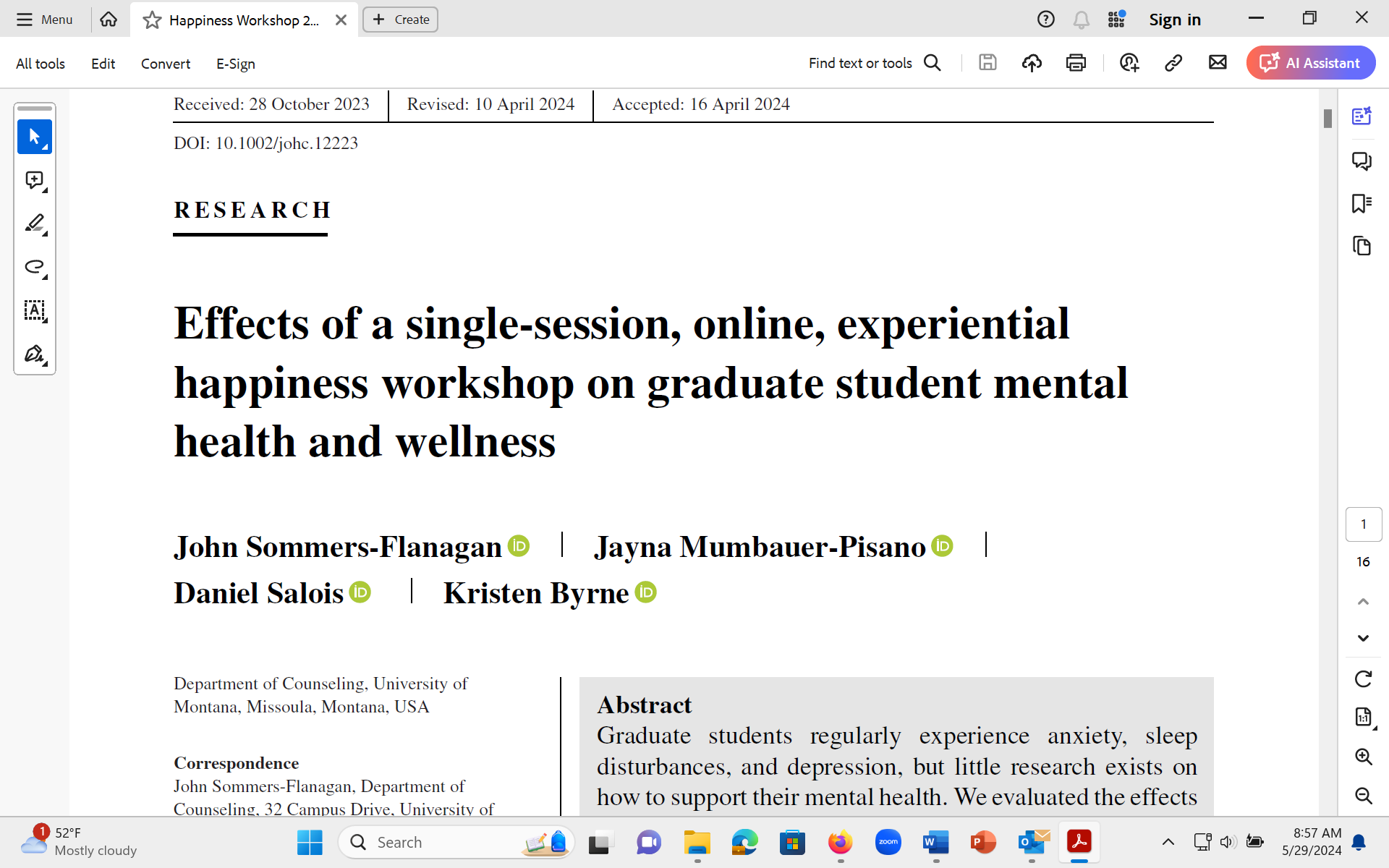
The Happy Workshop for Graduate Students Pub: Hot off the Digital Press

Good news. Yesterday, I got a mysterious email from ORCID–which stands for: Open Researcher and Contributor ID. ORCID is a global, non-profit organization. Their vision is: “a world where all who participate in research, scholarship, and innovation are uniquely identified and connected to their contributions across disciplines, borders, and time.”

Cool.

Anyway, ORCID was notifying me of a change to my ORCID record. A few minutes later, I received an email from Wiley telling me that our Happy Workshop for Grad Students article was now officially published online.

As some of you know, I’ve complained about the journal publishing process, and, although I still think it’s a pretty broken and disturbing process, working with the editors and reviewers from the Journal of Humanistic Counseling was pretty smooth and pretty fabulous. Check them out: https://onlinelibrary.wiley.com/journal/21611939

And so, without further ado, here’s the Abstract, followed by methods to access the article. . .

Effects of a Single-Session, Online, Experiential Happiness Workshop on

Graduate Student Mental Health and Wellness

John Sommers-Flanagan

Jayna Mumbauer-Pisano

Daniel Salois

Kristen Byrne

Abstract

Graduate students regularly experience anxiety, sleep disturbances, and depression, but little research exists on how to support their mental health. We evaluated the effects of a single-session, online, synchronous, happiness workshop on graduate student well-being, mental health, and physical health. Forty-five students participated in a quasi-experimental study. Students attended a synchronous 2.5-h online happiness workshop, or a no-workshop control condition. After workshop completion and as compared with no-treatment controls, participants reported significant reductions in depression symptoms but no significant changes on seven other measures. At 6 months, participants reported further reductions in depression symptoms. Moreover, across four open-ended questions, 37.0%–48.1% of workshop participants (a) recalled workshop tools, (b) found them useful, (c) had been practicing them regularly, and (d) used them in sessions with clients. Despite study limitations, single-session, synchronous, online, happiness workshops may have salutatory effects on graduate student mental health. Additional research is needed.

K E Y W O R D S: depression, graduate students, mental health, single-session, wellness

Here’s a link to the article online: https://onlinelibrary.wiley.com/share/author/UMKTTSPPECBTVXEQYRKX?target=10.1002/johc.12223

And here’s a pdf copy for your personal (non-commercial) use:

Who Supports Educators?

Hi All,

I’m writing for a little social marketing assistance to support Montana Educators.

As I’ve written before, because of the generosity and funding from the Arthur M. Blank Family Foundation, we have funding to support Montana educators. The main way we’ve chosen to support Montana educators is to offer a highly subsidized three-credit course on “Happiness for Teachers” through the fantastically helpful UMOnline people at the University of Montana.

We believe this course supports Montana Educators in three ways:

  1. The course can be used to help increase educator pay (because we believe educators should be paid more).
  2. The course can help educators feel positive feelings more often, savor them, increase their sense of meaning, and possibly reduce depression and improve physical health.  
  3. Educators can use the information to support their students’ happiness and well-being.

We’ve got a large section of the course open and starting on June 17. I’d love to get it all filled up.

If you are a Montana educator or know a Montana educator you can register here and now at this link: https://www.campusce.net/umextended/course/course.aspx?C=712&pc=13&mc=&sc=

In addition, to support educators, please consider sharing this blogpost or the Memo to Montana Educators linked here:

Clinical Interviewing – 7th Edition: Video Resources

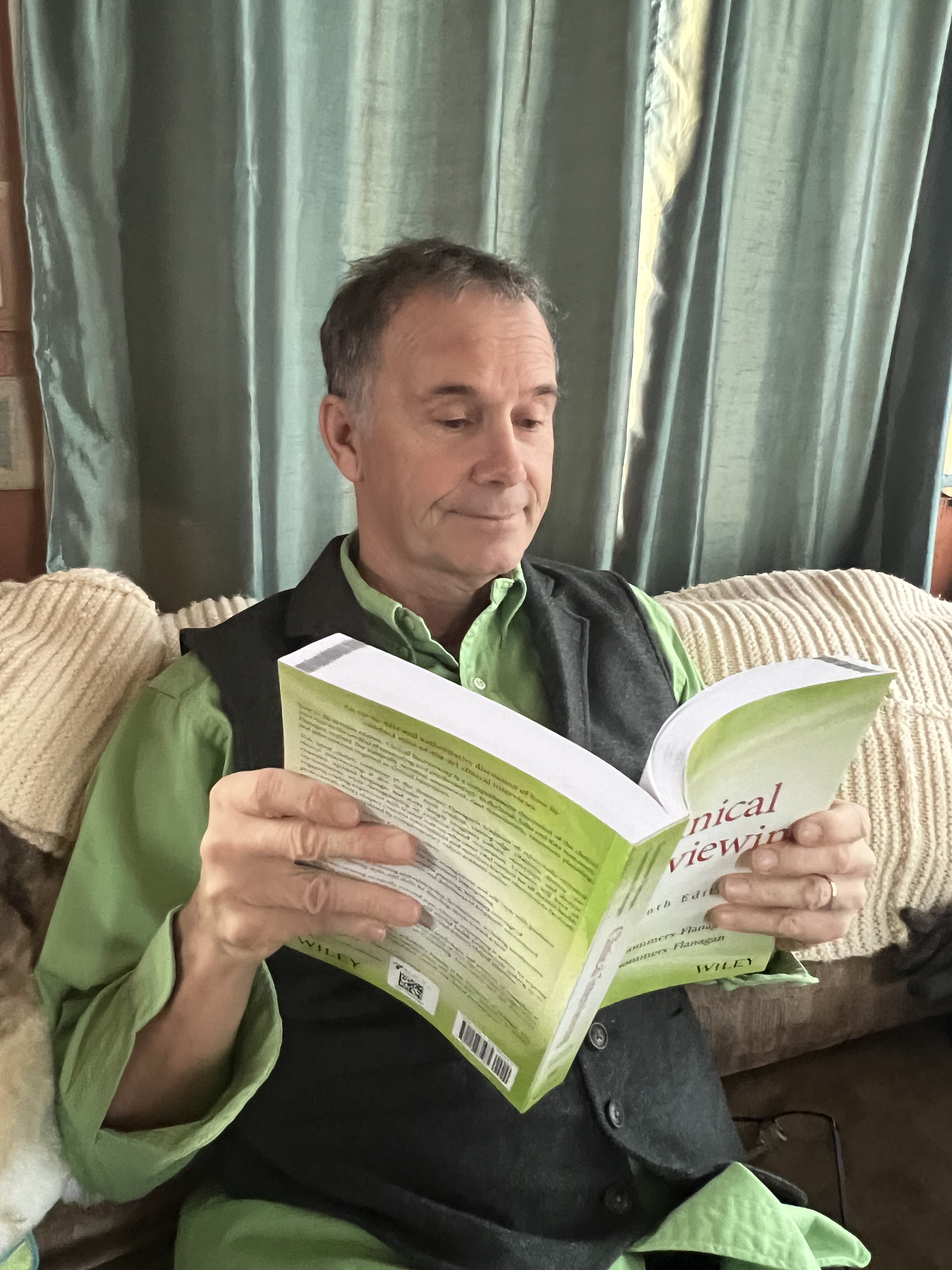
The 7th edition of Clinical Interviewing became available earlier this year. As a part of the text revision, we updated the accompanying videos, videos that Victor Yalom of Psychotherapy.net considers to be the best of their kind. And, possibly having watched more professional training videos than anyone on the planet, Victor knows what he’s talking about, and we are humbled by his endorsement.

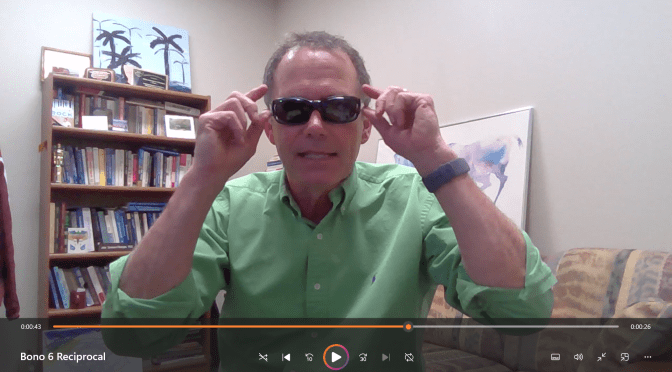
Videos that accompany the text cover 72 learning objectives and are extensive. The bad news is that they usually, but not always, feature me. The good news is that in our video revision and upgrade, we included numerous counselors/psychotherapists of color. . . so it’s not just all me talking about how to develop your clinical interviewing skills.

The other good news–and possibly the best news–is that these videos are now available online, for free. Although we want you to buy or adopt the Clinical Interviewing textbook for your classes or professional development, you can access these videos without adopting or purchasing the book. Here’s the link: https://higheredbcs.wiley.com/legacy/college/sommers-flanagan/1119981980/vids/9781119981985_Videos.html?newwindow=true

If you watch them, I hope you enjoy the videos. And, if you feel so moved, please share your reactions or suggestions with me here or via email: john.sf@mso.umt.edu.

Have a fantastic evening.

John S-F

Evidence-Based Happiness for Teachers: Preliminary Results (and another opportunity)

We’ve been collecting outcomes data on our Evidence-Based Happiness course for Teachers. From last summer, we have pre-post data on 39 participants. We had VERY significant results on all of the following outcomes

Less negative affect

More positive affect

Lower depression scores

Better sleep

Fewer headaches

Less gastrointestinal distress

Fewer colds

Increased hope

Increased mindfulness

If you’re a Montana Educator and you want to take the course THIS summer, it’s online, asynchronous, and only $195 for 3 Graduate Credits. You can register here: https://www.campusce.net/umextended/course/course.aspx?C=712&pc=13&mc=&sc=

If you’re not an educator, you must know one, and they deserve this, so share it, please!

Now for you researcher nerds. Over the past week, I’ve tried to fit in some manuscript writing time. If you’re following this blog, you’ll already know that I’ve experienced some rejections and frustrations in my efforts to publish out positive psychology/happiness outcomes. I’ve also emailed various editors and let them know what I think of their reviews and review processes. . . which means I may have destroyed my chances at publication. On the other hand, maybe sometimes the editors and reviewers need a testy review sent their way!

Yesterday, a friend from UC Santa Barbara sent me a fairly recent review of all the empirical research on College Happiness Course Outcomes. To summarize the review: There are HARDLY ANY good studies with positive outcomes that have been published. Specifically, if you look at U.S. published studies, only three studies with control groups and positive outcomes have been published. There’s one more I know of. If you want to read the article, here it is:

As always, thanks for reading. I’ll be posting a “teaching group counseling” update soon! JSF

The Power of Language

Language is powerful, but sometimes subtle in its influence. Last week in Group class I talked about using psychoeducation to teach people the power of language. As an example, I mentioned the work of Isolina Ricci, and the best post-divorce book ever, Mom’s House, Dad’s House. Ricci tells separated or divorced parents they should change the words they use to refer to their “Ex.” Because “Ex” refers to the former relationship with a romantic partner, it gets to the heart of how people use language to live in the past. Ricci says that we should use “My children’s Mom” or “My child’s Dad” because doing so accurately describes the current relationships. Years ago, I taught her language-based principles in the divorce education courses offered through Families First.

In a class-based group, my students brought up that perhaps we should shift from language that identifies others as “racist” to describing them as “people with racist tendencies.” I was happy my students were grappling with the influence of language. . . and was reminded of my first encounter when I really learned about the power of language and labels.

While in the University of Montana library about 4 decades ago, I recall reading something by Gordon Allport. Given it was so long ago, the memory is surprisingly vivid. Sadly, I can’t conjure up the reference. What I recall is Allport describing something like this:

First, we say, John behaves nervously.

Later, it becomes, John is nervous or anxious.

Eventually, we diagnose John: John has an anxiety disorder.

Then, we diagnose everyone similar to John, and put the disorder first: Anxiety disordered youth, like John, are more likely to. . .

In the end, we’ve inserted a trait-problem in John, without consideration of the context of his initial anxiety or the specific rate of anxiety associated with his so-called “anxiety disorder.” And then we repeat this description until the problem is fully placed inside John (and others) and rarely question that presumption.

This process begs many questions. Is the anxiety really located inside John, as if it were a personality trait or a mental disorder? Where did John’s anxiety originate? If John lived years in a frightening setting, should he be blamed and labeled for having anxiety symptoms? Might it be normal for John to expect that something bad is likely to happen?

The tendency for external observers to see behaviors or symptoms in others, and then insert the behaviors and symptoms inside of those they observe is so ubiquitous that in social/cognitive psychology, they named it the “Fundamental Attribution Error.” But even that language isn’t quite right.

Fundamental attribution error is the tendency to attribute the behaviors of others as representing a “trait” or underlying disposition in them (e.g., racist). Not surprisingly, at the same time, people also tend to attribute their own behaviors to situational factors (e.g., I was more judgmental than usual, because I was a bad mood and hadn’t slept well). To use language more precisely, the fundamental attribution error might be better described as a “common” phenomenon, instead of fundamental. And, of course, that tendency is not always in error. Maybe the better terminology would be “Common misattribution tendency.” Put more simply: We tend to blame others’ behavior on them. How common is that? Very common.

This is all very heady stuff, as is often the case when we dive into constructive language and narrative therapy principles. It tends to be easier for people to change and to believe in the possibility of people changing when we use person-first language and say things like, “engaged in racist behaviors” or “exhibited signs of anxiety,” instead of using firmly constructed attributions.  

Lately, in this blog I’ve been riffing with excerpts from our Clinical Interviewing textbook. Below, I’ve inserted another section from Clinical Interviewing. This excerpt is about using bias-free language in psychological reports.

******************************************

Using Bias-Free Language

No matter how careful and sensitive writers try to be, it’s still possible to offend someone. Writing with sensitivity and compassion toward all potential readers is difficult, but mandatory.

The publication manual of the American Psychological Association (APA, 2020, chapter 5) provides guidance regarding bias-free language. Additional details are provided in the APA’s Inclusive Language Guidelines (https://www.apa.org/about/apa/equity-diversity-inclusion/language-guidelines?_ga=2.54630952.2057453815.1669179921-716730077.1592238042).

Avoiding bias and demeaning attitudes is mostly straightforward. In addition to following the APA’s guidance and writing for a multidimensional audience, the best advice we have is to encourage you to conceptualize and write your intake report transparently and collaboratively. This means:

  1. At the beginning and toward the end of your session, speak directly with your client about the content you plan to include in the report.
  2. Rather than surprising clients with a diagnosis, be explicit about your recommended diagnosis and rationale.
  3. Discuss your treatment plan openly with clients. Doing so serves the dual purpose of providing clients with advance information and getting them invested in treatment.
  4. If you’re not clear about how your client would like to be addressed in the report (Mr., Ms., gender identity, ethnicity, etc.), ask directly. Avoid mis-labeling or mis-gendering clients in a psychological report. If you’re working with clients who have physical disabilities, check to see if person-first or disability-first language is preferred.

****************************

I’ve been trying to keep the word-length of these blogs reasonable, and so if you’re interested in a bit more on this topic, this link will give you Practice and Reflection 8.4: “Person-First or Identity-First Language” from, of course, the Clinical Interviewing text.