
Tag Archives: university of montana

The Art & Science of Happiness 3.0 with JSF is Coming Soon – You can sign up now

Last year, for the first time, we offered the Art & Science of Happiness simultaneously as a 3 credit COUN 195 course through the University of Montana and as a non-credit course open to community members through UMOnline. The course was fully online. Many students took the course “live” and synchronously; others enrolled and completed the course at their convenience.

We had 50 students sign up for the course: 30 UM students took the course for credit; 20 were “community” members (hailing from Missoula, Browning, Billings, Pennsylvania, and Canada). Many of the UM students were 19 to 22 years-old. Many of the community members were 60 to 87 years-old. The inter-generational synergy was fabulous.

What You Get in the Art & Science of Happiness

  • 25+ instructional hours with John Sommers-Flanagan, and occasionally Rita Sommers-Flanagan. You can experience these lectures synchronously through Zoom, or asynchronously at times that work into your personal schedule.
  • 10+ hours of small group counseling designed to facilitate reflection, discussion, and experiencing of evidence-based happiness activities (these “lab” groups can be face-to-face or via Zoom)
  • 8 hours of individual supportive wellness counseling with a Master’s student from the Counseling Department at the University of Montana (these services are face-to-face or via Zoom and on a first-come, first served basis, because we have a limited number of available counselors-in-training)

The cost for community UMOnline participants is $250. If that sounds expensive, think of it this way. You get 40+ total hours of a combination of large group instruction, small group counseling, and individual counseling, which translates to $6.25 an hour.

Potential Benefits

Research from the two previous semesters indicate that some (not all) participants experience:

  • Reduced depression symptoms (in some cases, depressive symptoms were substantially reduced)
  • Increased hope and optimism
  • An increased rate of positive emotions
  • A reduction in headaches
  • Improved sleep
  • Greater feelings of social connection

Comments from Previous Community Participants

“Words are inadequate to express my gratitude for the Happiness Class and your amazing expertise. Literally transforming my life after a very difficult and sad nine months; plus, it’s a heckuva lot of fun. Again, thank you.”

“I found the course interesting and rewarding far beyond my expectations.”

“I feel a major shift in my thinking. I am now more focused on gratitude and living in the moment and have developed an unexpected confidence about facing the inevitable challenges that lie ahead, a confidence that even others have noticed.”

[In response to the group counseling component] “I appreciate the interactions that I have with everyone in my group. We are all very different, yet willing to be open and share our thoughts. I wasn’t sure what this would be like and I am already liking it a lot.”

[In response to a homework assignment] “I am applying a very simple formula to myself…When I become aware of how grumpy and scared and negative I feel about an issue in our family, I consciously think of two things for which I feel grateful. It fills the basket of my emotions with more positivity and opens up a new way of approaching my worries.”

When

The course is offered “live” on Tuesdays/Thursdays from 1pm to 2:20pm, beginning on January 18, 2022, ending the week of May 9, 2022. However, because the course is fully online via Zoom, you can also take the course asynchronously.

How to Enroll

To enroll as a community member, go to: https://www.campusce.net/umextended/course/course.aspx?C=627&pc=30&mc=&sc and follow the instructions.

To enroll for University of Montana credit, login to Cyberbear: https://www.umt.edu/registrar/Registration/Class%20Schedules.php. The course is COUN 195. The CRN is: 33330.

Why

I believe this course content is very helpful, and so I’d like to make this course available as widely as possible. Please help me by sharing this information with others. Also, because I’m paid by the University of Montana to teach this course, all proceeds are returned to the University of Montana in general, and the Department of Counseling, in particular.

For a Win-Win-Win on Giving Tuesday – Support College Student Mental Health

After facing an overwhelming number of choices on Black Friday and Cyber Monday, now we’re faced with another litany of excellent choices for Giving Tuesday. There are so many wonderful charities to support. You can’t go wrong with supporting food banks, shelters, and other organizations that push back against poverty. You also can’t go wrong supporting children, minorities, education, and the environment . . . these are all huge needs.

Along with the preceding charity types, this year Rita and I are wholeheartedly supporting college student mental health. We’ve seen the struggles firsthand and we believe college students can benefit from greater access to mental health services. Specifically, we’re supporting a University of Montana Foundation project called “The University of Montana Mental Health and Happiness Fund.” We see the University of Montana Mental Health and Happiness Fund as a win-win-win. Here’s why.

The first win is that the funds will go to provide more hours of mental health counseling for college students. Unfortunately, more than ever before, college students are stressed and experiencing mental health struggles. These struggles can include suicidal thoughts and behaviors. As far as age groups vulnerable to death by suicide, the college student age group is among the highest (along with older males). Supporting college student mental health can literally save lives and help college students graduate and become significant contributors to their communities. Currently, Counseling Services at the University of Montana needs more counselors to meet increased needs.

The second win is about “workforce development.” In Montana, and around the nation, we need a continuous flow of competent and capable mental health professionals. That’s why the first priority of the University of Montana Mental Health and Happiness Fund is to support a ½ time Counseling Intern for UM’s Counseling Services department. Funding an intern means that the intern gains valuable experience and supervision and can then go out and contribute to mental health in the community. If we receive more funds than expected, we will either fund a second ½ time counseling intern or we will fund happiness promotion projects at UM and within the Western Montana area.

The third win is basic economics. College students contribute to local economies. When they graduate, college students also create capital. College students become entrepreneurs, scientists, grant writers, community leaders, parents, and grandparents. In all these roles, college graduates will do better and be better if they have better mental health.  

Our 2021 fundraising goal is $45,000. We’ve already raised over $22,000. Please help us reach our goal so we can contribute to positive mental health and happiness at the University of Montana.

If you’re interested in joining Rita and me in supporting the University of Montana Mental Health and Happiness fund here are the instructions.

  1. Click on this Link for Support
  2. As you complete the donation form, about halfway down the page, you will see “Designation Choice.” Choose “Other.”
  3. In the Additional Comments/Info Section – type/write University of Montana Mental Health and Happiness Fund

Thanks for considering college student mental health for this Giving Tuesday!

Who Wants a Two-Day Professional Workshop on Strengths-Based Suicide Assessment and Treatment?

I’ve got a friend who writes to me in acronyms. TBH is “To be honest.” LMK is “Let me know.” IMHO is “In my humble opinion.” FYI is “For your information.” YSKAT is “You should know about this.”

When I read my friend’s emails, there are always more letters than words, if YKWIM (you know what I mean).

This leads me to my PP (promotional point).

TBH signing up for a two-day SBSASTW (strengths-based suicide assessment and treatment workshop) isn’t everyone’s COT (cup of tea). TAI (think about it). That’s like 13 hours of suicide-related content. If you TAI, it CBYD (could bring you down).

That’s why, we will weave some PDC (pretty damn cool) EBHIs (evidence-based happiness interventions) into our 13 hours. This will be the MFE (most fun ever) two days of suicide training on November 19 and 20. YCBOI (you can bet on it).

But IMHO, woohoo. Really YSKAT. IMHO signing up for a two-day strengths-based suicide assessment and treatment workshop is TRTTD (the right thing to do).

YAMBWing (You also may be wondering), when John writes “we” is he going with the singular “we” or is he indicating there will be other presenters. TBH, John doesn’t know, but he’s hoping to recruit some of the amazing participants from this summer MHP (Montana Happiness Project) retreat to join in on the FUN (fricken unbelievably nice).

OK. I’ve had it with all these letters. And so, if you want to sign up, check out “Session three” on this link: https://www.familiesfirstmt.org/umworkshops.html

If that doesn’t help, send me an email (john.sf@mso.umt.edu) and I’ll see if I can help you figure out how to sign up. Just LMK. The session is also Zoomable.

Sign Up Now for the University of Montana’s Short Summer Happiness Course

Dan Salois is teaching an abbreviated version of the Montana Happiness Class this summer. The course starts in ONE WEEK!

Dan is a doctoral student in the Department of Counseling and a great instructor. The course is noncredit, offered through our campus continuing education unit, and all online . . . so you can get a boost of happiness from the convenience of home.

Here’s the course description:

Over the past 20 years, research on happiness has flourished. Due to the natural interest that most Americans have for happiness, research findings (and unfounded rumors) have been distributed worldwide. Every day, happiness is promoted via online blogs, newspaper and magazine articles, Twitter posts, Instagram videos, TikTok, and through many other media and social media venues. Ironically, instead of increases in national happiness, most epidemiological research indicates that all across the U.S., children, adolescents, adults, and seniors are experiencing less happiness, more depression, and higher suicide rates. To help sort out scientific reality from unsubstantiated rumors, in this course, we will describe, discuss, and experience the art and science of happiness. We will define happiness, do some short readings, try out research experiments in class, engage in happiness lab assignments, and measure our own happiness and well-being. Overall, we will focus on how happiness and well-being are manifest in the physical, cognitive, emotional, interpersonal, spiritual/cultural, behavioral, and contextual dimensions of our lives.

The course meets online July 12 – 30, Tuesday and Thursday, 11:00 a.m. – 12:20 p.m. Course fee is $90, which translates to about $10 per instructional hour. . . and a pretty good deal for a dose of happiness.

To register, click on the following link.

What’s Happening in Happiness Class?

We start every happiness class with music.

As many of you know, the class generated a pretty cool song playlist. Typically, I select a song from the playlist, download it into my powerpoint, and start the music at 12:55pm. I say typically in that optimistic—see the glass half-full—sort of way, because, in reality, sometimes I struggle to get the music video to play, other times I start it a bit late (and begin to hear my Zooming students query, “What’s happening? Where’s the music?”), and still other times I go rogue and pick an off-list song that I happen to think fits the topic perfectly.

Last week, before we explored spirituality and forgiveness, I couldn’t resist playing “Heart of the Matter” by Don Henley . . . and now I can’t stop the tune and lyrics in my head . . . “Forgiveness, forgiveness, even if, even if, you don’t love me anymore.” For your immediate listening pleasure, here’s the Henley music link:  https://www.youtube.com/watch?v=Rxni_Icyjj8&list=RDRxni_Icyjj8&start_radio=1&t=213

Usually I consider it best practice to keep my camera and microphone off during the opening music. You can imagine why. Holding on to the small shreds of respect that I’ve not yet squandered seems like good judgment, because if I let go, things might look like this: https://www.youtube.com/watch?v=W0Nju66rif4&feature=youtu.be

After the opening music I burst into the Zoom scene with energetic and pithy commentary designed to get everyone focused in on our topic of the day. Then, after a few orienting announcements, I send students into Zoom break-out rooms where they ask and answer the questions: “What do you remember from our last class” and “What about our last class seemed important to you and your life?”

My sense—based on our immediate debriefing after the break-out rooms—is that some students are finding joy in their five-minute one-on-one Q & A time. However, recently I heard from a few students that they particularly dislike the Zoom break-out experience. This leads me to a conundrum (why are there so many conundrums?). Should I continue with the opening class break-out rooms, or should I find another pedagogical strategy? Please enlighten me on whether you think I should continue with the break-out rooms or find a suitable alternative.

Following the break-out rooms and debriefing, I (sometimes accompanied by Rita), launch into lecture content. We talked about spirituality for three class meetings, and have also hit gratitude, kindness, cognitive methods for dealing with pesky negative thoughts, and much more. In order to not completely bore anyone, I shift in and out of the powerpoint slides, inserting side commentaries, forcing students to imagine their part of research studies, and facilitating experiential activities. My favorite two activities (so far) were having students engage in an on-camera Gestalt two-chair with themselves (the visuals were hilarious) . . . and having everyone shout out the word “fail” over and over again for 60 seconds. The “fail” activity is based on research on deconstructing particular words so they lose their power over us, and begin just sounding like funny sounds. The best part of that activity was having students report back that when they yelled “fail” repeatedly into their computers, their roommates thought they were having serious existential meltdowns.

Class usually closes with a large group discussion, during which I’m humbled by the depth and breadth of student commentary. On occasion, I’ve pushed quieter students to comment, and in every case, they’ve delivered. I’d share some examples, but the student comments are theirs to share. Let me just say, on their behalf, it’s good to listen to students.

Class ends with a flurry of good-byes, as well as expressions of gratitude and affection.

Although I’m not completely certain students are feeling the joy, I can say with confidence that I am. I’m loving the experience and deeply appreciating how often my students are making the Zoom version of happiness class . . . magical.   

Details on The Return of the University of Montana Happiness Course

Did you know you can enroll in my Art & Science of Happiness (COUN 195) course through the University of Montana as a non-credit community participant? The course is fully online via Zoom.

When: Live on Zoom every Tuesday and Thursday from 1:00pm to 2:20pm (MST), beginning January 12 and ending April 27.

What: You’ll hear and see lectures, demonstrations, video clips, small group lab activities, and role-plays.

Format: Because the course is online, live attendance isn’t required. Although I encourage live attendance, you can watch the course on your own schedule.

Cost: For community participants, the cost is $150 for the whole semester. That’s about $3.50 per instructional hour.

Why: You’ll get an amazing educational experience that just might increase your happiness in 2021. To enroll, go to: https://www.campusce.net/umextended/course/course.aspx?C=627&pc=13&mc=&sc

Please note: if you’re a University of Montana student (or want to become one) you can enroll in the course for three (3) semester credits. Go to Cyberbear, find the course (COUN 195), and enroll: https://www.umt.edu/cyberbear/.

Assignments: If you’re taking the course for credit, you’ll have quizzes, required assignments, and tracked attendance; if you’re taking the course as a community non-credit participant, assignments and attendance will be optional and ungraded. However, I will strongly encourage you to participate in the small, online lab groups. That’s where you can talk in more detail about your happiness-related experiences.

Your Weekend Homework: The Return to Happiness

As we approach the end of 2020, many of us are looking forward–like never before in the history of time–to turning that calendar to a new page and a new year. Readers of the Washington Post were recently surveyed and wrote, 2020 has been exhausting, relentless, and heartbreaking. Let’s put 2020 behind us and never look back (other than to remind ourselves of mistakes we shouldn’t make again).

In honor of turning the calendar to 2021, I’m working on an Op-Ed piece titled “The Return to Happiness.” The point of the piece is to acknowledge how good it is to move on, but also discuss the nature of New Year’s resolutions and how to make resolutions that have a reasonable chance of being accomplished. In the end, I’ll be making a pitch for everyone to sign up for my University of Montana course “The Art & Science of Happiness.” Well, not everyone, but anyone who wants to have a cool online “university” experience that provides an opportunity to test out the best, evidence-based, approaches to happiness on planet earth.

The course starts in January, and, for the first time ever, will be offered to “community” participants as a non-credit experience. This means EVERYONE can sign up. The catch is that it costs $150. But if you do the math, that’s only $10/week or about $3.50 an hour to discuss, learn, experiment with, and establish new happiness habits for 2021.

Here’s a description of the course:

Over the past 20 years, research on happiness has flourished. Due to the natural interest that most Americans have for happiness, research findings (and unfounded rumors) have been distributed worldwide. Every day, happiness is promoted via online blogs, newspaper and magazine articles, Twitter posts, Instagram videos, TikTok, and through many other media and social media venues. Ironically, instead of increases in national happiness, most epidemiological research indicates that all across the U.S., children, adolescents, adults, and seniors are experiencing less happiness, more depression, and higher suicide rates. To help sort out scientific reality from unsubstantiated rumors, in this course, we will describe, discuss, and experience the art and science of happiness. We will define happiness, read a popular happiness book, examine scientific research studies, try out research experiments in class, engage in extended happiness lab assignments, and use published instruments to measure our own happiness and well-being. Overall, we will focus on how happiness and well-being are manifest in the physical, cognitive, emotional, interpersonal, spiritual/cultural, behavioral, and contextual dimensions of our lives.

Other things to know: If you take the course as a community, non-credit, participant, you won’t take the quizzes, or get graded, and assignments will be optional. However, you will be asked to participate in small group lab sessions designed to give you (and others) a chance to talk and listen to each other as you experience and experiment with specific happiness assignments.

If you’re interested, you can register at this link: https://www.campusce.net/umextended/course/course.aspx?C=627&pc=13&mc=&sc

If you know friends who could use a happiness boost for 2021, share this post with them. And if you’ve got questions, you know where to find me.

Have a fantastic weekend.

Working Effectively with Parents: A workshop coming your way

In the Department of Counseling at the University of Montana we offer regular workshops for our students and for counseling, social work, and psychology professionals. This “Spring semester” (even though spring semester starts in January, at the U of MT we still call it spring, probably because we start wishing very hard for spring at some point in January), we’ve got a three-part workshop series. You can sign up for one, or two, or all three sessions.

I’m posting this because I’m doing my workshop completely online in the beautiful spring month of January. That means you can come—even from a very long distance. Although there’s a fee involved (sorry about that; we use the fees to support our departmental operations budget), you can also get 13.0 hours of professional continuing education credit. My plan is to make the workshop as engaging, practical, and fun as humanly possible.

Here are the details (I’m doing Session II, meaning it will be even more “springy” than session I):

Session II: Friday, January 29 – Saturday, January 30, 2021, 9:00am – 5:00pm

To Register and purchase a seat for this or the other workshops, go to: https://www.familiesfirstmt.org/umworkshops.html  

Working Effectively with Parents with John Sommers-Flanagan, Ph.D.

Parenting has always been challenging, but now, with ubiquitous social media influences, the global pandemic, and increasing rates of children’s mental health disorders, parenting in the 21st century is more stressful and demanding than ever before. As a consequence, many parents turn to mental health, healthcare, and school professionals for help with their family problems. However, partly because parents can be selective or picky consumers and partly because children’s problems can be complex and overwhelming, many professionals feel ill-prepared to work effectively with parents. This class will teach participants a model for working effectively with parents. The model, which has supporting research, can be used for brief individual consultations or longer-term parent counseling. Practitioners who want to work with parents will learn methods for quick rapport, collaborative problem formulation, initial interventions, and optional follow-up strategies.

Learning Objectives:

  1. Understand a consultation model, with supporting research, for working effectively with parents.
  2. Learn skills for brief individual consultations or longer-term parent counseling.
  3. Utilize methods for quick rapport, collaborative problem formulation, initial interventions, and optional follow-up strategies.

Presenter Bio:

John Sommers-Flanagan is a professor of counseling at the University of Montana, a clinical psychologist, and author or coauthor of over 100 publications, including nine books and numerous professional training videos. His books, co-written with his wife Rita, include Tough Kids, Cool Counseling, How to Listen so Parents will Talk and Talk so Parents will Listen, Clinical Interviewing, the forthcoming Suicide Assessment and Treatment Planning: A Strengths-Based Approach, and more. John is a sought out keynote speaker and professional workshop trainer in the areas of (a) counseling youth, (b) working with parents, (c) suicide assessment, and (d) happiness. He has published many newspaper columns, Op-Ed pieces, and an article in Slate Magazine. He is also co-host of the Practically Perfect Parenting Podcast and is renowned for his dancing skills (https://www.youtube.com/watch?v=fippweztcwg) and his performance as Dwight, in the Counseling Department’s parody of The Office (https://www.youtube.com/watch?v=eM8-I8_1CqQ&t=19s).

Again, to register, go to: https://www.familiesfirstmt.org/umworkshops.html

*******************************

A few more deets:

Course Number and Title: COUN 595: Working Effectively with Parents

Instructor: John Sommers-Flanagan, Ph.D.

Meeting Dates and Times: Friday, January 29, 2021 and Saturday, January 30, 2021, from 9:00am to 5:00pm

Instructional Modality: This is a synchronous online course. Attendance, participation, homework, and short quizzes are required for course credit.

Recommended Book: Sommers-Flanagan, J., & Sommers-Flanagan, R. (2011). How to listen so parents will talk and talk so parents will listen. John Wiley & Sons.

Happy Habits . . . Episodes 7 and 8

Big Turkey

Hi All,

As the turkeys were strutting around our house in Absarokee, Rita and I finished the final two episodes of Happy Habits for Hard Times. Please share these and the other Happy Habits episodes with people who you think might be interested. https://coehs.umt.edu/happy_habits_series_2020/default.php

Here’s Episode 7: Stop, Look, and Listenhttps://coehs.umt.edu/happy_habits_series_2020/hhs_module_seven.php

Here’s Episode 8: Persistence, Resilience, and Joyhttps://coehs.umt.edu/happy_habits_series_2020/hhs_module_eight.php

Our BIG thanks for inspiration and assistance on this project to Adrea Lawrence, Dean of the Phyllis J. Washington College of Education of the University of Montana, Eric Vorkoeper and Breanna Niekamp, both of UMOnline.

Have a fabulous weekend.

The Three-Step Emotional Change Technique

chicken-head950

Newsflash: I’m asking for a favor. UMOnline (of the University of Montana) is partnering with Rita and me to produce the free Happy Habits for Hard Times video series. Yesterday’s episode was “The Three-Step Emotional Change Technique” (described below). In appreciation for their technical and motivational support, I want to push some traffic to UMOnline. Here’s their link to the video: https://www.youtube.com/watch?v=Ji_q-T_SwZE and here’s a link to the series:  https://coehs.umt.edu/happy_habits_series_2020/default.php. Please click, like, subscribe, and share. Our main goal is to help people cope effectively during these immensely difficult times.

*************************************************

When I first started doing counseling and psychotherapy, I planned to do health psychology or behavioral medicine with people suffering from medical problems. I envisioned working with patients with high blood pressure, asthma, pain, and other physical ailments—all of which can be treated through psychological methods.

But life has a funny way of delivering a karate chop to our best laid plans. Instead of medical referrals, a parade of young people arrived in my office in blisteringly bad moods. They told me I was ugly, that I should fuck-off, and that there was no way in hell they would ever talk to me; sometimes they even threatened to destroy my office or physically attack me.

I also got one referral for a guy in his mid-50s who wanted to work on his high blood pressure. Turns out, the blood pressure treatment process was numbingly boring. To my surprise, I much preferred being pelted with insults by the nasty kids.

Early in the process I realized, these weren’t nasty kids, but instead, these were kids in nasty moods because of their difficult life circumstances. None of their insults or anger or sadness were about me, and so I modified Harold Mosak’s (1985) pushbutton technique, turning it into a simple, three-step emotional change technique to help my young clients deal with their bad moods. Using my creative naming skills, I called it the “Three-step emotional change trick.” I ended up liking the technique so well that I did it in my office, with myself, with parents, during professional workshops, and with classrooms full of 4th and 5th graders. Mostly it worked. Sometimes it didn’t. Here’s how it goes.

Introduction

Before teaching the three steps, I introduced the idea that bad moods were normal and offered a taste of emotional education. I asked, “Have you ever been in a bad mood?” Obviously, all the kids nodded, flipped me off, or said things like, “No duh.” My response was something like, “Yeah, me too.”

Then I’d ask, “Have you ever had somebody come up to you and tell you to cheer up?” All the kids said, “Yes!” and then followed up with how stupid they thought it was when someone told them to cheer up. I would agree and commiserate with them on how ridiculous it was for anyone to ever think that saying “Cheer up” would do anything but piss the person off even more.

At some point, I’d say, “I’ll never tell you to cheer up. Don’t worry about that. If you’re in a bad mood, I figure you’ve got a good reason to be in a bad mood, and so I’ll just respect your mood and let it be.”

Then I’d swoop in with my sales pitch. “But hey. Have you ever been in a bad mood and get stuck there and have it last longer than you wanted it to?”

Nearly always there was a head nod; I’d join in and admit to the same. “Damn those bad moods. Sometimes they last and last and hang around way longer than they need to.”

“If it’s okay with you,” I’d say, “I’d like to teach you this thing I call the three-step emotional change trick. It’s a way for you to change your mood, but only when you want to change your mood, and not when somebody tells you to cheer up. This trick is a way for you to be the captain of your own emotional ship.”

Maybe my memory is warped, but I can’t remember any young person ever refusing to let me teach them the three-steps. I think most people find their moods challenging, and so if you’re selling a technique or trick to give them more control, pretty much everyone wants to learn it. That’s why I’m sharing it with you now.

Step one is to feel the feeling. Feelings come around for a reason. Hardly ever do they come out of nowhere. We need to notice them, feel them, and contemplate their meaning. The big questions here are: How can you honor and feel your feelings? What can you do to respect your own feelings and listen to the underlying message? Over the years, I’ve heard many answers. Here are a few. But you can generate your own list.

  • Frowning or crying if you feel sad
  • Grimacing and making various angry faces into a mirror if you feel angry
  • Drawing an angry, ugly picture
  • Punching or kicking a large pillow (no real violence though)
  • Going outside and yelling (or screaming into a pillow)
  • Scribbling on a note pad with a black marker
  • Writing a nasty note to someone (but not delivering it)
  • Using your words, and talking to someone about what you’re feeling

Step two is to think a new thought or do something different. This step is all about intentionally doing or thinking something that might change or improve you mood. The big question here is: What can you think or do that will put you in a better mood?

I discovered that kids and adults have amazing mood-changing strategies. Here’s a sampling:

  • Tell a funny story (for example, yesterday in math, my friend Todd farted)
  • Tell a joke (What do you call it when 100 rabbits standing in a row all take one step backwards? A receding hareline).
  • Tell a better joke (Why did the ant crawl up the elephant’s leg for the second time? It got pissed off the first time.)
  • Get some exercise
  • Smile into a mirror
  • Watch funny internet cat videos
  • Talk to someone you trust
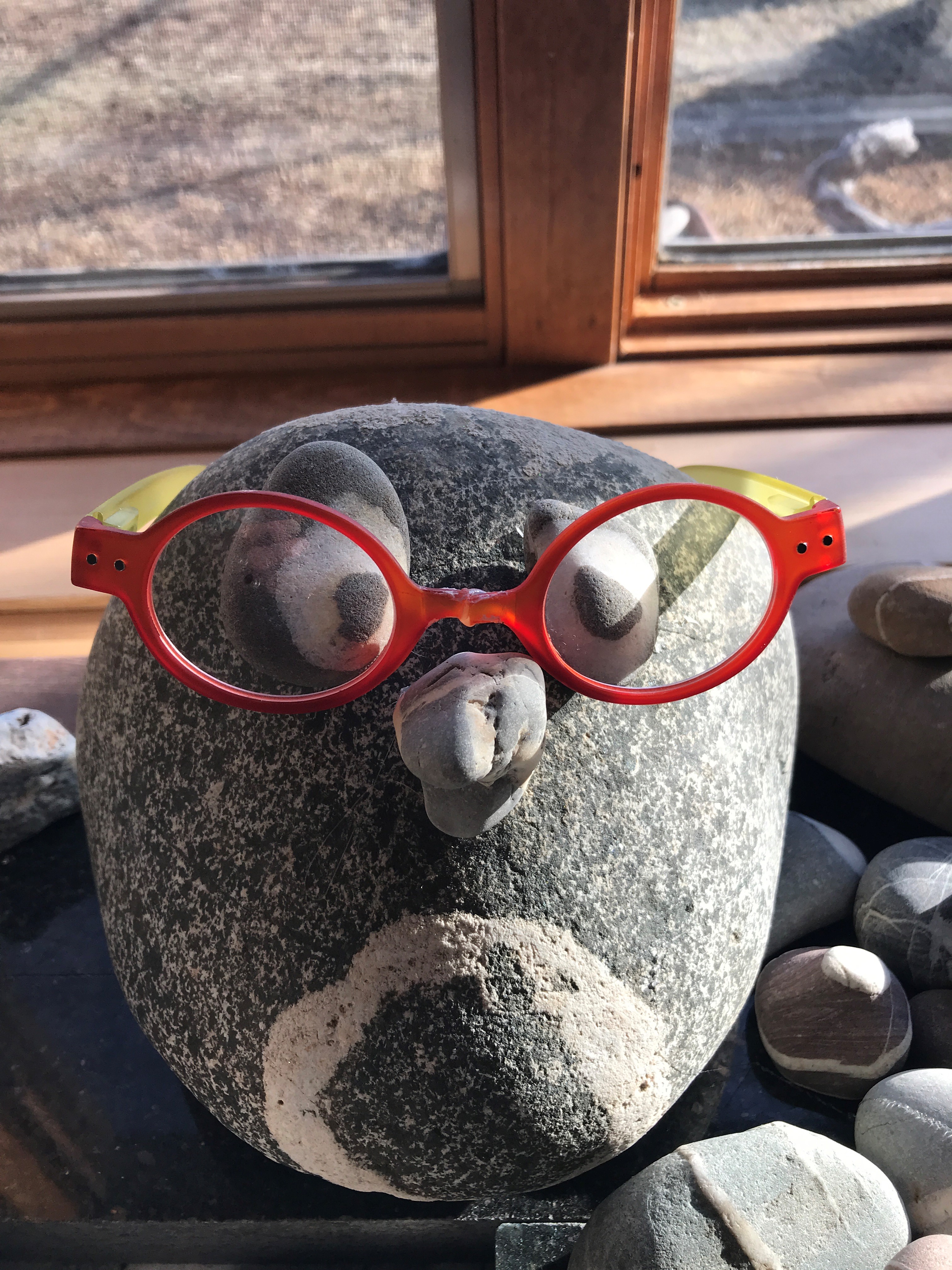
  • Put a cat (or a chicken or a duck) on your head
  • Chew a big wad of gum

I’m sure you get the idea. Nobody knows better than you what might put you in a good mood . . . so, when you’re ready, you should use your own self-knowledge to move into a better mood.

Step three is to spread the good mood. Spreading the good mood is based on the fact that moods are contagious. In fact, although COVID-19 is very contagious, moods might be even more contagious. I’d say things like this to my young clients:

“I want to tell you another interesting thing about moods. They’re contagious. Do you know what contagious means? It means you can catch them from being around other people who are in bad moods or good moods. Like when you got here. I noticed your mom was in a bad mood too. It made me wonder, did you catch the bad mood from her or did she catch it from you? Anyway, now you seem to be in a much better mood. And so I was wondering, do you think you can make your mom “catch” your good mood?”

How do you share good moods? Keep in mind that saying “Cheer up” is off-limits. Here’s a short list of what I’ve heard from kids and adults.

  • Do someone a favor
  • Smile
  • Hold the door for a stranger
  • Offer a random act of kindness
  • Offer a real or virtual hug
  • Listen to someone who wants or needs to talk
  • Tell someone, “I love you” (you can even do this while social distancing)

Step four might be the best and most important step in the three-step emotional change trick. With kids, when I move on to step four, they always interrupt:

“Wait. You said there were only three steps!”

“Yes. That’s true. That’s what I said. What’s interesting about the three-step emotional change trick is that it has four steps. It has for steps because emotions are complicated and surprising. And so there are four steps. This last step is for you to teach someone else the three steps.”

The other surprising thing about the three-step emotional change trick is that nobody ever complains that it has four steps. For whatever reason, the complexity of emotions seems to overshadow the need to count accurately. In fact, as you read this, you may have discovered an additional step. I wouldn’t be surprised if it turned out that the three-step emotional change trick actually has five steps. If you’ve got a fifth step, please share!