
Here’s the pdf of the ppts for today’s workshop sponsored by Idaho State University.
Tag Archives: Strengths-based
Integrating Strengths Based Suicide Assessment into Traditional Approaches
Good morning.
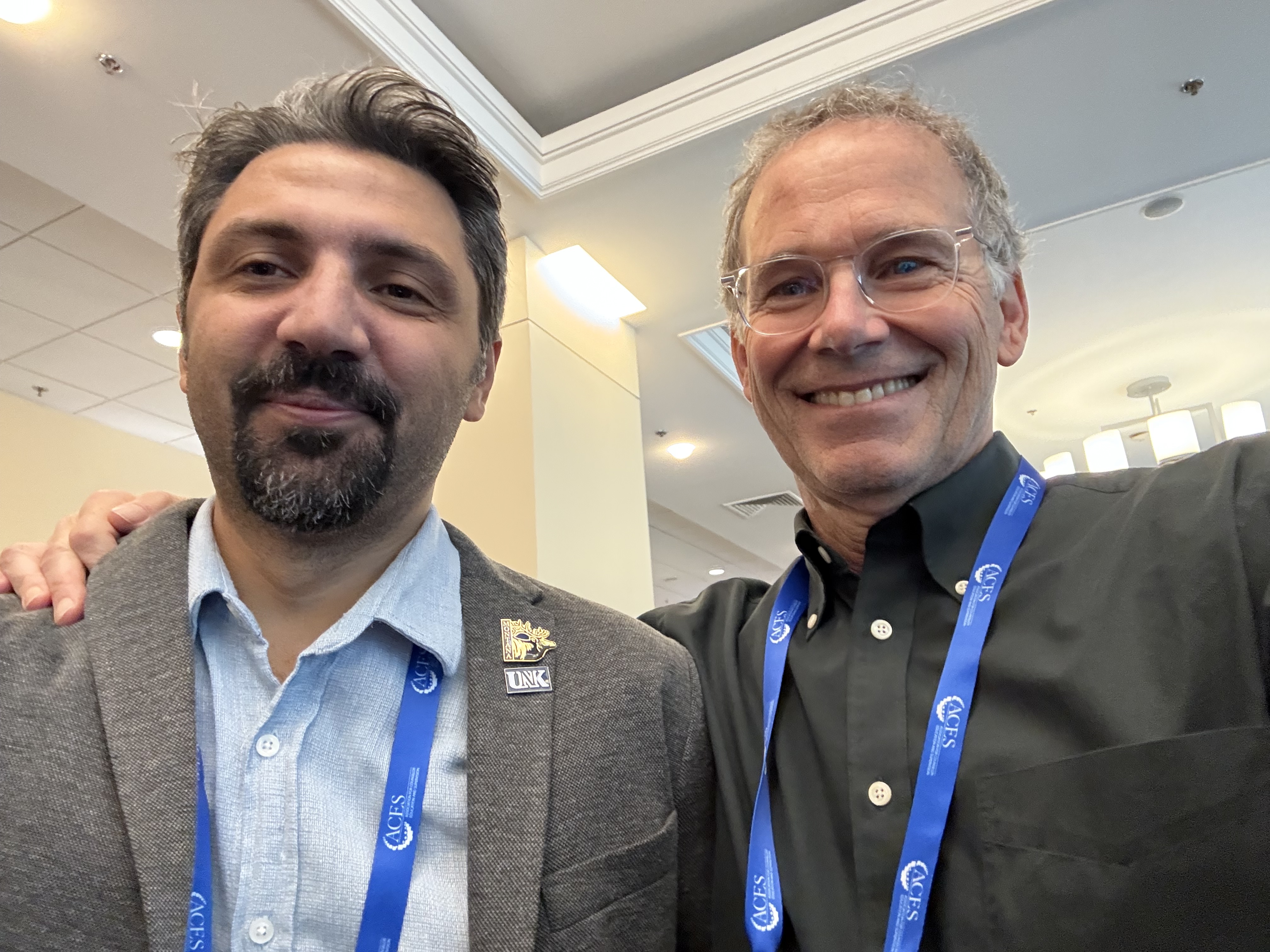
Yesterday I was in Arkansas with the Arkansas Psychological Association talking about Strengths-based Suicide Assessment. And today I’m in Philly, along with Dr. Umit Arslan (and missing Tammy Tolleson-Knee) talking about it again–at the Association of Counselor Education and Supervision conference.
Unfortunately, Tammy’s efforts to get here were foiled by a particular airline fiasco, but we’re carrying on! We miss you Tammy!
Here’s the ppt:
Strengths-Based Suicide Assessment and Treatment for the Western Oregon Mental Health Association
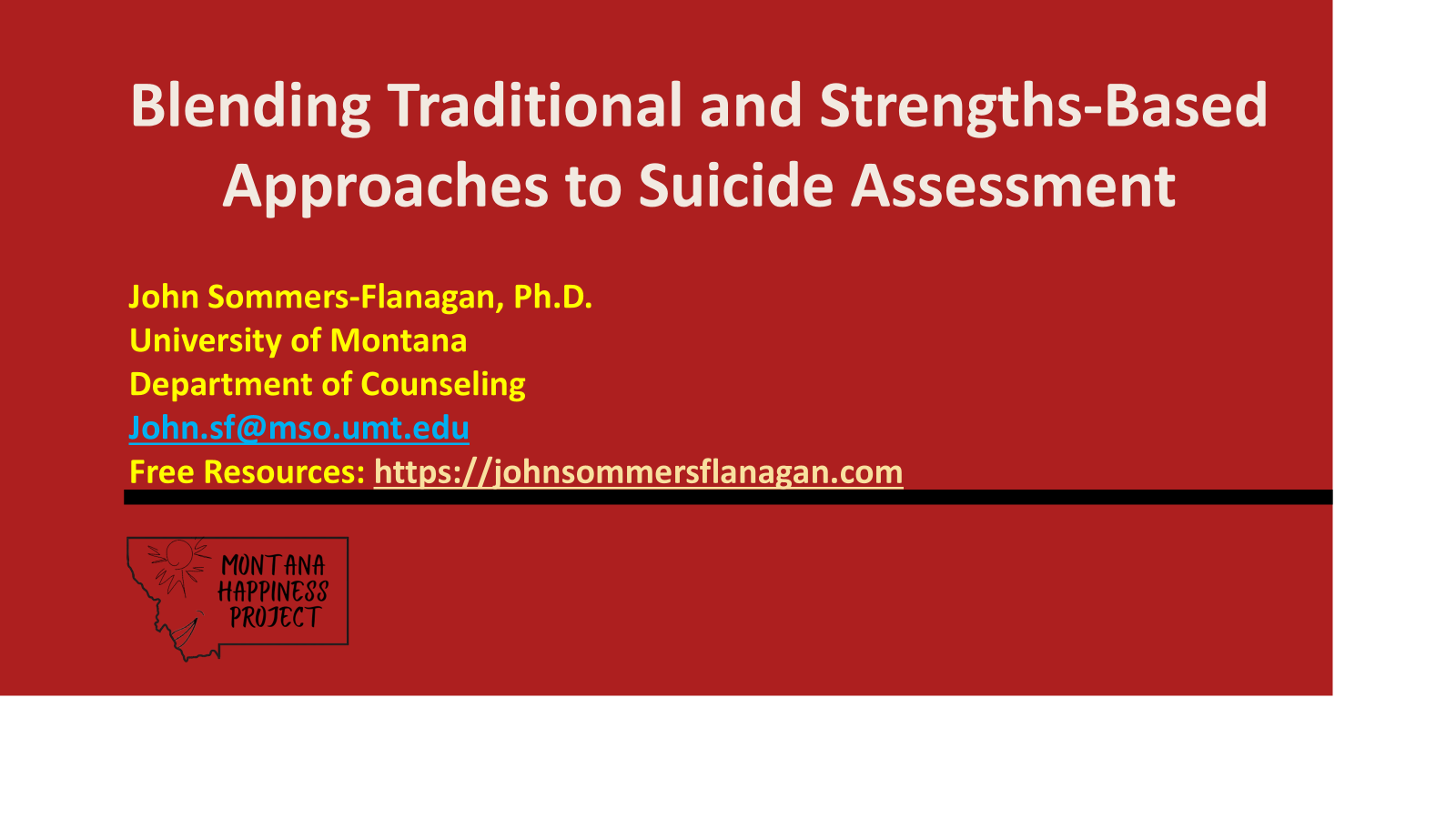
For fans of Strengths-Based suicide workshops, this Friday I’m doing a three hour online workshop for the Western Oregon Mental Health Assocation.
The workshop is happening this Friday from 9-noon (PDT). It’s a pretty reasonable deal: $60 for licensed WOMHA members, $75 for licensed non-members, $35 for pre-licensed people, and $5 for students.
Sorry for the late notice, but here’s the link to register:
https://bookwhen.com/womha#focus=ev-s8as-20250411090000
And here’s a copy of the ppts:
I’m looking forward to my virtual trip back to Oregon this Friday!
The Handout for this Friday’s Strengths-Based Suicide Workshop
Sorry for all the posts, but apparently there’s lots happening in early 2025.
The big NEWS post won’t be until tomorrow.
As you know, on this Friday, January 10, I’ll be doing an online, two-hour workshop on Strategies for Integrating Traditional and Strengths-Based Approaches to Suicide for the Cognitive Behavior Institute.
I’m posting the workshop handouts here, in advance, for anyone interested.
You may recall that this workshop is ALMOST FREE. Only $25. There’s still time to register here:
I hope to see you there!
Coming this Friday: Online Workshop — “Strategies for Integrating Traditional and Strengths-Based Approaches to Suicide”
Happy Sunday Evening,
Last week I shared my 2025 predictions with you. This week, I’ve got another prediction . On Friday, January 10, I’ll be doing an online, two-hour workshop (title listed above) for the Cognitive Behavior Institute. I predict that if you sign up, you’ll be happy you did.
The other good news about this workshop is that it’s ALMOST FREE. Only $25. Here’s the link to register:
I hope to see you there!
If you’re interested in this topic and can’t make it (or even if you can make it), here’s a pdf of an article I wrote about suicide assessment for a Psych journal in 2018:
And here’s a link to the first journal article that Rita and I wrote on suicide assessment way back in the 20th century (in 1995!):
Perfectly Hidden Depression and Viewing Suicidality through a Strengths-Based Lens
Last week I did a little cliff-jumping into the Stillwater River with my twin 13-year-old grandchildren. It was only about 20 feet, but high enough to feel the terror and exhilaration of a brief free-fall.
This week I’m having a different kind of buzz. Dr. Margaret Rutherford reached out to me with a link to her TEDx Boca Raton talk. Previously I was a guest on her video podcast show (here’s the link to her podcast page: https://drmargaretrutherford.com/podcast-2-2/, and a link to her website and book, “Perfectly Hidden Depression” https://drmargaretrutherford.com/perfectlyhiddendepressionbook/). We’ve stayed in touch via email. Along with her link, she apologetically noted that she “barely” got a plug in for my work on strengths-based suicide assessment. I thought it was incredibly nice for her to give a nod, even a brief one, to my work. But then I watched and discovered that she had only mentioned three professionals: Edwin Shneidman (the “Father of Suicidology), Sidney Blatt (a renowned suicide and depression researcher from Yale), and some obscure guy from the University of Montana (that would be me).
Aside from feeling honored, humbled, and flattered to even get a mention, Dr. Margaret’s talk is fantastic. She makes the point–with a couple of articulate cases–for moving away from a strictly medical model perspective and toward working with people who may be suicidal through a lens of no judgment and acceptance. Here’s the link to her talk, which is well-worth a watch: https://www.youtube.com/watch?v=lXZ5Bo5lafA
There are other signs that how professionals (and hopefully the public) view suicidal ideation and behavior may be shifting toward greater acceptance. I’ll go into these other signs in a future post, but right now I want to emphasize that the point is not to replace the medical model, but to move the needle toward less pathologizing and more acceptance of the fact that having suicidal thoughts is often a normal part of life. To the extent that we can approach people who are thinking about suicide with, as Dr. Margaret said, “non-judgment and acceptance,” the more likely they are to be open with us about their pain. . . and . . . when people are open about their pain and suffering, then we have a chance to listen with empathy and a greater opportunity to be of help. . . which, I think, is the main point.
Talking with Clients about Previous Suicide Attempts from a Strengths-Based Perspective

Working with suicidal clients often involves working two sides at the same time. . . as in a dialectic or paradox. For example, it’s crucial to be able to move back and forth between empathic acceptance and active-collaborative problem-solving.
When working from a strengths-based model, clinicians shouldn’t shy away from focusing on pain, sadness, anger, or other aversive emotions and experiences. At the same time, we need to also focus on potential strengths. The following excerpt from our new suicide book illustrates how to explore previous attempts, while also looking for strengths.
Previous attempts are often considered the most significant suicide predictor (Brown et al., 2020; Fowler, 2012). You can gather information about previous attempts through your client’s medical or mental health records, from an intake form, or during the clinical interview. During clinical interviews, clients may spontaneously tell you about previous attempts; other times you’ll need to ask directly. Again, using a normalizing frame can be facilitative:
It’s not unusual for people who are feeling very down to have made a suicide attempt. I’m wondering if there have been times when you were so down that you tried to kill yourself?
Once you have knowledge about a client’s previous suicide attempt, you can explore several dimensions of the attempt:
- What was happening that made you want to end your life?
- When you discovered that your suicide attempt failed, what thoughts and feelings did you experience?
- Some people report learning something important from attempting suicide. Did you learn anything important? If so, what did you learn?
Although the preceding questions are important for assessment, once you’re ready to move beyond exploration of a previous attempt, you should ask a therapeutic solution-focused question, similar to the following:
You’ve tried suicide before, but you’re here with me now . . . what has helped? (Sommers-Flanagan & Sommers-Flanagan, 2017, p. 373).
Asking “What helped?” is central to a strength-based or solution-focused model and sometimes illuminates a path forward toward living. However, if your client is depressed, you may hear,
Nothing helped. Nothing ever helps (Sommers-Flanagan & Sommers-Flanagan, 2017, p. 373).
In the context of an assessment protocol, the “What helped?” question and its side-kick, “What have you tried?” are important because they assess for two core cognitive problems associated with suicidality: hopelessness and problem-solving impairment. Clients who respond with “nothing ever helps” are communicating hopelessness. Clients who claim, “I’ve tried everything” or “There’s nothing left to do” are communicating hopelessness, plus the narrowing of cognitive problem-solving that Shneidman (1996) called mental constriction. Hopelessness and problem-solving impairments should be integrated into your suicide treatment plan.
You can read more excerpts of our book in other posts on this blog, via Amazon or Google. You can also purchase it as an eBook through Wiley, Amazon, or as a paperback through the American Counseling Association: https://imis.counseling.org/store/detail.aspx?id=78174
 John Sommers-Flanagan