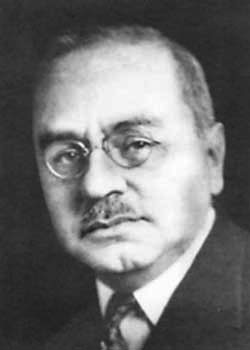
Tag Archives: Adler

Teaching Group: The Case of Zoey and Adlerian Theory

Group class is rolling downstream so fast that I feel I’m riding down Niagara Falls in a barrel. Well, that might be me being dramatic. My personal drama partly explains why I’m so late blogging about week 2 of group class.

Much of the focus of week 2 was on Yalom’s 11 therapeutic factors. I think they’re subtle, powerful, and sneaky insightful. When I teach the 11 factors, I try to give as many concrete examples as possible. Here’s one:

I got asked to run two in-school groups for 5th graders. I had twins in group (one in each group). These were difficult groups. I had let the principal assign the members. I know, bad idea, especially because I knew better; pre-group screening was both optimal and ethical. I share this story because it’s a good one, but also because I can acknowledge that I make mistakes and am still a work in progress.

The twins identified themselves as evil and good. They seemed to be living up to their self-proclaimed identities. The evil twin (let’s call her Zoey) got “removed” from the first three group meetings. My rule was to remove students and send them back to class if they violated the group rules. Zoey was intermittently making aggressive physical contact. She ripped up some “Disney cards” I had given all the students, and threw them at me. In each case, I just said, “Zoey, you’ve broken a rule and you need to go back to your class.” There were small protests, but she would eventually stand up, leave group and go back to class.

The other part of the rule was to let anyone who had been removed from group back in group if they presented me with an apology note. Zoey became an efficient apology note writer.

Dear Mr. Jhon,

I am sorry I pushed Amber. I won’t push Amber again. Can I come back to group?

Zoey

At the beginning of session 4, as Zoey walking into group, I impulsively said something like, “Zoey! You are in so much trouble. You are in so much trouble that you have to serve our group treats today.” Zoey stared at me, sat down, and began her new journey to becoming a very nice, polite, and wonderful group member.

I repeated my “You’re in so much trouble Zoey” opening the next week. And the next. Zoey never again pushed anyone, she didn’t argue, she became shockingly pleasant and cooperative.

At the end of group, Zoey wrote me a “Good bye” note. It read:

Dr. Mr. Jhon,

I had fun in group. Thank you for coming to our school. I will miss you.

Zoey

With this story (and many others), we get a chance to glimpse the complexities of human behavior. Zoey’s story also gives us a chance to apply counseling theory to group dynamics. The theory that comes to mind for Zoey is related to Dreikurs’ and Adler’s ideas about the 4 psychological goals of children’s misbehavior. You can read about why children (and adults) misbehave here: https://johnsommersflanagan.com/2017/06/10/why-children-misbehave-the-adlerian-perspective/. But in group, the focus is less on the 4 goals, and more on the two overarching factors that will, most of the time, mitigate and sometimes eliminate the misbehavior. What are these overarching factors?

A sense of belonging

Feeling useful

With Zoey, I think she suddenly felt useful. She also got proactive attention in a sort of sarcastic message of her being in trouble. I thought the “You’re in big trouble” part was pretty clever. But the more important part was to give her a job. . . to help her feel useful . . . and along with that came belonging.

In some ways, the Zoey intervention was an individual intervention that helped her function in a group. That was important because Zoey had never been successful in any group. She hadn’t been on a team, in a choir, and she rarely succeeded in making it through the school day without an interpersonal incident. “Graduating” from our group, was a big deal for Zoey.

Beyond the Adlerian principles, the evil twin scenario includes glimpses of Yalom’s therapeutic factors. Can you identify which ones? Here’s the list:

  1. Instillation of hope
  2. Universality
  3. Imparting information
  4. Altruism
  5. The corrective recapitulation of the family group
  6. Development of socializing techniques
  7. Imitative behavior
  8. Interpersonal learning
  9. Group cohesiveness
  10. Catharsis
  11. Existential factors

I’m heading into class momentarily, and so I’ll add the following observation quickly.

At this point, my group students still think I know what I’m doing. We’ve engaged in several whole group and subgroup (fishbowl) group activities where I’m the leader. One student referred to me as “smooth.” As much as I like that compliment, I also recognize that me being smooth is completely related to the students being engaged and cooperative. Maybe we’re still in the honeymoon phase of our group class. Maybe the storming is yet to come? Maybe everyone feels they belong, and that they’re useful. I do work at helping everyone feel belonging and usefulness.

As the instructor, I know that referencing that storming can happen and articulating, in advance, how I usually address storming, can make storming less likely. None of the students are especially keen to be the first stormers. Everyone (probably) knows that no matter the nature and content of the storming, I will try to meet it with acceptance and an opportunity for the stormer to “tell us more” while taking responsibility for their feelings. Nevertheless, sooner or later, I will want to prompt them to storm, rather than hold in feelings of discontent.

One last thought. I am not always smooth. I am not always competent. I am not always emotionally centered and ready to be a good group counselor. Given those realities, I’m also aware that it will be even more important (than being smooth) for me to acknowledge my mistakes and be vulnerable enough for students to accept me as a role model who isn’t just interested in being smooth, but is also interested in being vulnerable.

Thanks for reading! More to come soon. Here are the Week 2 powerpoints:

John

The Three-Step Emotional Change Trick, Revisited (Again) . . . with a side note on plagiarism

I’ve said it before and I’ll say it again: I have a friend who repeatedly espouses the glories of redundancy. Maybe that’s why some politicians stay on-message, regardless of the veracity of their statements. Of course, George Orwell and Hannah Arendt also commented on redundancy as persuasion, and not in a good way. I should emphasize that my goal for using redundancy and writing about the three-step emotional technique again has nothing to do with shaping your reality through political messaging.

When I presented on positive psychology to a bunch of UM STEM graduate students back in August, 2022, I made it very clear that I was not advocating toxic positivity. Nevertheless, in one of the student evaluations, someone complained that all I was doing was telling graduate students to “Cheer up.” Oh my. Sometimes people just hear what they want to hear. That’s a problem with over-valuing “lived experience.” When we over-value lived experience, then everything is viewed through our own, usually narrow and biased, personal lenses. Adler called this private logic. Too much private logic is too much private logic. Although we should strive to value, learn from, and share lived experiences, we should also have a shared value of this thing called . . . wait for it . . . science!

The next time I presented to the UM STEM grad students (in January, 2023), I made an explicit point of emphasizing my “non-toxic positivity street cred” by beginning the lecture with a short lesson on the three-step emotional change trick (which, BTW, with inspiration from Alfred Adler and Harold Mosak, we created as a youth psychotherapy technique in the mid-1990s). You can even find our (with Rita) original three-step article here: https://www.tandfonline.com/doi/abs/10.1300/J019v17n04_02 and a later book chapter here: https://psycnet.apa.org/record/2002-01308-098 and, of course, I’ve written about it on this blog, and have a youtube video demonstration: https://www.youtube.com/watch?v=ITWhMYANC5c, yada, yada, yada.

While presenting the 3SECT (which is what cool people call it) to the STEM students, there was a woman sitting toward the back. She had stationed her 8-year-old son still farther back, where he was sitting, head down, playing on her phone. I did the 3SECT thing, including the famous “And so I put my cat on my head” scene, emphasizing throughout, that the WHOLE reason for the 3SECT existing was because we should NEVER SAY CHEER UP to anyone, anytime!

The next day, I received the following email from the anonymous woman in the back (who generously gave me permission to share it here):

Hi John,

I was at your happiness seminar yesterday and was very disappointed I had to leave early. You may have noticed my son (who is 8) was sitting in the back playing a game on my phone during the seminar. I was delighted to find out this morning, while my 6-year-old daughter was having a meltdown trying to do her hair for school, that my son had been listening and absorbed your 3-step emotional change trick. He remembered the whole thing, and he asked his sister this morning if she wanted to learn it, but only if she wanted to change her own mood. He was clear that it wasn’t because he was trying to tell her to cheer up. He heard it all yesterday! Thought you might enjoy that little anecdote.

A few days later, she wrote:

We have gotten a lot of mileage out of your emotional change trick in the last few days.

I have to admit, I absolutely love it when people listen and get the message, but I truly and deeply love it EVEN MORE when 8-year-olds absorb messages while allegedly playing on a cell phone. I believe this may just be the scientific evidence (or is it my lived experience) I needed to validate that I am not and never have been a proponent of toxic positivity.

One other notable note. When searching (via Google) for my very own 3SECT video, I found that a counselor in Tennessee has copied one of my three-step blog posts and posted it as his own blog post. I was gobsmacked—with annoyance and flattery in equal proportions. If you want to read the blog post worthy of plagiarism (not the plagiarist’s version, which is the same, but my version that was so darn tempting that it literally caused plagiarism, here you go: https://johnsommersflanagan.com/2020/04/15/the-three-step-emotional-change-technique/

I’m ending now with a few core messages:

  • Don’t say “cheer up” to anyone.
  • Don’t get too over-focused on your own lived experiences, because, after all, everyone has their own lived experiences, and we should complement them all with scientific knowledge.
  • Don’t plagiarize.
  • If the person you plagiarized emails you, asking you to stop plagiarizing or provide a citation, don’t ignore that person.
  • And, whenever appropriate, follow in the anonymous 8-year-old’s footsteps and spread the good mood – without saying cheer-up!

Wishing You a Fantastic Holiday Season – And Lifelong Learning

For the past ten days I’ve been contemplating a witty and profound holiday greeting and blog post that would lift moods everywhere and inspire greater wellness. Sadly (or happily), the profound words did not emerge from my brain, perhaps because my brain–like many objects at this time of the season–preferred to remain at rest. The universe seemed to be saying something like, “Let there be inertia.” Who am I to dispute messages from the universe?

And then, in the midst of my stare-down with inertia, I read that today is Day 2 of Kwanzaa, the principle for which is “self-determination.” I don’t know much about Kwanzaa, and so I did a bit of reading and discovered that Day 2 involves the lighting of a candle that represents the principle of Kujichagulia (aka self-determination). Self-determination can be taken a few different ways, including the process of defining, creating, naming, and speaking for ourselves.

I have no intention of engaging in cultural appropriation here, but instead, my desire (in a Bertrand Russell sort of way) is to continue to embrace new learning—which seems to me as a nice antidote to staying at rest or remaining inert. Learning a bit more about African-American culture . . . as well as other cultures . . . strikes me as a good thing, and is consistent with what I hope for in the coming year.

In my momentarily state of naïve idealization (unfortunately, this too shall likely pass), I wish you all the best for Christmas, Kwanzaa, Hanukkah, and other celebratory holidays. I also wish for more learning, more openness to the ideas and cultures of others, and more of that social fabric that Alfred Adler called Gemeinschaftsgefühl. And, to paraphrase the great positive psychologist, Chris Peterson, remember, “Other people matter,” which, of course, means that because you’re an “other” person to everyone else, you matter too.

Be well,

John S-F

Paradoxical Intention: Don’t Try This at Home (or maybe don’t try it anywhere)

People want change.

People don’t want change.

As W. R. Miller noted in his treatise on motivational interviewing (MI), ambivalence is nearly always the order of the day. Most people, most of the time, would like to be better and healthier versions of themselves. And, most people, most of the time, resist becoming better and healthier versions of themselves.  Who knew?

Alfred Adler may have been the first modern psychotherapist to write from a non-psychoanalytic perspective about how to work with individuals not interested in changing. What follows is a complex quote from Adler. He’s writing about how to work with a patient who is depressed, but not motivated or willing to change. You may need to read this excerpt several times to track it and appreciate Adler’s method. You may see all those words below and not want to put in the effort. That’s okay. You can stop reading now if you don’t want to gather in the nuance sprinkled into Adler’s indirect suggestion.

After establishing a sympathetic relation, I give suggestions for a change of conduct in two stages. In the first stage my suggestion is “Only do what is agreeable to you.” The patient usually answers, “Nothing is agreeable.” “Then at least,” I respond, “do not exert yourself to do what is disagreeable.” The patient, who has usually been exhorted to do various uncongenial things to remedy this condition, finds a rather flattering novelty in my advice, and may improve in behavior. Later I insinuate the second rule of conduct, saying that “It is much more difficult and I do not know if you can follow it.” After saying this I am silent, and look doubtfully at the patient. In this way I excite his [her/their] curiosity and ensure his attention, and then proceed, “If you could follow this second rule you would be cured in fourteen days. It is—to consider from time to time how you can give another person pleasure. It would very soon enable you to sleep and would chase away all your sad thoughts. You would feel yourself to be useful and worthwhile.”

I receive various replies to my suggestion, but every patient thinks it is too difficult to act upon. If the answer is, “How can I give pleasure to others when I have none myself?” I relieve the prospect by saying, “Then you will need four weeks.” The more transparent response, “Who gives me pleasure?” I counter with what is probably the strongest move in the game, by saying, “Perhaps you had better train yourself a little thus: do not actually do anything to please anyone else, but just think about how you could do it!” (Adler, 1964a, pp. 25–26)

Similar to Adler, Viktor Frankl also wrote about using “anti-suggestion” or paradox. Frankl was keen on this method as a means for treating anxiety, compulsions, and physical symptoms. An excerpt from our theories textbook describing Frankl’s paradoxical intention follows.

***********************************

Paradoxical Intention

. . . In a case example, Frankl discussed using paradox with a bookkeeper who was suffering from chronic writer’s cramp. The man had seen many physicians without improvement; he was in danger of losing his job. Frankl’s approach was to instruct the man to:

Do just the opposite from what he usually had done; namely, instead of trying to write as neatly and legibly as possible, to write with the worst possible scrawl. He was advised to say to himself, “now I will show people what a good scribbler I am!” And at that moment in which he deliberately tried to scribble, he was unable to do so. “I tried to scrawl but simply could not do it,” he said the next day. Within forty-eight hours the patient was in this way freed from his writer’s cramp, and remained free for the observation period after he had been treated. He is a happy man again and fully able to work. (Frankl, 1967, p. 4)

Frankl attributed the success of paradox, in part, to humor. He claimed that paradox allows individuals to place distance between themselves and their situation. New (humorous) perspectives allow clients to let go of symptoms. Frankl considered paradoxically facilitated attitude changes to represent deep and not superficial change.

Given that Frankl emphasized humor as the therapeutic mechanism underlying paradoxical intention, it fits that he would use a joke to explain how paradoxical intention works,

The basic mechanism underlying the technique…perhaps can best be illustrated by a joke which was told to me some years ago: A boy who came to school late excused himself to the teacher on the grounds that the icy streets were so slippery that whenever he moved one step forward he slipped two steps back again. Thereupon the teacher retorted, “Now I have caught you in a lie—if this were true, how did you ever get to school?” Whereupon the boy calmly replied, “I finally turned around and went home!” (Frankl, 1967, pp. 4–5)

Frankl believed paradoxical intention was especially effective for anxiety, compulsions, and physical symptoms. He reported on numerous cases, similar to the man with writer’s cramp, in which a nearly instantaneous cure resulted from the intervention. In addition to ascribing the cure to humor and distancing from the symptom, Frankl emphasized that paradox teaches clients to intentionally exaggerate, rather than avoid, their existential realities.

********************************

I’m writing about paradoxical intention today because of an inspiration from Rita’s blog yesterday. There’s so much ostensible hate, judgment, and certainty in contemporary discourse. That got me thinking about whether a paradoxical approach might be timely and effective. Yesterday, I tried it on myself. Stay tuned, in my next post, I’ll write about how a little paradox worked out for me, and how it might help shift some of the lamentable, polarized arguments happening all around us.  

My Cache of Unprofessional Counseling and Psychotherapy Theories Videos

In a surprising turn of events, this semester, I’ve decided to make a series of unprofessional theories videos to accompany my counseling and psychotherapy theories course (and text). When I say surprising, I mean surprising in that I’m surprised about feeling open to spontaneously video recording myself and making it available via YouTube. Could it be that as I grow older, I care less about how I look and sound, and care more about showing myself openly to others as an imperfect being who’s just trying to offer up something that might be educational? Alternatively, maybe I just caught the narcissistically-leaning, reality television, constantly-make-videos-of-myself, YouTube, Instagram, Facebook, Tiktok, virus that’s infecting so many people. We may never know.

And I say unprofessional because I’m filming these all by myself, not using a script, and making side comments and using props that might involve embarrassing myself as I talk about counseling and psychotherapy theories. One form of these unprofessional videos includes me doing “dramatic readings” and commentary from the works of Freud, Adler, and other original theories thinkers and writers. Although I intended these readings to be dramatic, I can see how they also might just be dull.

With my explanations and caveats out of the way, here are the offerings, thus far, for this semester.

Week 1 – An Intro to Counseling and Psychotherapy Theories

Hypnosis for Warts: A Story – https://youtu.be/9FR4PyTcsKw

Psychotherapy Math – https://youtu.be/ZqMW0SNekY0

Week 2 – Psychoanalytic Approaches

Freud Dramatic Reading – https://youtu.be/L-fkveRk7B0

Week 3 – Individual Psychology and Adlerian Therapy

Adler Dramatic Reading, Take 1 – https://youtu.be/_sVysgm1UiY

Adler Dramatic Reading, Take 2 – https://youtu.be/xCQd6i_CWAI

Week 4 – Existential Theory and Therapy . . . coming soon!

Although this post focuses on my unprofessional videos, that doesn’t mean I’ve completely stopped behaving professionally. For example, recently, I was a guest on the podcast, “A New Angle” hosted by Justin Angle and Bryce Ward (both of the University of Montana College of Business). In this podcast, we talk about COVID, suicide in Montana, happiness, and why the College of Business supports the teaching “Essential” interpersonal and psychological skills. It’s a pretty cool (and professional) podcast, even if I do say so myself. You can find “A New Angle” on Apple Podcasts at:

https://podcasts.apple.com/us/podcast/i-i-happiness-with-john-sommers-flanagan/id1336642173

Or at: anewanglepodcast.com

I hope you’re all having a great run-up to the weekend.

A Letter to My Happiness Class on Why I Called BS on the So-Called Law of Attraction

Adler Heart Brain

[This is a letter to my happiness class]

Hello Happy People,

When happiness class ends, sometimes I wish we could continue in conversation. You may not feel that way. You might be thinking, “Thank-you Universe! Class is finally over.” But as a long-time professor-type, on many days I wish we could keep on talking and learning. I know that it may not surprise you to hear that I’m feeling like I’ve got more to say:).

This week (Tuesday, February 11) was one of those days. Many of you made great comments and asked big questions. But, given that time is a pesky driver of everything, I/we couldn’t go as deep as we might have. Here’s an example of a question I loved, but that I felt I didn’t go deep enough with:

“Do you believe in the Law of Attraction?”

This is a fascinating question with deep and profound contemporary relevance. At the time, if you recall, I had dissed inspirational statements like, “If you can imagine it, you can achieve it. If you can dream it, you can become it” as “just bullshit.” Then, in response to the question of whether I believe in the so-called Law of Attraction, I said something like “I don’t completely disbelieve it” . . . and then pretended that I was in possession of a scientific mental calculator and said something like, “I believe things like imagining the positive can have a positive effect, but it might contribute about 3% of the variation to what happens to people in the future.”

Not surprisingly, upon reflection, I’m thinking that my use of the word “bullshit” and my overconfident estimation of “3% of the variation” deserve further explanation. Why? Because if I don’t back up what I say with at least a little science, then I’m doing no better than the folks who write wacky stuff like, “You can if you think you can.” In other words, how can you know if what I say isn’t “just bullshit” too?

At this point I’d like to express my apologies to Dr. Norman Vincent Peale for referring to one of his book titles as “wacky stuff.” However, in my defense, I read the book and I still can’t do whatever I think I can do . . . so there’s that . . . but that’s only a personal anecdote.

Okay. Back to science. Here’s why I said that positive thinking, as in the so-called “Law of Attraction” might account for only about 3% of the variation in life outcomes.

Back in the 1980s, I did my thesis and dissertation on personality and prediction. At the time I had four roommates and I felt I could predict their behaviors quite easily on the basis of their personalities. However, much to my surprise, I discovered that social psychology research didn’t support personality as a very good predictor of behavior. Turns out, personality only correlates with behavioral outcomes at about r = 0.3 or r = 0.4. You might think that sounds big, because you might think that r = 0.3 means 30%. But that’s not how it works. If you do the math and multiply the correlational coefficient by itself (as in 3 x 3 or 4 x 4) you get what statisticians call the coefficient of determination (in this case, 3 x 3 = 9% and 4 x 4 = 16%). The coefficient of determination is an error-filled effort to predict specific future events, as in, if your r = 0.3, then, if you know r, then you can be about 9% accurate in predicting an outcome.

Please note that everything is error-filled, including science, and including me and my shoot from the hip efforts at estimation and prediction. When I say error-filled, I’m not disrespecting science, I’m just acknowledging its limitations.

Okay. Back to the so-called Law of Attraction. In class I was calculating in my mind that if well-measured personality traits like extraversion or introversion only account for about 9-16% of the variation in behavioral outcomes, then the so-called Law (which I’m inclined to rename as the Hypothesis of Attraction) would likely account for significantly less variation . . . so I quickly did some mental math and “3%” popped out of my mouth. What I should have said is that humans are remarkably unpredictable and that personality barely predicts behavior and situations barely predict behavior and so when we hypothesize what might influence our future, we should be careful and underestimate, lest we appear foolishly overconfident, like many television pundits.

Somewhere around this time, someone asked if I thought the authors of books who advocated things like the law of attraction really believed in what they wrote or just wrote their books for profit. My response there was something like, “I don’t know. Maybe a bit of both.” To be perfectly honest—which I’m trying to be—one of my big concerns about things like the law of attraction is that they’re used to increase hope and expectations and typically come at a price. I don’t like the idea of people with profit-driven motives luring vulnerable people with big hopes into paying and then being disappointed. Sometimes I ask myself, “If someone has their life together so much that they discovered a secret to becoming wealthy by visualizing wealth, then they should already be so damn rich that they should just share their secret for free with everyone in an effort to improve people’s lives and the state of the planet!” The corollary to that thought is that if somebody says they’ve got a powerful secret AND THEY WANT TO CHARGE YOU FOR IT, my bullshit spidey sense sounds an alarm. Go ahead, call me suspicious and cynical.

Now. Don’t get me wrong. I’m a big fan of positive thinking. A huge fan. I believe positive thinking can give you an edge, and I believe it can make you happier. But I also think life is deeper than that and multiple factors are involved in how our lives turn out. I don’t want to pretend I’ve got a secret that I can share with you that will result in you living happily ever after with all the money you ever wished for. On the other hand, I do want to encourage everyone to embrace as much as you can the positivity and gratitude and kindness and visions of your best self that we’re talking about and reading about for our happiness class. I want you to have that edge or advantage. I want you to harness that 3% (okay, maybe it could be 7%) and make your lives more like your hopes and dreams.

Later, another student asked how we can know if we’re just fooling ourselves with irrational positivity. Wow. What an amazing question. At the time, I said, we need to scrutinize ourselves and bounce our self-statements or beliefs off of other people—people whom we trust—so we can get feedback. One thing I’d add to what I said in class is that we should also gather scientific information to help us determine whether we’re off in the tulips or thinking rationally. Self-scrutiny, feedback from trusted others, and pursuit of science. . . I think that’s a pretty good recipe for lots of things. It reminds me of what Alfred Adler once wrote about love. . . something like, “Follow your heart, but don’t forget your brain!”

Tomorrow is Valentine’s Day. I hope your weekend is a fabulous mix of following your heart, and hanging onto the science.

John SF

Happiness Homework: Your Best Possible Self

Art Heart

You all already know about optimism and pessimism.

Some people see the glass half full. Others see the glass half empty. Still others, just drink and savor the water, without getting hung up on how much is in the glass. Obviously, there are many other responses, because some people spill the water, others find a permanent water source, and others skip the water and drink the wine or pop open a beer.

Reducing people to two personality types never works, but it never gets old either. Your activity this week is what we call an optimism activity. It’s called the Best Possible Self activity and it’s supposed to crank up your sense of optimism. That’s cool, because generally speaking, optimism is a good thing. Here’s what the researchers say about the Best Possible Self (BPS) activity.

[The following is summarized from Layous, Nelson, and Lyubomirsky, 2012]. Writing about your BPS (also seen as a representation of your goals) shows long-term health benefits, increases life satisfaction, increases positive affect, increases optimism, and improves overall sense of well-being. Laura King, a professor at U of Missouri-Columbia developed the BPS activity.

King’s BPS activity was a little more extensive than what I’m recommending below. Here’s the assignment:

  • Spend 10 minutes a day for four consecutive days writing a narrative description of your “best possible future self.”
  • Pick a point in the future – write about what you’ll be doing/thinking then – and these things need to capture a vision of you being “your best” successful self or of having accomplished your life goals.
  • You can upload all your writing or just a summary into Moodle for Dan or me to read.

Being a counseling and psychotherapy theories buff, I should mention that this fantastic assignment is very similar to the Adlerian “Future Autobiography.” Adler was way ahead of everyone on everything, so I’m not surprised that he was thinking of this first. Undoubtedly, Adler saw the glass half full, sipped and savored his share, and then shared it with his community. We should all be more like Adler.

G is for Gratitude . . . and Gayle

Gayle Peggy and John

My family of origin had its own mythical creation story.

In the beginning, we (my two sisters and me), were playing cards in my mother’s stomach. Somehow Gayle won (I suspect she cheated), and got to be born first. Peggy won the second round (more cheating) and was thereafter dubbed first loser. Being lonely for about 33 months, I finally managed to win a game of solitaire, and was officially born second loser (aka Pokey II).

My parents named Gayle, Gale Caren. Being smart, independent, and convinced she knew better than anyone, at about age 12, Gale protested. She convinced my parents to take legal action to spell her name correctly. Who does that? From then on, she was and is Gayle Karen. I will always remember her spelling it, loud and clear, G-A-Y-L-E. Whenever the speech-to-text function on my phone misspells her name, I immediately change it. From early on, Gayle knew what was right. As it turns out, according to the Freakonomics dudes, children who grow up with oddly spelled names experience worse educational and achievement outcomes. Duh! G-A-Y-L-E knew that back in 1964, took matters into her own hands, and changed the arc of her destiny.

As we know from developmental research, girls who grow up with a clear sense of identity and an assertive (I know what I want) style, do well in life. Gayle knew what she wanted. She became known as the “bossy” one. But Gayle was much more than bossy; she was a leader.

The famous existential group psychotherapist, Irvin Yalom (who, by the way, at age 88 will be keynoting again for the American Counseling Association in San Diego in April), says that group leaders are, by default, role-models and norm setters. Whoever takes the lead, implicitly and explicitly sets behavioral standards for everyone else. As group members, we cannot help but be influenced by the leader’s norms and behaviors. Group leaders show us the way.

In my family, more often than not, Gayle showed us the way.

In her early teens, Gayle designed and produced a neighborhood newspaper. Who does that? At age nine, I got to be the neighborhood sports reporter. Gayle mentored me as I wrote my very first publication. How many nine-year-old boys get big sisters who publish their first article?

Gayle organized backyard carnivals. Among the many backyard activities, we had fishing booths; fishing booth are like portable walls that carnival attendees sling ropes over. Then, two people behind the wall who are running the booth, grab the rope, and use clothes pins to clip on the “fishing” prize. These were big events. Gayle was a legacy in the neighborhood; she was a genius at organizing events and willing them to happen. Gayle was often the force that led us to organize ourselves into a family team that made things happen.

Not only did I learn skills of leadership from Gayle, I also learned skills of followership. Put in terms used by the famous psychological theorist Alfred Adler, Gayle taught me how to be in a community and how to cooperate. Gayle didn’t (and still doesn’t) know Adler or Yalom or any other famous names in psychology, but sometimes when I study them, I think to myself, ah . . . I started learning about these things before I turned 10, from Gayle.

Sometimes Gayle made mistakes and taught us things we shouldn’t do. Older siblings are great for that. I remember and tease Gayle for some of her quirks. But I think the only reason I get so much delight in remembering a few of Gayle’s neurotic behaviors is because they were exceptions. Most of the time (and I’m talking directly to you now Gayle), you weren’t just the bossy one; you were the  smart one, the  organized one, the relentlessly focused one, and the one who helped your subordinates (Peggy and me) learn how to be smarter and how to contribute to the good of the family and neighborhood.

Later in life when you experienced challenges and sadness, you modeled for me how people can cope with unplanned hardships and come out stronger on the other side. You were (and are still) a role model for me for that, and for so many other things. But in particular, your ability to sift the wheat from the chaff and focus like a laser on what’s important in the moment is illuminating.

Somehow, despite no college education, you took yourself from waitressing at Earl Kelley’s buffet diner, to being a bank teller, to being a bank vice president, and on to becoming an IT leader with AT&T and Blue Shield of Oregon. You are the epitome of American success. You worked your way to the top.

I hope you know that I know, despite me having a Ph.D., and Peggy (who bit me) having a Master’s degree, in our family, you were always the smart one. You were always the leader. You could discern the right and moral direction without a compass or a Bible. I am amazed and humbled at your success. I am happy and grateful to have been led by you, to follow you, and to learn from you. I am forever grateful that you cheated in our first card game, because, really I was the winner; I won the prize of having you as my big sister.

G is for Gratitude. G is for Gayle. G is for a tie (with Peggy, even though she bit me), for the Greatest sister of all time.

Happy late birthday from your brother, who, as you know, is usually late in all things.

Alfred Adler All Day Long

alfred adler photo small

It’s too bad, but IMHO we don’t ever seem to take enough time to celebrate the ideas and deeds of Alfred Adler. If, by chance, you’re not sure who the heck I’m talking about, then I’ll take that as validation of my point. Who was Alfred Adler? . . . sadly, that’s a question many people can’t answer.

Today, April 4, 2019, I’m doing a webinar on the similarities and distinctions between Alfred Adler’s “Individual Psychology” (aka Adlerian therapy) and cognitive-behavioral therapy. Most people who study these things, including Albert Ellis, recognize that Adler’s work was ahead of his time and much of what he wrote about can be considered foundational to cognitive therapy. Staunch Adlerians sometimes put it more dramatically when they say, “In the beginning, there was Adler.”

Today’s webinar has inspired me to renew my efforts to spread the gospel of Alfred Adler. If you read this blog regularly, you know I’ve done this before. You can read some of my previous Adler posts by clicking here: https://johnsommersflanagan.com/tag/adler/

Today, I feel like I’m taking the lazy way out. But Adler would likely correct me. He didn’t much believe in the word lazy. Instead, Adler would reformulate lazy as discouraged, or more specifically, in this, and many cases (think of your children, perhaps), what appears to be laziness is a function of having goals and aspirations that are beyond one’s reasonable skills and available time. I think that could be the case here. Although I’d like to shower you with lots of new and exciting Adlerian information, instead, I’m posting the first five pages of the Adlerian chapter of our Counseling and Psychotherapy theories textbook. Here it is . . . five pages of the start of a chapter that only begins to describe the life and work of the amazing Alfred Adler.

Chapter 3: Individual Psychology and Adlerian Therapy

We often wonder about Alfred Adler. Who was this man whose theories and approach predate and contribute substantially to ego psychology (Chapter 2), the cognitive therapies (Chapter 8), reality therapy (Chapter 9), feminist therapy (Chapter 10), and constructive perspectives (Chapter 11)? How did he develop—over 100 years ago—influential and diverse ideas that are foundational to so many different approaches to therapy, and so thoroughly infused into contemporary culture? His beliefs were so advanced that he seems an anomaly: He’s like a man from the future who landed in the middle of Freud’s inner circle in Vienna.

Introduction

Despite the ubiquity of Adler’s ideas, many contemporary mental health professionals don’t recognize, acknowledge, or appreciate his contributions to modern counseling and psychotherapy (Carlson & Englar-Carlson, 2017). Perhaps this is because Adler provided services for working class people, rather than the wealthy elite; or because he was an early feminist; or because his common sense ideas were less “sexy” than Freud’s.

What is Individual Psychology? (. . . and what is Adlerian Therapy?)

Individual psychology was the term Adler used to describe the psychotherapy approach he founded. Watts and Eckstein (2009) recounted Adler’s rationale for choosing the name Individual Psychology: “Adler chose the name individual psychology (from the Latin, individuum, meaning indivisible) for his theoretical approach because he eschewed reductionism” (p. 281).

Most people know individual psychology as Adlerian therapy, the contemporary applied term. Adlerian therapy is described as “a psychoeducational, present/future-oriented, and brief approach” (R. E. Watts & Pietrzak, 2000, p. 22). Similar to psychoanalytic psychotherapy, Adlerian therapy is also insight-oriented. However, therapists can use direct educational strategies to enhance client awareness.

Adler was a contemporary—not a disciple—of Freud. During their time, Adler’s ideas were more popular than Freud’s. Adler’s first psychology book, Understanding Human Nature, sold over 100,000 copies in six months; in comparison, Freud’s Interpretation of Dreams sold only 17,000 copies over 10 years (Carlson & Englar-Carlson, 2017). Jon Carlson (2015) referred to Adler as “the originator of positive psychology” (pp. 23-24).

Adler wove cognition into psychotherapy long before Albert Ellis and Aaron Beck officially launched cognitive therapy in the 1950s and 1960s. In the following quotation, Adler (1964; originally published in 1933) easily could be speaking about a cognitive rationale for a computerized virtual reality approach to treating fears and phobias (now growing in popularity in the 21st century):

I am convinced that a person’s behavior springs from his [or her] idea.… As a matter of fact, it has the same effect on one whether a poisonous snake is actually approaching my foot or whether I merely believe it is a poisonous snake. (pp. 19–20)

In his historical overview of the talking cure, Bankart (1997) claimed, “Adler’s influence on the developing fields of psychology and social work was incalculable” (p. 146). This chapter is an exploration of Alfred Adler’s individual psychology and his vast influence on modern counseling and psychotherapy.

Alfred Adler

Alfred Adler (1870-1937) was the second of six children born to a Jewish family outside Vienna. His older brother was brilliant, outgoing, handsome, and also happened to be named Sigmund. In contrast, Alfred was a sickly child. He suffered from rickets, was twice run over in the street, and experienced a spasm of the glottis. When he was 3 years old, his younger brother died in bed next to him (Mosak, 1972). At age 4, he came down with pneumonia. Later Adler recalled the physician telling his father, “Your boy is lost” (Orgler, 1963, p. 16). Another of Adler’s earliest memories has a sickly, dependent theme:

One of my earliest recollections is of sitting on a bench bandaged up on account of rickets, with my healthy, elder brother sitting opposite me. He could run, jump, and move about quite effortlessly, while for me movement of any sort was a strain and an effort. Everyone went to great pains to help me, and my mother and father did all that was in their power to do. At the time of this recollection, I must have been about two years old. (Bottome, 1939, p. 30)

In contrast to Freud’s childhood experience of being his mother’s favorite, Adler was more encouraged by his father. Despite his son’s clumsy, uncoordinated, and sickly condition, Adler’s father Leopold, a Hungarian Jew, firmly believed in his son’s innate worth. When young Alfred was required to repeat a grade at the same middle school Freud had attended 14 years earlier, Leopold was his strongest supporter. Mosak and Maniacci (1999) articulate Adler’s response to his father’s encouragement:

His mathematics teacher recommended to his father that Adler leave school and apprentice himself as a shoe-maker. Adler’s father objected, and Adler embarked upon bettering his academic skills. Within a relatively short time, he became the best math student in the class. (p. 2)

Adler’s love and aptitude for learning continued to grow; he studied medicine at the University of Vienna. After obtaining his medical degree in ophthalmology in 1895, he met and fell in love with Raissa Timofeyewna Epstein, and married her in 1897. She had the unusual distinction of being an early socialist and feminist. She was good friends with Leon and Natalia Trotsky and she maintained her political interests and activities throughout their marriage (Hoffman, 1994).

Historical Context

Freud and Adler met in 1902. According to Mosak and Maniacci (1999), Adler published a strong defense of Freud’s Interpretation of Dreams, and consequently Freud invited Adler over “on a Wednesday evening” for a discussion of psychological issues. “The Wednesday Night Meetings, as they became known, led to the development of the Psychoanalytic Society” (p. 3).

Adler was his own man with his own ideas before he met Freud. Prior to their meeting he’d published his first book, Healthbook for the Tailor’s Trade (Adler, 1898). In contrast to Freud, much of Adler’s medical practice was with the working poor. Early in his career, he worked extensively with tailors and circus performers.

In February 1911, Adler did the unthinkable (Bankart, 1997). As president of Vienna’s Psychoanalytic Society, he read a highly controversial paper, “The Masculine Protest,” at the group’s monthly meeting. It was at odds with Freudian theory. Instead of focusing on biological and psychological factors and their influence on excessively masculine behaviors in males and females, Adler emphasized culture and socialization (Carlson & Englar-Carlson, 2017). He claimed that women occupied a less privileged social and political position because of social coercion, not physical inferiority. Further, he noted that some women who reacted to this cultural situation by choosing to dress and act like men were suffering, not from penis envy, but from a social-psychological condition he referred to as the masculine protest. The masculine protest involved overvaluing masculinity to the point where it drove men and boys to give up and become passive or to engage in excessive aggressive behavior. In extreme cases, males who suffered from the masculine protest began dressing and acting like girls or women.

The Vienna Psychoanalytic Society members’ response to Adler was dramatic. Bankart (1997) described the scene:

After Adler’s address, the members of the society were in an uproar. There were pointed heckling and shouted abuse. Some were even threatening to come to blows. And then, almost majestically, Freud rose from his seat. He surveyed the room with his penetrating eyes. He told them there was no reason to brawl in the streets like uncivilized hooligans. The choice was simple. Either he or Dr. Adler would remain to guide the future of psychoanalysis. The choice was the members’ to make. He trusted them to do the right thing. (p. 130)

Freud likely anticipated the outcome. The group voted for Freud to lead them. Adler left the building quietly, joined by the Society’s vice president, William Stekel, and five other members. They moved their meeting to a local café and established the Society for Free Psychoanalytic Research. The Society soon changed its name to the Society for Individual Psychology. This group believed that social, familial, and cultural forces are dominant in shaping human behavior. Bankart (1997) summarized their perspective: “Their response to human problems was characteristically ethical and practical—an orientation that stood in dramatic contrast to the biological and theoretical focus of psychoanalysis” (p. 130).

Adler’s break from Freud gives an initial glimpse into his theoretical approach. Adler identified with common people. He was a feminist. These leanings reflect the influences of his upbringing and marriage. They reveal his compassion for the sick, oppressed, and downtrodden. Before examining Adlerian theoretical principles, let’s note what he had to say about gender politics well over 90 years ago:

All our institutions, our traditional attitudes, our laws, our morals, our customs, give evidence of the fact that they are determined and maintained by privileged males for the glory of male domination. (Adler, 1927, p. 123)

Raissa Epstein may have had a few discussions with her husband, exerting substantial influence on his thinking (Santiago-Valles, 2009).

Reflections

What are your reactions to Adler as a feminist? Do you suppose he became more of a feminist because he married one? Or did he marry a feminist because he already was one?

Theoretical Principles

Adler and his followers have written extensively about the IP’s theoretical principles. Much of what follows is from Adler (1958), Ansbacher and Ansbacher (1956), Mosak and Maniacci (1999), Carlson, Watts, and Maniacci (2006), Sweeney (2009), and Carlson & Englar-Carlson, 2017).

People are Whole and Purposeful

Adler emphasized holism because he believed it was impossible “. . . to understand an individual in parts” (Carlson & Johnson, 2016, p. 225). Instead of dichotomies, he emphasized unity of thinking, feeling, acting, attitudes, values, the conscious mind, the unconscious mind, and all aspects of human functioning. This holistic approach was in direct contrast to Freud’s id, ego, and superego. The idea of an id entity or instinct separately pushing for gratification from inside a person was incompatible with Adler’s holism.

A central proposition of individual psychology is that humans are purposeful or goal-oriented (Sweeney, 2009). We don’t passively act on biological traits or react to the external environment; instead, we behave with purpose. Beyond nurture or nature, there’s another force that influences and directs human behavior; Adler (1935) referred to this as “attitude toward life” (p. 5). Attitude toward life is composed of a delightful combination of human choice and purpose.

Everyday behavior is purposeful. When Adlerian therapists notice maladaptive behavior patterns, they focus on behavioral goals. They don’t aggressively interrogate clients, asking, “Why did you do that?”—but are curious about the behavior’s purpose. Mosak and Maniacci (1999) articulated how Adler’s holism combines with purposeful behavior:

For Adler, the question was neither “How does mind affect body?” nor “How does body affect mind?” but rather “How does the individual use body and mind in the pursuit of goals?” (pp. 73–74).

Rudolph Dreikurs (1948) applied the concept of purposeful striving to children when he identified “the four goals of misbehavior” (see Putting it in Practice 3.1).

Putting it in Practice 3.1

Why Children Misbehave

Adler’s followers applied his principles to everyday situations. Rudolph Dreikurs posited that children are motivated to grow and develop. They’re naturally oriented toward feeling useful and a sense of belonging. However, when children don’t feel useful and don’t feel they belong—less positive goals take over. In his book The Challenge of Parenthood, Dreikurs (1948) identified the four main psychological goals of children’s misbehavior:

  1. To get attention.
  2. To get power or control.
  3. To get revenge.
  4. To display inadequacy.

Children’s behavior isn’t random. Children want what they want. When we discuss this concept in parenting classes, parents respond with nods of insight. Suddenly they understand that their children have goals toward which they’re striving. When children misbehave in pursuit of psychological goals, parents and caregivers often have emotional reactions.

The boy who’s “bouncing off the walls” is truly experiencing, from his perspective, an attention deficit. Perhaps by running around the house at full speed he’ll get the attention he craves. At least, doing so has worked in the past. His caregiver feels annoyed and gives him attention for misbehavior.

The girl who refuses to get out of bed for school in the morning may be striving for power. She feels bossed around or like she doesn’t belong; her best alternative is to grab power whenever she can. In response, her parents might feel angry and activated—as if they’re in a power struggle with someone who’s not pulling punches.

The boy who slaps his little sister may be seeking revenge. Everybody talks about how cute his sister is, and he’s sick of being ignored, so he takes matters into his own hands. His parents feel scared and threatened; they don’t know if their baby girl is safe.

There’s also the child who has given up. Maybe she wanted attention before, or revenge, or power, but no longer. Now she’s displaying her inadequacy. This isn’t because she IS inadequate, but because she doesn’t feel able to face the Adlerian tasks of life (discussed later). This child is acting out learned helplessness (Seligman, 1975). Her parent or caregiver probably feels anxiety and despair as well. Or, as is often the case, they may pamper her, reinforcing her behavior patterns and self-image of inadequacy and dependence.

Dreikurs’s goals of misbehavior are psychological. Children who misbehave may also be acting on biological needs. Therefore, the first thing for parents to check is whether their child is hungry, tired, sick, or in physical discomfort. After checking these essentials, parents should move on to evaluating the psychological purpose of their child’s behavior.

Social Interest or Gemeinschaftsgefühl

Adler believed that establishing and maintaining healthy social relationships was an ultimate therapy goal. He developed this belief after working with shell-shocked soldiers from World War I (K. Adler, 1994; Carlson & Englar-Carlson, 2017). He became convinced that individualism and feelings of inferiority were destructive; in contrast, he viewed social interest and community feeling as constructive. Another way of thinking about this theoretical principle is to consider humans as naturally interdependent. Lydia Sicher (1991) emphasized this in the title of her classic paper “A Declaration of Interdependence.” When we accept interdependence and develop empathy and concern for others, social relationships prosper.

Adler used the German word, Gemeinschaftsgefühl, to describe what has been translated to mean social interest or community feeling. Carlson and Englar-Carlson (2017) elaborated on the meaning of this uniquely Adlerian concept.

Gemein is “a community of equals,” shafts means “to create or maintain,” and Gefühl is “social feeling.” Taken together, Gemeinschaftsgefühl means a community of equals creating and maintaining social feelings and interests; that is, people working together as equals to better themselves as individuals and as a community” (p. 43, italics in original)

Adlerians encourage clients to behave with social interest (Overholser, 2010). Watts (2000) emphasized that, “The ultimate goal for psychotherapy is the development or enhancement of the client’s social interest” (p. 323). Research has shown that social interest is positively related to spirituality, positive psychology, and health (G. K. Leak, 2006; G. K. Leak & K. C. Leak, 2006; Nikelly, 2005), and inversely related to anger, irritability, depression, and anxiety (Newbauer & Stone, 2010). Some writers consider the positive aspects of religion to be a manifestation of social interest. This was Adler’s position as well (Manaster & Corsini, 1982; Watts, 2000).

Various writers, and Adler himself, noted that Gemeinschaftsgefühl essentially boils down to the edict “love thy neighbor” (Alizadeh, 2012; Watts, 2000). Carlson and Englar-Carlson described it as being the “same as the goal of all true religions” (p. 44). Although Adler wasn’t especially religious, he had no difficulty embracing the concept of love thy neighbor as a social ideal. In contrast, Freud (1930/1961) concluded, “My love is something valuable to me which I ought not to throw away without reflection” (p. 56). This is one of several distinctions between Adler and Freud; for Adler, love is valuable, powerful, and abundant. It should be freely given; for Freud, love is also valuable, but should be conserved.

Striving for Superiority

Adler believed that the basic human motive is the striving for superiority. However, like Gemeinschaftsgefühl, this concept requires a detailed explanation.

The term superiority is an oversimplification. Heinz Ansbacher provided a more comprehensive description of Adler’s striving for superiority in a published interview:

The basic striving, according to Adler, is the striving for Vollkommenheit. The translation of Vollkommenheit is completeness, but it can also be translated as excellence. In English, only the second translation was considered; it was only the striving for excellence. The delimitation of the striving for excellence is the striving for superiority.

Basically, it all comes from the striving for completeness, and there he said that it is all a part of life in general, and that is very true. Even a flower or anything that grows, any form of life, strives to reach its completeness. And perfection is not right, because the being does not strive—one cannot say to be perfect—what is a perfect being? It is striving for completeness and that is very basic and very true. (Dubelle, 1997, p. 6)

Striving for individual superiority can take on a Western, individualistic quality. This wasn’t Adler’s perspective. He viewed excessive striving for self-interest as unhealthy; Adler once claimed he could simplify his entire theory by noting that all neurosis was linked to vanity. Striving for self-interest translates into striving for superiority rather than for social interest (Watts & Eckstein, 2009).

When it comes to basic human nature and potential, Adlerian theory is like Switzerland: Adler was neutral. He didn’t believe in the innate goodness or destructiveness of humans. He believed we are what we make ourselves; we have within us the potential for good and evil.

Striving for superiority is an Adlerian form of self-actualization. More concretely, it occurs when individuals strive for a perceived “plus” in themselves and their lives. Mosak and Maniacci (1999) applied this concept to a clinical situation:

How can self-mutilation move someone toward a plus situation? Once again, that may be a “real” minus, especially in the short-term situation. Long-term, however, that person may receive attention, others may “walk on eggshells” when near that person (so as to not “upset” him or her), and he or she may gain some sense of subjective relief from the act, including a sense of being able to tolerate pain. (p. 23)

Adler observed that people often compensate for their real or perceived inadequacies. Individual inadequacies can be in any domain (e.g., physical, psychological, social). Adler may have believed in compensation partly because he experienced it himself, while growing up. Being inadequate or deficient is motivating. “The fundamental law of life is to overcome one’s deficiencies” (Ansbacher & Ansbacher, 1956, p. 48). Compensation is the effort to improve oneself in areas perceived as weak. The existential philosopher Friedrich Nietzsche expressed the same sentiment, “What does not kill me makes me stronger.”

In an ideal situation, individuals strive to (a) overcome their deficiencies, (b) with an attitude of social interest, and (c) to complete or perfect themselves. Watts (2012) has argued that the Adlerian social interest and striving for superiority are foundational to positive psychology—despite the fact that Adler’s work remains largely unacknowledged within the positive psychology discipline.