Cancer Part III: What Happy Feet Can Do For You

I wrote this a few weeks ago, but am just getting around to posting it now. It’s just a personal essay; sort of a cancer update along with a few thoughts on politics. There’s only a little psychology or counseling here. Feel free to read or pass.

***************************************************

What Happy Feet Can Do For You

Anger can easily give way to angst. All it needs is a little room to grow.

Rita’s cancer treatment is over. Her hair obediently fell out during week three of chemotherapy. But yesterday, we ran together in an it’s-hard-not-to-think-about-global-warming 68-degree March day in Montana. Winter is retreating. Everything is growing, including two full inches of new curly hair on Rita’s recently bald scalp. I can hardly wait for the blossoms this year.

A puzzling fact on this puzzling planet is that spring is the season with far more suicide deaths than any other. But this is also a planet where Donald Trump can say disparaging things about Mexicans, women, Muslims, and other vulnerable groups and yet still increase support for his presidential campaign. There are theories for both these phenomena. Perhaps the sad and suffering find spring intolerable, with all its promises of love and regrowth? Or maybe the energy of individuals with depression, having hibernated over the winter, has returned to fuel self-destructive actions to accompany the previously lonely self-destructive thoughts. Energy can be like that.

People say Trump openly articulates what they’re thinking. If so, we’ve got lots of people who are angry and looking for someone to blame. Mexicans, women, and Muslims are convenient targets. Rarely do angry bullies target the rich and powerful because bullying is all about power: It’s big on little; rich on poor; many on few; smart on less smart; strong on weak. Anger is way more fun when you can vent it on a safe target. I get that. I was there . . . just looking for someone to piss me off or articulate a little hate on my behalf. But now my anger has abandoned me like rats off a sinking ship. It’s nowhere to be found. Hair growth on my wife’s head can do things like that.

One thing for sure, this spring will bring more suicides. Another thing is likely too; it will bring more hate. Hate is on sale at a premium right now. You can get it at yard sales and flea markets. Everyone seems to have a little extra hate and most people who have it feel compelled to pass it on. Hate is like that. It’s not enough to have it and be alone with it. You just gotta get out there and sell that shit.

Over the past nine months I’ve given my wife well over 200 foot rubs. Not that I’m counting and bragging; I’m estimating and sharing. Our evening ritual involves streaming a video and, as it turns out, trying to rub the chemo leftovers of neuropathy out of her feet feels good to both of us. It’s simple. Her feet are right there next to me on the couch. I can’t believe I never thought about rubbing her feet every night for the first 29 years of our marriage. What was I thinking? And now that she’s feeling better, she’s rubbing my feet too. Not that it matters. That’s one thing cancer taught me. If you love someone, counting and tracking to make sure everything is in balance is stupid and irrelevant.

I don’t have much hate to sell right now. My feet are happy. I can run my fingers through Rita’s hair. But the cancer she had was a bad cancer. In the medical literature they refer to it as aggressive and chemo-resistant. It could return any time. Every day of health is a gift. But every day of her illness was a gift too; it was just an angrier gift.

This is why I’m not voting for hate or suicide or guns this spring. I have the gift of a new day and season. Instead, I’m voting for joy and blossoms and a perfect March madness bracket. I’d like to hug all the Mexicans and women and Muslims and invite them for a stroll along the Stillwater River in Montana. Right about now I’d even be happy to give the Donald a foot rub. God knows, he needs someone to help him unwind and stop selling all that hate.

Dancing Bear

Five Recommendations for Developing a Positive Working Alliance

The working alliance is one of the most robust predictors of positive counseling and psychotherapy outcomes. This excerpt, from the forthcoming 6th edition of Clinical Interviewing, describes five recommendations. You can always email me directly if you have questions about these resources I post. Have an excellent Wednesday evening.

****************************************************

Therapists who want to develop a positive working alliance (and that should include everyone) will employ alliance-building strategies beginning with first contact. Using Bordin’s (1979) model, alliance-building strategies focus on (a) collaborative goal setting; (b) engaging clients in mutual therapy-related tasks; and (c) development of a positive emotional bond. Progress monitoring is also recommended. The following list includes alliance-building concepts and illustrations:

  1. Initial interviews and early sessions are especially important to alliance-building. Many clients will be naïve about psychotherapy. This makes role inductions essential. Here’s a cognitive-behavioral therapy (CBT) example:

For the rest of today’s session, we are going to be doing a structured clinical interview. This interview assesses a range of different psychological difficulties. It is a way to make sure that we “cover all of our bases.” We want to see if social anxiety is the best explanation for your problems and also whether you are having any other difficulties that we should be aware of. (Ledley, Marx, & Heimberg, 2010, p. 36)

  1. Asking clients direct questions about what they want from counseling and then integrating that information into your treatment plan helps build the alliance. In CBT this includes making a problem list (J. Beck, 2011).

Clinician:     What brings you to counseling and how can I be of help?

Client:         I’ve just been super down lately. You know. Tough to get up in the morning and face the world. Just feeling pretty crappy.

Clinician:     Then we definitely want to put that on our list of goals. Can I write that down? [Client nods assent] How about for now we say, “Find ways to help you start feeling more up?”

Client:         Sounds good to me.

  1. Engaging in collaborative goal-setting to achieve goal consensus is central to alliance-building. In CBT this involves transforming the “problem list” into a set of mutual treatment goals.

Clinician:     So far I’ve got three goals written down: (1) Find ways to help you start feeling more up, (2) Help you deal with the stress of having your sister living with you and your family, and (3) Improving your attitude about exercising. Does that sound about right?

Client:         Totally. It would be amazing to tackle those successfully.

Problem lists and goals are a good start, but clients engage with clinicians better when they know the treatment plan (TP) for moving from problems to goals. The TP includes specific tasks that will happen in therapy and may begin in the first clinical interview. Here’s an example of a “Devil’s Advocacy” technique where the clinician takes on the client’s negative thoughts and then has the client respond (Newman, 2013). You’ll notice that collaboratively engaging in mutual tasks offers spontaneous opportunities for deeper connection and clinician-client bonding:

Clinician:     You said you want a romantic relationship, but then you start thinking it’s too painful and pointless. Let’s try a technique where I take on your negative thinking and you respond with a reasonable counter argument. Would you try this with me?

Client:         Sure. I can try.

Clinician:     Excellent. Here we go: “It’s pointless to pursue a romantic relationship because they always come to a painful end.”

Client:         That’s possible, but it’s also possible to have some good times along the way toward the painful end.

Clinician:     [Smiles, breaks from role, and says] . . . That’s the best come-back ever.

  1. Soliciting feedback from clients from the first session on to monitor the quality and direction of the working alliance contributes to the alliance. Although you can use an instrument for this, you can also ask directly:

We’ve been talking for 20 minutes and so I want to check in with you on how you’re feeling about our time together so far. How are you doing with this process?

  1. Making sure you’re able to respond to client anger without becoming defensive or counterattacking is essential to positive working relationships. We usually apply radical acceptance (Linehan, 1993). Here’s an excerpt from an initial session with an 18-year-old male where the clinician accepted the client’s aggressive message and transformed it into a relational issue:

Clinician:     I want to welcome you to therapy with me and I hope we can work together in ways you find helpful.

Client:         You talk just like a shrink. I punched my last therapist in the nose (client glares at therapist and awaits a response) (J. Sommers-Flanagan & Bequette, 2013, p. 15).

Clinician:     Thanks for telling me that. I’d never want to have the kind of relationship with you where you felt like hitting me. And so if I ever say anything that offensive, I hope you’ll just tell me, and I’ll stop.


Using an Invitation for Collaboration in Counseling and Psychotherapy

As I’m sure you know, I believe (rather strongly) that counselors and psychotherapists should work hard to collaborate with clients. Being an authoritarian therapist is passe.

Sometimes collaboration sounds easy in theory, but it can be difficult in practice. It’s especially difficult if clients come into your office not “believing in therapy” and not trusting you. In the following excerpt from the forthcoming 6th edition of Clinical Interviewing, you can see how a skilled therapist deals with some initial client hostility.

Case Example 3.1: An Early Invitation for Collaboration

Sophia, a 26-year-old mother of two was referred for counseling by her children’s pediatrician. When she sat down with her counselor, she stated:

I don’t believe in this counseling thing. I’m stressed, that’s true, but I’m a private person and I believe very strongly that I should take care of myself and not have anyone take care of my problems for me. Besides, you look like you might be 18 years old and I doubt that you’re married or have children. So I don’t see how this is supposed to help.

It’s easy to be shaken when clients like Sophia pour out their doubts about therapy and about you at the beginning of the first session. Our best advice: (a) be ready for it; (b) don’t take it personally, Sophia is speaking of her doubts, don’t let them become yours; (c) be ready to respond directly to the client’s core message; and (d) end your response with an invitation for collaboration. An invitation for collaboration is a clinician statement that explicitly offers your client an opportunity to work together. In some cases, an invitation for collaboration is a time-limited “let’s try this out” offer.

Here’s a sample counselor response to Sophia:

Counselor: I hear you loud and clear. You don’t believe in counseling, you’re a private person, and you’re concerned that I don’t have the experiences needed to understand or help you.

Sophia: That’s right. [Sometimes when the counselor explicitly reflects the client’s core message (i.e., “. . . you’re concerned I don’t have the experience needed to understand or help you”) the client will retreat from this concern and say something like, “Well, it’s not that big of a deal.” But that’s not what Sophia does.]

Counselor: Well then, I can see why you wouldn’t want to be here. And you’re right, I don’t have a lot of the life experiences you’ve had. . But I do have knowledge and experience working with people who are stressed and concerned about parenting and I’d very much like to have a chance to be of help to you. How about since you’re here, we try out working together today and then toward the end of our time together I’ll check back in with you and you can be the judge of whether this might be helpful or not?

Sophia: Okay. That sounds reasonable.

In this case the counselor responded directly and with empathy to Sophia and then offered an invitation for collaboration. As the session ends, Sophia may or may not accept the counselor’s invitation. But either way, the counselor’s skillful response provides an opportunity for a collaborative relationship to develop.

Round Bales


What Brain Science Says about Becoming a Better Professional Writer

This piece on professional writing is in anticipation of our upcoming John Wiley & Sons sponsored ACA presentation on April 1 in Montreal titled: Writing for Publication: Insights and Strategies

The “Decade of the Brain” started way back in 1990. It’s been over for more than 15 years. So you would think everyone could get over it and move on. But obviously that’s not how things pertaining to the brain work. Too many neuroscientists, journalists, and other people are happily riding along on the brain science bandwagon to just let it go. Most things would be perfectly satisfied with their own decade and the attention that goes with that, but the brain is a selfish organ and obviously interested in hogging all the decades. And so the brain discoveries just keep rolling in and eager journalists keep on writing and talking about the brain, which is why the popularity of neuroscience is now officially off the map. Neuroscience’s reach has far exceeded its grasp, but such is the nature of popular things. Just think about bell-bottoms.

We still know very little about the brain. That’s partly why neuroscience excites people. The excitement is more related to our collective brains collective imagination of what neuroscience might be than neuroscience reality. This has turned neuroscience into a projective test (think of the Rorschach Inkblots). There’s some vague information or structure out there and so everyone takes some of it in, blends it with their unique personality and past experiences, and then projects hypothetical possibilities about brain science onto the blank canvass of reality. Then voila, people start talking about ridiculous things like male brains and female brains and teen brains.

I say all this as a balancing introduction that will help me not sound completely trite and ridiculous when I write,

Coming up next: What brain science says about how you can become a better writer.

Let’s pause and self-reflect here. This statement is both bad writing and bad science. It’s bad writing because I’ve transformed (through grammatical magic) the inanimate field of brain science into an entity that has something to say. It’s bad science because the first rule of becoming a better writer, although supported by neuroscience, is such numbingly basic common sense that it’s inappropriate to gift it the charade of scientific authority.

Put another way, brain science can’t talk; people talk. But if brain science could talk, and you asked it, “What can I do to become a better writer?” it would likely respond with something like:

The first rule to good writing is WRITER’S WRITE. This is what literary and professional writers have said over and over for centuries and you didn’t need me, brain science, to tell you something you already knew. (see also: https://johnsommersflanagan.com/2013/09/04/professional-writing-for-us-professionals-who-may-not-quite-be-writers-yet/)

If there’s one thing we know from brain science (and common sense), it’s that practice leads to improvement. Neuroscientists might say it this way, “Your behavior directly influences your brain structure and chemistry; when you repeatedly practice something, you’re actually creating specific neurons and neural pathways to make that something easier.” Common sense (if it could talk) might say, “Repeated practice generally leads to skill development.” Speaking (apparently) on behalf of common sense, the renowned science fiction writer Ray Bradbury wrote:

Just write every day of your life. Read intensely. Then see what happens. Most of my friends who are put on that diet have very pleasant careers.

The take home message here is simple. If your goal is writing success, then you must make time to write.

There is, of course, a caveat to this general brain-based common sense rule. Yes, practice leads to improvement, but there are always exceptions.

Sometimes, even when you practice with great effort, consistency, and sincerity, you don’t improve much. The good news about this exception is that in the world of writing there are usually fascinating reasons for why diligent writers aren’t improving . . . and I’ll get to that important content at some point in the future. For now, remember this: The first step to becoming a successful professional writer involves taking Bradbury’s advice—which I repeat and elaborate on below:

  • Write every day
  • Read intensely
  • Get feedback
  • Engage in self-editing—produce a 2nd, 3rd, and 4th draft
  • Schedule more time to write
  • Identify your target audience and then learn more about them
  • Deal with multiple distractions
  • Reward yourself
  • Get more feedback so that you can be certain that you’re not rewarding yourself when you should be engaging in more self-reflection and scrutiny
  • Read your 4th draft aloud to yourself, then read it aloud to someone you trust to get even more feedback
  • Find somewhere to submit your precious manuscript
  • Hope for the best, but prepare for rejection
  • When you get your rejection, stay calm and integrate the feedback into your writer-identity
  • Revise your manuscript again, read it aloud again, get feedback again
  • After dealing with your neuroses, improving your manuscript, and gnashing your teeth, find the courage and strength to face your fears and resubmit your precious manuscript to somewhere that will recognize its greatness
  • Hope for the best, but prepare for rejection—again
  • Repetitively do all these things to help your brain structure and chemistry develop itself and you into a better writer who has a better chance of writing success

Before moving on I should say that I realize Bradbury was advising fiction writers and fiction writers fall within the literary writing domain. This is an important distinction. If you’re reading this blog, you’re probably busy juggling numerous professional activities. These activities might include a combination of teaching, research, service, attending classes, clinical practice, supervision, and more. Traditionally, writers with literary ambitions only juggle their daily writing and reading with a job delivering pizza or waiting tables. It’s likely that you have a more rigorous and full professional life. This is one good reason why your immediate goal shouldn’t be to publish your first novel or personal memoir. You probably don’t have time for those more ambitious goals; most human services professionals who write novels and memoirs do so during sabbatical or after retirement. For now, our goal for you and your goal for yourself should be to begin taking small steps toward becoming a professional writer. The best-selling novel will have to wait.

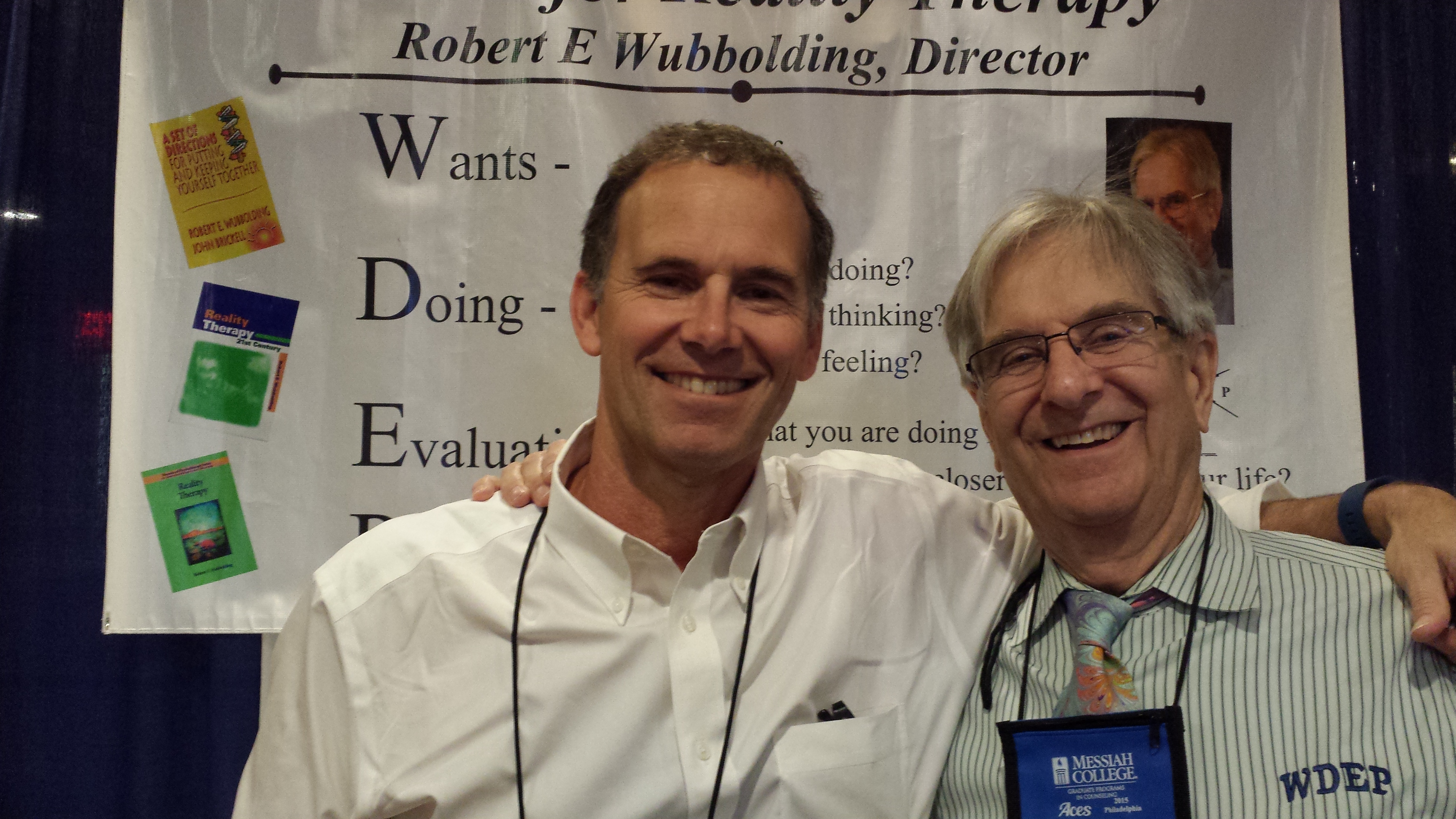
John hanging out with Robert Wubbolding

With Wubbolding

Reflections on Guantanamo in Austin, TX

Several weeks ago I was traveling in Texas to do a professional workshop. The following essay is a short reflection on a small part of that experience. It’s not a professional essay, but just a personal reflection on an interesting social experience. If you’re just following this blog for professional information, feel free to skip this . . . there will be more professionally-oriented posts later this week.

**************************

Fox News was flickering in the background in the fitness room of an unnamed Austin, Texas hotel. I hadn’t noticed. I was busy concentrating on peddling the exercise bike and balancing myself on its loose handlebars.

Hotel fitness centers are like that. They require focus and planning. My next move was to climb aboard what appeared to be the first treadmill ever built on the other side of the room. Watching television wasn’t on the agenda.

Before I moved to the treadmill, a White man about my age entered the room. He grunted and stretched. Then that I noticed Fox News. They were about to cut to the White House. President Obama would be announcing his plan to close Guantanamo. I silently wished I’d changed the channel while I’d been alone in the room.

The White guy climbed onto the elliptical machine immediately to my left. He decided to strike up a political conversation.

“I know how we should shut that place down,” he said. “We should line everybody up and shoot the fuckers.”

My brand new exercise buddy was celebrating our first special moment together.

Mostly I felt anxiety. Images of firing squads do that to me. Two words escaped my mouth before the communication system locked down. “Uh . . . yeeeaaahh,” I said in a long moan. There was no eye contact. He went on:

“That’s all those people are worth. Just line them up and shoot them all.”

I pedaled. But I also felt a natural social pull his direction, as if I should agree with him. This was combined with an equally natural impulse to leap off the bike and flee the scene.

Thoughts bounced around in my head, but no words came. He kept talking, but more quietly. He said something else about shooting. Then he described the worthless prisoners of Guantanamo. Then he trailed off into inaudible muttering. Finally, there was silence.

Five more minutes passed. I moved to the treadmill on the far side of the room and ran for 15 minutes. He stayed on the elliptical. A part of me worried I might have offended him. There was only silence with the television in the background.

Maybe he mistook me for an ally. After all, I was alone in a fitness room and tuned into Fox News. Maybe he was looking for a fight. Maybe he was just talking to the television out of frustration, as many people do. But he got nothing of substance from me.

Several rejoinders nearly made their way out of my mouth.

“That’s not how we do things in America” was closest to surfacing.

In second place there was a flood of sarcasm:

“Oh. So you must be in the CIA. You sound like you actually know something. Have you been there? Have you met the Guantanamo prisoners? Or have you somehow come to this informed opinion from a distance?”

Back in my room, I expressed a mix of disappointment and pride to my wife, Rita. I was disappointed in my silence. Perhaps I should have engaged him. But the other side of me was proud of maintaining silence. As a psychologist and counselor educator I know there’s no better extinction schedule than ignoring someone 100%. Besides, I had a feeling he wasn’t the sort of guy who was open to other perspectives.

My wife was reassuring. She commiserated with me on how difficult it is to think of something clever to say on the spot. She expressed support for my “That’s not how we do things in America” idea. She suggested an amplified version:

“Right. That’s how ISIS would handle things. Only they’d probably behead them.”

And that’s just one more reason why today I’m grateful to be an American in Austin, TX.

Suicide Assessment Powerpoints for MSU-Billings

I had a nice time today with the Student Health and Student Support staff of Montana State University Billings. Not only were they awesome, they were also awesomely dedicated to suicide prevention on their campus. Given that Spring is coming, that’s an excellent thing.

A link to the powerpoint for today’s talk is below:

MSU Billings Suicide Talk

Stuff Barry Says (and does)

Barry is 59 today. Based on my cracker-jack math, that means I wrote this four years ago, but it still fits. Now Barry is eating far too many fancy pastries from a new in Vancouver, WA fancy bakery shop. Yes. That’s right. He still needs a girlfriend.

johnsommersflanagan's avatarJohn Sommers-Flanagan

This blog is in honor of my friend, Barry Johnson, who doesn’t read my blog. I met Barry in August of 1972. I was carrying my gym-clothes in a paper bag. Barry noticed, but never made fun of me to my face. That’s a good way to start a life-long friendship.

Barry turned 55 today. Whenever I see him he suggests book titles to me. This time his suggestion was, “55 and Suicidal.” This is Barry’s idea of an excellent self-help book title. He told me that the fact that there’s no confusing 55 with midlife (which remains possible at 50) makes 55 much more emotionally painful. He also told me that being 55 and past mid-life is liberating because basically his life is over and so he can say and do whatever he wants. And Barry is an expert in eating and so I think this statement had something…

View original post 236 more words

A Brief History and Analysis of Antidepressant Medication Treatment for Youth with Depression Diagnoses

The popular press intermittently acts surprised that antidepressant medications actually have little scientific evidence supporting their efficacy. It’s old news, but it’s still important news and I’m glad for the recent reports. See: http://www.everydayhealth.com/news/did-studies-lack-key-data-on-link-between-antidepressants-youth-suicides/

Rita and I published an article about this in 1996. Below, I’ve pasted a pre-print excerpt from an article I published with Duncan Campbell in 2009 in the Journal of Contemporary Psychotherapy. It includes a brief summary of antidepressant medication research through 2008 or so. Check it out:

A Brief History and Analysis of Antidepressant Medication Treatment for Youth

Medication treatment for depressed youth has evolved over three relatively distinct periods. First, prior to 1987, small exploratory studies examined tricyclic antidepressant (TCAs) efficacy with young patients diagnosed with major depressive disorder (MDD). Second, from 1987-1994 there were a number of randomized, controlled trials (RCTs) of TCA efficacy; these efforts often employed double-blind procedures and inactive placebo controls. Third, since 1997, research efforts have primarily focused on evaluating selective serotonin reuptake inhibitor (SSRI) efficacy with RCTs.

Early Research: Pre-1987

In the early 1980s, psychiatric and pharmaceutical researchers began testing TCAs with youth. Early conclusions about the safety and efficacy of TCAs were generally optimistic (Klein, Jacobs, & Reinecke, 2007). This is a tendency that has been identified in the literature and it may be due to methodological limitations, confirmation bias or an allegiance to the medical model, or financial incentives associated with the pharmaceutical industry (Klein et al., 2007; Luborsky et al., 1999). For example, on the basis of existing studies and their very small double-blind trial with nine prepubertal children, Kashani and colleagues (1984) concluded that amitrityline was possibly efficacious for treating depression in children. Interestingly, the authors’ tentative claim was made despite the fact that no statistically significant effect was observed for amitriptyline and even though 11% of their sample “developed a hypomanic reaction while on the protocol” (p. 350).

RCTs with TCAs

From 1965 to 1994 there were 13 published RCTs evaluating TCA efficacy. Most of these studies were conducted from 1987 to 1994 (Fisher & Fisher, 1996; Sommers-Flanagan & Sommers-Flanagan, 1996). These RCTs confirmed the premature hopefulness of Kashani and colleagues’ early claims. Indeed, no study ever published showed that TCAs outperformed placebo in the treatment of youth depression (Hazell, 2000). More importantly, it is currently recognized that TCAs possess dangerous side effect profiles, while offering no demonstrable advantage over placebo in the treatment of youth depression (Hazell, 2000; Pellegrino, 1996).

In the mid-1990s there was considerable speculation about why TCAs were ineffective for treating youth. The primary hypothesis for involved the fact that children appear to have immature adrenergic synaptic systems. This possibility precipitated a more systematic inquiry of serotonergic medications.

RCTs with SSRIs

Using PsychInfo and PubMed searches combined with cross-referencing, we identified 12 published RCTs evaluating SSRI efficacy with 11 of these studies from 1997 to 2007. In total, these studies compared 1,223 SSRI treated patients to a similar number of placebo controls. On the basis of the researchers’ own efficacy criteria, six RCTs observed outcomes favoring medication over placebo, and six observed nonsignificant differences. Researchers described efficacious outcomes for fluoxetine (3 of 4 studies; G. J. Emslie et al., 2002; G. J. Emslie et al., 1997; Simeon, Dinicola, Ferguson, & Copping, 1990; Treatment for Adolescents With Depression Study (TADS) Team, US, 2004), paroxetine (1 of 3; Berard, Fong, Carpenter, Thomason, & Wilkinson, 2006; G. Emslie et al., 2006; M. B. Keller, 2001), sertraline (1 of 1; K. D. Wagner et al., 2003), and citalopram (1 of 1; K. D. Wagner et al., 2004). Neither of two studies observed efficacy for venlafaxine (G. J. Emslie, Findling, Yeung, Kunz, & Li, 2007; Mandoki, Tapia, Tapia, & Sumner, 1997), and the single escitalopram study returned negative results (K. D. Wagner, Jonas, Findling, Ventura, & Saikali, 2006).

Methodological Issues

Assessing a medication’s efficacy is a complex process with challenges that are difficult to address. We believe, however, that the six aforementioned RCTs favoring SSRIs suffered from methodological problems and issues that temper their positive conclusions. For example, (a) two of the three fluoxetine studies were characterized by unusually high and disproportionate discontinuation rates in the placebo conditions; (b) 11 of the 12 studies based their conclusions exclusively on a structured psychiatric interview; (c) despite simultaneous examination of several outcomes, no study used statistical adjustments for multiple comparisons; (d) placebo washouts and statistical approaches that advantage medications were nearly always employed (R. P. Greenberg, 2001); (e) no procedures were used to evaluate double-blind integrity (R. P. Greenberg & Fisher, 1997); and (f) despite documented inter-racial differences in medication metabolism and responsiveness, conclusions were generalized to all youth and inappropriately failed to account for racial/cultural specificity (Lin, Poland, & Nakasaki, 1993).

Side Effects and Adverse Events

In RCTs and other studies, patients treated with SSRIs experienced substantially more disturbing side effects and adverse events than those not treated with SSRIs. For example, in one of the most rigorous studies to date, the Treatment of Adolescents with Depression Study (TADS), 11.9% of the fluoxetine group evidenced harm-related adverse events (compared to 4.5% in the Cognitive Behavioral Therapy [CBT] group) and 21% experienced psychiatric adverse events (1% in the CBT group). Further, as the authors noted, “…suicidal crises and nonsuicidal self-harming behaviors were not uncommon and, with the caveat that the numbers were so small as to make statistical comparisons suspect, seemed possibly to be associated with fluoxetine treatment” (March et al., 2006; The TADS Team, 2007 p. 818; Treatment for Adolescents With Depression Study (TADS) Team, US, 2004).

Findings like these necessitate critical inspection of study results and should attenuate positive conclusions about medication safety. For example, Emslie et al.’s (1997) study of youth depression was the first ever to demonstrate superior outcome for an SSRI. In addition to the study’s numerous methodological problems, the authors noted that 6.3% of the fluoxetine patients (n = 3) developed manic symptoms. Although this percentage may sound small, extrapolation suggests that 6,250 of every 100,000 fluoxetine-treated youth might develop manic symptoms. Ultimately, despite data based solely on psychiatrist ratings and a placebo condition discontinuation rate approaching 46%, the authors concluded that fluoxetine “…is safe and effective in children and adolescents with MDD” (p. 1037). Moreover, the authors’ intent-to-treat analysis possibly conferred an advantage for the active drug group. In our opinion, this methodological problem and the mania data make it premature to conclude that fluoxetine is safe and effective in children.

Similarly, despite striking data that appear to demonstrate otherwise, authors of the single positive paroxetine study concluded that paroxetine is “safe and effective” for young patients (M. B. Keller et al., 2001). However, in their results section, the research team reported serious adverse effects, “…in 11 patients in the paroxetine group, 5 in the imipramine group, and 2 in the placebo group” (p. 769). More specifically, five adverse effects in the paroxetine group involved suicidal ideation or gestures. Despite these data, the researchers presented their results as evidence for the efficacy and safety of paroxetine treatment for adolescent depression. Because 12% of the paroxetine-treated adolescents experienced at least one adverse event and because 6% of these patients manifested increased suicidality or suicidal gestures (compared with zero in the imipramine and placebo groups), we believe the authors’ conclusion departs from the data in a significant and concerning way.
Shortly after publication of the Keller et al. (2001) study, regulatory agencies in France, Canada, and Great Britain restricted SSRI use among youth. In September of 2004, an expert panel of the U.S. Food and Drug Administration (FDA) followed suit and voted 25-0 in support of an SSRI-suicide link. Later, the panel voted 15-8 in favor of a ‘black box warning’ on SSRI medication labels. The warning states:

“Antidepressants increased the risk compared to placebo of suicidal thinking and behavior (suicidality) in children, adolescents, and young adults in short-term studies of Major Depressive Disorder (MDD) and other psychiatric disorders. Patients of all ages who are started on antidepressant therapy should be monitored appropriately and observed closely for clinical worsening, suicidality, or unusual changes in behavior. Families and caregivers should be advised of the need for close observation and communication with the prescriber.”

In 2006, the FDA extended its SSRI suicidality warning to adult patients aged 18-24 years (United States Food and Drug Administration, 2007).

Combination Medication and Psychotherapy Treatments

Many view the 2004 TADs study as a ‘state of the science’ comparison of SSRI medication (fluoxetine; FLU) with CBT and their combination (FLU + CBT). To date, it represents the largest placebo-controlled study comparing mono-therapy (FLU or CBT alone) with combination therapy. Not surprisingly, the TADs study has generated numerous publications and much controversy (Antonuccio & Burns, 2004; Diller, 2005; Weisz, McCarty, & Valeri, 2006).

To summarize, initial 12-week outcomes showed that 71% of FLU + CBT patients evidenced “much” or “very much” improvement on the on the CGI-Improvement item, a clinician-based assessment. FLU alone produced a similar outcome (60.6%), whereas the CBT alone (43.2) outcome did not differ significantly from placebo (34.8%). Based on these outcomes, several CBT researchers and practitioners criticized the specific CBT delivered to TADs participants. Brent (2006), for example, described TADS psychotherapy as a relatively “dense treatment, with multiple CBT strategies, each delivered at a relatively low dose” (p. 1463). In comparing the initial TADs CBT outcomes with previous and subsequent CBT studies, Weisz et al. (2006) suggested that the TADs CBT was weaker than most CBT interventions, for various reasons:

“the CBT ES (effect size) generated in TADS is not characteristic of most CBT or psychotherapy effects on youth depression; 20 of the 23 other CBT programs. . . showed larger ES than the TADS version of CBT, and the mean ES value across the non-TADS CBT programs. . . was 0.48, markedly higher than the -0.07 ES associated with the TADS CBT intervention” (p. 147).

To complicate issues further, follow-up data suggest that the TADs CBT evidenced delayed effectiveness, as it eventually “caught up” with FLU and CBT+FLU (The TADS Team, 2007). At week 18, for example, there were no statistically significant differences between CBT and FLU, and by week 36 there were no statistical differences among the three groups (CBT, FLU, and CBT + FLU) on primary outcome measures. Although the interventions including FLU might evidence a speedier antidepressant effect, these results suggest that CBT is equally effective over time.

The depression treatment literature frequently includes recommendations for combined interventions in order to maximize outcomes (Watanabe, Hunot, Omori, Churchill, & Furukawa, 2007). Unfortunately, however, little data exists to support these recommendations. In addition to TADs, the only other published RCT comparison of mono- and combination treatments for depressed adolescents reported partial remission rates of 71% for CBT, 33% for sertraline, and 47% for combination (Melvin et al., 2006). Medication group patients also evidenced significantly more adverse events and side effects. Although the researchers attributed the delayed response in the combination group to sertraline, they concluded with the puzzling statement that “CBT and sertraline are equally recommended for the treatment for adolescents with depression, each demonstrating an equivalent response” (Melvin et al., 2006 p. 1160).


20150616_121950

Suicide Interventions for Mental Health Professionals

This is the second follow up post to the MUS Suicide Summit in Bozeman this past week. It focuses on specific suicide interventions. As I looked through this and the material in the previous post, it reminded me that Dr. Janet P. Wollersheim was a huge influential force in my understanding of suicide assessment. Thanks Dr. Wollersheim!

Suicide Interventions

The following sections consist of basic ideas about suicide intervention options during a suicide crisis. These guidelines are consistent with Shneidman’s (1996) excellent advice for therapists working with suicidal clients: “Reduce the pain; remove the blinders; lighten the pressure—all three, even just a little bit” (p. 139).

Listening and Being Empathic

The first rule of working therapeutically with suicidal clients is to listen empathically. Your clients may have never openly discussed their suicidal thoughts and feelings with another person. Use basic attending behaviors and listening responses (e.g., paraphrasing and reflection of feeling) to show your empathy for the depth of your clients’ emotional pain is a solid foundation.

Establishing a Therapeutic Relationship

A positive therapy relationship is important to successful suicide assessment and effective treatment. In crisis situations (e.g., suicide telephone hotline) there’s less time for establishing therapeutic relationships and more focus on applying interventions. However, whether you’re working in a crisis or therapy setting, you should still use relationship-building counseling responses as much as possible given the constraints of your setting.

Within the CAMS approach, assessment is used to help therapists understand “the idiosyncratic nature of the client’s suicidality, so that both parties can intimately appreciate the client’s suicidal pain and suffering” (Jobes et al., 2007, p. 287). At some point after you’ve “intimately appreciated” your client’s suicidality, you may then make an empathic statement to facilitate hope:

I hear you saying you’re terribly depressed. Despite those feelings, it’s important for you to know that most people who get depressed get over it and eventually feel better. The fact that we’re meeting today and developing a plan to help you deal with your emotional pain is a big step in the right direction.

Clients who are depressed or emotionally distressed may have difficulty remembering positive events or emotions (Lau et al., 2004). Therefore, although you can help clients focus on positive events and past positive emotional experiences, you also need empathy with the fact that it isn’t easy for most clients who are suicidal to recall anything positive.

Clinician: Can you think of a time when you were feeling better and tell me what was happening then?
Client: (in a barely audible voice) No. I don’t remember feeling better.
Clinician: That’s okay. It’s perfectly natural for people who are feeling depressed to not be able to remember positive times.

Suicidal clients also may have difficulty attending to what you’re saying. It’s important to speak slowly and clearly, occasionally repeating key messages.

Safety Planning

Helping clients develop practical plans for coping with and reducing psychological pain is central to suicide intervention. This plan can include relaxation, mindfulness, traditional meditation practices, cognitive restructuring, social outreach, and other strategies that increase self-soothing, decrease social isolation, improve problem-solving, and decrease feelings of being a social burden.
Instead of traditional no-suicide contracts, contemporary approaches emphasize obtaining a commitment to treatment statement from clients (Rudd et al., 2006). These treatment statements or plans go by various names including, “Commitment to Intervention,” “Crisis Response Plan,” “Safety Plan,” and “Safety Planning Intervention” (Jobes et al., 2008; Stanley & Brown, 2012). These statements describe activities that clients will do to address depressive and suicidal symptoms, rather than focusing narrowly on what the client will not do (i.e., commit suicide). These plans also include ways for clients to access emergency support after hours (such as the national suicide prevention lifeline (800) 273-TALK or a similar emergency crisis number.

Stanley and Brown (2005) developed a brief treatment for suicidal clients, called the Safety Planning Intervention (SPI). This intervention was developed from cognitive-therapy principles and can be used in hospital emergency rooms as well as inpatient and outpatient settings (Brown et al., 2005). The SPI includes six treatment components:

1. Recognizing warning signs of an impending suicidal crisis.
2. Employing internal coping strategies.
3. Utilizing social contacts as a means of distraction from suicidal thoughts.
4. Contacting family members or friends who may help to resolve the crisis.
5. Contacting mental health professionals or agencies.
6. Reducing the potential use of lethal means. (Stanley & Brown, 2012, p. 257)

Stanley and Brown (2012) noted that the sixth treatment component, reducing lethal means, isn’t addressed until the other five safety-plan components have been completed. Component six also may require assistance from family members or a friend, depending on the situation. All six of these components should be included in your documentation, including firearms management.

Identifying Alternatives to Suicide

Engaging in a debate about the acceptability of suicide or whether with clients with suicidal impulses “should” attempt suicide can backfire. Sometimes suicidal individuals feel so disempowered that they perceive the possibility of killing themselves as one of their few sources of control. Rather than argue, your focus is on helping clients identify methods for coping with suicidal impulses and find more desirable life alternatives. .

Suicidal clients may be unable to identify options to suicide. As Shneidman (1980) suggested, clients need help to “widen” their view of life’s options.

Shneidman (1980) wrote of a situation in which a pregnant teenager came to see him in suicidal crisis. She had a gun in her purse. He agreed with her that suicide was an option, while pulling out paper and a pen to write down alternatives to suicide. Shneidman generated most of the options (e.g., “You could have the baby and give it up for adoption”), while she systematically rejected them (“I can’t do that”). He wrote them down anyway, noting they were only making a list of options. Eventually, he handed her a list of options and asked her to rank her preferences. To both of their surprise, she indicated death by suicide was her third preferred option. They worked together to implement options one and two. Happily, she never needed to choose option three.

This is a straightforward intervention. You can practice it with your peers and implement it with suicidal clients. There’s always the possibility that clients will decide suicide is their #1 choice (at which point you’ve obtained important assessment information). However, it’s surprising how often suicidal clients, once they’ve had help expanding their mental constriction symptoms, discover more preferable options; options that involve embracing life.

Separating the Psychic Pain From the Self

Rosenberg (1999; 2000) wrote, “The therapist can help the client understand that what she or he really desires is to eradicate the feelings of intolerable pain rather than to eradicate the self” (p. 86). This technique can help suicidal clients because it provides empathy for their pain, while helping them see that their wish is for the pain, rather than the self, to stop existing.

Rosenberg (1999) also recommended helping clients reframe what’s usually meant by the phrase feeling suicidal. She noted that clients benefit from seeing their suicidal thoughts and impulses as a communication about their depth of feeling, rather than as an “actual intent to take action” (p. 86). Again, this approach can decrease clients’ needs to act on suicidal impulses, partly because of the cognitive reframe and partly because of the therapist’s empathic connection.

Becoming Directive and Responsible

Both ethically and legally, when clients are a clear danger to themselves, it’s the therapist’s responsibility to intervene and provide protection. This mandate means taking a directive role. You may have to tell the client what to do, where to go, and whom to call. It also may involve prescriptive therapeutic interventions, such as urging clients to get involved in daily exercise, recreational activities, church activities, or whatever is preventative based on their unique individual needs.

Clients who are acutely suicidal may require hospitalization. Many professionals view hospitalization as less than optimal, but if you have a client with acute suicide ideation, hospitalization may be your best alternative. If so, be positive and direct. Clients may have negative views of life inside a psychiatric hospital. Statements similar to the following can aid in beginning the discussion.

  • I wonder how you feel (or what you think) about staying in a hospital until you feel safer and more in control?
  • I think being in the hospital may be just the right thing for you. It’s a safe place. You can work on coping skills and on any medication adjustments you may need or want.

Linehan (1993) discussed several directive approaches for reducing suicide behaviors based on dialectical behavior therapy. She advocated:

  • Emphatically instructing the client not to commit suicide.
  • Repeatedly informing the client that suicide isn’t a good solution and that a better one will be found.
  • Giving advice and telling the client what to do when/if he or she is frozen and unable to construct a positive action plan.

These suggestions can give you a sense of how directive you may need to be when working with clients who are suicidal.

OLYMPUS DIGITAL CAMERA

R-I-P-SC-I-P: An Acronym for Remembering the Essential Components of a Suicide Assessment Interview

This post is part 1 of a follow up to requests I’ve gotten following the MUS Suicide Prevention Summit in Bozeman. A number of people asked: What’s R-I-P-SC-I-P and how do I get more information about it? The answer is that it’s just an acronym to help practitioners recall key areas to cover in a comprehensive suicide assessment interview. But because I made it up in honor of Robert Wubbolding while doing a workshop in Cincinnati (he’s created several acronyms for Choice Theory and Reality Therapy), I’m pretty much the only source.

The following is a pre-published excerpt from the Suicide Assessment chapter in the forthcoming 6th edition of Clinical Interviewing. It includes some general information, a summary of R-I-P-SC-I-P, and some guidance on how to talk with clients about suicide ideation. Much more of this is in the whole chapter, but I can’t post it here.

Suicide Assessment Interviewing

A comprehensive and collaborative suicide assessment interview is the professional gold standard for assessing suicide risk. Suicide assessment scales and instruments can be a valuable supplement—but not a substitute—for suicide assessment interviewing (see Putting It in Practice 10.1).

A comprehensive suicide assessment interview includes the following components:

  • Gathering information about suicide risk and protective factors: This should be done in a manner that emphasizes your desire to understand the client and not as a checklist to estimate risk
  • Asking directly about possible suicidal thoughts
  • Asking directly about possible suicide plans
  • Gathering information about client self-control and agitation
  • Gathering information about client suicide intent and reasons to live
  • Consultation with one or more professionals
  • Implementation of one or more suicide interventions, including, at the very least, collaborative work on developing an individualized safety plan
  • Detailed documentation of your assessment and decision-making process (Table 10.3 includes an acronym to help you recall the components of a comprehensive suicide assessment interview)

Table 10.3: RIP SCIP – A Suicide Assessment Acronym

R = Risk and Protective Factors
I = Suicide Ideation
P = Suicide Plan
SC = Client Self-Control and Agitation
I = Suicide Intent and Reasons for Living
P = Safety Planning

These assessment domains or dimensions form the acronym R-I-P-SC-I-P (pronounced RIP SKIP).

Exploring Suicide Ideation

Unlike many other risk factors (e.g., demographic factors), suicide ideation is directly linked to potential suicide behavior. It’s difficult to imagine anyone ever dying by suicide without having first experienced suicide ideation.

Because of this, you may decide to systematically ask every client about suicide ideation during initial clinical interviews. This is a conservative approach and guarantees you won’t face a situation where you should have asked about suicide, but didn’t. Alternatively, you may decide to weave questions about suicide ideation into clinical interviews as appropriate. At least initially, for developing professionals, we recommend using the systematic approach. However, we recognize that this can seem rote. From our perspective, it is better to learn to ask artfully by doing it over and over than to fail to ask and regret it.

The nonverbal nature of communication has direct implications for how and when you ask about suicide ideation, depressive symptoms, previous attempts, and other emotionally laden issues. For example, it’s possible to ask: “Have you ever thought about suicide?” while nonverbally communicating to the client: “Please, please say no!” Therefore, before you decide how you’ll ask about suicide ideation, you need the right attitude about asking the question.

Individuals who have suicidal thoughts can be extremely sensitive to social judgment. They may have avoided sharing suicidal thoughts out of fear of being judged as “insane” or some other stigma. They’re likely monitoring you closely and gauging whether you’re someone to trust with this deeply intimate information. To pass this unspoken test of trust, it’s important to endorse, and directly or indirectly communicate the following beliefs:

  • Suicide ideation is normal and natural and counseling is a good place for clients to share those thoughts.
  • I can be of better help to clients if they tell me their emotional pain, distress, and suicidal thoughts.
  • I want my clients to share their suicidal thoughts.
  • If my clients share their suicidal thoughts and plans, I can handle it!

If you don’t embrace these beliefs, clients experiencing suicide ideation may choose to be less open.

Asking Directly about Suicide Ideation

Asking about suicide ideation may feel awkward. Learning to ask difficult questions in a deliberate, compassionate, professional, and calm manner requires practice. It also may help to know that, in a study by Hahn and Marks (1996), 97% of previously suicidal clients were either receptive or neutral about discussing suicide with their therapists during intake sessions. It also may help to know that you’re about to learn the three most effective approaches to asking about suicide that exist on this planet.

Use a normalizing frame. Most modern prevention and intervention programs recommend directly asking clients something like, “Have you been thinking about suicide recently?” This is an adequate approach if you’re in a situation with someone you know well and from whom you can expect an honest response.

A more nuanced approach is to ask about suicide along with a normalizing or universalizing statement about suicide ideation. Here’s the classic example:

Well, I asked this question since almost all people at one time or another during their lives have thought about suicide. There is nothing abnormal about the thought. In fact it is very normal when one feels so down in the dumps. The thought itself is not harmful. (Wollersheim, 1974, p. 223)

A common fear is that asking about suicide will put suicidal ideas in clients’ heads. There’s no evidence to support this (Jobes, 2006). More likely, your invitation to share suicidal thoughts will reassure clients that you’re comfortable with the subject, in control of the situation, and capable of dealing with the problem.

Use gentle assumption. Based on over two decades of clinical experience with suicide assessment Shawn Shea (2002/ 2004/2015) recommends using a framing strategy referred to as gentle assumption. To use gentle assumption, the interviewer presumes that certain illegal or embarrassing behaviors are already occurring in the client’s life, and gently structures questions accordingly. For example, instead of asking “Have you been thinking about suicide?” you would ask: “When was the last time when you had thoughts about suicide?” Gentle assumption can make it easier for clients to disclose suicide ideation.

Use mood ratings with a suicidal floor. It can be helpful to ask about suicide in the context of a mood assessment (as in a mental status examination). Scaling questions such as those that follow can be used to empathically assess mood levels.

1. Is it okay if I ask some questions about your mood? (This is an invitation for collaboration; clients can say “no,” but rarely do.)

2. Please rate your mood right now, using a zero to 10 scale. Zero is the worst mood possible. In fact, zero would mean you’re totally depressed and so you’re just going to kill yourself. At the top, 10 is your best possible mood. A 10 would mean you’re as happy as you could possibly be. Maybe you would be dancing or singing or doing whatever you do when you’re extremely happy. Using that zero to 10 scale, what rating would you give your mood right now? (Each end of the scale must be anchored for mutual understanding.)

3. What’s happening now that makes you give your mood that rating? (This links the mood rating to the external situation.)

4. What’s the worst or lowest mood rating you’ve ever had? (This informs the interviewer about the lowest lows.)

5. What was happening back then to make you feel so down? (This links the lowest rating to the external situation and may lead to discussing previous attempts.)

6. For you, what would be a normal mood rating on a normal day? (Clients define their normal.)

7. Now tell me, what’s the best mood rating you think you’ve ever had? (The process ends with a positive mood rating.)

8. What was happening that helped you have such a high mood rating? (The positive rating is linked to an external situation.)

The preceding protocol assumes clients are minimally cooperative. More advanced interviewing procedures can be added when clients are resistant (see Chapter 12). The process facilitates a deeper understanding of life events linked to negative moods and suicide ideation. This can lead to formal counseling or psychotherapy, as well as safety planning.

Responding to Suicide Ideation

Let’s say you broach the question and your client openly discloses the presence of suicide ideation. What next?

First, remember that hearing about your client’s suicide ideation is good news. It reflects trust. Also remember that depressive and suicidal symptoms are part of a normal response to distress. Validate and normalize:

Given the stress you’re experiencing, it’s not unusual that you think about suicide sometimes. It sounds like things have been really hard lately.

This validation is important because many suicidal individuals feel socially disconnected, emotionally invalidated, and as if they’re a social burden (Joiner, 2005). Your empathic reflection may be more or less specific, depending on how much detailed information your client has given you.

As you continue the assessment, collaboratively explore the frequency, triggers, duration, and intensity of your client’s suicidal thoughts.

  • Frequency: How often do you find yourself thinking about suicide?
  • Triggers: What seems to trigger your suicidal thoughts? What gets them started?
  • Duration: How long do these thoughts stay with you once they start?
  • Intensity: How intense are your thoughts about suicide? Do they gently pop into your head or do they have lots of power and sort of smack you down?

As you explore the suicide ideation, strive to emanate calmness, and curiosity, rather than judgment. Instead of thinking, “We need to get rid of these thoughts,” engage in collaborative and empathic exploration.

Some clients will deny suicidal thoughts. If this happens, and it feels genuine, acknowledge and accept the denial, while noting that you were just using your standard practice.

Okay. Thanks. Asking about suicidal thoughts is just something I think is important to do with everyone.

On the other hand, if the denial seems forced, or is combined with depressive symptoms or other risk factors, you’ll still want to use acknowledgement and acceptance, but then find a way to return to the topic later in the session.

The place to click if you want to learn about psychotherapy, counseling, or whatever John SF is thinking about.