Even a happy life cannot be without a measure of darkness, and the word happy would lose its meaning if it were not balanced by sadness. — Carl G. Jung
This opening quotation from Jung is a good start to a discussion of happiness. As many others have said, a “happy” life is a process and it includes the ability to embrace and experience darkness and sadness. I like the quote because it reminds us to not take happiness in the direction of toxic positivity. We don’t need that. At the same time, we need skills and attitudes to extend and prolong positive experiences and cope with our emotional challenges.
I’ve shared a bit about the Montana Happiness Project before, but it’s time for an update.
The Montana Happiness Project has four BIG initiatives.
Happy Schools
Happy Families
Happy Colleges
Happy Media
We’ve gotten started on all these initiatives, but in particular, Dylan Wright and Lillian Martz have us rolling forward on the Happy Schools initiative. This past Friday, Dylan and Lillian presented their work in Frenchtown School at the “GradCon” event at the University of Montana. They didn’t win the grand prize, but they were in the running. Their work is amazing and I’m proud to have them as a part of the Montana Happiness Project. Given their hard and smart work, it’s only a matter of time until they win some sort of grand prize. To give you a taste of their work and all that’s going on with the project, here are a couple of video clips.
And here’s a link to the Dylan and Lillian’s presentation at GradCon. It’s under 15 minutes and will give you a great taste of the potential of integrating happiness into the lives of high school students: https://www.youtube.com/watch?v=cZvHqIMQNGg
Just in case you’re as inspired as I am, after you watch those videos, you’ll want to follow the new Montana Happiness Project YouTube site . . . and then you’ll probably want to go to Facebook where you can follow our new Facebook page: https://www.facebook.com/profile.php?id=100073966896370
Thanks, in advance, for your interest in and support of infusing happiness skills into Montana and beyond.
Today I’m spending all day with the Youth Homes staff in Missoula . . . talking about strengths-based approaches to suicide. Should be fun, or at least as fun as a day of talking about suicide can be . . . Happy Friday, and here are the ppts!
Back in the days when video recording involved film rather than digits, editors would talk about leaving excellent footage “on the floor.” How do I know this? I was alive back in the day.
Today I’ve been working on revising a continuing education “course” for ContinuingEdCourses.net. The course has been popular and so the ContinuingEdCourses.net owners asked for a revision. I stalled until they recognized my stalling for what it was essentially told me I was overdue and late, which made me decide it would feel better to finish the revision than it would to keep procrastinating. I’m guessing maybe others of you out there can relate to that particular moment in time.
While editing and revising I discovered (actually I rediscovered) my penchant for redundancy. Sometimes that penchant is intentional and other times the penchant is an annoying rediscovery. This paragraph that you’re reading in the here-and-now includes an intentional penchant. The CE course included an unintentional penchant. Are you familiar with the research on the overuse of words? If you repeat a word over and over, after only a few seconds you can become desensitized to the meaning of the word and the word will just sound like a sound. I’m feeling a penchant for that too.
Bottom line: I had to cut some nice content. It ended up on the metaphorical floor, until I picked it up, dusted it off, and put it in this blog. Here you go. . .
Editor’s note [BTW, I’m the editor here, because it’s my blog, so I own all the mistakes, misspellings, and misplaced commas]: Turns out I edited out the other redundant content, but I’m posting this anyway, because it’s still 2/22/22, which happens to be most redundant date of the year. Now, here you go. . .
Four Suicide Myths
The word “myth” has two primary meanings.:
A myth is a traditional or popular story or legend used to explain current cultural beliefs and practices. This definition emphasizes the positive guidance that myths sometimes provide. For example, the Greek myth of Narcissus warns that excessive preoccupation with one’s own beauty can become dangerous. Whether or not someone named Narcissus ever existed is irrelevant; the story tells us that too much self-love may lead to our own downfall.
The word myth is also used to describe an unfounded idea, or false notion. Typically, the false notion gets spread around and, over time, becomes a generally accepted, but inaccurate, popular belief. One contemporary example is the statement, “Lightning never strikes the same place twice.” In fact, lightning can and does strike the same place twice (or more). During an electrical storm, standing on a spot where lightning has already struck, doesn’t make for a good safety strategy.
The statement “We only use 10% of our brains” is another common myth. Although it’s likely that most of us can and should more fully engage our brains, scientific researchers (along with the Mythbusters television show) have shown that much more than 10% of our brains are active most of the time – and probably even when we’re sleeping.
False myths can stick around for much longer than they should; sometimes they stick around despite truckloads of contradictory evidence. As humans, we tend to like easy explanations, especially if we find them personally meaningful or affirming. Never mind if they’re accurate or true.
Historically, myths were passed from individuals to groups and other individuals via word of mouth. Later, print media was used to more efficiently communicate ideas, both factual and mythical. Today we have the internet and instant mythical messaging.
Suicide myths weren’t and aren’t designed to intentionally mislead; mostly (although there are some exceptions) they’re not about pushing a political agenda or selling specific products. Instead, suicide myths are the product of dedicated, well-intended people whose passion for suicide prevention sometimes outpaces their knowledge of suicide-related facts (Bryan, 2022).
Depending on your perspective, your experiences, and your knowledge base, it’s possible that my upcoming list of suicide myths will push your emotional buttons. Maybe you were taught that “suicide is 100% preventable.” Or, maybe you believe that suicidal thoughts or impulses are inherently signs of deviance or a mental disturbance. If so, as I argue against these myths, you might find yourself resisting my perspective. That’s perfectly fine. The ideas that I’m labeling as unhelpful myths have been floating around in the suicide prevention world for a long time; there’s likely emotional and motivational reasons for that. Also, I don’t expect you to immediately agree with everything in this document. However, I hope you’ll give me a chance to make the case against these myths, mostly because I believe that hanging onto them is unhelpful to suicide assessment and prevention efforts.
Myth #1: Suicidal thoughts are about death and dying.
Most people assume that suicidal thoughts are about death and dying. Someone has thoughts about death, therefore, the thoughts must literally be about death. But the truth isn’t always how it appears from the surface. The human brain is complex. Thoughts about death may not be about death itself.
Let’s look at a parallel example. Couples who come to counseling often have conflicts about money. One partner likes to spend, while the other is serious about saving. From the surface, you might mistakenly assume that when couples have conflicts about money, the conflicts are about money – dollars, cents, spending, and saving. However, romantic relationships are complex, which is why money conflicts are usually about other issues, like love, power, and control. Nearly always there are underlying dynamics bubbling around that fuel couples’ conflicts over money.
Truth #1: Among suicidologists and psychotherapists, the consensus is clear: suicidal thoughts and impulses are less about death and more about a natural human response to intense emotional and psychological distress (aka psychache or excruciating distress). I use the term “excruciating distress” to describe the intense emotional misery that nearly always accompanies the suicidal state of mind. The take-home message from busting this myth should help you feel relief when clients mention suicide. You can feel relief because when clients trust you enough to share their suicidal thoughts and excruciating distress with you, it gives you a chance to help and support them. In contrast, when clients don’t tell you about their suicidal thoughts, then you’re not able to provide them with the services they deserve. Your holding an attitude that welcomes client openness and their sharing of distress and suicidal thoughts is foundational to effective treatment.
Myth #2: Suicide and suicidal thinking are signs of mental illness.
Philosophers and research scientists agree: nearly everyone on the planet thinks about suicide at one time or another – even if briefly. The philosopher Friedrich Nietzsche referred to suicidal thoughts as a coping strategy, writing, “The thought of suicide is a great consolation: by means of it one gets through many a dark night.” Additionally, the rates of suicidal thinking among high school and college students is so high (estimates of 20%-40% annual incidence) that it’s more appropriate to label suicidal thoughts as common, rather than a sign of deviance or illness.
Edwin Shneidman – the American “Father” of suicidology – denied a relationship between suicide and so-called mental illness in the 1973 Encyclopedia Britannica, stating succinctly:
Suicide is not a disease (although there are those who think so); it is not, in the view of the most detached observers, an immorality (although … it has often been so treated in Western and other cultures).
A recent report from the U.S. Centers for Disease Control (CDC) supports Shneidman’s perspective. The CDC noted that 54% of individuals who died by suicide did not have a documented mental disorder (Stone et al., 2018). Keep in mind that the CDC wasn’t focusing on people who only think about or attempt suicide; their study focused only on individuals who completed suicide. If most individuals who die by suicide don’t have a mental disorder, it’s even more unlikely that people who think about suicide (but don’t act on their thoughts), suffer from a mental disorder. As Wollersheim (1974) used to say, “Having the thought of suicide is not dangerous and is not the problem (p. 223).”
Truth #2: Suicidal thoughts are not – in and of themselves – a sign of illness. Instead, suicidal thoughts arise naturally, especially during times of excruciating distress. The take-home message here is that clinicians should avoid judgment. I know that’s a tough message, because most of us are trained in diagnosing mental disorders and as we begin hearing of signs of depression, emotional lability, or other symptoms, it’s difficult not to begin thinking in terms of psychopathology. However, especially during initial encounters with clients who have suicidal ideation, it’s deeply important for us to avoid labeling – because if clients sense clinicians judging them, it can increase client shame and decrease the chances of them sharing openly.
Myth #3: Scientific knowledge about suicide risk factors and warning signs support accurate allows for the prediction and prevention of suicide.
As discussed previously, mMost suicidologists agree: that Ssuicide is extremelyvery difficult to predict (Franklin et al., 2017).
To get perspective on the magnitude of the problem, imagine you’re at the Neyland football stadium at the University of Tennessee. The stadium is filled with 100,000 fans. Your job is to figure out which 13.54 of the 100,000 fans will die by suicide over the next 365 days.
A good first step would be to ask everyone in the stadium the question that many suicide prevention specialists ask, “Have you been thinking about suicide?” Assuming the usual base rates and assuming that every one of theall 100,000 fans answer you honestly, you might rule out 85,000 people (because they say they haven’t been thinking about suicide). Then you ask them to leave the stadium. Now you’re down to identifying which 13.54 of 15,000 will die by suicide.
For your next step you decide to do a quick screen for the diagnosis of clinical depression. Let’s say you’re highly efficient, taking only 20 minutes to screen and diagnose each of the 15,000 remaining fans. Never mind that it would take 5,000 hours. The result: Only 50% of the 15,000 fans meet the diagnostic criteria for clinical depression.
At this point, you’ve reduced your population to 7,500 University of Tennessee fans, all of whom are depressed and thinking about suicide. How will you accurately identify the 13 or 14 fans who will die by suicide? Mostly, based on mathematics and statistics, you won’t. Every effort to do this in the past has failed. Your best bet might be to provide aggressive pharmacological or psychological treatment for the remaining 7,500 people. If you choose antidepressant medications, you might inadvertently make about 200-250 of your “patients” even more suicidal. If you use psychotherapy, the time you need for effective treatment will be substantial. Either way, many of the fans will refuse treatment, including some of those who will later die by suicide. Further, as the year goes by, you’ll discover that several of the 85,000 fans who denied having suicidal thoughts, and whom you immediately ruled out as low risk, will confound your efforts at prediction and die by suicide.
To gain a broader perspective, imagine there are 3,270 stadiums across the U.S., each with 100,000 people, and each with 13 or 14 individuals who will die by suicide over the next year. All this points to the enormity of the problem. Most professionals who try to predict and prevent suicide realize that, at best, they will help some of the people some of the time.
Truth #3: Although there’s always the chance that future research will enable us to predict suicide, decades of scientific research don’t support suicide as a predictable event. Even if you know all the salient suicide predictors and warning signs, in the vast majority of cases you won’t be able to efficiently predict or prevent suicide attempts or suicide deaths. The take-home message from busting this myth is this: Lower your expectations about accurately categorizing client risk. Most of the research suggests you’ll be wrong (Bryan, 2022; Large & Ryan, 2014). Instead, as you explore risk factors with clients, use your understanding of risk factors as a method for deepening your understanding of the individual client with whom you’re working.
Myth #4: Suicide prevention and intervention should focus on eliminating suicidal thoughts.
Logical analysis implies that if psychotherapists or prevention specialists can get people to stop thinking about suicide, then suicide should be prevented. Why then, do the most knowledgeable psychotherapists in the U.S. advise against directly targeting suicidal thoughts in psychotherapy (Linehan, 1993; Sommers-Flanagan & Shaw, 2017)? The first reason is because most people who think about suicide never make a suicide attempt; that means you’re treating a symptom that isn’t necessarily predictive of the problem. But that’s only the tip of the iceberg.
After his son died by suicide, Rick Warren, a famous pastor and author, created a YouTube video titled, “Rick Warren’s Message for Those Considering Suicide.” The video summary reads,
If you have ever struggled with depression or suicide, Pastor Rick has a message for you. The pain you are experiencing will not last forever. There is hope!
Although over 1,000 viewers clicked on the “thumbs up” sign for the video, there were 535 comments; nearly all of these comments pushed back on Pastor Warren’s well-intended video message. Examples included:
Are you kidding me??? You’ve clearly never been suicidal or really depressed.
To say “Suicide is a permanent solution to a temporary problem” is like saying: “You couldn’t possibly have suffered long enough, even if you’ve suffered your entire life from many, many issues.”
This is extremely disheartening. With all due respect. Pastor, you just don’t get it.
Pastor Rick isn’t alone in not getting it. Most of us don’t really get the excruciating distress, deep self-hatred, and chronic shame linked to suicidal thoughts and impulses. And because we don’t get it, sometimes we slip into try toing rationally persuadesion to encourage individuals with suicidal thoughts to regain hope and embrace life. Unfortunately, a nearly universal phenomenon called “psychological reactance” helps explain why rational persuasion – even when well-intended – rarely makes for an effective intervention (Brehm & Brehm, 1981).
While working with chronically suicidal patients for over two decades, Marsha Linehan of the University of Washington made an important discovery: when psychotherapists try to get their patients to stop thinking about suicide, the opposite usually happens – the patients become more suicidal.
Linehan’s discovery has played out in my clinical practice. Nearly every time I’ve actively pushed clients to stop thinking about suicide – using various psychological ploys and techniques – my efforts have backfired.
Truth #4: Most individuals who struggle with thoughts of suicide resist outside efforts to make them stop thinking about suicide. Using direct persuasion to convince people they should cheer up, have hope, and embrace life is rarely effective. The take-home message associated with busting this myth is that the best approaches to working with clients who are suicidal are collaborative. Instead of taking the role of an esteemed authority who knows what’s best for clients, effective counselors and psychotherapists take a step back and seek to activate their client’s expertise as collaborators onagainst the suicidal problem.
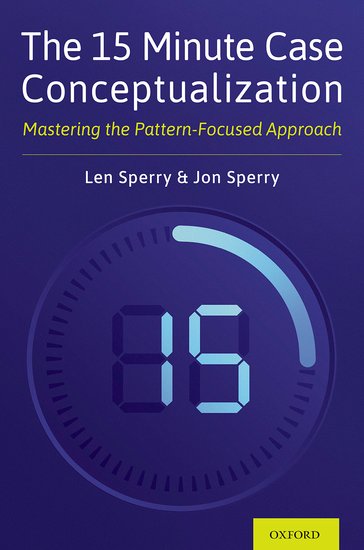
Jon Sperry asked if I could write the foreword for a book he and his dad wrote with Oxford University Press.
Because the truth will set me free, I should admit, I’d never written a foreword before. More truth . . . I went ahead and said “Yes” to Jon because (a) I was honored and didn’t want the opportunity to write my first foreword slip away, (b) the book was (is) cool (it’s “The 15-Minute Case Conceptualization”), and (c) Jon Sperry is one of the nicest guys on the planet.
And for even more information about this excellent book, my first-ever foreword is below.
************************
I’ve needed this book for 30 years.
Just last month (before reading this book), I was standing in front of a Zoom camera, trying to teach the basics of case conceptualization to a group of 23 master’s and doctoral students. All of my fine-grained case conceptualization wisdom was being channeled into a single visual and verbal performance.
“My left hand,” I said, “is the client’s problem.” Pausing briefly for dramatic effect, I then continued, “and my right hand is the client’s goal.”
My new-found nonverbal gestures are mostly a function of seeing myself onscreen, and therefore wanting to avoid seeing myself (and being seen by the class) as boring. To add spice to my case conceptualization gesturing. “Case conceptualization is simple,” I said. “All it is, is the path we take to help clients move from their problem state . . . toward their goal state (I finished with a flourish, by wiggling the fingers on my raised right hand).”
But boiled down truths are always partly lies. Despite my fabulous mix of the verbal and nonverbal, I was lying to my students. At the time, I had thought of it as a little white lie, all for the higher purpose of simplification. And although I still like what I said and still believe in the rough truth of my visual case conceptualization description, after reading Len and Jon Sperry’s illuminating work on case conceptualization, I better understand what I should have said.
Case conceptualization is not simple. As the Sperry’s describe in this book, case conceptualization—even when summarized well—includes multiple dimensions of human behavior along with clinician perception, judgment, and decision-making. I needed much more than a few wiggly fingers to communicate the detailed nuances of case conceptualization.
What these authors have done in this book is the gracious service that great writers do so well: They have done our homework for us. They’ve read extensively, taken notes, and gifted us with elegant summaries of dense and complex concepts. They’ve made it easy for us to understand and apply the principles and practices of case conceptualization.
What I might like best is how they transformed a bulky and inconsistent literature into simple, therapist-friendly principles. They emphasize the explanatory, tailoring, and predictive powers of case conceptualization. I’ve never organized case conceptualizations using those “powers” but doing so was like switching on a light-bulb. Of course, case conceptualizations should explain the relationships between client problems and client goals and shine a bright light along the path, but rarely do theorists or writers make this linkage so efficiently. Their second principle, “tailoring” case conceptualizations to individual and diverse clients, is an essential, idiographic, Adlerian idea. The whole idea of tailoring counters the all-too-frequent cook-book approach to case conceptualization. Tailoring breathes life into creating client-specific case conceptualizations. And of course, case conceptualizations need predictive power; Len and Jon equip us with enough foundational predictive language to improve how we evaluate our own work.
Many other examples of how elegantly the authors have done our homework are sprinkled throughout this book. Here’s another of my favorite examples.
In chapter 2, they take us (in a few succinct paragraphs) from what Theodore Millon described as eight evolutionarily-driven personality disorders to eight crisply described behavioral patterns. What I love about this is that Len and Jon’s wisdom transforms what might otherwise be viewed as a pathologizing personality disorder system into language that can be used collaboratively with clients to identify contextually maladaptive interpersonal patterns. This is a beautiful transformation because it spins psychopathology into something clients not only understand but will feel compelled to embrace. The process goes something like this:
Therapist and client engage in an assessment process that touches on the client’s repeating maladaptive behavior patterns. These behavior patterns are palpably troubling and far less than optimal for the client.
As all clinicians inherently know, touching upon clients’ repetitive maladaptive behavior patterns can activate client vulnerability. This is a primary challenge of all counseling and psychotherapy: How can we nudge clients toward awareness without simultaneously activating resistance? For decades, psychoanalysts managed this through cautious trial interpretations. Solution-focused therapists dealt with this by never speaking of problems. Gently coaxing ambivalent clients toward awareness and change is the whole point of motivational interviewing.
When addressed in a sensitive and non-pathologizing way, deep maladaptive behavior patterns can be discussed without activating resistance or excessive emotionality. This is a critical and not often discussed part of case conceptualization. Len and Jon illuminate a path for gentle, sensitive, and collaborative case conceptualization.
When clients can feel, recognize, and embrace their maladaptive behavioral patterns in the context of an accepting therapeutic relationship, insight is possible. In the tradition of Adlerian therapy, when insight happens, client interest is piqued and motivation to change spikes. Good case conceptualizations articulate problem patterns in ways that compel clients to invest in change.
I’m not surprised that Len and Jon Sperry have produced such a magnificently helpful book. If you dig into their backgrounds and conduct a case conceptualization of their personality patterns, you’ll discover they wholeheartedly embrace Alfred Adler’s work and consequently, much of what they do is all about social interest or Gemeinschaftsgefühl. Len and Jon Sperry are in the business of helping others. Reading their book has already helped me become better at teaching case conceptualization. I appreciate their work, and, no doubt, the next time I begin waving my hands in front of my Zoom camera, my students will appreciate their work too.
Apparently, video podcasts are the thing. Or maybe they’ve been a thing for a while. . . or at least since early 2020 and the onset of the Zoom age. I think we should call them vid-pods.
Two weeks ago, I promoted a vid-pod with Paula Fontenelle, Stacey Freedenthal, and me. It was Paula’s vid-pod, titled “Understand Suicide.” Paula is very experienced, very knowledgeable and produces great vid-pods. You can check out all her work, including her podcast (aka vid-pod) at: https://www.understandsuicide.com/
Late last year, Victor Yalom of Psychotherapy.net asked if he could connect me for a possible appearance on a vid-pod called “Normalize the Conversation.” Normalize the Conversation is the brain-child of Francesca Reicherter. Francesca is also the Founder and President of “Inspiring My Generation.” I think Victor wanted me to promote our 7.5-hour marathon Suicide Assessment and Treatment video training series with Psychotherapy.net. . . so here’s the link to that: https://www.psychotherapy.net/videos/expert/john-sommers-flanagan
In contrast to Paula, Stacey, Victor, and me, Francesca is very young. . . and she’s a powerhouse. I’m not sure where she finds the time to do all that she’s doing. She’s 23, but started her mental health advocacy work at age 12. She has published a workbook, founded her own organization, and has over 60 vid-pod episodes online. She’s also a graduate student. You can read more about Francesca here: https://inspiringmygeneration.org/2021/05/28/francesca-reicherter-starting-the-conversation-on-mental-health-conditions/
Francesca and I did a recording together and she did a bunch of editing and promoting and this past week she sent me some video clips of our time together. What you’ll immediately notice in the video clips is that Francesca is an artist at getting people to talk. Throughout the clips, I’m talking and she’s not. Somehow, she got me to talk for about 47 minutes (although she did some nice summaries and commentary here and there). If my experience is at all representative, I suspect Francesca will be a talented therapist and fabulous listener.
You can check out the vid-pod clips below, but more importantly, check out all the amazing work of Paula, Stacey, Victor, and Francesca . . . all of whom are making the world a place where supportive and quality mental health services are more accessible.
While engaged in a little late-night Twitter scrolling, I came across a fascinating post and thread questioning the utility of suicide screening for low risk populations (e.g., schools). Having been mildly opposed (along with the UK and Canada), to general population suicide screenings, I felt validated, especially upon discovering that Craig Bryan was author of the Twitter thread. Dr. Bryan is one of the best and most authoritative resources on suicide in the world. As of two nights ago, I was only familiar with his professional book with David Rudd (Brief cognitive-behavior therapy for suicide prevention) and his excellent work with military veterans, suicide, and lethal means management. I also knew he had recently published a new book titled, “Rethinking Suicide.”
Then, today, I checked out Rethinking Suicide online. I was gob smacked. It’s fantastic.
This post is mostly to pitch Craig Bryan’s book.
Among other gems, Dr. Bryan frames suicide prevention as a “wicked problem” and tells us about the origin of the term, wicked problem. What’s not to love about that.
Here’s a quote from his introduction: “Consistent with the perspective of suicide as a wicked problem, I will argue in this book that we need to replace our solution-based approach to suicide prevention with a process-based approach focused on creating and building lives worth living” (p. 7). Wow. That’s like music to my ears.
Dr. Bryan also weaves in “confirmation bias” (more music) as part of his critique of using so-called “mental illness” as an explanatory mechanism in suicide (I know if you know me and this blog, you know I don’t even use the term mental illness unless I’m explaining why I don’t use the term mental illness, and so I’m destined to love Dr. Bryan’s deconstruction of that concept).
Anyway, you can find Rethinking Suicide through your favorite online bookseller. I recommend it highly. I’ve ordered my copy. It’s about time we all started rethinking suicide.
The Montana Happiness Project (MHP) is rolling along.
After having our first “train-the-trainer” retreat at Boulder Hot Springs this summer, several of our retreat “graduates” are out doing amazing things. . . like offering a class through Blackfeet Community College, teaching happiness activities to youth in Frenchtown, filming a happiness-based television show through Missoula Community Access Television, and more. Although our focus is primarily Montana, we believe in building eudaimonic happiness skills and attitudes everywhere.
If you don’t know what eudaimonic happiness is or you want to learn more about the MHP, we have a brand-new website. The website includes a few videos, information about our mission, vision, and values, a calendar of upcoming events, and other resources.
If you have the time and inclination, we’d love to have you check it out the website and offer feedback. The website is in early phases—and so your feedback can be especially formative.
I’d like to invite you to join me at this year’s Psychotherapy Networker Symposium, where I’ll be speaking alongside over 60 of the world’s leading therapists and experts.
The Symposium is a special place where you not only learn with many of the best in the world and dive into what’s new in the field, but also where you can join a warm community of like-minded professionals to rest, rejuvenate, and be inspired for the year to come.
Esther Perel, renowned couple therapist and author of Mating in Captivity and The State of Affairs
Steven Hayes, developer of Acceptance & Commitment Therapy
Resmaa Menakem, author of NYT Bestseller My Grandmother’s Hands
Emily Nagoski, NYT Bestselling author of Come as You Are and Burnout
Ramani Durvasula, author of Should I Stay or Should I Go: Surviving a Relationship with a Narcissist.
Rev. angel Kyodo Williams, critically acclaimed author of Being Black: Zen and the Art of Living with Fearlessness and Grace hailed as “a classic” by Buddhist pioneer and psychologist Jack Kornfield.
For those interested, there’s also a special evening appearance from comedian Gary Gulman, host of the acclaimed HBO comedy special and documentary, The Great Depresh.
The Symposium is a pretty cool event and I’m honored to be presenting (twice). Although I can’t figure out why they didn’t include me among the keynoters (hahaha, just joking), the keynote lineup is very impressive.
I hope to see you there either in-person or online!
Book banning and book burning is an old strategy designed to control information. Stephen King—the famous author and Twitter presence (https://twitter.com/StephenKing)—recommends (I’m paraphrasing here) that everyone rush out and buy and read banned books, because they contain important knowledge.
I’ve been disappointed at efforts by state legislatures, governors, school superintendents, parents, and others who have been involved in book banning, as well as any or all of the above who have suggested that critical race theory (CRT) shouldn’t be taught in colleges and universities (it’s not really taught in any formal or in-depth way in K-12 schools, but even if it were, why not?).
CRT, books, and other sources of knowledge offer perspectives. A couple days ago, I received an email from a professor and student offering me feedback on a paragraph in our counseling theories text. From the student’s perspective, the paragraph felt anti-Semitic. I pulled up the paragraph on my computer, read it, and although I didn’t see it exactly the same way as the student, she had an important point—the passage could be taken in a negative way. I emailed the student and her professor and thanked them for the feedback, noting we’ll change that paragraph in the next edition.
One goal that Rita and I have in writing textbooks is to be inclusive, accessible, and non-racist/non-sexist. Although I’m sure we always fall short of our ultimate goal, in isolation and without feedback from others, we could never even come close to or make progress in accomplishing our inclusiveness goal. We were grateful to receive the feedback. Another goal we have is to keep learning. This experience, and many others, leads me to think that there may be no better way to learn, than to listen to the perspectives of others. Why not? Where’s the benefit in closing our ears and being defensive.
Just to be clear, I’m opposed to banning books; I’m opposed to limiting the teaching of CRT; and I’m opposed to other people trying to control information available to me and others. My best guess is that when other people try to control information, they probably fear the information. Why? I don’t know, but IMHO, putting our collective heads in the sand (this brings to mind the movie, “Don’t Look Up”) is NOT a particularly useful strategy for dealing with fears.
I teach theories all the time. At the University of Montana, I’ve taught Theories of Counseling and Psychotherapy nearly every fall semester for many years. Rita and I have a textbook on theories of counseling and psychotherapy published by John Wiley & Sons. All the hubbub over CRT has convinced me that I need to commit myself to teaching more CRT concepts in my theories course. Like all theories, I’ll treat it like a theory we can learn from.
Last week we had a visit from a university faculty person from a state where professors are being coerced into not teaching CRT. Hearing him talk about this experience made me wonder how I’d handle it if I was told I shouldn’t teach CRT at UM. Obviously, I don’t know my exact response to that scenario, and I hope it never develops, but my best hypothesis, based on a little personal theorizing, is that I’d get fired or go to jail before I agreed to NOT teach CRT, because it’s a theory, a perspective (and not the only one), from which we should all strive to learn.
I know I’m being overly dramatic, but I strongly believe that learning from the perspectives of others is a good thing. I don’t plan on stopping. To steal (and modify) an old line from the NRA: I’ll give you my banned books and theories when you pry them from my cold, dead hands.
Last week I got to be part of an amazing conversation with Paula Fontenelle and Stacey Freedenthal. Paula and Stacey are experts in suicide prevention, postvention, and treatment. You can easily find them and some of their great work online using your favorite search engine. They both have books out. Paula’s is: Understanding Suicide and Stacey’s is: Helping the Suicidal Person.
Paula invited Stacey and I onto her podcast (which is also a video production). We all sat in separate rooms in three different states (Oregon, Colorado, and Montana) and talked about, “How on earth” it could be that pandemic-related mental health stress and distress is up (the research says so), and yet suicide rates in 2020 dipped, for the first time in two decades? What a great question!
Between the three of us, we had many answers. That’s good, because death by suicide is always influenced by many factors (in the scientific world, we like to say that suicide is multi-determined). Our answers are speculative, but I think it’s good to be speculative, as long as you admit to the fact that you’re being speculative.
The most fascinating of many fascinating explanations for the recent reduction in suicide rates was our “in real time” discovery that the pandemic relief checks went out in April of 2020. That was important because, year-after-year, the CDC reports that April is nearly ALWAYS the month with the highest suicide rates and in 2020, it was the LOWEST. Why is April always linked to high suicide rates? No one knows for sure, but Paula, Stacey, and I talk about potential explanations for that too. As T. S. Eliot wrote:
“April is the cruelest month, breeding lilacs out of the dead land, mixing memory and desire, stirring dull roots with spring rain.”
If you’re interested in suicide-related phenomena—not everyone is—you should listen or watch Paula’s “Understand Suicide” podcast. You can watch any of the episodes for great info, but for our episode, here are the links.