All posts by johnsommersflanagan

Antidepressant Medications for Treating Depression in Youth: A 25-Year Flashback

About 25-years ago Rita and I published an article titled, “Efficacy of antidepressant medication with depressed youth: what psychologists should know.” Although the article targeted psychologists and was published in the journal, Professional Psychology, the content was relevant to all mental health professionals as well as anyone who works closely with children.

Yesterday, when teaching my research class to a fantastic group of Master’s students in the Department of Counseling at UM, I had a moment of reminiscence. Not surprisingly, along with the reminiscence, came a resurgence of emotion and passion. I was sharing about how it’s possible to find an area of interest that hooks so much passion, that you might end up tracking down, literally everything ever published on that topic (as long as the topic is small enough!).

The motivation behind my interest in the efficacy of antidepressants with youth came about because of a confluence of factors. First, I was working with youth every day, many of whom were prescribed antidepressant medications. Second, I was in a sort of professional limbo—working in full-time private practice—but wishing to be in academia. Third, out of virtual nowhere, in 1994, Bob Deaton, a professor of social work at the University of Montana, asked Rita and I to do an all-day presentation for the Montana Chapter of the National Association of Social Workers. Bob’s offer was not to be refused, and I’ve been in Bob Deaton’s debt ever since. If you’re out there reading this, thanks again Bob, for your confidence and the opportunity.

To prep, Rita and I split up the content. One of my tasks was to dive into all things related to antidepressant medications. Before embarking on the journey into the literature, I expected there would be modest evidence supporting the efficacy of antidepressants in treating depression in youth.

My expectations were completely wrong. Much to my shock, I discovered that not only was there not much “out there,” but the prevailing research was riddled with methodological problems and, bottom line, there had NEVER been a published study indicating that antidepressants were more effective in treating depression in youth than placebo. I was gob smacked.

Just to give you a taste, here’s the abstract:

Pharmacologic treatments for mental or emotional disorders are becoming increasingly popular, especially in managed care environments. Consequently, psychologists must remain cognizant of medication efficacy concerning specific mental disorders. This article reviews all double-blind, placebo- controlled efficacy trials of tricyclic antidepressants (TCAs) with depressed youth that were published in 1985-1994. Also, all group-treatment studies of depressed youth using fluoxetine, a serotonin-specific reuptake inhibitor (SSRI), are summarized. Results indicate that neither TCAs nor SSRIs have demonstrated greater efficacy than placebo in alleviating depressive symptoms in children and adolescents, despite the use of research strategies designed to give antidepressants an advantage over placebo. The implications of these findings for research and practice are discussed.

Early in my research class this semester, an astute young woman asked about the “rule” she had heard about that you shouldn’t cite research that’s more than 10-years-old. It was a great question. I hope I responded rationally, but my apoplectic-ness may have showed in my complexion and words. In my view, we cannot and should not ignore past research. As Samuel Clemens once wrote, “History doesn’t repeat itself, it only rhymes.” If we don’t know the old stuff, we may miss out on the contemporary rhyming pattern. In our article, 25-years-old now, we also discussed some medication research reporting shenanigans (although we used more professional language. Here’s an excerpt of our discussion about drop-out rates.

Dropout rates. Side effects and adverse events can significantly affect medication study outcomes by causing participants to discontinue medication treatment. For example, in the IMI [imipramine] study with children ( Puig-Antich et  al.,  I987), 4 out of 20 (20%) of the medication group did not complete the study, whereas in the two DMI [desipramine] studies ( Boulos et al., l99 l; Kutcher et al., 1994 ), 6 out of 18 (33%) and 9 out of 30 (30%) medication participants dropped out because of side effects. For each of these studies, participants who dropped out of the treatment groups before completing the treatment protocol were eliminated from data analyses. The elimination of dropout participants from data analyses produced inappropriately inflated treatment-response rates. For example, although Puig-Antich et al. (1987) reported a treatment-response rate of 56% (9 of 16 participants), if all participants are included within the data analyses, the adjusted or intent-to-treat response rate is 45% (9/20). For the three studies that reported the number of medication protocol participants who dropped out of the study, the average reduction in response rate was 16.5%. Overall, intent­to-treat response rates ranged from less than 8% to 45% (see Table 2 for intent-to-treat response rates for all reviewed TCA studies).

What’s the value, you might wonder, of looking back 25-years at the methodology and outcomes related to tricyclic antidepressant medication use? You may disagree, but I think the rhyming pattern within antidepressant medication research for youth (and adults) remains. If you’re interested in expanding your historical knowledge about this rhyming, I’ve linked the article here.

Research can be boring; it can be opaque; it can be riddled with stats and numbers. Nevertheless, for me, research remains exciting, both as a source of amazing knowledge, but also as something to read with a critical eye.

The Art of Giving Feedback–Revised

[Note: This is an edited and updated version of a post I did a year or two ago.]

Giving and receiving feedback is a huge topic. In this blog post the focus is on giving and receiving feedback in classroom settings or in counseling/psychotherapy supervision. The following guidelines are far from perfect, but they offer ideas that instructors and students can use to structure the feedback giving and receiving process. Check them out, and feel free to improve on what’s here.

Before you do anything, remember that feedback can feel threatening. Hearing about how we sound and what we look like is pretty much a trigger for self-consciousness and vulnerability. Sometimes, when we look in the mirror, we don’t like what we see, and so obviously, when someone else holds up a mirror, the feedback we experience may be . . . uncomfortable. . . to say the least. To help everyone feel a bit safer, the following can be helpful:

  • Acknowledge that feedback is scary.
  • Emphasize that feedback is essential to counseling skill development.
  • Share the feedback process you’ll be using
  • Make recommendations and give examples of what kind of feedback is most useful.

Acknowledge that Feedback is Scary: You can talk about mirrors (see above), or about how unpleasant it is for most people to hear their own voices or see their own images, or tell a story of difficult and helpful feedback. I encourage you to find your own way to acknowledge that feedback triggers vulnerability.

Feedback is Essential: Encourage students to lean into their vulnerability and be open to feedback—but don’t pressure them. Explain: “The reason you’re in a counseling class is to improve your skills. Though hard to hear, constructive feedback is useful for skill development. Don’t think of it as criticism, but as an opportunity to learn from mistakes and improve your counseling skills.” What’s important is to norm the value of giving and getting feedback.

Share the Process You’ll be Using: Before starting a role play or in-class practice scenario, describe the guidelines you’ll be using for giving and receiving feedback (and then generate additional rules from students in the class). Here are some guidelines I’ve used:

  • Everyone who volunteers (or does a demonstration or is being observed) gets appreciation. Saying, “Thanks for volunteering” is essential. I like it when my classes establish a norm where whoever does the role-playing or volunteers gets a round of applause.
  • After being appreciated, the role-player starts the process with a self-evaluation. You might say something like, “After every role play or presentation, the first thing we’ll do is have the person or people who were role-playing share their own thoughts about what they did well and what they think they didn’t do so well.”
  • After the volunteer self-evaluates, they’re asked whether they’d like feedback from others. If they say no, then no feedback should be given. Occasionally students will feel so vulnerable about a performance that they don’t want feedback. We need to accept their preference for no feedback and also encourage them to solicit and accept feedback at some later point in time.

Giving Useful Feedback: It’s always good to start with the positive. Try to be very clear and specific about some things you especially liked. I usually take notes to help me with this; I’ll write down exactly what the role player said and put a + sign next to it so I can say something like, “I see in my notes that I put a + sign next to your very first paraphrase. You seemed to be tracking very well and you shared what you heard with your client in a way that felt nice.

Constructive or corrective feedback shouldn’t focus so much on what was done poorly, but emphasize what could be done to perform the skill even better. Constructive or corrective feedback might sound like this: “I noticed you asked several closed questions. Closed questions aren’t bad questions, but sometimes it’s easier to keep clients talking about important content if you replace your closed questions with open questions or with a paraphrase. Let’s try that. How could you change one of your closed questions to an open question or a paraphrase?” BTW: General and positive comments (e.g., “Good job!”) are pleasant and encouraging, but should be used in combination with more specific feedback; it’s important to know what was good about your job.

Constructive feedback should be specific, concrete, and focused on things that can be modified. For example, you can offer a positive or non-facilitative behavioral observation (e.g., “I noticed you leaned back and crossed your arms when the client started talking about sexuality.”). After making an observation, the feedback giver or the group can explore potential hypotheses (e.g., “Your client might interpret you leaning back and crossing your arms as judgmental”). The feedback giver can also offer an alternative (“Instead, you might want to lean forward and focus on some of your excellent nonverbal listening skills.”).

With constructive feedback you can take some of the evaluation out of the comment by just noticing or observing, rather than judging, “I noticed you said the word, ‘Gotcha’ several times.” You can also ask what else they might say instead, “To vary how you’re responding to your client, what might you say instead of ‘Gotcha’?”

General negative comments such as “That was poorly done.” should be avoided. To be constructive, provide feedback that’s specific, concrete, and holds out the potential for positive change. Feedback should never be uniformly negative. Everyone engages in counseling behaviors that are more or less facilitative. If you happen to be the type who easily sees what’s wrong and have trouble offering praise, impose the following rule on yourself: If you can’t offer positive feedback, don’t offer any at all. Another alternative is to consciously focus on using the sandwich feedback technique when appropriate (i.e., say something positive, say something constructive, then say another positive thing).

IMHO, significant constructive feedback is the responsibility of the instructor and should be given during a private, individual supervision session. The general rule: “Give positive feedback in public and constructive feedback in private” can be useful.

Finally, students should be reminded of the disappointing fact that no one performs perfectly, including the teacher or professor. Also, when you do demonstrations, be sure to model the process by doing a self-evaluation (including things you might have done better), and then asking students for observations and feedback.

A Free Psychotherapy.net Video Offering

I’m just writing you all on this beautiful fall afternoon in Montana to let you know about a FREE 20ish minute video titled, “Working Online with Suicidal Clients in the Age of COVID.” The video features Victor Yalom of Psychotherapy.net and me discussing issues related to suicide and distance counseling.

In honor of national Suicide Prevention Awareness Month, Psychotherapy.net is offering this video free (n.b., to access the video, you’ll need to enter your email address). Note: I used “n.b.” in my previous parenthetical comment to stick with the “Yalom” theme, because I learned to use n.b. (along with a plethora of new vocabulary words, like solipsistic, amnestic, servility, internecine, and sacrosanct), from reading Irvin Yalom’s group psychotherapy textbook.

Here’s the link: https://academy.psychotherapy.net/suicide-prevention-2021-jsf-signup

Victor and I also collaborated on a longer (7.5 hour) suicide assessment and treatment psychotherapy.net video that may be available through your university library subscription.

I hope you’re all as healthy and well as possible.

Happy Autumn,

JSF

Skills and Strategies for Conducting Excellent Clinical Interviews

As seen on a Sussex Directories Inc site

Hello.

This morning I had the honor of spending two hours with counselors from the Western Tidewater Community Services Board in beautiful Virginia. Unfortunately, I wasn’t in Virginia, but the magic of Zoom made the connection and collaboration possible.

The presentation focused on how to integrate assessment and relational factors into an initial clinical interviews. The powerpoints are here:

Before signing off, I want to emphasize how much I enjoyed the short and Zoom-based interactions I had with the Western Tidewater clinicians. They were focused, interested, and engaged. Being with them (over 120 people) increased my belief that there are good people in the world. Thanks!

The ACA Town Hall is Tomorrow

Rita and I get to be the guests for tomorrow’s online ACA Town Hall. The topic for the day is suicide, but more generally, the Town Hall, moderated by ACA President Dr. Kent Becker, is designed to be a community event for ACA members. The suicide discussion will be brief and there will be several other break-out groups in the Zoom format.

To participate, you’ll need to be a member of the American Counseling Association (ACA). As ACA members, you can attend for free, but you need to register in advance. Here’s the link: https://imis.counseling.org/store/events/registration.aspx?event=DOH2021SEP

My apologies for the late notice on this.

I hope everyone is well and thriving as much as possible.

John

Emergence of Personal Theory

I think I might be uncertain about my theoretical orientation

For many counseling students, September brings with it the question, “What’s my theoretical orientation?” This is a big question . . . and its bigness is probably the reason why many of our old “theoretical orientation” blog posts suddenly get hot this time of year.

Below, I’ve excerpted a section from the end of chapter 1 of our Counseling Theories textbook. If you’re exploring your theoretical orientation, reading this section might be useful.

Here’s the excerpt

*********************

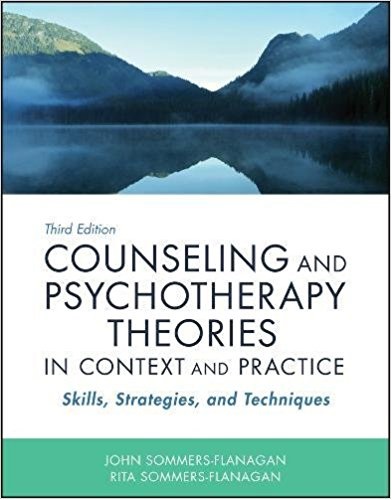
If you want to be an excellent mental health professional, then it makes sense to closely study the thinking of some of the greatest minds and models in the field. This text covers 12 of the most comprehensive and practical theories in existence. We hope you absorb each theory as thoroughly as possible and try experiencing them from the inside out. As you proceed through each chapter, suspend doubt, and try thinking like a practitioner from each theoretical orientation.

It’s also important for you to discover which theory or theories are the best fit for you. You’ll have opportunities reflect on the content of this text and hopefully that will help you develop your own ideas about human functioning and change. Although we’re not recommending that you develop a 13th theory, we are recommending that you explore how to integrate your genuine self into these different theoretical perspectives.

Some of you reading this book may already have considerable knowledge and experience about counseling and psychotherapy theories. However, even if you have very little knowledge and experience, you undoubtedly have some preexisting ideas about what helps people change. Therefore, before reading chapters 2 through 14, we encourage you to look at your own implicit ideas about people, and how they change.

Your First Client and Your First Theory

Pretend this is the first day of your career as a mental health professional. You have all the amenities: a tastefully decorated office, two comfortable chairs, a graduate degree, and a client.

You also have everything that any scarecrow, tin man, or lion might yearn for: a brain full of knowledge about how to provide therapy, a heart with compassion for a diverse range of clients, and courage to face the challenge of providing therapy services. But do you have what it takes to help a fellow human being climb from a pit of despair? Do you have the judgment to apply your knowledge in an effective way?

You walk to the waiting room. She’s there. She’s your first client ever. You greet her. The two of you walk back to the office.

In the first 20 minutes, you learn quite a lot about your client: She’s a 21-year-old college student experiencing apathy, insomnia, no romantic interests, carbohydrate cravings, an absence of hobbies, and extremely poor grades. She’s not using drugs or alcohol. Based on this information, you tentatively diagnose her as having some variant of clinical depression and proceed with counseling. But how do you proceed? Do you focus on her automatic thoughts and the core beliefs about herself that might be contributing to her depressive symptoms? Do you help her get a tutor, thinking that improved grades might lift her depressive symptoms? Do you recommend she begin an exercise routine? Do you explore her childhood, wondering if she has a trauma experience that needs to be understood and worked through? Do you teach her mindfulness skills and have her practice meditation? Do you have her role play and rehearse solutions to her problems? Do you focus on listening, assuming that if you provide her a positive therapy environment, she’ll gain insight into herself and move toward greater psychological health? Do you help her recast herself and her life into a story with a positive ending more adaptive identity? Do you ask her to sit in different chairs—speaking from different perspectives to explore her here and now feelings of success and failure? Any or all of these strategies might help. Which ones seem best to you?

You have many choices for how to proceed, depending upon your theoretical orientation. Here’s our advice: Don’t get stuck too soon with a single theoretical orientation. It’s unlikely that all humans will respond to a single approach. As suggested in Putting it in Practice 1.3, experiment and reflect before choosing your preferred theory. (Complete the ratings in Table 1.2 and then look through Table 1.3 to see which major theoretical perspectives might fit best for you).

Note: the info from Tables 1.2 and 1.3 are linked in this previous blog post: https://johnsommersflanagan.com/2019/07/27/whats-your-theoretical-orientation/

Early Birds and Two Upcoming Strengths-Based Suicide Trainings

On September 24, I’m doing a full-day online-only Strengths-Based Suicide Assessment and Treatment Planning workshop. The workshop is on behalf of the Association for Humanistic Counselors . . . a cool professional organization if there ever was one.

I’m posting today because today is the last day for the “Early bird rates” for this AHC workshop. Just in case you want to be an early bird, this link will give you that chance . . . at least for a few more hours: https://events.r20.constantcontact.com/register/eventReg?oeidk=a07eibjc7x5afb40bd4&oseq=&c=&ch=&fbclid=IwAR2mwGRA6UgOtrTXBdWlS8ZlQAArlPlQR3LGOZigxdIeyodKcIBtY1yovXs

Just in case you want two-days of Strengths-Based Suicide Training or you want to come to the U of Montana or you need some college credit, we’ve got a full two-day version of the workshop happening in Missoula on November 19 and 20. In addition, if you’re wanting a continuing education smörgåsbord, this link also includes two day trainings with the fabulous Dr. Kirsten Murray (Strong Couples) and the amazing Dr. Bryan Cochran (LGBTQI+ Clients). Here’s that link: https://www.familiesfirstmt.org/umworkshops.html

There’s more happening too . . . but for now, this is probably enough for one post.

Have a fantastic week, and don’t be afraid to be the early bird.

Your Fall 2021 Counseling and Psychotherapy Theories Resources

Fall semester is quickly approaching. For some of you, it may have already arrived.

This post includes my usual free offer of theories resources. Even though Rita and I have our own Theories textbook, and we would love for you use it, the resources below are free and will work for you regardless of whether you use our textbook. My general philosophy on textbooks is that I’d rather be helpful than try to coerce people to buy books.

Here we go:

  1. To help students explore their theoretical orientations, we’ve got a short https://johnsommersflanagan.com/2019/07/27/whats-your-theoretical-orientation/ and long-form of a Theoretical Orientation Test. https://johnsommersflanagan.com/2021/02/11/the-long-version-of-our-theoretical-orientation-test-which-hogwarts-hat-fits-you-best/ These tests are for exploration purposes . . . and my or may not have good psychometrics (although someone contacted me about doing a psychometric study on the long version, so we shall see about that).
  2. The Instructor’s Resource Manual is linked here. It includes a chapter-by-chapter glossary, as well as other info that might help with your teaching.
  • I’ve got a set of theories lab activities. I tried posting them here, but technology wasn’t helping. If you want them, email me and I’ll send them out as an attachment. john.sf@mso.umt.edu
  • You can access several theories-related counseling demonstration videos through my YouTube page. Also, I’ve posted a bunch of links previously, and you can access them with brief descriptions here: https://johnsommersflanagan.com/2020/03/14/free-video-links-for-online-teaching/ If you want access to the complete set of all of our theories videos, you have to use the text, but the preceding link has several potentially useful videos.

Theories is my favorite course to teach. I hope these resources will help you have a fun, engaging, skills-based, and inclusive theories teaching experience.

If you have feedback, please share here or via email: John.sf@mso.umt.edu

John SF