Hi All.
Here’s a link to the editorial in the Missoulian this morning which is linked to my talk at UM tonight which is linked to the idea that parents can be a positive influence which is linked to pretty much everything.

Hi All.
Here’s a link to the editorial in the Missoulian this morning which is linked to my talk at UM tonight which is linked to the idea that parents can be a positive influence which is linked to pretty much everything.
Direct power is one way parents try to have power and influence. Direct power is simple and straightforward. It involves directly informing children what to do and what not to do. It’s bossy and often manipulative but not necessarily tyrannical. As we all know, it’s possible to have a benevolent boss, someone to look up to as a respected authority. Alternatively, many of us know or have experienced a tyrannical boss. For many reasons, well-established through parenting research and child development, when direct power is needed, parents should enact that power in a wise and benevolent manner—rather than behaving as a controlling tyrant (Baumrind, 1975). A parent we once worked with articulated this practical principle when she told us her philosophy of parenting. She said, “Rules without relationship equals rebellion.”
Direct power can be communicated through voice tone (that extremely firm or even snarling voice), voice loudness (a raised level, even yelling), body posture (standing and pointing), eye contact and facial expression (a hard stare, serious face, or even an unpleasant grimace), and other physical means. Spanking, hitting, and all physical approaches to discipline are classic efforts at exerting direct power. Similarly, when parents use threatening words or verbal abuse with their child, usually they’re trying—somewhat desperately—to directly influence their child’s emotional state or behavior. When things get desperate, verbal efforts to influence children often end up sounding rather absurd. For example, we’ve heard parents saying things like,
Obviously, yelling, hitting, and verbal abuse are threatening and extreme means of trying to exert parental influence or control and we don’t advice using these approaches.
Grandma’s Rule is an example of a reasonable and relatively effective direct power and influence parenting strategy. This strategy is a language-based intervention that clearly spells out the sequence of desired or required behaviors and optional or reinforcing behaviors. Grandma’s Rule always follows a “When you/then you” format. For example, a parent might say to her child, “When you finish the dishes, then you can call your friends.” Using Grandma’s Rule is a clear and concise way to communicate parental authority by letting the child know exactly what he or she needs to do before engaging in a fun and positively rewarding activity. If you’d like to experience how Grandma’s Rule feels, try this out on yourself: “When you finish reading this blog, then you can check your Facebook account.”
When working with parents who sometimes use ambiguous language with their children, or with parents who are ambivalent about exerting authority, Grandma’s Rule can be very helpful. In particular, parents may need to be coached on avoiding the use of if instead of when. For example, parents who say, “If you do the dishes, then you can call your friends,” convey a sense of uncertainty as to whether their children really will be doing the dishes. Children who have oppositional or defiant tendencies will quickly latch onto the if and begin a debate over whether that behavior will ever occur. Grandma’s Rule always involves using “When you/then you” language.
In the next day or two I’ll be posting a short description of Indirect Power and Influence strategies. All of this material is excerpted or adapted from our book, “How to Listen so Parents will Talk and Talk so Parents will Listen.” You can find it on Amazon at: http://www.amazon.com/How-Listen-Parents-Will-Talk/dp/1118012968
* * * In this short excerpt from “How to Listen so Parents will Talk” we describe a model with four strategies for how parents influence their children. Over the next several days I will include more information about each of these four parental influence strategies. * * *
Although some individuals might suggest that adults always try to control children—and children (especially adolescents) always try to rebel against generational pressure and oppression—we see the world of adult–child relationships through a much rosier lens. In particular, we believe most adults don’t really want to control and oppress children and that most children, though striving for individuation and independence, are not automatically rebellious or oppositional. Instead, we believe most adults want to shape or influence children’s (especially their children’s) thoughts, feelings, and behaviors and most children feel the need to rebel only when their parents slip into an excessively controlling style.
As we move forward with this explanation of the parent influence model (PIM), we’re aware that some professionals and some parents may have negative reactions to the idea of using power or being an authority figure. Nevertheless, our rationale for describing a parent influence model is based on the reality of parent–child power differences. In this regard, we’re in agreement with the sentiment in the following passage by Grosshans & Burton (2008), who stated:
When you become a parent, you take on not only an unprecedented responsibility, but you are immediately imbued with an unparalleled dimension of power in relationship to another human being. Whether you philosophically agree with it, want it, or feel prepared or equipped to exercise it, when you are a parent, you’ve got it. In fact, you are the most powerful person the world to your child, because she depends on you for everything. (p. 17)
Let’s face the reality that parents automatically have power—and focus on how they can use it appropriately, humanely, and respectfully.
Based on the PIM, parents have four power sources (Wood’s, 1996, original social power labels are in parentheses):
1. Direct power (coercion)
2. Problem-solving power (expertness)
3. Indirect power (manipulation)
4. Relationship power (likability)
These power sources are presented in an order such that, if you were to overlay a triangle on this list, direct power would be at the tip and relationship power at the base. This is because relationship power functions as the foundation for all other power and influence approaches or strategies. Tomorrow I’ll begin discussing how parents can use and abuse “direct power” which lies at the tip of the PIM pyramid and work my way down in coming days.
Missoula Forum For Children And Youth To Host Parenting Discussion
Oct. 08, 2012
MISSOULA –
University of Montana counseling Associate Professor John Sommers-Flanagan will lead a community conversation titled “Parents are the No. 1 Influence” from 7 to 8:30 p.m. Tuesday, Oct. 16, on the third floor of the University Center. The discussion is presented by the Missoula Forum for Children and Youth in partnership with Missoula Underage Substance Abuse Prevention.
The first of a three-part Community Conversation Series, the discussion will address the importance of parents’ impact on youth. Research indicates that parents are the primary influence on children, including when youth make choices about engaging in risk behavior or experimenting with substance abuse.
“Parenting is a wonderful gift, but it also can be difficult at times,” said Brandee Tyree, MUSAP coordinator with the Missoula Forum for Children and Youth. “John Sommers-Flanagan will give concrete tips on how to influence your child’s behavior for the best. As a community we can support each other as parents, which in return supports our youth in making healthy decisions.”
The event is sponsored by UM, Missoula Indian Center, the Missoulian, St. Patrick Hospital Foundation and Montana Marketing Group. It is free and open to the public, and refreshments will be provided.
The Missoula Forum for Children and Youth and MUSAP work to support and enhance prevention efforts in the community.
For more information call Tyree at 406-721-3000 ext. 1021 or email btyree@co.missoula.mt.us.
This is a case example from “How to Listen so Parents will Talk and Talk so Parents will Listen.” It focuses on working with a couple on yelling at the kids.
Case: “I Think She Likes Yelling”
In this case, the consultant is working with a couple to address parenting issues and the mother discloses that she finds herself yelling too often at her two young (ages 6 and 8 years) children.
Mother (Nan): I try very hard not to yell, but I can’t seem to stop myself.
Father (Ed): She does yell a lot. I think sometimes she likes to yell.
Nan: [Gives Ed a blistering glare]
Consultant: Hang on a second. Ed, I know you’re saying what it looks like to you, but I don’t think that captures what it feels like to Nan on the inside. Most parents tell me that yelling happens when they feel desperation. My guess is that Nan doesn’t enjoy yelling, but that sometimes she wants so badly to get the kids to listen that she yells out of desperation and tries to get them to cooperate. It probably doesn’t feel enjoyable. [This is a risky, but necessary, confrontation and reframe.]
Nan: That’s exactly right.
Ed: Okay. You’re probably right. It just looks that way to me sometimes.
Consultant: And as you’ve both said, Nan is with the kids more often, and the parent who’s with the kids more is often the biggest target for defiance. With all that in mind, I’ve got some ideas about how Nan might start feeling a little more control over her yelling and get a little more cooperation from the kids.
Nan: That would be great.
Ed: I agree.
Consultant: Another thing that’s important to remember is that it’s humanly impossible to never feel angry toward our children. Anger is normal and natural. Usually we feel anger when we care deeply about something. Nan, you’ll feel angry again and probably soon, so a big part of this involves making a plan for how to deal with it when it comes up, because it will.
In this case, it was obvious that Nan felt out of control and Ed was feeling a bit smug or superior. The glare that Nan directed toward him when he volunteered his theory about her yelling was blistering. However, rather than drifting into marital conflict, the consultant moved through the conflict using empathy, reframing, and universalization, and by giving both parents new words to describe why Nan was yelling. To do this, she pointed out that yelling is a natural behavior that emanates from desperation and anger, and not from personal enjoyment.
The second key part of this intervention involves helping parents make a new plan.
Consultant: It’s important to remember that you’ll be angry again. You can’t stuff your angry feelings and say and do nothing, so you need a new plan for exactly what you’ll do next time your children misbehave. You can’t just decide to stop yelling. Most of us tried that and it doesn’t work very well. You need to come up with something else to do instead. Does that make sense?
Parents: Yes.
Consultant: Nan, this new and improved plan is all about you and only a little about your children. It should be a plan you feel good about and have a chance of enacting successfully. Your child’s misbehavior may or may not continue. You just need to do something different. What possibilities come to mind for you?
The consultant is using a solution-focused “Do something different” task and, while doing so, can engage one or both parents in a problem-solving process. In particular, the consultant is thinking in the back of her mind about ways Ed might be supportive by being available when Nan calls for his help (like tag-team wrestling). Additionally, this is a time when the consultant might share a brief personal story about how she effectively dealt with yelling (as long as the story is compassionate and joining, not condescending, and offers hope for positive change; see online resources at http://www.familiesfirstmontana.org/ for John’s favorite yelling story).
The third part of this intervention involves making a plan to practice the new plan.
Consultant: Okay. Now you both came up with ideas about what Nan might do to deal with her anger instead of yelling. Having good ideas is important, but ideas won’t magically cause less yelling. It’s really hard to stop yelling. Sometimes that’s because your kids are so used to it that they’ll automatically keep misbehaving until you yell—because that’s the established pattern. Because of that, unless you think it through mentally by imagining exactly what you will do and practice the behavior physically (with a friend or with Ed), you may quickly return to yelling because that’s what you all know best. Which of these new alternatives to yelling could you two practice together?
In this case it will be critical for Ed to support Nan as she experiments with alternatives to yelling. Like many spouses, he will need to be coached on what to say and do. Most importantly, he’ll need to agree to refrain from criticism and to notice and comment on her progress (as long as that’s okay with Nan) because his current attitude is likely contributing to Nan’s anger and yelling. Getting a commitment from Ed should be conducted in a direct and positive manner.
Consultant: Ed, can I be completely straight with you?
Ed: Uh, yeah. Sure.
Consultant: For couples, it’s always easier if both people make changes. I know Nan’s yelling is completely her responsibility. But, at the same time, you have the power to make this situation better or worse. If you just stand back and let Nan sink or swim, in a way, you’ll be contributing to the yelling. If you support her, if you take your share of time with the kids when she needs you, if you tell her you love her and how great she’s doing, you’ll be contributing to the solution. It’s really up to you. Can you step up here?
As with all interventions, the exact wording needs to be your own. Our tone may seem too direct and confrontational. However, if you do brief work with parents, you’ll need to find the right words for talking with parents in a way that engages them in the change process. In fact, we’ve found that parents, especially fathers, appreciate a brief, respectful, and direct approach that acknowledges their power within the family system and challenges them to contribute to a healthier and happier family.
In the end, Ed agreed to take complete responsibility for the kids three times a week so Nan could go to the gym and work out. They also agreed to sharing the bedtime ritual more equally, because being on her own to put the children to bed was annoying Nan. For her part, Nan agreed to develop a monitoring system for her anger and to take a break on her own (if Ed wasn’t home) or to ask Ed to step in and take over the parenting responsibilities. Ed agreed to step in when Nan made the request.
Exploring the Differences between Praise, Mirroring,
Character Feedback, and Solution-Focused Questions
This is a homework assignment from “How to Talk so Parents will Listen and Listen so Parents will Talk.” More info on the book is at: http://www.wiley.com/WileyCDA/WileyTitle/productCd-1118012968.html
If you’ve been given this homework assignment, you’re probably already using many good parenting techniques with your child. This assignment will help you refine your parenting approach to intentionally include even more ways of being positive with your child.
Imagine that a father is busy taking care of household chores while he’s parenting his 5-year-old daughter. She’s creating some excellent 5-year-old crayon art and approaches her daddy with a finished product and a beaming smile. Dad looks up and takes a break from his chores to admire his daughter’s artwork. He returns her grin and says one of the following:
If you can increase your awareness of these different strategies, you’ll feel more capable of being intentional and positive when interacting with your children. The result usually includes fewer power struggles and more positive parent–child relationship dynamics.
Using Praise
Using praise is simple. For example, praise includes statements like: “Great work,” “I’m proud of you,” and “Look at what a good job you’ve done cleaning the bathroom!” When you use praise, you are clearly communicating your expectations and your approval to your child.
Think about how much praise you use with your children. Are you being clear enough with them about what you want and are you letting them know when they’ve done well? As a part of this homework assignment, consider increasing how much you praise your child and then see how your child reacts.
Using Mirroring
Sometimes children don’t have a clear sense of how their behaviors look to others (which can also be true for adults). The purpose of mirroring is to help children see themselves through your eyes. After seeing (or hearing) their reflection, your child becomes more aware of his or her behavior and may choose to make changes.
For now, we recommend that you practice using mirroring only to reflect your child’s positive behaviors. For example, if your daughter has a play date and shares her toys with her friend, you could say, “I noticed you were sharing your toys.” Or if your son got home on time instead of breaking his curfew, you might say, “I noticed you were on time last night.” The hard part about using mirroring is to stay neutral, but staying neutral is important because mirroring allows your children to be the judge of their own behaviors. If you want to be the judge, you can use praise.
Using Character Feedback
Character feedback works well for helping your children see themselves as having positive character traits. For example, you might say, “You’re very honest with us,” or “You can really focus on and get your homework done quickly when you want to,” or “You’re very smart.”
Usually, as parents, instead of using character feedback to focus on our children’s positive qualities, we use it in a very negative way. Examples include: “Can’t you keep your hands to yourself?” “You’re always such a big baby,” and “You never do your homework.”
For your homework assignment, try using character feedback to comment on your children’s positive behaviors, while ignoring the negative. You can even use character feedback to encourage a new behavior—all you have to do is wait for a tiny sign of the new behavior to occur and then make a positive character feedback statement: “You’re really starting to pay attention to keeping your room clean.”
Using Solution-Focused Questions
Problem-focused questions include: “What’s wrong with you?” and “What were you thinking when you hit that other boy at school?” In contrast, solution-focused questions encourage children to focus on what they’re doing well. For example, “How did you manage to get that puzzle together?” “What were you thinking when you decided to share your toy with your friend?” and “What did you do to get yourself home on time?”
Solution-focused questions require us to look for the positive. For practice, try asking your child questions designed to get him or her to think about successes instead of failures. After all, it’s the successes that you want to see repeated. Of course, when you ask these questions, don’t expect your child to answer them well. Instead, your child will most likely say, “Huh? I don’t know.” The point is that you’re focusing on the positive and eventually these questions get your children to focus on the positive as well.
Four Roads to Healthier Self-Esteem
This case and the discussion that follows is excerpted from “How to Listen so Parents will Talk.”
Father: I’m a single dad and so I have the job of two parents. It’s hard, but it’s especially hard because I’m a worrier. My girls don’t have a mom around and so I get obsessed about their self-esteem. What can I do to boost their self-esteem?
Consultant: That’s a great question . . . and a big question. But before we talk about the answer, tell me, what sorts of things are you doing now to build their self-esteem?
Father: I compliment them as much as I can. I praise them. I constantly say “I love you.”
Consultant: Can you give me an example of how you compliment them?
Father: Like last night. The girls were coloring and they kept showing me their pictures and I would say, “That’s beautiful!” and “That’s wonderful!” and “You two are great artists.” Stuff like that.
Consultant: I should say first that I think it’s wonderful that you’re so positive with your daughters. I wish more parents were positive like you.
Father: Thanks, but, uh, what else can I do?
Consultant: You’re great at using praise and compliments and that’s really important, but I’ve got other ideas about how to expand your self-esteem-building repertoire. Can I share a few?
Father: Go for it.
Consultant: Let’s take the coloring and picture-drawing example. You’re giving out praise and compliments, which is very important. But praise and compliments are what we call “external” or “outside-in” strategies. They build your daughters’ self-esteem from the outside in. You’re the outside expert and you tell them they’re great. There are three other things you could add to that. I’ll describe these three options now, but I have a tip sheet that describes them, too.
First, instead of praising and complimenting, sometimes you could use a technique called “mirroring.” Mirroring is more of an “inside-out” technique for building self-esteem. To use mirroring, you should watch your children and mirror their positive feelings back to them. For example, you could say, “You look really happy about your drawing,” or you could ask a question: “What do you like best about your drawing?” By using these mirroring responses, you’re encouraging your children to judge their own drawings. That’s why we call it an inside-out approach, because it draws out your children’s internal feelings and judgments.
Father: Okay. I think I get that, but what if one of my daughters doesn’t like her drawing—or, even worse, what if she says ‘I hate my drawing’?
Consultant: Good questions. You’re so good at praise, your daughters may be depending on you for their compliments. If one daughter can’t think of anything positive, that’s okay. No need to get worried. We all sometimes produce things we don’t like. But you might try several things. You could just reflect back her feelings and see what happens by saying, “I guess you don’t like this drawing so much.” Or you could push her to identify to positives and negatives with a comment like, “Well, I see something about it I like, but I don’t want to go first. So, first you tell me what you like and then I’ll say what I like.” Or, you could help her focus on her next drawing with empathy and encouragement by saying, “Hmmm. You don’t seem too happy with this drawing. Maybe you’ll like your next one better.” The thing that’s important to remember is that false praise or too much praise doesn’t help your children build self-esteem from the inside out. Pretty soon, they’ll recognize that you always say something positive and they might start wondering if you really mean it.
Father: Okay. I get it.
Consultant: That’s mirroring. The key is to draw out or reflect your child’s judgments. It’s even okay to mirror back if she doesn’t like her drawing. This is part of respecting her judgment. If she doesn’t like the drawing, that’s okay, just reflect that back. You can even move a little bit away from mirroring and if you really like her drawing you can disagree with her and say something like, “I see you don’t like your drawing, but here’s what I like about it.”
Father: All right.
Consultant: The next method after praise and mirroring is character feedback. Character feedback is when you say something like, “You’re the kind of girl who loves to draw.” What you’re doing with this method is you’re making a positive behavior into a character trait. Try that out. Think of a character trait that one of your daughters has and put it into the sentence, “You’re the kind of girl who . . .”
Father: My older daughter likes to keep all her school stuff organized. So would I say, “You’re a girl who’s organized”?
Consultant: Sure. Almost anyway you say it is fine. What you’re doing is helping her build positive character traits so she begins seeing herself as an organized person.
Father: How about my other daughter? She’s very disorganized. Do I tell her, “You’re a disorganized girl”? That doesn’t seem like a good idea.
Consultant: Exactly. When we use character feedback, we almost always use it for positive character traits. With your less organized daughter, you might wait for a time when she displays even a tiny bit of organizational skill and then say, “I notice you can really get organized when you want to.” For character feedback, just think of yourself as a mirror that reflects positive behaviors and forms them into character traits. What’s interesting about this is that most parents, including me, tend to watch for our children’s weaknesses and negative qualities and comment on them. For example, lots of parents and teachers see children misbehaving and can’t resist making comments like, “What’s wrong with you? Can’t you keep your hands to yourself?” or “You’re lying again, aren’t you? You need to get over that lying problem.” Basically, when we repeatedly comment on our children’s negative behaviors we help them construct a more negative character. They end up thinking, “I’m the kind of kid who just keeps getting into trouble.” The magic of character feedback is that we can use it to intentionally construct positive character traits. I know it’s manipulative, but it’s being manipulative in a positive way.
Father: That’s interesting. I do have trouble not commenting when my daughters misbehave. Should I ignore misbehavior?
Consultant: Not always. We should just focus most of our attention on our children’s positive behaviors and only a little of our attention on the negative behaviors. Sometimes our children need corrective feedback or input. But if we focus too much on the negative, the negative will tend to grow, because it’s getting so much attention.
Father: Okay. I think I get that. You said you have a handout on this, right?
Consultant: Right. And there’s one last method. The last method is called solution-focused questioning. Here’s an example with your less organized daughter. Let’s say she shows a flash of organizational skill. Then, you could ask something like, “Wow. How did you manage to get your school work all organized?” Be careful to be curious and impressed, but not too surprised. You know how some parents will say things like, “Who are you and what have you done with my child?” as a joke. Well, that’s a funny joke, but it plays on the fact that the child is acting in an unusual way. What we want to communicate is that it’s normal for your daughter to be organized when she wants to and so you’re showing curiosity about how she manages to get organized. Solution-focused questions with children almost always ask them to reflect on how they accomplished something positive. For example, you could say: “How did you manage to be honest and tell the truth in that hard situation?” or “How did you figure out how to get that puzzle together?”
Father: Okay. This one is about focusing on solutions.
Consultant: Right. Let’s try one. What’s something one of your daughters did well this past week?
Father: My organized daughter had a terrible tantrum and then apologized to me.
Consultant: That’s great. What would be a solution-focused question?
Father: Um, how about this? “What were you thinking when you decided to apologize?”
Consultant: Yeah. That’s pretty good. But that might feel like you’re investigating or analyzing her thoughts. I might change it a little and throw in a positive character trait, like, “How did you find the courage to come and apologize to me?” That sends her a message that it takes courage to apologize and as long as you agree with that, it might be a nice way to combine a solution-focused question and a little character feedback.
Father: I like that.
Consultant: I should also say that often when we ask solution-focused questions of children they just shrug their shoulders and say, “I don’t know,” which is perfectly fine. The point is that hopefully we’re building into them a tendency to reflect on how they managed to do something that was positive or successful.
Father: Right. I can imagine my daughter saying “I don’t know.”
Consultant: Now, I know we’ve covered a whole lot of ground in the last few minutes, but parenting can be complicated sometimes.
Father: You’re telling me? I’ve got two daughters and pretty soon they’ll be attracting boys and that will be even worse.
Consultant: Yeah. I guess I don’t need to tell you that parenting is complicated, but what I want to say is that I’ve got this tip sheet for you on praise, mirroring, character feedback, and solution-focused questions and you can take it and just try out the ideas we talked about today that are in this tip sheet. Just practice away and see what happens and we can talk about it more next week.
In this case we see the consultant squeezing lots of nuanced parenting information into a brief time period. This is a very educational approach and most likely to work after the practitioner has established a positive working relationship with parents who are in the action stage of Prochaska and DiClemente’s (2005) transtheoretical model. Even in the action stage, most parents can’t absorb all this information at once, which is why tip sheets and homework assignments can be so important.
Although the methods illustrated (praise, mirroring, character feedback, and solution-focused questions) are fairly complex, most parents intuitively understand the differences. These methods are only partly designed to improve parent–child relationships; they’re also good behavior management and self-efficacy-building techniques and so they can be used with parents who are being either too negative or too positive with their children.
You can find the “How to Listen . . .” book at: http://www.amazon.com/How-Listen-Parents-Will-Talk/dp/1118012968/ref=sr_1_1?ie=UTF8&qid=1345003465&sr=8-1&keywords=how+to+listen+so+parents+will+talk
Life is not easy and children (and adults) learn through struggles, failures, and disappointments. Your goal, as a parent, is to create a reasonable, consistent, and loving home and then let your child struggle with the demands of life. These demands include very basic things like:
As you might gather from the preceding list, even little things in life can be hard for a growing child; but to learn, children need to directly experience frustration and disappointment.
Natural or logical consequences are a necessary part of learning. They help your child get better at surviving disappointments in the world and in your family home. Natural and logical consequences are always related in some way to the misbehavior and are not given out with anger or as “punishment.”
Here are some examples:
1. Your children leave toys in a public area of the house, even though they’ve been told to put toys away when done playing. Logical consequence: Use a “Saturday box” or put the toys in timeout. This involves picking up the toys and putting them in a box and storing them away until the next Saturday (or whatever day), when they’re given back. This logical consequence avoids the overreaction (“If you don’t put your toys away, then I’ll give them away to someone else”) and the attention-giving lecture (“Let me tell you about when I was a child and what would happen if I left my toys out . . .”) and instead provides children with a clear, consistent, and reasonable consequence.
2. Your children argue with you about a consequence or about you being unfair. Logical consequence: You let your children know, “I don’t feel like arguing about this” and leave the area. You may want to go to the bathroom to take time away to further develop your planned response. While remaining friendly, another important message to give is, “I know you’d like things your way, but we have rules and consequences for everyone in our family.” Of course this may trigger another argument and you can walk away again and tell your children, “I know you can figure this out and not have this consequence next time.”
3. You cook dinner, but your children don’t show up on time. Reasonable rules and logical consequences: If you cook dinner, everyone needs to show up on time and be respectful about the dinner-eating process. That doesn’t mean everyone has to eat every bite or provide you with lavish praise for your most excellent meal, but respectful attendance is a reasonable expectation. If your child is late for dinner, one reminder is enough. No drama or excess attention is needed. Just sit down and start eating and enjoying the mealtime process. Possible logical and natural consequences include: (1) Your child prepares the next meal; (2) you put away foods after you dish yourself up and so the child has to get them out and serve himself; (3) you got there early and prepared the food and so your child gets to stay afterward and clean up; (4) no special rewards (e.g., eating dinner in front of the television); instead, your child eats alone at the table.
To do logical and natural consequences, it’s helpful to work on the following:
1. Take the “punishing” quality out of your voice and the interactions. This is not about punishment; it’s about what’s logical, reasonable, and natural. You can even be friendly and positive.
2. Prepare in advance. Because you’ll be emotional when your children are noncompliant, it’s critical that you have a list of logical and reasonable and natural consequence ideas in your head. Otherwise, you will overreact. Going to parenting classes or talking with other parents can help you identify a wider range of reasonable consequences.
3. Use small consequences. Your purpose is to teach your child. Your purpose is not to hurt or humiliate. Learning occurs best if children are not emotionally overwhelmed by large consequences. Small consequences provide plenty of feedback.
4. Use mirroring and encouragement. Reflect back to your children what they’re feeling (“It’s very upsetting that you can’t play with your toys for the rest of the week”). Let your child know that you think things will go better the next time around (“I know, if you want to, you’ll be able to remember to put your toys away next time”).
5. Don’t lecture or shame. Let the small consequence do its work.

The natural and logical consequences (for Leah and Tommy) of growing up in Absarokee, MT.
One key to using time-out effectively is knowing your child well. Here’s the parent homework assignment from “How to Listen so Kids will Talk and Talk so Kids will Listen.”
Parent Homework Assignment 9-4
Following the Rules for a New-and-Improved Timeout from Reinforcement
Most parents use timeout like punishment, but punishment and timeout are really two different parenting techniques. Timeout is a less-aversive and more compassionate alternative to punishment.
The differences between punishment and timeout are subtle but important. When using timeout from reinforcement properly, children should be calmly taken from their usually rich and rewarding environment, but they should not be punished through pinching, squeezing, slapping, scolding, or yelling.
There are two main types of timeout: behavioral timeouts and emotional timeouts. Behavioral timeouts are used in response to inappropriate misbehavior. Emotional timeouts are used to help with emotional de-escalation or calming.
Tips for Behavioral Timeouts
A behavioral timeout is used immediately after your child has misbehaved. When misbehavior happens, consider saying: “Uh-oh. That’s not okay. You need to go to timeout.” The timeout location should be a chair or pillow or other location where your child can be separated from the social or family activity. Maintain silence (other than praising your child for going to timeout). Set a timer for between 1 and 10 minutes. Two minutes is appropriate for most children. If your child refuses to go to timeout, don’t get physical; simply shift the consequence to something you can control (e.g., turn off the television or computer, send the friend home, end the family outing, assign a “when you/then you” chore, etc.). If you’ve rehearsed your timeout procedure, it should go smoothly. When timeout is finished, praise your child for completing the timeout and verbally release him or her. Explain the reason for timeout as needed.
Your child shouldn’t be required to say silent during timeout. Many parents incorrectly assume that timeout should continue until children calm down. Calming down and completing a timeout are two different issues. If your child is angry or crying, a consequence has already been delivered and so there’s no need to continue the scene until he or she is quiet. If your goal is a quiet child, timeout may not be the appropriate consequence. Instead, you may need to implement a quiet time in the child’s room or remove him or her from a social or public situation.
Tips for Emotional Timeouts
If your child has trouble calming down after one or two minutes, you may need to approach and comfort him or her. This is okay. After one or two minutes you can release your child from timeout. At that point, the behavioral timeout has ended and an emotional timeout may begin.
During an emotional timeout children need soothing and comforting. They still may be angry or upset about not getting what they wanted and you shouldn’t give in and give them their desired outcome. Instead, give empathy, comfort, and support. Life is hard and most adults don’t like not getting what they want, either. Help them know this. Help them breathe deeply and think about happier times. Help them move past their distress and into a calmer and more comfortable place. This can be a powerful and positive experience for both parent and child. Behavioral timeouts are about limit-setting. Emotional timeouts are about parent–child bonding and emotional regulation.
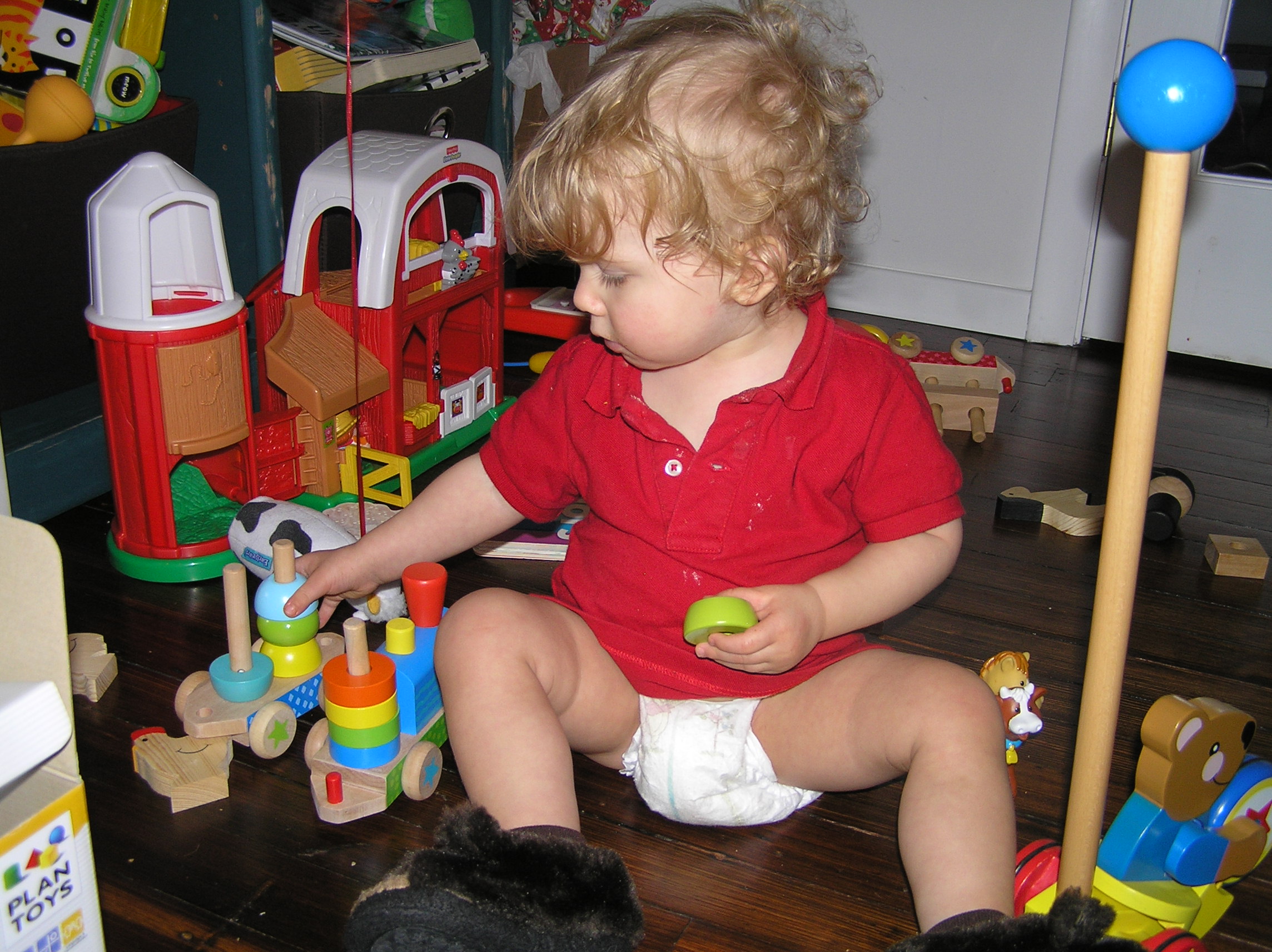
Time-in should always be more fun than time-out!
A New-and-Improved Timeout Procedure
This is the first of a two-part piece on time-out. Both parts (and more) are included in the book: How to Talk so Parents will Listen and Listen so Parents will Talk: http://www.amazon.com/How-Listen-Parents-Will-Talk/dp/1118012968/ref=sr_1_5?s=books&ie=UTF8&qid=1344118211&sr=1-5&keywords=how+to+listen+so+parents+will+talk+and+talk+so+parents+will+listen
Timeout from reinforcement is an immensely popular behavioral response cost procedure. Unfortunately, most parents use it like corporal punishment; when children misbehave, parents put them in timeout. The problem with traditional timeout as practiced in most households is that parents wield it like a stick when, technically, it’s supposed to be the taking away of a carrot.
It’s possible that problems with timeout arise because the term is so deceptively simple that most people believe they automatically understand what timeout is and how to use it. In reality, there are a number of do’s and don’ts that parents need to learn about timeout; these will be covered in part II of this special and exciting time-out series.
Timeout from reinforcement is a very brief time period during which children are not exposed to the normally rich, exciting, and rewarding stimulation of everyday life. Timeout is not “thinking time” and it should never be more than 10 minutes. Timeout is simply a break from all potential forms of positive reinforcement (including yelling, lecturing, and glaring).
Timeout Problems and Timeout Solutions
As Kazdin (2008) suggested (see the book, Kazdin Method for Parenting the Defiant Child), if brief and humane timeouts are not working, parents should not escalate their consequences. Instead, they should make time-in more enjoyable and work with their child on positive behavior simulations (described in the next section). Escalating punishment is a bad idea.
Typical complaints parents make about timeout are: (1) My child won’t go to timeout; and (2) my child won’t stay in timeout. Kazdin (2008) described, from a behavioral perspective, how to handle children who don’t go to timeout:
“If you declare a time-out and your child folds his arms and says, No, I’m not going, and you [shouldn’t] drag him, what do you do? First, give him an extra minute penalty. You can do this twice: up the time-out from two minutes to three, then to four. Then, if that doesn’t work, take away a privilege—something significant but brief, like no TV today. Then turn and walk away. Don’t give in if he then says, Okay okay okay, I’ll do it, because then you’d be reinforcing an unwanted sequence. . . . Let the consequence do the work. Resist the temptation to add little zingers. . . .” (pp. 142–143; italics in original)
Kazdin is making several excellent points in this description of how to handle timeout noncompliance. One part bears highlighting: When children refuse to do something physical, parents should not force them into the act. Forcing a physical act is beyond reasonable parent power and control and can result in ugly and undesirable outcomes. Instead, as Kazdin suggests, the parent should shift to a consequence over which the parent has complete control and authority (and the child’s physical movements is not one of these things).
Emotions and Emotional Timeouts
Timeouts will often elicit strong emotions and strong emotions will often elicit timeouts. This highlights the question of how to deal with children’s emotions before, during, and after timeouts.
Parents are the best experts on their own children’s emotional states and so the helping professional’s job is to help parents balance a reasonable response to misbehavior (a brief timeout) with their children’s need for empathy, emotional soothing, and emotion coaching.
Case: An Emotionally Soothing Timeout
Parent: When I try to put my child into timeout, he becomes an emotional basket case. He screams and cries and it’s really terrible.
Consultant: That sounds very hard. It really reminds me of how important it is for parents to set limits on misbehavior and provide empathy and comfort for difficult emotions at the same time. It’s possible to do both.
Parent: How do I do that?
Consultant: You need to stand firm on not giving in to whatever your child wanted before the timeout was called. So, if your child hit another boy and grabbed a toy, you would never give back the toy or put your child back with the other boy before the timeout was served. You stay firm because whenever your child is aggressive or obnoxious you cannot give in to him and give him what he wants. That’s a huge parenting rule.
Parent: Okay, I understand that.
Consultant: Then, you need to decide how much emotional support your child needs. If he’s heading toward inconsolable sobbing, you may need to make it a brief thirty-second to one-minute timeout. Right at the end, you swoop in and comfort and console and help him understand what he did wrong and what he could do next time to avoid the timeout. This is because if your child is sobbing, he’s already experienced the punishment and so there’s no need to prolong it.
Parent: But I’ve always heard you should keep your child in timeout until he behaves, or at least until he’s served one minute for each year of his age.
Consultant: There’s crazy information out there about timeout. The truth is: The first minute is the most important. Waiting for him to behave or calm down on his own could be too traumatic for both of you. And the one-minute-for-each-year is a general guideline that should be adjusted for individual children.
Parent: Okay.
Consultant: The only reason you might wait longer would be if you believed your child was pretending to be upset to get your attention. Even then, you shouldn’t wait long before offering emotional comfort, maybe two minutes.
Parent: Yeah, well, I’m pretty sure he’s not faking it.
Consultant: Another thing to keep in mind is that some children, and your son may be an example, need help with emotional soothing. He may need a calming timeout more than he needs a bad-behavior timeout. If that’s the case, find a big pillow or comfortable spot and have him do his timeout there. And if he’s really a wreck, spend the timeout with him and help him recover.
This dialogue illustrates some of the complexities and misconceptions of timeout. For example, when the consultant suggests using a big pillow for a timeout spot instead of the classic chair or corner, she’s illustrating that she understands that timeout is a response-cost procedure and not a punishment procedure. The purpose is not to inflict pain or discomfort, but to take away the “fun” of time-in. This is an important distinction for parents to understand and it can be much more productive and effective for children to serve their brief timeout in a comfortable spot (without toys or books). In fact, to promote emotional de-escalation it may even be appropriate for parents to take their child to his or her room and engage in gently playful activities while expressing empathy for the child’s emotional state and hope for emotional recovery.
Overall, when choosing to use timeouts as a reasonable consequence for specific behaviors (e.g., hitting a sibling or parent), parents should anticipate their children’s potential emotional reactions. These reactions can range from rage and anger to sadness, tears, and inconsolable sobbing. Parents should also consider emotional-recovery timeouts, during which emotional soothing takes place. Finally, parents can role-model timeout behavior by taking one themselves—especially when they’re emotionally upset and need to do a little deep breathing.
TOMORROW OR THE NEXT DAY I’LL POST PART II OF THIS TIME-OUT SERIES

John puts himself in timeout. . .
 John Sommers-Flanagan