Tag Archives: Counseling

Check out a new “Strengths-Based Suicide Assessment” continuing education course

From M 2019 Spring

This past month I worked on revising our Suicide Assessment chapter from our Clinical Interviewing (6th edition, 2017) textbook so it could function as a stand-alone continuing education course. The continuing education course is finished and now available online.

The Learning Objectives include:

Learning Objectives

This is a beginning to intermediate level course. After completing this course, you will be able to:

  • Explore your own personal reactions to suicide and identify four clinician self-care strategies.
  • Discuss and debunk four common and unhelpful myths about suicide.
  • Describe evidence-based risk/protective factors, warning signs, and cultural issues and how they can be used to deepen empathic understanding of suicidal clients.
  • Identify components of suicide theory that contribute to and guide suicide assessment.
  • Provide a comprehensive suicide assessment interview based on a social constructionist model.
  • Engage in decision-making with suicidal clients.

If you’re interested, here’s a link to the list of courses on ContinuingEdCourses.Net, with the Suicide Assessment course at the top of the list: http://www.continuingedcourses.net/active/courses/courses.php

And here’s a link that takes you deeper . . . all the way to the brand new 3 hour course, go here (I think you can read it for free and only have to pay to take the quiz and get CE credits): Suicide Assessment For Clinicians: A Strength-Based Model

Of course, if you’re interested in a three-part (7.5 hours total) continuing education video experience, here’s your link to Psychotherapy.net: https://www.psychotherapy.net/video/suicidal-clients-series

Have a great day . . . and keep on learning!


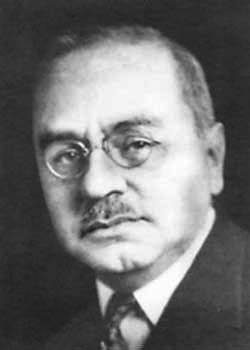
Alfred Adler All Day Long

alfred adler photo small

It’s too bad, but IMHO we don’t ever seem to take enough time to celebrate the ideas and deeds of Alfred Adler. If, by chance, you’re not sure who the heck I’m talking about, then I’ll take that as validation of my point. Who was Alfred Adler? . . . sadly, that’s a question many people can’t answer.

Today, April 4, 2019, I’m doing a webinar on the similarities and distinctions between Alfred Adler’s “Individual Psychology” (aka Adlerian therapy) and cognitive-behavioral therapy. Most people who study these things, including Albert Ellis, recognize that Adler’s work was ahead of his time and much of what he wrote about can be considered foundational to cognitive therapy. Staunch Adlerians sometimes put it more dramatically when they say, “In the beginning, there was Adler.”

Today’s webinar has inspired me to renew my efforts to spread the gospel of Alfred Adler. If you read this blog regularly, you know I’ve done this before. You can read some of my previous Adler posts by clicking here: https://johnsommersflanagan.com/tag/adler/

Today, I feel like I’m taking the lazy way out. But Adler would likely correct me. He didn’t much believe in the word lazy. Instead, Adler would reformulate lazy as discouraged, or more specifically, in this, and many cases (think of your children, perhaps), what appears to be laziness is a function of having goals and aspirations that are beyond one’s reasonable skills and available time. I think that could be the case here. Although I’d like to shower you with lots of new and exciting Adlerian information, instead, I’m posting the first five pages of the Adlerian chapter of our Counseling and Psychotherapy theories textbook. Here it is . . . five pages of the start of a chapter that only begins to describe the life and work of the amazing Alfred Adler.

Chapter 3: Individual Psychology and Adlerian Therapy

We often wonder about Alfred Adler. Who was this man whose theories and approach predate and contribute substantially to ego psychology (Chapter 2), the cognitive therapies (Chapter 8), reality therapy (Chapter 9), feminist therapy (Chapter 10), and constructive perspectives (Chapter 11)? How did he develop—over 100 years ago—influential and diverse ideas that are foundational to so many different approaches to therapy, and so thoroughly infused into contemporary culture? His beliefs were so advanced that he seems an anomaly: He’s like a man from the future who landed in the middle of Freud’s inner circle in Vienna.

Introduction

Despite the ubiquity of Adler’s ideas, many contemporary mental health professionals don’t recognize, acknowledge, or appreciate his contributions to modern counseling and psychotherapy (Carlson & Englar-Carlson, 2017). Perhaps this is because Adler provided services for working class people, rather than the wealthy elite; or because he was an early feminist; or because his common sense ideas were less “sexy” than Freud’s.

What is Individual Psychology? (. . . and what is Adlerian Therapy?)

Individual psychology was the term Adler used to describe the psychotherapy approach he founded. Watts and Eckstein (2009) recounted Adler’s rationale for choosing the name Individual Psychology: “Adler chose the name individual psychology (from the Latin, individuum, meaning indivisible) for his theoretical approach because he eschewed reductionism” (p. 281).

Most people know individual psychology as Adlerian therapy, the contemporary applied term. Adlerian therapy is described as “a psychoeducational, present/future-oriented, and brief approach” (R. E. Watts & Pietrzak, 2000, p. 22). Similar to psychoanalytic psychotherapy, Adlerian therapy is also insight-oriented. However, therapists can use direct educational strategies to enhance client awareness.

Adler was a contemporary—not a disciple—of Freud. During their time, Adler’s ideas were more popular than Freud’s. Adler’s first psychology book, Understanding Human Nature, sold over 100,000 copies in six months; in comparison, Freud’s Interpretation of Dreams sold only 17,000 copies over 10 years (Carlson & Englar-Carlson, 2017). Jon Carlson (2015) referred to Adler as “the originator of positive psychology” (pp. 23-24).

Adler wove cognition into psychotherapy long before Albert Ellis and Aaron Beck officially launched cognitive therapy in the 1950s and 1960s. In the following quotation, Adler (1964; originally published in 1933) easily could be speaking about a cognitive rationale for a computerized virtual reality approach to treating fears and phobias (now growing in popularity in the 21st century):

I am convinced that a person’s behavior springs from his [or her] idea.… As a matter of fact, it has the same effect on one whether a poisonous snake is actually approaching my foot or whether I merely believe it is a poisonous snake. (pp. 19–20)

In his historical overview of the talking cure, Bankart (1997) claimed, “Adler’s influence on the developing fields of psychology and social work was incalculable” (p. 146). This chapter is an exploration of Alfred Adler’s individual psychology and his vast influence on modern counseling and psychotherapy.

Alfred Adler

Alfred Adler (1870-1937) was the second of six children born to a Jewish family outside Vienna. His older brother was brilliant, outgoing, handsome, and also happened to be named Sigmund. In contrast, Alfred was a sickly child. He suffered from rickets, was twice run over in the street, and experienced a spasm of the glottis. When he was 3 years old, his younger brother died in bed next to him (Mosak, 1972). At age 4, he came down with pneumonia. Later Adler recalled the physician telling his father, “Your boy is lost” (Orgler, 1963, p. 16). Another of Adler’s earliest memories has a sickly, dependent theme:

One of my earliest recollections is of sitting on a bench bandaged up on account of rickets, with my healthy, elder brother sitting opposite me. He could run, jump, and move about quite effortlessly, while for me movement of any sort was a strain and an effort. Everyone went to great pains to help me, and my mother and father did all that was in their power to do. At the time of this recollection, I must have been about two years old. (Bottome, 1939, p. 30)

In contrast to Freud’s childhood experience of being his mother’s favorite, Adler was more encouraged by his father. Despite his son’s clumsy, uncoordinated, and sickly condition, Adler’s father Leopold, a Hungarian Jew, firmly believed in his son’s innate worth. When young Alfred was required to repeat a grade at the same middle school Freud had attended 14 years earlier, Leopold was his strongest supporter. Mosak and Maniacci (1999) articulate Adler’s response to his father’s encouragement:

His mathematics teacher recommended to his father that Adler leave school and apprentice himself as a shoe-maker. Adler’s father objected, and Adler embarked upon bettering his academic skills. Within a relatively short time, he became the best math student in the class. (p. 2)

Adler’s love and aptitude for learning continued to grow; he studied medicine at the University of Vienna. After obtaining his medical degree in ophthalmology in 1895, he met and fell in love with Raissa Timofeyewna Epstein, and married her in 1897. She had the unusual distinction of being an early socialist and feminist. She was good friends with Leon and Natalia Trotsky and she maintained her political interests and activities throughout their marriage (Hoffman, 1994).

Historical Context

Freud and Adler met in 1902. According to Mosak and Maniacci (1999), Adler published a strong defense of Freud’s Interpretation of Dreams, and consequently Freud invited Adler over “on a Wednesday evening” for a discussion of psychological issues. “The Wednesday Night Meetings, as they became known, led to the development of the Psychoanalytic Society” (p. 3).

Adler was his own man with his own ideas before he met Freud. Prior to their meeting he’d published his first book, Healthbook for the Tailor’s Trade (Adler, 1898). In contrast to Freud, much of Adler’s medical practice was with the working poor. Early in his career, he worked extensively with tailors and circus performers.

In February 1911, Adler did the unthinkable (Bankart, 1997). As president of Vienna’s Psychoanalytic Society, he read a highly controversial paper, “The Masculine Protest,” at the group’s monthly meeting. It was at odds with Freudian theory. Instead of focusing on biological and psychological factors and their influence on excessively masculine behaviors in males and females, Adler emphasized culture and socialization (Carlson & Englar-Carlson, 2017). He claimed that women occupied a less privileged social and political position because of social coercion, not physical inferiority. Further, he noted that some women who reacted to this cultural situation by choosing to dress and act like men were suffering, not from penis envy, but from a social-psychological condition he referred to as the masculine protest. The masculine protest involved overvaluing masculinity to the point where it drove men and boys to give up and become passive or to engage in excessive aggressive behavior. In extreme cases, males who suffered from the masculine protest began dressing and acting like girls or women.

The Vienna Psychoanalytic Society members’ response to Adler was dramatic. Bankart (1997) described the scene:

After Adler’s address, the members of the society were in an uproar. There were pointed heckling and shouted abuse. Some were even threatening to come to blows. And then, almost majestically, Freud rose from his seat. He surveyed the room with his penetrating eyes. He told them there was no reason to brawl in the streets like uncivilized hooligans. The choice was simple. Either he or Dr. Adler would remain to guide the future of psychoanalysis. The choice was the members’ to make. He trusted them to do the right thing. (p. 130)

Freud likely anticipated the outcome. The group voted for Freud to lead them. Adler left the building quietly, joined by the Society’s vice president, William Stekel, and five other members. They moved their meeting to a local café and established the Society for Free Psychoanalytic Research. The Society soon changed its name to the Society for Individual Psychology. This group believed that social, familial, and cultural forces are dominant in shaping human behavior. Bankart (1997) summarized their perspective: “Their response to human problems was characteristically ethical and practical—an orientation that stood in dramatic contrast to the biological and theoretical focus of psychoanalysis” (p. 130).

Adler’s break from Freud gives an initial glimpse into his theoretical approach. Adler identified with common people. He was a feminist. These leanings reflect the influences of his upbringing and marriage. They reveal his compassion for the sick, oppressed, and downtrodden. Before examining Adlerian theoretical principles, let’s note what he had to say about gender politics well over 90 years ago:

All our institutions, our traditional attitudes, our laws, our morals, our customs, give evidence of the fact that they are determined and maintained by privileged males for the glory of male domination. (Adler, 1927, p. 123)

Raissa Epstein may have had a few discussions with her husband, exerting substantial influence on his thinking (Santiago-Valles, 2009).

Reflections

What are your reactions to Adler as a feminist? Do you suppose he became more of a feminist because he married one? Or did he marry a feminist because he already was one?

Theoretical Principles

Adler and his followers have written extensively about the IP’s theoretical principles. Much of what follows is from Adler (1958), Ansbacher and Ansbacher (1956), Mosak and Maniacci (1999), Carlson, Watts, and Maniacci (2006), Sweeney (2009), and Carlson & Englar-Carlson, 2017).

People are Whole and Purposeful

Adler emphasized holism because he believed it was impossible “. . . to understand an individual in parts” (Carlson & Johnson, 2016, p. 225). Instead of dichotomies, he emphasized unity of thinking, feeling, acting, attitudes, values, the conscious mind, the unconscious mind, and all aspects of human functioning. This holistic approach was in direct contrast to Freud’s id, ego, and superego. The idea of an id entity or instinct separately pushing for gratification from inside a person was incompatible with Adler’s holism.

A central proposition of individual psychology is that humans are purposeful or goal-oriented (Sweeney, 2009). We don’t passively act on biological traits or react to the external environment; instead, we behave with purpose. Beyond nurture or nature, there’s another force that influences and directs human behavior; Adler (1935) referred to this as “attitude toward life” (p. 5). Attitude toward life is composed of a delightful combination of human choice and purpose.

Everyday behavior is purposeful. When Adlerian therapists notice maladaptive behavior patterns, they focus on behavioral goals. They don’t aggressively interrogate clients, asking, “Why did you do that?”—but are curious about the behavior’s purpose. Mosak and Maniacci (1999) articulated how Adler’s holism combines with purposeful behavior:

For Adler, the question was neither “How does mind affect body?” nor “How does body affect mind?” but rather “How does the individual use body and mind in the pursuit of goals?” (pp. 73–74).

Rudolph Dreikurs (1948) applied the concept of purposeful striving to children when he identified “the four goals of misbehavior” (see Putting it in Practice 3.1).

Putting it in Practice 3.1

Why Children Misbehave

Adler’s followers applied his principles to everyday situations. Rudolph Dreikurs posited that children are motivated to grow and develop. They’re naturally oriented toward feeling useful and a sense of belonging. However, when children don’t feel useful and don’t feel they belong—less positive goals take over. In his book The Challenge of Parenthood, Dreikurs (1948) identified the four main psychological goals of children’s misbehavior:

  1. To get attention.
  2. To get power or control.
  3. To get revenge.
  4. To display inadequacy.

Children’s behavior isn’t random. Children want what they want. When we discuss this concept in parenting classes, parents respond with nods of insight. Suddenly they understand that their children have goals toward which they’re striving. When children misbehave in pursuit of psychological goals, parents and caregivers often have emotional reactions.

The boy who’s “bouncing off the walls” is truly experiencing, from his perspective, an attention deficit. Perhaps by running around the house at full speed he’ll get the attention he craves. At least, doing so has worked in the past. His caregiver feels annoyed and gives him attention for misbehavior.

The girl who refuses to get out of bed for school in the morning may be striving for power. She feels bossed around or like she doesn’t belong; her best alternative is to grab power whenever she can. In response, her parents might feel angry and activated—as if they’re in a power struggle with someone who’s not pulling punches.

The boy who slaps his little sister may be seeking revenge. Everybody talks about how cute his sister is, and he’s sick of being ignored, so he takes matters into his own hands. His parents feel scared and threatened; they don’t know if their baby girl is safe.

There’s also the child who has given up. Maybe she wanted attention before, or revenge, or power, but no longer. Now she’s displaying her inadequacy. This isn’t because she IS inadequate, but because she doesn’t feel able to face the Adlerian tasks of life (discussed later). This child is acting out learned helplessness (Seligman, 1975). Her parent or caregiver probably feels anxiety and despair as well. Or, as is often the case, they may pamper her, reinforcing her behavior patterns and self-image of inadequacy and dependence.

Dreikurs’s goals of misbehavior are psychological. Children who misbehave may also be acting on biological needs. Therefore, the first thing for parents to check is whether their child is hungry, tired, sick, or in physical discomfort. After checking these essentials, parents should move on to evaluating the psychological purpose of their child’s behavior.

Social Interest or Gemeinschaftsgefühl

Adler believed that establishing and maintaining healthy social relationships was an ultimate therapy goal. He developed this belief after working with shell-shocked soldiers from World War I (K. Adler, 1994; Carlson & Englar-Carlson, 2017). He became convinced that individualism and feelings of inferiority were destructive; in contrast, he viewed social interest and community feeling as constructive. Another way of thinking about this theoretical principle is to consider humans as naturally interdependent. Lydia Sicher (1991) emphasized this in the title of her classic paper “A Declaration of Interdependence.” When we accept interdependence and develop empathy and concern for others, social relationships prosper.

Adler used the German word, Gemeinschaftsgefühl, to describe what has been translated to mean social interest or community feeling. Carlson and Englar-Carlson (2017) elaborated on the meaning of this uniquely Adlerian concept.

Gemein is “a community of equals,” shafts means “to create or maintain,” and Gefühl is “social feeling.” Taken together, Gemeinschaftsgefühl means a community of equals creating and maintaining social feelings and interests; that is, people working together as equals to better themselves as individuals and as a community” (p. 43, italics in original)

Adlerians encourage clients to behave with social interest (Overholser, 2010). Watts (2000) emphasized that, “The ultimate goal for psychotherapy is the development or enhancement of the client’s social interest” (p. 323). Research has shown that social interest is positively related to spirituality, positive psychology, and health (G. K. Leak, 2006; G. K. Leak & K. C. Leak, 2006; Nikelly, 2005), and inversely related to anger, irritability, depression, and anxiety (Newbauer & Stone, 2010). Some writers consider the positive aspects of religion to be a manifestation of social interest. This was Adler’s position as well (Manaster & Corsini, 1982; Watts, 2000).

Various writers, and Adler himself, noted that Gemeinschaftsgefühl essentially boils down to the edict “love thy neighbor” (Alizadeh, 2012; Watts, 2000). Carlson and Englar-Carlson described it as being the “same as the goal of all true religions” (p. 44). Although Adler wasn’t especially religious, he had no difficulty embracing the concept of love thy neighbor as a social ideal. In contrast, Freud (1930/1961) concluded, “My love is something valuable to me which I ought not to throw away without reflection” (p. 56). This is one of several distinctions between Adler and Freud; for Adler, love is valuable, powerful, and abundant. It should be freely given; for Freud, love is also valuable, but should be conserved.

Striving for Superiority

Adler believed that the basic human motive is the striving for superiority. However, like Gemeinschaftsgefühl, this concept requires a detailed explanation.

The term superiority is an oversimplification. Heinz Ansbacher provided a more comprehensive description of Adler’s striving for superiority in a published interview:

The basic striving, according to Adler, is the striving for Vollkommenheit. The translation of Vollkommenheit is completeness, but it can also be translated as excellence. In English, only the second translation was considered; it was only the striving for excellence. The delimitation of the striving for excellence is the striving for superiority.

Basically, it all comes from the striving for completeness, and there he said that it is all a part of life in general, and that is very true. Even a flower or anything that grows, any form of life, strives to reach its completeness. And perfection is not right, because the being does not strive—one cannot say to be perfect—what is a perfect being? It is striving for completeness and that is very basic and very true. (Dubelle, 1997, p. 6)

Striving for individual superiority can take on a Western, individualistic quality. This wasn’t Adler’s perspective. He viewed excessive striving for self-interest as unhealthy; Adler once claimed he could simplify his entire theory by noting that all neurosis was linked to vanity. Striving for self-interest translates into striving for superiority rather than for social interest (Watts & Eckstein, 2009).

When it comes to basic human nature and potential, Adlerian theory is like Switzerland: Adler was neutral. He didn’t believe in the innate goodness or destructiveness of humans. He believed we are what we make ourselves; we have within us the potential for good and evil.

Striving for superiority is an Adlerian form of self-actualization. More concretely, it occurs when individuals strive for a perceived “plus” in themselves and their lives. Mosak and Maniacci (1999) applied this concept to a clinical situation:

How can self-mutilation move someone toward a plus situation? Once again, that may be a “real” minus, especially in the short-term situation. Long-term, however, that person may receive attention, others may “walk on eggshells” when near that person (so as to not “upset” him or her), and he or she may gain some sense of subjective relief from the act, including a sense of being able to tolerate pain. (p. 23)

Adler observed that people often compensate for their real or perceived inadequacies. Individual inadequacies can be in any domain (e.g., physical, psychological, social). Adler may have believed in compensation partly because he experienced it himself, while growing up. Being inadequate or deficient is motivating. “The fundamental law of life is to overcome one’s deficiencies” (Ansbacher & Ansbacher, 1956, p. 48). Compensation is the effort to improve oneself in areas perceived as weak. The existential philosopher Friedrich Nietzsche expressed the same sentiment, “What does not kill me makes me stronger.”

In an ideal situation, individuals strive to (a) overcome their deficiencies, (b) with an attitude of social interest, and (c) to complete or perfect themselves. Watts (2012) has argued that the Adlerian social interest and striving for superiority are foundational to positive psychology—despite the fact that Adler’s work remains largely unacknowledged within the positive psychology discipline.


 

Breathing New Life into Your Dead, White Counseling and Psychotherapy Theories Course

IMG-4449

Artwork by Rita Sommers-Flanagan**

On April 18 at 1:00p.m. EST, I’ll be doing a Wiley Webinar. This webinar is free, and especially geared toward academics who want to expand their repertoire for teaching counseling and psychotherapy theories. Because this webinar is sponsored by my publisher, John Wiley & Sons, there will be some minor marketing of my textbook, Counseling and Psychotherapy Theories in Context and Practice (3rd ed.). However, you can attend this webinar regardless of the textbook you use. My goal is to help open all of us up to how we can integrate new ideas into existing “older” theoretical perspectives.

Here’s the link to register: https://www.wileyplus.com/wiley-webinar-series/#john-sommers-flanagan

And here’s the official blurb for the webinar:

Teaching traditional counseling and psychotherapy theories courses can feel dull and boring. In this webinar session, John Sommers-Flanagan will share pedagogical strategies for integrating culture into theory, and engaging students with here-now activities that bring the dusty old theories to life. This webinar will include specific recommendations for how to integrate culture and feminist ideas into traditional theories. Learning activities will be demonstrated, including: (a) early intercultural memories; (b) sex, feminism, and psychoanalytic defense mechanisms; (c) empowered narrative storytelling; and (d) spiritual and behavioral forms of relaxation. Handouts for each activity will be available later on this blogsite.

Beyond this short description, I also want to acknowledge the obvious. As a living White person who writes about, teaches, and practices theory-based counseling and psychotherapy, I know that my ability to claim expertise in making cultural adaptations is limited. I don’t want to be the expert on this (or most things). The purpose of this webinar is NOT to “tell” anyone exactly what diversity modifications “should” be made when teaching counseling and psychotherapy theories. Instead, my purpose is to talk about and illustrate ways in which new diversity-sensitive ideas might be creatively integrated into old theoretical perspectives. From there . . . the application of these and your own ideas about how to breathe new life into old theories is up to you and your unique personal and professional worldview.

Given this big preceding caveat, the webinar’s learner objectives are to help participants:

  • Identify compatibilities of culture, spirituality, and feminist thought with traditional counseling and psychotherapy theories
  • Implement an intercultural memory activity with large or small groups
  • Implement and discuss diverse sexualities along with psychoanalytic defense mechanisms
  • Implement a multicultural empowered storytelling strategy
  • Implement and debrief spiritual and behavioral integrations to achieve relaxation

Soon (right around 4/18/19) I’ll be posting more information related to this webinar. In the meantime, let me know your thoughts on this topic. As always, I value alternative perspectives and enjoy hearing your reactions to the posts on this blog.

Upcoming Webinars (without Spiderman)

Spiderman II

As a Marvel Comics fan since 1963, I’ve always felt uncomfortable doing webinars without mentioning Spiderman. Now that I’m on record for my Spiderman-influenced childhood, I feel my comfort-level returning to normal.

Somehow, in the next month or so, I’ve gotten myself involved in a plethora of webinars, as long as you define “plethora” as five.

Although it’s sticky business, the purpose of this blog post is to gently promote said webinars. You might be interested. I think they’re mostly free, or accessible through a particular professional association (e.g., WSASP).

Here’s the line-up (starting tomorrow!), along with webinar titles and links.

  1. Wednesday, March 13 – 2pm EDT (12pm MDT):

Transforming Therapeutic Relationships into Evidence-Based Practice: Practical Skills for Challenging Therapy Situations

Sponsored by TherapySites. To register, go to:    https://register.gotowebinar.com/register/2888908924358696194?source=Association

Many counselors and psychotherapists deeply believe in the therapeutic power of relationships, but feel mandated to practice using empirically-supported technical procedures. In this presentation, John will illustrate how relational approaches to counseling are also specific treatment methods.

Specifically, in this webinar, Dr. Sommers-Flanagan will be discussing:

– 9 different evidence-based relationship factors with practical examples of how to use these factors in challenging situations

– Using self-disclosure effectively and how to respond to difficult questions

– Recognizing relational ruptures and make repairs

– How to respond to clients who are not cooperating with the counseling process

– What to say when clients have suicidal thoughts and feel hopeless

All participants will have access to a handout describing and illustrating how to use evidence-based relationship factors to enhance counseling and psychotherapy practice.

  1. Friday, March 15, 2019, from 1pm-4pm PDT (12pm to 3pm MDT):

Tough Kids, Cool Counseling: Part I, Assessment and Engagement

Sponsored by the Washington State Association of School Psychologists (WSASP). To participate, you’ll need to be a WSASP member. https://www.wsasp.org/event-3158525?CalendarViewType=1&SelectedDate=3/12/2019

Counseling adolescent students can be immensely frustrating or splendidly gratifying. To address this challenge, participants in this workshop will refine their skills for managing resistance and implementing specific brief counseling techniques. Using video clips, live demonstrations, and other learning activities, the workshop presents four essential principles and 10 assessment and engagement strategies for influencing “tough students.” Group discussion, breakout skill-building, and other learning activities will be integrated.

  1. Thursday, April 4, 2019, from 12pm to 1pm (somewhere, TBA).

Adlerian Psychology and Cognitive-Behavioral Therapy

Sponsored by Adler University. To participate, go to: https://www.adler.edu/page/community-engagement/center-for-adlerian-practice-and-scholarship/calendar/upcoming-events

Most Adlerian theorists view Individual Psychology as the foundation for modern cognitive-behavior therapy. But most modern cognitive-behavior therapists rarely credit Adler or know much about his theory. In this webinar, John Sommers-Flanagan, author of Counseling and Psychotherapy Theories in Context and Practice (Wiley, 2018) will present two short case vignettes, while engaging in a lively debate with himself over the similarities and distinctions of Adlerian therapy and CBT.

  1. Thursday, April 18, 2019 – 1pm EDT (11am MDT): “Breathing New Life into Your Dead, White Counseling and Psychotherapy Theories Course”

Sponsored by WileyPlus. To register, go to:  https://www.wileyplus.com/wiley-webinar-series/

Teaching traditional counseling and psychotherapy theories courses can feel dull and boring. In this webinar session, John Sommers-Flanagan will share pedagogical strategies for integrating culture into theory, and engaging students with here-now activities that bring the dusty old theories to life. This webinar will include specific recommendations for how to integrate culture and feminist ideas into traditional theories. Learning activities will be demonstrated, including: (a) early intercultural memories; (b) sex, feminism, and psychoanalytic defense mechanisms; (c) empowered narrative storytelling; and (d) spiritual and behavioral forms of relaxation. Handouts for each activity will be available on https://johnsommersflanagan.com/.

  1. Friday, April 19, 2019, from 1pm-4pm PDT (12pm to 3pm MDT):

Tough Kids, Cool Counseling: Part II, Specific Counseling Techniques and Strategies

Sponsored by the Washington State Association of School Psychologists (WSASP). To participate, you’ll need to be a WSASP member. https://www.wsasp.org/event-3158525?CalendarViewType=1&SelectedDate=3/12/2019

In this advanced workshop, participants will learn 10 (or more) specific counseling techniques designed to promote positive change in middle and high school students. Using video clips, live demonstrations, and role-playing practice, participants will refine their skills for implementing change strategies with students. Techniques include problem solving, empowered storytelling, cognitive storytelling, cognitive–behavioral therapy for anger management, the three-step emotional change trick, early interpretations, and the fool-in-the-ring. Diversity-sensitive approaches will be highlighted.

In closing, I randomly selected the words of Spiderman (from 1966, #36, p. 20). “You’ll have to make it a solo the rest of the way down, Lootie! This is where I get off!”

Wow! I never realized Spiderman was a quotation machine or that he used so many exclamation points!

Have a great week!

John


#NASP2019 Extra Handout

20150313_141701

Hello NASP Workshop Participants (and other interested people). Below I’ve pasted an “extra” document to go along with the workshops you attended today in Atlanta. As always, I’m amazed and humbled by the dedication of all School Psychologists to the well-being of your students. I hope you know how important your work is to the students. They don’t often say “Hey. Thanks for working with me!” But, I’m confident that you’re making a crucial difference in the lives of many students across the U.S. And so, on behalf of students everywhere, let me say: Thanks for being a fabulous School Psychologist!

Here’s the extra handout: NASP 2019 Extra Handout

How to Make a Collaborative Plan for Terminating Counseling without Ever Using the Word Termination

Stone Smirk

Not long ago I noticed some of my excellent and well-intended supervisees talking with their clients about “termination.” They would say things like, “We need to prepare for termination” or “Let’s talk about termination today.” When this happened, I’d get nervous, squirm a bit, and eventually find a way to tell my supervisees that, although we use the word termination all the time when talking with each other ABOUT counseling, we shouldn’t use it when talking with clients DURING counseling.

Instead of saying termination, it’s preferable to talk about final sessions, or the ending of counseling, or to use normal and jargon-free words that speak to the reality that all good things—including counseling—must end. Sometimes the number of counseling sessions possible is dictated in advance by employee assistance program guidelines or insurance companies; other times, clients and counselors have more freedom to work together as long as the work is helpful or productive. Either way, ongoing conversations linking goals to progress is a part of an evidence-based approach to counseling and psychotherapy. Effective counselors connect the “ending” of counseling with the goals that were, in the beginning of counseling, collaboratively identified (and then possibly modified as needed).

Although you should use your own words, statements like some of the following can help you talk with clients or students about termination without using the word termination.

  • “Let’s talk about how our counseling is going and whether we’re making progress toward your goals”
  • “How do you feel about our counseling together?”
  • “I’d love to talk about what I can do differently to keep helping you move forward toward your goals.”

Speaking of termination—and now I’m speaking to you and not my clients—below you’ll find a Termination Checklist that you might find helpful as you talk with your students about preparing for termination. As with everything, this checklist is imperfect, but it’s a good start to help all of us address the ending of counseling, before counseling actually ends.

Termination Checklist

[Adapted from Sommers-Flanagan, J., and Sommers-Flanagan, R., (2007).
Tough Kids, Cool Counseling: User-Friendly Approaches with Challenging Youth.
Alexandria, VA: American Counseling Association]

This is a guide to help you think about termination—even though some of the details will be different for you and your client(s).

_____ 1. At the outset and throughout counseling, identify progress in the movement toward termination (e.g., “Before our meeting today, I noticed we have 4 more sessions left,” or “You are doing so well at home, at school, and with your friends. . . let’s talk about how much longer you’ll want or need to come for counseling”).

_____ 2. Reminisce about early sessions or the first time you and your client met. For example: “I remember something you said when we first met, you said: ‘there’s no way in hell I’m gonna talk with you about anything important.’ Remember that? I have it right here in my notes. You weren’t exactly excited about coming for counseling.”

_____ 3. Identify and describe positive behaviors, attitude, and/or emotional changes. This is part of the process of providing feedback regarding problem resolution and goal attainment: “I’ve noticed something about you that has changed. Do you mind if I share what I’ve noticed?” [Client gives permission]. It used to be that you wouldn’t let adults get close to you. And you wouldn’t accept compliments from adults. Now, from what you and your parents tell me and from how you act in here, it’s obvious that you give adults a chance. You don’t automatically push adults away from you. I think that’s a good thing.”

_____ 4. You should acknowledge, in advance, that the end of counseling is coming up, but there’s a possibility you’ll see each other in the future. “Our next session will be our last session. I guess there’s a chance we might see each other sometime, at the mall or somewhere. If we do see each other, I hope it’s okay for me to say hello. But I want you to know that I’ll wait for you to say hello first. And of course, if we see each other in public, I’ll never say anything about you having been in counseling.”

_____ 5. Identify a positive personal attribute that you noticed during counseling. This should be a personal characteristic separate from your client’s goals: “From the beginning of our time together, I’ve always enjoyed your sense of humor. You’re really creative and really funny, but you can be serious too. Thanks for letting me see both those sides. It took courage for you to get serious and tell me how you’ve been feeling about your mom.”

_____ 6. If there’s unfinished business (and there always will be) provide encouragement for continued work and personal growth: “Of course, your life isn’t perfect, but I have confidence that you’ll keep working on communicating well with your sister and those other things we’ve been talking about.” You may want to say that even though your client doesn’t “need” counseling, choosing to come back for counseling in the future might be helpful: “You know some people come to counseling to work on big problems; other people come because they find counseling helps them be a better person; and other people just like counseling. You might decide you want start up again for any of these reasons.”

_____ 7. Provide opportunities for feedback to you: “I’d like to hear from you. What did you think was most helpful about coming to counseling? What did you think was least helpful?” You can add to this any genuine statements about things you wish you’d done differently. For example, if your client got angry at you for misunderstanding something and this was processed earlier, you might say: “And of course I wish I had heard you correctly and understood you the first time around on that [issue], but I’m glad we were able to talk through it and keep working together.”

_____ 8. If it’s possible, let the client know that he or she may return for counseling in the future: “I hope you know you can come back for a meeting sometime in the future if you want or need to.”

_____ 9. Make a statement about your hope for the client’s positive future: “I’ll be thinking of you and hoping that things work out for the best. Of course, like I said in the beginning, I’m hoping you get what you want out of life, just as long as it’s legal and healthy.”

_____ 10. As needed, listen to and discuss how your client is feeling about ending counseling. Don’t make this into a big deal, but offer opportunities for the client to say “I can hardly wait for the end of this counseling crap” or “I wish we could keep meeting.” Whatever your client is feeling about termination warrants respectful listening.

_____ 11. Consider a parting gift. Although I don’t routinely recommend this with adults, with young clients you might give a meaningful gift at the end of counseling. It could be anything from a painted rock to a blank notebook for writing or a written card. The point is to give a gift that’s not especially expensive, but that might hold meaning for your client in the future.

For more information on termination with youth, go to: https://www.amazon.com/Tough-Kids-Cool-Counseling-User-Friendly-ebook/dp/B00QYU630Q/ref=sr_1_7?s=books&ie=UTF8&qid=1550512844&sr=1-7&keywords=sommers-flanagan

My Incredibly Insightful Comments on Self-Disclosure in Therapy from Counseling Today Magazine

Here’s a photo of me talking too much.

OLYMPUS DIGITAL CAMERA

Now imagine that I finally realize I’m talking too much, and to control myself, I place my hand over my mouth

***************************

Along with 10 other professionals, I was asked to write 300 words on using self-disclosure in counseling. All the comments were published this morning in the Counseling Today magazine.

I liked all the commentaries. You can read them here: https://ct.counseling.org/2019/01/counselor-self-disclosure-encouragement-or-impediment-to-client-growth/

But I was especially happy to see that three of the 11 selected professionals were linked to the University of Montana. Kim Parrow (doc student) and Sidney Shaw (former doc student) both provided their insights for the article. How cool is that?

Speaking of cool, and I know this isn’t appropriate, but I really liked my own commentary. I liked it partly because it sounds pretty smart and partly because I do a nice job of making fun of myself. And so here’s my short comment about self-disclosure in counseling:

My first thought about self-disclosure is that it’s a multidimensional, multipurpose and creative counselor response (or technique) that includes a fascinating dialectic. On one hand, self-disclosure should be intentional. If counselors aren’t aware that they’re using self-disclosure and why they’re using it, then they’re probably just chatting. On the other hand, self-disclosure should be a spontaneous interpersonal act.

Self-disclosure is an act that involves revealing oneself. As Carl Rogers would likely say, if your words aren’t honest and authentic, then your words aren’t therapeutic. From my perspective — which is mostly person-centered — the purest (but not only) purpose of self-disclosure is to deepen interpersonal connection. As multicultural experts have noted, self-disclosure can facilitate trust more effectively than a blank slate, because transparency helps clients know who you are and where you stand. What’s less often discussed is that it’s impossible to not self-disclose; we’re constantly disclosing who we are through our clothing, mannerisms, informed consent form, office accoutrements and questions.

I remember working with a 19-year-old white, cisgender, heterosexual male. He told me he was diagnosed as having reactive attachment disorder. After listening for 15 minutes, I was convinced that there was no possible way he could meet the diagnostic criteria for reactive attachment disorder. First, I used an Adlerian-inspired question/disclosure: “What if it turned out you didn’t really have reactive attachment disorder?”

You might not consider a question as self-disclosure, but every question you ask doesn’t simply inquire, it simultaneously reveals your interests.

Later, I disclosed directly, using immediacy: “As I sit and listen to all your positive relationships, it makes me think you don’t have reactive attachment disorder.” Despite my interpersonally clever use of an educational intervention embedded in a self-disclosure, my client didn’t budge, countering with, “That doesn’t make any sense, because I’m diagnosed with reactive attachment disorder.”

At that point, I wanted to use self-disclosure to share with him all the ways in which I was a smarter and better health care professional than whoever had originally misdiagnosed him. Fortunately, I experienced a flash of self-awareness. Instead of using disclosure to enhance my credibility, I spontaneously disclosed, “I’ve been talking way too much. I’m just going to put my hand over my mouth and listen to you for a while.”

As I put my hand over my mouth, my client smiled. The rest of the session was — in both our opinions — a rousing success.


Guidelines for Using Congruence in Counseling and Psychotherapy

20160709_135123

Consistent with my recent preoccupation with evidence-based relationships in counseling and psychotherapy, I’m posting a short excerpt from the 6th edition of our Clinical Interviewing textbook (check it out here: https://www.amazon.com/gp/product/1119215587/ref=dbs_a_def_rwt_bibl_vppi_i0)

Here’s the excerpt, coming at you from Chapter 7: Evidence-Based Relationships.

Students often have questions about how congruence sounds and looks in a clinical interview. Common questions (and brief answers) follow:

  • Does congruence mean I say what I’m really thinking in the session? [Usually not. Your thoughts may mean something important and may warrant being shared at some point, but initial spontaneous thoughts and reactions to clients should stimulate personal reflection, not immediate disclosure.]
  • What if I dislike something a client says or does? Am I being incongruent if I don’t express my dislike? [No. If you have an aversion to something your client says or does, reflect on it, rather than reacting with judgment. As Rogers (1957) recommended, if you have a negative reaction, try to transform it to your internal experience and find a way to express it in a positive manner.]
  • If I feel sexually attracted to a client, should I be “congruent” and share my feelings? [Absolutely not. As discussed in Chapter 2, you should NEVER share feelings of sexual attraction with clients. Doing so is manipulative and unethical. Deal with your sexual issues and attractions in supervision and on your own time.]

One general guideline for determining when and how to be transparent or congruent is to ask: Would the disclosure help facilitate my client’s work?  Making this decision involves relying on your clinical judgment—which is difficult for everyone, but especially for new clinicians. Too much self-disclosure—even in the service of congruence or authenticity—can muddy the assessment or therapeutic focus. The key is to maintain balance; self-disclosure in the service of congruence should be limited, purposeful, and based on solid theoretical foundations (Ziv-Beiman, 2013)

Rogers (1958) was wary about excessive self-disclosure:

Certainly the aim is not for the therapist to express or talk about his (sic) own feelings, but primarily that he should not be deceiving the client as to himself. At times he may need to talk about some of his own feelings (either to the client, or to a colleague or superior) if they are standing in the way. (pp. 133–134)

Imagine that you’re working with a client and you feel the impulse to self-disclose in the spirit of being congruent. If you’re not confident your comment will be facilitative or will keep the focus on the client, then you shouldn’t disclose. Given the challenges inherent in deciding how to be congruent, you should discuss struggles with self-disclosure with peers or supervisors. This can deepen your understanding of how to be therapeutically congruent.

Based on recommendations from the literature (Farber, 2006; Kolden et al., 2011; Ziv-Beiman, 2013) and our own clinical experiences, we offer the following guidelines for self-disclosures:

  • Examine your motives for the self-disclosure you have in mind.Is it more about you or more about your client?
  • Ask yourself if the disclosure is likely to be facilitative.
  • Ask yourself if the comment will keep the focus on the client or will it distract from the client’s process and issues?
  • Consider the possibility of a negative reaction. Could your client respond in a negative or unpredictable manner?
  • Remember, congruence doesn’t mean you say whatever comes to mind; it means that when you do speak, you do so with honesty and integrity.

Case Example 7.1:

Congruence Across Cultures

Cultural identity has many dimensions (Collins, Arthur, & Wong-Wylie, 2010). In this example, during an initial clinical interview with an African American male teenager, the clinician uses congruence across several different cultural domains.

Client: This is stupid. What do you know about me and my life?

Clinician: I think you’re saying that we’re very different and I totally agree. As you can probably guess, I’ve never been in a gang or lived in a neighborhood like yours. And you can see that I’m not a Black teenager and so I don’t know much about you and what your life is like. But I’d like to know. And I’d like to be of help to you in some way during our time together.

This clinician is being open and congruent and speaking about obvious differences that might interfere with the clinician-client relationship. It would be nice to claim that being open like this always improves clinician-client connection, but nothing always works. However, as researchers have reported, congruence tends to facilitate improved treatment process and also contributes to positive outcomes, at least in small ways (Kolden et al., 2011; Tao, Owen, Pace, & Imel, 2015).

Transforming Therapeutic Relationships into Evidence-Based Practice

img_1349This handout is an in-depth supplement to a web-based workshop I provided for the Chi Sigma Iota group at the University of the Cumberlands on January 13, 2019. Although it’s designed to go with the workshop, it’s also designed to be a standalone resource for learning more about how to integrate evidence-based relationship factors into counseling and psychotherapy practice.

The following principles, techniques, and strategies are listed in the order in which they were discussed in the workshop. More extensive information is included in the specific resources listed at the end of this handout, particularly, Clinical Interviewing (6th ed., Wiley 2017), Counseling and Psychotherapy Theories in Context and Practice (3rd ed., Wiley, 2018) and Tough Kids, Cool Counseling (2nd ed., 2007, ACA publications).

The 10 Evidence-Based Relationship Factors (EBRFs)

Beginning in the early 21st century, Norcross (2001; 2011) and others have put relational factors (e.g., Rogerian core conditions) on par with “empirically-supported techniques or procedures.” Norcross has done this by using the terminology: Evidence-Based or Empirically-Supported Relationships

What Norcross is talking about is the robust empirical support for specific and measurable relationship factors as contributors to positive counseling and psychotherapy outcomes. You can find the latest articles about empirically-supported relationships in a special issue of the journal Psychotherapy (Norcross & Lambert, 2018).

Here’s a list of the evidence-based relationship factors (EBRFs) that I covered in the workshop, followed by content and resources related to each factor.

  1. Congruence [Authenticity]
  2. Unconditional positive regard [Respect]
  3. Empathic understanding [Emotional attunement]
  4. Culture Humility and Sensitivity [Equity in worldview]
  5. Working Alliance 1: Emotional bond [Liking each other]
  6. Working Alliance 2: Goal consensus [Adler’s goal alignment]
  7. Working Alliance 3: Task collaboration [To reach client goals]
  8. Rupture and repair [Fixing relationship tension]
  9. Managing Countertransference [Self-awareness]
  10. Progress monitoring [Asking for feedback]

1. Congruence/Authenticity

There are many ways to show congruence or authenticity in counseling. Below, I’ve described some of the ways that are relatively easy to apply. Some of this content focuses on working with youth and other content focuses on working with adults, including parents.

Acknowledging Reality: Some young people, as well as older clients, may be initially suspicious and mistrustful of adults – especially sneaky, manipulative, authority figures like mental health professionals, school counselors or school psychologistsJ. To decrease distrust, it’s important to acknowledge reality about the reasons for meeting, about the fact that you don’t know each other, and to notice obvious differences between yourself and the client. Acknowledging reality is a form of transparency or congruence. Researchers consistently report that transparency, congruence, or genuineness is a predictor of positive counseling or psychotherapy outcomes (see Kolden, Klein, Wang, & Austin, 2011). Acknowledging reality includes a straightforward explanation of confidentiality and its limits.

Sharing Referral Information: To gracefully talk about referral information with students, you need to educate referral sources about how you’ll be using information they share with you. Teachers, administrators, probation officers, and parents should be coached to give you information that’s accurate and positive. If the referral information is especially negative, you should screen and interpret the information so it’s not overwhelming or off-putting to students. Simblett (1997) suggested that if therapists are planning to share referral information with clients, they should warn and prepare referral sources. If not, the referral sources may feel betrayed. Also, if you share negative referral information, it’s important to have empathy and side with the student’s feelings, while at the same time, not endorsing negative behaviors. For example, “I can see you’re really mad about your teacher telling me all this stuff about you. I don’t blame you for being mad. I’d be upset too. It’s hard to have people talking about you, even if they have good intentions.” Here’s a case example from Tough Kids, Cool Counseling (2007):

 A female counselor is meeting for the first time with a 16-year-old female client. Immediately after introducing herself and offering a summary of the limits of confidentiality, she states, “I’m sure you know I talked with your parents and your probation officer before this meeting. So, instead of keeping you in the dark about what they said about you, I’d like to just go ahead and tell you everything I’ve been told. This sheet of paper has a summary of all that (counselor holds up sheet of paper). Is it okay if I just share all this with you?”

 After receiving the client’s assent, the counselor moves her chair alongside the client, taking care to respect client boundaries while symbolically moving to a position where they can read the referral information together. She then reviews the information, which includes both positive information (the client is reportedly likeable, intelligent, and has many friends) and information about the legal and behavioral problems the adolescent has recently experienced. After sharing each bit of information, she checks in with the client by saying, “It says here that you’ve been caught shoplifting three times, is that correct?” or “Do you want to add anything to what your mom said about how you will all of a sudden get really, really angry?” When positive information is covered, the counselor says thing like, “So it looks like your teachers think you’re very intelligent and say that you’re well-liked at school . . . do you think that’s true . . . are you intelligent and well-liked?” If referral information from teachers, parents, or probation officers is especially negative, the counselor should screen and interpret the information so it is not overwhelming or off-putting to young clients. (from Sommers-Flanagan and Sommers-Flanagan, 2007, p. 32) 

 Authentic Purpose Statements: One technical manifestation of congruence or transparency is the use of an authentic purpose statement. This requires you to be clear about your own “why” of being in the room and then concisely sharing that with your student or client. Examples include: “My job is to help you be successful here” or “Your goals are my goals, as long as they’re legal and healthy.” Authentic purpose statements can also serve, in part, as an initial role induction.

 Responding to Client or Student Questions: Authenticity may be the most robust factor linked to positive treatment outcomes. How you handle client or student questions is one way to display congruence or authenticity. The following model can be helpful.

  1. Answer directly or explain why you’re not answering directly – “I think you’re asking a good question, but before I answer, I want to dive a little deeper into what’s under your question. That’s the sort of thing we do in counseling.”
  2. Use a reflection/paraphrase – “It sounds like you’re not sure I can be of any help.”
  3. Validate the underlying message/curiosity – “I don’t blame you for thinking that. Lots of people aren’t sure if counseling can work for them. I’d probably feel the same way as you.”
  4. Use psychoeducation, then answer after exploring – “Before answering, I’d like to ask you a few questions that might be important. First, if I say, ‘Yes’ I’ve done some drugs, I wonder how you would react? Second, if I say ‘No’ I haven’t done drugs, I wonder how you would react to that?”
  5. Use psychoeducation to explain not answering – Most of the time I’m happy to answer your questions. But this one feels like it’s too much about me . . . and of course the focus in counseling is supposed to be more on you than it is on me.”
  6. Use interpretation or confrontation – “It’s not unusual in counseling for clients to want to avoid talking about their personal situation and feelings. One way to avoid that is to ask me lots of questions. I’m wondering if that might be one of the reasons why you seem like you want to keep the focus on me.”
  7. Articulate a dilemma (Yalom) – “I have a dilemma. One part of me really wants to answer your question. But another part of me is worried it will move the focus of counseling away from you and onto me.”

 Self-Disclosure: Although authenticity is important, it’s quite possible to be too open or to have too much self-disclosure. To prevent excessive self-disclosure, consider the following guidelines.

 When to Self-Disclose

  • When you’re asked a direct question and it makes good sense to answer directly and briefly.
  • When a disclosure is likely to increase interpersonal connection (“I enjoy meeting with you”).
  • When disclosure is likely to facilitate transparency and therefore make it less likely for clients to “wonder” if you’re judging them (“my theoretical foundation is person-centered. That means I want to listen to you talk about your life, your experiences, and your emotions. That means I’ll probably listen more than I talk”).
  • When it’s helpful for psychoeducation purposes (mindfulness takes lots of discipline; I struggle with it too.” If you’re interested, I can share with you a couple tips that really helped me”)

 When NOT to Self-Disclose

  • When you’re talking too much about yourself and muddying the focus.
  • When you’re trying to slip in advice (e.g., “being assertive in that sort of situation worked for me”). This is especially a bad idea with minority clients because we shouldn’t assume they have our values or that what worked for us will work for them.
  • When it takes away from any of the EBRFs.
  • When it’s more about you and for you and less about the client (“I’m really proud of my children’s work ethic”).

2. Unconditional Positive Regard

Unconditional positive regard involves accepting clients and showing them immense respect. As Rogers said long ago, when clients feel accepted, then they become free to explore their insecure “nooks and crannies.”

For all of the person-centered core conditions, it’s not good to express them directly. That means you want to avoid saying “I accept you fully as you are.” There are many reasons for not expressing the core conditions directly (which we talk about in the book, Clinical Interviewing). The following counselor/psychotherapist behaviors are ways to show respect and positive regard indirectly. I’ve elaborated on a few of these.

  • Being on time
  • Non-directive listening
  • Asking clients what is important to them
  • Remembering client details
  • Asking permission
  • Second session first question
  • Using interactive summaries

 Asking Permission: Asking permission is a basic technique that clearly expresses your respect for your client. When using any technique, it’s useful to (a) ask permission to describe the technique (“Is it okay if we take a few minutes for me to describe this thing called progressive muscle relaxation?”); (b) describe the technique; and then (c) check in on your client’s reaction or thoughts about the technique. I even like to ask permission to self-disclose or give feedback (“Is it okay with you to share something I’ve noticed?”).

 Second Session First Question: The time between session #1 and session #2 can include many different experiences. It’s tempting to start the second session with a social question like, “How was your week?” My opinion is that social openings tend to defocus counseling and mostly aren’t appropriate (unless you’re modeling social skills and/or have an anxious client who is uncomfortable with a more formal opening. The second session first question is: “What did you find memorable or important to you from our meeting last week?”

 3. Empathic Understanding

 Most counselors and counseling students are well-versed in how to use empathy. One situation that can challenge your empathic responding occurs when you’re working with a client who is depressed and suicidal. The following is an adapted excerpt from an article published in the Journal of Health Service Psychology:

 Many or most suicidal patients are probably experiencing depression and/or hopelessness. If this is the case, they will be predisposed to discussing what makes them more suicidal; it may be more difficult for them to identify factors linked to feeling less suicidal. States of depression and hopelessness drive patients toward negative rumination and act as fogging agents when it comes to exploring or considering positives.

Exploring and Addressing Hopelessness

Hopelessness is a common feature linked to clinical depression and suicidality. Although hopelessness can manifest in different ways, having a general strategy for assessing and working through hopelessness can be helpful. Specifically, Beck (Wenzel, Brown, & Beck, 2009) has emphasized that treatment of suicidal patients must address hopelessness. Here are two examples of how to empathically explore and work with hopelessness.

Exploring intent, addressing hopelessness, and initiating problem-solving in the context of getting help. Once you have information about active suicide ideation or a previous attempt or attempts, you have a responsibility to acknowledge and explore suicidality. One common strength-based tool is a solution-focused question.

“You’ve tried suicide before, but you’re here with me now . . . what has helped?”

Unfortunately, if you’re working with a patient who is severely depressed, it is not unusual for your solution focused question to elicit a response like this:

“Nothing helped. Nothing ever helps.”

In response, one error clinicians often make is to venture into a yes-no questioning process about what might help or what might have helped in the past. However, if you are working with a patient who is extremely depressed and experiencing mental constriction, your patient will discount every idea you come up with and insist that nothing ever has helped and that nothing ever will help. This process can increase hopelessness and consequently a different assessment approach is required. Even the most severely depressed patients can, when given the right frame, acknowledge that every attempt to address depression and suicidality isn’t equally bad. Using a continuum where severely depressed and mentally constricted patients can rank interventions strategies (instead of a series of yes-no questions) is a better approach:

Counselor: It sounds like you’ve tried many different things to help with your depressed feelings and suicidal thoughts. Let’s look at all them. I’m guessing some of them are worse than others. For example, I know you’ve tried physical exercise, you’ve tried talking to your brother and sister and one friend, and you’ve tried different medications. Let’s list these out and see which has been worse and which has been less bad.

Client: The meds were the worst. They made me feel like I was already dead inside.

Counselor: Okay. Let’s put meds down as the worst option you’ve experienced so far. Which one was a little less worse than the meds?

You’ll notice the counselor emphasized that some efforts at dealing with depression/suicide were worse than others. Focusing on “worse” resonates with the patient’s negative emotional state. It will be easier to begin with the most worthless strategy of all and build up to strategies that are “a little less bad.” Building a unique continuum of helpfulness for your patient is the goal. Then, you can add new ideas that you suggest or that the patient suggests and put them in their appropriate place on the continuum. If this approach works well, you will have collaboratively generated several ideas (some new and some old) that are worth experimenting with in the future.

Addressing hopelessness and initiating problem-solving in the context of social disconnection. As you explore Susan’s social relationships, you ask, “Who is in your life that might provide you with support during this difficult time?” She answers, “I just don’t get on with people. No one understands. There’s no point talking to anyone.” With this disclosure, Susan has revealed interpersonal disconnection, along with hopelessness about being socially disconnected forever. At this point, it’s easy for clinicians to fall into an unproductive problem-solving pursuit in an effort to identify someone in Susan’s environment who would show her kindness and compassion (e.g., “How about your mother?”). Instead, because Susan is experiencing depressive symptoms, one way in which she might display problem-solving impairment is by denying that anyone in her world could be helpful. Consequently, the problem-solving process should begin with the counselor resonating with Susan’s hopelessness, and then move forward. Here’s an illustration:

Counselor: It feels like there’s no one to turn to. Nobody really gets what you’re going through.

Susan: That’s the way it has always been.

Counselor: This might sound weird, but I’m wondering who is the worst person for you to talk with? Who would really not get it and just make you feel worse?

Susan: That’s easy. My dad doesn’t get me. He would tell me I need a kick in the ass to get myself going.

Counselor: And that would feel really not helpful. Not helpful at all.

Susan: That’s never helpful to me.

Counselor: How about someone who’s not quite as bad as your dad? Who would be a little better than him, but still not especially good to talk with?

You can also use a visual version of this approach. To do so, you draw a circle in the middle of the page and write your patient’s name in the circle. Then, you say you want to get a visual sense of who, in the patient’s universe of social contacts, is most and least likely to be responsive and show support. In Susan’s case, you would place her father as a very distant circle in orbit around Susan. Then as you generate additional names, you would follow Susan’s guidance and place the circles closer or further away from the circle representing Susan. In the end, you will have a map of who—in Susan’s social universe—is closest (and furthest) and most (and least) supportive.

With patients who are depressed and experiencing problem-solving deficits, a good general strategy is to show empathy for the hopelessness and social disconnection, but then build a continuum from the bottom toward people who are “less bad” to talk with.

This method: (a) provides empathy; (b) addresses hopelessness; (c) addresses problem-solving deficits through the identification of alternative social support people; and (d) initiates problem-solving (by building a continuum that moves upward toward the best or “least bad” people for social connection).

4. Culture and Cultural Humility

Competent counselors and psychotherapists are able to reach across cultural divides with respect and sensitivity. In preliminary research, cultural humility has been linked with positive therapeutic outcomes.

Here’s a short excerpt on cultural humility from the Clinical Interviewing textbook:

Over the past decade researchers and writers have begun making distinctions between cultural competence and cultural humility. Cultural humility is viewed as an overarching multicultural orientation or perspective that mental health providers may or may not hold. It springs from the idea that individuals from dominant cultures—or any culture—often have a natural tendency to view their cultural perspective as right and good and sometimes as superior. This tendency implies that attaining multicultural competence isn’t enough for clinicians to be effective with culturally diverse clients. Clinicians need to be able to let go of their own cultural perspective and value the different perspective of their clients (Hook, Davis, Owen, Worthington, & Utsey, 2013).

Three interpersonal dimensions of multicultural humility have been identified:

  1. An other-orientation instead of a self-orientation
  2. Respect for others and their values/ways of being
  3. An attitude that includes a lack of superiority

 Cultural humility is closely aligned with, but not the same thing as multicultural competence. It’s generally presented as a supplement to multicultural competence. It has its own research base and appears to independently contribute to clinician effectiveness. In a recent research study, when clients viewed therapists as having higher levels of cultural humility, they also (a) endorsed higher ratings of the working alliance and (b) perceived themselves as having better outcomes (Hook et al, 2013).

 The Working Alliance

 Clinical research on the working alliance is immense. The section below is another excerpt from Clinical Interviewing.

The idea that therapist and client collaborate in ways that support positive outcomes originated with Freud (1912/1958). Later, psychoanalytic theorists introduced the terms therapeutic alliance and working alliance (Greenson, 1965; Zetzel, 1956). Greenson (1965, 1967) distinguished between the two, viewing the working alliance as the client’s ability to cooperate with the analyst on psychoanalytic tasks and the therapeutic alliance as the bond between client and analyst. Eventually, Bordin (1979; 1994) introduced a pantheoretical model that he referred to as the working alliance. Bordin’s model includes three dimensions:

  1. Goal consensus or agreement
  2. Collaborative engagement in mutual tasks
  3. Development of a relational bond

 5. Goal Consensus (Mutual Goal-Setting)

 Goal-Setting with Young Clients: I use the following procedure for setting mutual goals with young clients. This technique is used to help students or young clients begin to articulate their own goals (and not goals that have been defined FOR THEM by adults).

Working with adolescents is different from working with adults. In this excerpt from a 2013 article, we briefly focus on how the opening interaction with an adolescent client might look different than an opening interaction with an adult client (from: Sommers-Flanagan, J., & Bequette, T. (2013). The initial interview with adolescents. Journal of Contemporary Psychotherapy, 43(1), 13-22.)

When working with adults, therapists often open with a variation of, “What brings you for counseling” or “How can I be of help” (J. Sommers-Flanagan & Sommers-Flanagan, 2012). These openings are ill-fitted for psychotherapy with adolescents because they assume the presence of insight, motivation, and a desire for help—which may or may not be correct.

 Based on clinical experience, we recommend opening statements or questions that are invitations to work together. Adolescent clients may or may not reject the invitation, but because adolescent clients typically did not select their psychotherapist, offering an invitation is a reasonable opening. We recommend invitations that emphasize disclosure, collaboration, and interest and that initiates a process of exploring client goals. For example,

 I’d like to start by telling you how I like to work with teenagers. I’m interested in helping you be successful. That’s my goal, to help you be successful in here or out in the world. My goal is to help you accomplish your goals. But there’s a limit on that. My goals are your goals just as long as your goals are legal and healthy.

 The messages imbedded in that sample opening include: (a) this is what I am about; (b) I want to work with you; (c) I am interested in you and your success; (d) there are limits regarding what I will help you with. It is very possible for adolescent clients to oppose this opening in one way or another, but no matter how they respond, a message that includes disclosure, collaboration, interest, and limits is a good beginning.

 Some adolescent clients will respond to an opening like the preceding with a clear goal statement. We’ve had clients state: “I want to be happier.” Although “I want to be happier” is somewhat general, it is a good beginning for parsing out more specific goals with clients.    Other clients will be less clear or less cooperative in response to the invitation to collaborate. When asked to identify goals, some may say, “I don’t know” while others communicate “I don’t care.”

 Concession and redirection are potentially helpful with clients who say they don’t care about therapy or about goal-setting. A concession and redirection response might look like this: “That’s okay. You don’t have to care. How about we just talk for a while about whatever you like to do. I’d be interested in hearing about the things you enjoy if you’re okay telling me.” Again, after conceding that the client does not have to care, the preceding response is an invitation to talk about something less threatening. If adolescent clients are willing to talk about something less threatening, psychotherapists then have a chance to listen well, express empathy, and build the positive emotional bond that A. Freud (1946, p. 31) considered a “prerequisite” to effective therapy with young clients.

 Some adolescents may be unclear about limits to which psychotherapists influence and control others outside therapy. They may imbue therapists with greater power and authority than reality confers. Some adolescents may envision their therapist as a savior ready to provide rescue from antagonistic peers or oppressive administrators. Clarification is important:

 Before starting, I want to make sure you understand my role. In therapy you and I work together to understand some of the things that might be bugging you and come up with solutions or ideas to try. But, even though I like to think I know everything and can solve any problem, there are limits to my power. For example, let’s say you’re having a conflict with peers. I would work with you to resolve these conflicts, but I’m not the police, and I can’t get them sent to jail or shipped to military school. I can’t get anyone fired, and I can’t help you break any laws. Does that make sense? Do you have any questions for me?

 A clear explanation of the therapist’s role and an explanation about counseling process can allay uncertainties and fears about therapy. Inviting questions and allowing time for discussion helps empower adolescent clients, build rapport, and lower resistance.

 Wishes and Goals: Wishes and goals is a specific mutual goal-setting procedure that I’ve used with youth. It’s described in the Tough Kids, Cool Counseling book. You can watch a youtube video demonstration of the procedure being used as part of a session opening with a 12-year-old client named Claire. Here’s the link: https://www.youtube.com/watch?v=rHHrMC8t6vY&feature=youtu.be

 6. Collaborative Therapeutic Tasks (aka task collaboration)

 In psychotherapy, tasks and techniques are also referred to as procedures. Even if counselors are employing a highly relational approach, it is still crucial to engage clients in specific tasks, activities, or procedures that are conceptually linked to solving their problems and achieving their goals. This may be a more implicit process, as when a solution-focused counselor helps clients identify and elaborate on exceptions, or more explicit, as when counselors teach clients how to make decisions using a four-step problem-solving process.

 Though engaging clients in therapeutic tasks involves applying specific techniques, it quickly becomes relational. From the evidence-based relationship perspective, which specific procedures to apply is far less important than how they are applied. They must be applied collaboratively:

  1.  The procedure—such as progressive muscle relaxation, Socratic questioning, or eye movements—must be explained clearly and linked to client goals (a psychoeducation process).
  2.  Before the procedure is employed in the session, the client gives explicit permission or informed consent (e.g., “Is it okay with you if we try out this progressive muscle relaxation technique?”). This permission-seeking interaction is sometimes referred to as an invitation for collaboration.
  3.  This part of the relational piece is crucial: after implementing the task or procedure, evidence-based counselors intermittently check in with clients (e.g., “What was your reaction to the role play we just tried?”). This requires sensitivity, empathic listening skills, and reassurance. Again, it makes no difference whether the specific task or procedure is free association (psychoanalytic theory), active listening and encouragement of the emergence of the self (as in person-centered counseling), reflecting as-if (Adlerian counseling), mindfulness meditation (cognitive-based mindfulness therapy), or another option. The point is that the relational activity of working together on a task contributes to positive outcomes (the preceding is from Sommers-Flanagan, 2015).

 7. Forming an Emotional Bond

A good example of a positive emotional bond occurs when counselors and clients experience mutual liking and mutual positive anticipation of counseling sessions. The following excerpt is from Sommers-Flanagan (2015).

The formation of a positive emotional bond begins with informed consent, continues in the waiting room and during first impressions, includes creation of a pleasant and comfortable counseling space, and involves specific counselor responses throughout each session, such as empathic reflections, positive strength-based feedback, and validating feelings. It also involves letting clients talk about their problems and the past as they wish—even when the counselor is operating from an approach that typically does not place much value on gathering historical information, such as CBT or solution-focused counseling. For example, Judith Beck (2011) emphasized that cognitive-behavior therapists should talk freely with clients about the past either when the client is stuck or when clients want to talk about the past. This is one of the ways in which relational and technical aspects of counseling merge. For all theoretical perspectives—from existential to reality therapy to CBT—counselors take special care to bond with clients, and part of that bonding involves letting them talk about what they want to talk about.

 Recommendations for Developing a Positive Working Alliance

 Again, from Clinical Interviewing.

Therapists who want to develop a positive working alliance (and that should include everyone) will employ alliance-building strategies beginning with first contact. Using Bordin’s (1979) model, alliance-building strategies focus on (a) collaborative goal setting; (b) engaging clients in mutual therapy-related tasks; and (c) development of a positive emotional bond. Progress monitoring is also recommended. The following list includes alliance-building concepts and illustrations:

Initial interviews and early sessions are especially important to alliance-building. Many clients will be naïve about psychotherapy. This makes role inductions essential. Here’s a cognitive-behavioral therapy (CBT) example:

For the rest of today’s session, we are going to be doing a structured clinical interview. This interview assesses a range of different psychological difficulties. It is a way to make sure that we “cover all of our bases.” We want to see if social anxiety is the best explanation for your problems and also whether you are having any other difficulties that we should be aware of. (Ledley, Marx, & Heimberg, 2010, p. 36)

Asking clients direct questions about what they want from counseling and then integrating that information into your treatment plan helps build the alliance. In CBT this includes making a problem list (J. Beck, 2011).

Clinician:     What brings you to counseling and how can I be of help?

Client:          I’ve just been super down lately. You know. Tough to get up in the morning and face the world. Just feeling pretty crappy.

Clinician:     Then we definitely want to put that on our list of goals. Can I write that down? [Client nods assent] How about for now we say, “Find ways to help you start feeling more up?”

Client:          Sounds good to me.

Engaging in collaborative goal-setting to achieve goal consensus is central to alliance-building. In CBT this involves transforming the “problem list” into a set of mutual treatment goals.

Clinician:     So far I’ve got three goals written down: (1) Find ways to help you start feeling more up, (2) Help you deal with the stress of having your sister living with you and your family, and (3) Improving your attitude about exercising. Does that sound about right?

Client:          Totally. It would be amazing to tackle those successfully.

Problem lists and goals are a good start, but clients engage with clinicians better when they know the treatment plan (TP) for moving from problems to goals. The TP includes specific tasks that will happen in therapy and may begin in the first clinical interview. Here’s an example of a “Devil’s Advocacy” technique where the clinician takes on the client’s negative thoughts and then has the client respond (Newman, 2013). You’ll notice that collaboratively engaging in mutual tasks offers spontaneous opportunities for deeper connection and clinician-client bonding:

Clinician:     You said you want a romantic relationship, but then you start thinking it’s too painful and pointless. Let’s try a technique where I take on your negative thinking and you respond with a reasonable counter argument. Would you try this with me?

Client:          Sure. I can try.

Clinician:     Excellent. Here we go: “It’s pointless to pursue a romantic relationship because they always come to a painful end.”

Client:          That’s possible, but it’s also possible to have some good times along the way toward the painful end.

Clinician:     [Smiles, breaks from role, and says] . . . That’s the best come-back ever.

Soliciting feedback from clients from the first session on to monitor the quality and direction of the working alliance contributes to the alliance. Although you can use an instrument for this, you can also ask directly:

We’ve been talking for 20 minutes and so I want to check in with you on how you’re feeling about our time together so far. How are you doing with this process?

Making sure you’re able to respond to client anger without becoming defensive or counterattacking is essential to positive working relationships. We usually apply radical acceptance (Linehan, 1993). Here’s an excerpt from an initial session with an 18-year-old male where the clinician accepted the client’s aggressive message and transformed it into a relational issue:

Clinician:     I want to welcome you to therapy with me and I hope we can work together in ways you find helpful.

Client:          You talk just like a shrink. I punched my last therapist in the nose (client glares at therapist and awaits a response) (J. Sommers-Flanagan & Bequette, 2013, p. 15).

Clinician:     Thanks for telling me that. I’d never want to have the kind of relationship with you where you felt like hitting me. And so if I ever say anything that offensive, I hope you’ll just tell me, and I’ll stop.

 8. Rupture and Repair

In many counseling situations there are inevitable strains, impasses, resistance, and intermittent weakening of the therapeutic relationship. These things happen naturally and both client and the counselor contribute to these therapeutic ruptures. As counselors, sooner or later, we all  “fail” to get it right; we might miss with our paraphrases, let out a little judgment, or recommend a therapeutic task that the client finds aversive.

There are two basic signs of therapeutic rupture. These include (a) when clients withdraw and (b) when clients behave in an aggressive or confrontational manner.

If/when you notice there may be a rupture, you have several options. These include:

  • Apologizing
  • Repeating the therapeutic rationale
  • Changing tasks or goals
  • Clarifying misunderstandings at a surface level
  • Exploring relational themes and taking responsibility for the rupture (this might include cultural misunderstandings)

Of course, repair doesn’t happen instantly, but over time, you can regain trust and deepen the relationship.

 Noticing Process and Making Corrections (Rupture and Repair): When there’s a clear pattern that begins to manifest itself in the counseling session, it’s best to acknowledge that pattern. In one session I had with a Black 19-year-old male, I offered a half-dozen paraphrases and most of them were rejected. The client said things like, “Nah” and “Not exactly.” Eventually, after several paraphrases “misses” I managed to notice the pattern and share with the client, “I noticed that I’m trying to listen to you and understand what you’re saying, but I keep getting it wrong and you keep correcting me. I’m sorry for this and I appreciate you letting me know when I don’t quite get things right. If it’s okay with you, I’ll keep trying and you can keep correcting me when I get things wrong.” In situations like this one, it’s recommended that the counselor acknowledge the process reality in the session. Because, as Yalom has so articulately noted, commenting on process can be intense, it can be better to begin process commentary by noticing your own less-than-optimal patterns.

 9. Managing Countertransference

Research suggests that our countertransference reactions can teach us about ourselves, our underlying conflicts, and our clients (Betan, Heim, Conklin, & Westen, 2005; Mohr, Gelso, & Hill, 2005). For example, based on a survey of 181 psychiatrists and clinical Counselors, Betan et al., reported “patients not only elicit idiosyncratic responses from particular clinicians (based on the clinician’s history and the interaction of the patient’s and the clinician’s dynamics) but also elicit what we might call average expectable countertransference responses, which likely resemble responses by other significant people in the patient’s life” (p. 895). Countertransference is now widely considered a natural phenomenon and useful source of information that can contribute to counseling process and outcome (Luborsky, 2006). In fact, clinicians from various theoretical orientations have historically acknowledged the reality of countertransference.

Speaking from a behavioral perspective, Goldfried and Davison (1976), the authors of Clinical Behavior Therapy, offered the following advice: “The therapist should continually observe his own behavior and emotional reactions, and question what the client may have done to bring about such reactions” (p. 58). Similarly, Beitman (1983) suggested that even technique-oriented counselors may fall prey to countertransference. He believes that “any technique may be used in the service of avoidance of countertransference awareness” (p. 83). In other words, clinicians may repetitively apply a particular therapeutic technique to their clients (e.g., progressive muscle relaxation, mental imagery, or thought stopping) without realizing they are applying the techniques to address their own needs, rather than the needs of their clients. There are many moments to reflect on how countertransference dynamics might affect the counseling process during the workshop. More recent research affirms that identifying and working through countertransference is associated with positive counseling and psychotherapy outcomes (see: Norcross, 2011).

To deal effectively with countertransference requires the following possibilities:

  • The counselor is aware of the possibility
  • The counselor seeks supervision
  • The counselor gets counseling
  • The counselor owns his/her/their countertransference reaction in the session and makes a commitment to dealing with it effectively

 10. Progress Monitoring

Progress monitoring occurs when counselors routinely and formally check in with clients regarding the clients’ progress. This “checking in” can focus on the counseling relationship/alliance or on symptom improvement. At a very basic level, counselors can check in informally, like Carl Rogers often did (e.g., “Am I getting that right?”

 More formal progress monitoring can involve use of formal scales like the session rating Scale and the Outcomes Rating Scale. You can find these instruments online.

The most important part of progress monitoring may be as simple as you, the counselor, showing interest in the client.

 A Bonus Technique

 As a method for deepening your understanding of the EBRFs, I recommend that you watch some counseling sessions with the intent to “see” the EBRFs in action. To give you an opportunity for that, I’m offering this bonus technique and an accompanying video clip.

 The Three-Step Emotional Change Trick: Emotions are complex. Young people need strategies for dealing with negative affect. The three-step emotional change trick is one method for providing emotional education. For details, and a video demonstration, see: https://johnsommersflanagan.com/2017/03/12/revisiting-the-3-step-emotional-change-trick-including-a-video-example/

John S-F Resources

The main resources from which this handout is drawn are below, starting with my own publications and then continuing to additional citations.

Sommers-Flanagan, J. (2018). Conversations about suicide: Strategies for detecting and assessing suicide risk. Journal of Health Service Psychology, 44, 33-45.

Sommers-Flanagan, J., & Shaw, S. L. (2017). Suicide risk assessment: What psychologists should know. Professional Psychology: Research and Practice, 48, 98-106.

Sommers-Flanagan, J. (2015). Evidence-based relationship practice: Enhancing counselor competence. Journal of Mental Health Counseling, 37, 95-108.

Sommers-Flanagan, J. (2018). Suicide assessment and intervention with suicidal clients [Video]. 7.5 hour training video for mental health professionals.  Mill Valley, CA: Psychotherapy.net.

Sommers-Flanagan, J., & Sommers-Flanagan, R. (2018). Counseling and psychotherapy theories in context and practice: Skills, strategies, and techniques (3rd ed.). Hoboken, NJ: Wiley.

Sommers-Flanagan, J., & Sommers-Flanagan, R. (2017). Clinical Interviewing (6th ed.). Hoboken, NJ: Wiley.

Sommers-Flanagan, J. (2016). Assessment strategies. In M. Englar-Carlson (Ed.). The skills of counseling [Video]. Alexandria, VA: Alexander Street Press.

Sommers-Flanagan, J. (2015). Evidence-based relationship practice: Enhancing counselor competence. Journal of Mental Health Counseling, 37, 95-108.

Sommers-Flanagan, J., & Bequette, T. (2013). The initial psychotherapy interview with adolescent clients. Journal of Contemporary Psychotherapy, 43(1), 13-22.

Sommers-Flanagan, J., Richardson, B.G., & Sommers-Flanagan, R. (2011). A multi-theoretical, developmental, and evidence-based approach for understanding and managing adolescent resistance to psychotherapy. Journal of Contemporary Psychotherapy, 41, 69-80.

Sommers-Flanagan, J., & Sommers-Flanagan, R. (2007). Tough kids, cool counseling: User-friendly approaches with challenging youth (2nd ed.). Alexandria, VA: American Counseling Association.

Sommers-Flanagan, J., & Sommers-Flanagan, R. (2018). Clinical interviewing (6th ed.). Hoboken, NJ: John Wiley & Sons.

Sommers-Flanagan, J., & Sommers-Flanagan, R. (2017). Counseling and psychotherapy theories in context and practice: Skills, strategies, and techniques (3rd ed.). Hoboken, NJ: Wiley.

Sommers-Flanagan, J., & Sommers-Flanagan, R. (2004). The challenge of counseling teens: Counselor behaviors that reduce resistance and facilitate connection. [Videotape]. North Amherst, MA: Microtraining Associates.

Selected References

Betan, E., Heim, A.K., Conklin, C. Z., & Westen, D. (2005). Countertransference phenomena and personality pathology in clinical practice: An empirical investigation. American Journal of Psychiatry, 162 (5), 890 – 898.

Castro-Blanco, D., & Karver, M. S. (2010). Elusive alliance: Treatment engagement strategies with high-risk adolescents. Washington, DC: American Psychological Association.

de Shazer, S. (1985). Keys to solution in brief therapy. New York: Norton.

Feindler, E. (1986). Adolescent anger control. New York: Pergamon Press.

Kolden, G. G., Klein, M. H., Wang, C., & Austin, S. B. (2011). Congruence/genuineness. Psychotherapy relationships that work: Evidence-based responsiveness (2nd ed.) (pp. 187–202). New York, NY: Oxford University Press.

Miller, W. R., & Rollnick, S. (2013). Motivational interviewing: Preparing people for change (3rd ed.). New York: Guilford Press.

Norcross, J. C. (Ed.). (2011). Evidence-based therapy relationships. Psychotherapy relationships that work: Evidence-based responsiveness (2nd ed.). New York, NY: Oxford University Press.

Norcross, J. C., & Lambert, M. J. (2018). Psychotherapy relationships that work III. Psychotherapy, 55(4), 303-315.

Rogers, C. R. (1961). On becoming a person. Boston: Houghton Mifflin.

Shirk, S. R., Karver, M. S., & Brown, R. (2011). The alliance in child and adolescent psychotherapy. Psychotherapy, 48, 17-24.

Villalba, J. A., Jr. (2007). Culture-specific assets to consider when counseling Latina/o children and adolescents. Journal of Multicultural Counseling and Development, 35(1), 15-25.

Watkins, J. G. (1971). The affect bridge: A hypnoanalytic technique. International Journal of Clinical and Experimental Hypnosis, 19, 21-27.

Weisz, J., & Kazdin, A. E. (2010). Evidence-based psychotherapies for children and adolescents (2nd ed.). New York: Guilford.

If you have questions about this handout, or are interested in having John SF conduct a workshop or keynote for your organization, contact John at: john.sf@mso.umt.edu. You may reproduce this handout if you like, but please provide an appropriate citation. For additional free materials related to this workshop and other topics, go to John’s Blog at: johnsommersflanagan.com