All posts by johnsommersflanagan

Youth Sports and Parents: How to Use the Words Unlucky and Brilliant to Your Advantage

Nora Golfing

Unlucky.

This is what the Brits would shout out when something didn’t go well on the football (soccer) pitch.

We were living in England for 5 months. Our older daughter was attending Oxford University and our younger daughter was a 7th grader at a local school in the county town of Northampton-shire. My wife had orchestrated a 5 month teaching exchange at the University of Northampton.

Living in the UK was hard. It rained nearly every day. Except when there was this thing they called “freezing fog.” I recall steadily hoping the temperature (in Celsius) would be higher than the wind-speed (in MPH). Typically, I was disappointed.

It was also hard to find a girls’ soccer team for my 7th grade daughter to play on. But we did. It was amazing and weird and good all at the same time.

What I liked best was the behavior of the parents on the sidelines. In the U.S. parents would often let off steam in rather unruly ways. And in response, the U.S. soccer refs (IMHO) behaved as if they had the proverbial chip on their shoulders. But in the U.K., when things didn’t go well, you’d hear shouts of “Unlucky” in a British accent. How cool was that? Not as cool as what they would shout out in response to good plays. Then, they yelled “Brilliant!” with their British lilt, and it was as if all was well with the world. Later, the refs and parents and coaches would share pint or two.

I have a lot to say about youth sports. And I even got to say some of it during our recent podcast. At least until Dr. Sara Polanchek put me in time-out for bad fan behavior. Yes, I lost my cool, but if you want to hear more, you’ll have to spend the 25 minutes it takes to listen to the Practically Perfect Parenting Podcast. We’re in the process of making it big as podcasters, but until then, we’re still small. We’re also brilliant. You can listen on iTunes: https://itunes.apple.com/us/podcast/practically-perfect-parenting-podcast/id1170841304?mt=2

Or you can listen on our Libsyn site:  http://practicallyperfectparenting.libsyn.com/

In closing, I have a favorite book and a favorite quotation about coaches. The book is The Brother’s K, by David James Duncan. Here’s the quotation:

“Bobby Edson, like most coaches, was a kind of mystic: he believed the cosmos was endowed with an ineffable muffling system that rendered all the racist, sexist, tasteless and denigrating remarks made by coaches inaudible to the students about whom they bellowed them.” 

I had some Bobby Edson-type coaches. I’ve also heard some Bobby Edson-type parents, yelling from the sidelines.

Unlucky.


The 2015 Counselor Education Graduation Speech I Didn’t Give

Reposting this in honor of today’s 2017 University of Montana graduation, where they still don’t let me make speeches.

johnsommersflanagan's avatarJohn Sommers-Flanagan

This is the transcript of the 2015 Graduation Speech for Counselor Education I didn’t give. I should note, I wasn’t really invited to deliver a speech, but since I’m in Absarokee and can’t attend graduation, I’m pretending this is the speech I would have given. In other words, I’m making all this up.

The Speech

Graduation speeches are supposed to be lightly profound with a substantial dose of inspiration. Well . . . this one, not so much.

Seriously? Like you didn’t know this speech would be different?

After all, two years ago (or maybe three or four years ago for some of you who are extra special), you all enrolled in a graduate program in . . . COUNSELING. Basically, what I’m saying is that something in your rational brain snapped and you let an empathic, compassionate, impulse to help others for the rest of your life take over…

View original post 1,574 more words

Saturday Night (or Monday morning) Listening!

20150326_165823.jpg

Dr. Sara Polanchek and I have been cranking out podcasts at a dizzying pace. Well, maybe not dizzying for you, but as I get older, it hardly takes anything to get me dizzy.

Being dizzy is my excuse for why I’m just now letting you know that our latest podcast “How Parents can Help Children with Grief” even though it’s been available since LAST MONDAY!

This is a tough, but important topic. Because life and relationships are complex, often grief for children and parents can be complex and so getting some guidance is strongly recommended.

This episode, number 14 if you’re counting, is about 29 minutes and packed with critical information about how to help children cope with grief. Once again, Dr. Tina Barrett is the special guest and she answers my questions with grace and wisdom.

I hope you’ll listen. I hope you’ll let me know if you find it helpful. If you listen on iTunes, who knows, you could be the 20th person to rate our podcast.  https://itunes.apple.com/us/podcast/practically-perfect-parenting-podcast/id1170841304?mt=2

As always, feel free to post your ideas or reactions or email me with comments and/or recommendations for our next podcasting topics.

http://practicallyperfectparenting.libsyn.com/


Passing Personal Notes to Ohio School Psychologists

Davis Letter to SantaLast week I had the honor and privilege to spend a day with a group of about 340 mostly school psychologists in Columbus, Ohio. Talk about amazing. Were they nicer than last month’s group in Rock Hill, South Carolina? I don’t know. Both groups were awesome. I’ll keep the details secret just so everyone will wonder why gatherings in Rock Hill and Columbus are or will be inevitably fantastic.

I received a few emails in follow-up to the so-called “Tough Kids, Cool Counseling” workshop in Columbus. I’ll be framing one of the emails for my wall, but there was another one that asked for my feedback on a particularly challenging therapeutic conundrum. That email reminded me of a technique that Rita and I first wrote about in 1995, but hasn’t been posted here. So I dug up an excerpt of it from the second edition of our “Tough Kids, Cool Counseling” book and am inserting it below. Here’s a link to that book on Amazon, but you can get it other places too:   https://www.amazon.com/Tough-Kids-Cool-Counseling-User-Friendly/dp/1556202741/ref=sr_1_1?s=books&ie=UTF8&qid=1494088480&sr=1-1&keywords=tough+kids+cool+counseling

The excerpt follows . . . and it’s followed by a link to an “Extra SCASP Handout” with more detailed info about the SCASP and Columbus Workshop techniques.

Passing Personal Notes

            A simple method for re-engaging an angry or “checked out” child/adolescent in counseling is the note-passing technique (J. Sommers-Flanagan & Sommers-Flanagan, 1995). This technique is used when a young client suddenly appears sullen, angry, or quiet and nonresponsive. In some cases, counselors may have clues as to why the client has become quiet. However, in other cases the young client’s silence may be a complete mystery. Whatever the case, note passing is used to communicate to clients through an alternative format, to reduce pressure on young clients to be verbally productive, to express empathy for an emotional state, and to surprise the client (and thereby modify affect) by being supportive and affectionate rather than critical in response to the client’s silence. When counselors have a positive response to client silence it can be conceptualized as a corrective emotional experience (Alexander & French, 1946).

Children, teenagers, and even some college students are notorious for passing notes in class. Most often the notes are brief and focus on gossip or on whatever is bothering the note writer at the moment. Generally speaking, among teenagers, passing notes is cool.

To utilize this technique all you need is a notebook and pencil or pen. When your client is quiet and perhaps angry or sullen and efforts to interact verbally result in continued withdrawal and silence, simply pick up the notebook and begin writing. This activity may attract the youth’s attention. Your client may assume you’re writing something negative about them. One 12-year-old boy immediately questioned: “Are you writing a note to the group home?” as he expected he would be reprimanded for becoming silent in therapy. I (John) responded: “Nope, I’m just writing a note to you.”

When using this technique, hold the notebook so your client cannot see the content of your note; part of the effect of this technique rests on your client’s surprise at receiving a personal note and on surprise at the content of the note. Of course, the note should be individualized and personal (see Box 4.1 for a sample note).

Box 4.1

Note-Passing Sample

Hey Tonya:

What’s up?  Seems like you might be kind of upset today, but I might be wrong.  I hope I didn’t do something to bug you or make you mad.  If I did, be sure to let me know when you feel like it, okay?  I know that counseling can be kind of dumb or seem like a waste of time or even make people mad sometimes.  I hope we can find ways to make this be a good thing for you.  Thanks for coming—even when you might not feel like it.  So, how are you feeling, anyway?  Do you think it is a little too warm in this office?  That’s a cool sweater you’re wearing.

Your Very Own Counselor,

Rita S-F

P.S. Write back if you want to.

[End of Box 4.1]

            We recommend writing the personal note with a person-centered flavor (Rogers, 1961). Additionally, it’s useful to include a humorous or light closing and an interest in hearing back from your client. Finally, write only what your clients will feel comfortable taking home (e.g., critical comments about teachers or family members, even if such comments are in the service of empathy and emotional validation, may have negative repercussions).

Most of our young clients respond positively to this procedure. Often they act surprised when told: “I wrote you a note.” One client asked to take it into the bathroom to read. Other clients have asked: “Can I keep it?”  Our response to these requests is usually something like, “Of course. I wrote it to you.” Another client refused the note during the session, but accepted it later from her mother (i.e., it was sealed and given to the mother to deliver at home). Sometimes young clients have initiated a note-writing exchange after receiving a note from one of us. On the other hand, we’ve had some young clients rip the note to shreds or toss it in the trash which is perfectly acceptable from our perspective because we view these more aggressive responses as a non-violent and perhaps useful anger expression.

Personal notes can reopen communication, possibly because the activity moves young people out of a negative mood state; it’s hard for clients to maintain a negative mood state when they’re also experiencing surprise or pleasure (Mosak, 1985). Research suggests that it’s common for young people who behave aggressively to anticipate hostility or overt coercion from others during times of stress or threat (Dodge, Lochman, Harnish, Bates, & Pettit, 1997; Dodge & Somberg, 1987). This anticipatory tendency has been labeled the misattribution of hostility.  For youth who anticipate hostility, a nonjudgmental, funny, or caring note can be quite a surprise. Also, many young people we see in therapy have never received a personal handwritten note from an adult (especially from an adult male). Overall, a sincere and nonthreatening effort by a counselor to enhance emotional intimacy and establish a personal connection usually does not go unnoticed.

SCASP Extra Handout

Dealing with Your Grief before it Deals with You

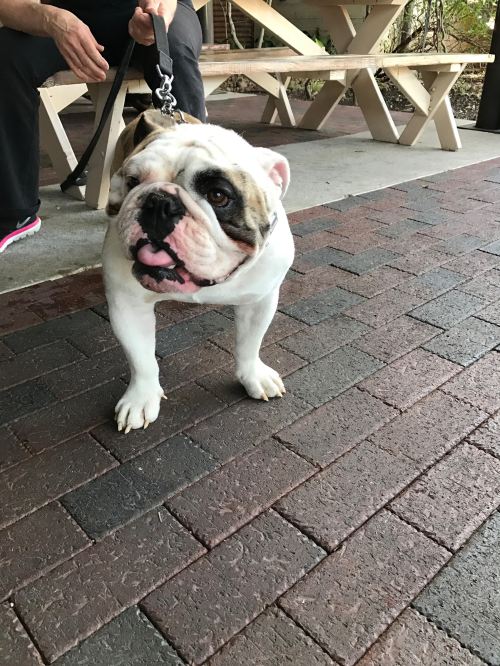
Bulldog

When it comes to caring for our own mental health, most Americans are asleep at the wheel. There are road signs, signals, and exits everywhere, but most Americans are committed to keeping their eyes shut and snoozing right through anything remotely resembling mental health awareness.

Okay. This judgment is a too harsh. But, I’m thinking this way because, not long ago, I watched the film, Manchester by the Sea. Casey Affleck plays the lead character, Lee Chandler. Obviously the film got me a little worked up.

Early on, Lee Chandler’s negligence leads to his children dying in a fire. By any and every measure, this is a trauma and tragedy of immense magnitude. Chandler is emotionally desperate. He tries killing himself. He ends up choosing to live.

But how does Chandler handle his traumatic grief? He continues to drink alcohol and numb himself. He lives like an automaton. Who can blame him? His grief must be so huge that it can’t be addressed. Right? Well, not exactly.

Not long after his children die, Chandler’s brother dies. This is terrible and sad, but suddenly, Chandler gets a second chance. His 16-year-old nephew needs an adult role model. Chandler is the best option.

The film is about pain.  Chandler is devastated. I get that. But instead of showing a glimpse of what it might take to face grief, instead, the film shows Chandler studiously avoiding anything resembling counseling or psychotherapy or education or the possibility of any genuine human interactions that might be helpful.

To be blunt and unkind, Chandler is an emotional chicken. He doesn’t face his emotions or embrace an interest in improving himself or his relationships. He doesn’t do that before or after his traumatic grief. Why not? One reason might be because doing so would be against the cultural norm for real men. . . because real men avoid looking in the mirror and engaging in emotional self-awareness. Seriously? Is this all we expect of emotional development for men and boys? I hope not.

Chandler could have done better than that. We can all do better than that.

What do we know? There’s substantial scientific evidence supporting several ways Chandler might move toward addressing his grief, his depression, his alcohol abuse, and his damaged relationships. He could have been a better person a better man, and a better uncle.

Okay. I’ll calm down now. I understand this is just Hollywood . . . which is why I feel so free to attack Chandler for avoiding what might have been good for himself and his nephew.

All this brings me to my point. In the latest episode of the Practically Perfect Parenting Podcast, Dr. Sara and I interview Dr. Tina Barrett about how to talk to children about death and loss. Then, in the following episode (watch for it next week), we interview her again about how to help children through the death of a loved one.

If you don’t know who Dr. Tina is, you should. I met her in the mid-1990s, hired her at Families First in about 1998, and have followed her amazing work ever since. In our podcast, she provides wisdom and guidance and insights about death and dying. I hope you’ll take time to listen (and avoid being like the character Lee Chandler). Tina has some great ideas that might just contribute to your (and your children’s) emotional development.

As usual, you can listen at iTunes: https://itunes.apple.com/us/podcast/practically-perfect-parenting-podcast/id1170841304?mt=2

Or you can listen on Libsyn: http://practicallyperfectparenting.libsyn.com/

That time when I conducted a scientific research study designed to test the effectiveness of using hypnosis to break down the space-time continuum and transport 18 people to the future so they could fill-out perfect March Madness brackets.

Flower in Bricks

You can probably tell by the title of this post that I’m pretty stoked about scientific research right now.

I typically don’t do much empirical research. That’s why it was a surprise to me and my colleagues that, about six weeks ago, I spontaneously developed a research idea, dropped nearly everything else I was doing, and had amazing fun conducting my first ever March Madness bracket research project.

My research experience included a roller coaster of surprises.

I somehow convinced a professor from the Health and Human Performance department at the University of Montana to collaborate with me on a ridiculous study on a ridiculously short timeline.

My university IRB approved our proposal. Seriously. I submitted a proposal that involved me hypnotizing volunteer participants to transport them into the future to make their March Madness bracket selections. Then they approved it in six days. How cool is that?

I managed to network my way onto ESPN radio (where we called the study ESP on ESPN; thanks Lauren and Arianna) and onto the Billings, MT CBS affiliate (thanks Dan).

And, this is the teaser: with only 36 participants, the results were significant at the p < .001 level.

Damn. Now you know. Scientific research is so cool.

Of course, there’s a back-story. While you’re waiting in anticipation to learn about those p < .001 results, you really need to hear this back-story.

Several years ago, while on a 90-minute car ride back from Trapper Creek Job Corps to Missoula, my counseling interns asked me if I could hypnotize someone and take them back in time so they could recall something that happened to them in a previous life. I thought the question was silly and the answer was simple.

“Absolutely yes.” I said, “Of course I could do that.”

Questions followed.

My answers included a ramble about not really believing in past lives and not really thinking that past life hypnotic regression was ethical. But still, I said, “If someone is hypnotizable, then, I’m sure I could get them into a trance and at least make them think they went back to a previous life and retrieved a few memories. No problem.”

Have you ever noticed that once you start to brag, it’s hard to stop. That’s what happened next, for several years.

Somewhat later in another conversation, I started exaggerating bigly. I decided to extend my imaginary prowess into a fool-proof strategy for generating a perfect March Madness bracket. I said something about, “Brains being amazing and that you can suddenly pay attention to the big toe on your right foot and, at nearly the same time, project yourself not only back into your 7-year-old self, but forward in time into the future. That being the case,” I waxed, “it’s pretty obvious that I could hypnotize people, break down the space-time continuum, and take them to a future where all the March Madness basketball games had been played and therefore, they could just copy down the winners and create a perfect March Madness bracket.”

Through this process, I would turn a one-in-a-trillion possibility into absolute certainty.

I enjoyed bragging about my imaginary scenario for several years. That is, until this year, when, I decided that if I was set on bragging bigly, I should also be willing to put my science where my mouth is (or something like that). It was time to test my hypnosis-space-time-continuum hypothesis using the scientific method.

We designed a pre-test, post-test experimental design with random assignment to three conditions.

Condition 1: Education. Participants would receive about 20 minutes of education on statistics relevant to making March Madness bracket picks. My colleague, Dr. Charles Palmer, showed powerpoint slides and provided insights about the statistical probabilities of 12s beating 5s and 9s beating 8s, and “Blue Blood” conferences.

Condition 2: Progressive Muscle Relaxation. The plan was for Daniel Salois, one of my graduate students and an immensely good sport, to do 20 minutes of progressive muscle relaxation with this group.

Condition 3: Hypnosis. I would use a hypnotic induction, a deepening procedure, and then project participants into the future. Instead of having everyone fill out their brackets while in trance, I decided to use a post-hypnotic suggestion. As soon as they heard me clap twice, they would immediately recall the tournament game outcomes and then fill out their brackets perfectly.

Unfortunately, on short notice we only recruited 36 participants. To give ourselves a chance to obtain statistical significance, we dumped the progressive muscle relaxation condition, and just had the EDUCATION and HYPNOSIS conditions go head to head in a winner-take-all battle.

Both groups followed the same basic protocol. Upon arrival at the College of Education, they were randomly assigned to one of two rooms (Charlie or me). When the got to their room, they signed the informed consent, and immediately filled out a bracket along with a confidence rating. Then they received either the EDUCATION or HYPNOSIS training. After their respective trainings, they filled out a second bracket, along with another confidence rating.

We hypothesized that both groups would report an increase in confidence, but that only the EDUCATION group (but not the HYPNOSIS group) would show a statistically significant improvement in bracket-picking accuracy. We based our hypotheses on the fact that although real education should help, there’s no evidence that anyone can use hypnosis to transport themselves to the future. We viewed the HYPNOSIS condition as essentially equivalent to raising false hopes without providing help that had any substance.

IMHO, the results were stunning.

We were dead on about the EDUCATION group. Those participants significantly increased their confidence; they also improved their bracket scores (we used the online ESPN scoring system where participants can obtain up to a maximum of 320 points for each round; this means participants got 10 points for every correct pick in the first round, with their potential points doubling in every round, and concluding with 320 points if they correctly picked the University of North Carolina to win the tournament).

Then there was the HYPNOSIS group.

HYPNOSIS participants experienced a small but nonsignificant increase in their confidence. . . but they totally tanked their predictions. We had a participant who picked Creighton to win it all. We had one bracket that had Virginia Tech vs. Oklahoma State in the final. We had another person who listed a final score in the championship game of 34-23. When I shared these results to our research class, I said, “The HYPNOSIS participants totally sucked. They did so bad that I think they couldn’t have done any worse if we had hit them all on the head with a 2 x 4 and given them concussions and then had them fill out their brackets.”

So what happened? Why did the HYPNOSIS group perform so badly?

When told of the outcome, one student who had participated offered her explanation, “I believe it. I don’t know what happened, but after the hypnosis, I totally forgot about anything I knew, and just wrote down whatever team names popped into my head.”

My interpretation: Most of the people in the HYPNOSIS group completely abandoned rational and logical thought. They decided that whatever thoughts that happened to come into their minds were true and right.

It’s probably too much of a stretch to link this to politics, but it’s hard not to speculate. It’s possible that candidates from both parties are able, from time to time, to use charisma and bold claims to get their supporters to let go of logic and rational thought, and instead, embrace a fantastical future.

Another faculty member in our department offered an alternative explanation. She recalled the old Yerkes-Dodson law. This “law” in psychology predicts that optimal arousal (or stress) is linked to optimal performance. In contrast, too much arousal or too little arousal impairs performance. She theorized that perhaps the hypnosis participants had become too relaxed; they were so under-aroused that they couldn’t perform.

It seems clear that the hypnosis did something. But what? It wasn’t a helpful trip to the future. Some friends suggested that maybe they went to the wrong year. Others have mocked me for being a bragger who couldn’t really use hypnosis to break down the space-time continuum.

What do you think? Do you have any potential explanations you’d like to offer? I’d love to hear them. And, if you have any ideas of which scientific journal to submit our manuscript to, we’d love to hear that as well.

Teenagers and Depression

Every year, every month, and every day, many teenagers complain of feeling down, depressed, or sad and some of them just act with immense irritability. You probably knew that. But, how many teens are experiencing symptoms of depression?

Estimates are wide ranging. The National Institute of Mental Health reported that approximately 12.5% of U.S. youth from 12-17 years-old experienced at least one episode of major depressive disorder. That’s a huge number of American teenagers (about 3 million).

Add to that the many more teenagers who complain of feeling depressed or down, but who don’t officially meet the diagnostic criteria for clinical depression. By some estimates, that brings the number to close to 50% of teens who are consistently bothered by sad, bad, and irritable feelings.

If you’re a parent of a teen, it’s easy to feel concerned about your teenager’s emotional health.

You may have questions like the following

  • Is my teenager clinically depressed or just going through the normal emotional ups and downs of adolescence?
  • Should I take my son or daughter to a mental health professional?
  • What about medications? Are any of the antidepressants safe and effective for teenagers?

The answers to these questions are complex. It’s hard to tell whether a teenager is in a normal emotional angst or experiencing something more insidious and chronic. And, the answer to the question about whether antidepressant medications are safe and effective with teens is a solid: “Maybe, but maybe not.”

In the latest Practically Perfect Parenting Podcast, Dr. Sara and I take on the serious topic of teenage depression. There are no laughs or giggles, but you’ll get to hear Sara ask me many questions about teen depression, and you’ll get to hear me try to answer them, which is sort of funny. You’ll hear the answer to my favorite trivia question: “What percent of children “recovered” from their depressive symptoms in the first-ever double-blind, placebo-controlled study of antidepressant medications?” And yes, once again, you’ll hear Sara find a way to mention sex during our podcast.

If you have teenagers yourself, or you know someone who has teenagers, or you’re a helping professional who works with teenagers, this podcast may be of interest or helpful to you. Check it out here on iTunes: https://itunes.apple.com/us/podcast/practically-perfect-parenting-podcast/id1170841304?mt=2

If you listen and like it, please share it, and then do us one little favor—rate the podcast on iTunes. That way Sara and I can keep climbing up the charts in reality—rather than just in our imaginations.

JSF Dance Party

Calling All Parents

This post is an invitation for you to participate in a research study. We’re evaluating the effects of listening to the Practically Perfect Parenting Podcasts.

To participate, click on the link below. You’ll be taken to an anonymous online survey. It has 57 items and should take you 15 minutes or less to complete. If you’ve already listened to some or all of the Practically Perfect Parenting Podcasts, that’s okay, you can still participate. Just click on the link and get started:

Practically Perfect Parenting Podcast Survey — Pretest

After filling out the survey, sometime during the next week you should listen to episode 2 (Practically Perfect Positive Discipline, Part I) or episode 5 (Sleep Well in 2017) [or both] of the Practically Perfect Parenting Podcasts. To find the podcasts, go to iTunes https://itunes.apple.com/us/podcast/practically-perfect-parenting-podcast/id1170841304?mt=2 or go to Libsyn:  http://practicallyperfectparenting.libsyn.com/.

After listening to the podcast, please click on the link below and complete the questionnaire again.

Parenting Podcast Post-Test

If you want to be entered in a drawing to win a copy of the book, “How to Listen so Parents will Talk and Talk so Parents will Listen,” either “like” or comment on the podcasts using Facebook or Libsyn between now and April 30. The winner of the book will be announced on May 1, 2017.

Thank you very much for helping us with this research project. We will post a summary of the results when we’re finished.

Sincerely,

John SF

John and Davis Improve their Moods
John and Davis Improve Their Moods

Handouts from South Carolina

This past Thursday I had the honor of offering a full-day workshop on “Tough Kids, Cool Counseling” to the South Carolina Association of School Psychologists. For anyone who has misplaced their handout or who wants additional content, I’m including two handouts in this post.

The first handout includes all the powerpoint slides (except the cartoons and empowered storytelling).

SCASP 2017 for Handout  

The second handout includes additional content corresponding (mostly) to the content in the powerpoint slides.

SCASP Extra Handout

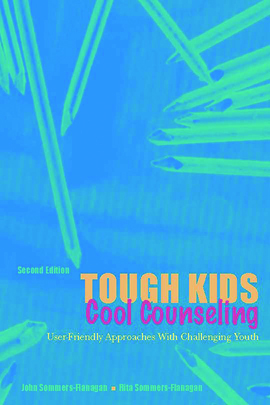
For more information, you can check out our Tough Kids, Cool Counseling book, published by the American Counseling Association, https://www.amazon.com/Tough-Kids-Cool-Counseling-User-Friendly/dp/1556202741/ref=sr_1_10?s=books&ie=UTF8&qid=1491153299&sr=1-10&keywords=sommers-flanagan:

Tough Kids Image

Or you can check out our book on working effectively with parents: https://www.amazon.com/How-Listen-Parents-Will-Talk/dp/1118012968/ref=sr_1_4?s=books&ie=UTF8&qid=1491153770&sr=1-4&keywords=sommers-flanagan


Goodnight, South Carolina

Some days . . . the news is discouraging. Some days . . . evidence piles up suggesting that nearly everyone on the planet is far too greedy and selfish. On those days, I can’t help but wonder how our local, national, and worldwide communities survive. It feels like we’re a hopeless species heading for a cataclysmic end.

Sunset on StillwaterBut then I have a day like yesterday. A day where I had the honor and privilege to spend time hanging out with people who are professional, smart, compassionate, and dedicated to helping children learn, thrive, and get closer to reaching their potentials. I’m sure you know what I mean. If you turn off the media and peek under the surface, you’ll find tons of people “out there” who wake up every day and work tremendously hard to make the world just a little bit better, for everyone.

For me, yesterday’s group was the South Carolina Association of School Psychologists. They were amazing. They were kind. About 110 of them listened to me drone on about doing counseling with students who, due, in part, to the quirky nature of universe, just happen to be living lives in challenging life and school situations. The school psychologists barely blinked. They rarely checked their social media. They asked great questions and made illuminating comments. They were committed to learning, to counseling, to helping the next generation become a better generation.

All day yesterday and into the night I had an interesting question periodically popping up in the back of my mind. Maybe it was because while on my flight to South Carolina, I sat next to a Dean of Students from a small public and rural high school in Wisconsin. Maybe it was because of the SCASP’s members unwavering focus and commitment to education. The question kept nipping at my psyche. It emerged at my lunch with the Chair of the Psychology Department at Winthrop University.  It came up again after my dinner with four exceptionally cool women.

The question: “How did we end up with so many people in government who are anti-education?”

Yesterday, I couldn’t focus in on the answer. I told someone that–even though I’m a psychologist–I don’t understand why people do the things they do. But that was silly. This morning the answer came flowing into my brain like fresh spring Mountain run-off. Of course, of course, of course . . . the answer is the same as it always has been.

The question is about motivation. Lots of people before me figured this out. I even had it figured out before, but, silly me, I forgot. Why do people oppose education when, as John Adams (our second President) said, “Laws for the liberal education of youth, especially for the lower classes of people, are so extremely wise and useful that to a humane and generous mind, no expense for this purpose would be thought extravagant.”

The answer is all about money and power and control and greed and revenge and ignorance. Without these motivations, nearly everyone has a “humane and generous mind” and believes deeply in funding public education.

Thanks to all the members of the South Carolina Association of School Psychologists, for giving me hope that more people can be like you, moving past greed and ignorance and toward a more educated and better world.

Good night, South Carolina. It’s been a good day.