In a surprising turn of events, this semester, I’ve decided to make a series of unprofessional theories videos to accompany my counseling and psychotherapy theories course (and text). When I say surprising, I mean surprising in that I’m surprised about feeling open to spontaneously video recording myself and making it available via YouTube. Could it be that as I grow older, I care less about how I look and sound, and care more about showing myself openly to others as an imperfect being who’s just trying to offer up something that might be educational? Alternatively, maybe I just caught the narcissistically-leaning, reality television, constantly-make-videos-of-myself, YouTube, Instagram, Facebook, Tiktok, virus that’s infecting so many people. We may never know.
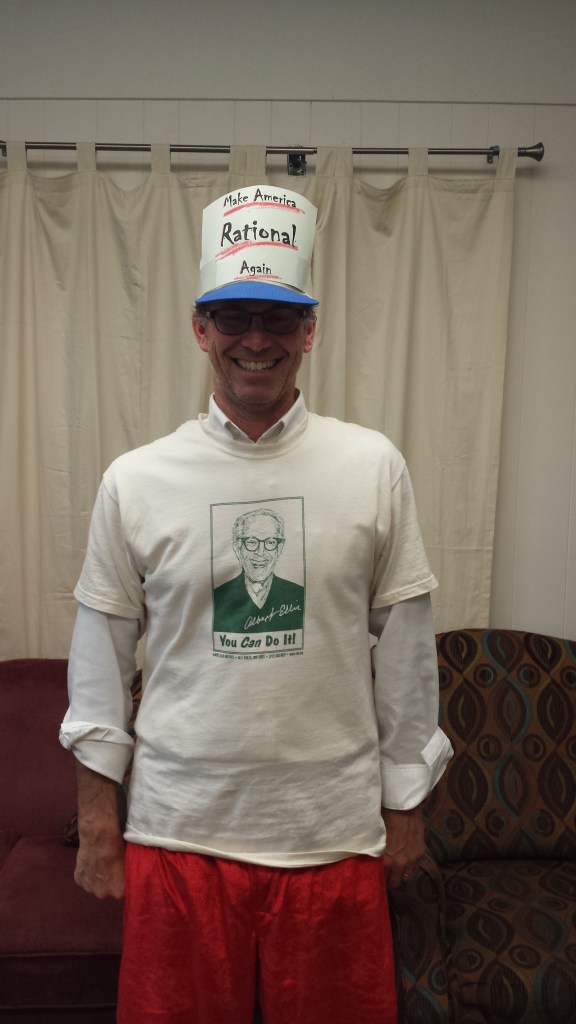
And I say unprofessional because I’m filming these all by myself, not using a script, and making side comments and using props that might involve embarrassing myself as I talk about counseling and psychotherapy theories. One form of these unprofessional videos includes me doing “dramatic readings” and commentary from the works of Freud, Adler, and other original theories thinkers and writers. Although I intended these readings to be dramatic, I can see how they also might just be dull.
With my explanations and caveats out of the way, here are the offerings, thus far, for this semester.
Week 1 – An Intro to Counseling and Psychotherapy Theories
Week 4 – Existential Theory and Therapy . . . coming soon!
Although this post focuses on my unprofessional videos, that doesn’t mean I’ve completely stopped behaving professionally. For example, recently, I was a guest on the podcast, “A New Angle” hosted by Justin Angle and Bryce Ward (both of the University of Montana College of Business). In this podcast, we talk about COVID, suicide in Montana, happiness, and why the College of Business supports the teaching “Essential” interpersonal and psychological skills. It’s a pretty cool (and professional) podcast, even if I do say so myself. You can find “A New Angle” on Apple Podcasts at:
The word suicide, all by itself and regardless of context, can elicit anxiety, grief, anger, and other raw emotions. One of my goals as a mental health professional, is to advocate for open discussions of suicide. Why? Because I want to actively role model how facing, embracing, and discussing suicide directly can shrink the threatening nature of the word—and also shrink the anxiety, grief, and anger that people feel when they hear the word.
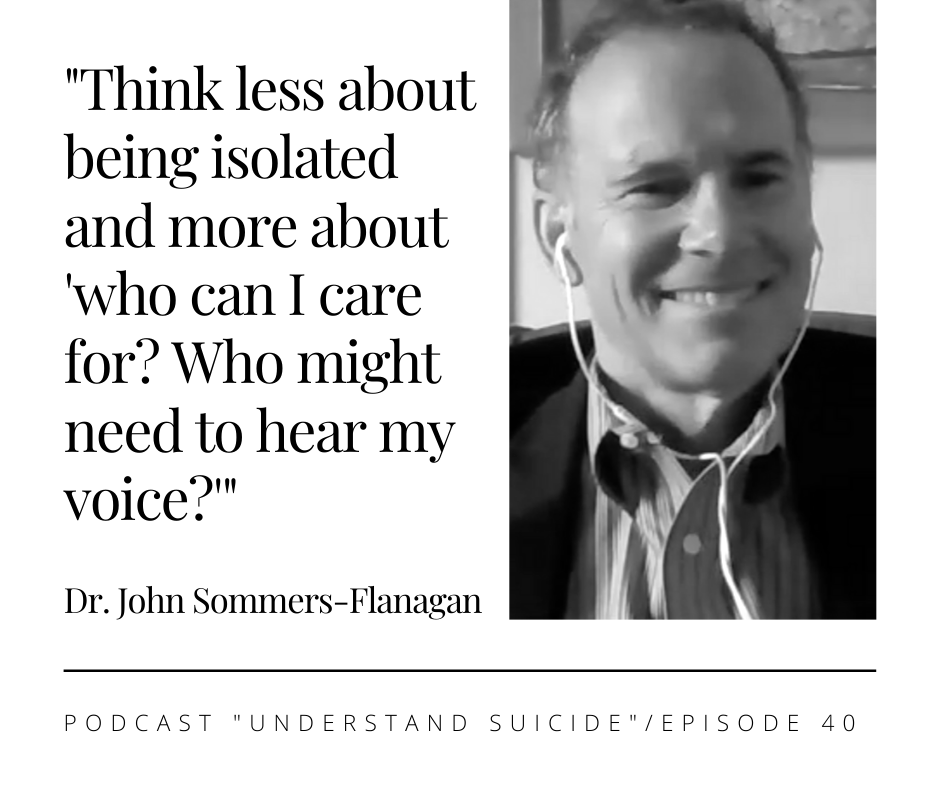
Just yesterday, Paula Fontenelle, author of “Understanding Suicide” (see Amazon: https://www.amazon.com/Understanding-Suicide-Living-loss-prevention/dp/1691504831), posted a podcast and video of her and I discussing suicide. As always, when I look at and listen to myself, I feel a bit shy about sharing this. The mirror (or video recording) is never as flattering as I wish it to be. However, I love that Paula is so dedicated to this topic and that she was willing to have me as a guest on the 1st anniversary and 40th episode of her show.
On Monday, August 31, 2020, Paula Ann Sommers passed on to the place where only the kindest and most loving people on the planet go after death. We don’t know the exact location, but she’ll be there, sharing her angelic love and kindness. Paula was 91 years old, living in a small family group home in Woodinville, WA. She was suffering from dementia and had recently tested positive for COVID-19.
Paula was born to Angelo and Lucille Costanzo in Portland, Oregon. She had two older brothers, Robert (Bob) and Lawrence (Larry) Costanzo. Paula loved her parents and her older brothers, often telling stories of their years together growing up on the Oregon coast. Paula’s stories of Seaside and Arch Cape made these locations mystical and magical to the 13 cousins (children of Bob, Larry, and Paula).
After graduating from Seaside High School in 1948, Paula worked at Patty’s Fountain. In the summer of 1948, Max Sommers walked into the restaurant with a mutual friend. The friend, knowing Paula already had a boyfriend (or two), bet Max that Paula wouldn’t accept a ride home with him. Max took the bet. Not long after Paula saw Max—and his new yellow convertible—Max won the bet. In Max’s words, the bigger prize was to be with the love of his life. Last November, 2019, was Paula and Max’s 70th wedding anniversary.
In 1949, with the help of a VA loan, Paula and Max purchased City Shade Company in Vancouver, Washington. She worked at City Shade with Max for over 44 years. Paula regularly confessed to stealing cash from the company’s cash-box. Having absolutely no ability for stealth or deceit, she confessed to her so-called crimes, just as openly as she shared her heart and love with everyone who entered the doors at City Shade. Among her many remarkable gifts, Paula exuded warmth, genuine caring for others, and unmitigated kindness; she created moments in time and space that made people feel loved, accepted, and prized. In the days following her death, we (her children) have heard dozens of stories of how she unselfishly provided comfort to others. Around Christmas, virtually anyone who entered her home received a gift. For several years she gave out gym bags; other years there were shirts, sweaters, and blouses; still other years, games, toys, and fudge. Her kindness and generosity had no bounds.
As the daughter of an Italian American immigrant, Paula experienced discrimination. Then, as a Catholic, she met, fell in love with, and married a Jewish man. These experiences fueled her determination to reject all forms of prejudice and discrimination with an intensity that might have been labeled as hate (but Paula was philosophically opposed to using the word hate for anything). Instead of railing in negativity against racism, sexism, and homophobia, Paula simply lived her values, welcoming everyone into her bubble of love and kindness. The Christian family next door, the Jewish relatives, the Black family up the street, the lesbian daughter of friends, people on the street living in poverty, Muslims she had never met, children at restaurants . . . to be in proximity of Paula put everyone in danger of a hug, a gift, a smile, an empathic ear, and her unwavering love and acceptance.
Children from the neighborhood came to the Sommers home just as much to be with Paula as to see her children. There was only one Black family in the neighborhood. Paula loved that family with all her heart, soul, and spirit. When they were hungry, she fed them. If the boy who was struggling to understand his sexuality needed to talk, he wandered down the street and sought out Paula. Like moths to a flame, children were instantly attracted to “Mrs. Sommers,” because they saw her for what she was, an oasis of love and acceptance in a world of judgment. Despite this, Paula was nearly oblivious of her popularity. As is true with other Catholic saints, Saint Paula walked humbly in the world, never overestimating herself, while quietly living out her deep values of love, acceptance, kindness, and generosity.
Along with her talents for customer service, listening, and parenting, Paula was also an excellent cook. Every meal was an event that didn’t start until everyone was seated. Special guests got the coveted lace tablecloth, but everyone got food and comfort that would linger in their memories. Paula especially loved desserts. Everyone who knew anything knew that if fresh cookies weren’t on the counter, they could find a cache of snickerdoodles, chocolate chip cookies, banana bread, pumpkin bread, or lemon poppyseed bread in the third drawer on the south end of kitchen. If you came for dinner, it was advisable to “save room in your stomach” for Paula’s pies of the lemon meringue, pumpkin, pecan, apple, and other varieties. Her cheesecakes were to die for. Paula had a mathematical formula for calculating precisely how many pies (or cheesecakes or cakes) were required for a particular meal. She took the number of guests, and divided by two. If eight people were expected, she made four pies. Despite being teased by her children for constantly overestimating dessert needs, in the end, rarely did any of Paula’s desserts exist after noon the following day. Either Paula sent generous servings away with happy recipients, or her naysayers ate all the leftover desserts for breakfast.
In the Sommers family, there were very few rules, because when everyone feels loved and prized for their unique personalities, very few family rules are needed. She never yelled at her children. She never hit her children (although she did chase one child around with an eggbeater until they both dissolved in laughter). One of Paula’s most famous rules was, “We never use the word hate in our family.” She offered an alternative, “You can say you dislike something very intensely.” The word hate was simply the opposite of everything Paula believed in and stood for. In rare cases, when one sibling insulted another, Paula would counter, “If John’s dumb, you’re dumb too, because you’re both in the same family.” To this day, the Sommers children have no memory of sibling rivalry. The Sommers family was a team; Paula gently guided us away from conflict and toward love. When angry, she vacuumed and cleaned the house until everything was spotless and her anger had diminished. Freudian sublimation was never so complete. No one went to bed angry. Everyone was valued. No one doubted Paula’s love.
For many years, Paula mailed out so many greeting, sympathy, and birthday cards that we believe she single-handedly drove up the stock price of Hallmark Cards. Consistent with her character and values, she signed every card the same way: “Love always, Paula.”
For Valentine’s Day, 2010, Regence BlueShield of Oregon made a video recording of Paula and Max talking about their relationship and marriage. During the recording, Max said “Paula is the most unselfish person you ever saw, and you can’t help but take on some of those traits for fear of looking bad if you don’t.” This was the essence of Paula Ann (Costanzo) Sommers. Whenever she was, through kindness, love, and generosity, she inspired everyone to be better, lest they not keep up.
Paula is survived by her husband, Max (Vancouver, WA), her children Gayle (Vancouver, WA and Surprise, AZ), Peggy (Kirkland, WA), and John (Absarokee/Missoula, MT), and her grandchildren Chelsea Bodnar (Missoula, MT), Jason Lotz (Chino Hills, California), Patrick Klein (Vancouver, WA), Aaron Lotz (Seattle, WA), Rylee Sommers-Flanagan (Helena, MT), and Stephen Klein (Los Angeles, CA). Paula is also survived by eight great grandchildren, nieces, nephews, and friends of the family, many of whom who refer to her as their “Favorite Aunt,” or “Quite possibly the kindest person I have ever met.”
Memorial plans for Paula are to be arranged. The family is considering online and face-to-face alternatives. Paula was a staunch supporter of people with limited incomes and resources. Memorial donations can be made in honor of Paula Sommers to whatever charity you believe would fulfill her desire to help those in need. More importantly, she would want all who read this to live in ways to spread happiness, unity, and love. In the spirit of Paula’s life and values, we hope—in her honor—you will take a day, a week, a month, a year, or the rest of your life to intentionally share kindness, acceptance, and generosity with others. And, as Paula would say, “Love always.”
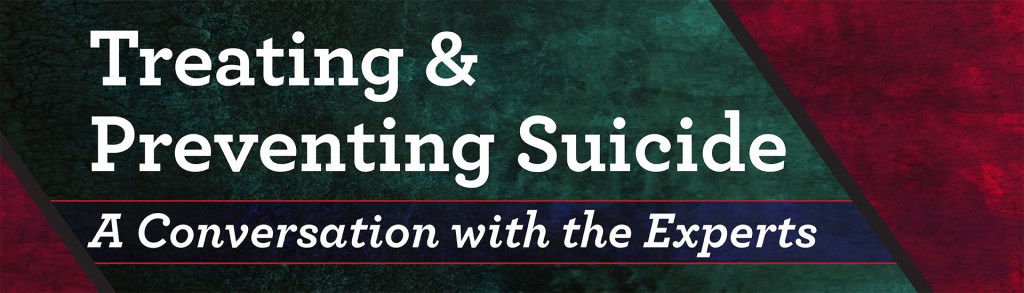
On Wednesday, we had about 3,000 people register for the ACA-sponsored webinar, “Treating & Preventing Suicide.” That was a fantastic turn out and I owe a BIG THANKS to Zachary Taylor of PESI for skillfully moderating the event and to Victoria Kress (Distinguished Professor from Youngstown State University) for sharing her insights about suicide assessment, prevention, and non-suicidal self-injury. Questions and comments from participants were excellent; it would have been great to have more than only one hour.
During the webinar we promised I would post additional suicide and NSSI resources on my blog. Other events have conspired (as they will) to delay this posting to this particular moment in time. Because we’re posting this content after the event, I’m aware that we may not efficiently get this out to everyone who was online and interested. Consequently, if you get this post and you know someone who’s not following this blog, but who might want this information, please feel free to forward or share.
The following content is from Victoria:
An article on self-harm published in Psychotherapy Networker:
Vicki also co-authored the following two publications:
Kress, V. E., & Hoffman, R. M. (2008) Non-suicidal self-injury and motivational interviewing: Enhancing readiness for change. Journal of Mental Health Counseling, 30, 311-329.
Stargell, N. A., et al., (2017-2018). Student non-suicidal self-injury: A protocol for school counselors. Professional School Counseling, 21, 37-46. Click here for the pdf.
Sommers-Flanagan, J. (2018). Conversations about suicide: Strategies for detecting and assessing suicide risk. Journal of Health Service Psychology, 44, 33-45.
Sommers-Flanagan, J. (2018). Suicide assessment and intervention with suicidal clients [Video]. 7.5 hour training video for mental health professionals (produced by V. Yalom). Mill Valley, CA: Psychotherapy.net — https://www.psychotherapy.net/video/suicidal-clients-series
Sommers-Flanagan, J. (2019). Suicide assessment for clinicians: A strength-based model. ContinuingEdCourses.net
Sommers-Flanagan, J. (2019). Suicide interventions and treatment planning for clinicians: A strength-based model. ContinuingEdCourses.net
Because Rita and I just turned in our ACA book manuscript (coming in Feb), I’ve got a huge list of suicide-related citations. Below, I’m listing a few highlights related to our discussion on Wednesday. Books and articles about the top evidence-based approaches have an asterisk (*).
Ahuja, A., Webster, C., Gibson, N., Brewer, A., Toledo, S., & Russell, S. (2015). Bullying and suicide: The mental health crisis of LGBTQ youth and how you can help. Journal of Gay & Lesbian Mental Health, 19(2), 125-144. https://doi.org/10.1080/19359705.2015.1007417
Binkley, E. E., & Liebert, T. W. (2015). Prepracticum counseling students’ perceived preparedness for suicide response. Counselor Education & Supervision, 54(2), 98-108.
Bryan, C. J., Bryan, A. O., & Baker, J. C. (2020). Associations among state‐level physical distancing measures and suicidal thoughts and behaviors among U.S. adults during the early COVID‐19 pandemic. Suicide and Life Threatening Behavior, e12653, 1-7. https://doi.org/10.1111/sltb.12653
*Bryan, C. J., & Rudd, M. D. (2018). Brief cognitive-behavioral therapy for suicidal prevention. Guilford Press.
Cureton, J. L., & Clemens, E. V. (2015). Affective constellations for countertransference awareness following a client’s suicide attempt. Journal of Counseling & Development, 93(3), 352-360. https://doi.org/10.1002/jcad.12033
Erbacher, T. A., Singer, J. B., & Poland, S. (2015). Suicide in the schools: A practitioner’s guide to multi-level prevention, assessment, intervention, and postvention. Routledge.
Finn, S. E., Handler, L., & Fischer, C. T. (2012). Collaborative/therapeutic assessment: A casebook and guide. Wiley.
Freedenthal, S. (2018). Helping the suicidal person: Tips and techniques for professionals. Routledge.
Granello, D. H. (2010a). A suicide crisis intervention model with 25 practical strategies for implementation. Journal of Mental Health Counseling, 32(3), 218-235. https://doi.org/10.17744/mehc.32.3.n6371355496t4704
Healy, D. (2009). Are selective serotonin reuptake inhibitors a risk factor for adolescent suicide? The Canadian Journal of Psychiatry/La Revue Canadienne De Psychiatrie, 54(2), 69-71. https://doi.org/10.1177/070674370905400201
Hedegaard, H., Curtin, S.C., & Warner, M. (2020). Increase in suicide mortality in the United States, 1999–2018. NCHS Data Brief, 362. National Center for Health Statistics.
*Jobes, D. A. (2016). Managing suicidal risk: A collaborative approach (2nd ed.). Guilford Press.
*Joiner, T. (2005). Why people die by suicide. Harvard University Press.
Large, M. M., & Kapur, N. (2018). Psychiatric hospitalisation and the risk of suicide. The British Journal of Psychiatry, 212(5), 269-273. https://doi.org/10.1192/bjp.2018.22
Large, M. M., & Ryan, C. J. (2014). Suicide risk categorisation of psychiatric inpatients: What it might mean and why it is of no use. Australasian Psychiatry, 22(4), 390-392. https://doi.org/10.1177/1039856214537128
*Linehan, M. (1993). Cognitive behavioral therapy of borderline personality disorder. Guilford Press.
*Linehan, M. (2015). DBT® skills training manual (2nd ed.). Guilford Press.
Maris, R. W. (2019). Suicidology: A comprehensive biopsychosocial perspective. Guilford Press.
*Stanley, B. & Brown, G. K (2012). Safety planning intervention: A brief intervention to mitigate suicide risk. Cognitive and Behavioral Practice, 19(2), 256–264. https://doi.org/10.1016/j.cbpra.2011.01.001
Wenzel, A., Brown, G. K., & Beck, A. T. (2009) Cognitive therapy for suicidal patients: Scientific and clinical applications. American Psychological Association.
As a resource to complement the panel discussion, I’m posting some information on suicide assessment. Below is the opening from the suicide assessment chapter in our forthcoming book with the American Counseling Association. We emphasize that suicide assessment isn’t purely data collection. Instead, professionals need to simultaneously keep their eye on how to be therapeutic. Here’s the excerpt:
Suicide assessment integrates science and art. Assessment science helps practitioners determine what information is most important during a clinical interview and how to best obtain reliable and valid assessment data (Sommers-Flanagan et al., 2020; Wygant et al., 2020). The art of assessment includes how and when to ask questions, relational methods for offering empathy, and how clinicians can partner with clients to explore symptoms and strengths in ways that facilitate trust and stimulate honesty (Ganzini et al., 2013). Because suicide is a painful and provocative topic, advanced assessment skills are essential.
When clients or students experience suicidality, exposure to an assessment process can feel threatening. As a consequence, we believe counselors should embrace principles of therapeutic assessment (Fischer, 1970, 1985). Therapeutic assessment originated in the late 1960’s, when Constance Fischer began practicing and publishing about a radical new assessment approach. Unlike traditional objective and unilateral approaches to assessment, Fischer (1969, 1970) began viewing clients as “co-evaluators.” Stephen Finn has extended Fischer’s ideas; the approach is now called therapeutic assessment (Finn et al., 2012).
Therapeutic assessment principles are consistent with the professional counseling paradigm (Capuzzi & Stauffer, 2016); they include collaboration, compassion, openness, honesty, and a commitment to valuing clients as ultimate experts on their lived experiences. Although information gathering remains important, relationship connection during assessment interviews takes priority. Every assessment finding needs to be validated and understood within each client’s unique personal context. Collaboration is the cornerstone; assessments are done with clients, not on clients (Martin, 2020; Sommers-Flanagan & Sommers-Flanagan, 2017). As Flemons and Gralnik (2013) wrote, when conducting suicide assessments, “Our goal is not to remain objectively removed but, rather, to become empathically connected” (p. 6).
Obviously, there’s not enough time and space to go into great depth on suicide assessment in a little blog like this. And so, if you looking for depth, check out the video series I did with Victor Yalom and Psychotherapy.net. You can even watch a short demonstration video clip: https://www.psychotherapy.net/video/suicidal-clients-series
I wish you all the best as you face the challenge of engaging with and treating clients who are suicidal with the therapeutic respect they deserve.
Over the past decade or so, Rita and I have been involved in some better and worse video production experiences. When I say better and worse, mostly I mean more embarrassing and less embarrassing.
Once, back in 2012, Sara Polanchek volunteered to help me do a psychoanalytic video demonstration. In honor of Freud, I suppose, the videographer begins by over-handling my tie. Then, we officially start the session with me asking Sara to free associate, and Sara takes over. Late in the clip, the other voice you hear in the background is Rita, whom I suspect collaborated with Sara on trying to embarrass me (even more than I would have been naturally embarrassed simply be trying to demonstrate a psychoanalytic session).
I tried posting this clip several years ago, but somehow the version didn’t actually include Sara’s opening disclosure. . . which was the whole point. So here’s the full 1 minute and 55 seconds: https://www.youtube.com/watch?v=SeihJqtenyc
Being holed up in our passive solar Absarokee house made an interesting venue for blasting off this semester’s University of Montana Counseling Theories class. I’m mentioning passive solar not to brag (although Rita did design an awesome set-up for keeping us warm in the winter and cool in the summer using south-facing windows and thermal mass), but to give you a glimpse of our temperature-related passivity: we have no working parts (as in air conditioning). And I’m mentioning holed up because we’re in a stage 1 air pollution alert from California smoke and consequently weren’t able to use our usual manual air conditioning system (opening up the windows in the night to cool off the house). Our need to keep the windows shut created a warmer than typical room temperature and, based on my post-lecture assessment of the armpits of my bright yellow shirt, yesterday just might have been my sweatiest class since 1988, when I was teaching at the University of Portland, and started sweating so much during an Intro Psych class that my glasses fogged up. In case you didn’t already know this about me, I’m an excellent sweater. You haven’t seen sweat until you’ve seen my sweat. Top-notch. The sort of sweating most people only dream about. I’d rate myself a sweating 10.
Aside from my sweating—which I’m guessing you’ve had enough of at this point—the students were pretty darn fantastic. Attendance was virtually perfect, which, given that everything was virtual, exceeded my expectations.
Speaking of expectations, because I’m teaching online via Zoom, one thing I’m adding to the course are a few pre-recorded videos. Yesterday’s pre-recorded video featured me telling my famous “Hypnosis for Warts” story. My goal with the pre-recorded video—aside from letting my students see me and my yellow shirt in a less sweaty condition—was to break up the powerpoints. I could have told the story live, but instead, I clicked out of the powerpoints, told my students we were going to watch a video, and then showed a video of myself . . . telling a story I could have been telling live. I thought I was hilarious. However, mostly, the sea of 55 Hollywood Squares faces just stared into the sea of virtual reality, and so I couldn’t see whether the students appreciated my pre-recorded video of myself teaching strategy. I know I’ve got too many “seas” in that preceding sentence, but redundancy happens. Really, it does. I’m totally serious about redundancy.
Back to expectations . . .
One of Michael Lambert’s four common factors in counseling and psychotherapy is expectancy. He estimated that, in general, expectation accounts for about 15% of the variation in treatment outcomes. But, of course, treatment outcomes are always contextual and always variable and always unique, and so, as in the case of “Hypnosis for Warts,” sometimes the outcome may be a product of a different combination or proportion of therapeutic ingredients. If you watch the video, consider these questions:
What do you think “happened” in the counseling office with the 11-year-old boy to cause his eight warts to disappear?
Do you think the therapeutic ingredients that helped the boy get rid of his warts were limited to Lambert’s extratherapeutic factors, relationship factors, technical factors, and expectancy factors (his four big common factors) . . . or might something else completely different have been operating?
What proportion of factors do you suppose contributed to the positive outcome? For example, might there have been 50% expectancy, instead of 15%?
That’s about all I’ve got to share for today. However, if you happen to know of some nice 1-5 minute theories-related video clips that I can share with my students, please pass them on. I’d be especially interested if you happen to have video clips of me, but relevant videos of other people would be nice too. Haha. Just joking. Please DON’T send video clips of me. My students and I—we already have far too much of the JSF video scene.
See below for links to the handouts for the Alabama Counseling Association workshop on 8/21/20, titled, “Suicide Assessment and Treatment Planning: A Strength-Based Approach.” Although I wish I could be there in-person in Alabama, instead, we’ll get an exciting, live, and interactive Zoom workshop!
Giving and receiving feedback is a huge topic. In this blog post the focus is on giving and receiving feedback in classroom settings or in counseling/psychotherapy supervision. The following guidelines are far from perfect, but they offer ideas that instructors and students can use to structure the feedback giving and receiving process. Check them out, and feel free to improve on what’s here.
Before you do anything, remember that feedback can feel threatening. Hearing about how we sound and what we look like is pretty much a trigger for self-consciousness and vulnerability. Sometimes, when we look in the mirror, we don’t like what we see, and so obviously, when someone else holds up a mirror, the feedback we experience may be . . . uncomfortable. . . to say the least. To help everyone feel a bit safer, the following can be helpful:
Acknowledge that feedback is scary.
Emphasize that feedback is essential to counseling skill development.
Share the feedback process you’ll be using
Make recommendations and give examples of what kind of feedback is most useful.
Acknowledge that Feedback is Scary: You can talk about mirrors (see above), or about how unpleasant it is for most people to hear their own voices or see their own images, or tell a story of difficult and helpful feedback. I encourage you to find your own way to acknowledge that feedback triggers vulnerability.
Feedback is Essential: Encourage students to lean into their vulnerability and be open to feedback—but don’t pressure them. Explain: “The reason you’re in a counseling class is to improve your skills. Though hard to hear, constructive feedback is useful for skill development. Don’t think of it as criticism, but as an opportunity to learn from mistakes and improve your counseling skills.” What’s important is to norm the value of giving and getting feedback.
Share the Process You’ll be Using: Before starting a role play or in-class practice scenario, describe the guidelines you’ll be using for giving and receiving feedback (and then generate additional rules from students in the class). Here are some guidelines I’ve used:
Everyone who volunteers (or does a demonstration or is being observed) gets appreciation. Saying, “Thanks for volunteering” is essential. I like it when my classes establish a norm where whoever does the role-playing or volunteers gets a round of applause.
After being appreciated, the role-player starts the process with a self-evaluation. You might say something like, “After every role play or presentation, the first thing we’ll do is have the person or people who were role-playing share their own thoughts about what they did well and what they think they didn’t do so well.”
After the volunteer self-evaluates, they’re asked whether they’d like feedback from others. If they say no, then no feedback should be given. Occasionally students will feel so vulnerable about a performance that they don’t want feedback. We need to accept their preference for no feedback and also encourage them to solicit and accept feedback at some later point in time.
Giving Useful Feedback: It’s always good to start with the positive. Try to be very clear and specific about some things you especially liked. I usually take notes to help me with this; I’ll write down exactly what the role player said and put a + sign next to it so I can say something like, “I see in my notes that I put a + sign next to your very first paraphrase. You seemed to be tracking very well and you shared what you heard with your client in a way that felt nice.
Constructive or corrective feedback shouldn’t focus so much on what was done poorly, but emphasize what could be done to perform the skill even better. Constructive or corrective feedback might sound like this: “I noticed you asked several closed questions. Closed questions aren’t bad questions, but sometimes it’s easier to keep clients talking about important content if you replace your closed questions with open questions or with a paraphrase. Let’s try that. How could you change one of your closed questions to an open question or a paraphrase?” BTW: General and positive comments (e.g., “Good job!”) are pleasant and encouraging, but should be used in combination with more specific feedback; it’s important to know what was good about your job.
Constructive feedback should be specific, concrete, and focused on things that can be modified. For example, you can offer a positive or non-facilitative behavioral observation (e.g., “I noticed you leaned back and crossed your arms when the client started talking about sexuality.”). After making an observation, the feedback giver or the group can explore potential hypotheses (e.g., “Your client might interpret you leaning back and crossing your arms as judgmental”). The feedback giver can also offer an alternative (“Instead, you might want to lean forward and focus on some of your excellent nonverbal listening skills.”).
With constructive feedback you can take some of the evaluation out of the comment by just noticing or observing, rather than judging, “I noticed you said the word, ‘Gotcha’ several times.” You can also ask what else they might say instead, “To vary how you’re responding to your client, what might you say instead of ‘Gotcha’?”
General negative comments such as “That was poorly done.” should be avoided. To be constructive, provide feedback that’s specific, concrete, and holds out the potential for positive change. Feedback should never be uniformly negative. Everyone engages in counseling behaviors that are more or less facilitative. If you happen to be the type who easily sees what’s wrong and have trouble offering praise, impose the following rule on yourself: If you can’t offer positive feedback, don’t offer any at all. Another alternative is to consciously focus on using the sandwich feedback technique when appropriate (i.e., say something positive, say something constructive, then say another positive thing).
IMHO, significant constructive feedback is the responsibility of the instructor and should be given during a private, individual supervision session. The general rule: “Give positive feedback in public and constructive feedback in private” can be useful.
Finally, students should be reminded of the disappointing fact that no one performs perfectly, including the teacher or professor. Also, when you do demonstrations, be sure to model the process by doing a self-evaluation (including things you might have done better), and then asking students for observations and feedback.
The following is an excerpt from a section we’re developing in our strength-based suicide assessment and treatment book. Check it out and provide feedback if you like.
****************
Lethal Means Restriction (Safety)
Firearm availability or easy access to other lethal means is significantly linked to death by suicide (Bryan & Rudd, 2018). Access to lethal means is especially important because acute suicidal crises tend to be brief. If guns, razor blades, pills or other means are not immediately accessible, the crisis may pass without an attempt occurring. Summarizing pertinent research (Simon et al., 2001), Bryan and Rudd noted:
The final decision regarding the suicide attempt method typically occurs approximately 2 hours prior to the attempt, the final decision regarding the location of the attempt typically occurs approximately 30 minutes prior to the attempt, and the final decision to act typically occurs approximately 5 minutes prior to the attempt (p. 143).
Given that intense suicidal impulses usually pass quickly, limiting easy access to lethal means may be one of the most effective interventions available.
Bryan and colleagues (2011) published an article on how to engage clients who are suicidal in “means-restriction counseling.” As they noted, mental health professionals are expected to talk with clients about locking up and removing lethal means for suicide. However, little practical advice on how to do so is available (other than articles by Britton et al., 2016 & Bryan et al., 2011).
Early in her session with her counselor, 15-year-old Sophia (chapter 4), made it clear that she knew where her father kept the family’s guns. Although the counselor didn’t feel the need to immediately respond to her statement, as they worked on a collaborative safety plan later in the session, lethal means restriction came up for discussion:
Counselor: Sophia, we need to talk about a big issue that’s related to your safety. Is it okay with you if I just bring it up right now?
Sophia: Yeah.
Counselor: When people are suicidal, guns are the most dangerous thing to have in the house. Because my biggest goal is to keep you safe, we need to talk about how to lock up the guns or get them out of the house.
Sophia: My dad will completely freak about that.
Counselor: That’s okay. Lots of people have strong feelings about keeping guns in their homes. Don’t worry about talking with your dad, because I can do that. I want to keep you safe, but also respect your dad’s rights.
Sophia: Yeah. No way am I bringing that up.
Sophia’s reluctance to bring up gun safety with her father is natural. Her clear statement, “No way am I bringing that up,” means that bringing up gun safety is the counselor’s responsibility—as it should be.
Although phone conversations about gun safety with parents or family members may be helpful, we prefer a face-to-face contact when possible. In our experience, the best approach is to be direct, straightforward, and matter of fact. The core message is that because often suicidal impulses briefly escalate but then subside, all highly lethal methods should be locked away or removed.
Bryan and colleagues (2011) recommended presenting options for restricting firearms access. They presented options such as completely removing the means from the home by disposing of it or giving it to a supportive person. They noted you can also have clients lock up the means and give the key to a supportive person, or dismantle the firearm and give a critical piece to a supportive person (Bryan et al., 2011, pp. 341-342).
Discussing firearms during counseling sessions can result in instant escalation and polarization. Preparation helps. We recommend the following:
Be prepared talk about firearm safety. Talking directly about firearm safety is one of the most effective methods you have for reducing risk.
Keep a laser-focus on safety; avoid using the word “restriction.” Your discussion isn’t about restrictions on firearms or gun rights. Your discussion is about safety.
If it feels helpful, say, “I support your second amendment rights.” Conversations about firearms in the context of suicide prevention don’t need to be political.
As needed, state unequivocally, “I want to respect your right to own your guns . . . AND I want you (or your daughter) to be safe and to live a long and fulfilling life.”
Brainstorm different methods for enhancing safety. Recognize that there are two general approaches to gun safety: (a) removing firearms from the premises and (b) creating obstacles to impulsive use of firearms during a suicidal crisis (e.g., trigger locks, gun safes). Although removing guns is the safest alternative, creating obstacles is a reasonable alternative. You may want to conduct your brainstorming with the parent, client, essential support person, or all of the above.
Remember that because there’s no single perfect safety solution and because nearly everyone is more agreeable if they participate in a decision-making process, less directive procedures like Socratic questioning and motivational interviewing may be preferable.
If you’d rather not be boldly direct about gun safety, consider using Socratic questions to help clients come to their own conclusions. Bryan and Rudd (2018) recommend questions such as, “What do you think about someone having access to guns when they’re really upset and are suicidal?” “What might be some benefits of temporarily limiting your access to firearms?” “If complete removal of the guns is not possible, what are some other options for practicing good gun safety while you’re going through this treatment?” “What do you think about putting together a plan for this?” (p. 148).
Motivational interviewing (MI) is another less-directive method for discussing firearms safety. Keeping in mind the core principle of MI—that clients should be the ones making the case for change—clinicians can use open-ended questions, reflections, affirmation, and other technical strategies to increase firearms safety (Miller & Rollnick, 2013). The following short exchange is excerpted from an extended case example where a veteran has refused to remove his firearms, and so clinician is using MI to elicit talk around adding obstacles to enhance safety (see Britton et al., 2016, pp. 56-58, for the full case example).
**To be continued**
The place to click if you want to learn about psychotherapy, counseling, or whatever John SF is thinking about.





 John Sommers-Flanagan