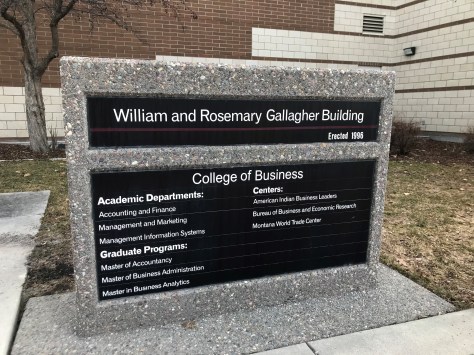
Today I’m talking at the University of Montana’s College of Business. It’s a fantastic place with incredible faculty and cool students. Here’ the powerpoint: College of Business Talk 2020

Today I’m talking at the University of Montana’s College of Business. It’s a fantastic place with incredible faculty and cool students. Here’ the powerpoint: College of Business Talk 2020
This is the assignment for my happiness students at the University of Montana. Check it out.
About a decade or two ago, the concept, “Random acts of kindness” gained traction. Now, about a decade or two later, I’m a little sad that random acts of kindness has become the most common way we talk about kindness. I say this despite the fact that I’m a big fan of randomness.
For your assignment this week, I’d like all of us to break away from the randomness mentality and embrace intentionality.
Intentional acts give us—as actors in the grand theater of life—greater agency. Instead of being stuck with a script someone else wrote, when we embrace intentionality, we become the author of every scene. Rather than randomly responding to opportunities with kindness, we can exert our will. What this means is that when an opportunity for kindness pops up, we already have a plan . . . and that plan involves creatively finding a way to respond with kindness. How cool is that?
Let’s think about this together.
Toward whom would you like to demonstrate kindness? A stranger? If so, it might feel random in that you might act kind in a moment of spontaneity. But your spontaneity—although wonderful—is a moment when your intentionality (to be a person who acts with kindness) meets opportunity. In this way, even acts toward strangers that seem or feel spontaneous, will be acts that reflect your deeper values and character.
Maybe you’d like to intentionally be kind to a friend, a parent, or a sibling. Again, this requires thought and planning and the ability to step outside yourself. Assuming that others want what you want can backfire. You’ll need to step into another person’s world: What would your friend, parent, or sibling appreciate?
To stay with the theater metaphor, you’re the script-writer and you’ve written yourself into this performance. For this week, the script or plan includes a character who values kindness and who watches for opportunities to share that value with others. You’re that character.
Your job is to translate your kind character into kind action. I don’t what that will look like for you. Maybe you don’t either. That’s the magic—where opportunity meets planned spontaneity.
Your other job is to write a summary of this experience (100 to 300 words) to Dan and me and to post it in the correct Moodle destination.
Have a fabulous week!
John SF
This is a photo of the James River in Richmond, Virginia this past Sunday evening.


Gratitude Homework
Although it’s true that most everyone experiences gratitude, most of us don’t intentionally create time and space to express gratitude. That’s why this week’s happiness assignment is all about intentional expressions of gratitude.
This assignment is part contemplation, part writing, and part action. Use the following steps:
Remember, your plan is to express gratitude. What that means is that you need to drop any expectations for how the recipient of your gratitude should or will respond. Don’t focus on their response, instead, focus on doing the best job you can expressing the gratitude that you sincerely feel.
If the person loves hearing about your gratitude, cool. If the person is uncomfortable or not positive or silent, that’s okay. Your goal should be within your control—meaning that all you can control is your end of the communication and not how the communication is received.
Turn in a short report to Dan and me about your gratitude experience and put it in the appropriate Moodle bin. Tell us, (a) what it was like to write the gratitude message, (b) what it was like to deliver it, and (c) how it felt to express your gratitude. If you get inspired, feel free to repeat this gratitude experiment a second or third time.
Like last week, your report to us doesn’t need to be long—unless writing it is a pleasant experience for you—in which case, you can linger and write longer.
Good luck and although I know I can’t control the outcome of this experience, I hope you find it fun and meaningful.

[This is a letter to my happiness class]
Hello Happy People,
When happiness class ends, sometimes I wish we could continue in conversation. You may not feel that way. You might be thinking, “Thank-you Universe! Class is finally over.” But as a long-time professor-type, on many days I wish we could keep on talking and learning. I know that it may not surprise you to hear that I’m feeling like I’ve got more to say:).
This week (Tuesday, February 11) was one of those days. Many of you made great comments and asked big questions. But, given that time is a pesky driver of everything, I/we couldn’t go as deep as we might have. Here’s an example of a question I loved, but that I felt I didn’t go deep enough with:
“Do you believe in the Law of Attraction?”
This is a fascinating question with deep and profound contemporary relevance. At the time, if you recall, I had dissed inspirational statements like, “If you can imagine it, you can achieve it. If you can dream it, you can become it” as “just bullshit.” Then, in response to the question of whether I believe in the so-called Law of Attraction, I said something like “I don’t completely disbelieve it” . . . and then pretended that I was in possession of a scientific mental calculator and said something like, “I believe things like imagining the positive can have a positive effect, but it might contribute about 3% of the variation to what happens to people in the future.”
Not surprisingly, upon reflection, I’m thinking that my use of the word “bullshit” and my overconfident estimation of “3% of the variation” deserve further explanation. Why? Because if I don’t back up what I say with at least a little science, then I’m doing no better than the folks who write wacky stuff like, “You can if you think you can.” In other words, how can you know if what I say isn’t “just bullshit” too?
At this point I’d like to express my apologies to Dr. Norman Vincent Peale for referring to one of his book titles as “wacky stuff.” However, in my defense, I read the book and I still can’t do whatever I think I can do . . . so there’s that . . . but that’s only a personal anecdote.
Okay. Back to science. Here’s why I said that positive thinking, as in the so-called “Law of Attraction” might account for only about 3% of the variation in life outcomes.
Back in the 1980s, I did my thesis and dissertation on personality and prediction. At the time I had four roommates and I felt I could predict their behaviors quite easily on the basis of their personalities. However, much to my surprise, I discovered that social psychology research didn’t support personality as a very good predictor of behavior. Turns out, personality only correlates with behavioral outcomes at about r = 0.3 or r = 0.4. You might think that sounds big, because you might think that r = 0.3 means 30%. But that’s not how it works. If you do the math and multiply the correlational coefficient by itself (as in 3 x 3 or 4 x 4) you get what statisticians call the coefficient of determination (in this case, 3 x 3 = 9% and 4 x 4 = 16%). The coefficient of determination is an error-filled effort to predict specific future events, as in, if your r = 0.3, then, if you know r, then you can be about 9% accurate in predicting an outcome.
Please note that everything is error-filled, including science, and including me and my shoot from the hip efforts at estimation and prediction. When I say error-filled, I’m not disrespecting science, I’m just acknowledging its limitations.
Okay. Back to the so-called Law of Attraction. In class I was calculating in my mind that if well-measured personality traits like extraversion or introversion only account for about 9-16% of the variation in behavioral outcomes, then the so-called Law (which I’m inclined to rename as the Hypothesis of Attraction) would likely account for significantly less variation . . . so I quickly did some mental math and “3%” popped out of my mouth. What I should have said is that humans are remarkably unpredictable and that personality barely predicts behavior and situations barely predict behavior and so when we hypothesize what might influence our future, we should be careful and underestimate, lest we appear foolishly overconfident, like many television pundits.
Somewhere around this time, someone asked if I thought the authors of books who advocated things like the law of attraction really believed in what they wrote or just wrote their books for profit. My response there was something like, “I don’t know. Maybe a bit of both.” To be perfectly honest—which I’m trying to be—one of my big concerns about things like the law of attraction is that they’re used to increase hope and expectations and typically come at a price. I don’t like the idea of people with profit-driven motives luring vulnerable people with big hopes into paying and then being disappointed. Sometimes I ask myself, “If someone has their life together so much that they discovered a secret to becoming wealthy by visualizing wealth, then they should already be so damn rich that they should just share their secret for free with everyone in an effort to improve people’s lives and the state of the planet!” The corollary to that thought is that if somebody says they’ve got a powerful secret AND THEY WANT TO CHARGE YOU FOR IT, my bullshit spidey sense sounds an alarm. Go ahead, call me suspicious and cynical.
Now. Don’t get me wrong. I’m a big fan of positive thinking. A huge fan. I believe positive thinking can give you an edge, and I believe it can make you happier. But I also think life is deeper than that and multiple factors are involved in how our lives turn out. I don’t want to pretend I’ve got a secret that I can share with you that will result in you living happily ever after with all the money you ever wished for. On the other hand, I do want to encourage everyone to embrace as much as you can the positivity and gratitude and kindness and visions of your best self that we’re talking about and reading about for our happiness class. I want you to have that edge or advantage. I want you to harness that 3% (okay, maybe it could be 7%) and make your lives more like your hopes and dreams.
Later, another student asked how we can know if we’re just fooling ourselves with irrational positivity. Wow. What an amazing question. At the time, I said, we need to scrutinize ourselves and bounce our self-statements or beliefs off of other people—people whom we trust—so we can get feedback. One thing I’d add to what I said in class is that we should also gather scientific information to help us determine whether we’re off in the tulips or thinking rationally. Self-scrutiny, feedback from trusted others, and pursuit of science. . . I think that’s a pretty good recipe for lots of things. It reminds me of what Alfred Adler once wrote about love. . . something like, “Follow your heart, but don’t forget your brain!”
Tomorrow is Valentine’s Day. I hope your weekend is a fabulous mix of following your heart, and hanging onto the science.
John SF

We all know how to savor chocolate or wine or the cheesecake that tastes like you’ve made it to heaven. When it comes to gustatory experiences, savoring is natural.
Funny thing, savoring successes, beautiful scenery, a poem you hear on the radio, and other potentially positive life experiences often (but not always) feels less natural. That’s too bad, because researchers have repeatedly found that taking a moment to savor the moment in the midst of a busy day can increase happiness and decrease depression. We should try to remember to savor more often.
For this week the plan is for you to pick one savoring assignment from a menu of research-based savoring activities (below). Each of these activities has research support; doing any of them might make you feel significantly more happiness or less depression. Here are your options:
As usual, write a short report to Dan and me about your experiences and put it in the appropriate Moodle bin. This report doesn’t need to be long—unless writing it is a pleasant experience for you—in which case, you can linger and write longer.

You all already know about optimism and pessimism.
Some people see the glass half full. Others see the glass half empty. Still others, just drink and savor the water, without getting hung up on how much is in the glass. Obviously, there are many other responses, because some people spill the water, others find a permanent water source, and others skip the water and drink the wine or pop open a beer.
Reducing people to two personality types never works, but it never gets old either. Your activity this week is what we call an optimism activity. It’s called the Best Possible Self activity and it’s supposed to crank up your sense of optimism. That’s cool, because generally speaking, optimism is a good thing. Here’s what the researchers say about the Best Possible Self (BPS) activity.
[The following is summarized from Layous, Nelson, and Lyubomirsky, 2012]. Writing about your BPS (also seen as a representation of your goals) shows long-term health benefits, increases life satisfaction, increases positive affect, increases optimism, and improves overall sense of well-being. Laura King, a professor at U of Missouri-Columbia developed the BPS activity.
King’s BPS activity was a little more extensive than what I’m recommending below. Here’s the assignment:
Being a counseling and psychotherapy theories buff, I should mention that this fantastic assignment is very similar to the Adlerian “Future Autobiography.” Adler was way ahead of everyone on everything, so I’m not surprised that he was thinking of this first. Undoubtedly, Adler saw the glass half full, sipped and savored his share, and then shared it with his community. We should all be more like Adler.

Everyone agrees that the human brain is amazing. Perhaps the most amazing quality of human brains is the ability to shift focus. In an instant and at will, you can shift your focus from a current life conundrum, to the big toe on your left foot, to your dreams for the future, and to a memory from 1st grade. You can explore all these things—at least superficially—and then move on to the meaning of existence and the possibility of life on Mars all in less than one minute. In fact, as you were reading this, I’ll bet you were able to touch on all those thoughts.
Although shifting attention can feel random, it’s a power that most of us should learn to use more intentionally.
We’re using several methods for helping students intentionally harness their attentional focus in the Art and Science of Happiness course at the University of Montana. One method involves homework. Another method involves in-class and happiness lab activities. A third method (and the one featured here), is intentional and regular use of self-reflection. To accomplish this, we ask students to answer four reflection questions every two weeks.
Here are the questions, along with a small sampling of anonymized student responses:
As I look over the students’ responses to these questions and the homework assignments, I feel like I’m catching some positive psychology contagion. I’m grateful to be able to teach this course and inspired by the students’ efforts to apply positive psychology principles to their lives.

This week we’ve only got one active learning assignment (see below). That’s probably because there’s a Moodle quiz later in the week and, of course, there are things for students to watch and listen to, like these:
And here’s the active learning homework for the week!
Active Learning Assignment 5 – Your Favorite Relaxation Method
As you likely recall from the Thursday, January 23 lecture, in 1975, Herbert Benson of Harvard University published a book titled, The Relaxation Response. Benson wrote that for humans to achieve the relaxation response, they needed four components:
For this assignment, your job is to identify and practice your favorite relaxation method. The good news is that you don’t really need a quiet place and a comfortable position (although they help, they’re not essential). But you do need a mental device and a passive attitude.
Unfortunately, as it turns out, for some people, the act of trying to relax creates anxiety. This is a puzzling paradox. Why would trying to relax trigger anxiety?
The intent to relax can trigger anxiety in several different ways. For some, if you try to relax, you can also trigger worries about not being able to relax. This is a relatively natural byproduct of self-consciousness. If this is the case for you, take it slowly. Self-awareness can trigger self-consciousness and self-consciousness can trigger anxiety . . . but time and practice can overcome these obstacles.
For others, a history of trauma or physical discomfort can be activated. This is similar to self-consciousness because the turning of your attention to your body inevitably makes you more aware of your body and this awareness can draw you into old, emotionally or physically painful memories. If this is the case for you, again, take it slowly. Also, manage your expectations, and get support as needed. Support could come in the form of specific comforting and soothing cues (even physical cues), an outside support person, or a professional counselor or psychotherapist.
Trauma and anxiety are common human challenges. Although trauma and anxiety can be terribly emotionally disturbing and disruptive, the core treatment for these problems usually involves one or more forms of exposure and can be traced back to Mary Cover Jones. You can read more about Mary Cover Jones and her amazing work on my blog: https://johnsommersflanagan.com/2018/06/04/the-secret-self-regulation-cure-seriously-this-time/
Okay, that’s enough of my jibber-jabbering. Here’s your assignment:
Thanks for reading and have a fantastic Sunday.

Yesterday the happiness class focused on the context of happiness and happiness habits. On my powerpoint slides, I managed to reverse the numerator and denominator of Bono’s happiness equation, resulting in my abject humiliation in front of the class. This led to my personally disclosing my most humiliating experience ever, thereby demonstrating how contextual experiences in the here-and-now can trigger memories that can then either magnify or minimize an experience of happiness or unhappiness in the moment. I’ll spare you the details of my historical humiliations, and instead, direct you toward this week’s happiness homework assignments.
By now, students have read chapters one and two in Tim Bono’s book, “When Likes Aren’t Enough: A crash course in the science of happiness.” Additionally, they listened to a Hidden Brain podcast on Creatures of Habit: https://www.npr.org/transcripts/787160734, and watched a short Forest Bathing video: https://www.youtube.com/watch?v=W0MEFNyLPag
The two take-home assignments of the week are described below:
Active Learning Assignment 3 – Three Happy Places
More often than we might think, our environment, setting, or context directly influences our mood and sense of well-being. This is most obvious when we’re in settings or environments that we find aversive.
To start this assignment, reflect briefly on environments, settings, or contexts that you find aversive. For example, some people find cloudy days, rain, smoky skies (or rooms), or particular temperatures aversive or uncomfortable. Other people might find churches, gyms, or libraries aversive.
Now, consider the opposite: What environments, settings, or contexts do you find pleasurable, comforting, or energizing? As you may have noticed in the short “Forest bathing” video, there’s evidence that, in general, more time in the outdoors is linked to increased feelings of well-being. For this assignment, don’t worry about what “should” be your happy place. . . but if the outdoors is a happy place for you, be sure to include it.
After reading and reflecting on the above, write a few words (short answers) in response to the following prompts:
Active Learning Assignment 4 – Three Good Things
Perhaps the most basic and well-known evidence-based happiness assignment is Martin Seligman’s Three Good Things activity.
Here’s Seligman’s description: Write down, for one week, before you go to sleep, three things that went well for you during the day, and then reflect on why they went well.
Just in case you want to hear it from the horse’s mouth, here’s a one-minute video of Seligman describing the activity: https://www.youtube.com/watch?v=ZOGAp9dw8Ac
For this assignment, you should do the Three Good Things activity for a week, as prescribed by Seligman. Dan and I don’t need to see all 21 good things from your whole week, but we would like you to share the following with us:

In the friendly confines of a psychological laboratory, happiness is created rather easily. In the real world, happiness is more elusive.
Whether researchers have college students hold pens with their teeth or write down three good things or express gratitude, mood is boosted. In the real world, sometimes you have to force yourself to smile, and even still, you may not experience happiness.
You might wonder, do the small behaviors that improve mood in the lab result in sustained positive moods into the future? Martin Seligman, the contemporary psychologist most closely linked to the positive psychology movement (and author of Authentic Happiness and Flourishing) says yes. Although I’m less sure about this than Dr. Seligman, I am sure that many small behaviors over time—the sorts of behaviors that become positive habits (or positive routines)—can, for many, result in improved moods sustained over time.
Instead of assuming that everything Martin Seligman or other researchers say is true, in our University of Montana happiness class (COUN 195: The Art and Science of Happiness) we’re all about directly testing evidence-based happiness strategies. Part of the reason we’re testing these strategies is because we’re replicating nomothetic scientific findings in idiographic contexts. The true originator of positive psychology, Alfred Adler, would be happy about this. That’s because Adler believed we can never know if group scientific findings generalize to individuals, until we try them out with individuals.
In the spirit of positive psychology, and in an effort to develop and maintain healthy habits in college students, I’m giving small weekly homework assignments in the UM happiness class. Sometimes these assignments are verbatim (or nearly so) from published scientific research. Other times they’re assignments that Dan Salois (my TA) and I have created just for the class. This week’s assignments are home cooking.
I’m including these assignments on my blog so you can follow along with the class and experience different approaches to creating positive moods and psychological wellness. These assignments aren’t stand-alone miracles; they’re brief and simple behaviors purposely designed to elicit positive emotions and prompt you (and the happiness students) to reflect on the nature of positive emotions and wellness-oriented behaviors. They might work as intended, or they might not. I hope they work.
You have two assignments for this week.
Active Learning Assignment 1 – Happy Songs in Your Life
Music in general, and songs in particular, can trigger happiness, sadness, other emotions, and life memories. Sometimes our emotional responses to music are all about the music. Other times, our emotional responses are about the personal links, associations, or memories that songs trigger. For example, when I listen to “Joy to the World” by Three Dog Night, I’m transported back to positive memories I had playing 9th grade basketball. The song, “Put the Lime in the Coconut” will forever take me back to a car accident that happened with my sister in 1973. It’s not unusual for us to turn to music to help regulate our emotions or to heighten particular feelings.
For this assignment, do the following:
Active Learning Assignment 2 – Witness Something Inspiring
Inspiring things are constantly happening in the world.
Martin Luther King Day is coming. Martin Luther King was a source of great inspiration for many. Over this coming long weekend you could watch a video recording of King’s “I have a dream” speech and feel inspired. You could also go on the internet and find something inspiring on social medial. But instead, just for fun (and for this assignment), we want you to watch for and observe something inspiring that’s happening in the real world.
The inspiring event that you notice may be small or it may be big. The key part of this assignment is that it involves intentionally watching for that which will inspire. Keep all your sensory modalities open for inspiration. Then, write Dan a short note (about 200 to 300 words) describing what you experienced. Your note should include:
*******************************
Try these assignments for yourself (or not). If it strikes your fancy, you can post your reactions on this blog (or not).
I hope the remainder of your Martin Luther King weekend is fantastic.
 John Sommers-Flanagan