Category Archives: Counseling and Psychotherapy Theory and Practice

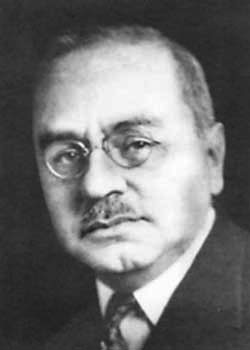
Happy Birthday Alfred Adler

Recently someone mistook me for an Adlerian. This got me thinking, “Maybe I am an Adlerian?” Then again, if you look at the history of counseling and psychotherapy, most of us are Adlerians. At one presentation I attended back when we attended those things, the presenters started with, “In the beginning, there was Adler.”

As a Happy Birthday tribute to Alfred Adler, below is an excerpt from our Adlerian theories chapter. There’s much more, of course, like, for example, what Adlerian theory would have to say about the Super Bowl.

Happy Birthday Dr. Adler.

Historical Context

Freud and Adler met in 1902. According to Mosak and Maniacci (1999), Adler published a strong defense of Freud’s Interpretation of Dreams, and consequently Freud invited Adler over “on a Wednesday evening” for a discussion of psychological issues. “The Wednesday Night Meetings, as they became known, led to the development of the Psychoanalytic Society” (p. 3).

Adler was his own man with his own ideas before he met Freud. Prior to their meeting he’d published his first book, Healthbook for the Tailor’s Trade (Adler, 1898). In contrast to Freud, much of Adler’s medical practice was with the working poor. Early in his career, he worked extensively with tailors and circus performers.

In February 1911, Adler did the unthinkable (Bankart, 1997). As president of Vienna’s Psychoanalytic Society, he read a highly controversial paper, “The Masculine Protest,” at the group’s monthly meeting. It was at odds with Freudian theory. Instead of focusing on biological and psychological factors and their influence on excessively masculine behaviors in males and females, Adler emphasized culture and socialization (Carlson & Englar-Carlson, 2017). He claimed that women occupied a less privileged social and political position because of social coercion, not physical inferiority. Further, he noted that some women who reacted to this cultural situation by choosing to dress and act like men were suffering, not from penis envy, but from a social-psychological condition he referred to as the masculine protest. The masculine protest involved overvaluing masculinity to the point where it drove men and boys to give up and become passive or to engage in excessive aggressive behavior. In extreme cases, males who suffered from the masculine protest began dressing and acting like girls or women.

The Vienna Psychoanalytic Society members’ response to Adler was dramatic. Bankart (1997) described the scene:

After Adler’s address, the members of the society were in an uproar. There were pointed heckling and shouted abuse. Some were even threatening to come to blows. And then, almost majestically, Freud rose from his seat. He surveyed the room with his penetrating eyes. He told them there was no reason to brawl in the streets like uncivilized hooligans. The choice was simple. Either he or Dr. Adler would remain to guide the future of psychoanalysis. The choice was the members’ to make. He trusted them to do the right thing. (p. 130)

Freud likely anticipated the outcome. The group voted for Freud to lead them. Adler left the building quietly, joined by the Society’s vice president, William Stekel, and five other members. They moved their meeting to a local café and established the Society for Free Psychoanalytic Research. The Society soon changed its name to the Society for Individual Psychology. This group believed that social, familial, and cultural forces are dominant in shaping human behavior. Bankart (1997) summarized their perspective: “Their response to human problems was characteristically ethical and practical—an orientation that stood in dramatic contrast to the biological and theoretical focus of psychoanalysis” (p. 130).

Adler’s break from Freud gives an initial glimpse into his theoretical approach. Adler identified with common people. He was a feminist. These leanings reflect the influences of his upbringing and marriage. They reveal his compassion for the sick, oppressed, and downtrodden. Before examining Adlerian theoretical principles, let’s note what he had to say about gender politics well over 90 years ago:

All our institutions, our traditional attitudes, our laws, our morals, our customs, give evidence of the fact that they are determined and maintained by privileged males for the glory of male domination. (Adler, 1927, p. 123)

Raissa Epstein may have had a few discussions with her husband, exerting substantial influence on his thinking (Santiago-Valles, 2009).

***********

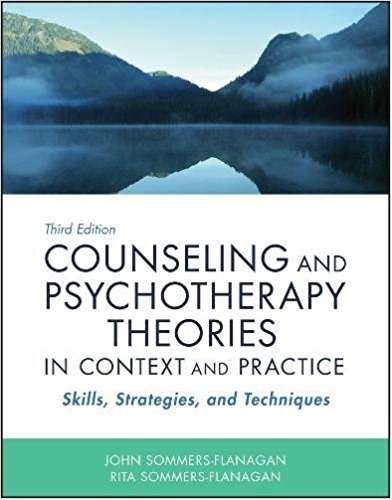
You can take a peek at our Theories text on Amazon: https://www.amazon.com/Counseling-Psychotherapy-Theories-Context-Practice/dp/1119473314/ref=sr_1_1?crid=LIAVFMJLE5TD&dchild=1&keywords=sommers-flanagan&qid=1612716309&s=books&sprefix=sommers-%2Caps%2C205&sr=1-1

Coming In January: The Strengths-Based Approach to Suicide assessment and treatment Planning

As many of you know, Rita and I have been working on a suicide assessment and treatment planning manuscript to be published by the American Counseling Association. Today, we received a photo of the full (front and back) cover. Although we know you’re not nearly as excited about this book (coming in mid-January!) as we are, below, I’ve pasted the photo of the cover and the first part of the Preface.

Preface

Writing a book about suicide may not have been our best idea ever. Rita made the point more than once that reading and writing about suicide at the depth necessary to write a helpful book can affect one’s mood in a downward direction. She was right, of course. Her rightness inspired us to pay attention to the other side of the coin, so we decided to integrate positive psychology and the happiness literature into this book. As is often the case when grappling with matters of humanity, focusing on suicide led us to a deeper understanding of suicide’s complementary dialectic—a meaningful and fully-lived life–and that has been a very good thing.

Before diving into these pages, please consider the following.

Do the Self-Care Thing

            In the first chapter, we emphasize how important it is to practice self-care when working with clients who are suicidal. Immersing ourselves in the suicide literature required a balancing focus on positive psychology and wellness. While you’re reading this book and exploring suicide, you cannot help but be emotionally impacted, and we cannot overstate the importance of you taking care of yourself throughout this process and into the future. You are the instrument through which you provide care for others . . . and so we highly encourage you to repeatedly do the self-care thing.

What is the Strengths-Based Approach?

            Many people have asked, “What on earth do you mean by a strengths-based approach to suicide assessment and treatment planning?” In response, we usually meander in and out of various bullet points, relational dynamics, assessment procedures, and try to emphasize that the approach is more than just strength-based, it’s also wellness-oriented and holistic. By strengths-based, we mean that we recognize and nurture the existing and potential strengths of our clients. By wellness-oriented we mean that we believe in incorporating wellness activities into counseling and life. By holistic we mean that we focus on emotional, cognitive, interpersonal, physical, cultural-spiritual, behavioral, and contextual dimensions of living.

You will find the following strengths-based, wellness-oriented, and holistic principles woven into every chapter of this book.

  1. Historically, suicide ideation has been socially constructed as sinful, illegal, or a terribly frightening and bad illness. In contrast, we believe suicide ideation is a normal variation on human experience that typically stems from difficult environmental circumstances and excruciating emotional pain. Rather than fear client disclosures of suicidality, we welcome these disclosures because they offer an opportunity to connect deeply with distressed clients and provide therapeutic support.
  2. Although we believe risk factors, warning signs, protective factors, and suicide assessment instruments are important, we value relationship connections with clients over predictive formulae and technical procedures.
  3. We believe trust, empathy, collaboration, and rapport will improve the reliability, validity, and utility of data gathered during assessments. Consequently, we embrace the principles of therapeutic assessment.
  4. We believe that counseling practitioners need to ask directly about and explore suicide ideation using a normalizing frame or other sophisticated and empathic interviewing strategies.
  5. We believe traditional approaches to suicide assessment and treatment are excessively oriented toward psychopathology. To compensate for this pathology-orientation, we explicitly value and ask about clients’ positive experiences, personal strengths, and coping strategies.
  6. We believe the narrow pursuit of psychopathology causes clinicians to neglect a more complete assessment and case formulation of the whole person. To compensate, we use a holistic, seven-dimensional model to create a broader understanding of what’s hurting and what’s helping in each individual client’s life. 
  7. We value the positive emphasis of safety planning and coping skills development over the negative components of no-suicide contracts and efforts to eliminate suicidal thoughts.

Becoming a Reality Therapist: The Reality Therapy Lab

Let’s say you want to practice reality therapy. Maybe more than any other approach, you’ll need to use reality therapy on yourself to become a reality therapist. Here’s what I mean.

You could consider channeling a little William Glasser, because he’s the developer of reality therapy. Then again, you might not want to channel Glasser, because, as Robert Wubbolding has written, to become a reality therapist, “You need not imitate the style of anyone else.”

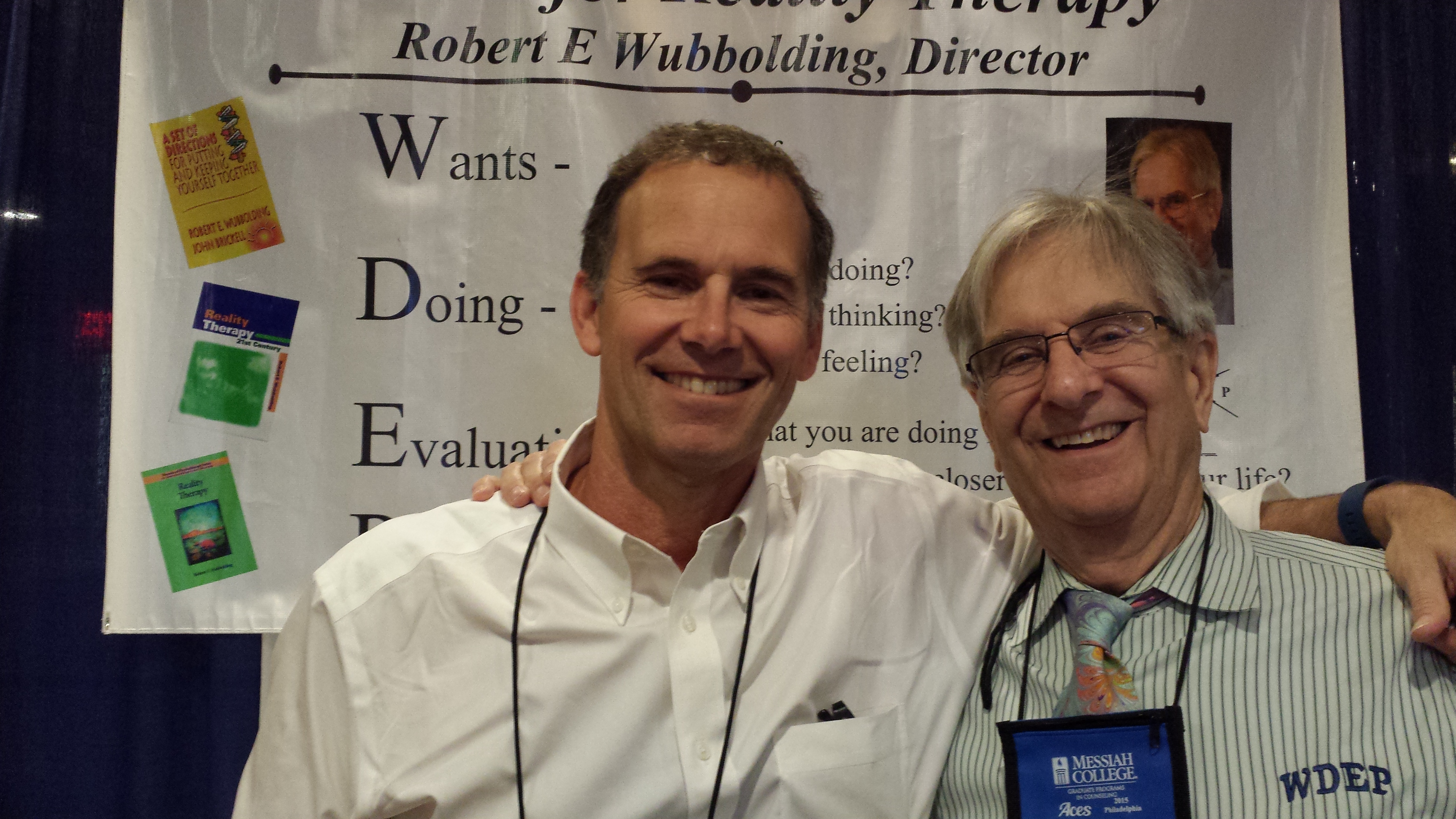
The point is that you get to do the choosing . . . and a great start is to choose to use Wubbolding’s summary of the delivery system of reality therapy. Wubbolding used the letters, WDEP to summarize reality therapy, and these letters also happen to appear on Wubbolding’s car license plate. If you’re getting the feeling that Wubbolding is committed to reality therapy principles, you would be absolutely right. WDEP stands for Wants, Doing, Evaluation, and Planning. The following four questions capture WDEP:

What do you want?

What are you doing?

Is what you’re doing working? [Evaluation]

Should you make a new plan?

Before enacting reality therapy, you’ll need to adopt a positive, engaged, courteous, enthusiastic, counselor demeanor. You also need to be ready to use your excellent active listening skills. Avoiding toxic relational strategies like arguing, blaming, and criticizing is crucial. Think of yourself as a mentor or coach, and then practice the following strategies to see if they fit for you.

Begin by helping your client (or role-play partner) identify what he/she/they want. You could use any of the following questions:

If we could work on something that feels important to you, what would that be?

What do you want from our meeting today?

This is a big question, but I’m going to ask it anyway: What do you want from life?

If we have a good session and accomplish something that feels good to you, what will we have accomplished?

After you’ve gotten a sense of what your client is wants, you can move onto an inquiry about how your client is currently trying to get those wants. Questions like the following might help:

How are you currently trying to get what you want?

What have you tried?

I imagine you’ve tried various strategies for getting what you want to happen in your life. Tell me about all those things you’ve tried and how they’ve worked.

You can see from this last question, that asking about what clients are doing naturally leads to what Wubbolding considers to be the most important step in reality therapy: Evaluation. Wubbolding hypothesizes that many clients don’t get taught how to self-evaluate and/or may not have much practice at self-evaluation. He uses questions like the following to prompt client self-evaluation.

Is what you’re doing helping or hurting?

Is want you want realistic and attainable?

Does your self-talk help or hinder you in your efforts to get what you want?

Wubbolding has many additional questions about how to help clients self-evaluate in his book, Reality Therapy for the 21st Century. Check it out.

This brings us to the final question: Should you make a new plan? I think one of the most important insights that reality therapy brings to the counseling table is its emphasis on active and smart planning. Although SMART plans originated in the business world, Wubbolding has an extensive guide for how to help clients make effective plans. In my experiences doing counseling and psychotherapy, I’ve been astonished at how often clients go off in search of goals with either no plans or bad plans. For Wubbolding, client plans should be: Simple, Attainable, Measurable, Immediate, Involved, Controlled, Committed, and Continuous (Wubbolding’s acronym for planning is SAMI2C3). For more information on how to create SAMI2C3 plans, see Wubbolding’s book or the chapter in our Counseling and Psychotherapy Theories in Context and Practice textbook.

All planning that happens in counseling should be collaborative planning. Your job, as you engage in this important planning step, is to come alongside clients, brainstorm small tweaks or big changes in how clients might attain their goals, and to give them constructive feedback about whether their plan is a smart plan while providing encouragement and collaboratively evaluating the plan’s effectiveness. I have no doubt that reality therapy can be effective, partly because the first three reality therapy questions are so central to human functioning, but also because a good plan is a beautiful thing.

Note: the content of this blog is primarily adapted from the section that Robert Wubbolding wrote for our theories textbook.

My Birthday Wish (and Request)

Yesterday, in anticipation of my 63rd trip around the sun, I started feeling a slow creep of melancholia. At my age, because all movements are slower than frozen molasses, I now have the luxury of spotting doom early on, as its ambling my way. Last night’s gloominess was mostly about aging, but amplified by my nightly dose of watching the evening news. As usual, the news inevitably featured Donald J. Trump being Donald J. Trump, and saying things that can’t—without the aid of a delusional disorder—be framed as anything other than mean, nasty, and dangerous. After yet again witnessing Mr. Trump’s malevolence, I turned to Rita and murmured, “I think he might be evil.”

As soon as the word evil escaped my mouth, I immediately thought of Carl Rogers. Rogers was an amazing American psychologist who, from the 1930s to the 1960s, developed a profoundly empathic way of working with people. Rogers was raised in a rigid fundamental conservative Christian family. He wasn’t allowed to dance or play cards. During college, at age 20 (the year was 1922), Rogers took a sharp ideological left turn while on a slow boat to China. He stepped away from his fundamentalist roots, and began embracing a broad and encompassing belief in the goodness of all people. Rogers stepped so far away from judgmentalism, and believed so deeply and persistently in the innate goodness of all humans, that many philosophers and psychologists in the 1950s and 1960s (like Rollo May and Martin Buber), viewed Rogers as dangerously naïve.

After realizing back in the 20th century that I would never be “Like Mike” (Michael Jordan), I started fancying myself as being like Carl Rogers instead. The match seemed perfect. Just like Rogers, I believe in everyone’s positive potential. Also like Rogers, I don’t really believe in evil. However, after four years of listening to someone with immense power mock the disabled, disparage the military, demean women, remorselessly lock migrant children in cages, stoke hate, division, and conspiracies, and threaten to blow up our democratic process . . . I’ve begun reconsidering my naïve Rogerian perspective on evil. Last night’s news snippet included Mr. Trump’s continued attack on the Michigan governor. As far as I can tell, the only times Mr. Trump manages to use his words to show empathy is when he’s reading—rather haltingly—off of a teleprompter.

Rogers might blanch at my judgment of Trump, but I think not. He wrote a book “On Personal Power” and his bottom line was that you should give it away. And when I interviewed his daughter, Natalie Rogers, in 2006, she made it clear that her dad was in favor of accepting and prizing all human feelings, but that he could be quite firm when people (and his children) behaved in unacceptable ways. I’m pretty sure that Carl Rogers, one of the most profoundly influential psychologists of all time, would be horrified by Mr. Trump’s behavior, and he would use his power to bring back civility, decency, and empathy.

A couple years ago I had the honor of meeting Joe Biden, face-to-face. He greeted me with flourish and enthusiasm. He oozed empathy, compassion, kindness, and a commitment to service. He spoke and acted without a whiff of arrogance. I’m convinced that he’s the sort of person who will use his power for good.

Here’s my birthday wish (and request). Instead of sending me all the lavish gifts you had planned to send me, just go out and spread the word that decency, empathy, respect, kindness, and love are making a HUGE comeback. And if you know someone whom you think isn’t voting, consider this: reach out with respect and kindness and ask them to vote for Joe Biden. That would be amazing . . . a little frosting on my birthday wish.

Thanks for reading this and for helping make my birthday wish come true.

Essential Information about Counseling and Psychotherapy Theories

A good summary is a beautiful thing. But summaries are always unfair and limited representations of that which is bigger. Nevertheless, below, I’ve tried to summarize the primary listening focus and the primary change mechanisms for each of 13 theoretical orientations included in our textbook, Counseling and Psychotherapy Theories in Context and Practice (John Wiley & Sons, 2018). In addition, yesterday I filmed myself using a memory-palace strategy while describing all 13 perspectives below. You can read the summary below and/or watch me try to pull off this 15 minute theories overview on YouTube: https://youtu.be/VJFK6cCHCU8

TheoryWhat to Listen For. . .Change Mechanisms
Psychoanalytic PsychodynamicOld maladaptive intrapersonal conflicts and repetitive, unconscious, and dysfunctional interpersonal patterns.Make unconscious conscious, catharsis, and working through new intra- and interpersonal dynamics.
AdlerianBasic mistakes imbedded in the style of life, including excess self-interest and inferiority/superiority.Awareness, insight, and encouragement (courage) to face the tasks of life.
ExistentialAnxiety over and avoidance of core existential life dynamics like death, isolation, meaninglessness, and freedom.Feedback and confrontation to help clients gain awareness and face life’s ultimate existential demands.
Person-CenteredEmotional distress, incongruence (discrepancies between real and ideal selves), and conditions of worth.A relationship characterized by congruence, unconditional positive regard, and empathic understanding.
GestaltUnfinished emotional and behavioral baggage from the past that blocks awareness or disturbs self-other boundaries.Guidance on using here-and-now experiments to deal with unfinished emotional and behavioral experiences.
BehavioralDisturbing emotions (e.g., anxiety), maladaptive behavior patterns, and environmental contingencies.New learning or re-learning via operant, classical, and social processes.
CBTDisturbing emotions (e.g., anxiety, anger), maladaptive thinking, maladaptive behaviors, and triggers/contingenciesCollaborative and empirical tasks that modify maladaptive or distorted cognitive information processing.
Choice Theory/Reality TherapyWhat clients want, what they’re doing, whether that’s working, and planning.Commit to and enact adaptive plans that are aligned with quality world goals.
FeministWhere is the client experiencing anger or dissatisfaction due to gender-based limits or oppressive situations?Relational connection and empowerment to actively seek personal goals and mutually empathic emotional relationships.
ConstructiveWhere clients are stuck and how existing client strengths, exceptions, and solutions can fuel change.Re-shaping, reframing, and reconsolidating old narratives and problem-based patterns through solutions and sparkling moments.
Family SystemsFamily dynamics, transactions, hierarchy, roles, and boundaries that contribute to personal or systemic dysfunction.Shift family dynamics and transactions via in-session and outside session assignments.
MulticulturalWhere is the client experiencing distress due to limiting or oppressive socio-political factors?Cultural acceptance, empowerment, and culturally-based rituals.
IntegrativeWhat are the client’s unique problems, strengths, and consistent ways of thinking, acting, and feeling?Match a therapeutic process to the client’s unique problems and strengths.

My Cache of Unprofessional Counseling and Psychotherapy Theories Videos

In a surprising turn of events, this semester, I’ve decided to make a series of unprofessional theories videos to accompany my counseling and psychotherapy theories course (and text). When I say surprising, I mean surprising in that I’m surprised about feeling open to spontaneously video recording myself and making it available via YouTube. Could it be that as I grow older, I care less about how I look and sound, and care more about showing myself openly to others as an imperfect being who’s just trying to offer up something that might be educational? Alternatively, maybe I just caught the narcissistically-leaning, reality television, constantly-make-videos-of-myself, YouTube, Instagram, Facebook, Tiktok, virus that’s infecting so many people. We may never know.

And I say unprofessional because I’m filming these all by myself, not using a script, and making side comments and using props that might involve embarrassing myself as I talk about counseling and psychotherapy theories. One form of these unprofessional videos includes me doing “dramatic readings” and commentary from the works of Freud, Adler, and other original theories thinkers and writers. Although I intended these readings to be dramatic, I can see how they also might just be dull.

With my explanations and caveats out of the way, here are the offerings, thus far, for this semester.

Week 1 – An Intro to Counseling and Psychotherapy Theories

Hypnosis for Warts: A Story – https://youtu.be/9FR4PyTcsKw

Psychotherapy Math – https://youtu.be/ZqMW0SNekY0

Week 2 – Psychoanalytic Approaches

Freud Dramatic Reading – https://youtu.be/L-fkveRk7B0

Week 3 – Individual Psychology and Adlerian Therapy

Adler Dramatic Reading, Take 1 – https://youtu.be/_sVysgm1UiY

Adler Dramatic Reading, Take 2 – https://youtu.be/xCQd6i_CWAI

Week 4 – Existential Theory and Therapy . . . coming soon!

Although this post focuses on my unprofessional videos, that doesn’t mean I’ve completely stopped behaving professionally. For example, recently, I was a guest on the podcast, “A New Angle” hosted by Justin Angle and Bryce Ward (both of the University of Montana College of Business). In this podcast, we talk about COVID, suicide in Montana, happiness, and why the College of Business supports the teaching “Essential” interpersonal and psychological skills. It’s a pretty cool (and professional) podcast, even if I do say so myself. You can find “A New Angle” on Apple Podcasts at:

https://podcasts.apple.com/us/podcast/i-i-happiness-with-john-sommers-flanagan/id1336642173

Or at: anewanglepodcast.com

I hope you’re all having a great run-up to the weekend.

Counseling Theories — Week One — Hypnosis for Warts

Theories III Photo

Being holed up in our passive solar Absarokee house made an interesting venue for blasting off this semester’s University of Montana Counseling Theories class. I’m mentioning passive solar not to brag (although Rita did design an awesome set-up for keeping us warm in the winter and cool in the summer using south-facing windows and thermal mass), but to give you a glimpse of our temperature-related passivity: we have no working parts (as in air conditioning). And I’m mentioning holed up because we’re in a stage 1 air pollution alert from California smoke and consequently weren’t able to use our usual manual air conditioning system (opening up the windows in the night to cool off the house). Our need to keep the windows shut created a warmer than typical room temperature and, based on my post-lecture assessment of the armpits of my bright yellow shirt, yesterday just might have been my sweatiest class since 1988, when I was teaching at the University of Portland, and started sweating so much during an Intro Psych class that my glasses fogged up. In case you didn’t already know this about me, I’m an excellent sweater. You haven’t seen sweat until you’ve seen my sweat. Top-notch. The sort of sweating most people only dream about. I’d rate myself a sweating 10.

Aside from my sweating—which I’m guessing you’ve had enough of at this point—the students were pretty darn fantastic. Attendance was virtually perfect, which, given that everything was virtual, exceeded my expectations.

Speaking of expectations, because I’m teaching online via Zoom, one thing I’m adding to the course are a few pre-recorded videos. Yesterday’s pre-recorded video featured me telling my famous “Hypnosis for Warts” story. My goal with the pre-recorded video—aside from letting my students see me and my yellow shirt in a less sweaty condition—was to break up the powerpoints. I could have told the story live, but instead, I clicked out of the powerpoints, told my students we were going to watch a video, and then showed a video of myself . . . telling a story I could have been telling live. I thought I was hilarious. However, mostly, the sea of 55 Hollywood Squares faces just stared into the sea of virtual reality, and so I couldn’t see whether the students appreciated my pre-recorded video of myself teaching strategy. I know I’ve got too many “seas” in that preceding sentence, but redundancy happens. Really, it does. I’m totally serious about redundancy.

Back to expectations . . .

One of Michael Lambert’s four common factors in counseling and psychotherapy is expectancy. He estimated that, in general, expectation accounts for about 15% of the variation in treatment outcomes. But, of course, treatment outcomes are always contextual and always variable and always unique, and so, as in the case of “Hypnosis for Warts,” sometimes the outcome may be a product of a different combination or proportion of therapeutic ingredients. If you watch the video, consider these questions:

  • What do you think “happened” in the counseling office with the 11-year-old boy to cause his eight warts to disappear?
  • Do you think the therapeutic ingredients that helped the boy get rid of his warts were limited to Lambert’s extratherapeutic factors, relationship factors, technical factors, and expectancy factors (his four big common factors) . . . or might something else completely different have been operating?
  • What proportion of factors do you suppose contributed to the positive outcome? For example, might there have been 50% expectancy, instead of 15%?

Here’s the video link to the Wart story: https://www.youtube.com/watch?v=9FR4PyTcsKw

That’s about all I’ve got to share for today. However, if you happen to know of some nice 1-5 minute theories-related video clips that I can share with my students, please pass them on. I’d be especially interested if you happen to have video clips of me, but relevant videos of other people would be nice too. Haha. Just joking. Please DON’T send video clips of me. My students and I—we already have far too much of the JSF video scene.

Be well,

John SF

Reality Therapy: Developing Effective Plans

With Wubbolding

Thanks to Molly Molloy, the Montana Office of Rural Health, the Montana Flex Program, and the Montana Hospital Association, I had a chance to present as part of a “Rethinking Resiliency” series this morning. One question that came up had to do with how we can make better plans to facilitate our self-improvement. The best answer I could come up with was to follow Robert Wubbolding’s guidance on effective planning, from a reality therapy perspective. All of the preceding leads me to posting a section from our Counseling and Psychotherapy Theories textbook on Reality Therapy and Planning.

Here we go:

***************************

Wubbolding (1988, 1991, 2000, 2011 . . . and pictured above) has written extensively about how reality therapists help clients develop plans for making positive life changes. Therapists help clients make positive and constructive plans. Wubbolding (1988) uses the acronym SAMI2C3 to outline the essential ingredients of an effective plan:

S = Simple: Effective plans are simple. If a plan generated in reality therapy is too complex, the client may become confused and therefore not follow through.

A = Attainable: Effective plans are attainable or realistic. If the plan is unattainable, the client can become discouraged.

M = Measurable: Effective plans are measurable. Clients need to know if the plan is working and if they’re making progress.

I = Immediate: Effective plans can be enacted immediately, or at least very soon. If clients have to wait too long to implement a plan, motivation may be compromised.

I = Involved: Helping professionals can be involved with their client’s or student’s planning. This should be done ethically and in ways that promote client independence.

C = Controlled: The planner has exclusive control over effective plans. Avoid having clients develop plans that are contingent on someone else’s behavior.

C = Committed: Clients need to commit to their plans. If a client is only half-heartedly invested in the plan, the plan is less likely to succeed.

C = Continuous: Effective plans are continuously implemented. When the process is going well, reality therapy clients have continuous awareness of what they want and of their plan for getting what they want. This high level of awareness reminds us of mindfulness or conscious-raising therapeutic techniques.

Wubbolding (1988) also recommended that individuals learning to conduct reality therapy develop a plan for themselves. He noted that to be effective reality therapists, practitioners should obtain consultation and/or supervision from certified reality therapists (in addition, we recommend that you practice living your life using choice theory rules; see Putting it in Practice 9.3).

Putting it in Practice 9.3

Living Choice Theory: The Four Big Questions

Four questions have been developed to help students and clients live the choice theory lifestyle (Wubbolding, 1988). These questions are derived from Wubbolding’s WDEP formula. During one full week, do your best to keep these four reality therapy questions on your mind:

  1. What do you want? (Wants)
  2. What are you doing? (Doing)
  3. Is it working? (Evaluation)
  4. Should you make a new plan? (Planning)

Every day you’re operating with a personal plan. The plan may or may not be any good and it may or may not be clear. The point is this: You’re thinking and doing things aimed toward getting your basic needs met. Therefore, consistently ask yourself the four preceding questions. This will help make your plan and choices more explicit.

Wubbolding’s four questions are powerful and practical. Think about how you might apply them when doing therapy with a teenager. Now think about how you might apply them as a consultant for a local business. Whether you’re consulting with a teenager or a business leader, there are hardly any other four questions that are more relevant and practical.

In the space that follows each question, answer the four questions for yourself today.

  1. What do you want? ________________________________________
  2. What are you doing? _______________________________________
  3. Is it working? _____________________________________________
  4. Should you make a new plan? _______________________________

After you’ve answered the questions, go back and think about what you’ve written as your answer for Question 1.

To Mask or Not to Mask: Making America Rational Again

Make America Rational Again

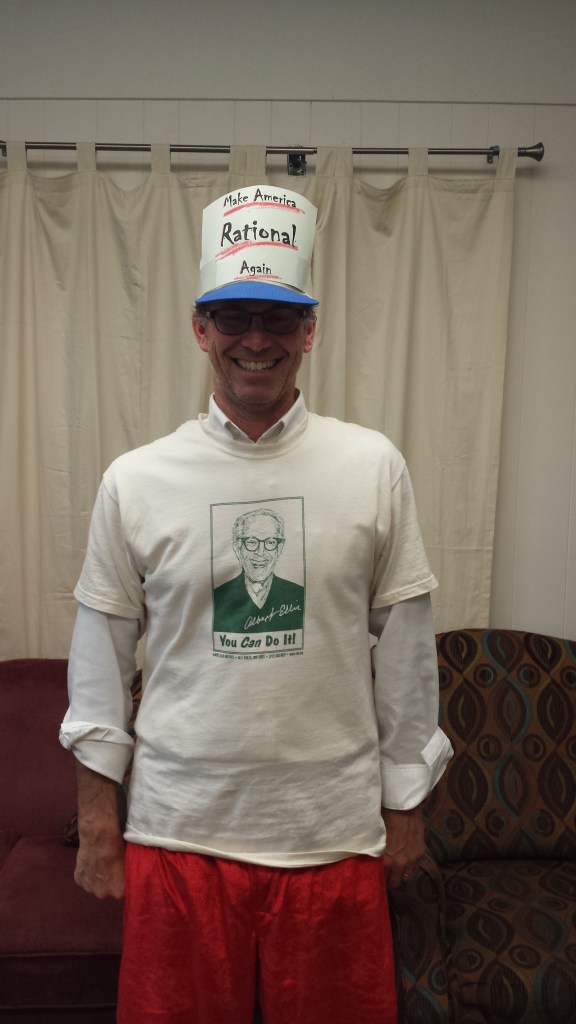
About 4 years ago, I made a MARA hat. MARA stands for “Make America Rational Again.” My hat was in honor of the late Albert Ellis, a famous psychologist who relentlessly advocated for rational thinking. Given that some folks are doubting Covid-19, while others are passionately accusing health officials of infringing on their God-given liberties, I’m thinking my MARA hat from the last presidential election is still in style.

Way back when I was a full-time therapist working mostly with teenagers, I developed a method for talking with my teen-clients about their freedoms. When they complained about their parents infringing on their rights—those damn parents were pronouncing unreasonable curfews, alcohol prohibitions, and other silly mandates—I’d say something like this:

“Really, you only have three choices. You can do whatever your parents think you should do. That’s option #1. Or, you can do the opposite of what your parents think you should do. That’s option #2. Those are easy options. You don’t even have to think.”

Hoping to pique the teen’s interest, I’d pause and to let my profound comments linger. Sometimes I got stony silence, or an eye-roll. But usually curiosity won out, and my client would ask:

“What’s the third choice?”

“The third choice is for you to make an independent decision. But that’s way harder. You probably don’t want to go there.”

Actually, most of my teenage clients DID want to go there. They wanted to learn, grow, develop, and become capable of effective decision-making. Sadly, that doesn’t seem to be the case today. All too often, Americans are basing their decision-making on poor information. For example, when people are gathering the 411 on whether they should mask-up in public settings, to where do they turn? The rational choice would be medical professionals and virologists. But instead, people are turning to Facebook, Twitter, and even worse, Fox News, where misinformation from Tucker Carlson, Laura Ingraham, and Sean Hannity is offered up with nary a shred of journalistic ethics or integrity (for a fun and fabulous SNL Parody with Kate McKinnon as Laura Ingraham, check out this link: https://www.youtube.com/watch?v=XezLiezWN0E).

A related question that’s especially pressing right now is this: “How should we respond to coronavirus deniers and rabid anti-maskers?” Speaking for myself, I’ve been struggling to find the right words. Saying what I’m thinking—which usually starts with “WTF!? Have you been listening to Tucker Carlson instead of Dr. Fauci?”—seems too offensive and unhelpful. Instead, I’m making a commitment to letting go of the outrage, putting my 2016 campaign hat back on, and making myself rational again. Instead of being angry, my plan is to retreat to rationality. I’ll say things like this: “Hey, I’m curious, have you read the latest article in the New England Journal of Medicine titled, “Observational study of hydroxychloroquine in hospitalized patients with Covid-19?” or, “What are your thoughts about the chilblain-like lesions doctors are finding on patients with Covid-19?” or “According to the CDC and Dr. Fauci and the American Medical Association, the cloth face coverings—although imperfect—statistically reduce the likelihood of spreading the coronavirus.”

I invite you to join me in gathering good data for our personal and social decision-making. Together, we can Make America Rational Again.

Individualizing Suicide Risk Factors in the Context of a Clinical Interview

Spring 2020

In response to my recent post on “The Myth of Suicide Risk and Protective Factors” Mark, a clinical supervisor from Edmonton, wrote me and asked about how to make individualizing suicide risk factors with clients more concrete/practical and less abstract. I thought, “What a great question” and will try to answer it here.

Let’s start with two foundational prerequisites. First, clinical providers need to be able to ask about suicide in ways that don’t pathologize the patient/client. Specifically, if clients fear that disclosing suicide ideation will result in them being judged as “crazy” or in involuntary hospitalization, then they’re more likely to keep their suicidal thoughts to themselves. This fear dynamic is one reason why we emphasize using a normalizing frame when asking about suicide.

Second, both before and after suicide ideation disclosures, providers need to explicitly emphasize collaboration. Essentially, the message is: “All we’re doing is working together to better understand and address the distress or pain that underlies your suicidal thoughts.” In other words, the focus isn’t on getting rid of suicidal thoughts; the focus is on reduction of psychological pain or distress.

With these two foundational principles in place, then the provider can collaboratively explore the primary and secondary sources of the client’s psychological pain. In our seven-dimensional model, we recommend exploring emotional, cognitive, interpersonal, physical, cultural-spiritual, behavioral, and contextual sources of pain. Collaborative exploration is fundamental to individualizing risk factors. The general statistics showing that previous attempts, social isolation, physical illness, being male, and other factors predict suicide are mostly useless at that point. Instead, your job as a mental health provider is to pursue the distress. By pursuing the distress, you discover individualized risk factors. The following excerpt from our upcoming book illustrates how asking about “What’s bad” and “What feels worst?” results in individualized risk factors.

********************

     The opening exchange with Sophia is important because it shows how clinicians—even when operating from a strength-based foundation—address emotional distress. In the beginning the counselor drills down into the negative (e.g., “What’s making you feel bad?”), even though the plan is to develop client strengths and resilience. By drilling down into the client’s distress and emotional pain, and then later identifying what helps the client cope, the counselor is individualizing risk and protective factor assessment, rather than using a ubiquitous checklist.

Counselor: Sophia, thanks for meeting. I know you’re not super-excited to be here. I also know your parents said you’ve been talking about suicide off and on for a while, so they wanted me to talk with you. But I don’t know exactly what’s happening in your life. I don’t know how you’re feeling. And I would like to be of help. And so if you’re willing to talk to me, the first thing I’d love to hear would be what’s going on in your life, and what’s making you feel bad or sad or miserable or whatever it is you’re feeling?

The counselor began with an acknowledgement and quick summary of what he knew. This is a basic strategy for working with teens (Sommers-Flanagan & Sommers-Flanagan, 2007), but also can be true when working with adults. If counselors withhold what they know about clients, rapport and relationship development suffers.

The opening phrase “I don’t know. . .” acknowledges the limits of the counselor’s knowledge and offers an invitation for collaboration. Effective clinicians initially and intermittently offer invitations for collaboration to build the working alliance (Parrow, Sommers-Flanagan, Sky Cova, & Lungu, 2019). The underlying message is, “I want to help, but I can’t be helpful all on my own. I need your input so we can work together to address the distress you’re feeling.”

The opening question for Sophia is negative (i.e., What’s making you feel bad or sad or miserable or whatever it is you’re feeling?). This opening shows empathy for the emotional distress that triggers her suicidality and clarifies the link between her emotional distress and the triggering situations. By tuning into negative emotions, the counselor hones in on the presumptive primary treatment goal for all clients who are suicidal—to reduce the perceived intolerable or excruciating emotional distress (Shneidman, 1993).

***************************

Collaborative exploration is the method through which risk and protective factors are individualized. If Sophia had a previous attempt, the reason to explore the previous attempt would be to discover what created the emotional distress that provoked the attempt, and how counseling or psychotherapy might address that particular factor. For example, if bullying and lack of social connection triggered Sophia’s attempt, then we would view bullying and social disconnection as Sophia’s particular individualized risk factors. We would then build treatments—in collaboration with Sophia and her family—that directly address the unique factors contributing to her pain, and provide her with palpable therapeutic support.

I hope this post has clarified how to individualize suicide risk factors and use them in treatment. Thanks for the question Mark!