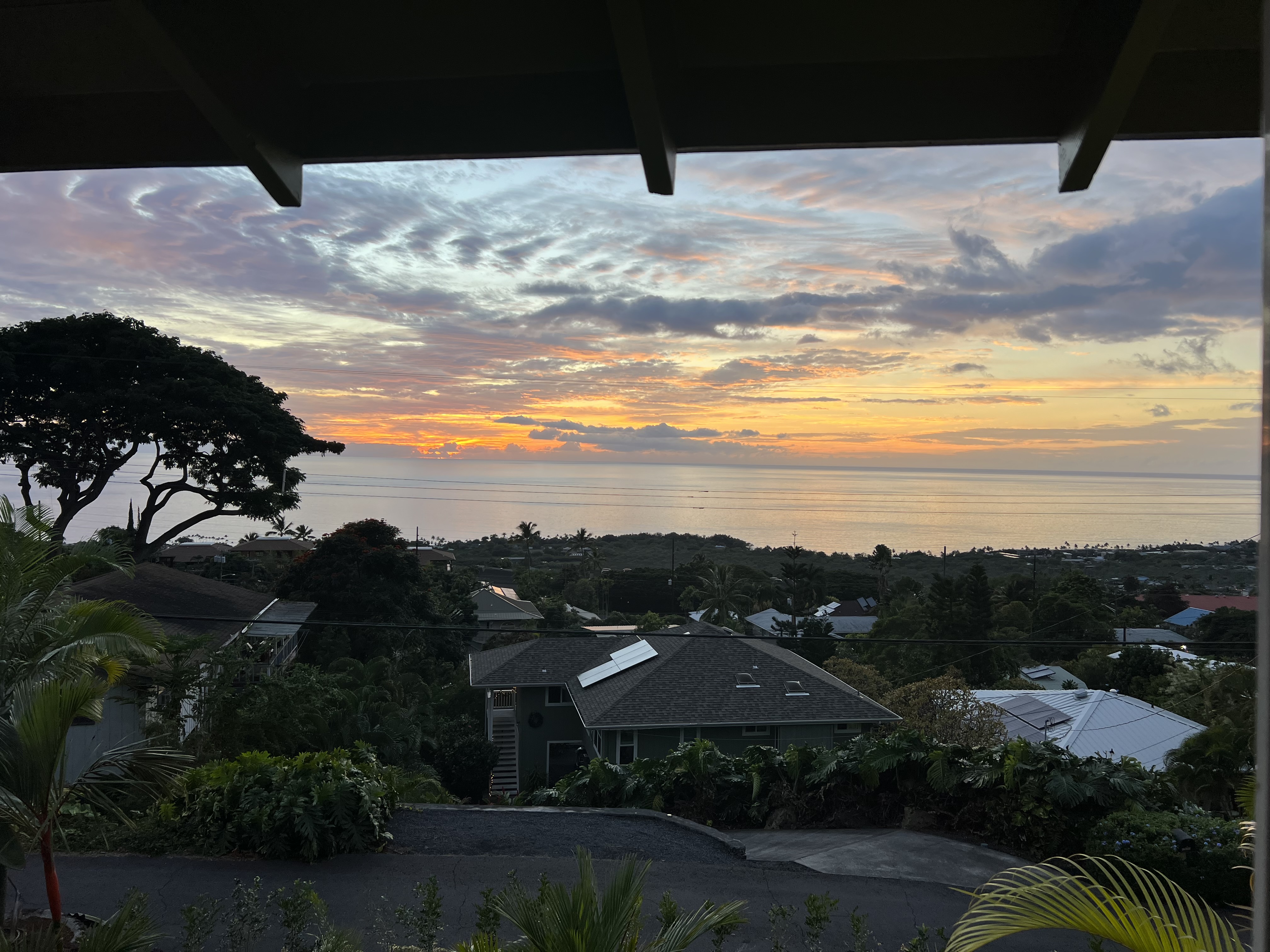
This is our room with a view.
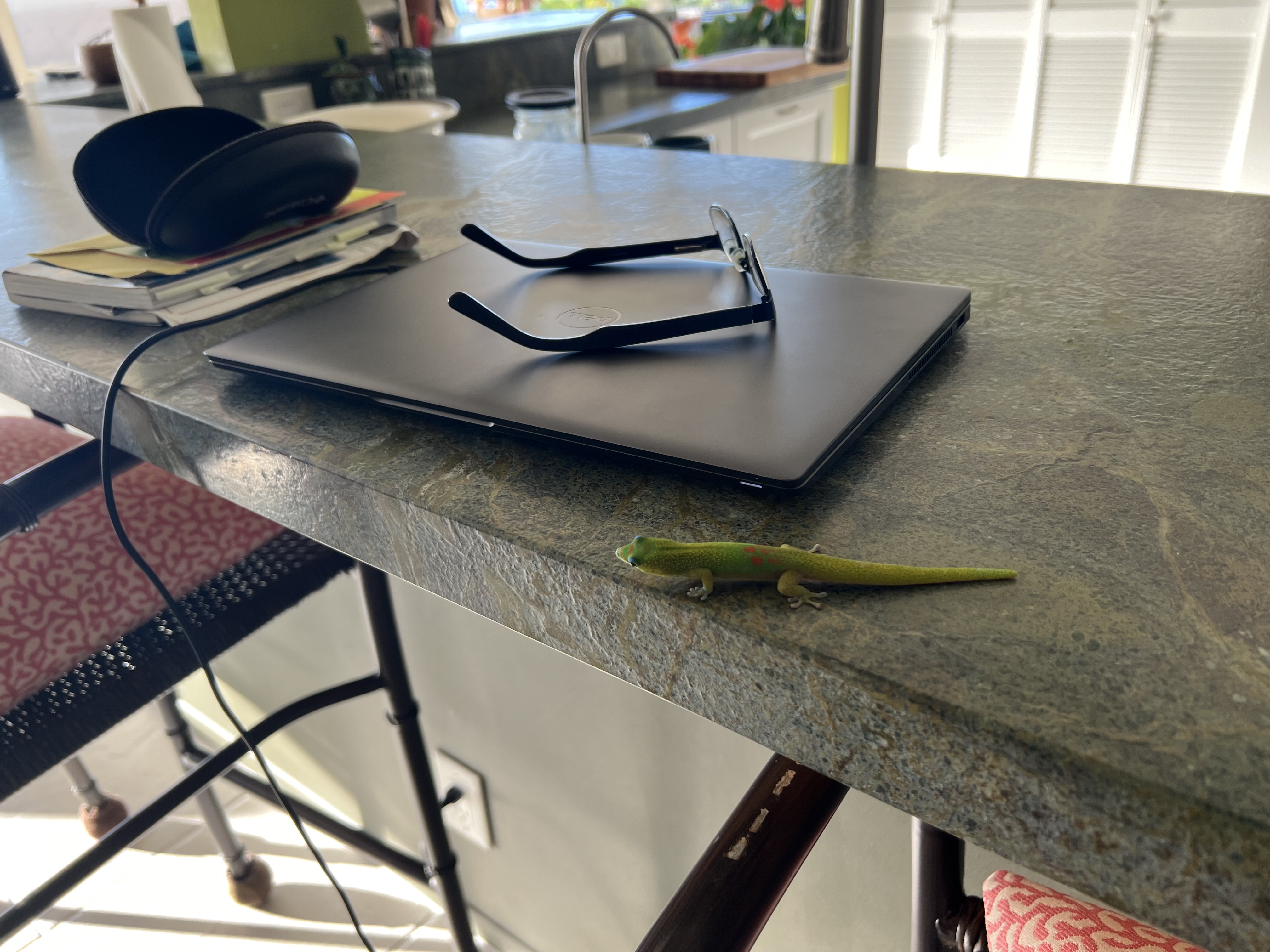
I’m a little embarrassed to report that Rita and I are on the Big Island of Hawai’i. We’re house-sitting for a friend. I know it’s hard work (insert eye-roll here). I have to wipe up the gecko poop and pee every morning. We’re here and experiencing this great fortune because a friend presented us with a very big act of kindness.
This week’s Montana Happiness Challenge is all about acts of kindness. Turns out, kindness is emotionally and psychologically healthy; this is true whether we engage in the act, receive the act, or observe the act. In a fascinating study titled, “Brief exposure to social media during the COVID-19 pandemic: Doom-scrolling has negative emotional consequences, but kindness-scrolling does not,” the researchers noted that doom scrolling during COVID reduced positive affect and optimism. In contrast, looking for positive stories of kindness on the internet either had no effect, or reduced negative affect.
As someone who has done more doom-scrolling than kindness scrolling, that’s good information to know. Here’s a link to the study: https://journals.plos.org/plosone/article?id=10.1371/journal.pone.0257728
Below, please find the kindness homework for this week. I know it’s Wednesday and the week is growing shorting, but I’ve found that being in Hawai’i is terribly distracting. Who knew?
Here’s a gecko trying to either work on or poop on my computer.
*******************************
About a decade or two ago, the concept, “Random acts of kindness” gained traction. Now, about a decade or two later, I’m a little sad that random acts of kindness has become the most common way we talk about kindness. I say this despite the fact that I’m a big fan of randomness and kindness.
For your assignment this week, I’d like all of us to break away from the mentality of randomness and embrace the mentality of intentionality.
Intentional acts give us—as actors in the grand theater of life—greater agency. Instead of being stuck with a script someone else wrote, when we embrace intentionality, we become the author of every scene. Rather than randomly responding to opportunities with kindness, we exert our will. What this means is that when an opportunity for kindness pops up, we already have a plan . . . and that plan involves creatively finding a way to respond with kindness. How cool is that?
Let’s think about this together.
Toward whom would you like to demonstrate kindness? A stranger? If so, it might feel random in that you might act kind in a moment of spontaneity. But your spontaneity—although wonderful—is a moment when your intentionality (to be a person who acts with kindness) meets opportunity. In this way, even acts toward strangers that seem or feel spontaneous, will be acts that reflect your deeper values and character.
Maybe you’d like to intentionally be kind to a friend, a parent, or a sibling. Again, this requires thought and planning and the ability to step outside yourself. Assuming that others want what you want can backfire. You’ll need to step into another person’s world: What would your friend, parent, or sibling appreciate?
To stay with the theater metaphor, you’re the script-writer and you’ve written yourself into this performance. For this week, the script or plan includes a character who values kindness and who watches for opportunities to share that value with others. You’re that character.
Your job is to translate your character trait of kindness into actions that represent kindness. I don’t what that will look like for you. Maybe you don’t either. That’s the magic—where your character meets opportunity and opportunity meets planned spontaneity.
Your other job is to share about your kindness experiences on social media. You can share your efforts to act with kindness or share your experience of someone acting with kindness toward you.
Have a fabulous and kindness-filled week!
John
 John Sommers-Flanagan
I just wanted to say that though I love you guys and almost everything that you do, I really want to hear people saying that they will NOT go to Hawaii for any reason. The Indigenous population is being overpriced and run out, and even if you are just house sitting you are THERE and posting pictures like it’s paradise. Well, it IS paradise, but NOT white people tourists. It was colonized and taken over without their approval. I just want people to say NO, anytime there is colonization going on. That’s it, said my piece. I know you guys AREN’T the colonizers, but you are benefitting from all of it. Thanks, Pam
Hi Pam,
Thanks very much for sharing your thoughts. I’m glad to hear that you love almost everything we do! I appreciate your perspective on Hawai’i and colonization and will try to be more thoughtful regarding this issue. I hope all is well in your life. Best, JSF
Hello, I just read your posting today and thought “ Conscious Kindness” instead of random acts of kindness. I am a school counselor and my school did a book study on Conscious Discipline, a school and family approach to managing children’s behaviors. It follows the same concept on being intentional with your words and actions. It does take practice to be intentional with kindness and child discipline. I hope there can be more positive intentional acts with all we do and I am grateful that you choose to do this as part of your life’s work. Enjoy this great earth wherever it may take you! Beth
Thank you very much Beth! Yes, I think consciousness and intentionality require focus, practice, and discipline. Wishing joy right back to you.
On it! Love the assignment.
Merry Kah-leek-we- ah!( you know what I mean)
Kaye❤️☘️🌟
Mele Kalikimaka right back to you and Matt! The weather is pretty good here!